Your Five-Year Plan Is Built From Last Year
I sat through an offsite that wrote 2029 as last year with nicer fonts. The futures worth living stay invisible until you stack skills, relationships, and harder rooms.
Browse all articles in the Philosophy category. Here you'll find insights, tips, and exploration of topics related to philosophy.
Explore diverse perspectives on philosophy through practical advice, thought-provoking analysis, and real-world examples.
I sat through an offsite that wrote 2029 as last year with nicer fonts. The futures worth living stay invisible until you stack skills, relationships, and harder rooms.
A rest day sat on the plan and I snuck a session anyway. Sitting still felt like losing the person I was becoming. I was occupying a part of myself that had a job: recover.
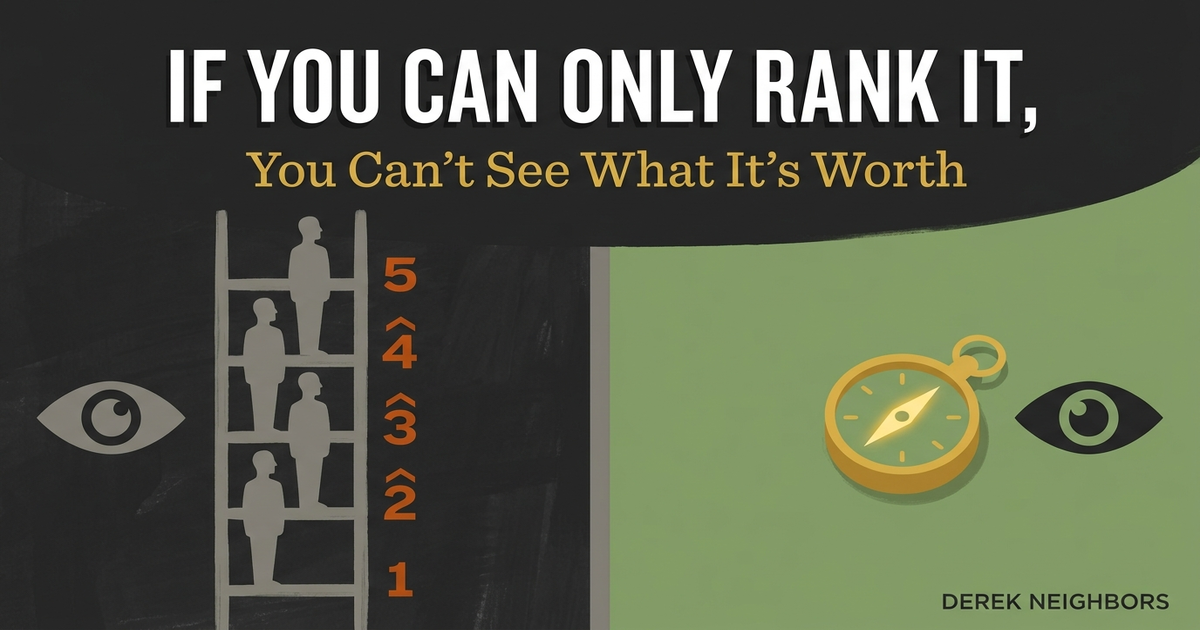
Value blindness starts when comparison becomes the only way you look. Worth stops being seen as itself and turns into a rank or a price. Scheler's ressentiment named the pattern. Greek phthonos and axia sharpen it. Excellence needs eyes that can still see a good without putting it on a ladder.
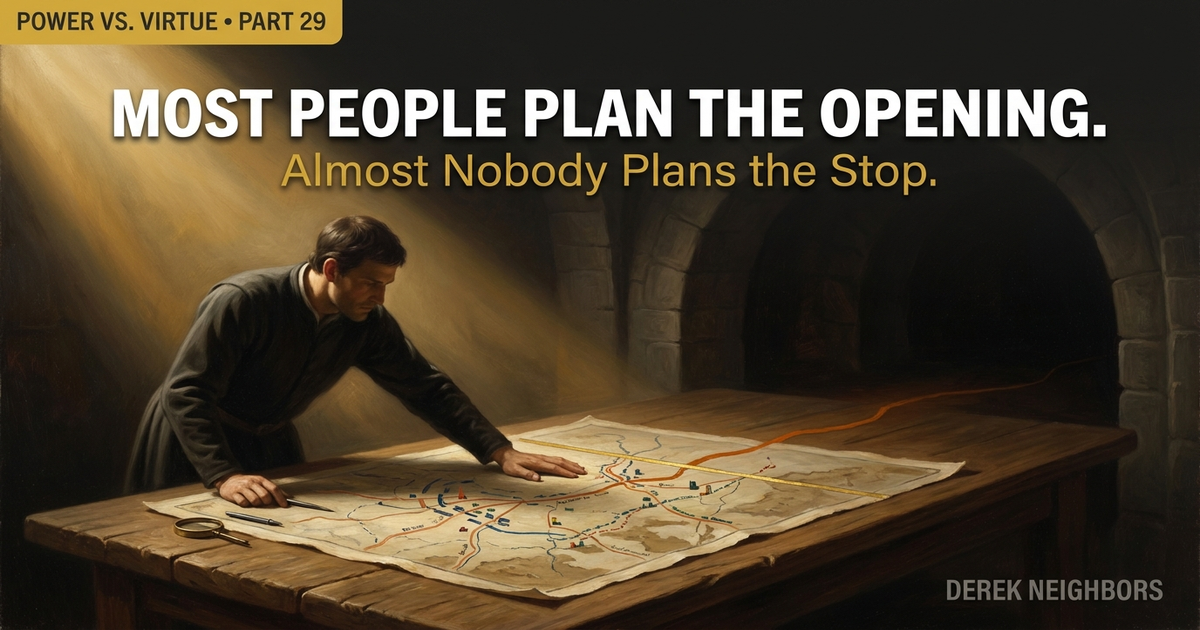
Law 29 of the 48 Laws of Power tells you to plan all the way to the end, and this series agrees with it. Vague plans collapse into improvisation, improvisation is crisis-to-crisis living, and the people who cannot name a stop get owned by whoever can. Greene's evidence is Balboa, who discovered the Pacific and still lost his head, versus Bismarck, who unified Germany and then refused the siren of more. The ancient correction is simple: the ending has to be a worthy end, not just a clever exit, and naming it is what makes bold action safe to start.
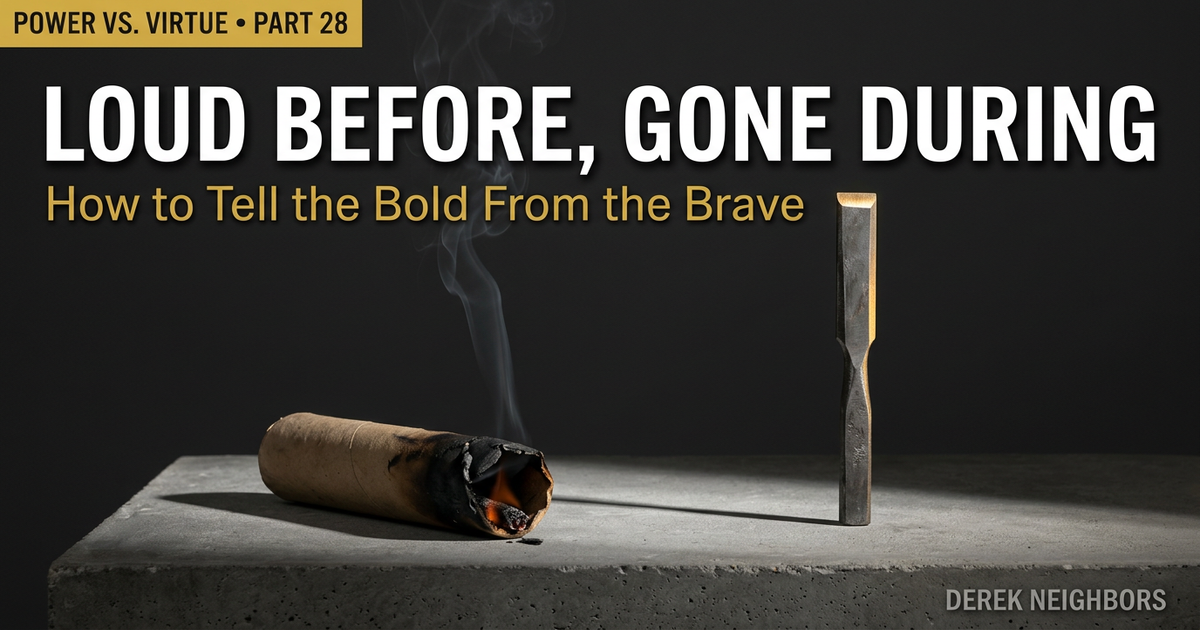
Law 28 of the 48 Laws of Power tells you to enter action with boldness, and this series agrees with it. Hesitation telegraphs doubt, half-measures dig deeper graves than full commitment ever does, and timidity has never once been mistaken for wisdom. But Greene builds his case on con artists, and that choice exposes the crack in the law. Audacity aimed at an audience has a tell that Aristotle documented twenty-three centuries ago: the rash man is loud before the danger arrives and gone once it does, while the brave man is quiet beforehand and keen inside the moment. The difference decides whether your boldness compounds into a life or burns off like a firework.
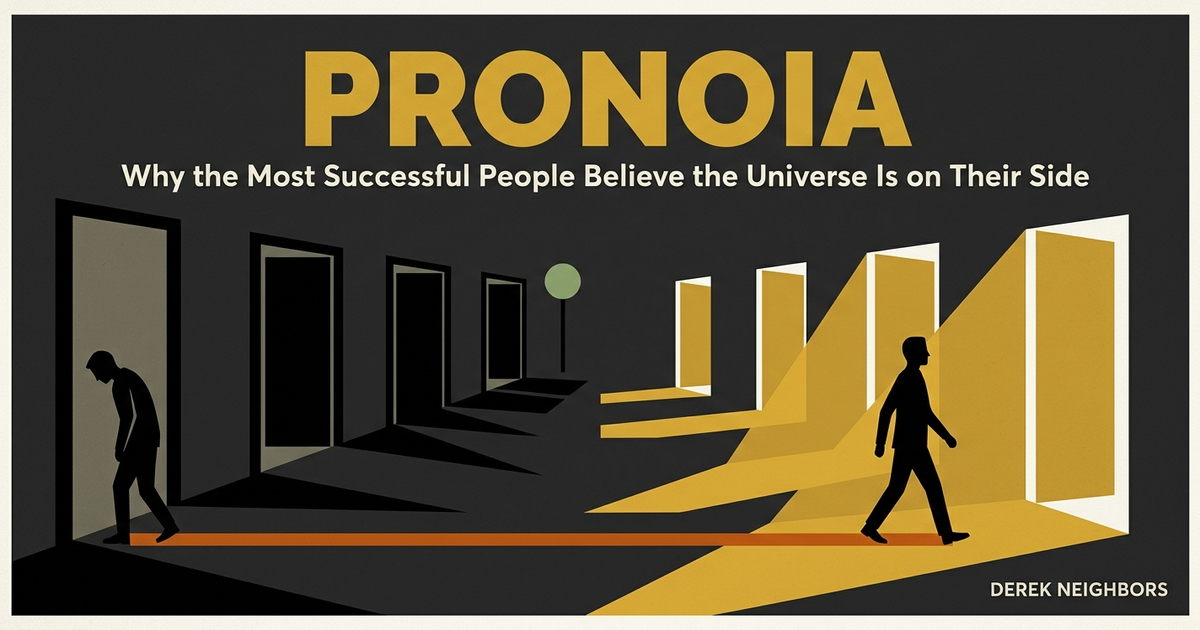
Some people move through the world braced for ambush. Others move through the same world convinced it keeps leaving doors unlocked for them. The second group looks delusional right up until you check the results. The Greeks called the ordered version of this trust pronoia, the Stoics built a cosmology on it, and the mechanism that makes it pay requires no mysticism at all. Your prior about the world is not a mood. It is a strategy, and it is the one you are running right now.
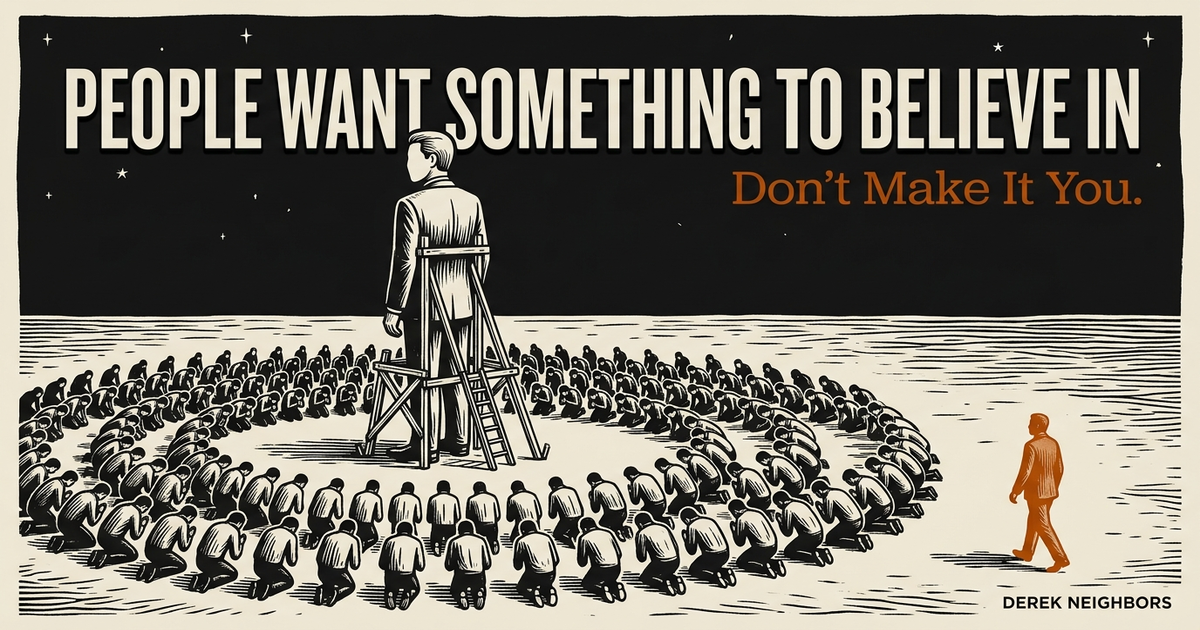
Law 27 of the 48 Laws of Power tells you to play on people's need to believe and create a cultlike following. Keep your words vague, favor enthusiasm over thinking, hand out rituals, collect the devotion. The need Greene identified is real. People are starving for something worth believing in. The law fails at the harvest. The Greeks called his method goeteia, the enchanter's craft that bypasses judgment instead of building it, and they left us a portrait of exactly where it ends: a con man with a puppet snake god who opened his rites by expelling every skeptic in the crowd, because one honest question would have brought the whole thing down.
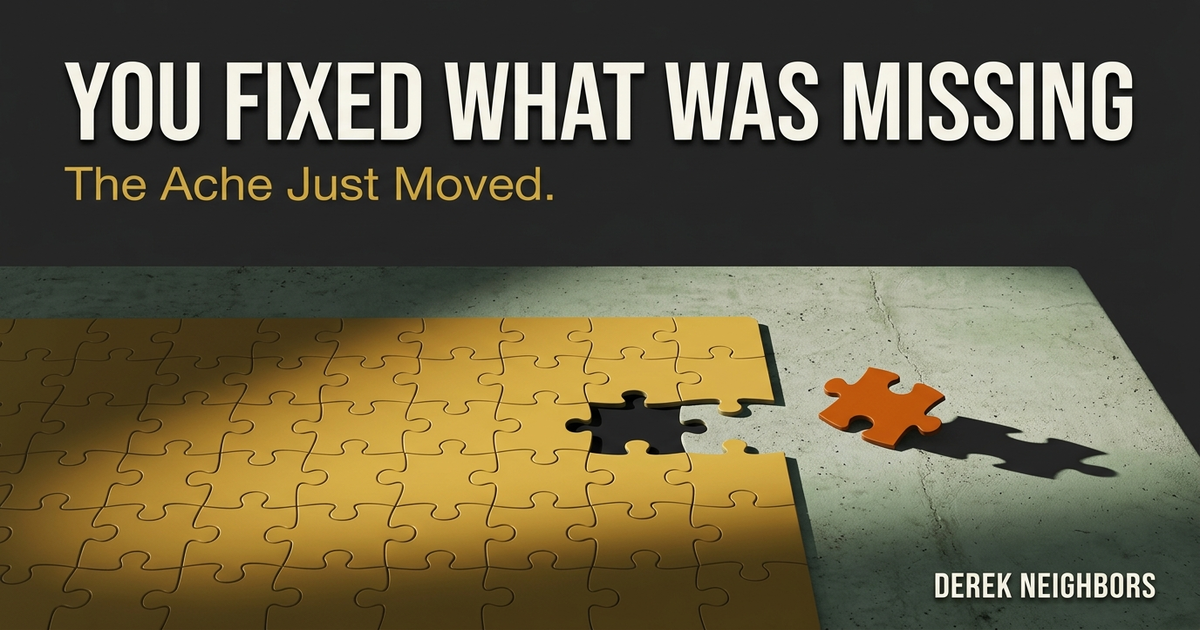
You spent years wanting the thing. You got it. A season later, something else is the thing. Single people ache for partnership and partnered people ache for solitude. The overworked ache for rest and the rested ache for purpose. Most people read the moving ache as proof they chose wrong or that gratitude is broken in them. Plato had a different answer: desire has lack in its lineage and cannot be separated from it. Scarcity never resolves. It relocates. Meaning follows the gap, and the mature move is an honest inventory of the current gap, not another round of chasing.
A flawless apology used to mean someone sat with the weight. Now it often means someone was not in the room. AI made sounding right cheap, and audiences rewired what they trust: hesitation, disclosed uncertainty, and speech that could have embarrassed you.
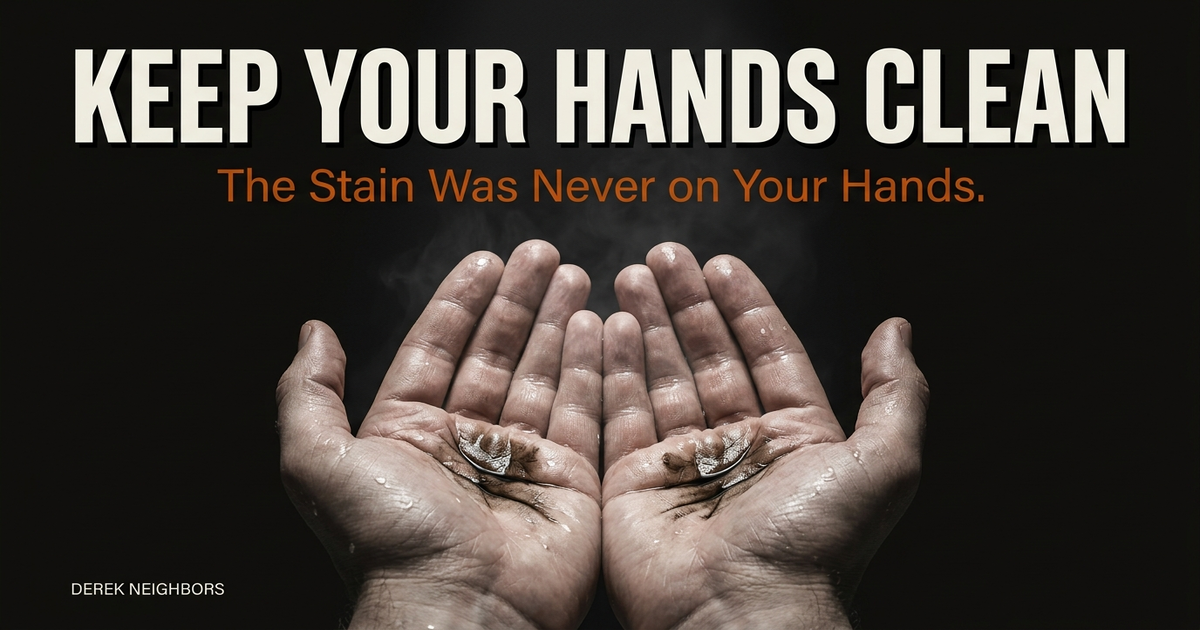
Law 26 of the 48 Laws of Power tells you to seem a paragon of civility while using scapegoats and cat's-paws to do your dirty work, so your hands stay spotless. The Greeks had a word for what that strategy ignores: miasma, the pollution that attaches to a deed and the one who willed it, no matter whose hands carried it out. You cannot wash it off by passing someone else the knife. There is a real way to keep your hands clean. It is the most literal one. Do not do the thing that stains.
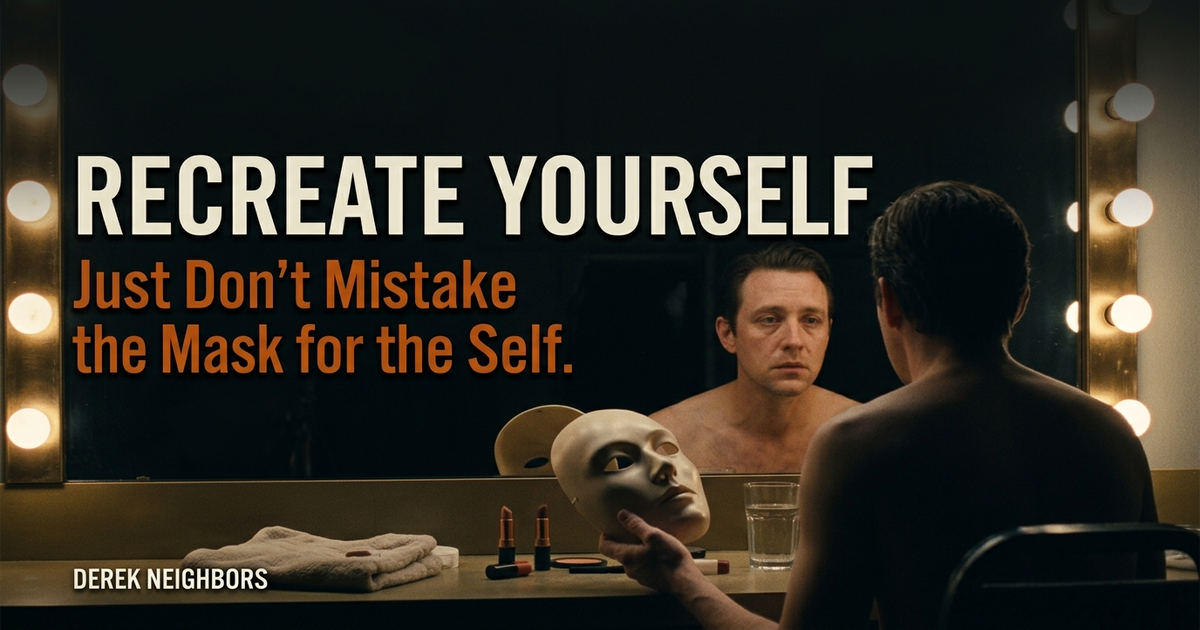
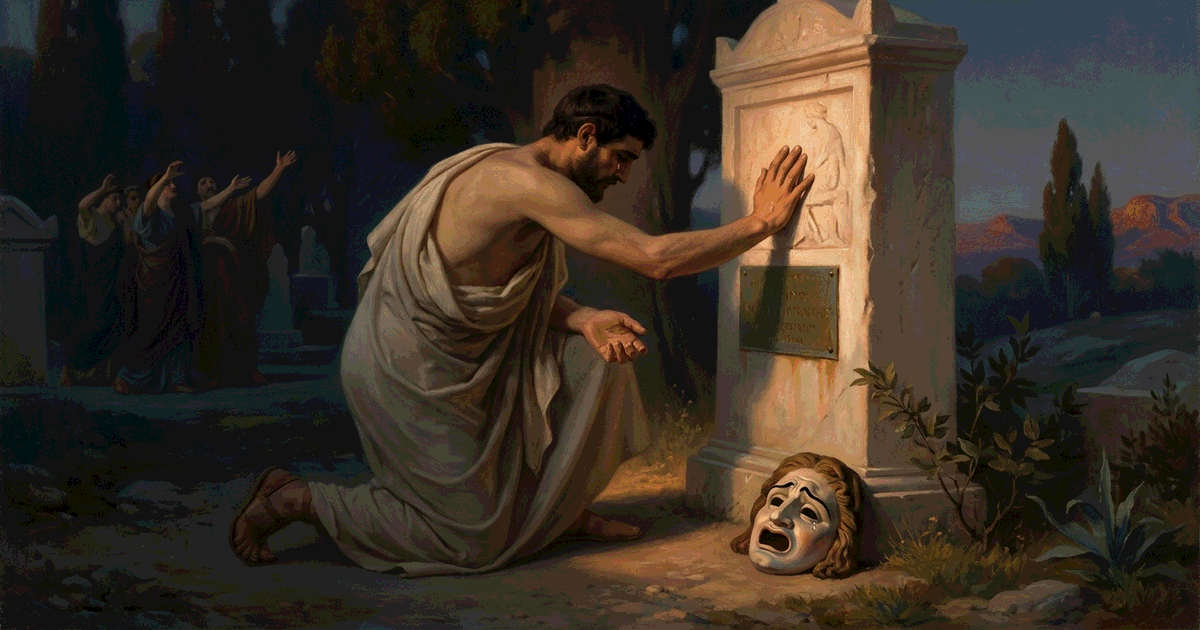
Law 25 of the 48 Laws of Power tells you to recreate yourself by seizing control of your image, becoming a memorable, protean figure who never bores the audience. The Greeks had a word for the thing you put on to face a crowd: prosopon, the mask an actor wore on stage. Greene's reinvention is mask-work, and a mask worn long enough fuses to the face. There is a real kind of self-recreation, but it runs the other direction. You forge the substance and let the appearance follow.
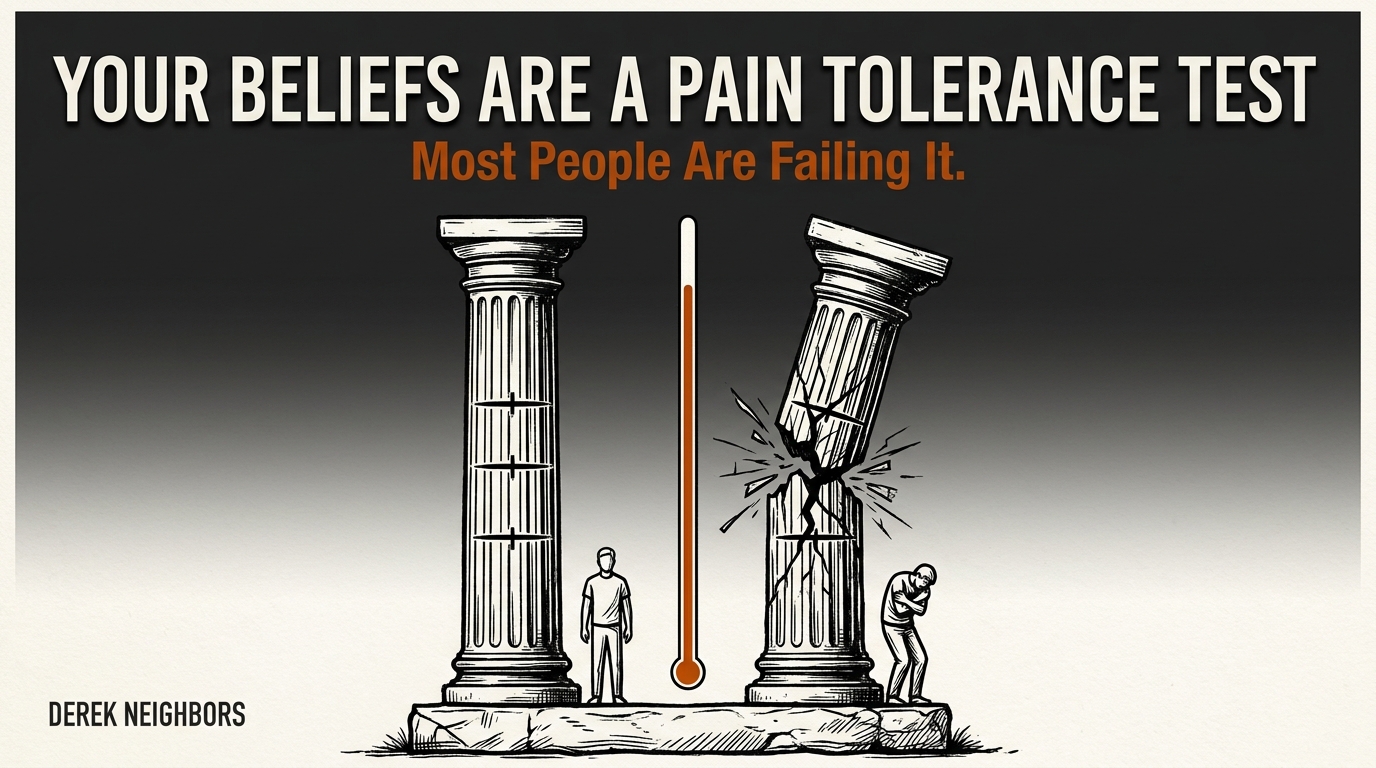
Two people take the same hit. Same diagnosis, same year, same loss of income. One keeps showing up. One disappears into the couch for six months. The difference is rarely willpower. It is the belief system running underneath, and belief systems can be scored. The Stoics built a scorecard without calling it that: internal control, suffering as training material, virtue as something worth the cost. Most modern frameworks fail on all three axes and then wonder why life feels unbearable.
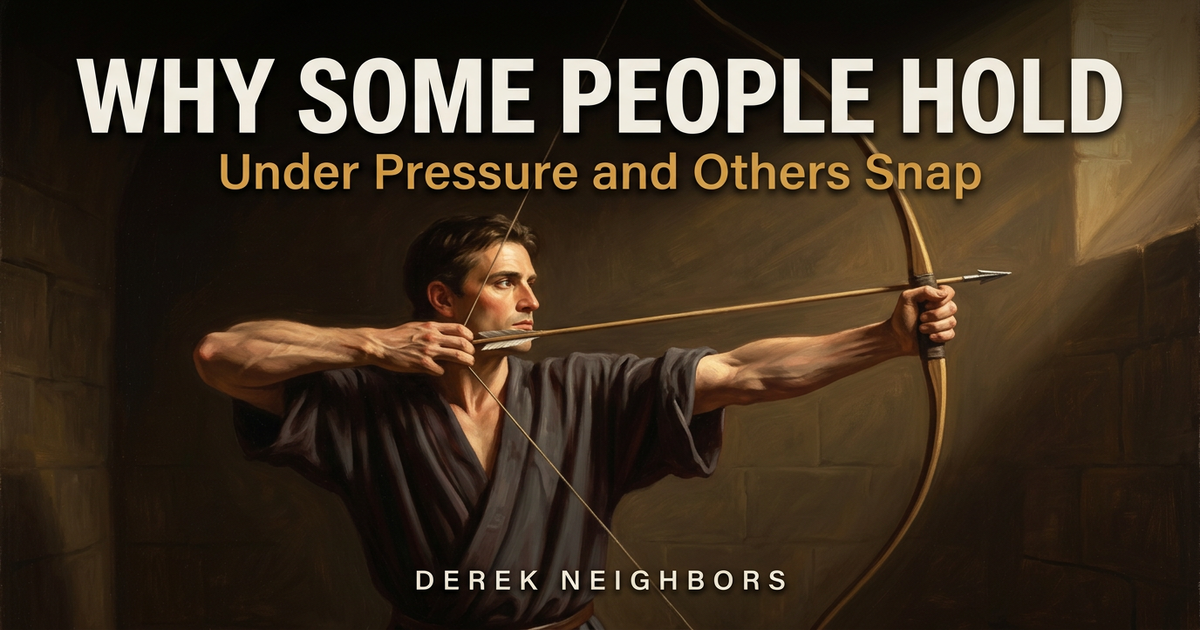
Two people take the same hit. One holds. One snaps. The usual story says the first one had more willpower, as if character were fuel in a tank you spend down until you run dry. That model cannot explain why the same person holds one month and folds the next, or why the toughest-looking people break first. The Stoics ran a better model. They thought character was held together by tension, the way a structure is, and they had a precise word for that tension: tonos. Strong distributed tension holds under load. Slackness collapses. Rigidity snaps. You do not rise to pressure. You fall to the tension you keep when nothing is testing you.
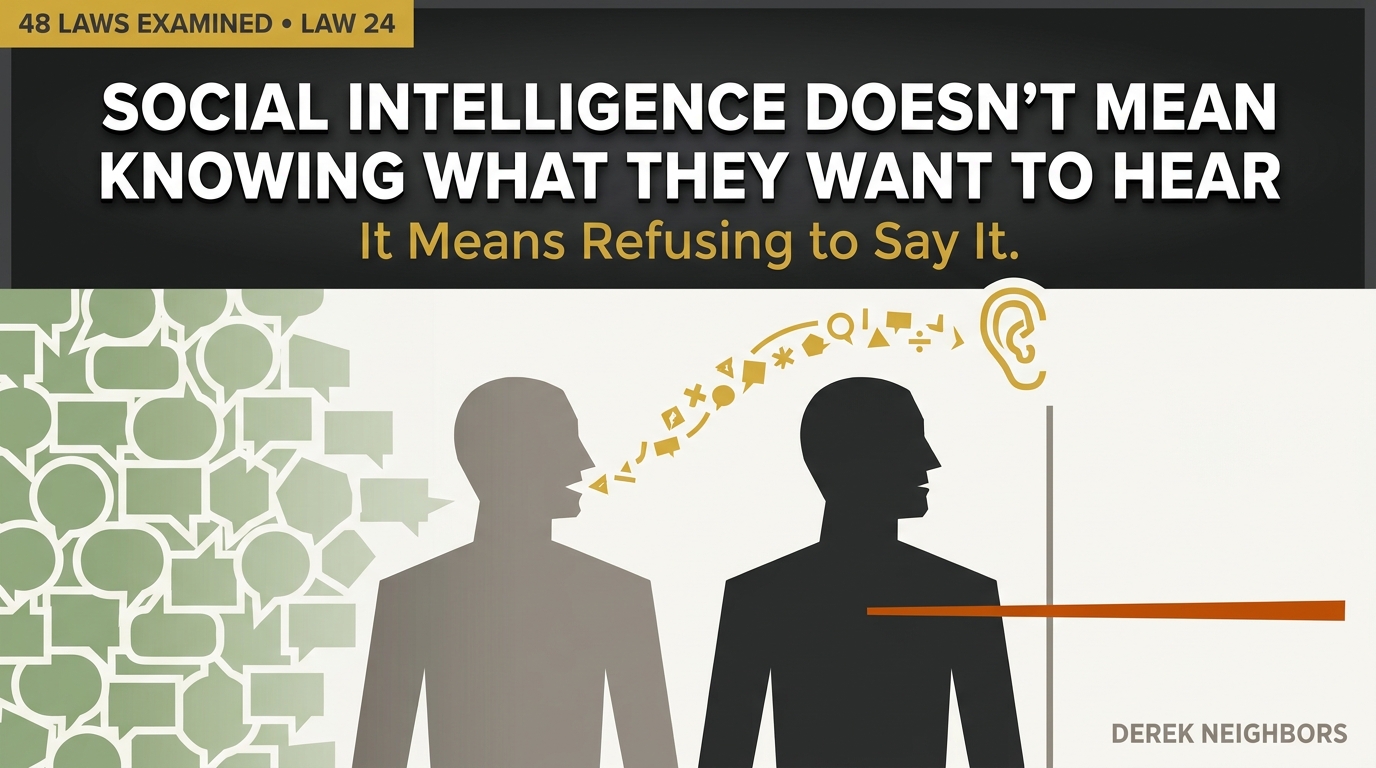
Law 24 tells you to become the perfect courtier: master indirection, flatter without obvious flattery, never deliver uncomfortable truths directly. The Greeks had a word for that kind of social facility. They called it kolakeia. They condemned it. Not because flattery fails tactically, but because it corrupts both the giver and the receiver. The alternative is charis: social grace rooted in genuine goodwill, deployed with the courage to say what needs to be said.
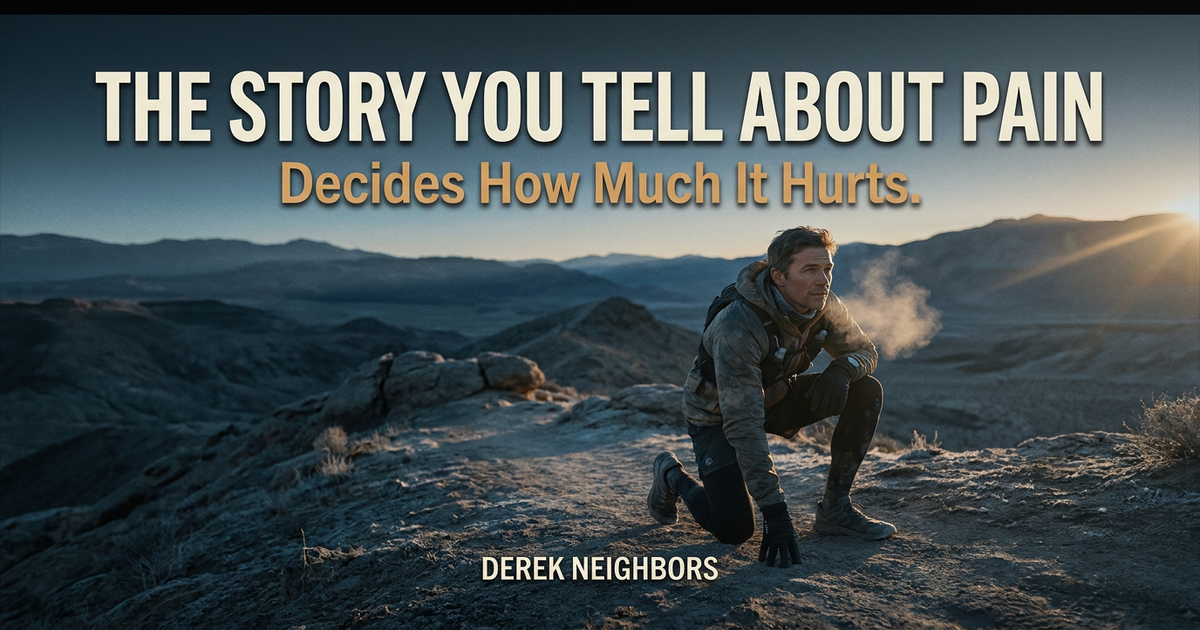
Two soldiers and two civilians take the same wound. The soldiers ask for less morphine. The injury is identical, so the difference is not in the tissue. It is in the meaning. Cicero spent a book on this, the Stoics built a whole practice around it, and modern pain science has now mapped the lever they were pulling. Pain has two parts: the signal the body sends and the story your mind wraps around it. The signal is mostly fixed. The story is not, and the story does most of the damage.
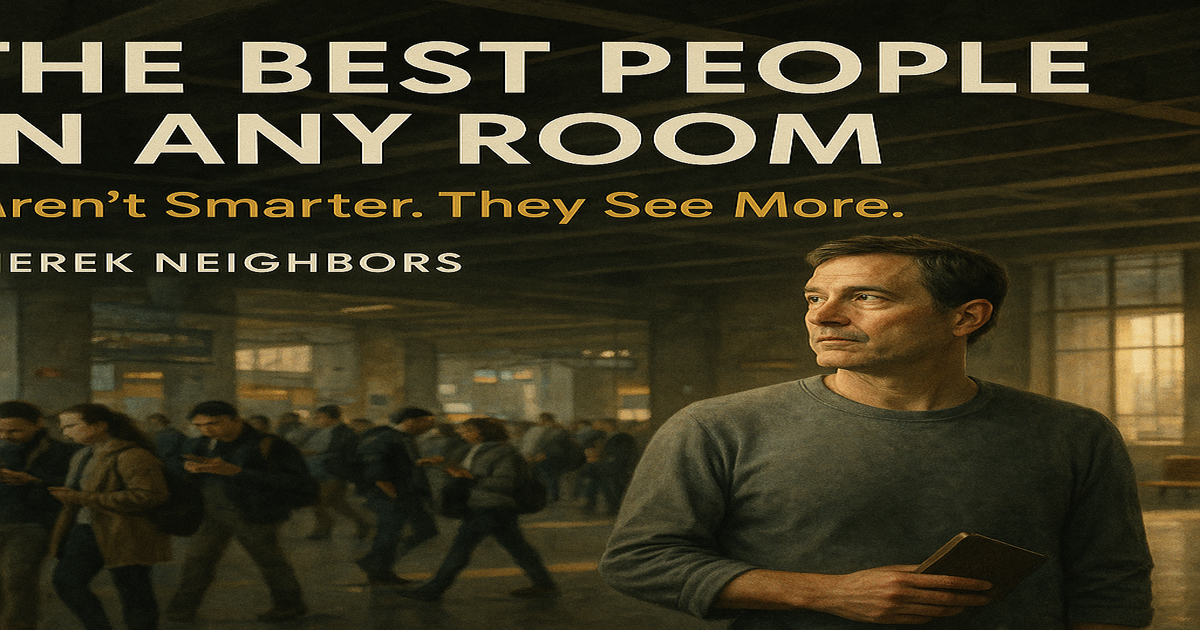
Sit beside a top performer for a week and the myth dies fast. They are not smarter, not faster, not better credentialed. They notice what everyone else walks past. The Stoics named the practice prosoche, sustained deliberate attention. The Greeks distinguished aisthesis (sense-perception) from theoria (patient contemplative seeing) because the territory was that important. Modern life trains the opposite: scan, scroll, miss. The rare few who deliberately train their eyes catch the early signal, draw gratitude from what is already in front of them, and exert quiet influence in rooms where everyone else is performing. This is a ninety-day curriculum.
The self-development industry treats you as a blank slate waiting for a better blueprint, so you keep importing other people's designs and calling it growth. The Greeks worked from the opposite premise. Pindar told his readers to become who they are, having learned it. The Stoics built a whole theory, oikeiosis, around development as progressive alignment with your own nature. Michelangelo said the figure already lives in the marble. The question isn't who you should become. It's who is already in the stone, and what has to come off.
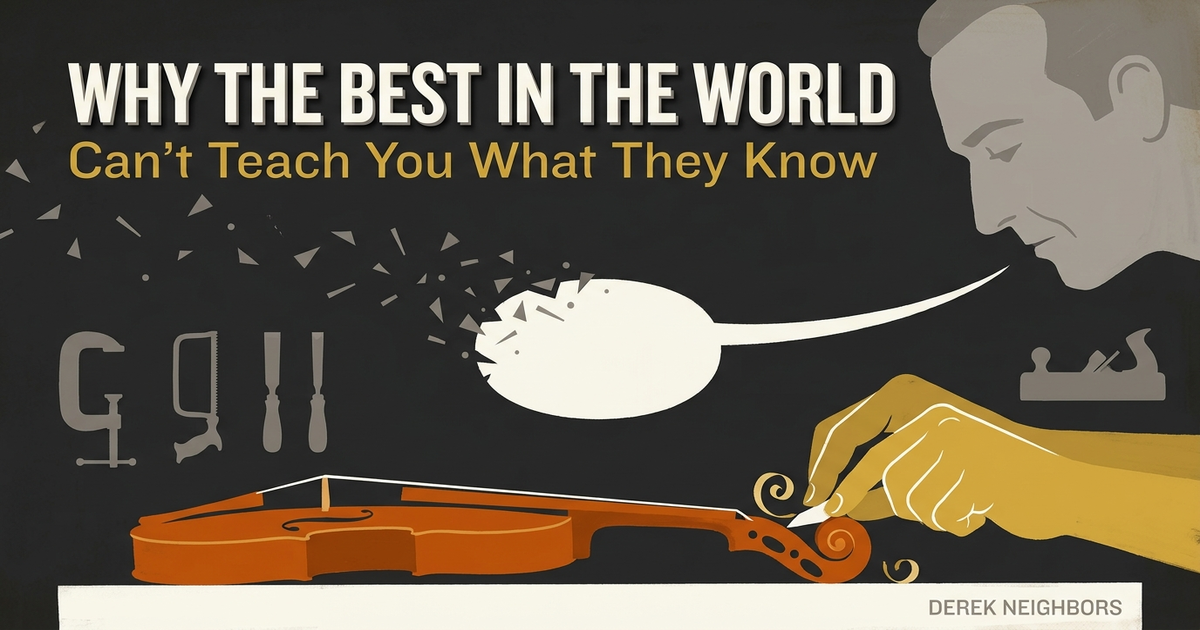
Ask the best performer in any field how they do it and you get a slogan. Trust your gut. See the ball, hit the ball. We assume they're hiding the secret or explaining it badly. The truth is stranger: fluent expertise erases its own steps as it compiles, so the master's explanation is a reconstruction by a narrator who no longer has access to the machinery. The Greeks called the unteachable knack empeiria. Modern research calls it tacit knowledge. Either way, the words are the least transferable thing a master has, and the people who learn fastest stop collecting answers and start watching hands.
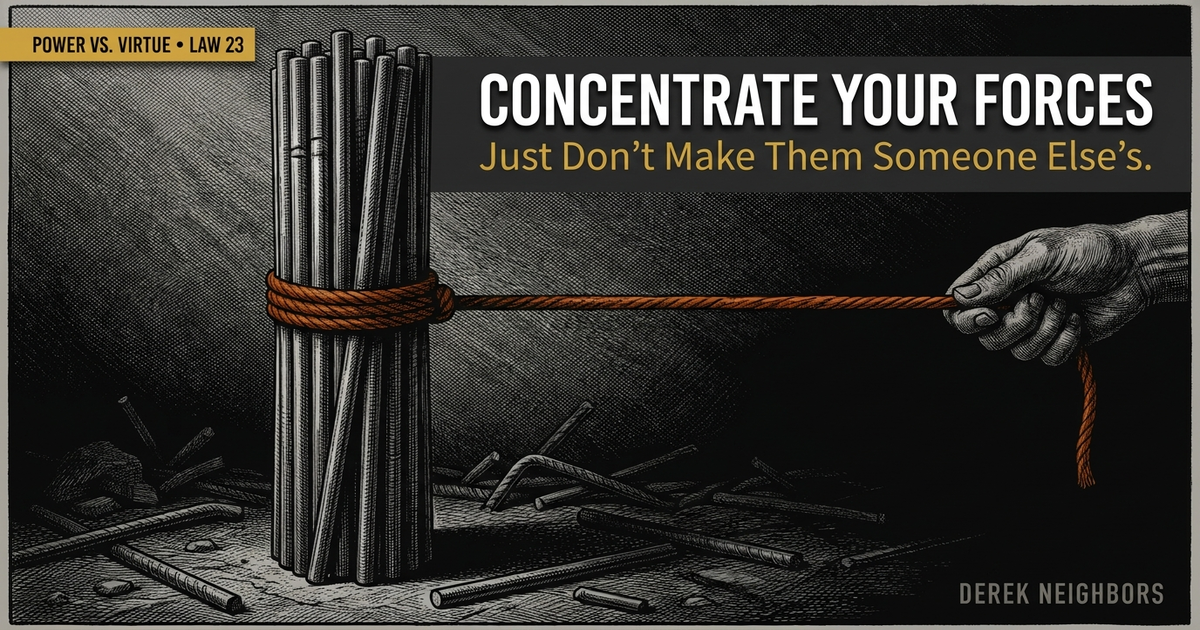
Greene's Law 23 welds two opposite ideas together. Concentrate your forces at their strongest point is some of the most virtue-aligned advice in the book. Find the one patron, the fat cow to milk, is the trap. Both feel like focus. One builds a foundation you own. The other lends your forces to a hand that can drop you.
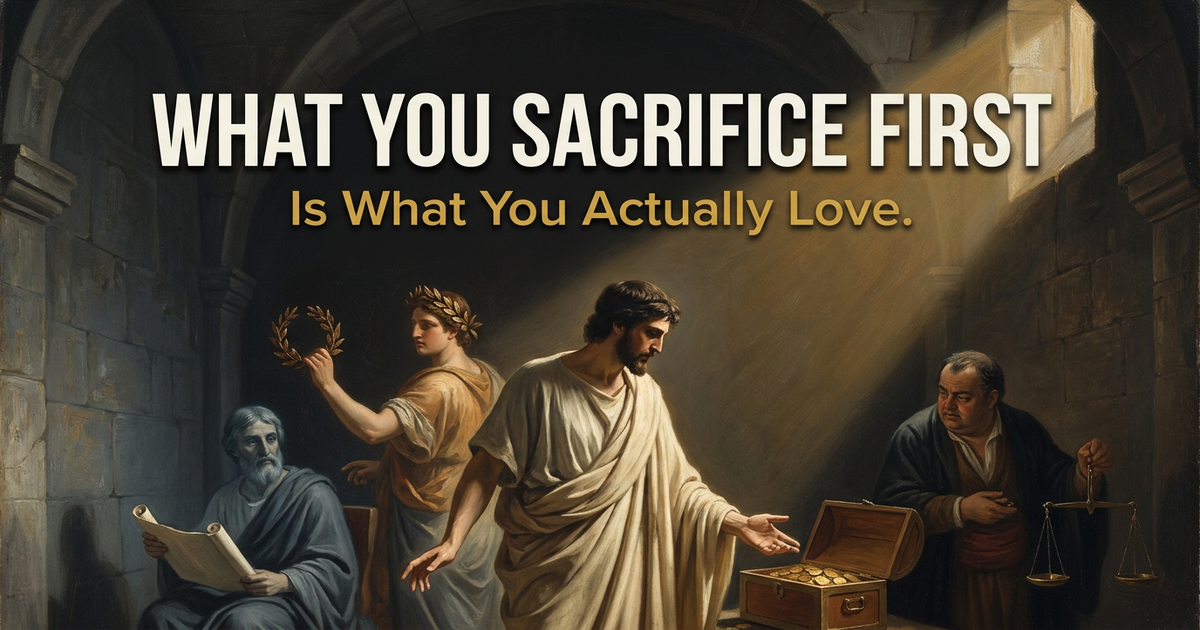
Most people believe they hold their values in balance: family, work, health, growth, all weighted more or less equally. Plato argued that nobody actually lives this way. Every soul is ordered by a single ruling love, and everything else gets ranked beneath it. The proof is not in what you claim to value. The proof is in what you sacrifice first when two of your loves collide, because the thing you protect last is the thing you actually love.
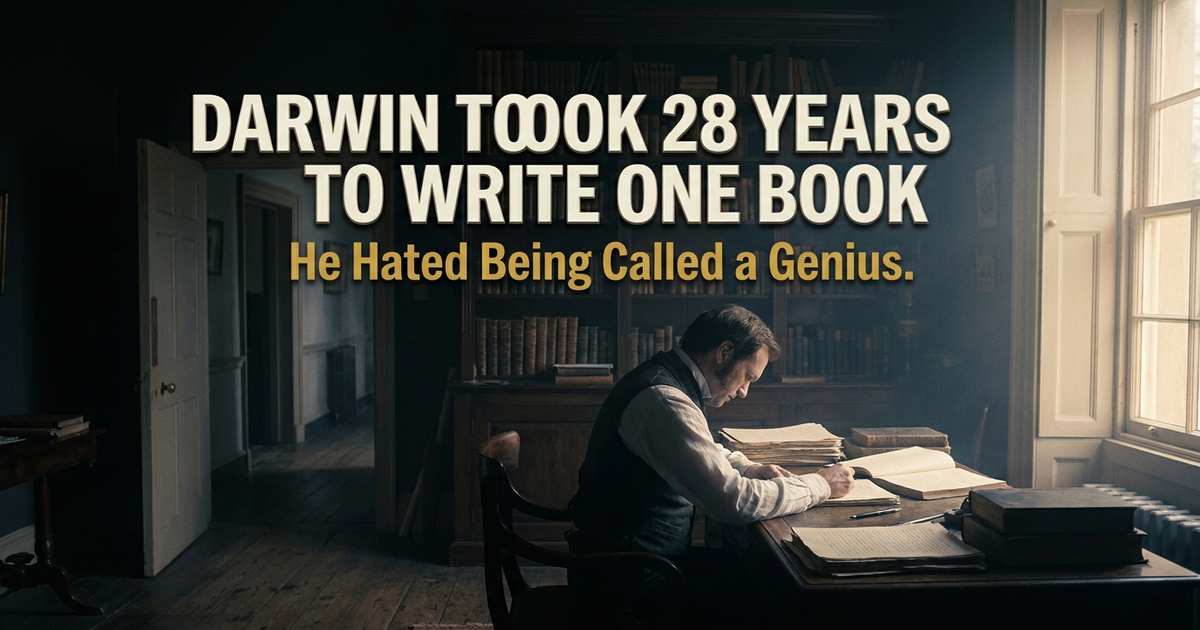
Charles Darwin spent twenty-eight years between the HMS Beagle's return in 1836 and the publication of On the Origin of Species in 1859. Eight of those years he spent classifying barnacles. He described himself in his autobiography as not a quick thinker or writer. The word the public eventually used for him was genius. He hated it. Genius is a hindsight label we paste onto a long, mostly invisible accumulation of patient daily work, and the lightning-bolt myth of insight survives because it lets the rest of us off the hook for not enduring the years of karteria, patient endurance, the actual builders endured.
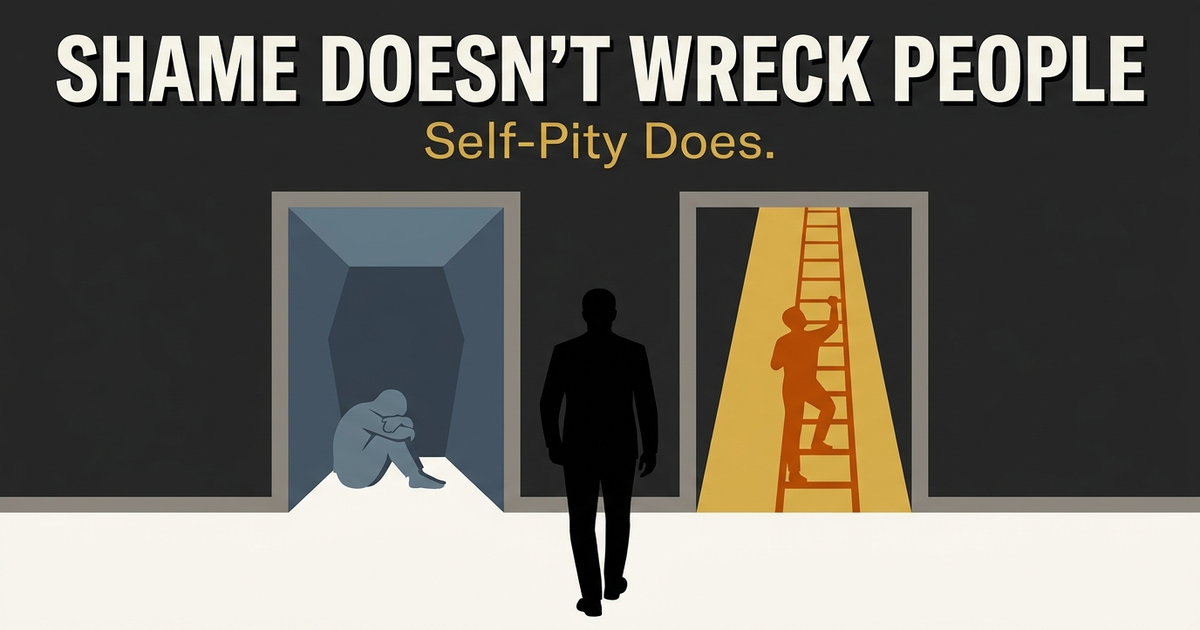
Shame is the recognition of the gap between who you are and who you wanted to be. The Greeks called it aidos and treated it as a moral faculty, not a wound to be silenced. The same shame, in two people facing the identical failure, produces two opposite trajectories. Self-pity sits in the gap and decorates it. Self-respect uses the gap as instruction. Most people pick the response that feels gentlest in the moment because the gentle one is the closer door. Decades later it turns out to be the most expensive door in their lives.
The retirement party promise was honest in the moment. The silence three months later is structural. Most workplace bonds rest on four scaffolds that disappear the day the project does, and the bitterness most leaders carry into their late careers comes from expecting utility friendships to behave like virtue friendships. Aristotle mapped three kinds of philia 2,400 years ago. The leadership move is to know which kind you have, identify the one or two candidates for the third kind, and invest on purpose outside the project's calendar.
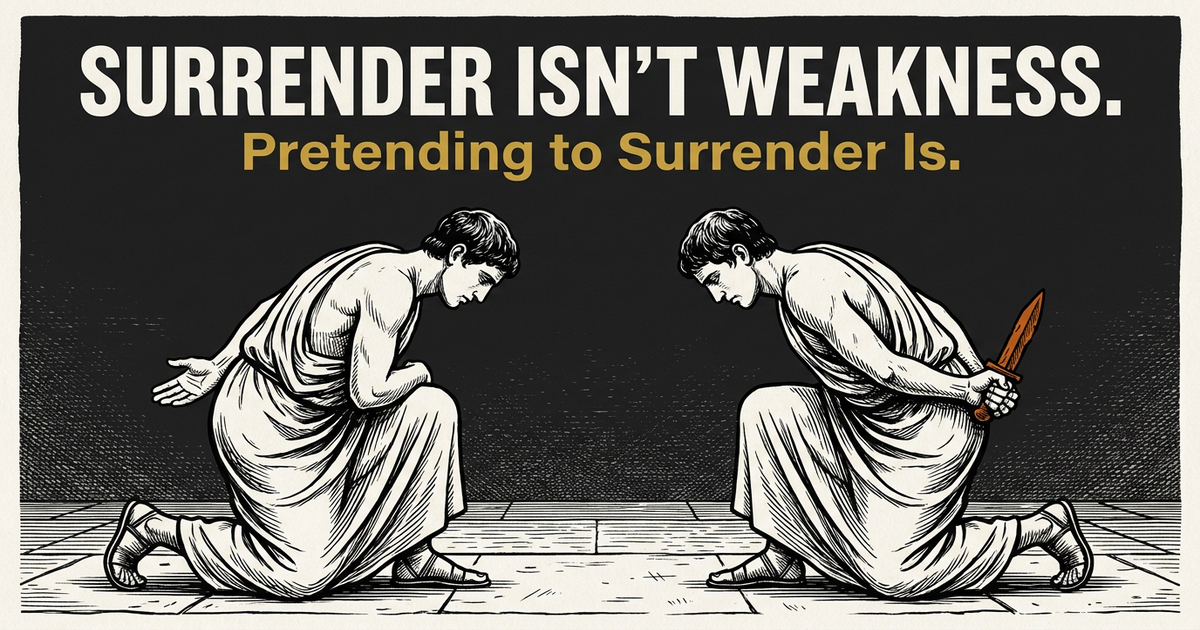
Greene's Law 22 tells you to surrender as a counter-trap. The tactic is real, and the Stoics knew the moves it copies. But Marcus Aurelius yielded to preserve his prohairesis. Greene's reader yields to spring an ambush. The heads can look identical; the ends diverge. The test that separates them is whether you could name, out loud, what you yielded for.
We have engineered constraint out of ordinary days and cannot understand why ordinary days no longer move us. The ancient world knew the answer. They built deliberate practices around removing inputs, not adding them. The Sabbath was an amputation. Askēsis was training. Autarkeia was the freedom of needing less. This is the protocol for a thirty-day voluntary sabbath that gets the meaning back into the small things you have stopped noticing.
The popular picture of Stoicism is a man who feels nothing at the funeral. The philosopher who wrote the manual on composure buried a close friend and wept past all reason, then admitted it in writing. What the Stoics actually taught about loss is harder than numbness and harder than wallowing, and it turns on one distinction almost nobody makes.
Greene's Law 21 tells you to play the fool so your marks lower their guard. The tactic is real. The Greeks invented it. But Socrates played dumb to make people wiser, and Greene plays dumb to make people poorer. The mask is identical. The cost of running the wrong one is that you eventually cannot take it off.
The next milestone always arrives on schedule, but the person it was supposed to arrive for has already moved on to the next pursuit. The engine producing your wins is the engine evicting you from the life they were meant to build. The paradox is structural, not personal, and most ambitious people have been paying for it for decades without noticing the bill.
Greene's Law 20 sounds like freedom. Refuse to commit. Stay above the fight. Keep your options open. Run it as your default operating system for a few years and watch what stops happening to you. The Greeks called the resulting condition by a different name.
A team that always agrees with you is not aligned. It has been worn down. Most leaders are quietly running a sophistic operation, training reciters when they think they are developing thinkers. The Socratic test still applies, and most modern leaders fail it.
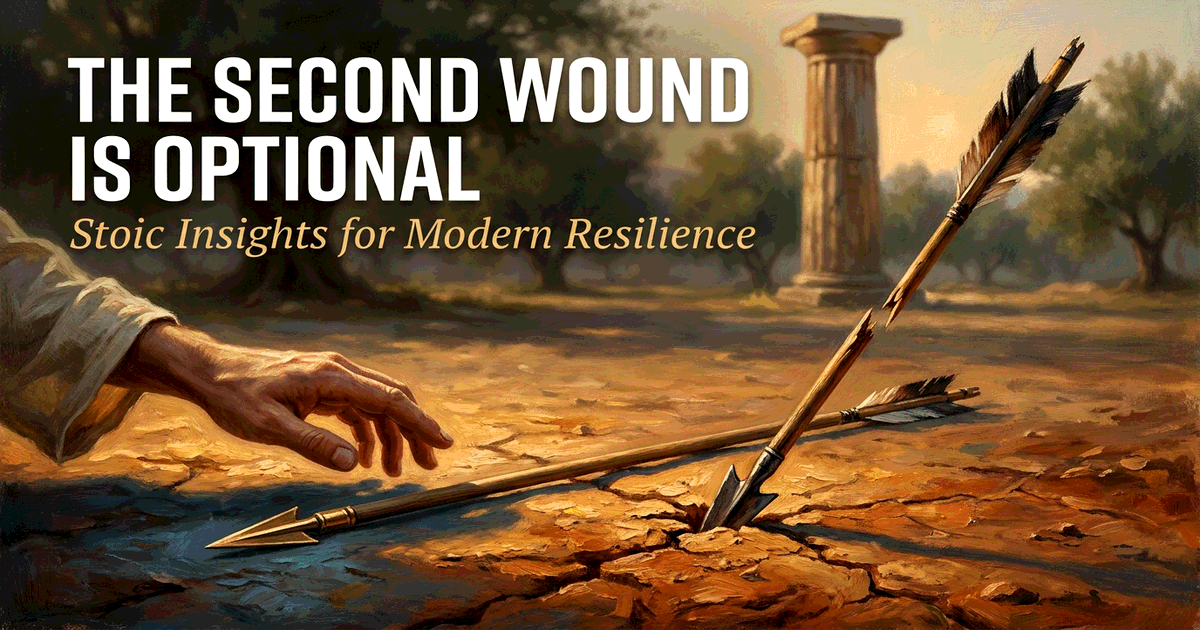
Falls are not optional. Bitterness is. The first injury is something done to you. The second is the one you carry forward for years, every day, by choice. Ancient wisdom on the wound that is genuinely yours to refuse.
Greene says study people before you act, and never offend the wrong one. Run that as your operating system for a few years and watch what it does to your honesty. The Greeks had a sharper answer.
The hardship that felt like a disadvantage was the only education that holds up under pressure. Privilege has an expiration date. Formation does not.
Most people try to engineer their lives down to zero pressure. The Stoics tried something harder. They trained the response so the pressure stopped being decisive.
You left the job four years ago. The wiring didn't leave with it. Calm feels suspicious. Rest feels like falling behind. You manufacture deadlines that don't exist. Drive doesn't explain that. Years of corporate conditioning do.
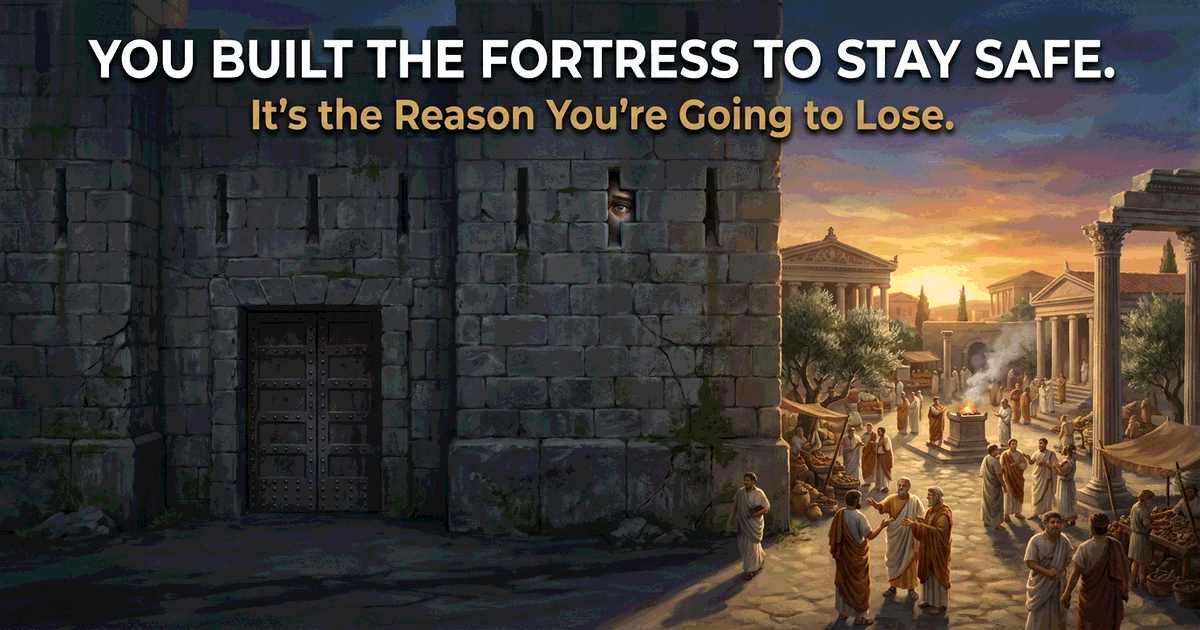
Greene says don't build fortresses because they make you a target. The Greeks had a deeper warning: humans were never built for life behind walls. The word for someone who isolated was idiotes.
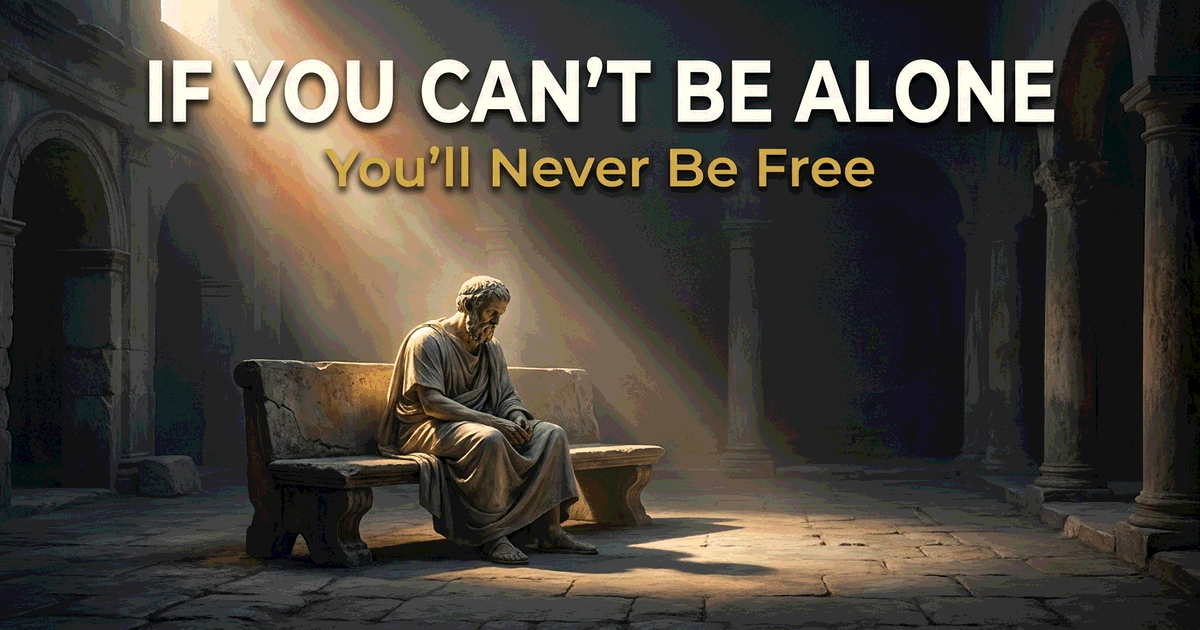
Most people skip the foundation and wonder why their freedom feels so hollow. Schopenhauer named the prerequisite. The Greeks named the practice. You have been arranging your life to avoid both.
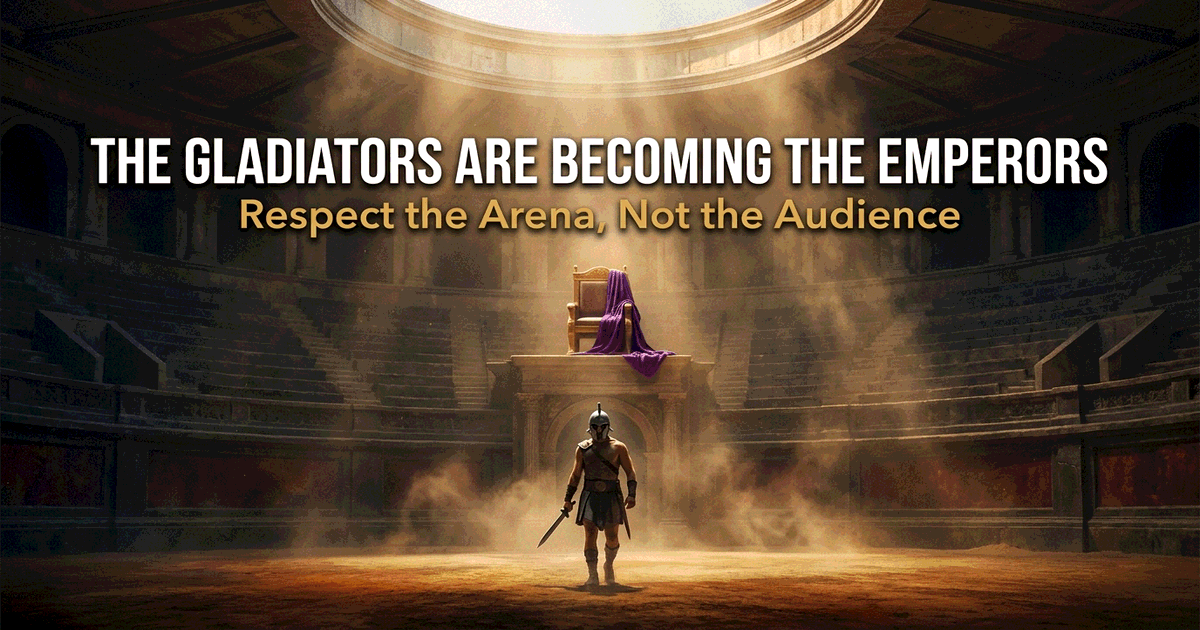
Last week the Daily Stoic guy lost his composure on YouTube because Ivanka Trump praised Marcus Aurelius. The same week, SpaceX offered sixty billion dollars for a company whose 25-year-old CEO does every podcast himself. These are the same story.
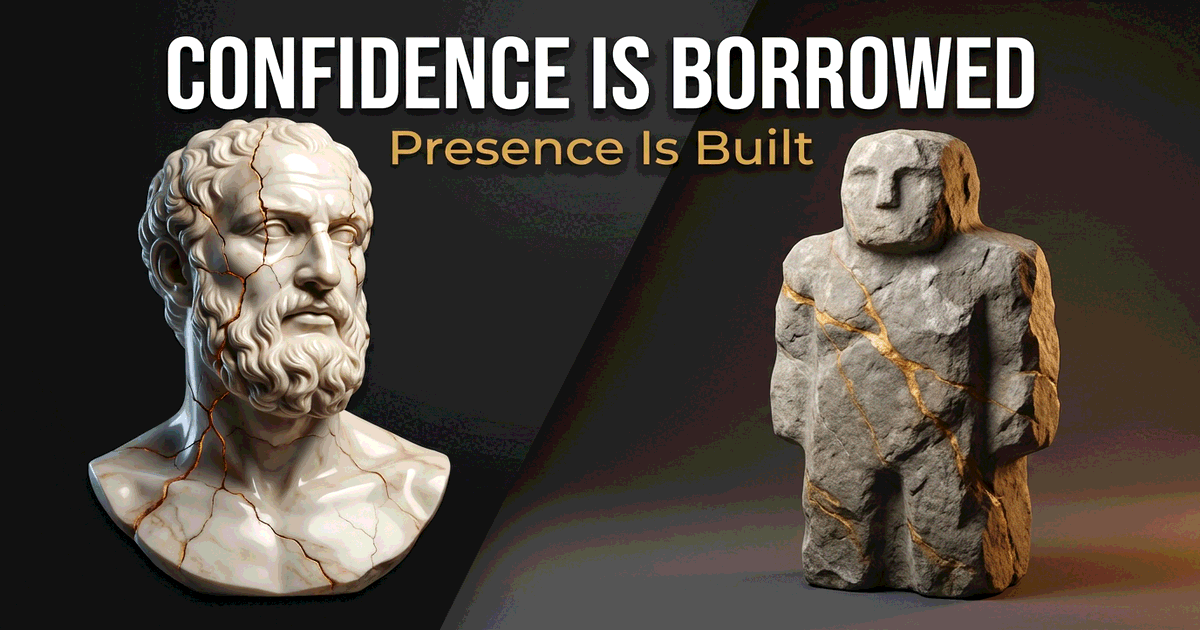
The confidence industry sells you something that expires. The Greeks pursued something better: the capacity to be fully here regardless of what happens next.
Law 17 says keep others in suspended terror through unpredictability. The Greeks had a name for leaders who ruled through fear: tyrants. And they had a clear record of how every tyranny ends.
Comfort culture has convinced you that if something feels hard, you're doing it wrong. The Greeks built an entire civilization on the opposite idea. Struggle isn't the obstacle. It's the signal.
Law 16 says use absence to increase respect. The Stoics practiced withdrawal too, but for a completely different reason. One builds depth. The other builds delusion.
We talk about untapped potential like it's a savings account, sitting there earning interest while you figure things out. Aristotle had a different word for it. And his version has an expiration date.
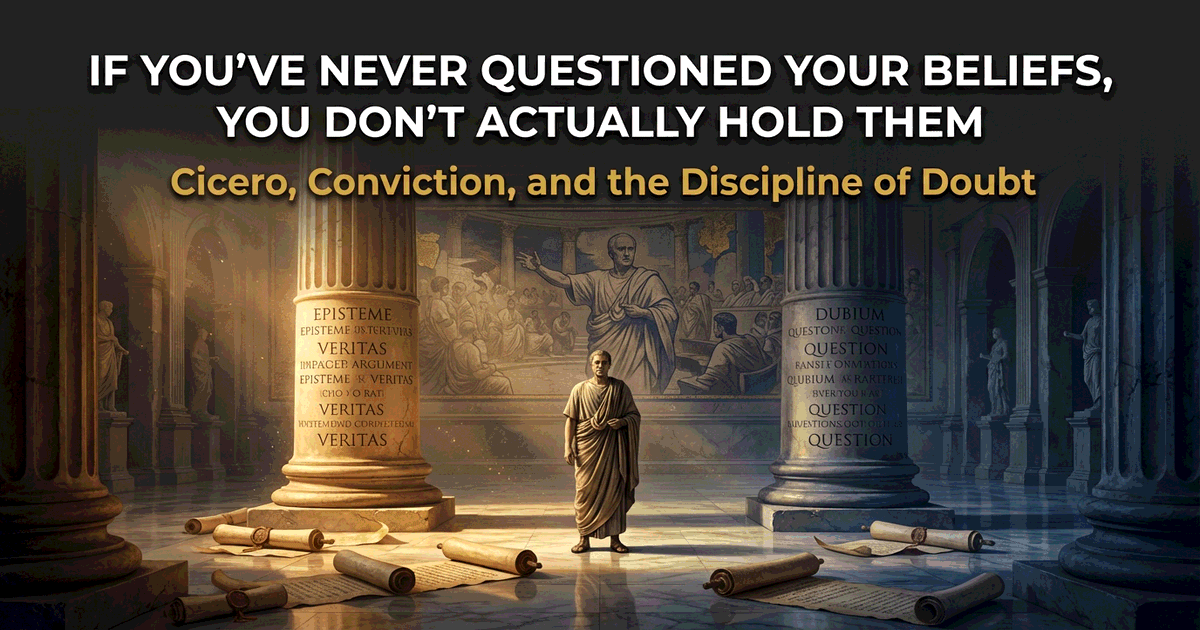
Cicero's Academic Skeptics didn't doubt because they were weak. They doubted because they understood something about conviction that most people never will. Unexamined certainty disguises itself as strength while producing the brittleness that shatters under the first real challenge.
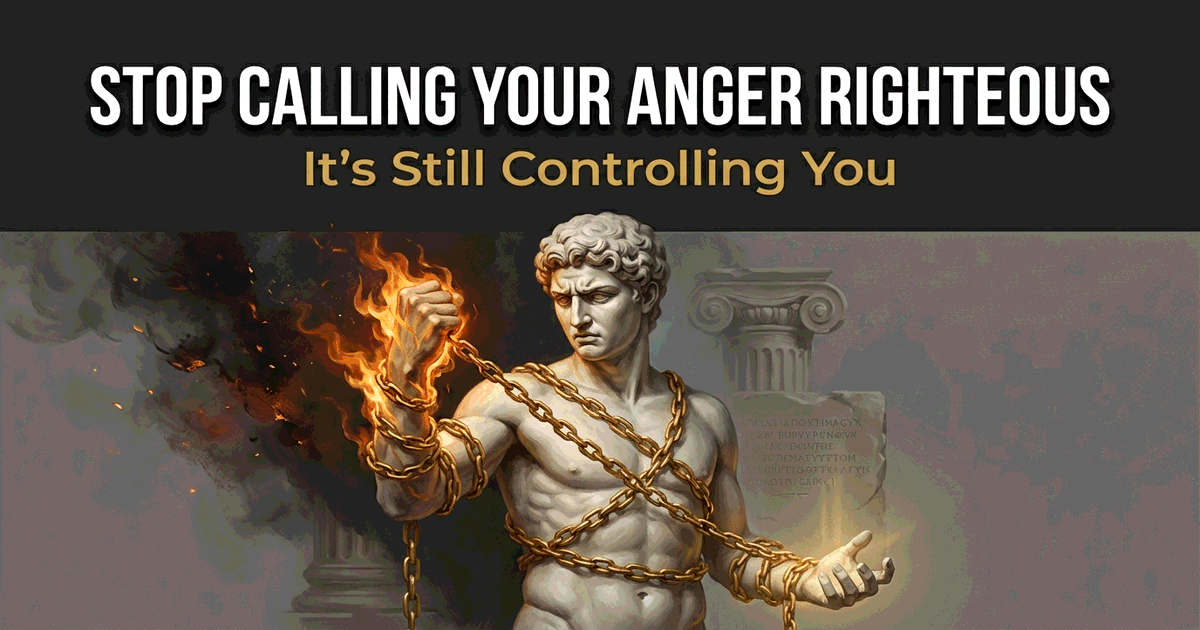
Marcus Aurelius argued that kindness requires more courage than fury. The Stoics rejected righteous anger as philosophy's most dangerous illusion, and modern neuroscience proves them right.
Preparation is the most sophisticated form of procrastination. It feels productive. It looks responsible. And it keeps you exactly where you are.
You tell yourself the backup plan is smart, responsible, prudent. The Stoics knew better. Prohairesis, moral choice, is singular by nature. Every escape route you build is a promise to yourself that when things get hard enough, you'll quit.
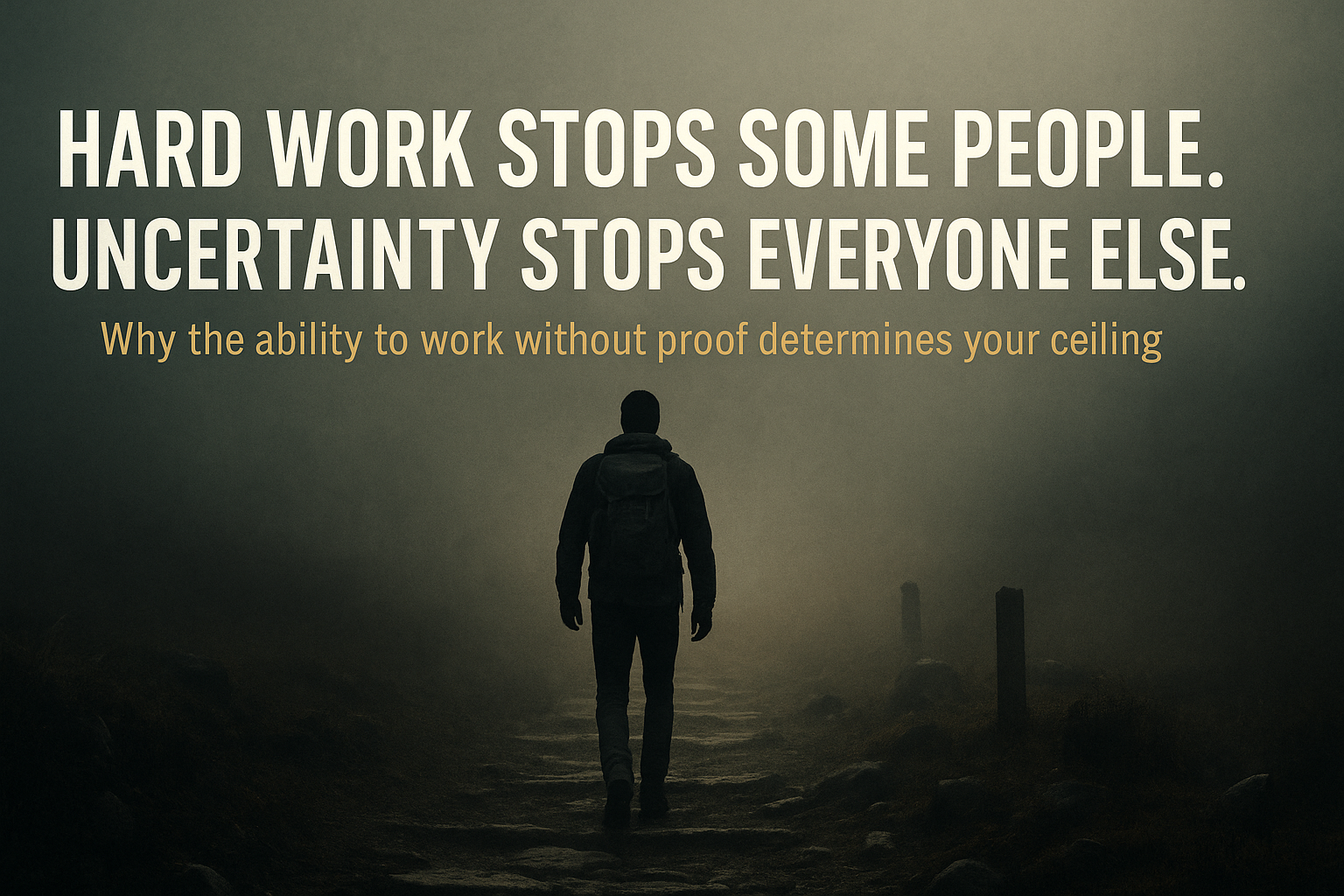
Andy Weir posted chapters of The Martian to his blog for 10 years. 3,000 readers. No validation. No proof it mattered. Then the breakthrough. The separator isn't talent or work ethic, it's tolerance for uncertainty.
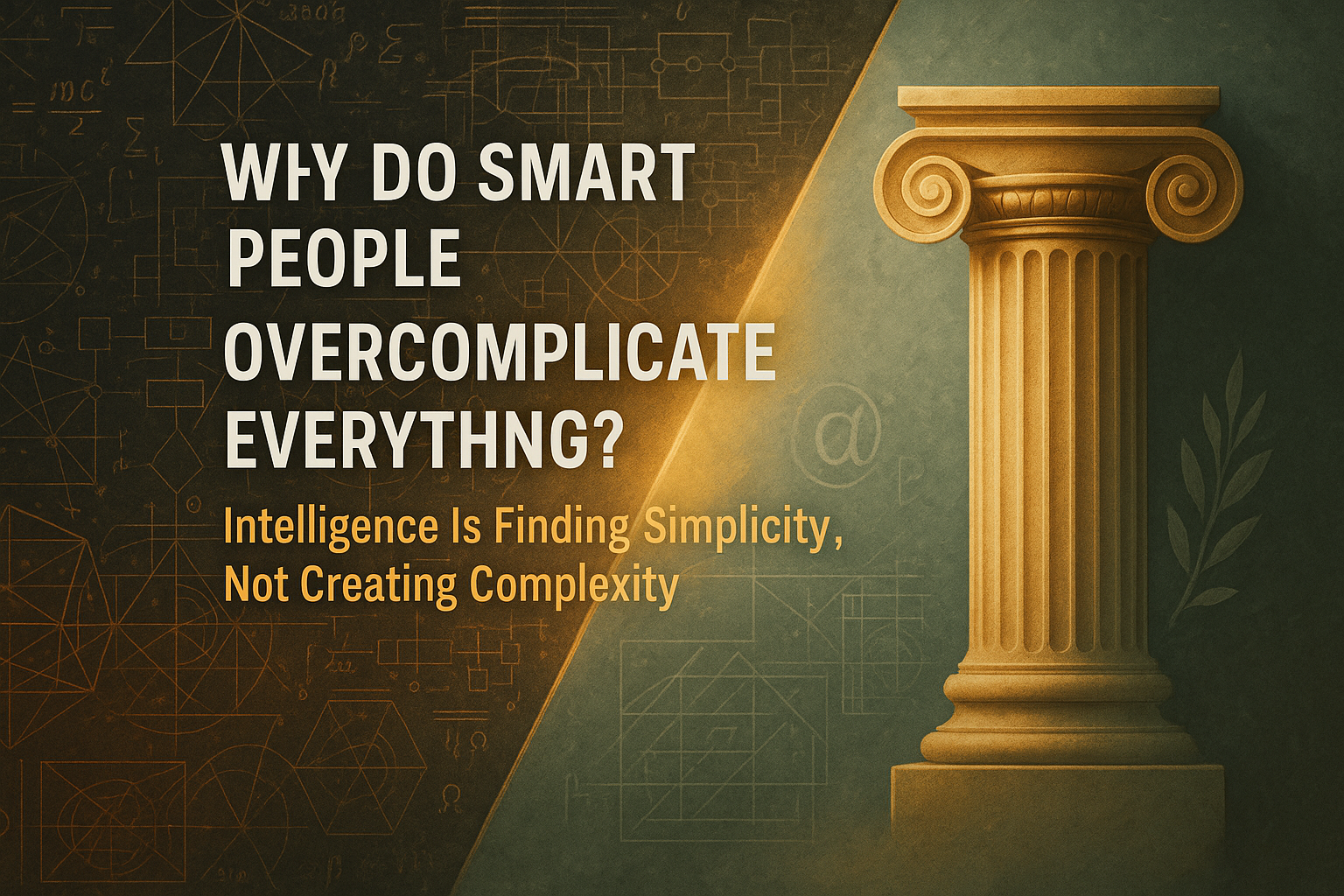
The Greeks understood something we've forgotten, true wisdom reveals itself through simplicity, not complexity. Intelligence is finding the simple truth, not creating elaborate frameworks.
The ancient Greeks understood something we've forgotten—every difficulty is training when you ask the right question. The shift from 'why me?' to 'what's this teaching?' changes everything.
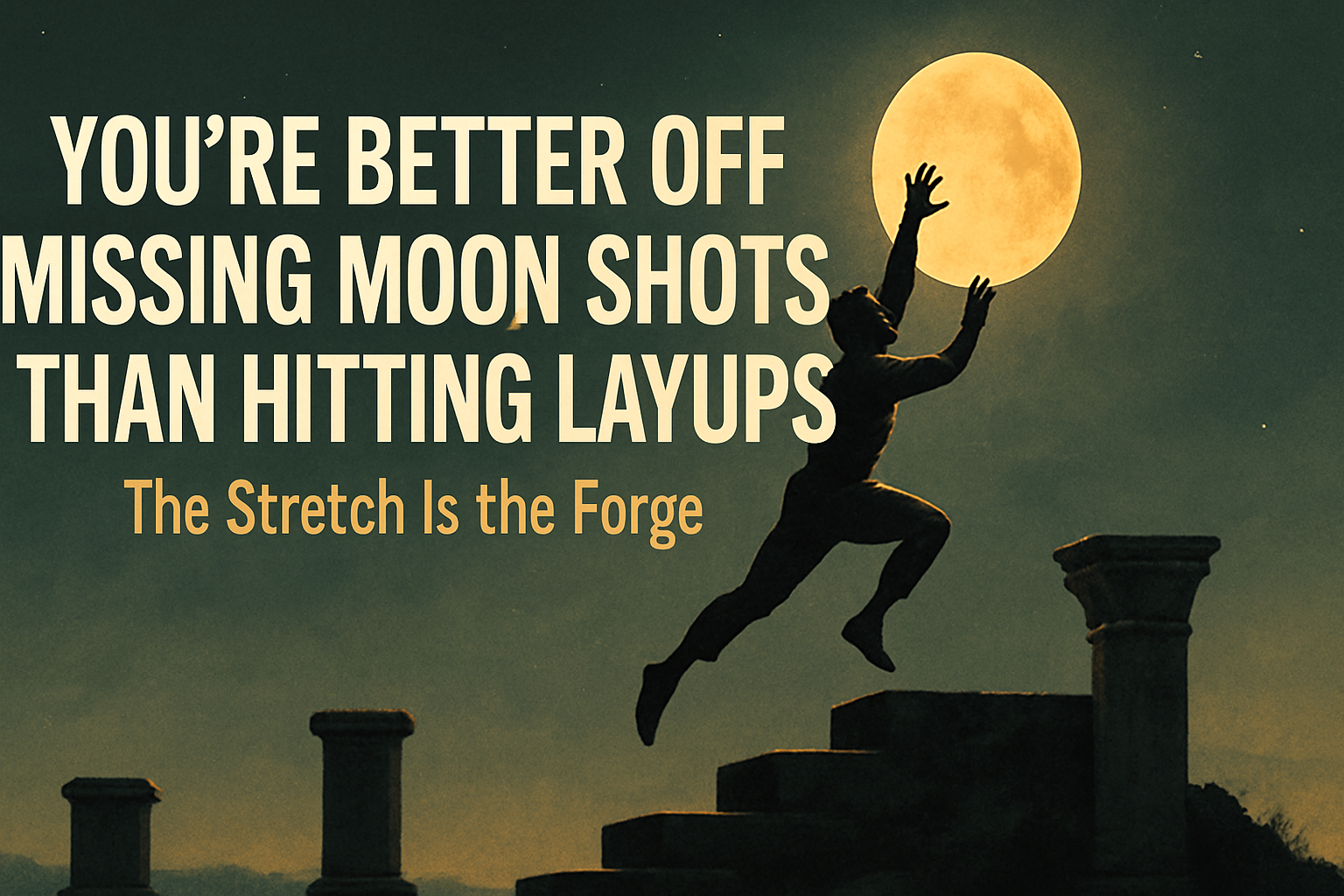
You think success is about the win. It's actually about what the attempt makes you become. The goals you miss build more character than the ones you hit.
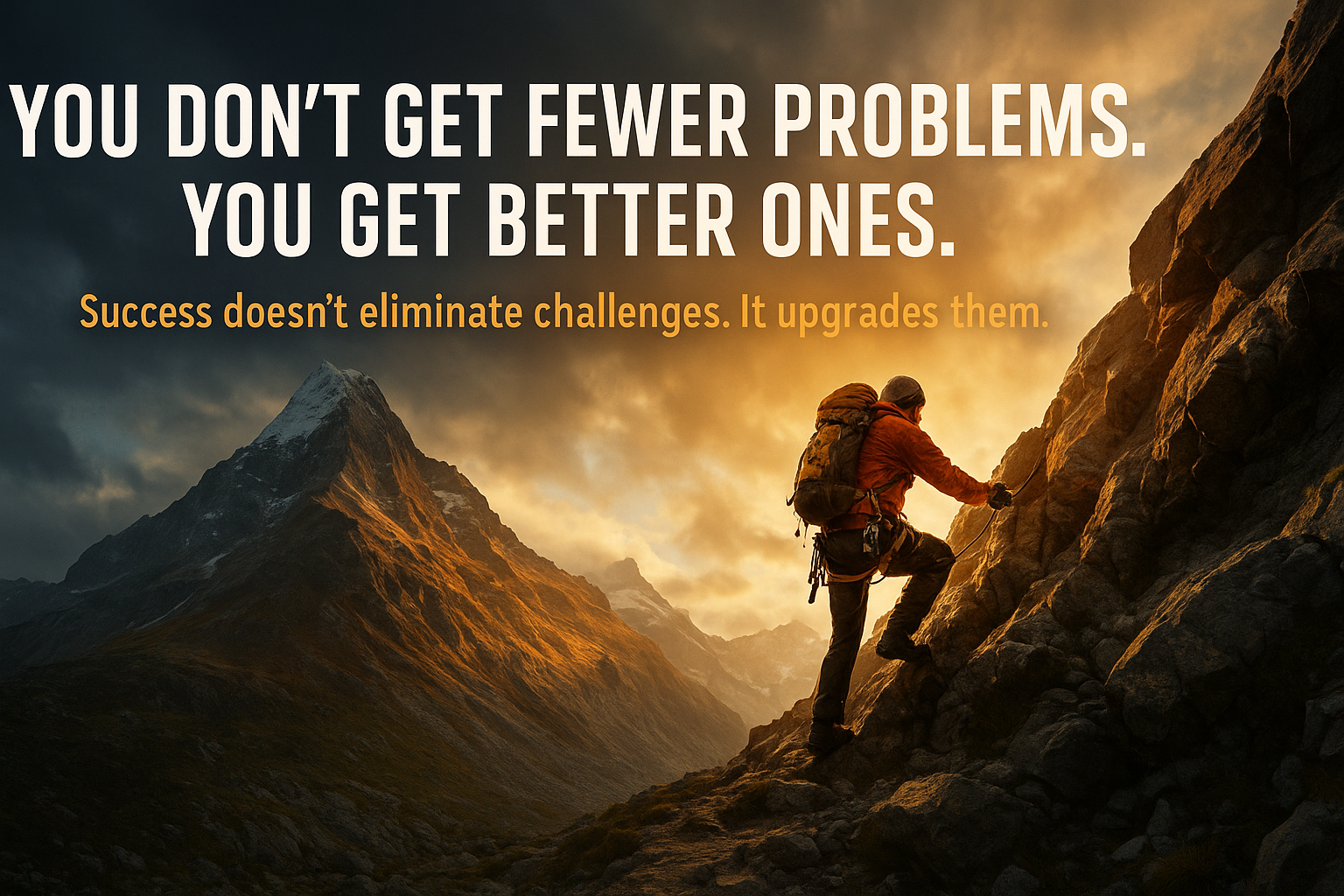
Your problems aren't proof you're failing. They're proof of where you've climbed. Each level of success doesn't reduce difficulty, it upgrades it.
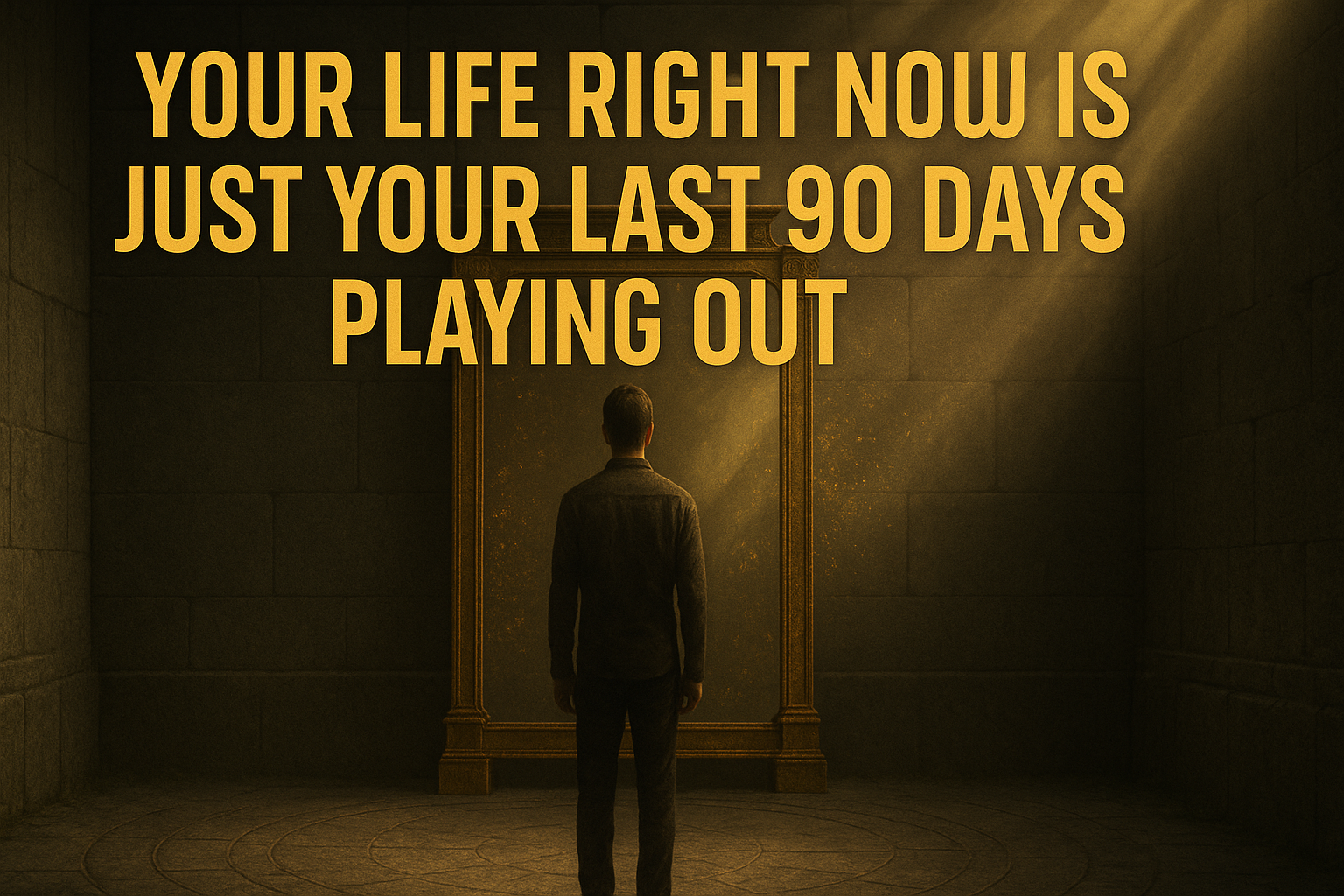
Your fitness, your bank account, your relationships, your opportunities right now aren't revealing your identity. They're showing you what you've been doing for the past 30-90 days. That's not philosophy. That's physics.
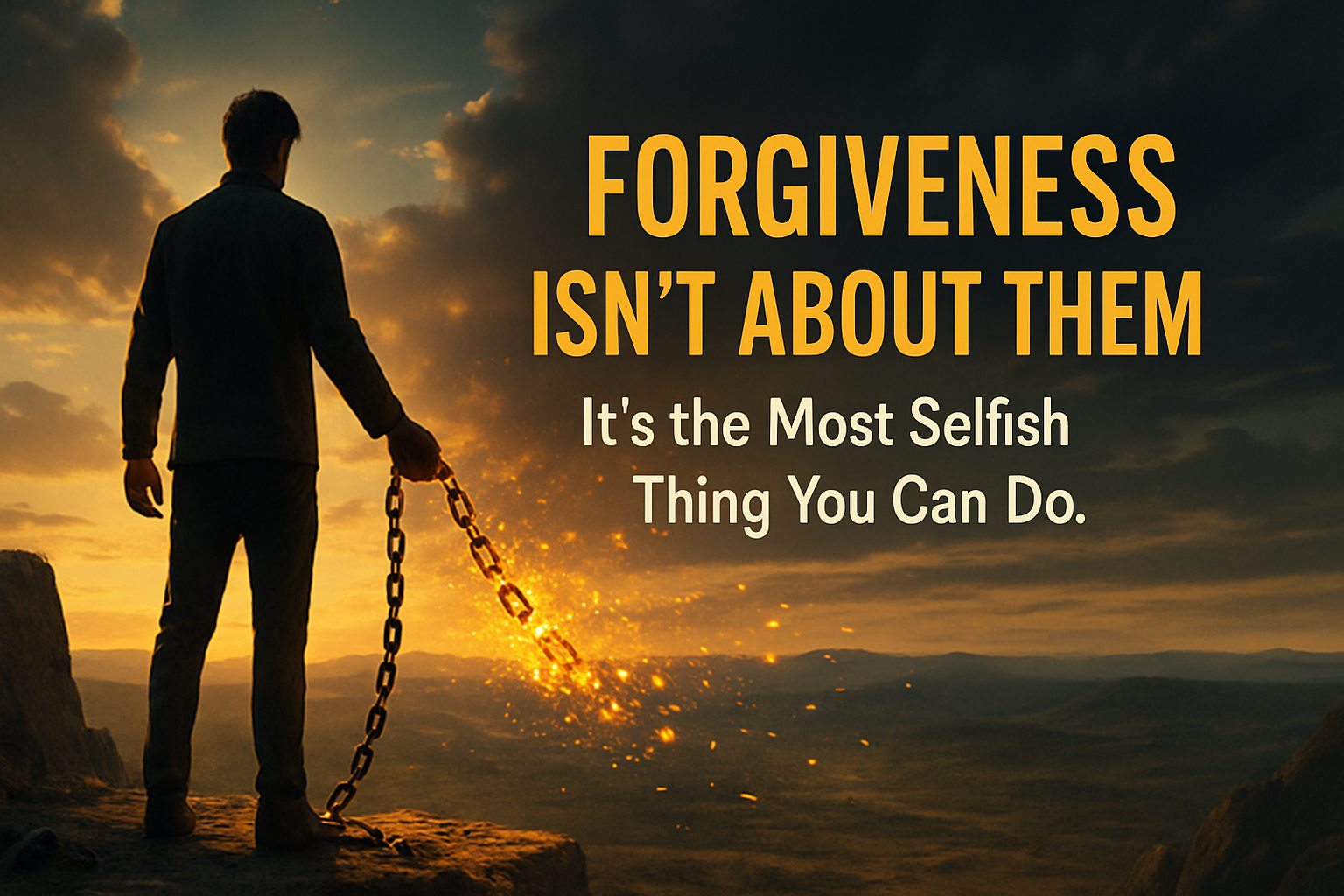
Every minute you spend resenting someone is energy you're not using to build your life. The Stoics knew what we forgot: forgiveness releases you from the prison, not them from consequences.
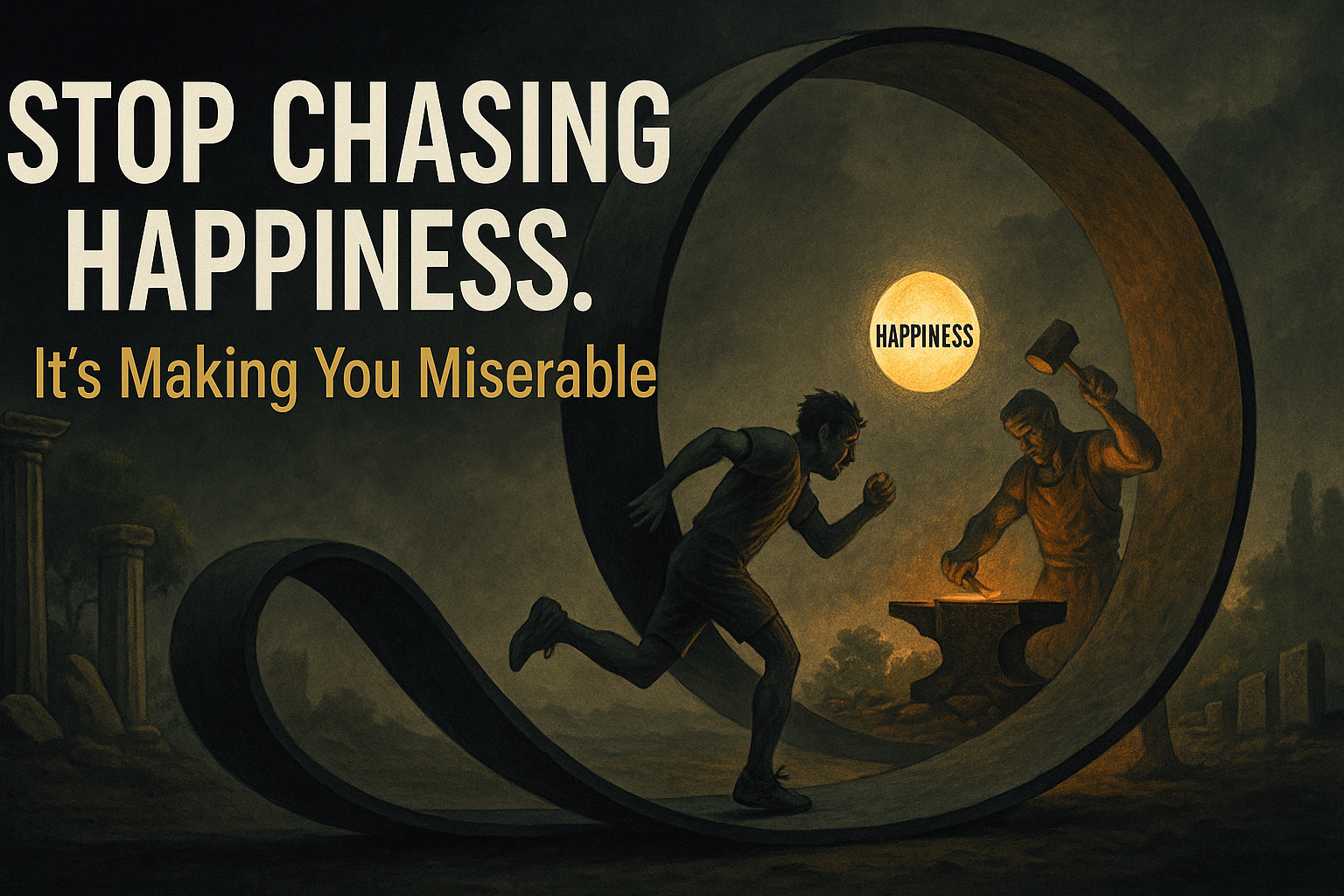
The more directly you pursue happiness, the more it evades you. Kant knew what we forgot: happiness only arrives as a byproduct of living virtuously, not as a target to optimize for.
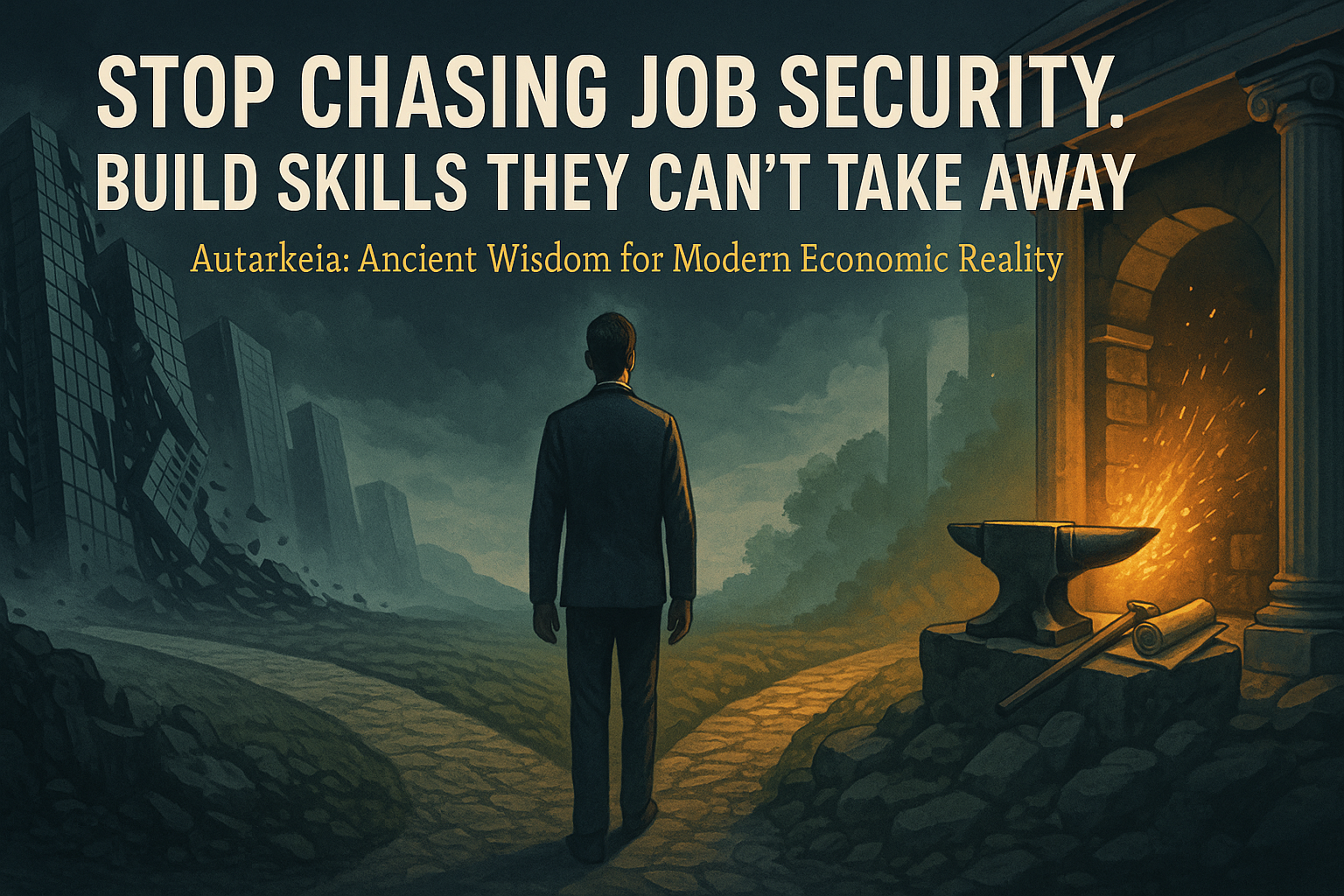
Job security is dead. The people who recover fastest from layoffs aren't the ones with the best titles, they're the ones who built skills that travel. Here's what autarkeia teaches us about real security.
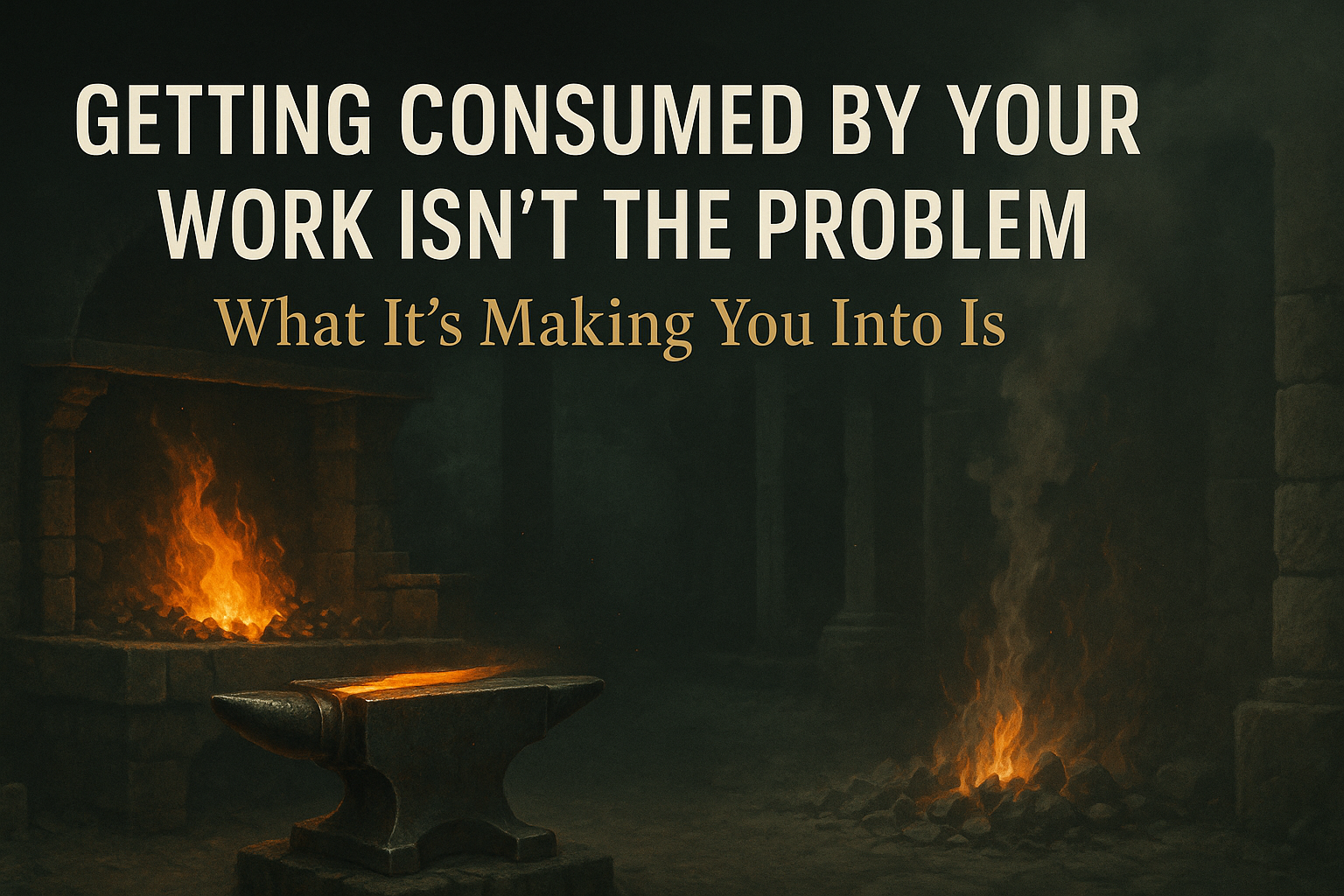
Work-life balance won't save you from being consumed. Everything significant consumes you. The question isn't whether work will consume you, but what you're becoming through that consumption. Choose the fire that forges you.
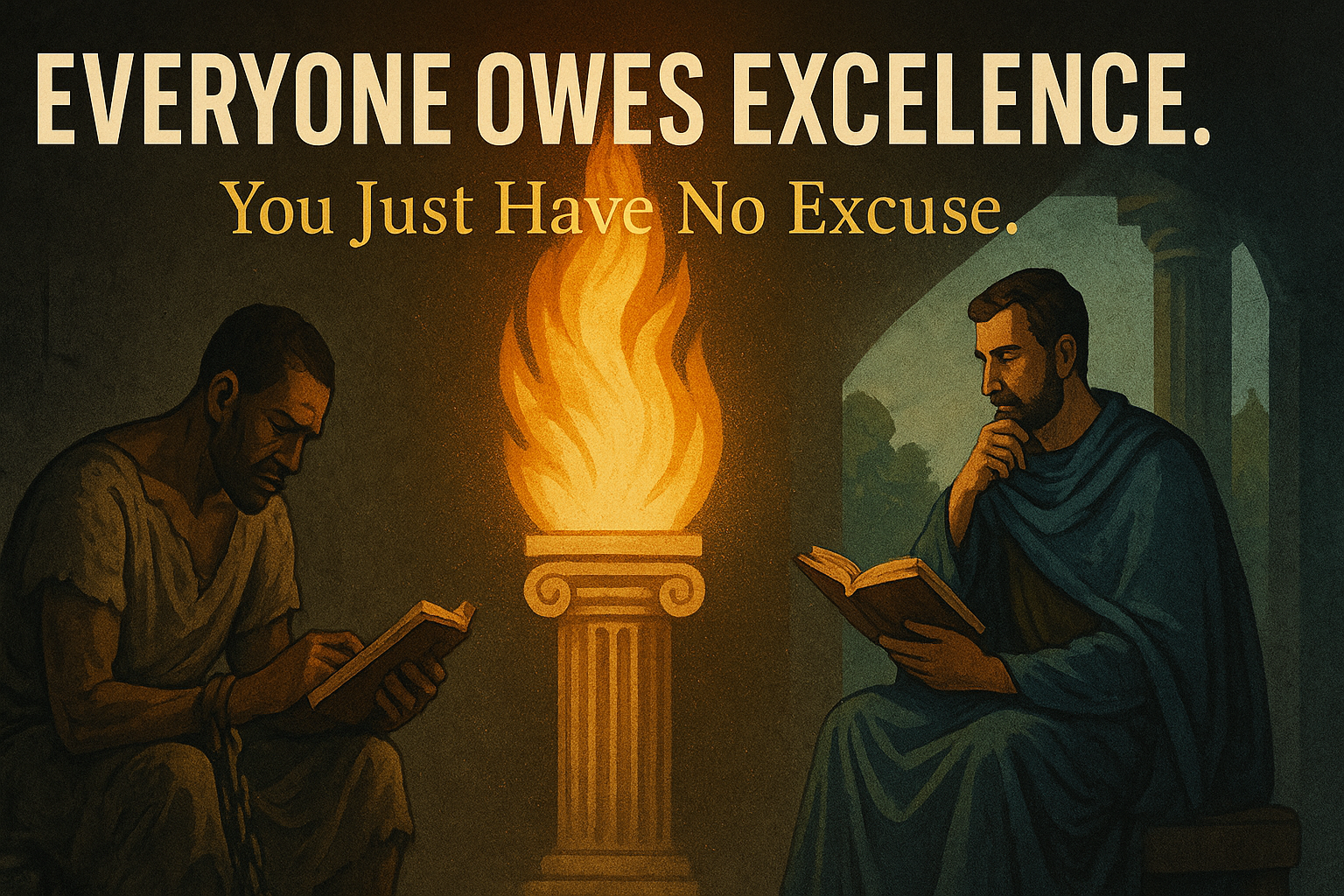
Epictetus was a slave and chose philosophy. Marcus Aurelius was emperor and chose duty. Excellence is owed regardless of circumstances. Your advantages don't create the obligation. They just eliminate every excuse for avoiding it.
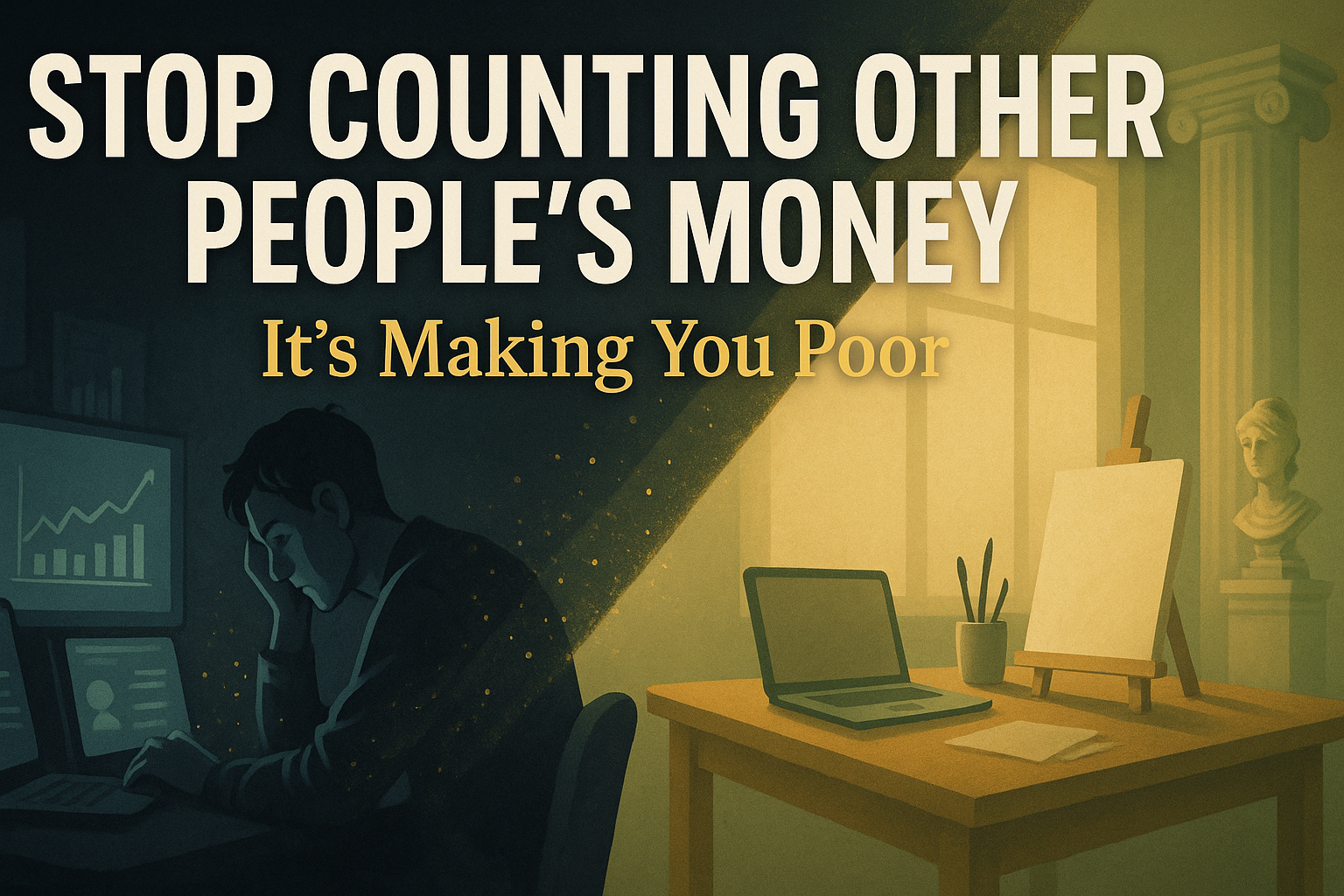
Every moment you spend obsessing over others' achievements is a moment not creating your own. Envy doesn't just feel bad, it actively steals the fuel you need for your own work.
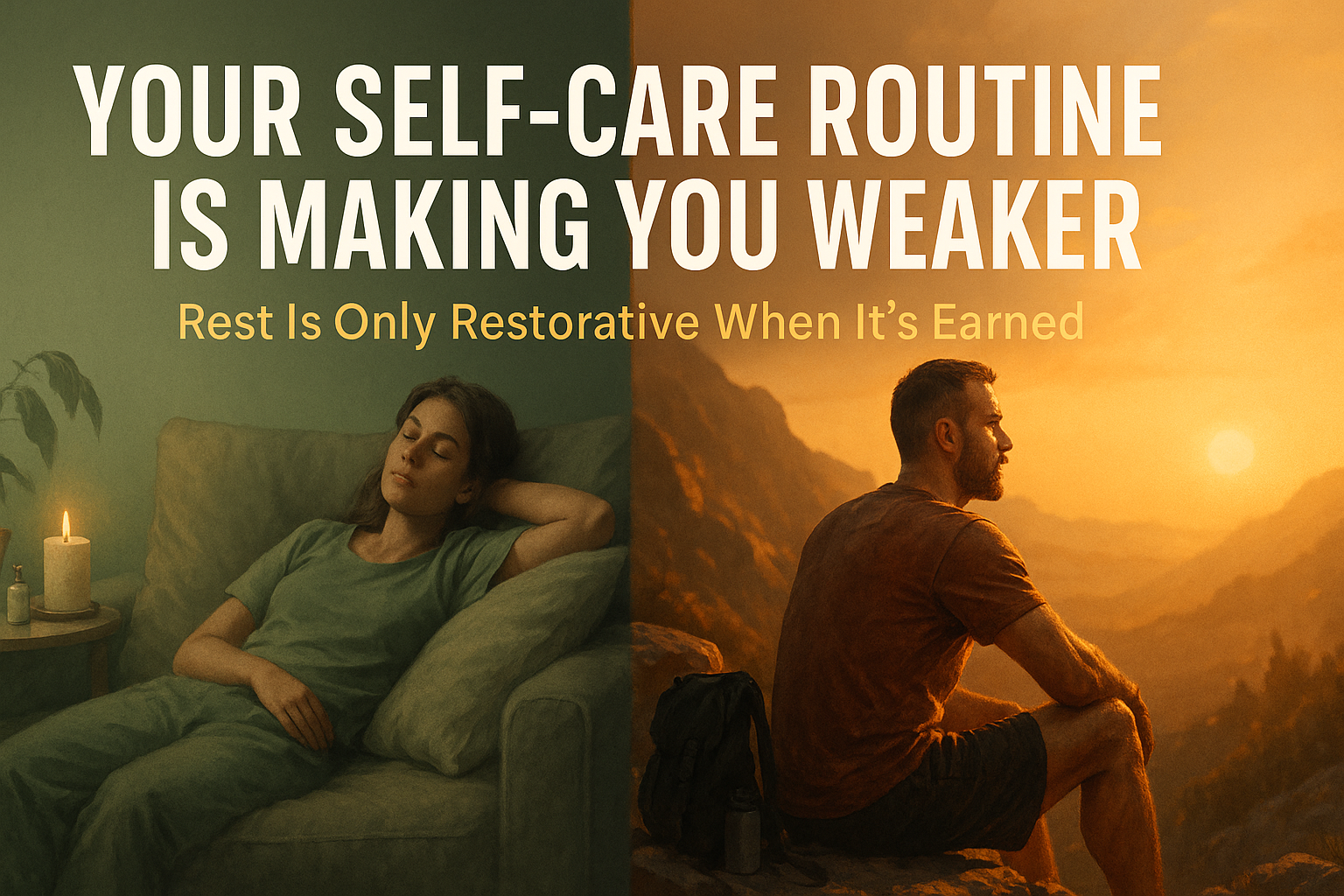
Modern self-care culture produces people who need more support to handle less challenge. Rest is only restorative when preceded by genuine exertion. Without the depletion, there's nothing to restore.
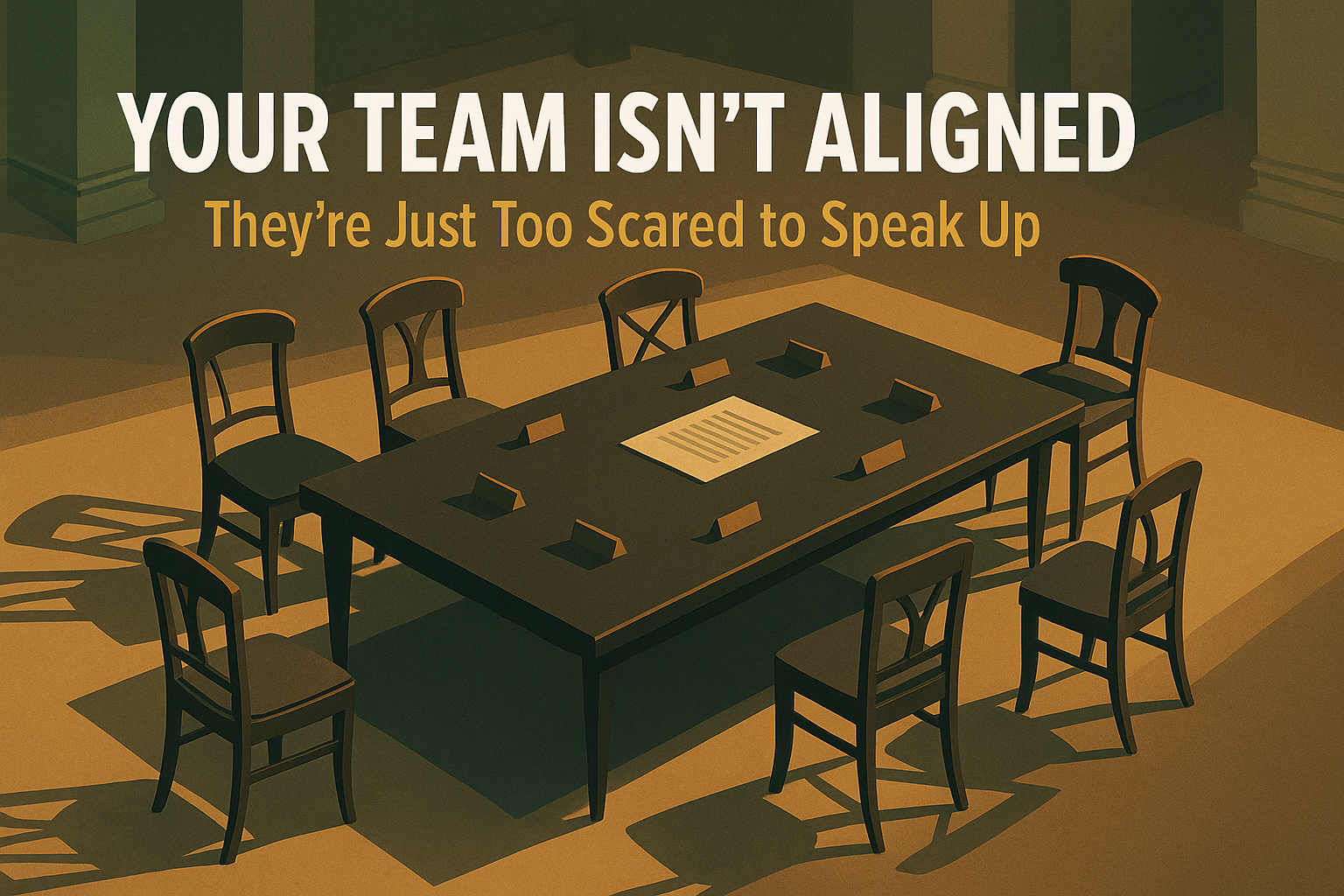
When teams nod along in meetings, we celebrate alignment. But what if everyone's privately disagreeing? The Abilene Paradox shows how silence becomes performative agreement and why andreia (courage) matters more than consensus.
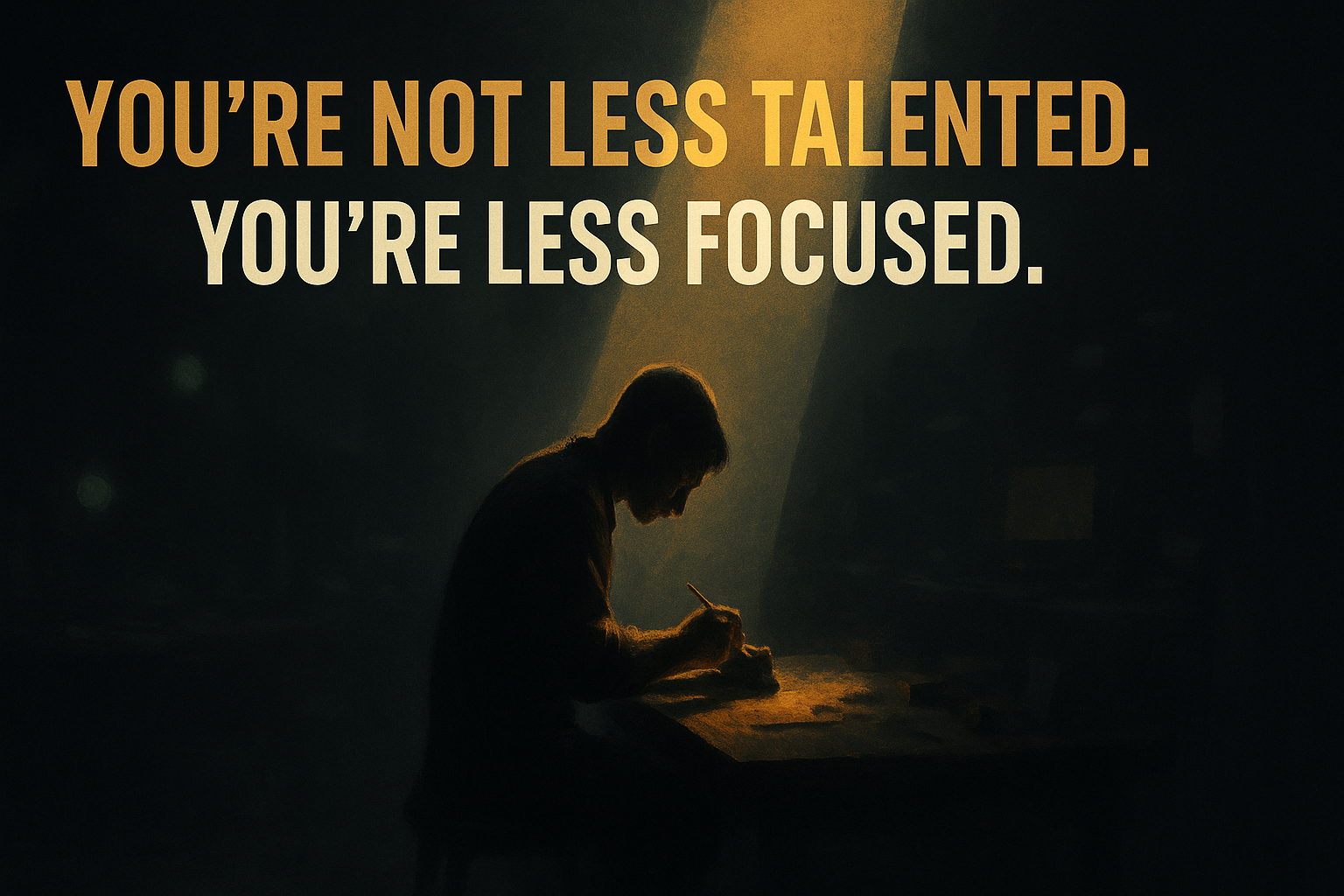
What looks like exceptional talent is usually exceptional attention. The people crushing it aren't more gifted, they've just built the character discipline to ignore everything except what matters most.
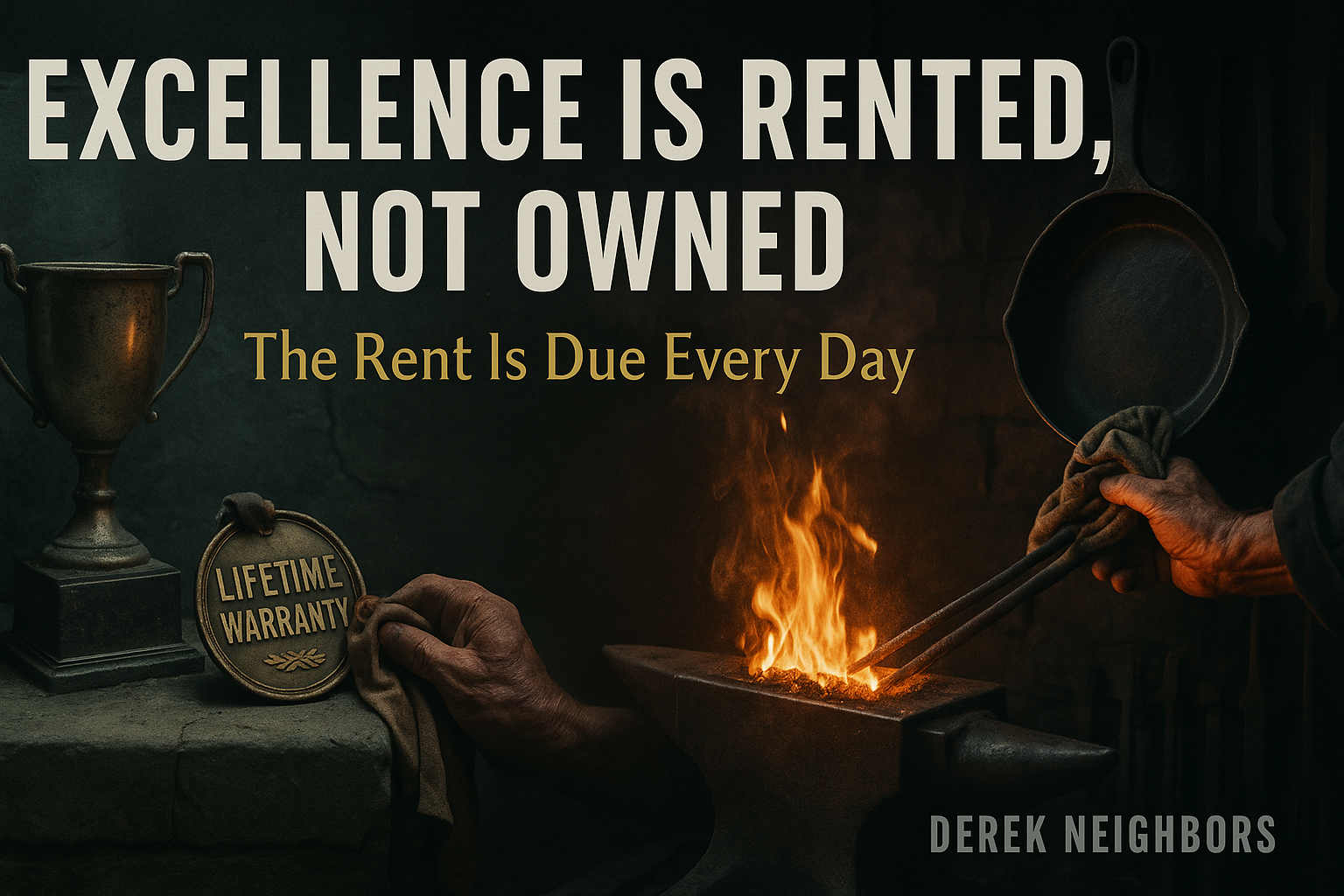
Grandma's cast iron pan lasted 60 years with daily care. My 'lifetime warranty' pan died in 18 months with neglect. Excellence isn't owned—it's rented. And the rent is due every single day.
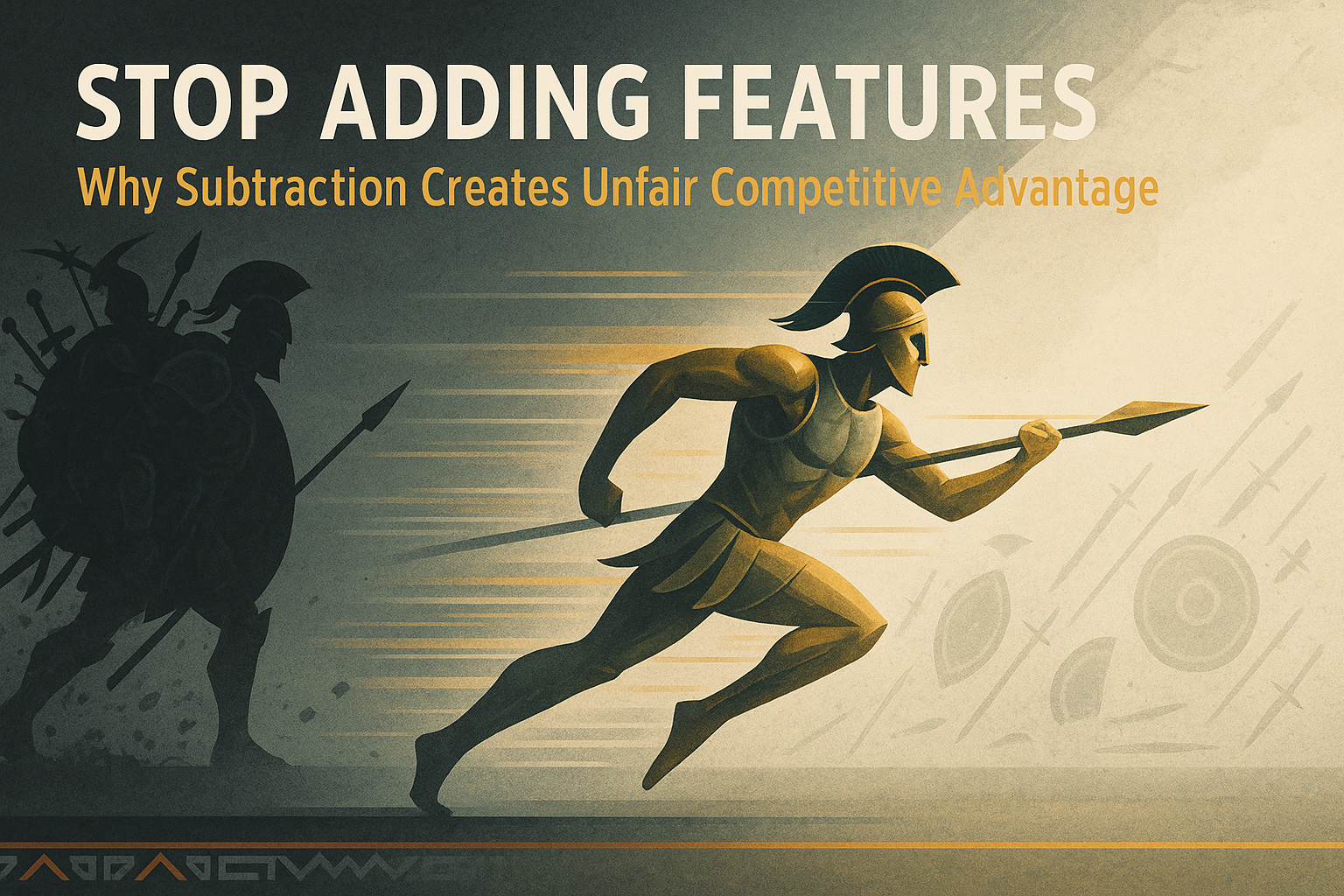
Every feature you add slows every decision. Every process you maintain steals focus. While everyone accumulates complexity, strategic subtraction creates unfair competitive advantage. The lighter you are, the faster you move.
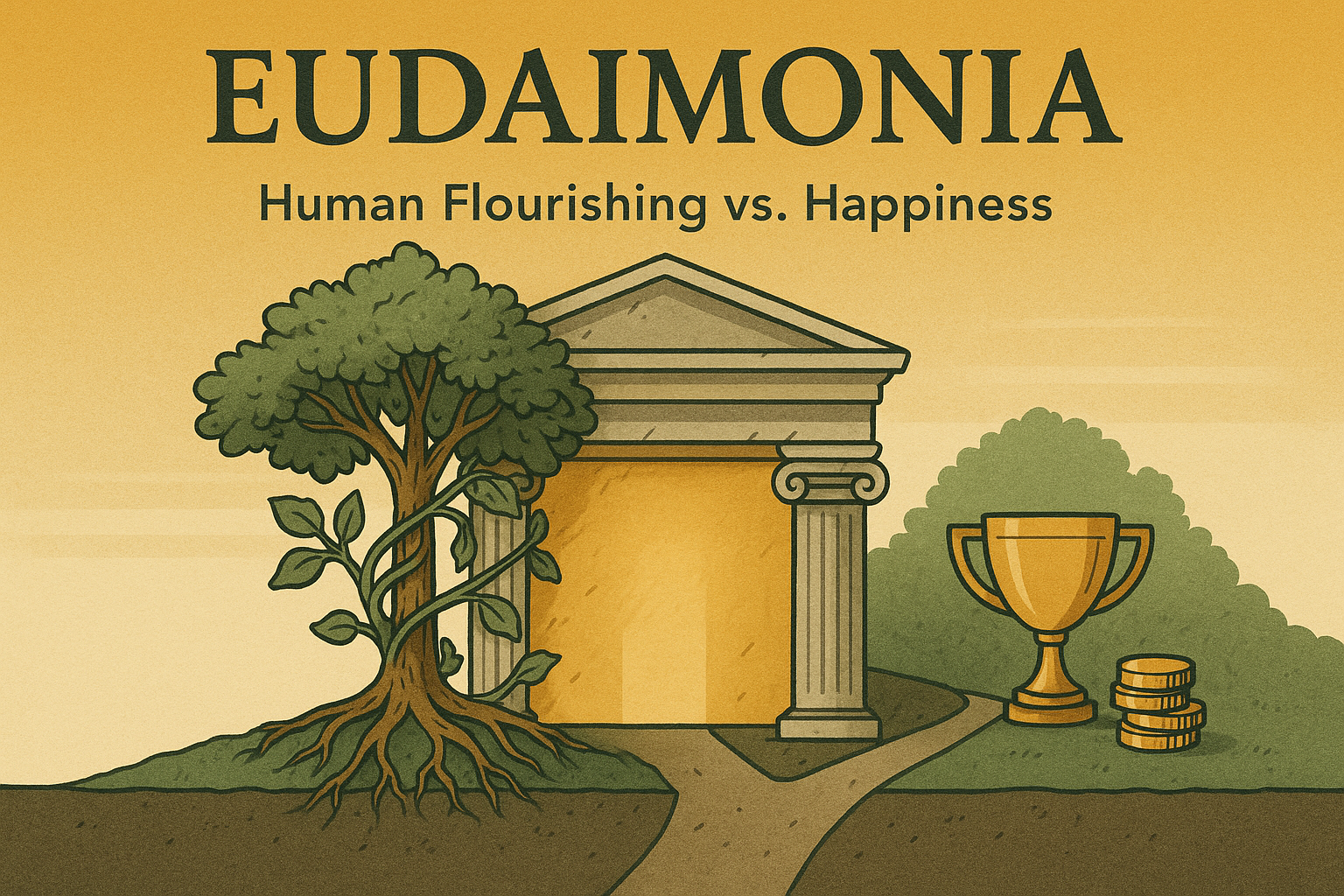
Most leaders chase happiness and end up empty. Ancient wisdom reveals why: they're pursuing the wrong goal. Eudaimonia, human flourishing, transforms everything about how you lead and why it matters.
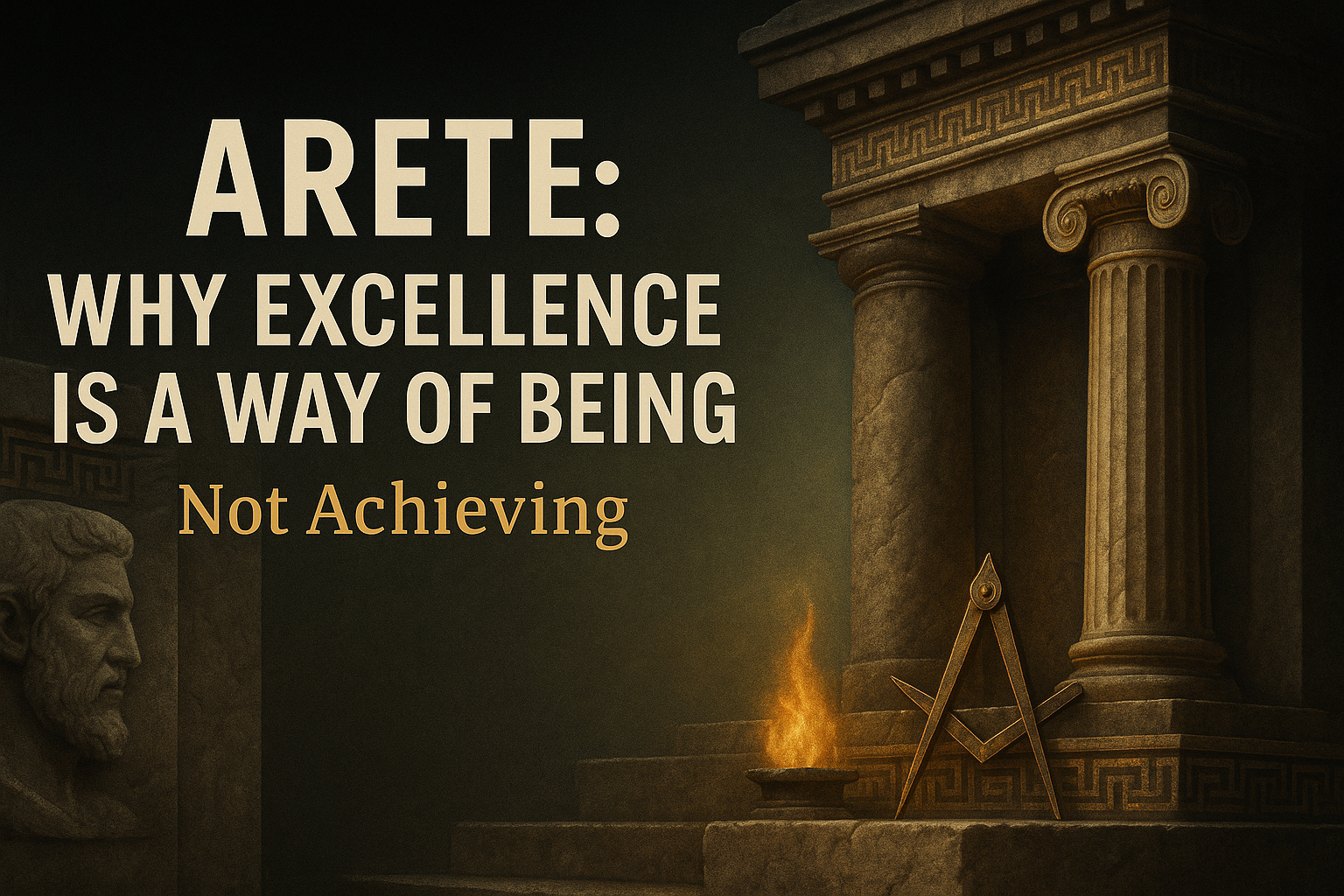
The Greeks understood something we've forgotten: excellence isn't something you achieve, it's something you become. This fundamental shift changes everything about how you approach work, leadership, and life.
Most of your learning is actually entertainment in disguise. Here's why information without action is intellectual hoarding, and how to transform from consumer to creator through practical implementation.
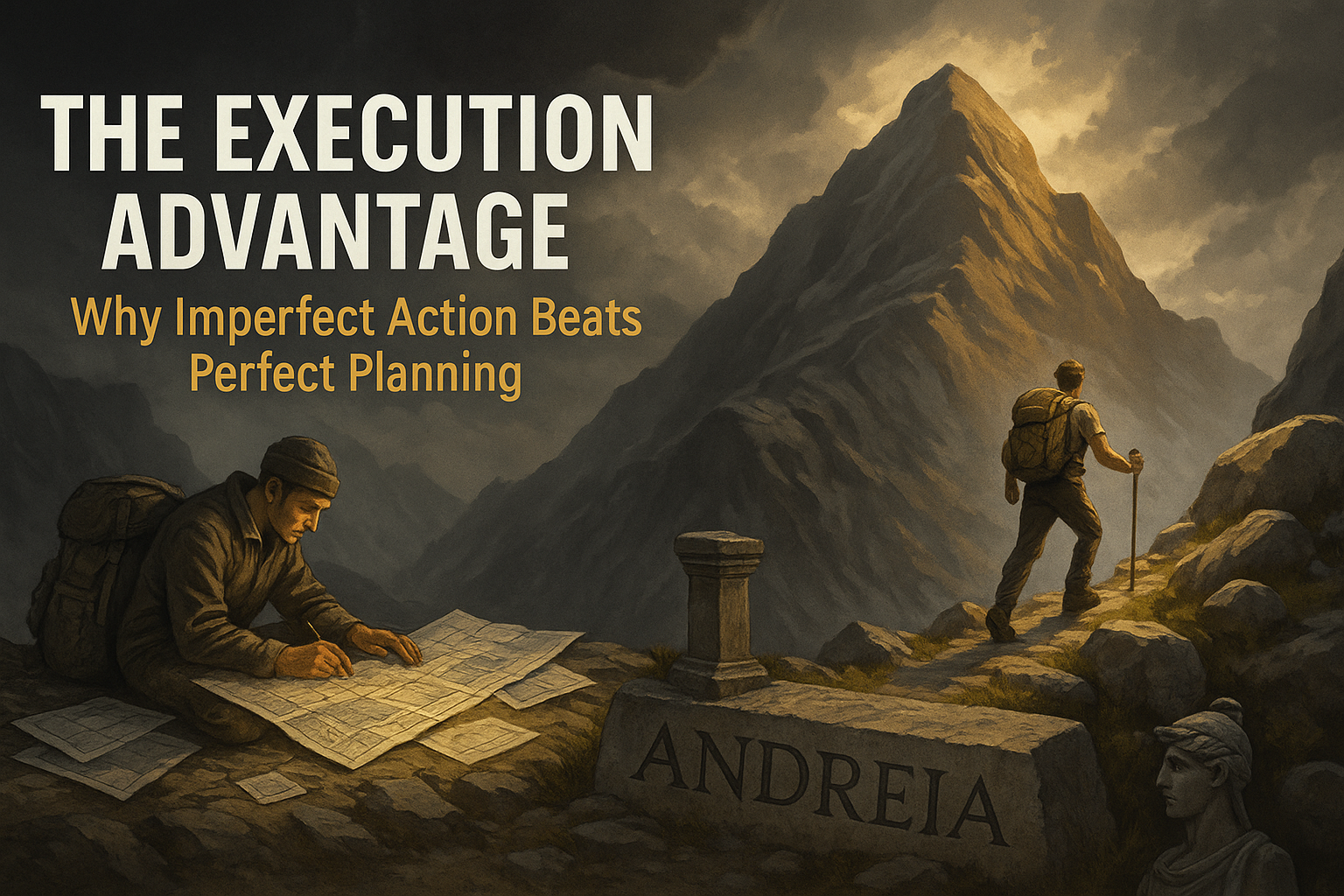
Perfect plans are usually perfectly wrong. Here's why imperfect action creates better results than perfect planning, and how to build the execution advantage through courage and rapid iteration.
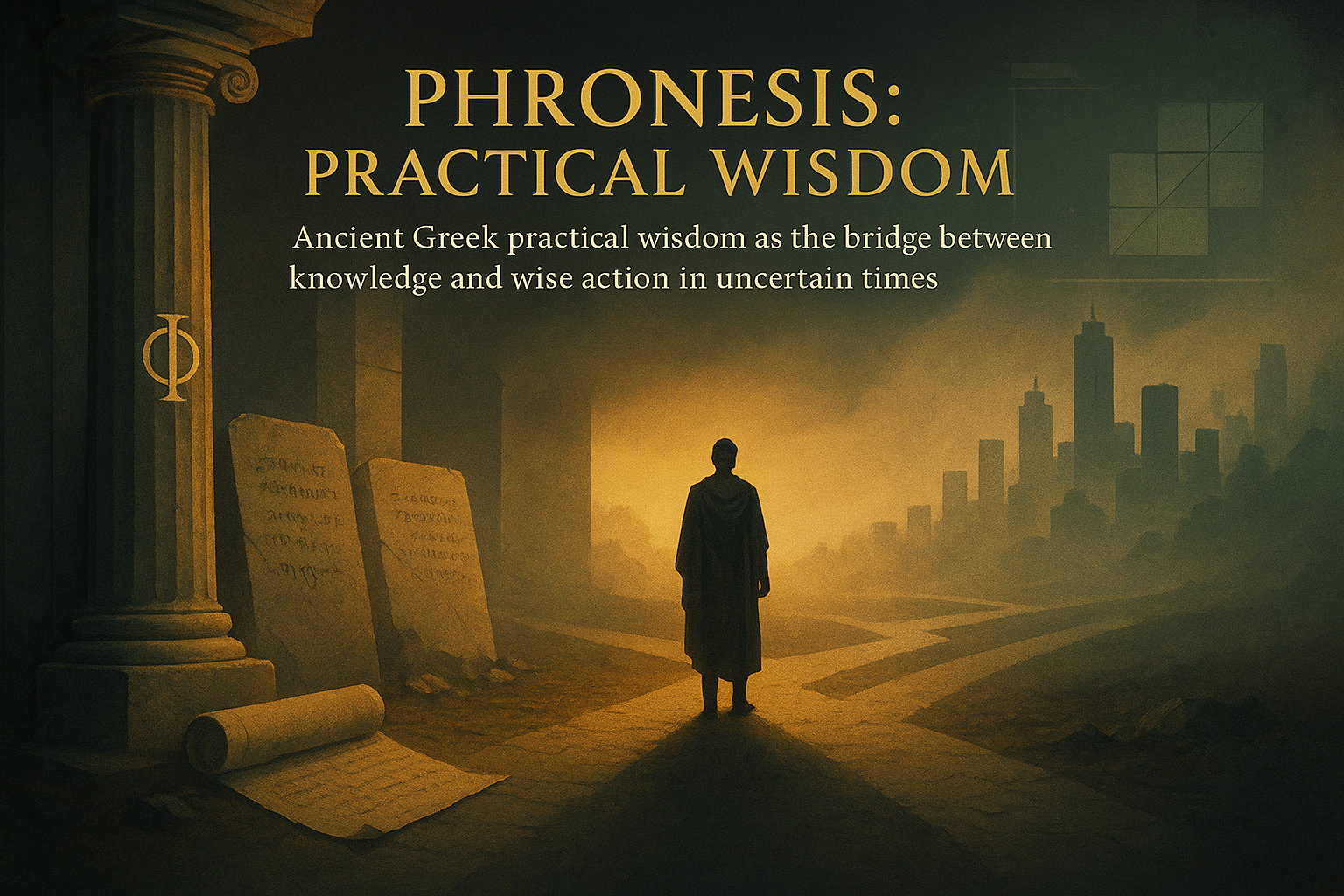
The ancient Greeks had a word for the leadership skill we desperately need today: phronesis. It's not about having all the answers, it's about acting wisely when you don't.
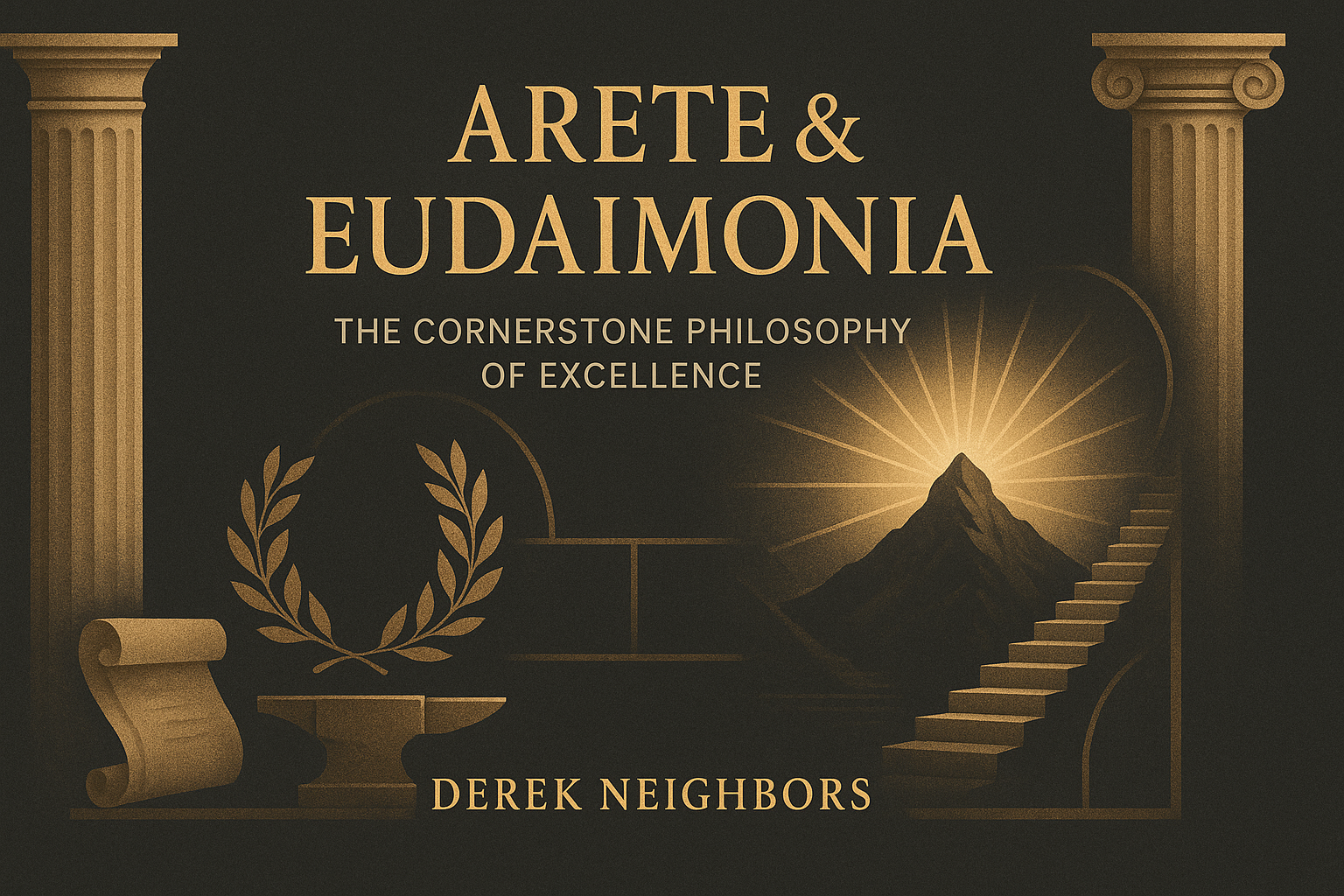
The path to true excellence isn't found in quick fixes or surface, level achievements. It's discovered through the ancient wisdom of arete and eudaimonia, principles that have guided the greatest minds for over 2,000 years.