The People You're Afraid to Offend Already Run Your Life
By Derek Neighbors on May 11, 2026
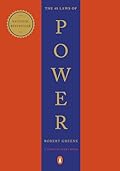
Power vs. Virtue: The 48 Laws Examined
A year-long examination of Robert Greene's 48 Laws of Power through the lens of ancient virtue ethics. Some laws we affirm, some we reframe, some we reject entirely.
The law sounds like wisdom. Know who you are dealing with. Read the room. Do not stick your finger in the wrong person’s eye.
Of course.
Run it for a year as your default operating system and watch what it does to you. You become attentive to anyone who could damage you and dismissive of anyone who cannot. Your honesty starts filtering itself by who is in the room. Your willingness to push back gets quieter every time the audience gets more powerful.
You believe you are being shrewd. You are actually outsourcing your behavior to a threat-assessment routine running in the back of your head.
Greene’s Law 19 has a real tactical kernel. Different people respond to provocation with different intensities, and treating everyone identically is a kind of carelessness. But the prescription, taken seriously, rebuilds your entire moral life around the question of who can hurt you. The Greeks had a name for the opposite virtue. They called it andreia, and they considered it the precondition for every other virtue you might claim to have.
The Law
Greene’s Law 19: “There are many different kinds of people in the world, and you can never assume that everyone will react to your strategies in the same way. Deceive or outmaneuver some people and they will spend the rest of their lives seeking revenge. They are wolves in lambs’ clothing. Choose your victims and opponents carefully, then never offend or deceive the wrong person.”
The vivid examples Greene leans on are the ones that have terrified courtiers for centuries. Ambassadors who insulted the wrong khan and brought a horde down on their cities. Negotiators who underestimated a quiet adversary and spent the rest of their careers in retreat. Subordinates who slighted a powerful patron and lost the next twenty years to that single afternoon.
The prescription: study people before acting. Identify the dangerous ones. Treat them with calibrated deference. Save your candor and your maneuvering for the people who cannot retaliate.
Read the architecture of that advice carefully. The variable governing your behavior is what the other person can do to you.
The Tactical Truth
Greene is not wrong about the surface. Some people will let a slight roll off them. Others will catalogue it, nurse it for years, and find a way to repay it long after you have forgotten the encounter. That asymmetry is real. Ignoring it is a kind of social color blindness that produces casualties you did not need to take.
There is a version of this advice that is plain phronesis, practical wisdom. Do not pick fights you do not need to pick. Do not insult people gratuitously. Do not assume the world processes provocation through your particular nervous system. None of that is controversial.
If the law stopped there, it would be useful. It does not stop there.
The whole frame of “the wrong person” sorts humanity into a single dimension: how much damage can they do to me. The frame teaches you to compute that score on every encounter. It teaches you to let the score govern your conduct.
That is where the tactical truth tips into something else. You started by trying to avoid unnecessary fights. You ended up running a constant background calculation of social threat level, with your honesty, your candor, and your respect all routed through the output of that calculation.
The math may protect you. The math is also slowly building the person it protects into something smaller than the one who walked in.
The Character Cost
Watch what happens to people who run this law as their default for a few years.
They become exquisitely attentive to power and almost blind to character. They can tell you the org chart of any room they walk into within ninety seconds. They cannot tell you, in the same ninety seconds, who in the room is honest.
They develop two voices. One for the people who matter, by which they mean the people who can promote them, sue them, fire them, or fund them. Another voice for the people who cannot. Both voices believe themselves to be the real one.
Their honesty becomes conditional. They will tell the truth in low-stakes rooms where there is nothing at risk. In the rooms where truth would actually cost them, the truth never appears. They mistake this for tact.
They start to assume the same of everyone around them. They distrust kindness from the powerful, because what does this person want from me. They distrust criticism from the powerful, because what is this person preparing to take from me. The whole social field becomes a chessboard rather than a community.
Most damning, they stop being someone whose opinion can be trusted. The people around them can feel the calibration happening in real time. The compliment never lands cleanly. The pushback never arrives without an angle. After enough years of this, they cannot remember what their unfiltered position actually is on most questions, because the filter has been running so long the original signal has been overwritten.
This is the character cost the law does not advertise. Greene treats it as wisdom. The Greeks would have looked at the resulting person and said: this is a slave with a good office.
The ARETE Alternative
The alternative is not the opposite extreme. The opposite extreme is the person who deliberately picks fights with the powerful to prove some kind of independence. That person is still being governed by the same variable, just inverted. They are not free. They are still letting power set their agenda.
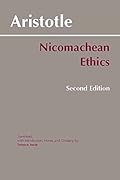
The alternative is andreia, the Greek virtue of courage, which Aristotle treated as the precondition for every other virtue. Without courage, honesty, justice, and friendship all bend around whoever could punish you. Every other quality you claim becomes conditional on whether someone is watching who could hurt you. Aristotle did not consider those qualities yours at all in that case. He considered them rented, dependent on circumstances you do not control.
andreia does not mean recklessness. It means your behavior is no longer governed by the question what can this person do to me. That question still exists. It just no longer has veto power over what you say, how you treat people, or whether you tell the truth.
The next layer is parrhesia, frank speech. The classical tradition treated parrhesia as the test of an honest person. Could you say what you actually thought to anyone in the room, including the person at the top of it, in a way that served the situation rather than your own positioning? A famous philosopher told a famous king to step out of his sunlight. That story has lasted for two thousand years because the culture recognized something in it: a person whose speech was not for sale.
The arete alternative is to treat all people with the same baseline of respect, then adapt your approach to character and context, not to threat level. Read the room because you want to serve it well, not because you want to escape its retaliation.
Ancient Wisdom
andreia sits at the foundation. Aristotle ranked courage as the first virtue because without it, every other virtue is conditional. The brave person is not the one who feels no fear. They are the one whose fear does not get a vote on what they do.
parrhesia sits one layer up. The classical practice of saying what one actually thought, regardless of audience. The test of parrhesia was always the same: willingness to speak in a way that could cost you something, to an audience that had power over you. The cynic philosophers built an entire school around it.
megalopsychia, Aristotle’s “greatness of soul,” is what becomes possible when the first two are in place. The great-souled person, he wrote, does not flatter, is not afraid of the powerful, does not adjust their conversation to who is in the room. They have a sense of their own worth that the room does not have permission to amend.
eleutheria is the name for what you actually gain by this. Not the political freedom of citizenship, which the Greeks distinguished carefully. The inner freedom of not needing anyone’s approval to hold your own ground. The Stoics treated eleutheria as the goal of philosophical training and observed that almost no one had it, including most of the people in togas walking around the forum claiming it.
These four virtues sit underneath the law and dissolve it. They describe a person whose conduct is not for sale to threat assessment. The person Greene is teaching you to become is a person these virtues would not recognize.
The Test
For one week, watch yourself. Not in any structured way. Just notice.
When you spoke with your boss, your investor, your most important client, did your sentences come out the same shape they came out with the barista, the new hire, the friend who cannot help you?
When someone with status was wrong about something in front of you, did you say so the same way you would say so to someone without status?
When you needed to give difficult feedback, did the size of the consequence determine whether the feedback got given honestly, edited into something safer, or never delivered at all?
The gap you find is a map of where Law 19 has been running your life on autopilot. The work begins the moment you can see the map clearly.
Final Thoughts
The kernel of Law 19 is real. People are not interchangeable, and treating them as if they were is its own kind of carelessness. Take that part. Keep it.
The full law is something else. It is an operating system that routes your conduct through threat assessment, and the longer you run it, the smaller the version of you that survives the operation.
The Greeks were not naive about power. They lost wars to it. They drank hemlock for it. They knew exactly what could happen to a person who spoke their mind in the wrong room. They built their virtue ethics anyway, because they understood that a person whose conduct depends on who is watching is not really a person yet. They are a system responding to inputs.
The people you are afraid to offend already run your life. Not because they want to. Because you handed them the keys when you decided their reaction was the variable that governed your conduct. The first move toward freedom is taking the keys back.
Excellence cannot be conditional on who is watching. MasteryLab.co is where leaders train the inner foundation that makes their conduct the same in every room, with every person, regardless of what that person can do to them.