Fear Makes People Obey. It Never Makes Them Follow.
By Derek Neighbors on April 29, 2026
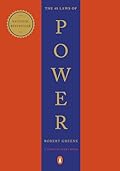
Power vs. Virtue: The 48 Laws Examined
A year-long examination of Robert Greene's 48 Laws of Power through the lens of ancient virtue ethics. Some laws we affirm, some we reframe, some we reject entirely.
Robert Greene’s Law 17 doesn’t dress itself up. Most of his laws at least pretend to serve some higher strategic purpose. This one cuts straight to the thesis: keep people scared. Be unpredictable. Alternate between kindness and severity so nobody can prepare for what comes next.
The law assumes that confusion is control. That people who can’t predict your behavior can’t counter it. That an atmosphere of low-grade terror keeps everyone performing at their peak because nobody knows when the hammer drops.
Here’s the question worth asking before you adopt this strategy: When you walk into a room, do people straighten up or open up? If it’s straighten up, you’ve already lost the war you think you’re winning. You’ve purchased compliance and paid for it with truth.
The Law
Greene frames Law 17 around a basic observation about habit. Humans are predictable creatures. When they learn your patterns, they optimize around them. Give consistent praise on Fridays, and people coast Monday through Thursday. Respond to every crisis with the same measured tone, and people stop bothering to prevent crises because they know you’ll handle it.
The prescription: disrupt expectations. Be warm one day and cold the next. Reward an employee publicly, then ignore them for weeks. Alternate between accessibility and distance. The goal is a permanent state of vigilance in the people around you.
Notice the company this law keeps. Greene’s examples aren’t executives running profitable companies. They’re monarchs, warlords, and political operators. People who held power through the credible threat of violence. The law doesn’t bother pretending otherwise.
The Tactical Truth
I won’t pretend there’s nothing here. Predictable leaders can be gamed.
The middle manager who approves every request that follows a specific template will get buried in template-formatted requests, half of them unnecessary. The executive who always says yes when the pitch includes a competitive threat will receive pitches that manufacture competitive threats. People are adaptive. When they know your algorithm, they write code that runs on it.
Some unpredictability prevents this kind of complacency. The leader who occasionally shows up on the factory floor, who sometimes asks the question nobody expected, who doesn’t always follow the same decision-making script keeps people honest in a way that pure consistency cannot.
Surprise inspections work. Not because terror motivates, but because the possibility of observation changes behavior when nobody’s built a workaround for it yet.
But there’s a canyon between “don’t be a pushover” and “keep people in suspended terror.” Acknowledging that rigidity has costs doesn’t justify weaponizing chaos. The fact that locked doors prevent some theft doesn’t make it wise to booby-trap your house.
The Character Cost
Here’s what terror kills first: parrhesia.
The Greeks had a word for the willingness to speak truth to power, and they considered it one of the highest civic virtues. parrhesia requires a speaker willing to risk punishment and a listener willing to receive honesty. Remove either condition and it collapses.
Fear-based leadership destroys parrhesia systematically. When the consequences of honesty are unpredictable, when the boss who laughed at a mistake on Tuesday fires someone for a similar mistake on Thursday, rational people stop speaking. Not dramatically. Gradually. They filter. They soften. They present information in the most palatable form possible. They start telling you what you want to hear instead of what you need to know.
This is where the law eats itself.
Every organizational disaster shares the same footnote. Somebody knew. Usually several people knew. They didn’t speak up because the environment punished honesty more reliably than it rewarded it. The Challenger explosion, Enron, Boeing’s 737 MAX, every corporate collapse has a trail of memos nobody read, concerns nobody raised, warning signs that got filtered into oblivion before they reached the person who needed them most.
And the second cost: talent.
The best people leave unpredictable environments. They have options. They don’t need to decode your moods to do their work. The market for excellent people is always strong enough that they can find someone who respects them enough to be consistent.
What remains after the exodus is a team of people who stay because they can’t leave. The trapped and the obedient. They won’t challenge your thinking, sharpen your judgment, or deliver the difficult truth that could save the whole operation.
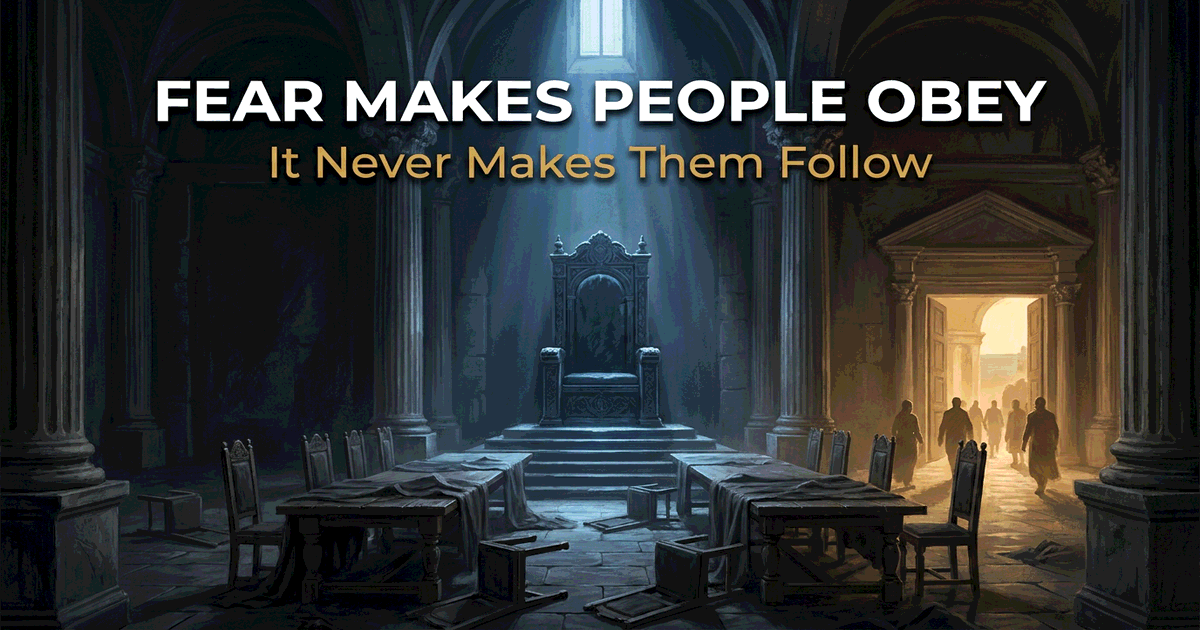
The leader who rules through phobos ends up governing a kingdom of filtered information and diminishing capability. The throne still looks impressive. The room is emptying.
The ARETE Alternative
The ancient model runs in the opposite direction: be predictable in character, demanding in standards.
The leader worth following is one people can read. Not because they’re simple, but because their values are consistent enough to navigate by. “I know what she values. I know what she won’t tolerate. And I know she’ll be fair about how she handles both.” That sentence is worth more than any amount of strategic terror.
Predictable character generates andreia in others. Courage doesn’t develop in atmospheres of random punishment. It develops when people know the rules, understand the standards, and trust that effort in good faith won’t be met with arbitrary consequences. A team that knows what excellence looks like and believes the pursuit is rewarded will take risks. A team that fears the unpredictable response plays it safe forever.
Here’s the distinction that matters. Demanding standards and arbitrary punishment look similar from a distance. Both produce immediate compliance. But demanding standards are consistent and achievable. People can orient toward them. Arbitrary punishment is capricious and impossible to prepare for. People can only hide from it.
eunoia, genuine goodwill, is what real authority generates. Not the anxious attention of people scanning for threats, but the active investment of people who believe their leader’s success serves their own. You can’t manufacture eunoia through fear. It grows in environments where people trust that the rules apply equally and the standards are worth meeting.
The leader whose character is predictable and whose standards are high produces teams that self-correct. They don’t need terror because the standard has been internalized. People hold themselves and each other accountable because they believe in what they’re building, not because they’re afraid of who’s watching.
Ancient Wisdom
The Greeks drew a sharp distinction that modern leadership theory often misses. They separated the basileus, the legitimate ruler, from the tyrannis. Both held power. The difference wasn’t authority or scale. It was the mechanism of control.
The basileus ruled through arete, demonstrating excellence that justified the position. People followed because the ruler’s virtue made the collective stronger. The tyrannos ruled through phobos, maintaining control through fear and unpredictability. People obeyed because the alternative was worse.
Aristotle observed that tyrannies require three conditions: keeping subjects ignorant, keeping them divided, and keeping them too occupied with survival to organize resistance. Law 17 reads like a manual for creating all three.
parrhesia was considered so essential to Athenian democracy that its destruction was treated as a sign of the polis itself dying. When citizens stopped speaking freely, when fear replaced frank counsel, the Greeks didn’t see it as a discipline problem. They saw it as the death of the civic body.
And andreia, courage, wasn’t reserved for the battlefield. Civic courage meant speaking when silence was safer and telling the ruler what the ruler didn’t want to hear. Terror doesn’t produce this. It annihilates it.
The Test
Try this diagnostic. Leave a room where you’ve been present for thirty minutes. Not dramatically. Just step out.
Does the energy shift? Does the conversation loosen? Do people laugh differently?
If the room exhales when you leave, you’ve been running on fear. The compliance you observed while present was a performance. The real culture lives in the room you’re not in.
Now try the second test. Think about the last time someone on your team brought you bad news. How long did it take between the problem occurring and the information reaching you? If there’s a meaningful delay, somewhere in your organization, someone is filtering reality before it gets to your desk. That filtering is a direct tax on your ability to lead effectively. And if your leadership style includes unpredictable emotional responses, that tax is compounding daily.
The leader worth following isn’t the one who keeps people guessing. It’s the one whose character is so well established that guessing isn’t necessary.
Final Thoughts
Law 17 is Greene’s most revealing entry. Most of his laws at least attempt the pretense of serving some mutual benefit. This one doesn’t bother. Keep people in terror. Use unpredictability as a weapon. Maintain control through confusion.
The Greeks watched this play out across centuries of political history and reached a verdict: every tyrannis falls. Not because tyranny lacks power, but because the mechanism of control consumes the resources it needs to sustain itself. Fear drives out truth. Truth’s absence drives out competence. Competence’s absence drives out results. The cycle is always the same. Only the timeline varies.
Excellence doesn’t need anyone to be afraid. It needs standards clear enough to orient toward, consequences consistent enough to trust, and leadership stable enough to tell the truth to. That combination is harder to build than a reputation for being scary. It also outlasts it by decades.
Stop trying to keep people on their toes. Start building something worth standing for.
If you’re ready to lead through character instead of confusion, MasteryLab.co is where that work begins.