Your Potential Isn't Waiting. It's Disappearing.
By Derek Neighbors on April 23, 2026
People love talking about potential. They talk about it the way they talk about money in a savings account: safely deposited, earning interest, available whenever they decide to withdraw it.
“I have so much potential.”
“She never reached her full potential.”
“He’s got untapped potential.”
Listen to the language. It treats potential as a possession. Something you own. Something static and patient, sitting in a vault somewhere inside you, waiting for the day you finally get around to using it.
That’s a comforting idea. It’s also wrong.
The Contradiction Nobody Wants to Hear
Here’s what we believe: potential is a resource we carry. We can use it now or save it for later. The choice is ours, and the potential remains unchanged either way.
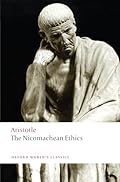
Here’s what Aristotle observed 2,400 years ago: potential that isn’t being pursued is potential that’s being lost.
He had two words for this. dynamis and energeia.
dynamis is potentiality. The acorn’s capacity to become an oak. The marble’s capacity to become a sculpture. Your capacity to become whatever version of yourself you keep promising you’ll get to eventually.
energeia is actuality. Being-at-work. The acorn sprouting roots. The sculptor’s chisel striking stone. You, in the active process of becoming.
Most people hear this and think it’s a simple distinction between having and doing. That’s the surface reading. Aristotle’s deeper claim is the one that should keep you up at night: energeia is prior to dynamis. Actuality is more fundamental than potential. The pursuit doesn’t merely follow from the capacity. The pursuit is what gives the capacity meaning.
An acorn that never sprouts isn’t “saving” its potential. It’s rotting on the pavement.
The Comfortable Lie
The lie goes like this: “I still have time.”
And technically, you might. But the person saying “I still have time” at twenty-five is a different creature than the person saying it at forty-five. Not because twenty years passed, but because twenty years of non-pursuit passed. The capacity itself changed. Neural pathways that would have strengthened through use weakened through neglect. Physical abilities that would have compounded through training atrophied through inactivity. And the creative instincts you once relied on? They dulled through silence, the same way a language you stop speaking becomes harder to recall with every passing year.
You don’t lose potential the way you lose your keys, through a single moment of carelessness that can be reversed by retracing your steps. You lose it the way you lose muscle mass: gradually, silently, one unused day at a time, until the capacity that once felt effortless now requires more effort than you can generate.
This is the part that most conversations about potential refuse to acknowledge. The gap between dynamis and energeia is not neutral territory. It’s a slope. And it tilts in one direction. Every day you stand still, the hill between where you are and where you could be gets steeper.
I see this constantly in leadership. A founder who was once the sharpest product thinker in the room spends five years doing nothing but fundraising and board management. When they finally return to product decisions, they struggle. The instincts aren’t gone, exactly. But they’re buried under years of disuse, covered in rust, slower to fire. They remember being good at this. They may not be good at this anymore. And the gap between the memory and the reality is where frustration lives.
Why We Prefer the Paradox Unresolved
The reason people cling to the “potential as savings account” model is that it lets them feel wealthy without doing anything. Knowing you could be great carries its own private satisfaction. You get to look at people who are actually doing the work and think, “I could do that if I wanted to.”
Maybe you could have. The question is whether you still can.
This is the same mechanism behind why most people need a crisis to try their hardest. Crisis forces energeia. It drags dormant capacity into action whether you like it or not. But the person who chooses energeia without crisis is the person who keeps their capacity alive between emergencies. The rest of us let it atrophy until the next fire forces us to remember what we’re capable of.
arete, the Greek concept of excellence, is not a destination. It is a practice. Aristotle was explicit: virtue is an activity, not a state. You don’t possess arete the way you possess a talent. You practice it the way you practice an instrument. Stop practicing and the ability doesn’t pause. It degrades.
The person who says “I have potential” is making an empirical claim about their current capacity. But if they said the same thing five years ago and did nothing in the interval, the claim is no longer the same claim. The word “potential” hasn’t changed, but the capacity it points to has.
This is what makes the dynamis-energeia paradox so uncomfortable. Both things are simultaneously true: you have genuine potential, AND that potential is actively deteriorating because you haven’t pursued it. You’re rich and going broke at the same time.
The Separation Point
The people who actualize are not the people with the most dynamis. They are the people who refuse to let favorable conditions become a prerequisite for energeia.
Sit with that. Greatness does not correlate with raw capacity. It correlates with the willingness to pursue capacity under unfavorable conditions. This applies whether you started with abundant dynamis and let it atrophy, or whether you were never told you had any to begin with. The person born into disadvantage who begins pursuing excellence today owes the same obligation as the person who squandered a head start. Epictetus was a slave. He pursued philosophy anyway. The obligation is not contingent on the starting position.
The writer who writes every morning before the house wakes up is not more talented than the writer who is “waiting for inspiration.” But in five years, the first writer will have a body of work and the second will have a body of excuses. The talent gap, if one ever existed, will be invisible next to the execution gap.
Aristotle understood this. He placed energeia above dynamis in his metaphysical hierarchy not because doing is more impressive than being capable, but because doing is the only proof that capability exists. A capacity that never expresses itself is, to everyone who matters, indistinguishable from a capacity that was never there. The potential may exist somewhere inside you. But if it never surfaces, no one will ever know. Including you.
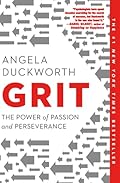
Your telos, your purpose or natural aim, cannot be fulfilled by intention alone. And this is where the stakes get higher than most people realize. Failing to pursue energeia is not merely losing a skill or letting an advantage slip. It is failing to actualize your proper function as a human being. Aristotle did not think telos was optional. The acorn that never becomes an oak has not “chosen a different path.” It has failed to become what it is. The same applies to you. The acorn becomes the oak through sustained growth in imperfect soil, not through the theoretical perfection of its DNA. This is why the difference between grit and stubbornness matters so much. Stubbornness is repeating the same approach despite evidence it doesn’t work. Grit is adapting your methods while refusing to abandon the pursuit. One preserves dynamis. The other lets it calcify into a habit of inaction disguised as persistence.
The Diagnostic
Someone will object: what about the person who starts at sixty and produces remarkable work? If potential decays as I’m describing, how do late bloomers exist?
They exist because decay is not annihilation. The person who begins at sixty has less dynamis to work with than they would have had at thirty. They succeed not because their potential was preserved through decades of inaction but because enough remained to build on. Late bloomers are not evidence against the decay thesis. They are evidence that even diminished capacity, once finally activated, can produce something real. Imagine what they could have produced with thirty more years of energeia.
I’ve spent enough years watching talented people stall to know the pattern. The stall never looks like quitting. It looks like preparation. It looks like strategic patience. It looks like wisdom. But the result is always the same: the capacity that once made them dangerous starts to soften at the edges.
Three questions to determine whether your potential is growing or dying:
Name a specific capacity you exercise today that you couldn’t exercise a year ago. If nothing comes to mind, your dynamis is shrinking, not holding steady.
Are you actively pursuing something right now that has no guarantee of success? energeia requires engagement with uncertainty. If every pursuit in your life comes with a safety net, you’re not actualizing. You’re rehearsing.
List the conditions you’re waiting for before you begin. Look at that list. Then ask yourself whether Aristotle would consider waiting for those conditions a form of wisdom or a sophisticated way of letting your potential rot.
Final Thoughts
One distinction matters here. Practical capacity, your skills, your physical abilities, your creative sharpness, decays with disuse. That process is real and measurable. But the capacity for virtue, the ability to choose rightly, to begin the pursuit of arete, does not decay in the same way. As long as you retain rational choice, you retain the ability to start. What you lose is not the right to begin. You lose the ease of beginning. You lose the years of compound growth you could have had. You lose the version of yourself that would have existed if you had started sooner. The choice remains. The cost of that choice increases with every day you defer it.
Your potential is not a bank account. It is not patient. It is not waiting for you to be ready. Practical capacity is a living thing that requires continuous engagement to survive, and it will atrophy in silence as surely as a muscle will atrophy in a cast.
The gap between dynamis and energeia is not time. It is choice. And the most deceptive feature of that choice is that it disguises itself as patience. “I’m not quitting,” you tell yourself. “I’m waiting.” But waiting and quitting produce the same result when the capacity you’re waiting to use is actively decaying.
Aristotle placed actuality above potentiality for a reason. The person in motion, imperfect and uncertain and struggling, is closer to arete than the person with immense capacity who has decided that today is not the day.
Today is always the day. Tomorrow, you’ll have less to work with.
If you’re ready to stop waiting and start the work of actualization, MasteryLab.co exists to bridge the gap between who you are and who you’re becoming.