People Want Something to Believe In. Don't Make It You.
By Derek Neighbors on July 6, 2026
Power vs. Virtue: The 48 Laws Examined
A year-long examination of Robert Greene's 48 Laws of Power through the lens of ancient virtue ethics. Some laws we affirm, some we reframe, some we reject entirely.
The Law
Law 27: “Play on People’s Need to Believe to Create a Cultlike Following.”
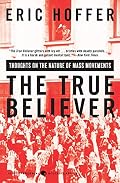
Greene’s observation is that people have an overwhelming desire to believe in something, and that this desire is an open resource. Become the focal point of it. Offer a cause, a new faith to follow. Keep your words vague but full of promise. Emphasize enthusiasm over rationality and clear thinking. Give your followers rituals to perform and ask them for sacrifices on your behalf.
He is generous enough to include the manual. Five steps of the charlatan: keep it vague and simple. Emphasize the visual and the sensual over the intellectual. Borrow the forms of organized religion. Disguise your source of income. Set up an us-versus-them dynamic. Follow the recipe, Greene promises, and in the absence of organized religion and grand causes, your new belief system will bring you untold power.
The Tactical Truth
Start with what Greene gets right, because he gets a lot right.
The hunger is real. People are starving for something to believe in, and the starvation is worse now than when Greene wrote. The old containers of meaning have been draining for generations, and the need did not drain with them. It moved. It shows up at product launches that feel like revivals, in founders quoted like prophets, in workout programs with initiation rites, in online communities with heretics and excommunications. Anyone who has watched a room full of adults chant a company slogan knows the vacuum Greene is pointing at.
And he is right that belief outperforms structure. A team that merely works for you executes the plan. A team that believes marches past the plan, works the weekend unasked, defends you in rooms you will never enter. Movements beat org charts. Shared conviction is the strongest binding agent human groups have ever produced, and every serious leader has felt the difference between a staffed project and a believed-in one.
He is even right about the mechanics. Vagueness scales better than precision, because a precise claim invites argument and a vague promise lets every listener complete it with their own private hope. Ritual bonds people faster than reasoning does. An enemy at the gates produces cohesion that no incentive plan can match. As engineering, the five steps work. That is exactly why they deserve a closer look, because the question with every law in this series is never whether it works. It is what it costs.
The Character Cost
What Greene tells you to harvest has a name. The Greeks called it elpis, hope, the last thing left in Pandora’s jar after every plague had flown out into the world. They argued for centuries about whether it stayed behind as a mercy or as the subtlest plague of the batch, and the argument itself is the warning: hope is the most renewable resource in a desperate person. It refills overnight. A farmer of elpis never runs out of crop, which is precisely what makes farming it so profitable and so corrosive.
They also had a name for the farmer. The goes was the wailing wizard, the enchanter, and his craft was goeteia: the production of belief through spectacle and emotional manipulation rather than truth. Plato used the word for persuasion that bypasses a person’s judgment instead of engaging it. Read Greene’s five steps again with that definition in hand: vague words, spectacle over intellect, borrowed vestments, hidden money, and a manufactured enemy. It is goeteia, step by step, and the Greeks classified it with sorcery rather than with leadership for a reason. It does something to people. Specifically, it dulls the faculty it bypasses. Every ritual that replaces a reason, every enthusiasm that substitutes for an argument, atrophies the follower’s judgment a little further, until what you lead is not a movement but a congregation of deisidaimonia, the superstitious dread Plutarch judged worse than atheism, because the atheist merely ignores the gods while the superstitious man lives in cringing terror of them.
Now count what this costs you, the operator.
First, contempt becomes your resting position. You cannot farm people and respect them at the same time. The follower who sends money to a man he believes is a prophet is, from the prophet’s side of the curtain, a mark. Run the play long enough and you will hold every believer in the same quiet contempt, and contempt for the people who trust you is a poison with no known antidote.
Second, you have rigged your own information supply. The five steps are a selection filter: they attract the credulous and repel the critical, which means every cycle of growth raises the concentration of people who will not tell you the truth, and drives out the people who would. This is the flatterer’s trap built at industrial scale. Most leaders drift into an environment of agreement. You built yours on purpose, and now you have to make decisions inside it, blind.
Third, the honest question becomes an existential threat. A leader with real results can survive any amount of scrutiny. A belief system built on vagueness and stagecraft can survive none, so the one thing you can never permit is the one thing every healthy organization runs on. You will find yourself policing curiosity, reading every question as an attack, because in your case it genuinely is one. The walls you built to keep the faithful in now hold you hostage too. You live inside the myth, guarded by believers, cut off from every mind sharp enough to warn you, and the vagueness that made you unfalsifiable also makes you unteachable. A man who can never be proven wrong has lost the ability to learn he is.
The end state is a leader who despises his followers, cannot trust his information, fears every intelligent person in the room, and has made himself the load-bearing wall of a structure that collapses the moment he stops performing. Greene calls this untold power. It reads more like a well-decorated cell.
The ARETE Alternative
The need to believe is real, and someone will meet it. People will attach their hope to something with or without your permission. What a leader actually controls is which faculty they engage when they commit: their judgment, or the bypass around it.
So build thinkers instead of believers. The Greek word for this work is paideia, the formation of a person’s judgment, and it is the exact inverse of goeteia. The enchanter bypasses the mind to win the person. The teacher builds the mind and lets the person decide. Real teaching aims to make itself unnecessary; enchantment aims to make itself indispensable. Every practice in your organization sits somewhere on that line, and you can audit them one by one.
The audit is Greene’s five steps, inverted. Where he says stay vague, be precise, because precision is what lets your people catch your mistakes before your customers do. Where he says favor spectacle over intellect, make the argument, because commitment that survives scrutiny is the only kind that survives contact with reality. Where he says borrow the forms of religion, attach loyalty to the telos, the mission and the work, rather than to your face, so that the thing keeps running when you leave the room and after you leave the company. Where he says disguise your income, keep the money visible, because nothing clarifies a movement like knowing who profits from it. And where he says manufacture an us-versus-them, keep the exit door open and unbolted. A cause people are free to leave, and stay in anyway, has passed the only loyalty test that means anything.
Above all, change your relationship to the rude question. The cult leader expels the skeptic. Do the opposite: pay the skeptic in status. When someone challenges you in the open, with parrhesia, the dangerous frank speech the Athenians prized, and you answer it well, everyone watching learns that this house runs on reasons. The trust that produces is pistis of the earned kind, conviction that has been tested and held, and it is stronger than any manufactured rapture precisely because a belief you can defend under cross-examination is the only belief you actually own.
Notice the trade you are making. The believer route is faster. Enchantment recruits in weeks; formation takes years. But the two curves cross, and they cross hard. A cult gets weaker every time a member thinks for himself. A crew of thinkers gets stronger. One of these compounds in your favor.
Ancient Wisdom
Greene’s own star example, read to the end, makes the case against him.
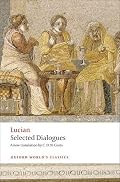
In the second century, a man named Alexander of Abonoteichus executed Law 27 more perfectly than anyone before or since. He buried a goose egg with a baby snake sealed inside it, staged its public discovery, and announced the birth of a god. Days later he unveiled the grown deity: a large tame serpent named Glycon, wearing a crafted human-faced head of linen that Alexander could work in the dim lamp-light of his shrine. He sold prophecies for a fee. He answered sealed questions by melting the seals and restoring them. He franchised. Emperors consulted the snake. The five steps, all of them, run flawlessly, and the fortune was real. We know every mechanism because a satirist named Lucian investigated the operation and published the exposé, Alexander the False Prophet, the ancient world’s great debunking.
Two details from Lucian survive as the whole argument of this article. First: Alexander opened his mystery rites with a formal expulsion. “Away with the Epicureans! Away with the Christians!” he cried, and the crowd chanted the response. Why those two groups? They were the trained skeptics of the empire, the people most likely to ask how a linen puppet answers sealed letters. The charlatan’s liturgy begins by removing everyone capable of elenchus, the cross-examination, because one honest question ends the god. Second: when Lucian kept digging, Alexander arranged his murder, sweet-talking the captain of Lucian’s ship into an assassination that failed only because the captain lost his nerve. The prophet of hope, at the first touch of scrutiny, reached for a knife. That is where the law lives when it is executed perfectly.
Now set the counter-model beside him. Socrates had every asset a cult requires: magnetic presence, devoted young followers, even a private divine sign. He refused the position. He charged no fees. He claimed no doctrine, only a method. At his trial, with his life on the line, he told the jury plainly that he had never been anyone’s teacher, and that anyone who claimed to have learned private doctrine from him was lying. What he gave the young men around him instead of a faith was the elenchus itself, the practice of testing every claim, including his. The charlatan expels the cross-examiner. The philosopher deputizes him. Alexander died rich, and Glycon’s cult evaporated within a few generations of losing its puppeteer. Socrates was executed by the city he questioned, and the method he handed his followers is still running, twenty-four centuries later, in every discipline that tests claims before believing them. That is the difference between a following and a legacy: one requires your hands on the puppet, the other survives your death.
The Test
Run your own operation through three questions, and answer them slowly.
First: could your best people explain why they follow you, in their own words, under hostile questioning? Not recite the slogan. Defend the reasoning, the way they would defend a belief they built themselves. If the answer is the slogan, you have believers, and belief that cannot survive cross-examination was installed, never grown.
Second: what happened to the last person who asked the rude question in public? Trace it honestly. Were they answered, or were they managed out, frozen out, expelled from the rites? Every organization gives one of two answers, and everyone inside already knows which one yours gives. A culture is defined by what it does to its Lucians.
Third: if you disappeared tomorrow, does the thing keep working? Say the uncomfortable version out loud: how much of what you have built runs on conviction about the mission, and how much runs on proximity to you? If the thing dies without your hands every day, you built a performance with your name above the title, and performances close.
Final Thoughts
Law 27 is the most honest law in Greene’s book, because it names its practitioner: the charlatan. He does not pretend the cult leader is anything else. He simply bets that you will take the trade, their judgment for your power, their hope for your income, and he is right that the trade is available. The hunger is real, the recipe works, and the marks are abundant.
The Greeks watched this exact play run for a thousand years and left us the accounting. The enchanter wins the crowd and loses his information, his peers, and eventually the ability to distinguish his own performance from the truth. The teacher takes the slow road, builds judgment instead of bypassing it, and creates the only kind of following that neither collapses nor imprisons: people who stay because they have examined the thing and found it sound.
People want something to believe in. Treat that hunger as a responsibility to deserve rather than an exploit to run. The test of deserving it is simple: give them something that gets stronger when they think, and never make it you.
If you would rather build a crew of thinkers than an audience of believers, MasteryLab is the framework and the community for leaders doing that slower, sounder work in the open.