Acting Dumb to Get Ahead Works. Until You Can't Stop Acting.
By Derek Neighbors on May 25, 2026
Power vs. Virtue: The 48 Laws Examined
A year-long examination of Robert Greene's 48 Laws of Power through the lens of ancient virtue ethics. Some laws we affirm, some we reframe, some we reject entirely.
There is a man in almost every organization who lets everyone else feel like the smartest person in the room. He asks the slightly naive question. He fumbles a detail he understands better than anyone present. He lets the confident colleague explain a thing the man could have explained more precisely, and he nods along, grateful, a little out of his depth. It works. People relax around him. They reveal more than they should. They underestimate him into opportunity after opportunity, and he collects the winnings quietly.
Then one day, usually somewhere in middle age, he notices something he cannot fix. No one in his life has ever actually met him. They have met the agreeable, slightly-behind version he deploys to keep everyone comfortable and unguarded. He has become so good at seeming less than he is that the people closest to him would not recognize his actual interior if it were set in front of them. And he finds he cannot stop performing even when he wants to be known, because the relationships were all built on a man who is not there.
This is the bill on Robert Greene’s twenty-first law. It takes years to arrive, which is exactly why almost no one connects the tactic to the cost.
The Law
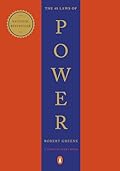
Greene’s Law 21 is “Play a Sucker to Catch a Sucker: Seem Dumber Than Your Mark.” His framing: “No one likes feeling stupider than the next person. The trick, then, is to make your victims feel smart, and not just smart, but smarter than you are. Once convinced of this, they will never suspect that you may have ulterior motives.”
The model citizens are familiar. The con man who plays the bumbling out-of-towner. The negotiator who pretends not to follow the numbers until the other side overcommits. The courtier who lets the king feel like the only clever man in the palace. Greene treats the deliberate performance of inferiority as a sophisticated instrument. The mark’s vanity is the lever. Your hidden intelligence is the hand on it.
The Tactical Truth
I will give Greene the kernel, because it is real and most ambitious people learn it too late.
Flaunting your intelligence is a genuine liability. The person who needs to be visibly the smartest in every room pays a steep tax. People defend against him. They withhold from him. They quietly enjoy his failures. There is real phronesis, practical wisdom, in not leading with your intelligence as a weapon, in asking the honest question instead of performing the answer, in letting people arrive at things on their own. Being underestimated is sometimes a gift you should accept rather than rush to correct.
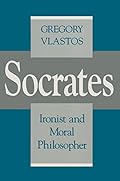
The Greeks went further than this and gave the noble version of feigned ignorance a name. eironeia, the root of our word irony, originally meant dissembling, a strategic understatement. Socrates turned it into the most productive teaching method in the ancient world. He would profess to know nothing, ask the confident expert to explain, and let the expert’s own answers expose the holes in what he claimed to know. Socrates played dumb constantly. He was the patron saint of seeming dumber than your mark.
So the tactic itself is not the problem. Humans have used strategic understatement well for twenty-five centuries. The law tips into something else at a specific, locatable point, and that point is the telos, the end the action serves. Socrates feigned ignorance to walk the other person toward truth and leave him wiser. Greene’s reader feigns ignorance to walk the other person into a position he can be exploited from and leave him poorer. Same mask. The hinge is what the mask is for.
The Character Cost
Here is the invoice, in three escalating parts.
First, the performance fuses to the performer. hypokrisis was the Greek word for acting, the work of the hypokritēs, the actor who delivered a part on stage. It is the source of our word hypocrisy, and the journey of that word tells you everything. A mask worn for an evening is a tool. Run it as a daily operating posture and the line between the played self and the real self stops being something you can find on command. You meant to wear the fool. After enough years, the fool is wearing you. You reach for your actual judgment in a moment that finally matters and discover you have spent so long hiding it that you are no longer fluent in it. The muscle you stopped using atrophied while you were busy winning small hands.
Second, you forfeit being known. Every relationship built on the performed-inferior self is a relationship with a character, not with a person. The people who like the fool do not like you, because they have never met you. The intimacy you eventually want, the colleague who actually sees how your mind works, the friend who knows what you carry, becomes structurally unavailable, because you spent years training everyone in your life to relate to someone who is not there. You end up surrounded and unmet, which is a particular kind of loneliness that money and position do nothing to touch.
Third, and deepest, you corrode your own relationship to aletheia, truth. The Greek word means unconcealment, the state of a thing being un-hidden. A person who spends his cognitive life concealing what he knows from the people around him slowly loses the reflex of truth-telling, and not only to others. The instrument you use to deceive other people is the same instrument you use to see reality, and it does not come with two settings. Sharpen it for the con and it cuts your own perception. The skilled deceiver becomes, over a long enough career, the most deceived person at the table, because he has spent his finest faculty hiding the truth, and a faculty trained to hide does not come back clean when you finally need it to reveal.
The ARETE Alternative
The alternative is not the opposite extreme. The opposite extreme is the man who broadcasts his intelligence constantly, corrects everyone, treats every conversation as an exam he must win. He is not being known either. He is being endured. Compulsive display and compulsive concealment are two roads to the same place, which is a life in which no one has met you.
The arete path is sophrosyne without hypokrisis. sophrosyne is the restraint that does not need to be the smartest voice in the room. You do not have to dominate. You also do not have to manufacture a false inferiority. You can ask the genuine question because you actually want the answer, not as bait. You can let someone misjudge you in your favor and simply decline to correct them, which costs you nothing and deceives no one, because you did not engineer the misjudgment. The difference between accepting that a person has underestimated you and building the underestimation on purpose is the entire difference between a virtue and a con.
And then there is the recovered version of eironeia, the honorable one. Use feigned not-knowing the way Socrates did. Ask the question you know the answer to so the other person thinks it through and arrives at something true on their own. That is the only kind of playing dumb that leaves both people better. You can test any instance of it by its telos. If the end is that the other person sees something true, the irony is virtuous. If the end is that the other person can be taken, the irony is a con artist in a philosopher’s robe.
Ancient Wisdom
It is worth sitting with what eironeia cost Socrates, because it kills the easy reading. Athens executed him, and part of why is that powerful men did not enjoy being made to feel less wise than they had walked in assuming. The honorable use of playing dumb is not free. It exposes people to themselves, and people do not always thank you for the mirror. But notice the shape of the cost. Socrates paid for telling the truth through the side door of feigned ignorance. Greene’s reader profits by concealing the truth through the same door. One man dies for aletheia. The other man dines out on its absence. The behavior looks identical from across the room. The telos is the whole story.
This is precisely why the law is so seductive and so corrosive at once. The surface behavior is defensible, because everyone sensible agrees you should not flaunt your intelligence. It runs the same play as using honesty itself to disarm a target, a defensible surface laid carefully over an extractive intent. The end it quietly serves is the conversion of every person around you into a potential mark. The defensibility of the surface is the camouflage for the rot underneath, and because the telos is invisible from the outside, you can run the rot for decades and tell yourself you are merely being humble.
The Test
Run this diagnostic the next time you catch yourself dialing down what you know in a conversation. Stop and ask one question. What is this for?
If the honest answer is “so this person relaxes and reveals more than they would to my equal, so that I can use it,” you are running Law 21, and the bill is accruing whether or not you can see it yet. If the honest answer is “because I do not need to win this, and the conversation goes better when I am not performing my intelligence,” you are practicing sophrosyne, and you owe no one an apology. If the honest answer is “because I want this person to reason it through and reach it themselves,” you are using eironeia the way Socrates did, and you are doing one of the most generous things one mind can do for another.
The lowered voice and withheld knowledge can serve restraint, Socratic teaching, or predation, and only the telos separates them. The test was never whether you seem dumber than you are. The test is what the seeming is for.
Final Thoughts
The kernel of Law 21 is worth keeping. Do not flaunt your intelligence. Let people underestimate you when it serves the work. Accept the gift of being misjudged in your favor. There is real wisdom in the restraint, and the Greeks would have endorsed it.
The full law is a different animal. It is the deliberate, sustained manufacture of a false self for the purpose of turning the people around you into marks, and the longer you run it, the less of you survives the operation. You set out to catch suckers by playing one. You end up the man who won every hand and was never once known by anyone at the table. The Greeks handed us the better version of the same tactic and showed us exactly where the line falls. Feign ignorance to reveal the truth and lift the other person, and you are Socrates. Feign ignorance to conceal your intent and lower the other person, and you have confused a long clever career for a life. The mask is the same in both hands. Everything that matters is in what you put it on for.
Excellence requires the courage to be known, not the cleverness to stay hidden. MasteryLab.co is where leaders trade the performed self for the developed one.