Stay Uncommitted Long Enough and No One Comes Looking for You
By Derek Neighbors on May 18, 2026
Power vs. Virtue: The 48 Laws Examined
A year-long examination of Robert Greene's 48 Laws of Power through the lens of ancient virtue ethics. Some laws we affirm, some we reframe, some we reject entirely.
The phone rings less than it used to. Not the work phone. The other one. The introductions that used to find their way to you have stopped finding their way. The opportunities are still being routed, just somewhere else. You have made no enemies. Your reputation, in the polite formal sense, is intact. Something else has shifted that you cannot quite trace.
You have been preserving your independence for years. Refusing to take sides. Keeping your options open. Each individual instance looked like prudence in the moment. The aggregate looks like something else. You have not noticed the cumulative training you have been giving the people around you. You have been teaching them, week by week, what to expect from you. They have learned the lesson. The lesson is that you will respond with a thoughtful, polite, non-binding version of “let me think about it” that almost never resolves into a real action. Their model of you has updated. The updated model does not call.
This is the part of Greene’s Law 20 the book does not advertise. It works tactically. It also produces, over years, a person nobody can quite be sure of. The Greeks had a precise word for the disposition the law forbids, and a precise word for the kind of freedom you actually lose by following it.
The Law
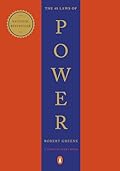
Greene’s Law 20: “Do not commit to any side or cause but yourself. By maintaining your independence, you become the master of others, playing people against one another, making them pursue you.”
The model citizens of this law are familiar. The mercenary who switches sides for the next contract. The courtier who never quite endorses anything until the fight is over. The operator who positions themselves as the indispensable broker between camps. Greene treats them as masters of the game. He frames the alternative, the person who commits early, as a fool who gets locked in and pays for it.
The prescription: stay free, stay above, stay in motion. Let everyone else commit. Be the one they all need to court.
Read the architecture of that advice carefully. The variable governing your conduct, taken seriously, becomes whether commitment will reduce your future optionality.
The Tactical Truth
There is a real kernel here. Some people do lock in too early. They join the wrong side of a corporate fight because the recruiter was charismatic. They commit to a partnership before they have seen what the partner does under pressure. They sign a deal because it was in front of them. The world is full of people who paid expensive prices for premature commitment.
A version of this advice is plain phronesis, practical wisdom. Do not commit before you understand what you are committing to. Do not let urgency manufacture your loyalty. Do not give your word lightly. None of that is controversial.
If the law stopped there, it would be useful. It does not stop there.
The law’s full prescription is structural. It is not “do not commit prematurely.” It is “do not commit.” The filter that governs your conduct, run over years, becomes a permanent posture of strategic withholding. You started by trying to avoid being played. You ended up unreachable.
The math may protect you from a specific class of mistake. The math is also slowly building the person it protects into someone the world stops bringing things to.
The Character Cost
This is the section where the law’s hidden invoice gets read aloud.
People stop bringing you things. Not the small things. The small things keep coming. The big things stop. The opportunity that would change someone’s career, the confidence that would only get shared with someone trusted, the introduction that costs the introducer a chip with someone they respect, these find someone else. You notice the change as a quiet thinning of your incoming flow. You cannot trace it to any single event because there was no event. There was only the cumulative pattern of you not being the person anyone could be sure of.
You become someone everyone is polite to. People say good things about you in your absence. The good things are general. They do not include the sentence that produces the introduction, which is some version of “they will show up.” That sentence requires a track record of having shown up, which requires having committed, which is the thing the law forbade.
You lose access to the deepest information in any room. The deep information only moves through pistis, the fidelity that makes the recipient safe to tell. Without it, people manage you the way they manage acquaintances. Politely. Carefully. With nothing on the table they cannot afford to have leak. After enough years of this, you forget what the deep information sounds like. You think the surface conversation is the conversation.
You stop being the person someone calls in a crisis. The call goes to the person who committed years ago, even if that person is less competent than you, because in a crisis, competence ranks below the question of whether the helper will still be there in the morning.
Worst of all, you start to believe the absence is freedom. You misread the empty calendar as bandwidth. You misread the lack of demands on you as autonomy. You have confused the situation of a free citizen with the situation of a person nobody is counting on. The Greeks would have looked at the resulting state and given it a name they reserved for the most invisible form of unfreedom: the freedom of a person whose word has stopped being requested because everyone around them has quietly concluded it would not arrive on time.
The ARETE Alternative
The alternative is not the opposite extreme. The opposite extreme is the person who commits to everything indiscriminately, who joins any cause that asks, who gives their word to anyone who requests it. That person also has no commitment in any operationally useful sense, because the word means nothing once it is given to everyone.
The alternative is pistis, the Greek virtue of fidelity. pistis is not loyalty to a side. It is the disposition of being someone whose commitments can be relied on. The pistis person can take a side, hold a position, give a word, and the people around them know what the word is worth because the track record exists. Their optionality is not the optionality of the uncommitted person. It is the optionality of someone who is in demand because they are known to be there when they say they will be.
philia requires pistis. Aristotle wrote that real friendship takes years and cannot be rushed, because friendship is the long mutual demonstration that the other person can be relied on through difficulty. The uncommitted person cannot have philia. They can have many warm acquaintances. The warm acquaintances are real. They are also, in a way Aristotle was clear-eyed about, a substitute that does not nourish.
koinonia, the shared life, requires the very thing the law forbids. To be in koinonia with anyone is to be available to them in a way that constrains your optionality. The constraint is the gift. It is what makes the relationship a relationship rather than a transaction.
Ancient Wisdom
pistis sits underneath the alternative. Aristotle and the Stoics treated fidelity as a virtue precisely because most people, under pressure, walked away from their word. The pistis person was rare and therefore valuable. Epictetus taught his students that the test of pistis was not whether you kept the easy commitments. It was whether you kept the commitments when keeping them cost you something. By that standard, Law 20’s prescription is a prescription for the absence of pistis: never put yourself in the position where keeping your word costs you optionality.
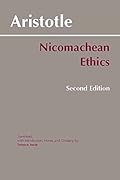
philia is what becomes possible when pistis exists between two people over time. Aristotle’s Nicomachean Ethics contains some of the longest passages on friendship in the ancient world, and the structural claim is consistent: real friendship is the slow accumulation of evidence that the other person will be there. You cannot manufacture it. You can only earn it by being someone whose commitments can be tested without breaking.
koinonia extends the same logic to community. The Greeks treated the polis as the highest form of koinonia and considered the citizen who treated the polis as a stage for personal optionality to be a defective citizen. Such a person was free-riding on the commitments other people had made. They were extracting value from a system they refused to invest in. The diagnosis was unflattering and accurate.
eleutheria is the political payoff for the other three. The Greeks did not consider freedom the absence of obligation. They considered freedom the capacity to make obligations that meant something. The slave could not bind himself with a contract, because the slave did not own his time. The free citizen could. The exercise of freedom was the giving of one’s word, the holding of a position, the taking of a side. Law 20 trains you to refuse that exercise. The result is a kind of unfreedom that is invisible because it looks, on the surface, like the maximum of freedom.
These four virtues sit underneath the law and dissolve it. They describe a person whose conduct earns the kind of optionality Law 20 tries to manufacture by withholding. The person Greene is teaching you to become is a person these virtues would not recognize.
The Test
For one week, watch the small moments. Notice what you do when someone asks you to commit to something. The commitment can be small. A meeting. A position on a debate. A side in a small office disagreement. A reference for someone whose work you respect. A weekend on someone’s project.
Watch the reflex.
Notice if the first move in your head is the calculation of what commitment would cost you in future flexibility. Notice if you produce a polite version of “let me think about it” that you have no actual intention of thinking about. Notice if you have a smooth phrase for staying close to the situation without putting your name on it. Notice if the smooth phrase comes out the same way it came out last month, and the month before that.
The reflex is the data. It tells you how long the law has been running underneath your conduct. It does not, by itself, change anything. What changes things is the willingness, in some specific case where the reflex fires, to do the opposite. To commit. To give your name. To be on the hook. The first time you do it, the reflex will protest. The protest is information about how deep the habit has run.
Final Thoughts
The kernel of Law 20 is real. Premature commitment is a real cost. Not every cause is your cause. Not every fight is yours to enter. There is a version of strategic patience that is plain wisdom.
The full law is something else. It is an operating system that converts your relationships into a perpetual brokerage of unmade commitments, and the longer you run it, the smaller the version of you that survives the operation. You end up with a social position the Greeks would have recognized: someone whose word cannot be given, because nothing in their life is theirs to commit. The wealth and titles do not change the diagnosis. The diagnosis is structural.
The people who will matter to you five years from now will be the people you decided were worth the risk of commitment. The opportunities that change your life will arrive through the relationships that survived the cost of pistis. The phone will ring for the person who showed up. None of that is available to the person Law 20 builds, because Law 20’s prescription is to never quite show up in any way that could be held against you later.
The Greeks knew exactly what the prescription produced. They had seen it in the men who moved through the agora collecting respect from everyone and trust from no one. They built their virtue ethics anyway, because they understood that a person who cannot give his word has not yet become a person. He is a position, occupied by no one in particular, available to everyone, sought by no one when it matters.
Stay uncommitted long enough and no one comes looking for you, because trust accrues to people who can be counted on, not to people who keep every exit open. You can take the kernel of Law 20 and keep it. The rest of the law is a prescription for a quiet, prestigious, isolated life that the Greeks would have refused to call a life at all.
Excellence requires the willingness to be on the hook for something. MasteryLab.co is where leaders train the fidelity that makes their commitments worth more than their optionality.