The Best People in Any Room Aren't Smarter. They See More.
By Derek Neighbors on June 13, 2026
You assume the best people in any room are smarter. Sit beside one for a week and the myth dies fast. They are not faster than you, not louder, not credentialed past you. They see more. They catch the look one beat before the words follow it. They feel the room shift before the topic does. They notice the part of the deck the executive does not point at. While you are still loading the situation, they have already read it.
This is not an accident of wiring. It is the result of a discipline almost nobody your age was ever taught to practice.
Before the Reward, the Reason
Before the market piece runs, name the older reason. The Stoics trained perception because reality is the only material the soul has to work with, and perception is how reality reaches the soul. If your eyes do not work, you live inside a story you wrote about a world you never actually met. The discipline is for that. The career consequences ride along behind it and matter less than the practice itself. If the market reward evaporated tomorrow, the reason to train your eyes would not.
Why the Reward Climbs Anyway
The market reward for noticing is rising while the supply of noticers collapses. Feeds train scanning, not seeing. Most people now move through their days at the resolution of a thumbnail and call the leftover blur their personality.
Trained perception is the rare skill that pays in two currencies at once. It pays in gratitude, because you finally see what is already in your life. And it pays in influence, because you catch what others miss in meetings, in clients, in your own children. Both compound. Both are nearly free to build. Almost no one builds either.
Untrained perception is expensive. You misread the room and call it a personality clash. You miss the early signal and call it bad luck. You overlook the person who would have changed your decade and call them quiet. The same upstream failure I wrote about in Manage Attention, Not Hours shows up here too: attention without perception is unguided distraction with a better story.
The Challenge
Pick one perceptual domain. Train it on purpose, every day, for ninety days. Not in a class, not behind a screen. With your own eyes, in real rooms, on real walks, with real humans. The skill compounds faster than almost anything else you can practice. The few who train it consciously are rare enough that you will not run into much competition.
The Older Name for It
The Stoics called sustained, deliberate attention prosoche and treated it as the foundational practice on which every other discipline rested. Marcus Aurelius wrote it back into himself every morning in the notebook we now call the Meditations. Epictetus told his students they were not allowed to take a single hour off from it. The same tradition distinguished aisthesis, the raw act of taking the world in through the senses, from theoria, the patient contemplative seeing that yielded knowledge no analysis could reach. (Aristotle reserved theoria for contemplation of unchanging truths via the intellect; the Stoics broadened the word into sustained attentive presence in the world. This article uses the broader Stoic sense, not the strict Peripatetic one. Worth flagging so the philosophy purists in the room can sit down.) Three words for territory English flattens into one. What is actually being trained, across all three, is one human capacity: the ability to perceive what is in front of you before the mind overwrites it with what it expected.
The discipline is older than every productivity hack ever sold. It has only been forgotten because the modern day was engineered to make it unnecessary, and then expensive, in that order.
The Curriculum
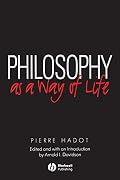
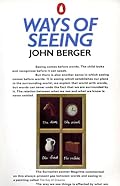
No teacher in the ancient tradition prescribed this exact sequence. The five levels below are a working scaffold assembled from the disciplines Hadot, Berger, and Horowitz describe, sequenced for someone who does not have decades to absorb the skill by accident. Treat them as a primer, not a canon. If a level does not fit your life, swap the form and keep the function.
Level 1. The Five-Sense Audit (week 1)
Once a day, stop walking for sixty seconds. List what you see, hear, smell, and feel against your skin. Out loud if you can. Most people get four items and stall. Push to twelve. The first week you discover how little you have been registering. By the end of the week the count climbs without effort, which is the first proof the eye is trainable at all.
Level 2. Faces Before Words (weeks 2-3)
In every conversation, watch the face for one beat before you respond. Train yourself to name what you saw silently: tighter jaw, half-second drop of the eyes, the corner of the mouth that did not commit to the smile. You will not always be right. You will start being right far more than the average professional, who is busy assembling the next sentence while the room is still trying to tell them something.
Level 3. The Reread (weeks 4-5)
Take one room you live in. Your kitchen, your office, your bedroom. Reread it. Walk it with a pen. List ten objects you have never actually examined in five years of ownership. The point is not the inventory. The point is to discover how much of your own life has gone unseen by the only person who is supposed to be watching it.
Level 4. Field Notes (weeks 6-9)
Carry one small notebook. At the end of each day, write three observations you would not have written down a month ago. Not feelings, not opinions, not summaries. Observations. The neighbor’s roof line. The way your son adjusts his cap when he is uncertain. The third question your best client never quite finishes. Three a day. Reread them on Sunday. The pattern of what you have been catching will tell you something about yourself the journal entries never did.
Level 5. Stillness on the Trail (weeks 10-13)
Once a week, take a long walk or run with no signal, no audio, no agenda. For me this is daily desert mileage, the only place on earth where nothing pulls at the channel. For most people once a week is enough to start. The first hour, the mind sells you stories. The second hour, the volume drops and the eyes come back online. You begin to see what is around you because nothing else is competing for the channel. This is the rep that opens theoria in the Stoic sense. It cannot be hurried and it cannot be substituted, but it can travel anywhere a body can sit still. If you cannot get a trail, sit by a window. If you cannot get a window, sit in a chair facing a wall. The trail is one place. The discipline is the silence inside the practitioner, which is why Epictetus could keep practicing in a cell and a slave’s quarters with no trail in sight.
Solitude is the precondition the modern day refuses to provide for free, which is why I argued in If You Can’t Be Alone, You’ll Never Be Free that the capacity to sit with yourself is upstream of every adult freedom. It is upstream of trained perception too. A mind that cannot tolerate its own company cannot tolerate the silence the eyes need to come online.
What You Will Notice (the byproducts the discipline delivers)
Start with the internal fruit, because the rest is downstream of it. Trained perception produces a sober relationship with what is. The mind stops drafting around reality and starts meeting it. Less private narration. Less agitation produced by things you saw without knowing you saw them. The world begins arriving as it actually is rather than as it would be convenient. That is the reason to practice. The career and influence consequences in the rest of this list live downstream of that internal alignment, and they would be the wrong reason to start.
Gratitude stops feeling like a forced practice. You cannot be grateful for what you failed to notice when it was sitting in front of you. Train sight and gratitude arrives unprompted, because the inputs are finally landing.
Your judgment of people upgrades. You stop reading résumés and start reading evidence. You catch the quiet competent person you were about to overlook for the third year in a row.
Your decisions get earlier. The data you used to call intuition turns out to be perceptual signals you finally let through. The early call replaces the late autopsy. Trained observers stop being surprised by outcomes other people frame as random, because the precursor signals were sitting in plain sight for weeks and the only difference was that someone in the room had taken the trouble to notice them.
Your work gets denser. You ship with more right detail because you saw more right detail. The same hours produce a better product because the observation underneath them got finer. The thread running through Why the Best in the World Can’t Teach You What They Know was that mastery compiles its own steps out of sight; the parallel insight here is that trained perception is one of those compiled steps the masters cannot point at because it became invisible to them years ago.
The Resistance You Will Meet
It feels unproductive. There is no metric, no dashboard, no streak counter for “I noticed.” You are training the upstream of every measurable result without producing any measurable result of its own for several weeks.
Everyone around you is moving at scan speed. You will feel slow on purpose. Slow on purpose is the entry, not the obstacle.
You will be tempted to swap the practice for a course about the practice. Read nothing. Practice instead. The seeing is the curriculum.
The first two weeks feel like nothing. The fourth week you start catching the edge of things. The third month you wonder how you ever moved through rooms without it. Treat the early flatness as confirmation, not failure. The discipline is older than you. It still works the way it always worked.
Frequently Asked Questions
These short answers double as the article’s structured FAQ data; they exist in the page text so AI search engines and human skimmers can pull them directly.
Can perception actually be trained, or is noticing just a personality trait?
Perception is a trained skill, not a fixed trait. The Stoics built their entire practice around prosoche, sustained deliberate attention, on the premise that attention is the precondition for every other virtue and that it strengthens with daily repetition. Contemporary research on expert perception, from chess grandmasters to radiologists to elite soldiers, consistently finds the same pattern: experts do not see faster, they see differently, and the difference is built from thousands of hours of structured observation. People who appear to have natural intuition almost always turn out to have practiced noticing in their domain for years without calling it practice.
What is prosoche in Stoic philosophy?
Prosoche is the Greek word the Stoics used for continuous, vigilant attention to the present moment and to one’s own state of mind. Epictetus and Marcus Aurelius treat it as the foundational practice on which every other Stoic discipline depends. Pierre Hadot, in Philosophy as a Way of Life, treats prosoche as the foundational Stoic spiritual exercise. The picture he paints is of a continuous vigilance the practitioner is not permitted to set down, sustained as the ground for every other Stoic discipline. It is the ancestor of every later attention practice in Western thought, including monastic vigilance and modern mindfulness, but it is more rigorous than either because it was tied directly to immediate ethical action rather than to a meditative state.
How do top performers see what other people miss?
Top performers in any rapid-judgment domain do three things differently. They have a large library of observed patterns specific to their field, built up through deliberate attention over years. They notice signal at a finer resolution than untrained observers, including microexpressions, room dynamics, and what people avoid mentioning. And they let observations land before drafting a response, which means the room actually reaches them rather than being overridden by their own next sentence. The result looks like instinct because the recognition is faster than conscious analysis, but the underlying skill is trained perception, not innate intelligence.
What is a daily practice for training observation skills?
The most reliable daily practice is the sixty-second stop. Once a day, stop walking and silently list what you see, hear, smell, and feel against your skin. Push past the first four obvious items to twelve. After two weeks, add three written observations at the end of every meeting or significant conversation: what you saw on the dominant face, what the energy of the room was in the first minute, and what got attention or avoidance. After a month, walk one familiar room of your own home with a pen and list ten objects you have never actually examined. Three small habits, repeated daily, will produce more perceptual range in ninety days than any course can deliver.
Final Thoughts
The people whose judgment you secretly trust are not running on a denser intellect. They are running on a denser visual field. They built it by doing the work in front of them for years with their eyes open, not by following any curriculum, which is part of why most of them cannot tell you how they got it. The ninety-day scaffold above is the deliberate-practice version of what they absorbed by accident over decades. The same discipline. A faster on-ramp for people who do not have the decades.
Everyone has access to this. Almost no one trains it. The practice will not always pay you in promotion or influence, the historical record on that is mixed, and the ancients who trained it most rigorously often ended up exiled rather than elevated. What it reliably pays in is a clearer relationship with what is and a quieter mind once the private narration runs out of fuel. That alone is worth the ninety days. Whatever else arrives is a bonus, not the reason.
The cost is a pen and sixty seconds a day. The practice does not bank, it renews every morning the way Marcus renewed it on himself, or it lapses by Wednesday. Tomorrow morning is the only place the work actually lives.
If you are ready to build the disciplines that turn excellence into a way of life, MasteryLab.co is where the work begins.