Every Step Up Needs a Small Funeral
By Derek Neighbors on November 22, 2026
You got here by being someone. Maybe you were the engineer who knew where every bug lived. Maybe you were the founder who knew every customer by first name, or the manager who could walk into any fire and come out with a plan by lunch. That person earned you the bigger job.
Now the bigger job needs someone else, and your old self will not leave.
You feel it as a pull. Production goes down and you are running the incident call before anyone asked you to. A customer escalation lands and you take the call yourself, because you are good at it and it feels like breathing. At the end of the week you are tired, busy, and somehow behind, and you could not say on what.
You are behind on a funeral. Mark Manson calls these small funerals, the moments when growth asks an earlier version of you to die. Every real step up has one, and most people refuse to hold it.
The Setup: The Old Self That Got You Here
Start with credit, because the old self earned it. That version of you solved the problems in front of it. It worked the hours and learned the craft that built your reputation. Those habits were right for that job.
By the old self I mean two things together: the habits that fit your last job, and the story you tell about who you are because of them. The story is the part that sticks. You can change a habit with a calendar block, but people defend their stories. “I’m the one who ships.” “I’m the one people call when it breaks.” Both sentences were true for years, and both feel like character, which makes them hard to question.
Marshall Goldsmith keeps a list of twenty habits that hold successful people back. One of them is “an excessive need to be me,” the urge to treat your old patterns as virtues because they are who you are. When you say “this is who I am” about a habit that fit your last job, you have put the old self on life support.
The Journey: Life Support
Life support looks like loyalty from the inside. The new role starts and you keep a hand in the old work to stay sharp. You rewrite the specs your managers hand the agents, because nobody frames a problem the way you do. The big customer relationships stay with you because you built them.
Each of those choices makes sense alone. Together they mean the new job gets the scraps of your week. The team learns to wait for you. The people who should grow into the old work never get the chance, because the old work still has someone in it.
Stopping hurts, and that hurt is real. You are good at the old work. The new work makes you feel slow and unsure, and every hour there feels like a step down. So you sneak back to the place where you are competent, and you call it helping.
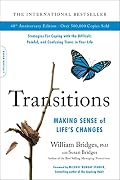
William Bridges spent his career on this. In his book Transitions, he separates change, the outside event like a new title or a new team, from transition, the inside work of letting go. His sharpest point is that every transition starts with an ending. You end the old thing first. Then you spend a stretch in what he called the neutral zone, where the old self is gone and the new one has not formed. Only after that does the new beginning take hold.
Most people run that order backward. They start the new role and wait for the old self to leave on its own, and it stays.
The Turning Point: Call It Grief
The turn comes when you call the feeling by its right name.
What you feel in the new role is mostly grief, and you have been reading it as incompetence. You are losing a version of yourself that was good at something and got praised for it. Losing something you loved is supposed to hurt.
Seneca wrote about this in his 24th letter to Lucilius. We die every day, he says, because every day some part of our life is taken from us. We lost infancy, then boyhood, then youth. Then he adds the line that matters here: even while we are growing, life is being taken away. He wrote it to Lucilius, who was anxious about a lawsuit, and it works as well for a promotion. The gain and the loss show up on the same day.
Once you see it as grief, two things change. You stop treating the ache as the only evidence about whether you took the right job. And you can do what people have always done with grief, which is mourn on purpose and then move. The Stoics never asked anyone to skip that part, which I wrote about in Stoicism Doesn’t Mean You Stop Grieving. Naming it grief explains why the old work keeps pulling at you, and you still choose where your hours go.
The Greek word for the turn you are making is metanoia, a change of mind deep enough to change your direction. I wrote about metanoia for leaders as the change an organization needs from the top. People tend to picture it as one bright moment. In my experience it more often looks like this: a slow, sad turning away from a self you liked.
The Other Failure: Skipping the Grief
There is a second way to get this wrong, and I know it from the inside.
In my thirties I owned a company during a bad economy while my kids were in high school playing competitive soccer. The business was barely breathing. We pared the family down to the basics, and I bought a twenty-year-old Toyota 4Runner on purpose. That lean version of me learned that most of what I wanted, I did not need.
When the kids graduated and the economy turned, I threw that version of me out without a funeral. I bought more cars, went through rounds of remodels, and said yes to more commitments. I told myself I had earned it, and in some ways I had. But the lesson went out with the hardship. I am back to living with less now, in my late forties, and a lot of the credit goes to my wife, who is a more disciplined minimalist than I am and holds the line when I start to drift.
A funeral lets you bury the person and keep what they taught you. When you skip it and throw the old self out in a hurry, the lesson usually goes with it, and you end up having to learn it again.
The Resolution: How to Hold a Small Funeral
Make it concrete. A funeral that only happens in your head stays a mood.
-
Name who is ending. Finish this sentence in writing: “The person who got me here was the one who ___.” Be specific. “The one who ran every incident call personally” is useful. “A hard worker” tells you nothing.
-
Write the eulogy. Three or four sentences on what that version of you gave you, such as the skill or the people who trust you because of it. Giving it credit is what keeps you from throwing the lesson out with the role.
-
Split the estate. Make two columns and sort with one question: does this still serve the job I have now? The judgment and standards that version of you built usually land in the keep column. The role, the reflexes, and the work that now belongs to someone else land in the bury column. Hand each item in the bury column to a named person with a date.
-
Tell one person. Pick someone who sees you work every week. Tell them what you are burying, and ask them to say so when they catch you reaching for it. The old self comes back most when you are tired and something breaks.
-
Expect the neutral zone. For a while you will be worse at the new work than you were at the old. Bridges treats that stretch as a normal part of a transition, so do not read it as a verdict on the move. How fast you get good at the new work is only partly up to you, while the handoffs and where your hours go are entirely yours. Pick a review date, ninety days out is my rule of thumb, and refuse to judge the decision before then. By that point grief has usually started to ease, while a job that is truly wrong for you still hurts the same way. That is the day to ask whether you would choose it again.
Epictetus opens his Handbook by sorting what is up to us from what is not, and he puts office, the positions we hold, on the not-up-to-us side. Later in the same book he says never to say about anything, “I have lost it,” and to say “I have given it back” instead. Your old role was a position you held for a season, and it was never yours to keep. You are handing it back so someone else can use it.
The Principle: Growth Costs a Self
Every real step up costs a version of you. The promotion, the company that outgrows its founder, and the move from doing the work to leading the people who do it all ask for one. Some step ups are the same craft with more scope, and those need a smaller funeral. If nothing at all has to end, check whether you stepped up or got a bigger version of the same job.
The people who keep growing feel the loss too, and it keeps happening to them. Seneca’s point was that we die a little every day, so you will hold more of these. The engineer becomes the manager, then the director who has to bury the manager. Each one gets a little easier once you know that the grief means the move is real.
Something does carry through all of them. The part of you that judges what to keep, along with the standards you choose to carry forward, is the part holding each funeral, and the roles come and go around it.
Final Thoughts
You stall when you keep the person who got you here on life support, and you lose the lesson when you throw them out without grieving. The way through is a small funeral: name who is ending, credit what they gave you, keep the lesson, give back the role, and expect to feel slow for a while. Then do it again at the next step, because there will be one.
The old self sneaks back when nobody is watching. MasteryLab is a room of people who will notice and tell you.
Frequently Asked Questions
What does it mean to let go of your old self?
Letting go of your old self means ending the identity that fit your last stage so the next one can form. It usually shows up at a real step up, such as a promotion, a company that outgrows its founder, or a move from doing the work to leading the people who do it. You keep the lessons and judgment that version of you built, and you give back the role, the reflexes, and the work that now belong to someone else.
What are the three stages of transition according to William Bridges?
William Bridges described transition as three phases: an ending, a neutral zone, and a new beginning. He separated change, the outside event like a new title, from transition, the inside work of letting go. His central point is that every transition starts with an ending, and that the neutral zone, where the old self is gone and the new one has not formed, is a normal part of the process rather than a sign that something went wrong.
What did Seneca mean when he said we die every day?
In Letter 24 to Lucilius, Seneca wrote that we die every day because each day takes some part of our life away. We lost infancy, then boyhood, then youth. He added that this happens even while we are growing. His point was that loss is built into living and growing, so the healthy response is to expect it and meet it calmly instead of treating each ending as a disaster.