Your Brain Would Rather Be Wrong Than Confused
By Derek Neighbors on October 22, 2026
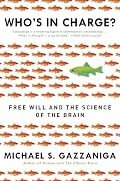
In the late 1970s, the neuroscientist Michael Gazzaniga sat across from a teenage patient known in the literature as P.S. The boy had undergone surgery that cut the main connection between the two halves of his brain, a last-resort treatment for severe epilepsy. With that connection gone, each half could be shown a different picture, and the halves could not compare notes.
Gazzaniga and his colleague Joseph LeDoux flashed a chicken claw to the left hemisphere, the half that handles speech. They flashed a snowy winter scene to the right hemisphere, which cannot talk. Then they laid out a row of cards and asked P.S. to point to the ones that matched what he had seen.
His right hand, run by the left hemisphere, pointed to a chicken. His left hand, run by the right hemisphere, pointed to a shovel, which makes sense if you saw snow.
Then they asked him why he chose the shovel.
The speaking half of his brain had never seen the snow. It had no idea why the left hand picked a shovel. A careful answer would have been “I don’t know.” P.S. answered right away: “Oh, that’s simple. The chicken claw goes with the chicken, and you need a shovel to clean out the chicken shed.”
He was not lying. His brain made up a cause on the spot and handed it to him as fact, and he believed it.
The Patient Was Not the Unusual Part
The easy read is that this is what happens to a damaged brain. Gazzaniga drew the opposite conclusion. He argued that the left hemisphere holds a system whose job is to explain, and he called it the interpreter. Everyone has one. The surgery made it visible, because for once researchers knew the real reason and could watch the explanation miss.
Two studies on people with ordinary, intact brains show the same thing.
In 1977, the psychologists Richard Nisbett and Timothy Wilson set up a table in a store with four pairs of nylon stockings and asked shoppers to pick the best one. The four pairs were identical. Shoppers still chose the right-most pair far more often than the left-most, probably because people tend to look left to right and settle on the last thing they see. When asked why, they talked about knit, sheerness, and stretch. When asked whether position had anything to do with it, almost all said no, and some looked at the interviewer as though the question were strange.
In 2005, Petter Johansson and Lars Hall took it further. They showed people two photos of faces and asked which one was more attractive. On some trials, using a magician’s sleight of hand, they slid over the face the person had rejected and asked them to explain their choice. Most of the time, people did not notice the swap. They gave reasons for a choice they had not made, and some praised features, like earrings, that only the rejected face had. Johansson and Hall called it choice blindness.
So the part of your brain that explains things will give you a reason for almost anything, right away, and it will not tell you when it is guessing. (I am drawing an arrow through a handful of studies here myself. Choice blindness in particular has been repeated many times, but check this article the same way it asks you to check yourself.)
The Narrative Fallacy: Why Your Brain Prefers a Wrong Story
Nassim Nicholas Taleb gave this habit a name in The Black Swan. He called it the narrative fallacy: “our limited ability to look at sequences of facts without weaving an explanation into them, or, equivalently, forcing a logical link, an arrow of relationship, upon them.”
Hand the mind a few scattered facts and it draws that arrow through them. The arrow makes the facts easier to remember and easier to act on. A wrong explanation still tells you what to do next, and confusion tells you nothing, so a brain built to keep you moving will usually choose the wrong story over no story.
The relief matters too. Not knowing why you did something feels bad, and an explanation, any explanation, makes the bad feeling stop. I wrote about how that same relief picks the answer in a hard meeting. Here the meeting is inside your own head, and the question on the table is about you.
The Story It Writes About You
The same interpreter writes your biography, and it uses the method it used on the shovel.
A label, as I mean it here, is a sentence about what kind of person you are, built from a few events, that predicts what you will do next. Take three events. You froze in a hard conversation with a direct report. A year later, a peer pushed back in a meeting and you went quiet. Then a difficult 1:1 went sideways. The interpreter draws an arrow through those three points and hands you a sentence: I’m bad at conflict.
It feels like a fact about you because it arrived like one, fast and sure, the same way the chicken shed did. The sentence may also be wrong. You might have frozen the first time because nobody ever taught you how to start that conversation. The meeting could have been a bad day, and the 1:1 could have been with a person who would have gone sideways with anyone. Each of those is a real possible cause. The interpreter skipped all of them because one clean label is easier to carry than three messy reasons.
Then the label goes to work. Someone who believes they are bad at conflict avoids it, gets no practice, and walks into the next hard conversation out of shape. It goes badly, and the interpreter adds a fourth point to the arrow. Now the label has evidence it helped create, and each time the skill comes up, you choose not to try it. That loop is close kin to the personal best that turns out to be a personal belief.
I hear a version of this from engineering leaders all the time: “I’m not technical.” Usually it rests on a few rough months early in a career, a class that went badly, or a team where the senior engineers made them feel slow. The sentence then decides what they do for the next fifteen years. They stay out of the code, so they stay unable to read it, so the sentence keeps looking true.
The examination has always been the leader’s job, and what changed is the cost of one test. Open the repo with an AI model, pick one file, and ask it to walk you through what the code does, line by line, until you can explain it back. One afternoon of that is more evidence than the whole story was built on. My bet is that most leaders who try it find the label was about access and practice more than ability.
A Story Is Not a Cause
Two Greek words help here. A mythos is a story. In the Poetics, Aristotle uses the word for a plot, and he says a good plot links its events by what is probable or necessary, so each one seems to follow from the one before. That is why a well-made story feels like a cause. An aitia is a cause, and the word also meant the thing responsible, the one you could fairly blame. Aristotle built his whole account of explanation around the question of what is actually responsible for a thing being the way it is.
A mythos can be complete, moving, and false. P.S. had a perfect mythos about the chicken shed. The aitia was a snow scene he never consciously saw. Plato told myths on purpose, like the myth of Er that closes the Republic, and he called them myths when he told them. A story does no harm while you remember it is a story. The label “I’m bad at conflict” is a mythos you forgot was a story. The aitia might be missing practice, one bad teacher, a culture that punished disagreement, or a single rough week that got promoted to a personality trait.
Epictetus taught his students to slow down at exactly this moment. When a strong impression arrives, he said, speak to it: wait for me a little, let me see what you are and test you. He never expected them to stop having impressions, only to check one before agreeing with it. Your brain will hand you explanations all day, and whether you sign off on one is up to you.
The Audit: Checking the Story Against the Record
Since nobody can turn the interpreter off, the work is checking what it hands you. Here is the practice I would run on any label that is costing you something.
Write the sentence down exactly. “I’m not a numbers person.” “I’m bad at conflict.” “I’m not technical.” Vague labels are hard to test, so get the exact words on paper.
List the events it rests on. Write each specific moment you can remember: what happened, roughly when, who was there. Most people find the list is short. A label that runs your career is often standing on three or four memories, some of them more than ten years old.
Look for the events that do not fit. The interpreter tends to skip these, so you have to search on purpose. The budget you built that held up. The hard conversation that went fine and that you forgot because it went fine. Put them on the same page.
Name other causes. For each event on the first list, write at least one cause that is not “I am this kind of person”: no practice, no teacher, too tired, new to the job, the wrong tool. The point is to see how many reasons fit the same facts and to find the one you can work on. A bad teacher ten years ago can explain a weak start, but the avoiding since then has been your call, and whatever the cause was, the next practice rep is yours to take.
Run one cheap test this month. Pick a small, low-stakes version of the thing the label says you cannot do. Have the conversation you have been putting off with a peer you trust. Rebuild one forecast yourself. Read one service in the codebase with a model beside you. Write down what happened, right after, before the interpreter gets to it. Sometimes the record backs the label, because you really have had a dozen tries and a dozen bad results. Keep the label then. It now tells you something true about where to practice harder or where to bring in help.
Rewrite the sentence as a record. “I have avoided hard conversations for three years and have had two that went badly” is true, and it starts changing the first time you practice, which “I’m bad at conflict” never will.
| Label (a verdict you cannot test) | Record (a fact you can add to) |
|---|---|
| “I’m bad at conflict.” | “I have avoided hard conversations for three years, and two went badly.” |
| “I’m not technical.” | “I have not read our codebase since my first job.” |
| “I’m not a numbers person.” | “I have built two budgets, and one of them held.” |
You can do all of this without a pep talk. It only asks you to look at the evidence and notice that the label was written before you looked.
Final Thoughts
P.S. was confident, fluent, and wrong, and nothing in his voice told him so. Neither will anything in yours. The explanation you have for why you are not good at something will feel exactly as solid as the true ones.
The first explanation arrives without your permission, but what you do with it next is yours. Treat it the way a good engineer treats a confident log message from a system that has been wrong before: read it, then go check. Some labels will hold up, and you can keep those. The ones that do not hold up have been deciding what you try, and you can stop letting them.
Your brain would rather be wrong than confused. You can afford to be confused for an afternoon while you check.
If you want to do this kind of honest self-audit alongside people who will push back on your stories, MasteryLab is built for that work.
FAQ
What is the narrative fallacy?
The narrative fallacy is Nassim Nicholas Taleb’s name for our limited ability to look at a sequence of facts without weaving an explanation into them. Given a few events, the mind links them into a story with causes and a direction, even when the events were unrelated. The story feels like understanding, which is why it is hard to notice.
What is the left-brain interpreter?
The interpreter is neuroscientist Michael Gazzaniga’s name for a system in the left hemisphere that explains behavior after the fact. In split-brain studies, patients acted on information only their right hemisphere had seen, and the left hemisphere instantly produced a confident but invented reason for the action. Gazzaniga argued the same system runs in everyone and keeps our sense of self coherent.
Do people know why they make their choices?
Often not. In a 1977 study, Richard Nisbett and Timothy Wilson found shoppers preferred the right-most of four identical pairs of stockings, then explained the choice by quality and denied position mattered. In 2005, Petter Johansson and Lars Hall showed people would defend a face they had rejected after the photos were secretly swapped. People give reasons fluently whether or not the reasons caused the choice.
How do you stop a self-limiting label from becoming true?
Write the label down, then list the specific events it rests on. Look for events that contradict it and for other causes of the original failures, such as no practice, no teaching, or one bad day. Then run one small, cheap test of the skill this month and record the result. The label should change to match the record, not the other way around.