Hexis vs Dynamis: Key Differences in Greek Philosophy
Hexis and dynamis describe different stages in the development of capability. Dynamis is raw potential, the capacity you have but have not yet stabilized through practice. Hexis is that same capacity once it has been trained into a reliable disposition. Understanding the difference helps you distinguish between someone who can do something occasionally and someone who will do it consistently.
Definitions
Hexis
(ἕξις)
HEX-is
A stable disposition or settled state of character acquired through repeated action. For Aristotle, hexis represents the intermediate condition between mere capacity and active expression—the ingrained habit that shapes how you reliably respond to situations.
Dynamis
(δύναμις)
DOO-nah-miss
The inherent capacity or potential power within a thing to become what it is meant to be. In Aristotle’s metaphysics, dynamis represents the latent possibility that precedes actualization (energeia)—the acorn’s power to become an oak, the student’s potential to become a master.
Key Differences
| Aspect | Hexis | Dynamis |
|---|---|---|
| Stability | Hexis is a stable, enduring state. Once a disposition is formed through practice, it persists and resists change. | Dynamis is unstable potential. A capacity that has not been developed through practice may or may not manifest in any given situation. |
| Reliability | Hexis produces reliable behavior. A person with a well-formed hexis will respond consistently because the disposition has been integrated into their character. | Dynamis produces variable behavior. A person with unrealized potential may perform brilliantly one day and poorly the next. |
| Formation | Hexis is formed through repeated action. Aristotle argued that we acquire virtues by first exercising them, the way a builder becomes a builder by building. | Dynamis exists prior to development. It is the raw capacity that training and practice will shape into a stable disposition. |
| Relationship to Character | Hexis is character itself. Your virtues and vices are hexeis, stable dispositions that determine how you consistently act. | Dynamis precedes character. It is the material from which character is built but does not yet constitute character. |
Stability
Hexis is a stable, enduring state. Once a disposition is formed through practice, it persists and resists change.
Dynamis is unstable potential. A capacity that has not been developed through practice may or may not manifest in any given situation.
Reliability
Hexis produces reliable behavior. A person with a well-formed hexis will respond consistently because the disposition has been integrated into their character.
Dynamis produces variable behavior. A person with unrealized potential may perform brilliantly one day and poorly the next.
Formation
Hexis is formed through repeated action. Aristotle argued that we acquire virtues by first exercising them, the way a builder becomes a builder by building.
Dynamis exists prior to development. It is the raw capacity that training and practice will shape into a stable disposition.
Relationship to Character
Hexis is character itself. Your virtues and vices are hexeis, stable dispositions that determine how you consistently act.
Dynamis precedes character. It is the material from which character is built but does not yet constitute character.
When to Apply Each Concept
When to Choose Hexis
Focus on hexis when assessing someone’s reliability or your own. The question is not ‘Can they do it?’ but ‘Will they do it consistently?’ When hiring, building teams, or evaluating your own readiness for greater responsibility, hexis is the relevant lens. A person’s stable dispositions predict their behavior far more accurately than their occasional peak performance.
When to Choose Dynamis
Focus on dynamis when assessing potential for growth. When identifying talent, exploring new skills, or deciding what to develop next, dynamis is the relevant lens. The question is: ‘What latent capacities could be developed through deliberate practice?’ Dynamis points to the growth frontier where investment of effort will produce the most significant returns.
Frequently Asked Questions
What is the difference between hexis and dynamis?
Hexis is a stable disposition formed through repeated practice. Dynamis is potential capacity that has not yet been developed into a reliable trait. A novice musician has the dynamis for excellence. A master musician has the hexis. The difference is that hexis is dependable while dynamis is merely possible.
How does dynamis become hexis?
Dynamis becomes hexis through repeated, deliberate practice. Aristotle's core insight about virtue formation is that we become what we repeatedly do. By exercising a capacity consistently, the initially effortful action becomes a stable disposition. The shy person who practices speaking up develops the hexis of confident expression. The key is sustained repetition until the behavior requires less conscious effort.
Why does hexis matter more than dynamis?
Hexis matters more for practical purposes because it predicts actual behavior. Potential is valuable but unrealized potential produces nothing. A team of people with excellent hexeis will outperform a team of people with greater dynamis but undeveloped dispositions. In Aristotle's framework, the goal of development is always to convert raw potential into stable excellence.
Articles Exploring Hexis or Dynamis (63)
Blend In Long Enough and There Is Nothing Left to Hide
Law 38 of the 48 Laws of Power tells you to think as you like but behave like others. Seneca gave nearly the same advice, for a better reason and with a line Greene never draws. Aristotle explains the bill: there is no inside that survives ten years of an outside that conforms.
Stop Celebrating Decimals
You are at 0.4 and there is a slide about it. Somebody made a chart. The number moved, so the room claps. A decimal is a position report, and treating it like an achievement pays you in advance for work you have not finished. The opposite error is quieter and more flattering, and it is the one that catches good people.

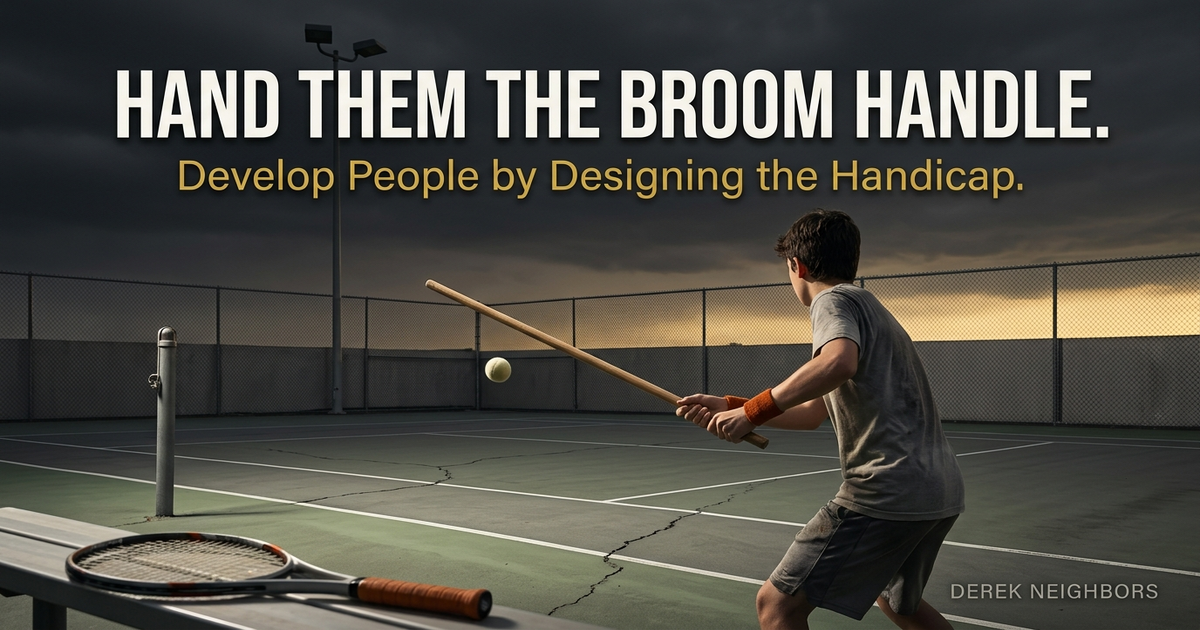
Hand Them the Broom Handle
The story goes that Arthur Ashe learned to see the ball with a broom handle, because a racket made hitting it too easy. I hand people the racket all day: agents, templates, last quarter's deck, a runbook for everything. I want them on it. And I keep meeting people who can operate every tool we own and cannot tell you why the ball went where it went. The fix is a handicap you design on purpose: one skill, one task, a date, and the racket handed straight back.
What You Built on Adrenaline Won't Run on It
Every company tells its launch story at offsites: the brutal weeks, the 2am deploy, the save. The story is true, and it trains everyone to believe intensity is what excellence looks like. Then month eighteen arrives, the hero is on the next new thing, and the product is running on fumes nobody budgeted. Aristotle said one swallow does not make a spring. A launch does not make an operating model.
The Room Orbits Whoever Holds Steady
Watch any room when something breaks. Eyes go to one person, and it is not always the boss. Authority people actually follow is accumulated character, built through held standards and absorbed hits.

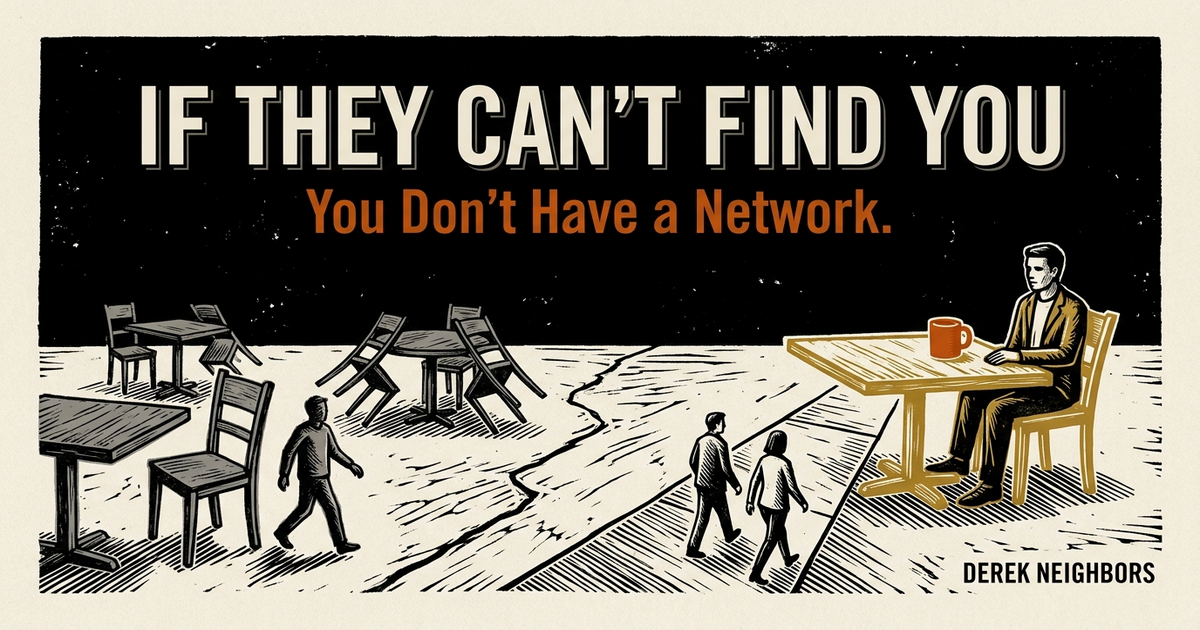
If They Can't Find You, You Don't Have a Network
I rotated five breakfast spots so nobody could pin me to a chair. Then I picked one table and kept the same morning window. The owner learned the mug. Merchants stopped texting and walked over. The network grew because I became easy to find.
Your Five-Year Plan Is Built From Last Year
I sat through an offsite that wrote 2029 as last year with nicer fonts. The futures worth living stay invisible until you stack skills, relationships, and harder rooms.

What You Tolerate, You Insist On
Three late Fridays in a row I covered the same miss and called it patience. A mentor named the lesson I was teaching. You cannot always change them. You can still change your side.

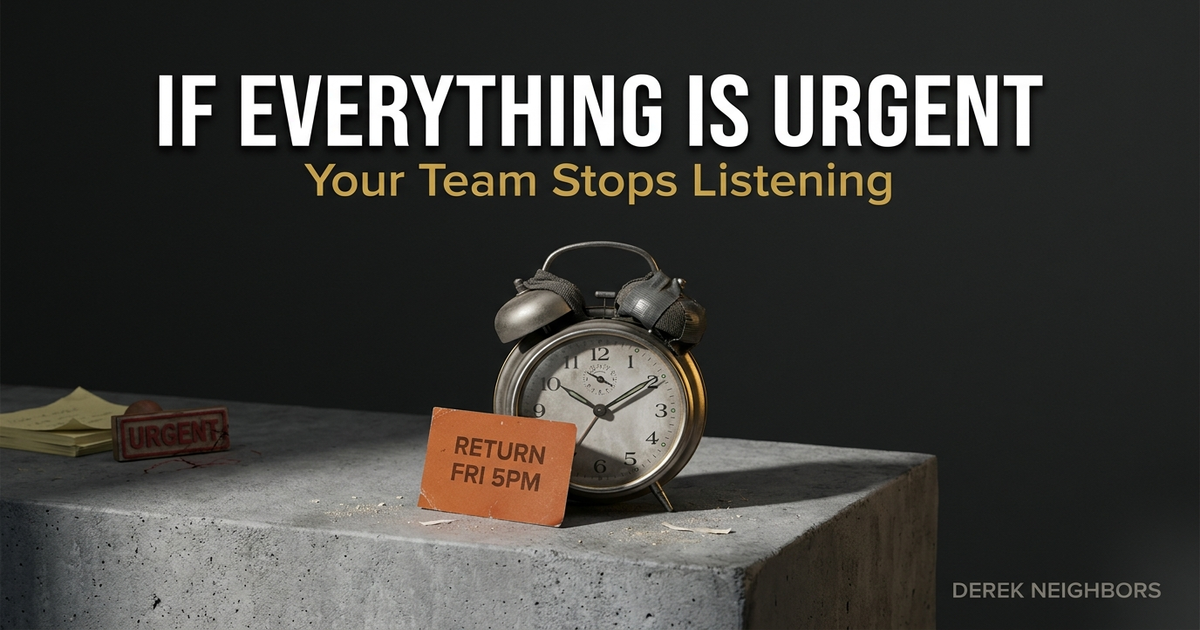
If Everything Is Urgent, Your Team Stops Listening
Constant fire drills train people to ignore you. Calm urgency is scarce pressure with a named end date, shared ownership, and language that matches the work. Restore the signal or lose the room.
Your Old Pain Keeps Arriving On Time. Date the Map.
Korzybski said the map is not the territory. The harder problem is the undated map: a reaction that was right once and still fires on a present that has changed. Date the impression before you grant it authority.

Write Your Own Review First. Then Decide What Theirs Means.
Owning your career means owning the judgment. Write your own honest review before the meeting, then use theirs as information that updates your ledger.

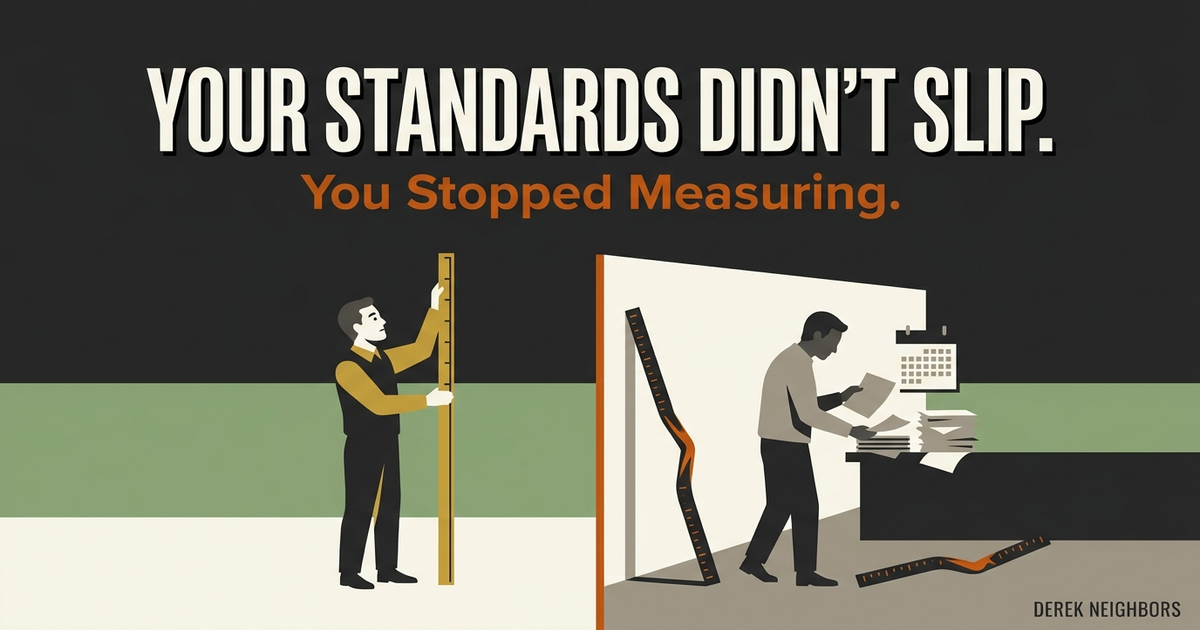
Your Standards Didn't Slip. You Stopped Measuring.
After the win you stopped looking at the bar, kept a fluent story about why, and called the soft week strategy. Rewards end. Standards renew. Measuring is the difference.
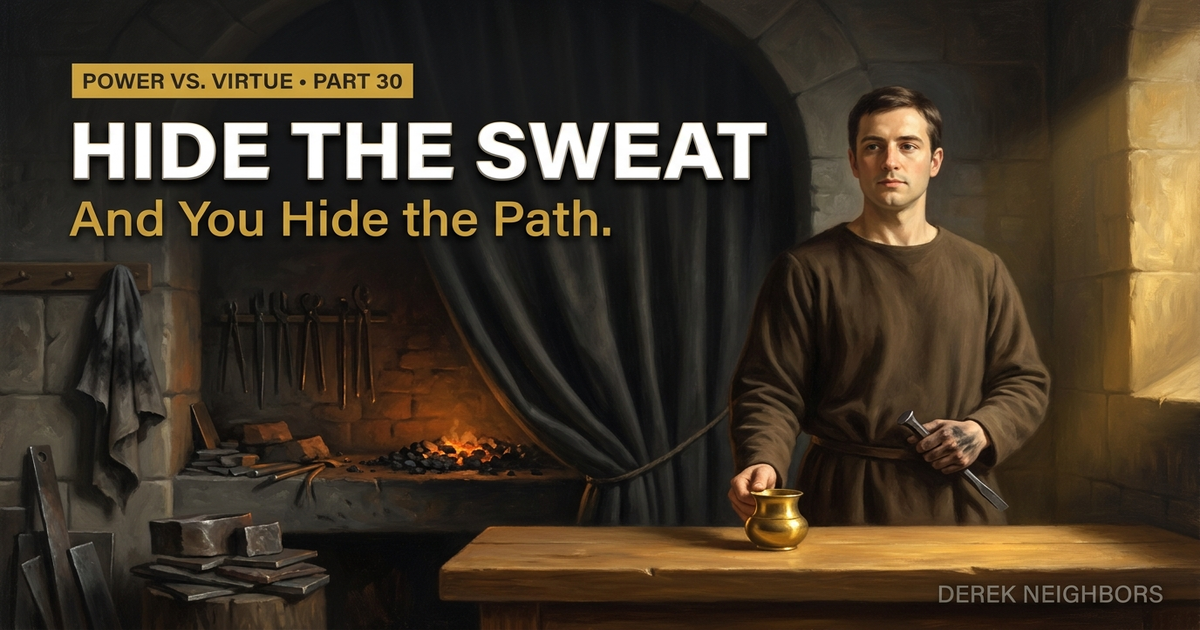
Hide the Sweat and You Hide the Path
Law 30 of the 48 Laws of Power tells you to make your accomplishments seem effortless. Hide the toil. Conceal the tricks. Act as if you could do much more. The tactical truth is real: audiences confuse rehearsal with weakness, and clean execution reads as competence. The character cost arrives when concealment becomes mystique. Juniors never see the path. Effort becomes shame. Your identity fuses to a costume of natural gift. The ARETE alternative is Castiglione's sprezzatura rebuilt on Greek hexis: earned ease from practice, ponos honored in the forge, techne that can still teach.
The Risky Move on Great Teams Is Staying Silent
Great teams do not wait for braver people. They install a ritual where declaring the miss is expected and staying quiet is the move that stands out. Calling a Safety is the pattern. Your calendar is the test.
Just This Once Is Never Once
You said yes to the small ask and called it pragmatism. Access, politics, keeping the relationship warm. Temporary yeses do not stay temporary. They become precedent, then habit, then a person who can no longer refuse. Seneca thought proximity to Nero would become influence. It became rehearsal for folding. The only safe answer to 'just this once' is the no spoken before the first bend.
AI Was Supposed to Level the Field. It Widened the Gap.
The promise was equal access and a rising bottom. The mechanism runs the other way. AI does not replace discernment. It multiplies whatever quality of judgment already sits in the chair, which means the people who needed a leveler most are often the ones the tool harms first.

Providence Is Not Passive. Neither Are You.
Believing the universe is on your side means nothing if your calendar proves you are waiting. The Stoics welded trust in providence to being-at-work. Pronoia without energeia is costume. This is the challenge: meet the field armed, or stop calling the wait faith.
Loud Before, Gone During: How to Tell the Bold From the Brave
Law 28 of the 48 Laws of Power tells you to enter action with boldness, and this series agrees with it. Hesitation telegraphs doubt, half-measures dig deeper graves than full commitment ever does, and timidity has never once been mistaken for wisdom. But Greene builds his case on con artists, and that choice exposes the crack in the law. Audacity aimed at an audience has a tell that Aristotle documented twenty-three centuries ago: the rash man is loud before the danger arrives and gone once it does, while the brave man is quiet beforehand and keen inside the moment. The difference decides whether your boldness compounds into a life or burns off like a firework.
The Styrofoam Cup: The Title Was Never Yours to Lose
The ceramic cup, the car service, the upgraded seat, the jokes that got funnier with every promotion. All of it arrived as you rose, so it reads like a measurement of you. It never was. The deference is addressed to the chair, and the chair is on loan. The Stoics kept a running audit of exactly this, and the Greeks had a job title for the right way to hold borrowed power. Confuse the trappings for yourself and the confusion bills you twice: once while you hold the title, and once, brutally, on the day you hand it back.

Companies Break the Same Way People Do
A few lost customers, a couple of setbacks, and a company that owned its market becomes afraid of its own shadow. Nothing on the balance sheet changed. Plato saw why: a city has the same three-part soul a person does, and the part that breaks first is the spirit, the seat of nerve and pride and the will to fight. Capability survives most wounds. Morale doesn't. Learn to read the psyche of any organization you work for, invest in, or lead, because companies with character survive their setbacks and companies without it decline with pristine assets.

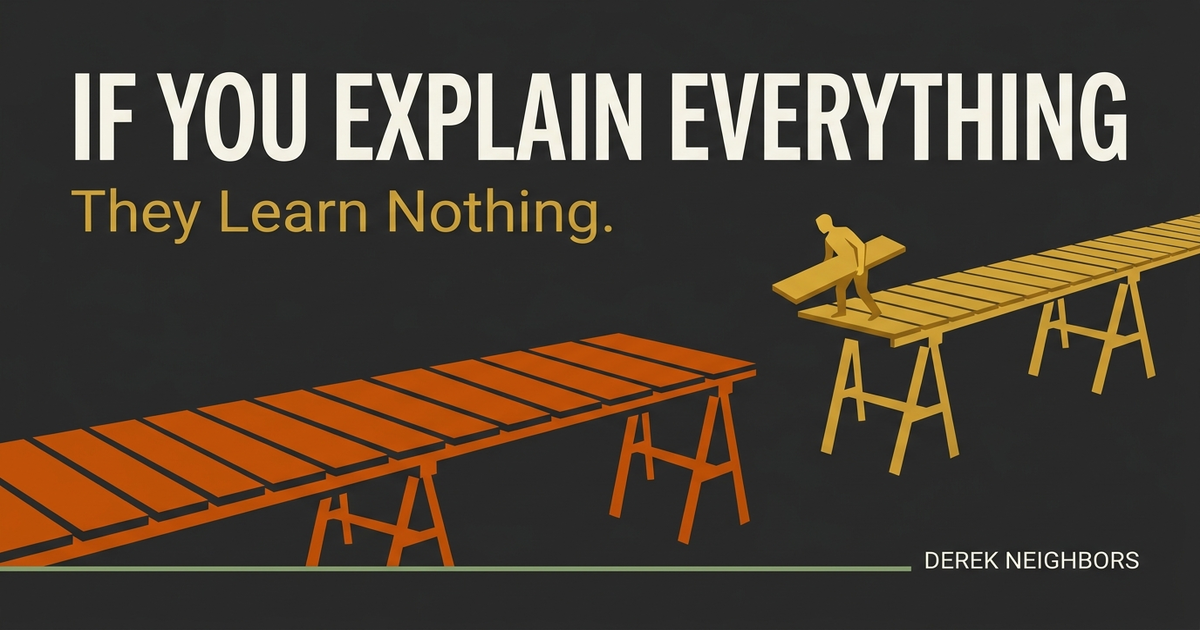
If You Explain Everything, They Learn Nothing
The most patient explainer on the team is often the reason the team can't function without them. Complete answers feel generous, and they quietly train people to wait for the next one. Every procedure you hand over expires with the tool it describes. The thing that transfers is the loop: how to get stuck, stay calm inside the stuck, and work a way out. Aristotle said you can't untie a knot you don't know is there. A teacher who explains everything makes sure the student never meets the knot.
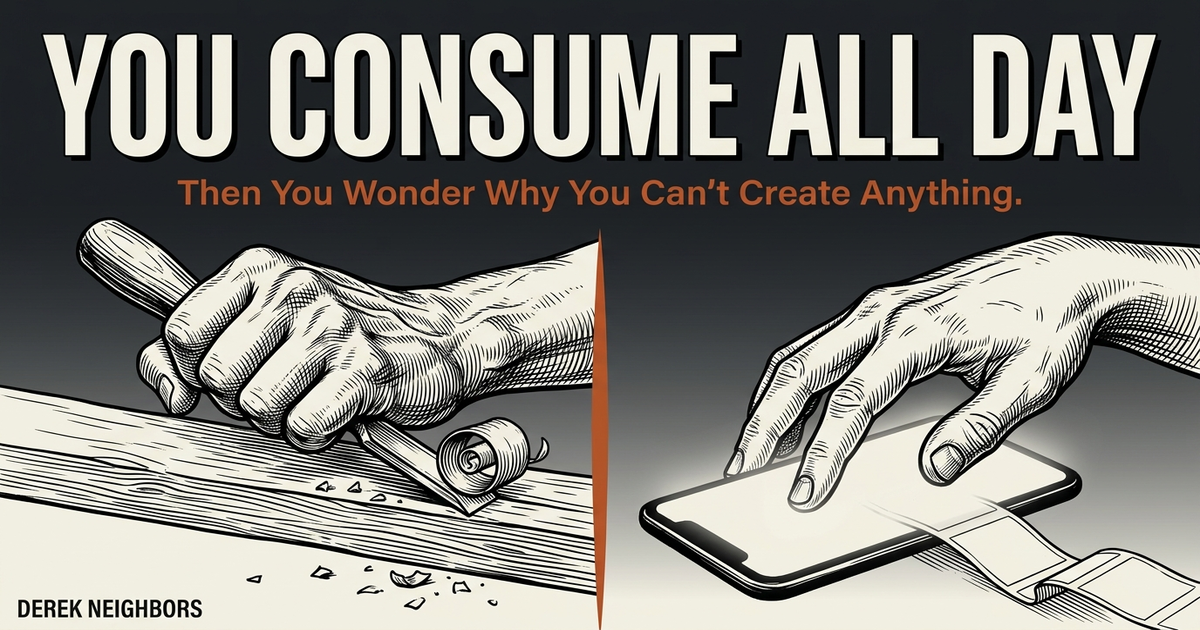
You Consume All Day. Then You Wonder Why You Can't Create Anything.
Two people spend the same free evening. One opens a feed and consumes for three hours. The other picks up a tool that fights back and makes something clumsy and real. From the outside both are relaxing. A year later one of them can do a dozen things with their hands and the other can only find things other people made. Every tool trains you. A craft tool demands skill and leaves capability in you. A capture tool demands only your appetite and hands you consumption you rent from an algorithm. The line was never analog versus digital. It is whether the thing in your hand is finishing you into a maker or a consumer.
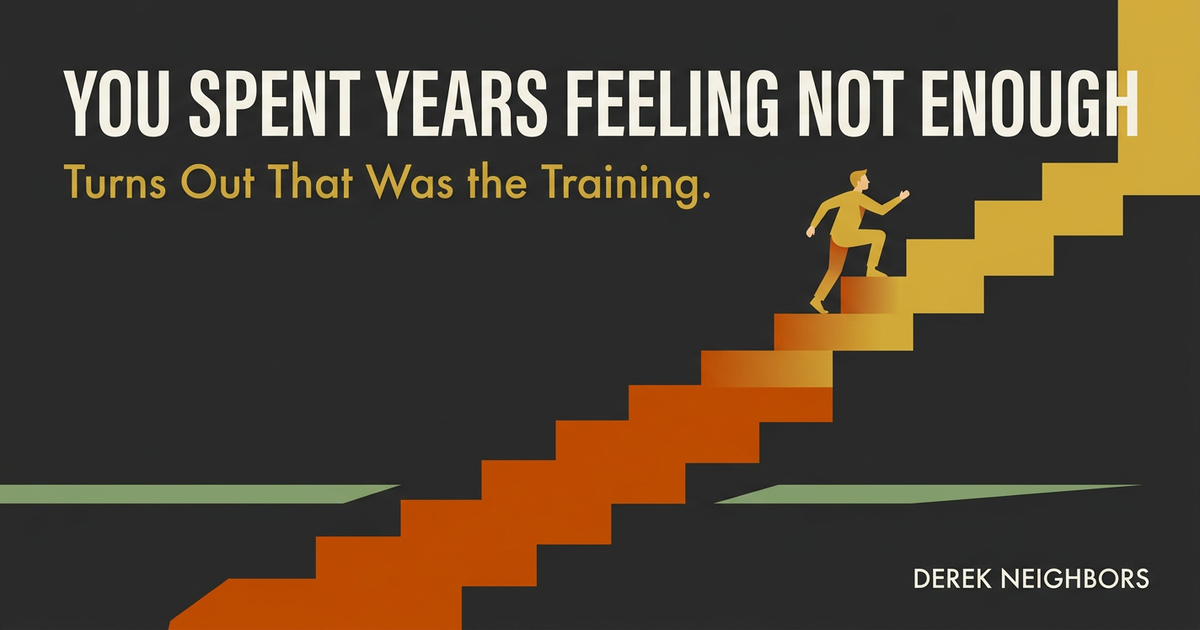
You Spent Years Feeling Not Enough. Turns Out That Was the Training.
There is a low hum a lot of people grow up with: the sense that you are a little behind, a little short, that everyone else got a manual you missed. Most spend decades trying to silence it. Some go dead. Some go bitter. But that ache was never measuring your worth. It was pointing. The years of feeling not enough were formation, training you in the one thing comfort can never teach, the refusal to settle. The work of adulthood is not curing the engine that lack built. It is aiming it without the self-contempt it once carried.
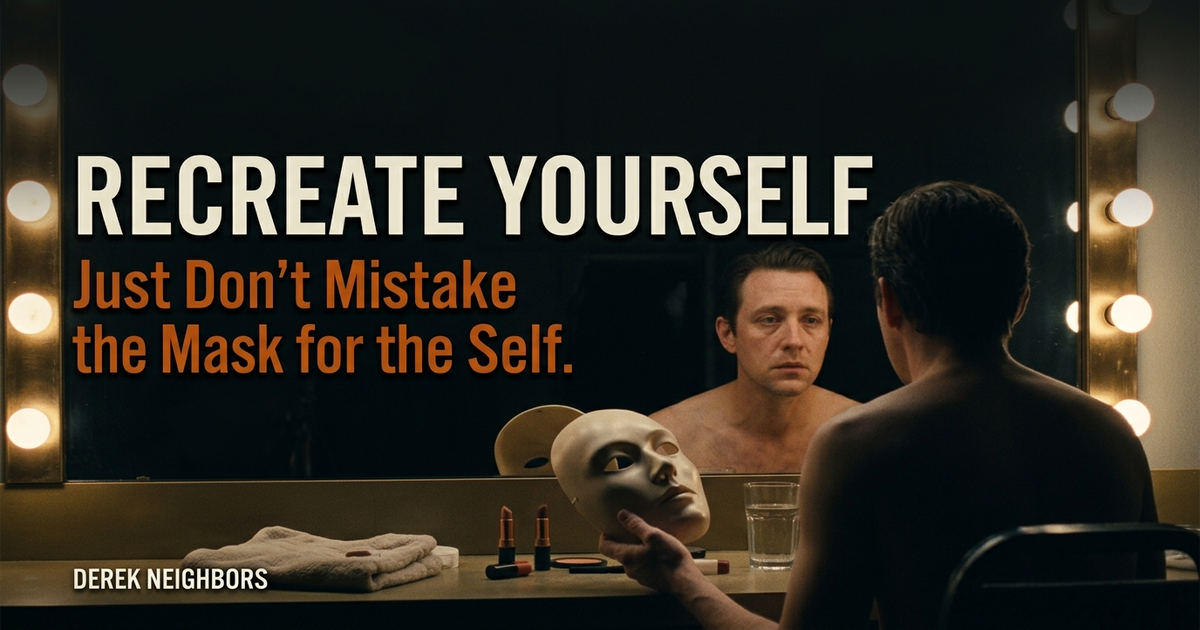
Recreate Yourself. Just Don't Mistake the Mask for the Self.
Law 25 of the 48 Laws of Power tells you to recreate yourself by seizing control of your image, becoming a memorable, protean figure who never bores the audience. The Greeks had a word for the thing you put on to face a crowd: prosopon, the mask an actor wore on stage. Greene's reinvention is mask-work, and a mask worn long enough fuses to the face. There is a real kind of self-recreation, but it runs the other direction. You forge the substance and let the appearance follow.
Your Response to Unfairness Reveals More About You Than the Unfairness Does
Three leaders take the same public hit. One escalates, one absorbs and redirects, one performs martyrdom for an audience. The unfairness was identical. The response was not. Between the stimulus and your reply lies the only territory where character actually lives, and most people never inspect what runs there.

Why Some People Hold Under Pressure and Others Snap
Two people take the same hit. One holds. One snaps. The usual story says the first one had more willpower, as if character were fuel in a tank you spend down until you run dry. That model cannot explain why the same person holds one month and folds the next, or why the toughest-looking people break first. The Stoics ran a better model. They thought character was held together by tension, the way a structure is, and they had a precise word for that tension: tonos. Strong distributed tension holds under load. Slackness collapses. Rigidity snaps. You do not rise to pressure. You fall to the tension you keep when nothing is testing you.
Why the Best in the World Can't Teach You What They Know
Ask the best performer in any field how they do it and you get a slogan. Trust your gut. See the ball, hit the ball. We assume they're hiding the secret or explaining it badly. The truth is stranger: fluent expertise erases its own steps as it compiles, so the master's explanation is a reconstruction by a narrator who no longer has access to the machinery. The Greeks called the unteachable knack empeiria. Modern research calls it tacit knowledge. Either way, the words are the least transferable thing a master has, and the people who learn fastest stop collecting answers and start watching hands.
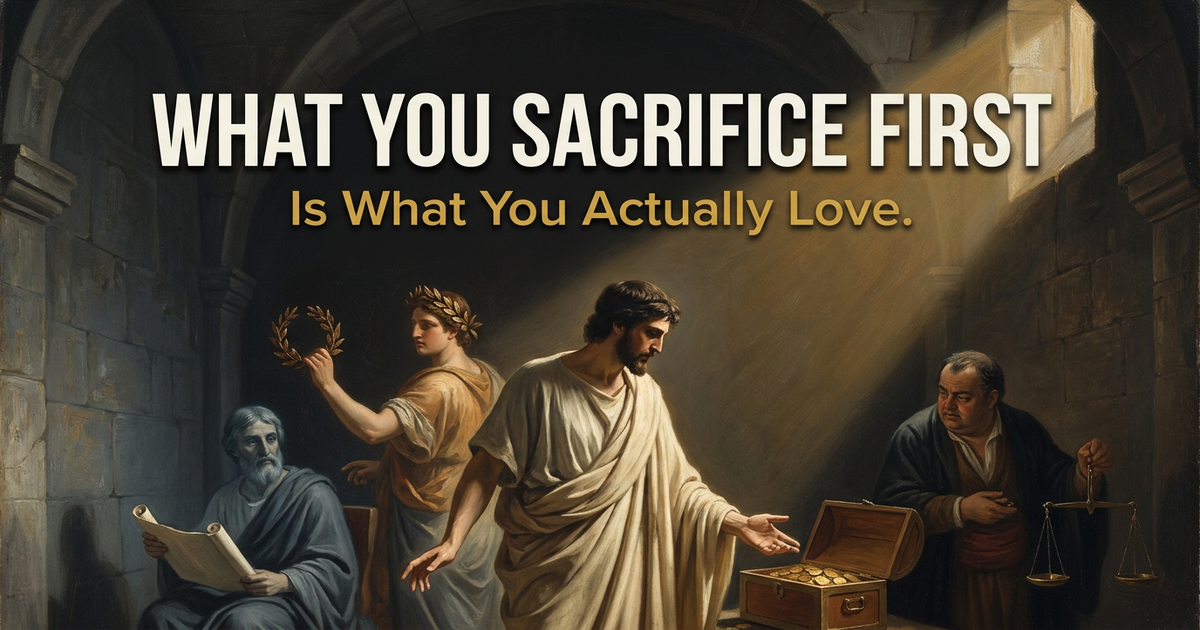
What You Sacrifice First Is What You Actually Love
Most people believe they hold their values in balance: family, work, health, growth, all weighted more or less equally. Plato argued that nobody actually lives this way. Every soul is ordered by a single ruling love, and everything else gets ranked beneath it. The proof is not in what you claim to value. The proof is in what you sacrifice first when two of your loves collide, because the thing you protect last is the thing you actually love.
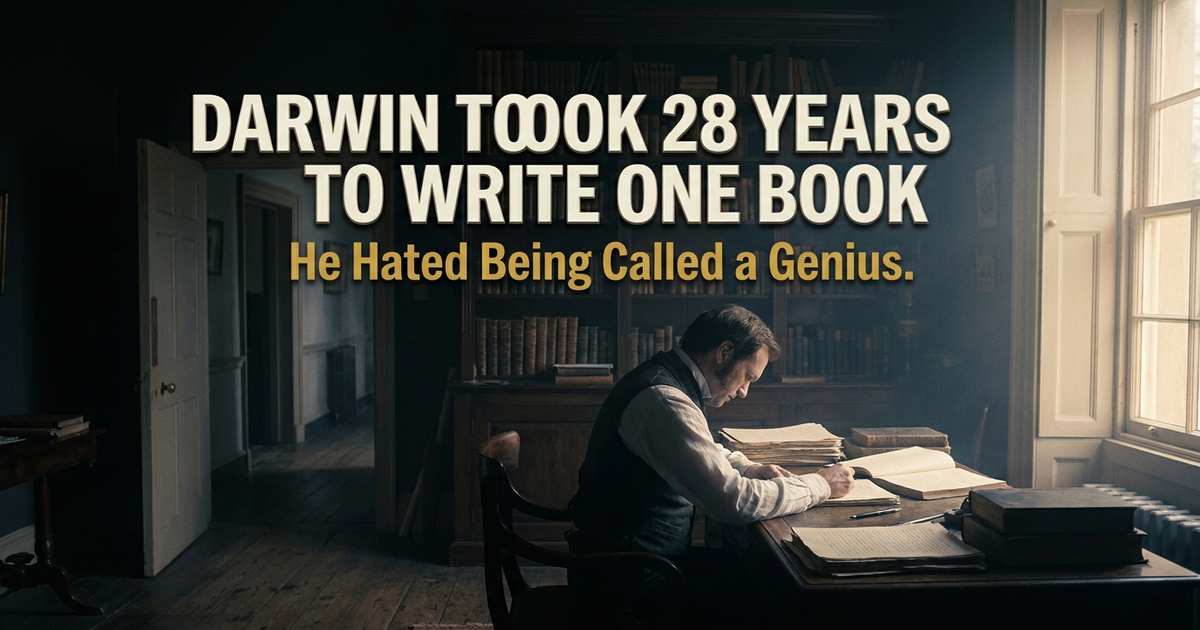
Darwin Took 28 Years to Write One Book. He Hated Being Called a Genius.
Charles Darwin spent twenty-eight years between the HMS Beagle's return in 1836 and the publication of On the Origin of Species in 1859. Eight of those years he spent classifying barnacles. He described himself in his autobiography as not a quick thinker or writer. The word the public eventually used for him was genius. He hated it. Genius is a hindsight label we paste onto a long, mostly invisible accumulation of patient daily work, and the lightning-bolt myth of insight survives because it lets the rest of us off the hook for not enduring the years of karteria, patient endurance, the actual builders endured.
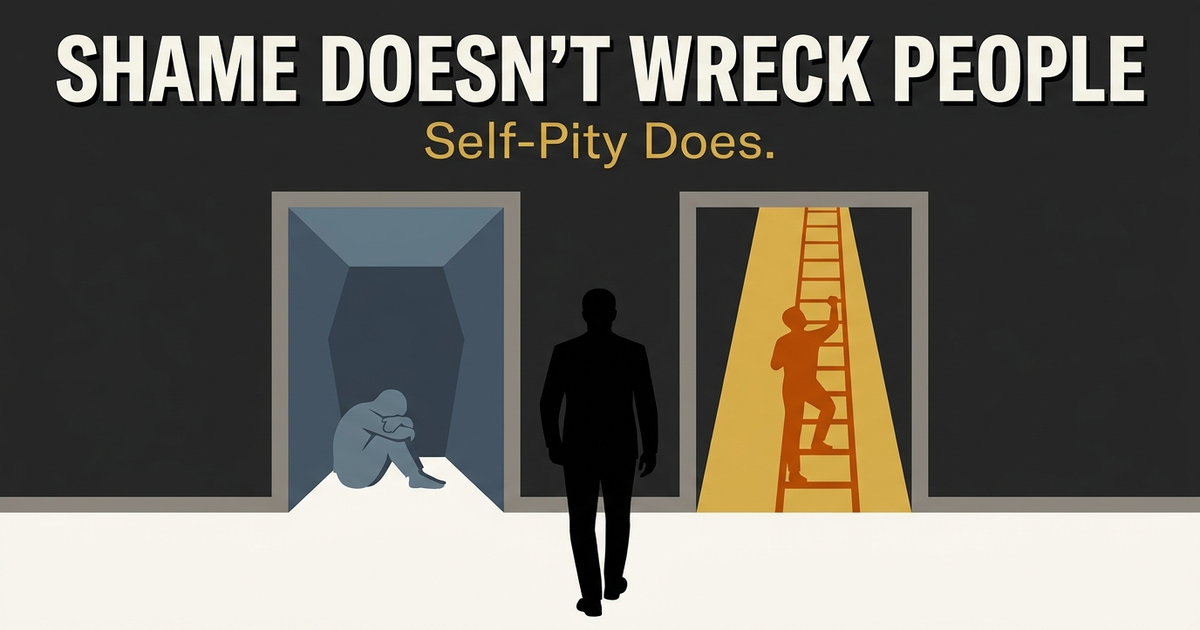
Shame Doesn't Wreck People. Self-Pity Does.
Shame is the recognition of the gap between who you are and who you wanted to be. The Greeks called it aidos and treated it as a moral faculty, not a wound to be silenced. The same shame, in two people facing the identical failure, produces two opposite trajectories. Self-pity sits in the gap and decorates it. Self-respect uses the gap as instruction. Most people pick the response that feels gentlest in the moment because the gentle one is the closer door. Decades later it turns out to be the most expensive door in their lives.
Your Work Family Has an Expiration Date. Most People Discover It Too Late.
The retirement party promise was honest in the moment. The silence three months later is structural. Most workplace bonds rest on four scaffolds that disappear the day the project does, and the bitterness most leaders carry into their late careers comes from expecting utility friendships to behave like virtue friendships. Aristotle mapped three kinds of philia 2,400 years ago. The leadership move is to know which kind you have, identify the one or two candidates for the third kind, and invest on purpose outside the project's calendar.

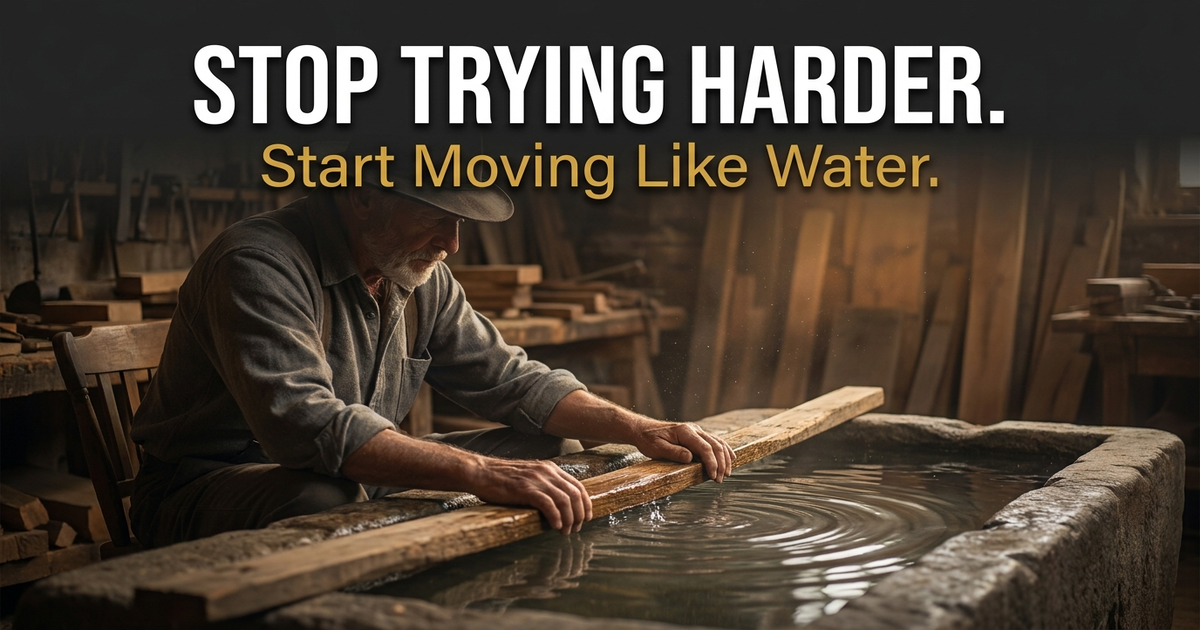
Stop Trying Harder. Start Moving Like Water.
The mythology that says excellence comes from gripping tighter is a Western misread of how skilled humans actually perform. Four hundred years ago, a swordsman named Miyamoto Musashi described the working stance every senior craftsman, surgeon, musician, and distance runner eventually finds: mizu no kokoro, the water mind. Alert without rigidity. Fitted to the moment. Impossible to tense up. The novice grips. The master flows. This is the investigation into why, and the training that gets you across the threshold.
Don't Tell Your Team What They Did. Tell Them Who They're Becoming.
Almost every working leader can quote a single sentence said to them in early career that organized their identity for the next twenty years. Almost no leader can name a sentence they have offered, on the same terms, to someone they lead. The gap between the leader who shapes a person and the leader who manages output is, on close inspection, the gap between the review and the named becoming.
Knowing Better Doesn't Make You Better. Most Self-Help Stops at Step One.
The reader who has read seventy books on character is roughly the person they were five years ago. The gap is not a willpower failure. The gap is a method failure. Epictetus described the three-stage path that produces formed character, and the modern self-improvement industry has built a market by pretending the last two stages are optional.

Your Environment Will Beat Your Discipline Every Time
Disciplined people stall, blame themselves, and try harder. The verdict is wrong. The room they are standing in has a low ceiling, and the will they keep applying to themselves should have been applied, years ago, to choosing a different room. The Greeks understood this. We have spent two centuries forgetting it.

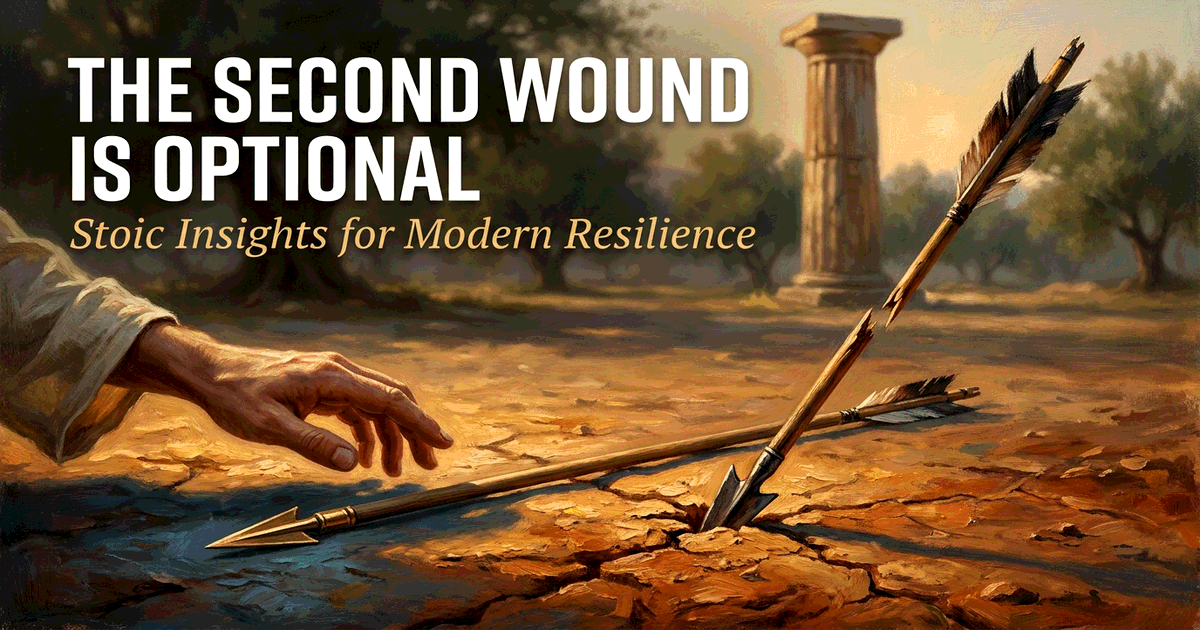
The Fall Was the First Wound. Bitterness Is the One You Choose.
Falls are not optional. Bitterness is. The first injury is something done to you. The second is the one you carry forward for years, every day, by choice. Ancient wisdom on the wound that is genuinely yours to refuse.
Stop Buying Productivity Apps. Your Disorganization Is a Character Problem.
Most adults have a folder of dead productivity apps and a quiet sense that they are uniquely undisciplined. They are not. They have run a ten-thousand-iteration experiment in which they said they would do something and then did not. The fix is not a better system. It is the ancient discipline of pistis, faithfulness to your own word, rebuilt one small kept promise at a time.
Trust Isn't Built in Big Moments. It's Built in the Ones Nobody Sees.
Most leaders keep training for the big moment and wondering why the trust they expected never arrives. The big moment is not the building site. It is the audit. The deposits were made long before anyone was watching.
The Scar You Think Everyone Sees Isn't There. You're the Only One Looking.
You assume your perception of how others treat you is data. A famous psychology experiment, and a much older Stoic discipline, both say it isn't. Most of what you think the room is responding to is being generated by the filter you brought into the room.
You Don't Have to Be the Best. You Just Have to Still Be Here.
You probably aren't the best in your field. That matters far less than you think. Almost everyone you compare yourself to has already quit, or is about to. The strategy that compounds is staying.

One Slip Doesn't Set You Back a Day. It Sets You Back Months.
You tell yourself one day off won't matter. But momentum doesn't degrade on a schedule. It collapses. And the rebuild costs more than you think.
Your Potential Isn't Waiting. It's Disappearing.
We talk about untapped potential like it's a savings account, sitting there earning interest while you figure things out. Aristotle had a different word for it. And his version has an expiration date.

If Your Team Falls Apart Without You, You Already Failed
Greene says make people dependent on you to secure your position. The Greeks say build people who stand on their own. One creates leverage that requires constant maintenance. The other creates organizations that grow stronger whether you're in the room or not.
Why Arguing Your Point Is Always a Losing Strategy
For the second time in this series, Greene and the ancient philosophers agree. Demonstrate, don't argue. But they agree for different reasons, and the difference reveals whether you're performing power or practicing excellence.
You Stopped Growing and Didn't Even Notice
You can look back ten years and barely recognize who you were. You can acknowledge enormous personal transformation. And yet, right now, you believe you're basically done becoming. Psychology calls this the end of history illusion. The Greeks called it the opposite of flourishing.
Why Building Your Reputation Is a Waste of Time
Greene says guard your reputation with your life. The Greeks say build character worth remembering. One requires constant maintenance. The other requires consistent choices. The difference explains why some reputations survive scrutiny and others collapse the moment the spotlight shifts.
You Don't Need More Willpower. You Need a Better Sequence.
The people with the most discipline often needed the least of it. They sequenced their changes so well that each one created gravitational pull toward the next.
Why Staying Silent Is the Most Expensive Thing You'll Ever Do
Every swallowed truth is a down payment on becoming someone you don't recognize. The Greeks had a word for what's missing: parrhesia.
Your Best Days Aren't Behind You. Unless You Keep Looking Back.
The glory days trap isn't about memory. It's about identity. Living in the past is a form of self-protection that guarantees self-limitation.

Most People Need a Crisis to Try Their Hardest. That's a Character Flaw.
Crisis unlocks extraordinary performance. But needing crisis to access your best means your best isn't really yours. It belongs to whatever circumstances happen to arrive.

Stop Asking 'What Should I Do?' Start Asking 'Who Should I Become?'
Everyone optimizes their actions. Almost no one optimizes who they're becoming. The obsession with tactics keeps people trapped while the strategic question goes unanswered.

Your Goals Aren't Too Big. Your Sacrifices Are Too Small.
You don't have an ambition problem. You have a payment problem. Everyone wants the dream. Almost no one wants to pay what it actually costs.

"Discipline Is for Losers"? The Obsession You're Jealous Of Started There
The person calling discipline 'for losers' is watching masters and missing the decades of discipline underneath. What looks like obsession is hexis. The discipline came first.

Your Confidence Is Fake. Here's How to Build the Real Thing.
The modern confidence industry sells shortcuts that produce fragile leaders. Real confidence follows the ancient sequence: courage first, then competence, then confidence.

Why Do Most New Year's Resolutions Die Before February?
I watched a man fail his resolution in an ice cream shop parking lot. Not because he ate ice cream. Because he was already negotiating with Monday. The timing was wrong before he started.

What If Your 'Personal Best' Is Actually Your Personal Belief?
Everyone treats their personal best as an objective measurement. But what if it's actually a prophecy? What if the limit you keep hitting is the limit you keep expecting to hit?
The Momentum Machine: How Relentless Reps Turn Impossible into Routine
The difference between extraordinary achievement and constant restarting isn't talent or luck. It's whether you've built a momentum machine that runs even when motivation dies.
Build Habits for Your Worst Day, Not Your Best
You've been designing habits for the version of you that exists after good sleep, full of motivation, in ideal conditions. That version shows up maybe 20% of the time. Here's how to build for the other 80%.

Good Intentions Are Why Most Dreams Die
Everyone celebrates good intentions. 'At least their heart was in the right place.' But intentions aren't neutral. They're a sophisticated form of self-deception that lets you feel virtuous about dreams you're not actually building.

Character Isn't What You Post. It's What You Practice.
Social media has convinced us that visible virtue is real virtue. Aristotle knew better. Character is the pattern of what you do when no one's watching, not the highlight reel you curate for strangers.

You're Not Getting Ready. You're Hiding.
Preparation is the most sophisticated form of procrastination. It feels productive. It looks responsible. And it keeps you exactly where you are.

Metanoia: The Transformation Mindset for Leaders
The Greeks understood that lasting change requires complete transformation of mind, heart, and character. Most organizational change fails because leaders try to change everything except themselves. Here's the ancient solution.
Arete: Why Excellence is a Way of Being, Not Achieving
The Greeks understood something we've forgotten: excellence isn't something you achieve, it's something you become. This fundamental shift changes everything about how you approach work, leadership, and life.