The Styrofoam Cup: The Title Was Never Yours to Lose
By Derek Neighbors on July 10, 2026
The perks kept perfect time with your promotions.
Somewhere in your second decade of work, the calls started coming back faster. The seat got upgraded. Invitations arrived to rooms you used to read about. Your jokes, mysteriously, got funnier, and the laughter started a half-second earlier than it used to.
Because all of it tracked your rise so precisely, it reads like a measurement. The deference feels like data about you: proof of your judgment, your presence, your worth. You would never say “I am owed this” out loud. But watch what happens to a leader’s face when the upgrade doesn’t come through, and you can see the belief underneath.
That belief is the myth the styrofoam cup exists to break. The perks were never measuring you. They were measuring the chair.
To be precise about the claim: some of the warmth is real. A portion of the regard you receive was earned by you as a person, and it will follow you out the door. But from inside the role you cannot tell the two apart, and the myth survives on exactly that blindness. Whatever fraction is genuinely yours, you will be tempted to credit yourself with all of it.
The Cup Was Addressed to the Chair
Simon Sinek tells a story about a former Under Secretary of Defense giving a talk at a large conference. The official paused mid-speech, looked at the coffee in his hand, and told the audience about the previous year, when he had spoken at the same event while still in office. That year: business class, a car waiting at the airport, a handler walking him to the green room, and coffee brought to him on stage in a ceramic cup.
This year he flew coach, took a taxi, and poured his own coffee in the lobby into a styrofoam cup.
His conclusion has stayed with everyone who has heard it. The ceramic cup was never meant for me. It was meant for the position I held. I deserve a styrofoam cup.
Tim Cook has made the same point about running Apple: the attention, the access, the seat at every table belongs to the role rather than to him. The clearest-eyed holders of power keep this audit running the whole time they hold it, and the ones who start it earliest are the ones the role never deforms.
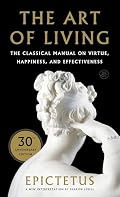
The audit itself is ancient. Epictetus opens the Enchiridion by splitting the world in two: what is up to us and what is not. Up to us: our judgments, our desires, our choices. Not up to us: the body, property, reputation, and office. Reputation, doxa, and office, arche, the same word the Greeks used for rule itself. He puts the trappings of position on the not-up-to-us list in the first paragraph of the most famous practical manual in Western philosophy. This placement was never incidental. Epictetus had been a slave in Nero’s Rome, owned by a man who was himself a freedman of the emperor. He had watched borrowed power operate from underneath.
Marcus Aurelius ran the same audit from the other end of the hierarchy. The most powerful man alive kept a private notebook in which he repeatedly deflated his own office. He describes the imperial purple as sheep’s wool dyed in shellfish blood. He warns himself, in Gregory Hays’ translation, to take care not to be Caesarified, not to be dyed purple, because the dye soaks in.
Notice what the emperor is doing. He is separating, on paper, at night, the things that were his from the things that were the office’s. He knew that without a running inventory, the two merge, and once they merge you cannot lose the office without losing yourself.
What the Confusion Costs
Mistaking the trappings for the self sends you two bills. The first arrives while you still hold the title.
A leader who believes the deference starts protecting it. Decisions bend, a few degrees at a time, away from what the mission needs and toward what keeps the chair safe. Flattery gets promoted from noise to signal, because it confirms the story, and the Greeks already had a name for the courtier who feeds that appetite: kolakeia, flattery as a vice with a business model. Meanwhile the honest data dries up. When your team stops teasing you, the laughter that got funnier was the first warning, and it gets read as respect instead.
There is a tell for this stage, and it is embarrassingly reliable: watch what a leader fights for in negotiations. Scope, resources, and mandate are fights about the mission. The corner office, the title bump without new responsibility, the parking spot: those are fights about the trappings, and the person fighting for them has already started to believe he is made of them. The love of honor, philotimia, has quietly replaced the love of the work.
Aristotle ran this exact test in the Nicomachean Ethics and rejected honor as the good for one reason: honor depends on those who bestow it more than on the one who receives it, and the good has to be something of your own that cannot easily be taken away. The deference fails his test on both counts. It lives in other people’s hands, and it moves the day the org chart does.
The second bill arrives at the exit, and it is the one that ruins people. If the deference was data about you, then its withdrawal is also data about you. And everything that was addressed to the chair, which was most of it, gets withdrawn at once. The calls stop coming back. The calendar goes quiet. Talk to recently retired executives and you keep hearing the language of bereavement, and the language is precise: something did die, the fused self that was half person and half position. The confusion, not the transition, decides how much it hurts. Founders who cannot leave the room are rarely confused about strategy. They are facing the small death and calling it succession planning.
Measure the grief and you measure the earlier mistake. The people flattened by losing a title are the people who spent years believing the ceramic cup was addressed to them.
And no reader gets to file this under other people’s problems. The loan structure does not start at the executive floor. Every role a human holds runs on the same terms: the parent whose children grow up and leave, the athlete whose body has its own timeline, the expert whose field will one day move past them, the founder whose company learns to run without them. Nobody escapes holding borrowed things. The only choice anyone gets is whether to audit the loan or to let the loan audit them, at the worst possible moment, with interest.
The Steward’s Posture
The Greek household had a job title for the right way to hold what you do not own. The oikonomos was the steward, the estate manager, and the role was a paradox on purpose. He ran everything. Accounts, land, staff, harvests: full operational authority, frequently held by a man who was not even free himself. He owned none of it, and he was judged by a single standard: the condition of the estate on the day he handed it back.
Full authority. Zero ownership. Total accountability. That posture, and not renunciation, is the alternative to the myth.
Because notice what the steward’s frame does to the perks. It does not require you to refuse them. The Stoics filed externals like the upgraded seat under adiaphora, indifferents: things that are neither good nor bad in themselves, usable and even enjoyable, so long as nothing load-bearing rests on them. Take the ceramic cup when it comes. Say thank you. Believe none of it. What is actually up to you never included the cup: your judgment, your character, the capability you built, how you treat the people the role gives you power over. These are yours for a structural reason, not a sentimental one. Each was built the only way such things can be built, by your own repeated action, one decision and one rep at a time, and what the Greeks called a hexis, a trained disposition, can be bestowed by no one and repossessed by no one. prohairesis, the faculty of choice, is the entire estate you own outright. Everything else came with the job.
Here is the paradox that makes this practical rather than pious. The leader who internalizes the loan wields the role better. A person defending an identity cannot make free decisions; every option gets filtered first through what it costs the reputation. The steward has nothing to defend, so he can spend the office’s full power on what the office is for. Plato built the Republic’s entire theory of rule on this paradox: the best-governed city is the one whose rulers least desire to rule, because they alone cannot be paid in the office’s own coin. The authority that never needs asserting belongs to exactly this person: the one who knows the power is borrowed and therefore holds it with a relaxed grip.
Handing Back the Cup
The shift from owner to steward is a practice, not an insight. Five moves, all of them available today.
Run the styrofoam audit. Two columns. In the first, everything that vanishes within thirty days of losing the title. In the second, what remains. Read the ratio without flinching. Then notice which column your week has been feeding.
| Vanishes with the title | Stays with you |
|---|---|
| The car service and the upgraded seat | The skills you can demonstrate cold |
| The invitations to rooms that matter | The judgment built from decisions you owned |
| The response times and the early laughter | The people who would take your call at midnight |
| The borrowed weight of the company’s name | Your name on work that shipped |
| The deference in every meeting | How you treated people when you had the power |
Enjoy the trappings on a day rate. Take the upgrade. Never build on it. The test is your reaction when a perk goes to someone junior: if it stings, that perk had quietly become load-bearing, and the sting is free instruction about where the fusion started.
Keep one arena the badge cannot enter. Most mornings I am on a desert trail long before the first meeting, and the desert has never once asked what I do for a living. The mountain does not know my title. If I skipped the training, I suffer, whatever my bio says. Everyone needs one place that only pays in earned capability, because that place keeps an honest ledger of what is actually yours.
Rehearse the handoff while it is still voluntary. Give away the credit. Let someone else run the meeting you always run. Practice being unnecessary in small doses now, so that necessity never becomes your identity. The predecessors who vanish gracefully started vanishing years early, one meeting at a time.
Ask the steward’s question. Before the next significant decision, one query: does this protect the mission, or does it protect the chair? You will not always like the honest answer. Ask anyway. The question is the whole discipline compressed to a sentence.
Frequently Asked Questions
What is the styrofoam cup story?
Simon Sinek tells it about a former Under Secretary of Defense speaking at a conference. In office the year before: business class, a waiting car, coffee handed to him on stage in a ceramic cup. Out of office a year later, at the same event: coach, a taxi, coffee poured by himself into styrofoam. His verdict: the ceramic cup was never meant for him, only for the position, and a styrofoam cup was all he was ever personally owed.
What does oikonomos mean in Greek?
oikonomos is the ancient Greek word for a household steward or estate manager, built from oikos (household) and nemein (to manage or dispense), and it is the root of the word economy. The steward held full authority over an estate he did not own and was measured by the condition of what he handed back. The word names a posture toward power: wield it fully, own none of it, answer for all of it.
What did the Stoics say about titles and power?
Epictetus put reputation and office on the not-up-to-us list in the opening lines of the Enchiridion, which makes a title an external to be used well rather than an identity to be defended. Marcus Aurelius, holding the most powerful office on earth, warned himself in his private notes not to be dyed purple by it. The Stoic position was never that power is bad. It was that power is borrowed, and the borrower who forgets this loses himself twice: once in office and once at the door.
How do you keep a job title from becoming your identity?
Audit what disappears with the title against what survives it, and deliberately feed the surviving column. Keep one arena in your life where credentials do nothing. Give away credit and practice being unnecessary while the role is still yours by choice. And before big decisions, ask whether you are protecting the mission or the chair. Start early; the fusion is much easier to prevent than to reverse.
Final Thoughts
The cup was never the compliment. The chance to sit in the chair and do something with it was, and that chance is the one part of the arrangement worth wanting.
So hold the office the way the oikonomos held the estate: with both hands, at full strength, and with the handoff already in mind. Spend its power on the mission. Keep your name off the trappings. And when the day comes, set the ceramic cup down on the way out without checking whether anyone noticed, because you will be carrying everything that was ever actually yours.
The people who learn this early get a strange reward. They are the ones the role never deforms, which makes them the ones worth handing the role to.
Building an identity that survives every title you’ll ever hold is the daily character work we practice at MasteryLab.co. Bring your styrofoam cup.