Greene's first law of power tells you to never outshine the master. The tactical truth is real: insecure leaders punish excellence. But the solution isn't dimming your light. It's knowing when to deploy it. The Greeks called it kairos.

A year-long examination of Robert Greene's 48 Laws of Power through the lens of ancient virtue ethics. Some laws we affirm, some we reframe, some we reject entirely.
Greene's first law of power tells you to never outshine the master. The tactical truth is real: insecure leaders punish excellence. But the solution isn't dimming your light. It's knowing when to deploy it. The Greeks called it kairos.
Greene's second law of power tells you to distrust friends and hire enemies. The tactical truth is real: friends can betray you. But the solution isn't strategic isolation. It's wisdom about who to let close.
Greene's Law 3 conflates wisdom with manipulation. Strategic silence is phronesis. Active deception is a cognitive tax that compounds into exhaustion and isolation.
For the first time in this series, Greene and the ancient philosophers agree. Say less. Mean more. But they agree for different reasons, and the difference reveals everything about power versus virtue.
Greene says guard your reputation with your life. The Greeks say build character worth remembering. One requires constant maintenance. The other requires consistent choices. The difference explains why some reputations survive scrutiny and others collapse the moment the spotlight shifts.
Greene says court attention at all costs. The Greeks say build something worth seeing, then refuse to hide it. One manufactures spectacle. The other practices megalopsychia, the discipline of being exactly as capable as you are, in public, where it counts.
Greene says get others to do the work and take the credit. The Greeks say earn your honor through what you actually contribute. One builds empires that depend on resentful people staying. The other builds teams that grow stronger because people choose to stay.

Greene says make others come to you. The Stoics say build a foundation so solid that who moves first becomes irrelevant. One is a tactic. The other is character.
For the second time in this series, Greene and the ancient philosophers agree. Demonstrate, don't argue. But they agree for different reasons, and the difference reveals whether you're performing power or practicing excellence.
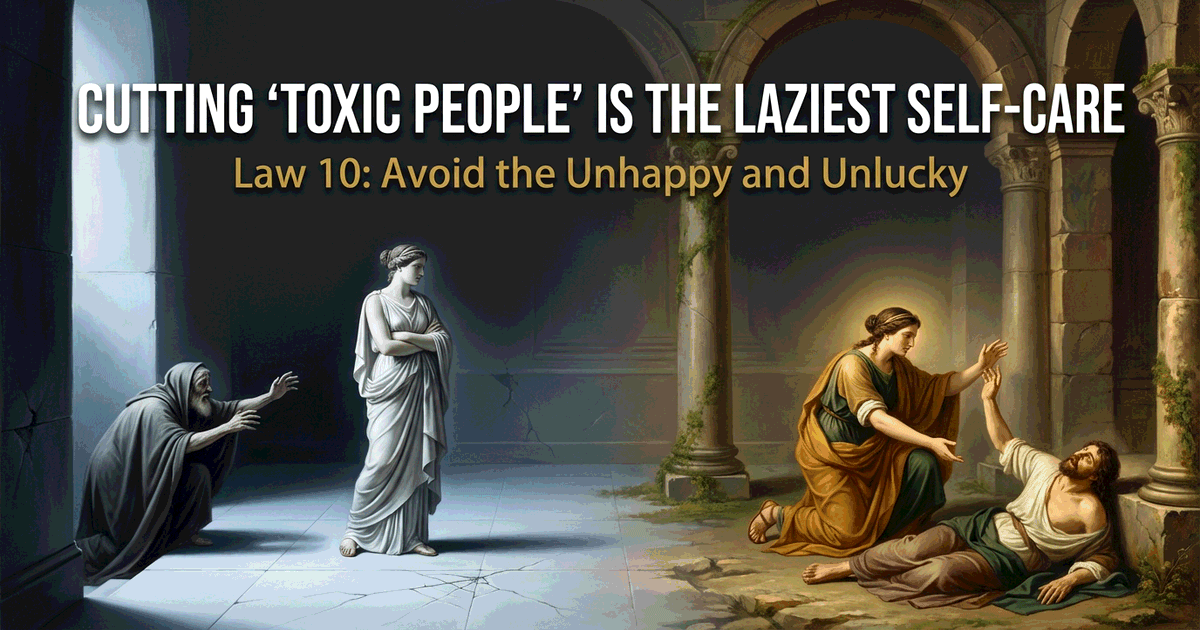
Greene says avoid the unhappy and unlucky. The ancients say build yourself strong enough to sit with someone else's pain without losing your center. One protects your comfort. The other builds your character.
Greene says make people dependent on you to secure your position. The Greeks say build people who stand on their own. One creates leverage that requires constant maintenance. The other creates organizations that grow stronger whether you're in the room or not.

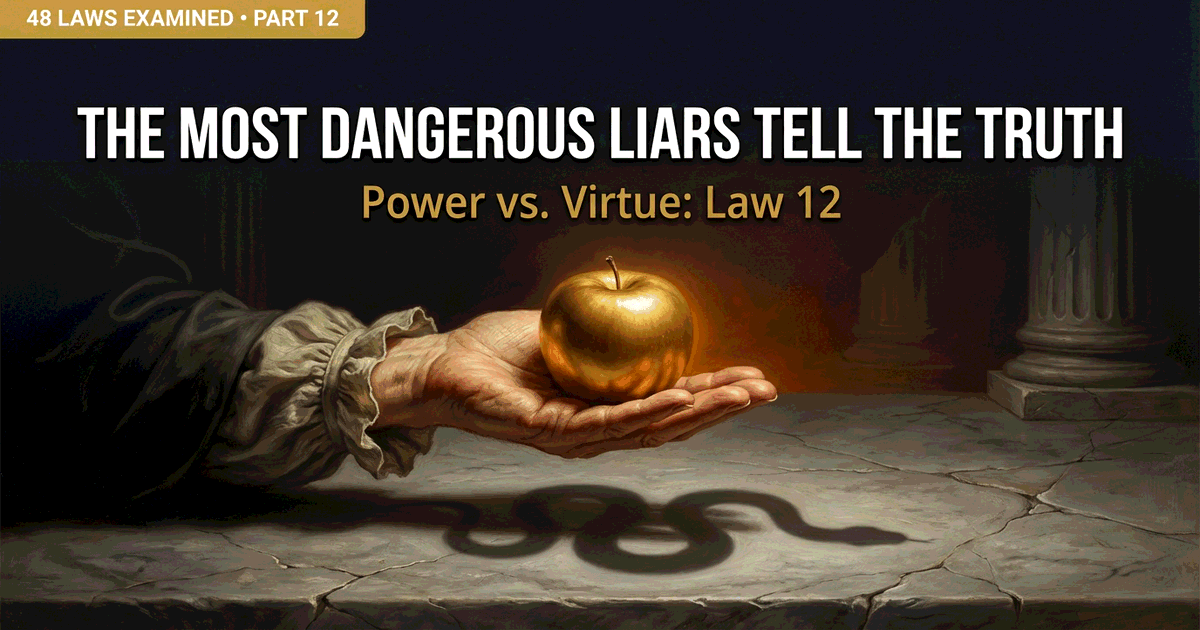
Greene says use selective honesty and generosity to disarm your victim. The Greeks say truth spoken from calculation corrupts the speaker, the listener, and every honest conversation that follows. One creates a short-term advantage. The other creates a permanent disability.
Greene says appeal to self-interest because gratitude and mercy are unreliable. The Greeks say build the kind of character that makes people want to help because your cause is worth joining. One treats people as machines with levers. The other treats them as allies capable of something extraordinary.

Greene says use friendship as cover for intelligence gathering. The Greeks called performing emotions you don't feel hypokrisis, the word that gave us hypocrisy. One produces temporary advantage. The other produces permanent inability to connect with anyone who matters.

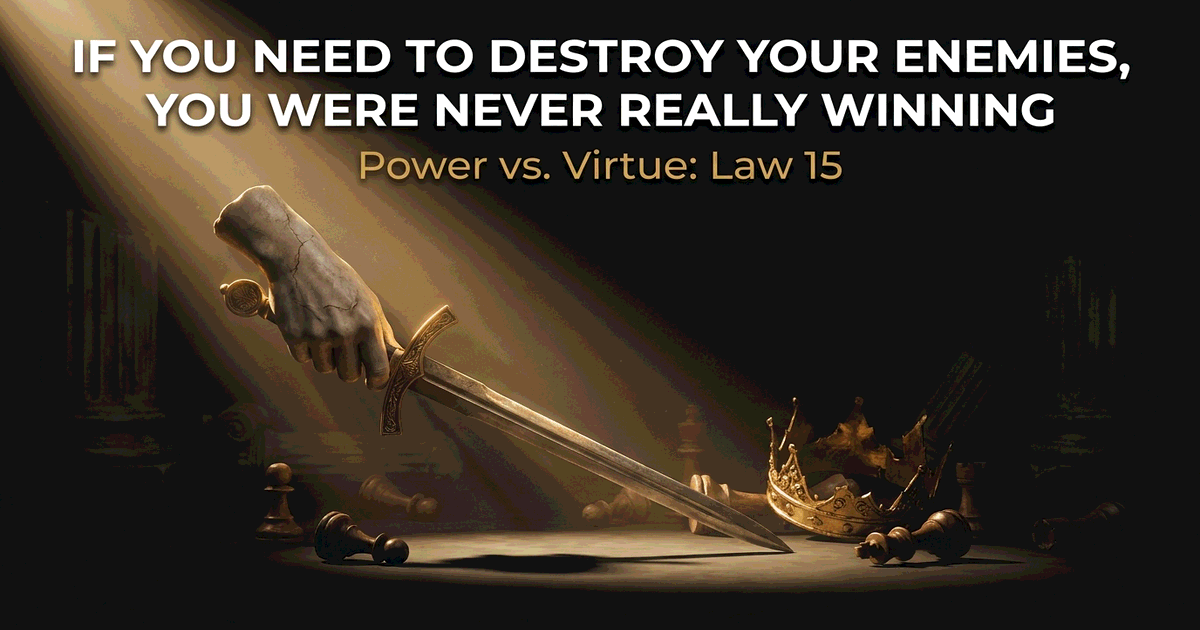
Greene says leave nothing to chance and annihilate your opponent completely. But total destruction requires total obsession with another person's existence. The Greeks called this failure of character, not strength. Megalopsychia, greatness of soul, means your purpose is too large for any single enemy to define.
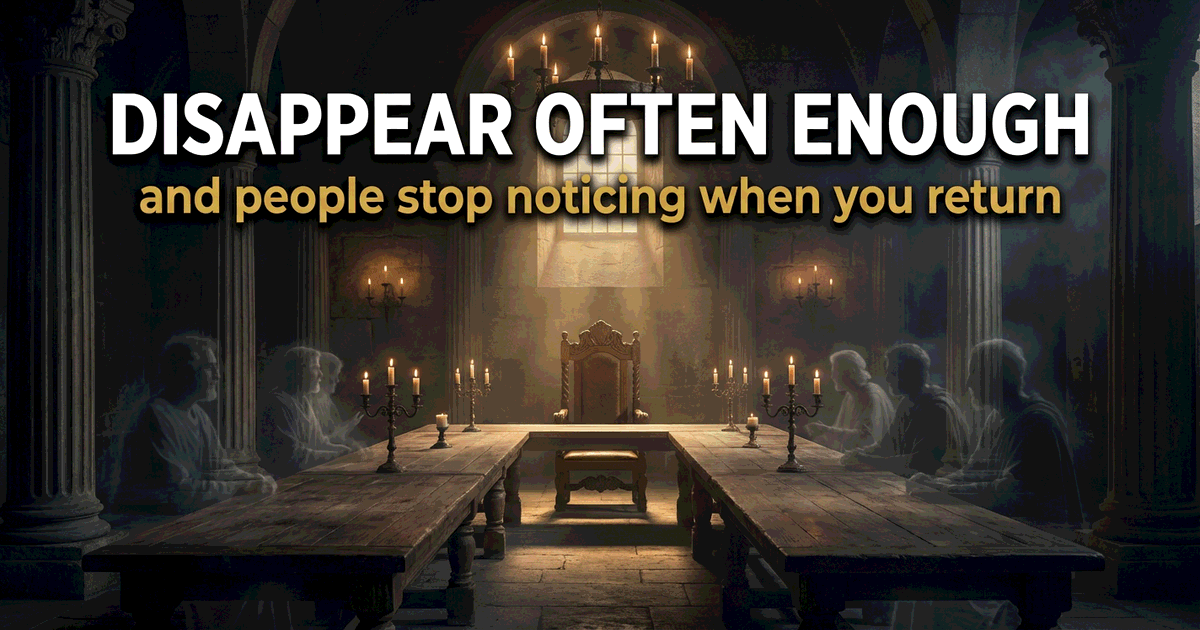
Law 16 says use absence to increase respect. The Stoics practiced withdrawal too, but for a completely different reason. One builds depth. The other builds delusion.
Law 17 says keep others in suspended terror through unpredictability. The Greeks had a name for leaders who ruled through fear: tyrants. And they had a clear record of how every tyranny ends.

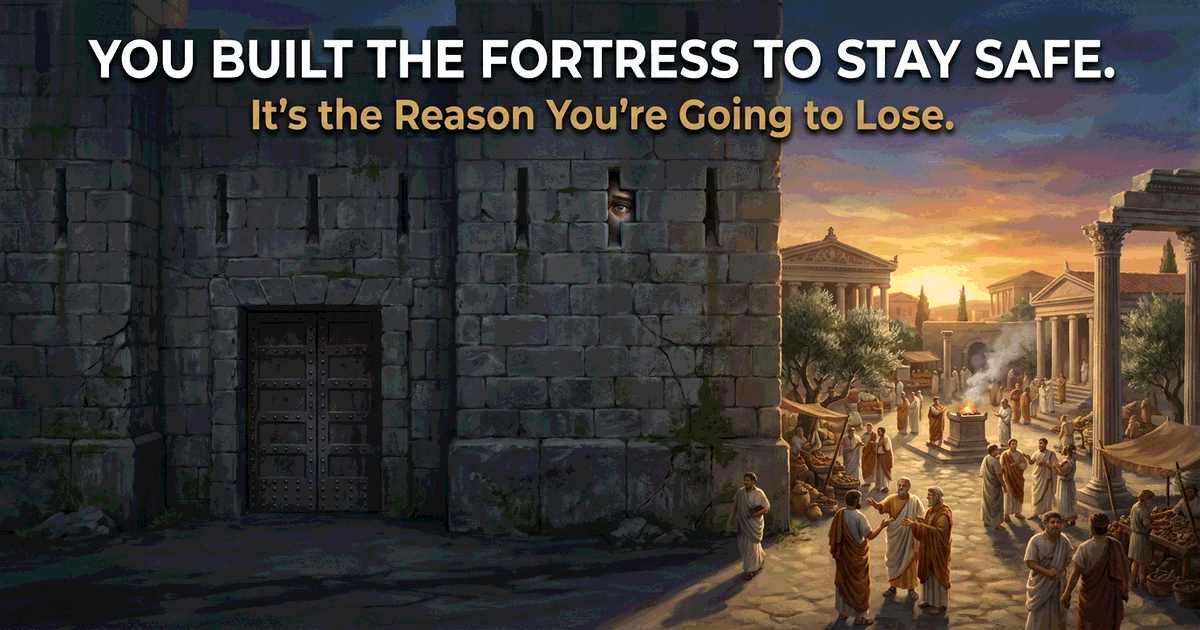
Greene says don't build fortresses because they make you a target. The Greeks had a deeper warning: humans were never built for life behind walls. The word for someone who isolated was idiotes.
Greene says study people before you act, and never offend the wrong one. Run that as your operating system for a few years and watch what it does to your honesty. The Greeks had a sharper answer.

Greene's Law 20 sounds like freedom. Refuse to commit. Stay above the fight. Keep your options open. Run it as your default operating system for a few years and watch what stops happening to you. The Greeks called the resulting condition by a different name.
Greene's Law 21 tells you to play the fool so your marks lower their guard. The tactic is real. The Greeks invented it. But Socrates played dumb to make people wiser, and Greene plays dumb to make people poorer. The mask is identical. The cost of running the wrong one is that you eventually cannot take it off.

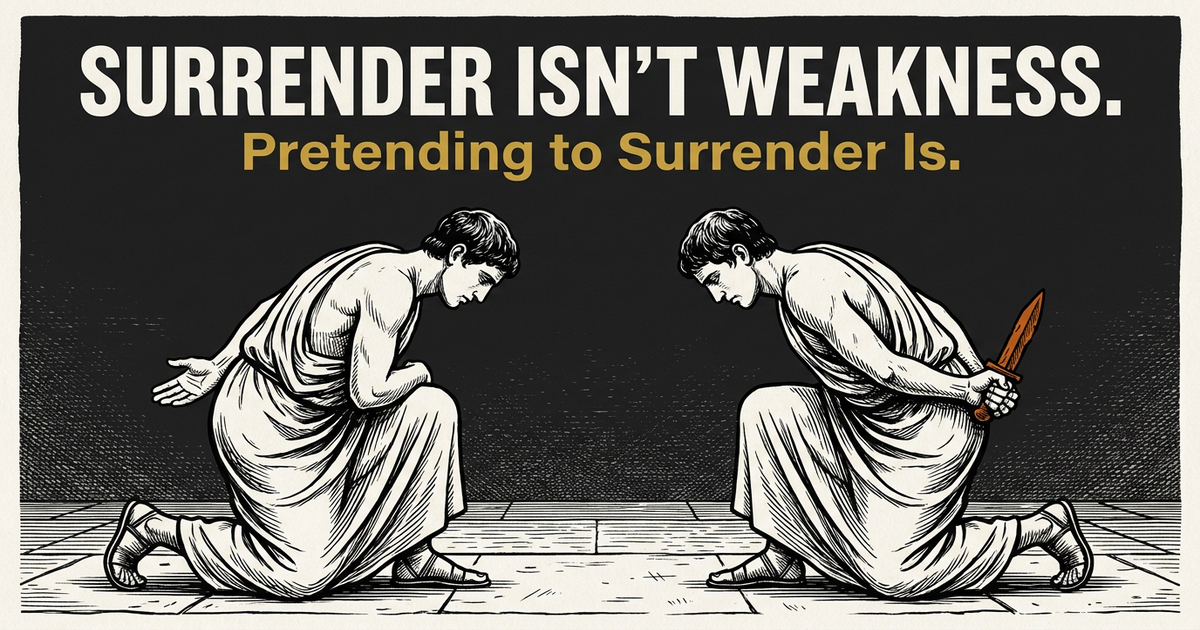
Greene's Law 22 tells you to surrender as a counter-trap. The tactic is real, and the Stoics knew the moves it copies. But Marcus Aurelius yielded to preserve his prohairesis. Greene's reader yields to spring an ambush. The heads can look identical; the ends diverge. The test that separates them is whether you could name, out loud, what you yielded for.
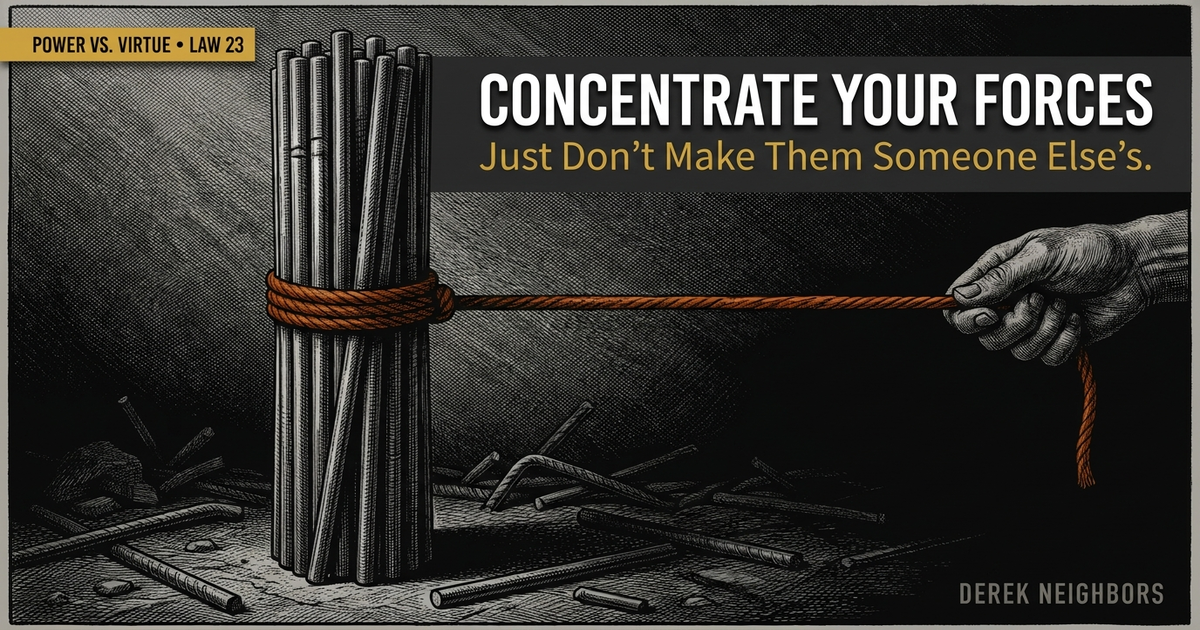
Greene's Law 23 welds two opposite ideas together. Concentrate your forces at their strongest point is some of the most virtue-aligned advice in the book. Find the one patron, the fat cow to milk, is the trap. Both feel like focus. One builds a foundation you own. The other lends your forces to a hand that can drop you.
Law 24 tells you to become the perfect courtier: master indirection, flatter without obvious flattery, never deliver uncomfortable truths directly. The Greeks had a word for that kind of social facility. They called it kolakeia. They condemned it. Not because flattery fails tactically, but because it corrupts both the giver and the receiver. The alternative is charis: social grace rooted in genuine goodwill, deployed with the courage to say what needs to be said.

Law 25 of the 48 Laws of Power tells you to recreate yourself by seizing control of your image, becoming a memorable, protean figure who never bores the audience. The Greeks had a word for the thing you put on to face a crowd: prosopon, the mask an actor wore on stage. Greene's reinvention is mask-work, and a mask worn long enough fuses to the face. There is a real kind of self-recreation, but it runs the other direction. You forge the substance and let the appearance follow.

Law 26 of the 48 Laws of Power tells you to seem a paragon of civility while using scapegoats and cat's-paws to do your dirty work, so your hands stay spotless. The Greeks had a word for what that strategy ignores: miasma, the pollution that attaches to a deed and the one who willed it, no matter whose hands carried it out. You cannot wash it off by passing someone else the knife. There is a real way to keep your hands clean. It is the most literal one. Do not do the thing that stains.

Law 27 of the 48 Laws of Power tells you to play on people's need to believe and create a cultlike following. Keep your words vague, favor enthusiasm over thinking, hand out rituals, collect the devotion. The need Greene identified is real. People are starving for something worth believing in. The law fails at the harvest. The Greeks called his method goeteia, the enchanter's craft that bypasses judgment instead of building it, and they left us a portrait of exactly where it ends: a con man with a puppet snake god who opened his rites by expelling every skeptic in the crowd, because one honest question would have brought the whole thing down.

Law 28 of the 48 Laws of Power tells you to enter action with boldness, and this series agrees with it. Hesitation telegraphs doubt, half-measures dig deeper graves than full commitment ever does, and timidity has never once been mistaken for wisdom. But Greene builds his case on con artists, and that choice exposes the crack in the law. Audacity aimed at an audience has a tell that Aristotle documented twenty-three centuries ago: the rash man is loud before the danger arrives and gone once it does, while the brave man is quiet beforehand and keen inside the moment. The difference decides whether your boldness compounds into a life or burns off like a firework.
Law 29 of the 48 Laws of Power tells you to plan all the way to the end, and this series agrees with it. Vague plans collapse into improvisation, improvisation is crisis-to-crisis living, and the people who cannot name a stop get owned by whoever can. Greene's evidence is Balboa, who discovered the Pacific and still lost his head, versus Bismarck, who unified Germany and then refused the siren of more. The ancient correction is simple: the ending has to be a worthy end, not just a clever exit, and naming it is what makes bold action safe to start.

Law 30 of the 48 Laws of Power tells you to make your accomplishments seem effortless. Hide the toil. Conceal the tricks. Act as if you could do much more. The tactical truth is real: audiences confuse rehearsal with weakness, and clean execution reads as competence. The character cost arrives when concealment becomes mystique. Juniors never see the path. Effort becomes shame. Your identity fuses to a costume of natural gift. The ARETE alternative is Castiglione's sprezzatura rebuilt on Greek hexis: earned ease from practice, ponos honored in the forge, techne that can still teach.

Law 31 of the 48 Laws of Power tells you to control the options: get others to play with the cards you deal. The tactical truth is real. Unstructured choice stalls rooms, and people defend outcomes they believe they chose. The character cost arrives when the menu is a rigged deck. Every door already belongs to the dealer. Discovery bankrupts trust. The operator trains contempt for other people's judgment. The ARETE alternative keeps framing as craft and restores real prohairesis: honest constraints, a shared end, and at least one exit that is not already yours.

Law 32 of the 48 Laws of Power tells you to play to people's fantasies: become the oasis of romance in a harsh world, avoid ugly truth, and gain power from the hunger for soft stories. The tactical truth is real. Pleasant pictures gather crowds, and disenchantment makes people angry. The character cost arrives when fantasy becomes your operating system. You train judgment off reality. When the mirage breaks, you earn the rage. The ARETE alternative keeps hope aimed at a hard path people can walk, and restores frank speech that can still lead.

Law 33 of the 48 Laws of Power tells you to find each person's thumbscrew: the insecurity, the need, the secret pleasure, then turn it. The tactical truth is real. People have soft spots, and pressure on a known fear produces motion. The character cost arrives when that knowledge becomes inventory. They stop telling you the truth. You keep the title and lose the information that would have let you lead. The ARETE alternative still reads people, then aims the knowledge at their good instead of your next yes.

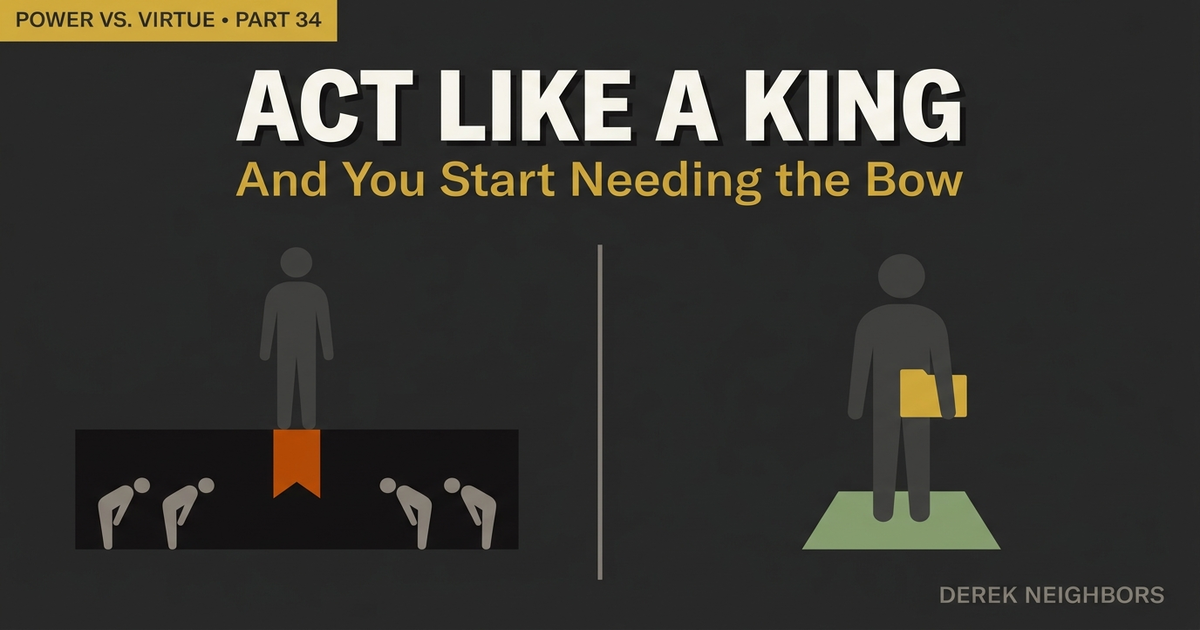
Law 34 of the 48 Laws of Power tells you to act like a king so the room treats you like one. The tactical truth is real. Rooms copy how you price yourself, and cheap familiarity can collapse the work. The character cost arrives when bearing becomes a standing request for deference. You start needing the bow. The ARETE alternative still holds a standard for how you are treated, then roots that standard in inner sufficiency instead of a court.
Law 35 of the 48 Laws of Power tells you to master the art of timing, and this series agrees with it. The same move lands or dies on when you make it, hurry reads as fear, and rooms punish people who cannot wait. Then the law tells you to seem patient and to sniff out the spirit of the times, and its hero is a man who survived every regime by standing for nothing. Kairos is the right moment for something. Decide the something first, or the moment never comes.

Law 36 of the 48 Laws of Power tells you to disdain what you cannot have and to ignore your enemies, because ignoring them is the best revenge. Half of that is true. Attention makes things bigger, and you cannot hang your good on things outside your reach. Then Greene tells you to do it the way Aesop's fox did, by deciding the grapes were sour. The fox lied to himself, and the lie is the expensive part. The Stoics had a cheaper way to lose.

Law 37 of the 48 Laws of Power tells you to stage arresting spectacles, because dazzled by appearances nobody will notice what you are really doing. The first half is true and Aristotle already had a virtue for it. The second half is the problem. A spectacle is a promise made in public, and the bill arrives whether or not you meant to sign it.

Law 38 of the 48 Laws of Power tells you to think as you like but behave like others. Seneca gave nearly the same advice, for a better reason and with a line Greene never draws. Aristotle explains the bill: there is no inside that survives ten years of an outside that conforms.
Law 39 of the 48 Laws of Power tells you to stay calm yourself and make your enemies angry. It works, and Aristotle wrote the manual for it. He also wrote the objection: provoking someone bends the ruler you were about to measure with, and you are the one who needed the measurement.
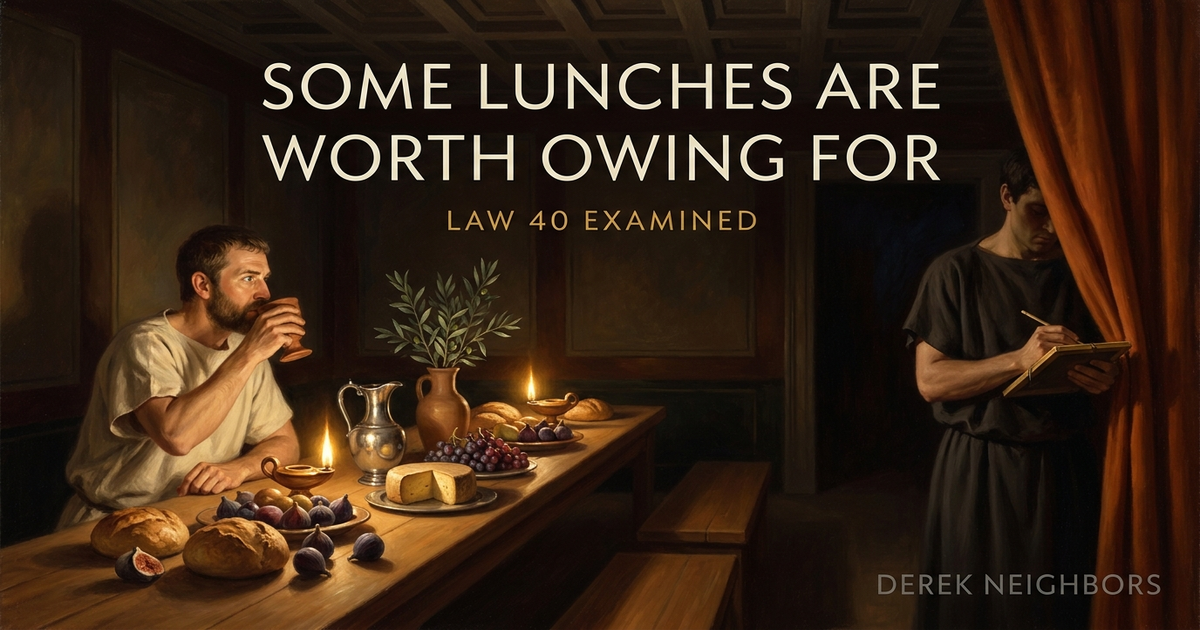
Law 40 of the 48 Laws of Power tells you to distrust anything free, pay full price, and give lavishly because generosity draws power. Half of that is sound. The other half teaches you to turn down help, keep a ledger on your friends, and give only when it buys something.
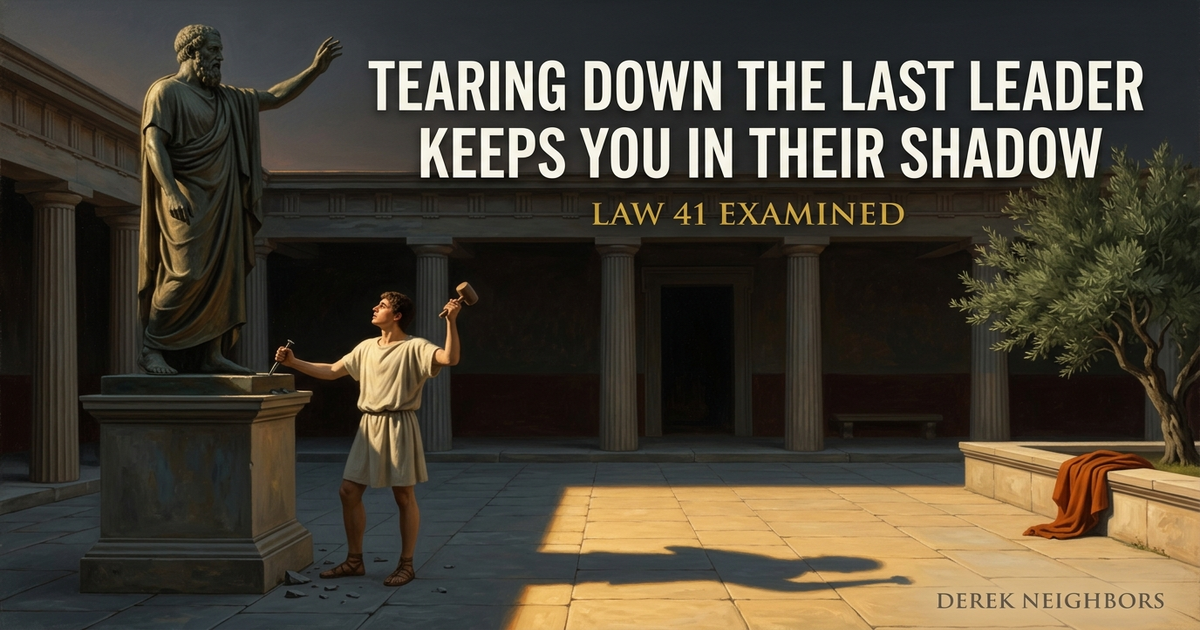
Law 41 of the 48 Laws of Power tells you to avoid following a great predecessor, and if you must, to break with them and run down what they built. The comparison is real. The cure keeps you steering by the person you are trying to escape.
Excellence of function. Not achievement or outcome, but becoming excellent through consistent act...
Practical wisdom. The capacity to discern the right action in specific situations, particularly k...
Self-mastery and moderation. The discipline to regulate yourself internally when nothing external...
The ultimate end, purpose, or goal toward which something naturally develops and at which it reac...
Self-sufficiency. The capacity to stand on your own capability, meeting challenges through develo...
The courage to speak truth freely and frankly, especially to those in power, regardless of person...
Truth as unconcealment. Not merely accurate statements, but the fundamental orientation toward re...
Greatness of soul—the virtue of one who considers themselves worthy of great things and is actual...
The faculty of moral choice and rational decision-making that defines human agency. For the Stoic...
A stable disposition or settled state of character acquired through repeated action. For Aristotl...
The art of playing a role, originally denoting theatrical acting and rhetorical delivery. In phil...
Deep friendship rooted in mutual recognition of virtue and commitment to each other's flourishing...
The quality of trustworthiness, faith, or reliable commitment that binds relationships and commun...
Attention to oneself; the continuous vigilant awareness of one's thoughts, judgments, and impulse...
Courage. The willingness to face what's difficult rather than retreat to what's comfortable, acti...
Human flourishing. The deep satisfaction of functioning as you were meant to function, living in ...
Goodwill, benevolence, and well-mindedness toward others. A genuine disposition of favorable rega...
Deep fellowship and communal participation. The shared life of a community bound by common purpos...
Things that are morally indifferent—neither inherently good nor bad. In Stoic philosophy, this in...
Grace, gratitude, and reciprocal generosity. A cycle of giving, receiving, and returning that is ...
True freedom understood not as license to do whatever one wishes, but as the capacity for self-go...
The characteristic function, task, or work that defines what something is meant to do. In Aristot...
The opportune or decisive moment, the critical point in time when conditions align for effective ...
The city-state as the essential context for human flourishing. For Aristotle, humans are politica...
Freedom from destructive passions and emotional turbulence—not the absence of all feeling, but th...
Disciplined training and practice aimed at self-mastery, originally athletic exercise but extende...
Self-legislation and the capacity to govern oneself according to one's own rational principles ra...
Cowardice or excessive fear that prevents right action. In Aristotelian ethics, the vice of defic...
Opinion, reputation, or common belief as distinguished from true knowledge (episteme). In ancient...
The inherent capacity or potential power within a thing to become what it is meant to be. In Aris...
The expectation of future good or ill, encompassing both hope and fear. In Greek thought, elpis r...
The art of sorcery, enchantment, or fraudulent manipulation through deceptive charm. In philosoph...
Excessive pride or arrogance that leads one to transgress natural or divine limits, often resulti...
Love of humanity. Not selective affection for people who benefit you, but a universal orientation...
The love of honor and distinction—an ambitious drive to earn recognition through noble deeds and ...
The insatiable desire to have more than one's fair share—a grasping acquisitiveness that Aristotl...
The aim, target, or mark toward which one directs effort and attention. In Greek philosophy, skop...
The cause, reason, or explanation for why something exists or occurs. In Aristotelian philosophy,...
Strategic withdrawal or retreat, either physical or psychological, undertaken to gain perspective...
Sequential, quantitative time measured by clocks and calendars. Unlike kairos (the opportune mome...
Excessive fear of the divine or supernatural, manifesting as irrational religious anxiety, supers...
The philosophical practice of feigned ignorance or deliberate understatement, employed by Socrate...
The Socratic method of cross-examination that exposes contradictions in a person's beliefs, leadi...
The virtue of generosity and liberality in giving, particularly concerning wealth. For Aristotle,...
The state of being at work, actuality, or the full realization of potential. In Aristotle's metap...
The mastery of self through the power of will over impulse and appetite. For Aristotle and the St...
Strife, discord, or competitive rivalry. In Greek thought, eris represents both destructive confl...
The stable character or disposition of a person, formed through repeated action and habit. For Ar...
The beautiful and the noble unified. In Greek thought, kalon denotes moral beauty where aesthetic...
The vice of flattery: insincere praise offered to gain favor or advantage. Aristotle identifies i...
Reason, speech, argument, or account. In Greek philosophy, logos represents the rational principl...
The virtue of magnificent expenditure befitting great occasions. Aristotle defines it as spending...
A fundamental transformation of mind and heart—not mere regret, but a complete turning around of ...
A pollution or stain that spreads through a community from wrongdoing, requiring purification. In...
Pettiness or meanness in conduct, especially regarding money and honor. In Aristotle's ethics, th...
The act of imitation or representation, central to Aristotle's theory of art and learning. Beyond...
The comprehensive formation of a human being through education, culture, and character training. ...
The capacity of the mind to form impressions, appearances, or mental representations of reality. ...
Fear understood not as mere cowardice but as a rational emotional response to genuine danger. In ...
Envious resentment toward another's good fortune or excellence. In Greek philosophy, a destructiv...
The intrinsic nature, essence, or fundamental character of a thing that determines its growth, be...
The vice of meddling in affairs that do not concern you, excessive busyness, or compulsive interf...
The toil, labor, and productive struggle necessary for achieving anything of worth. In Greek thou...
Gentle strength that responds to provocation with measured calm rather than rage or passivity. Fo...
Action or practice directed toward living well. For Aristotle, praxis is purposeful human activit...
The face, mask, or persona one presents to the world. Originally referring to theatrical masks, i...
Universal connection and fellow-feeling. The Stoic recognition that all humans are woven into the...
The systematic knowledge and skill required to produce something well—craft, art, or applied expe...
Reckless boldness or foolhardy daring. In Aristotle's ethics, the vice of excess in relation to f...
The spirited part of the soul associated with passion, anger, courage, and the drive for recognit...
The passionate emulation of excellence in others, a positive rivalry that inspires one to match o...
This year-long series examines each of Robert Greene's 48 Laws of Power through the lens of ancient Greek virtue ethics. We acknowledge the tactical truth of each law, examine its character cost, and provide the ARETE alternative for achieving effectiveness without sacrificing integrity.
No. Some laws align with ancient wisdom (like 'Always say less than necessary' which reflects sophrosyne). Some need reframing (like 'Never outshine the master' which confuses timing with self-diminishment). Some we reject entirely (like 'Use selective honesty to disarm' which is manipulation). Each law gets examined individually.
The ARETE alternative shows how to achieve similar outcomes through virtue rather than manipulation. Instead of dimming your light to avoid threatening insecure leaders, you deploy excellence with wisdom about timing. Instead of using enemies, you choose friends for character. The goal is effectiveness without character erosion.
Greek concepts like kairos (timing), phronesis (practical wisdom), and arete (excellence) provide frameworks for navigating power dynamics with integrity. The Stoics understood political realities while maintaining character. This series bridges ancient wisdom and modern workplace challenges.
Most critiques either reject Greene entirely or accept his premises uncritically. This series acknowledges the tactical truth of each law, understands WHY they 'work,' then asks the deeper question: What kind of person do you become by practicing this? It's not about whether laws are effective, but whether the effectiveness is worth the character cost.
One law per week, every week for 48 weeks. The series runs from January 2026 through January 2027, providing a full year of examination into power, character, and what it means to lead with integrity.
This series is part of a comprehensive approach to excellence and human flourishing. Get systematic frameworks and practical tools for transformation.
Distinguishing genuine self-optimization from elaborate avoidance strategies
Navigate the AI revolution with practical wisdom and strategic thinking