Prohairesis (προαίρεσις): Meaning, Definition & Modern Application
pro-HY-reh-sis
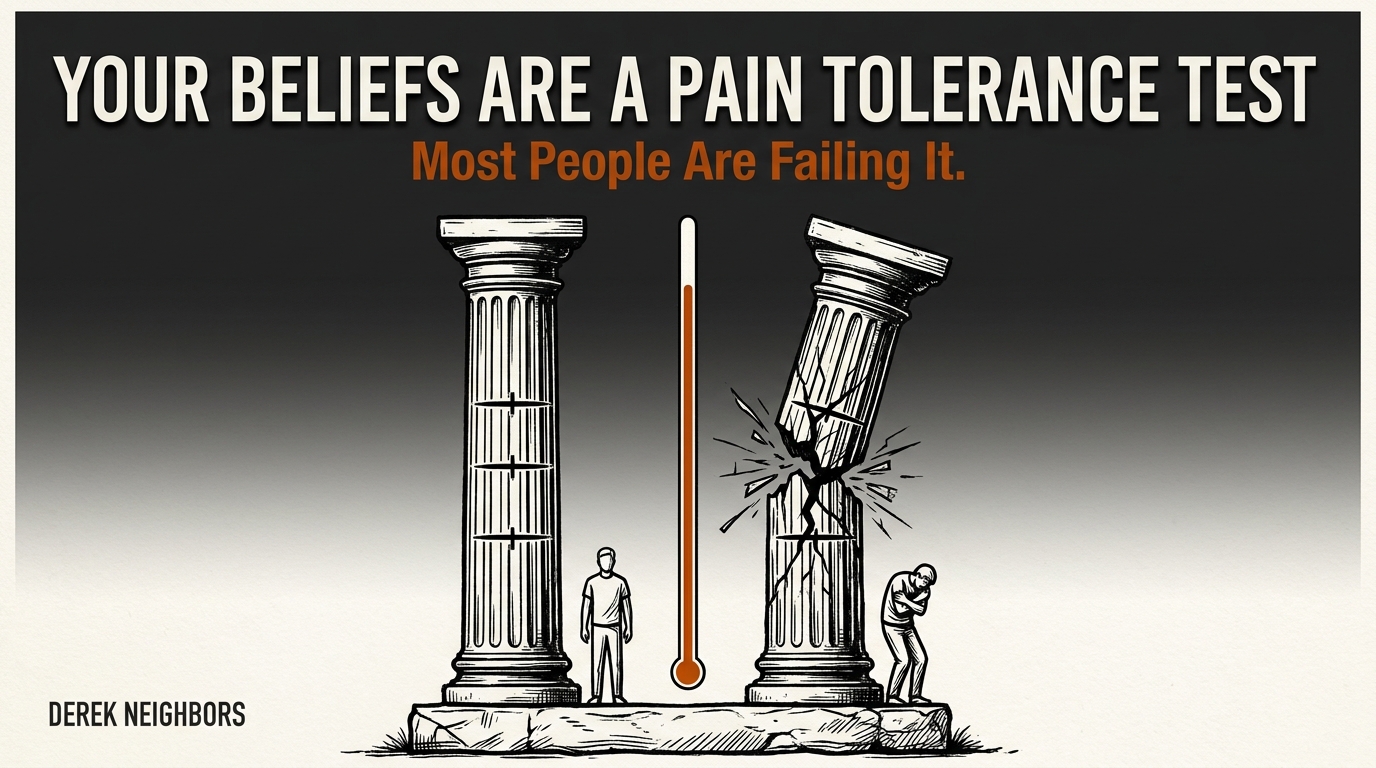
The faculty of moral choice and rational decision-making that defines human agency. For the Stoics, particularly Epictetus, prohairesis represents the ruling center of the self—the one thing entirely within your control and immune to external circumstances.
Etymology
From pro (before) and hairesis (choice, taking), literally “choosing before” or “deliberate choice.” Aristotle used the term to describe the rational selection among alternatives that distinguishes human action from animal behavior. Epictetus elevated prohairesis to the core of Stoic psychology, arguing it is the one faculty that external forces cannot touch. Your body can be imprisoned, your possessions taken, but your capacity for moral choice remains inviolate.
Deep Analysis
Prohairesis stands at the center of both Aristotelian ethics and Epictetan Stoicism, though each philosopher deployed the concept differently. The word itself combines pro (before) and hairesis (choice, selection). Prohairesis is the choice made after deliberation, the act of will that follows rational evaluation of alternatives. It is not impulse, not desire, not wish. It is the specifically human capacity to weigh options, consider consequences, and commit to a course of action on rational grounds.
Epictetus elevated prohairesis to the absolute center of his philosophical system. In the Discourses, he teaches that prohairesis is the one thing genuinely “up to us” (eph’ hemin). External circumstances, your body, your possessions, your reputation, other people’s actions, are not up to you. Your prohairesis, your faculty of rational choice, is the only thing fully within your control. This is not a counsel of passivity. It is a precise identification of where your freedom lies. You cannot control the market, the weather, or other people’s responses. You can control how you evaluate the situation and what you choose to do about it.
Aristotle’s treatment in the Nicomachean Ethics is more analytical. He defines prohairesis as “deliberate desire of things in our power” and distinguishes it carefully from three related concepts. It is not the same as desire (orexis), because you can desire things beyond your power to achieve. It is not the same as impulse (horme), because impulse acts without deliberation. It is not the same as wish (boulesis), because you can wish for the impossible. Prohairesis is specifically the choice that follows deliberation (bouleusis) about means to ends that are within your power to achieve.
The relationship between prohairesis and eleutheria (genuine freedom) in Epictetus’s thought is profound. For Epictetus, the slave whose prohairesis is uncorrupted is freer than the emperor whose prohairesis is enslaved to desire, fear, or opinion. This is not a consolation prize. Epictetus, who had himself been a slave, was making a precise philosophical claim: freedom is a property of the will, not of external circumstances. The person who chooses their values, maintains their commitments, and refuses to compromise their character under pressure is free regardless of their external situation. The person who abandons their values whenever circumstances make them inconvenient is enslaved regardless of their social position.
Phronesis (practical wisdom) relates to prohairesis as the intellectual virtue that informs the choices the will makes. Prohairesis without phronesis produces committed but unwise choices: you choose decisively but choose wrong. Phronesis without prohairesis produces wisdom without commitment: you know what to do but lack the resolve to do it. The combination of practical wisdom and moral choice, knowing the right thing and choosing to do it, is what Aristotle identifies as the foundation of moral responsibility.
Ethos (character) is the accumulated product of prohairesis over time. Each choice you make reinforces a disposition. Choose courage often enough, and courage becomes your default. Choose avoidance often enough, and avoidance becomes your default. You are not merely making choices. You are constructing a character. Aristotle’s account of virtue as hexis (stable disposition) formed through habitual action is really an account of prohairesis exercised consistently in one direction until the direction becomes part of who you are.
Askesis (disciplined training) is the practice through which prohairesis is strengthened. Just as physical training strengthens the body, moral askesis strengthens the faculty of choice. Epictetus recommended specific exercises: when desire arises, practice deferring it. When anger arises, practice pausing before responding. When comfort calls, practice choosing the harder path. These exercises are not about suppressing natural responses. They are about developing the capacity to choose your response rather than having it chosen for you by habit, impulse, or circumstance.
Modern Application
Your prohairesis is your leadership superpower: the ability to choose your response to any situation, regardless of external pressures. When markets crash, teams fracture, or critics attack, you retain sovereign authority over your judgments and decisions. Train this faculty daily by distinguishing what depends on you from what does not, then directing all your energy toward the former.
Historical Examples
Epictetus’s own life provides the most compelling illustration of prohairesis in action. Born into slavery in Hierapolis around 50 CE, Epictetus was owned by Epaphroditus, a freedman of Nero. Ancient sources, including Origen, report that Epictetus’s master once twisted his leg, and Epictetus calmly observed, “You are going to break it,” and when it broke, added, “Did I not tell you that you would?” Whether this specific anecdote is historically accurate, the tradition preserves the central teaching: external circumstances, including physical violence, cannot reach your prohairesis unless you allow them to. Epictetus’s faculty of choice remained his own even when his body did not.
Thomas More’s refusal to endorse Henry VIII’s Act of Supremacy in 1534 exemplifies prohairesis maintained to the point of execution. More, who served as Lord Chancellor of England, chose death over compromising his religious convictions. Henry offered multiple opportunities for More to take the oath with minimal consequences. More’s silence and eventual execution were not passive acts. They were sustained exercises of prohairesis: the deliberate, repeated choice to maintain his moral position despite escalating consequences.
Václav Havel, the Czech playwright who spent years imprisoned for his dissidence before becoming president of Czechoslovakia in 1989, described his decision to sign Charter 77 as a moment of prohairesis. Havel wrote that the decision was not heroic in the dramatic sense. It was simply the recognition that refusing to sign would have required him to become someone other than who he was. The choice to sign was a choice to remain himself, which is precisely what Epictetus meant when he taught that prohairesis is the seat of moral identity.
How to Practice Prohairesis
Each morning, divide your concerns into two columns: what is within your control (your judgments, choices, effort, and responses) and what is not (others’ opinions, market conditions, past events, outcomes). Commit to directing your energy exclusively toward the first column. When you catch yourself worrying about something in the second column, redirect immediately to the corresponding action within your control. Practice making deliberate choices rather than reactive ones: before each decision today, pause and ask, “Am I choosing this, or am I being pushed into it?” The distinction will sharpen your agency over time. Keep a choice journal for one week, recording every significant decision and whether it was deliberate or reactive. At week’s end, calculate the ratio and set a specific goal to increase the proportion of deliberate choices. Epictetus taught that your prohairesis is the one faculty external forces cannot touch. Your body can be constrained, your possessions taken, but your capacity for moral choice remains sovereign. Test this by identifying one area where you have been blaming external circumstances and reclaiming full ownership of your response.
Application Examples
A mid-level manager discovers that a practice generating significant revenue is ethically questionable but not technically illegal. Her superiors are aware and supportive. Her peers participate without objection. She must choose between conforming to the institutional norm and raising a concern that will make her unpopular and may damage her career.
Prohairesis is tested most severely when the right choice and the advantageous choice diverge. The manager’s external circumstances, institutional pressure, peer behavior, career implications, are not up to her. Her choice is. And the choice will not only address this specific situation but reinforce a pattern of character that will determine how she faces every subsequent moral test.
A recovering addict faces the daily choice between attending a support meeting after a long day of work and going home to rest. The immediate desire is for comfort. The deliberate choice, made fresh each day, is for the meeting. Over months, the daily prohairesis builds a pattern that eventually becomes a stable disposition.
Recovery is prohairesis exercised daily against the pull of immediate desire. The choice is never made once. It is made every day, and each day’s choice either reinforces the pattern of recovery or weakens it. This is exactly what Aristotle described: character is built through repeated choice, and the accumulation of choices creates the person you become.
During a crisis, a leader must choose between a response that will be effective but will require the leader to take public responsibility for previous mistakes, and a response that deflects blame but is less effective. The effective response requires honesty about what went wrong. The blame-deflecting response allows the leader to maintain their reputation at the cost of the best outcome.
Prohairesis in leadership is most visible during crises, when the stakes are high enough to reveal whether the leader’s commitment to doing the right thing is genuine or conditional. The leader who chooses effectiveness over self-protection in a crisis is exercising prohairesis in its most consequential form. The choice reveals who they are.
A doctoral student discovers that their thesis data contains an anomaly that, if investigated, might undermine their central finding. Ignoring the anomaly would allow them to defend the thesis on schedule. Investigating it could delay graduation by a year. The student chooses to investigate.
Academic integrity is prohairesis exercised against the pressure of career timelines. The student’s choice to investigate the anomaly is not merely a methodological decision. It is a moral choice about what kind of scholar they will be. The choice, made at a moment when no one is watching, shapes their character more profoundly than any public commitment to integrity.
A professional cyclist at the peak of their career is offered a performance-enhancing substance that would be undetectable by current testing methods. Their competitors are rumored to be using similar substances. The cyclist declines, knowing that the decision may cost them victories and the financial rewards that come with them. The choice to compete clean is a prohairesis about who they are, not about what they can win.
Prohairesis in competitive contexts is tested when the right choice and the winning choice diverge. The cyclist’s decision is not about rules or detection risk. It is about the kind of person they choose to be. Each day they compete clean while suspecting that others do not, they are exercising prohairesis in its most demanding form: choosing character over advantage when no one would know the difference.
Common Misconceptions
Reducing prohairesis to willpower misses the deliberative dimension that makes it distinctly human. Willpower is brute force applied to resist temptation. Prohairesis is a rational process: you deliberate, you evaluate, and then you choose. The difference matters because willpower eventually depletes while prohairesis, because it is rooted in understanding rather than force, can sustain commitment over a lifetime. Another misconception assumes that exercising prohairesis means outcomes do not matter. Aristotle was clear that outcomes do matter, but he insisted that moral evaluation must focus on the choice itself because outcomes are influenced by factors beyond the agent’s control. The leader who makes the right choice and gets a bad result due to unforeseen circumstances has exercised excellent prohairesis. The leader who makes a reckless choice and gets a good result due to luck has exercised poor prohairesis regardless of the outcome.
The choices that defined my career were not the big, dramatic ones. They were the small, daily ones that no one noticed at the time.
I once worked in an organization where the implicit expectation was to present good news up the chain and manage bad news locally. This was never stated as policy. It was absorbed through observation: the people who brought problems to leadership were not rewarded for their honesty. They were associated with the problems they reported. The people who reported only successes advanced.
My prohairesis was tested every week in this environment. Each report, each status update, each conversation with a superior offered the choice between accuracy and advantage. I wish I could say I always chose accuracy. The truth is that I initially participated in the filtering. The institutional incentive was clear, and my desire for advancement was real.
What changed was a situation where the filtered information led to a decision that harmed people, a real decision with real consequences for real human beings whose well-being depended on accurate information reaching decision-makers. The harm was not catastrophic. It was manageable. But I could trace the causal chain from my filtered report to the inadequate decision to the harm caused. That traceability changed something in me that has not changed back.
Since then, I have treated accuracy in communication as a non-negotiable prohairesis. Not because it is comfortable. Not because it advances my career. Because the alternative, constructing filtered realities that produce avoidable harm, is a choice I am not willing to make again. The practice has cost me politically in every organization where I have worked. It has never cost me more than the alternative would have cost my character.
Frequently Asked Questions
What is prohairesis in Greek philosophy?
Prohairesis is the Stoic concept of moral choice and rational decision-making, the faculty that defines human agency. Epictetus considered it the one thing entirely within your control, immune to external circumstances. It represents your capacity to choose your response to any situation. Aristotle originally used the term to describe the rational selection among alternatives that distinguishes human action from animal behavior, and Epictetus later elevated it to the core of Stoic psychology.
What does prohairesis mean?
Prohairesis literally means "choosing before" or "deliberate choice," from pro (before) and hairesis (choice). It describes the rational faculty of selecting among alternatives, the ruling center of the self that determines how you respond to circumstances. The "before" in the word is significant: prohairesis implies that genuine choice happens in advance of action, through deliberation rather than impulse.
How do you practice prohairesis?
You practice prohairesis by distinguishing what depends on you from what does not, then directing all your energy toward the former. Before each decision, pause and ask whether you are making a deliberate choice or being pushed by external pressure. Train this faculty daily through conscious reflection. Each morning, divide your concerns into two columns of what you control and what you do not, and commit to investing your effort exclusively in the first.
What is the difference between prohairesis and eleutheria?
Prohairesis is the faculty of moral choice, your capacity to select your response deliberately. Eleutheria is the freedom that results from exercising that faculty well. Prohairesis is the tool; eleutheria is the state you achieve when you use it to liberate yourself from external dependencies. A person can possess prohairesis without having achieved eleutheria, much as a person can have a compass without having yet found their way.