Doxa (δόξα): Meaning, Definition & Modern Application
DOK-sah
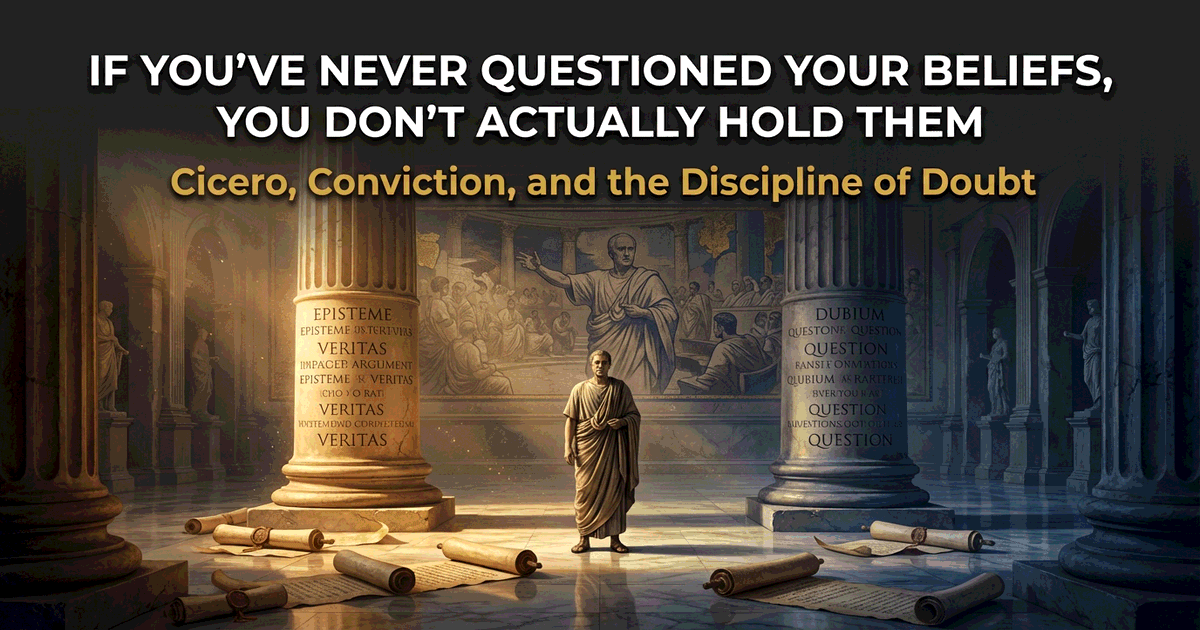
Opinion, reputation, or common belief as distinguished from true knowledge (episteme). In ancient Greek thought, doxa represents the realm of appearance and popular perception—what most people believe to be true, which may or may not align with deeper reality.
Etymology
From the Greek verb dokein, meaning “to seem” or “to appear.” Doxa carried a double meaning: both “opinion” (what seems true) and “glory” or “reputation” (how one appears to others). Plato’s divided line in the Republic placed doxa in the lower half, representing belief without genuine understanding. Parmenides drew a sharp line between the “way of truth” and the “way of doxa,” framing opinion as the obstacle truth must overcome.
Deep Analysis
Plato’s divided line in Republic Book VI provides the most systematic ancient framework for understanding doxa and its relationship to genuine knowledge. He divided cognition into four levels: eikasia (imagination, engagement with images and shadows), pistis (belief, engagement with physical objects), dianoia (reasoning, engagement with mathematical and logical objects), and noesis (understanding, direct apprehension of the Forms). The lower two levels, eikasia and pistis, constitute the realm of doxa. The upper two, dianoia and noesis, constitute the realm of episteme. The critical difference is not in the confidence with which beliefs are held but in their foundations. A person operating in the realm of doxa may be completely certain of their opinions while lacking any understanding of why those opinions are true or false.
Parmenides, writing before Plato, drew an even sharper line. In his poem On Nature, he described the Way of Truth, accessible only through reason, and the Way of Doxa, which is the path of appearances and mortal opinions. For Parmenides, doxa is not merely imprecise knowledge. It is a fundamentally different mode of engagement with reality, one that accepts appearances without interrogating them. The person living in doxa navigates through a world of seeming, responding to how things appear rather than investigating how things are.
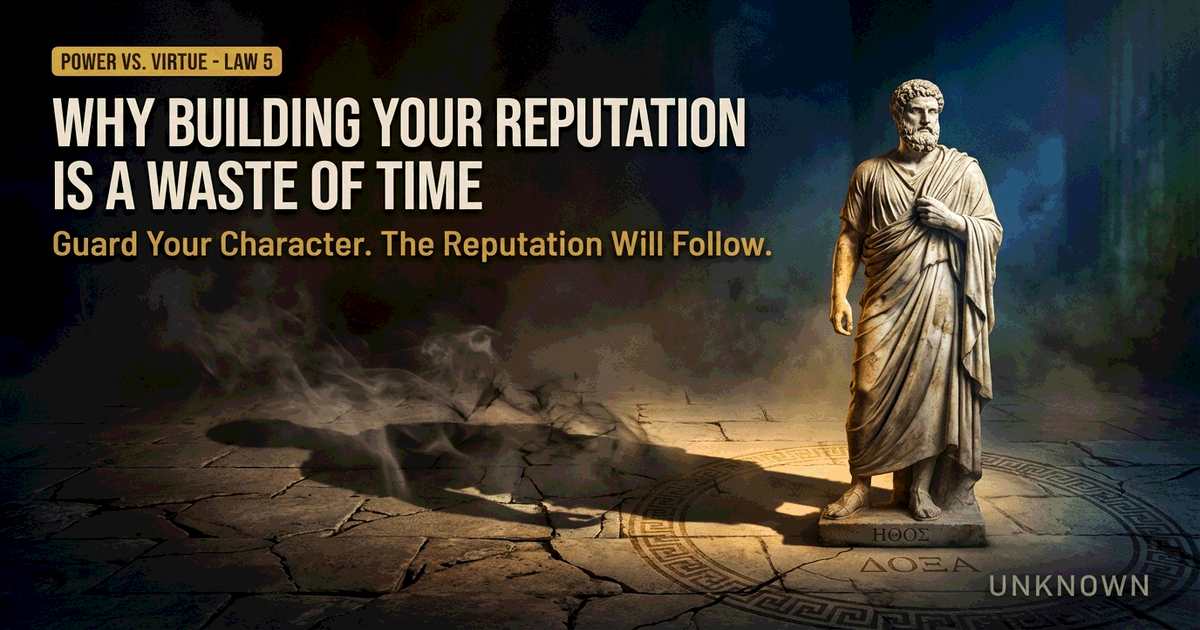
The double meaning of doxa, both “opinion” and “glory/reputation,” reveals a deep Greek insight about the connection between popular belief and public image. The realm of opinion and the realm of reputation are the same domain because both are governed by appearance rather than reality. Your doxa, your reputation, is the opinion others hold of you. It may or may not correspond to who you actually are. The person who manages their doxa without developing their actual character is operating entirely within the realm of appearance.
The danger of doxa is not that it is always wrong. Many popular opinions happen to be correct. The danger is that doxa is believed without understanding. The person who holds a true opinion without knowing why it is true is vulnerable in two ways. First, they cannot defend their belief when challenged. Second, they cannot distinguish their accidentally true opinions from their false ones because they lack the criterion, understanding of causes, that would enable the distinction. This is why Plato argued that true opinion, even when correct, is inherently unstable: it can be dislodged by a persuasive argument because the person holding it has no foundation to resist the argument.
Social media and the modern information ecosystem have created what might be called a civilization of doxa. The volume of opinion available to any person at any moment is effectively infinite. The algorithms that curate this opinion are optimized not for truth but for engagement, which means they amplify the most emotionally provocative opinions regardless of their accuracy. The result is an environment where doxa replicates at unprecedented speed while episteme requires the same slow, difficult work it has always required. The ratio of opinion to knowledge in any individual’s information diet has shifted dramatically in favor of opinion.
Aletheia (truth as unconcealment) and logos (reason, rational argument) are the tools through which doxa is examined and, where warranted, transformed into episteme. Socratic dialogue was designed specifically for this purpose. By questioning the foundations of people’s opinions, Socrates revealed which beliefs rested on solid ground and which rested on nothing. The experience was often uncomfortable because people prefer their comfortable opinions to the unsettling work of examining them. But Plato argued that this discomfort is the birth pain of genuine understanding.
The practical application of the doxa-episteme distinction in professional life is immediate. When you make a decision, you are operating on either doxa or episteme. The question is: do you know why your strategy will work, or do you believe it will work because it worked before, because an authority recommended it, or because it is popular in your industry? If your confidence rests on anything other than understanding of the underlying causes, you are operating in doxa. This does not mean the decision is wrong. It means you lack the foundation to adapt when circumstances change, because you do not understand the principles that make the strategy effective.
Modern Application
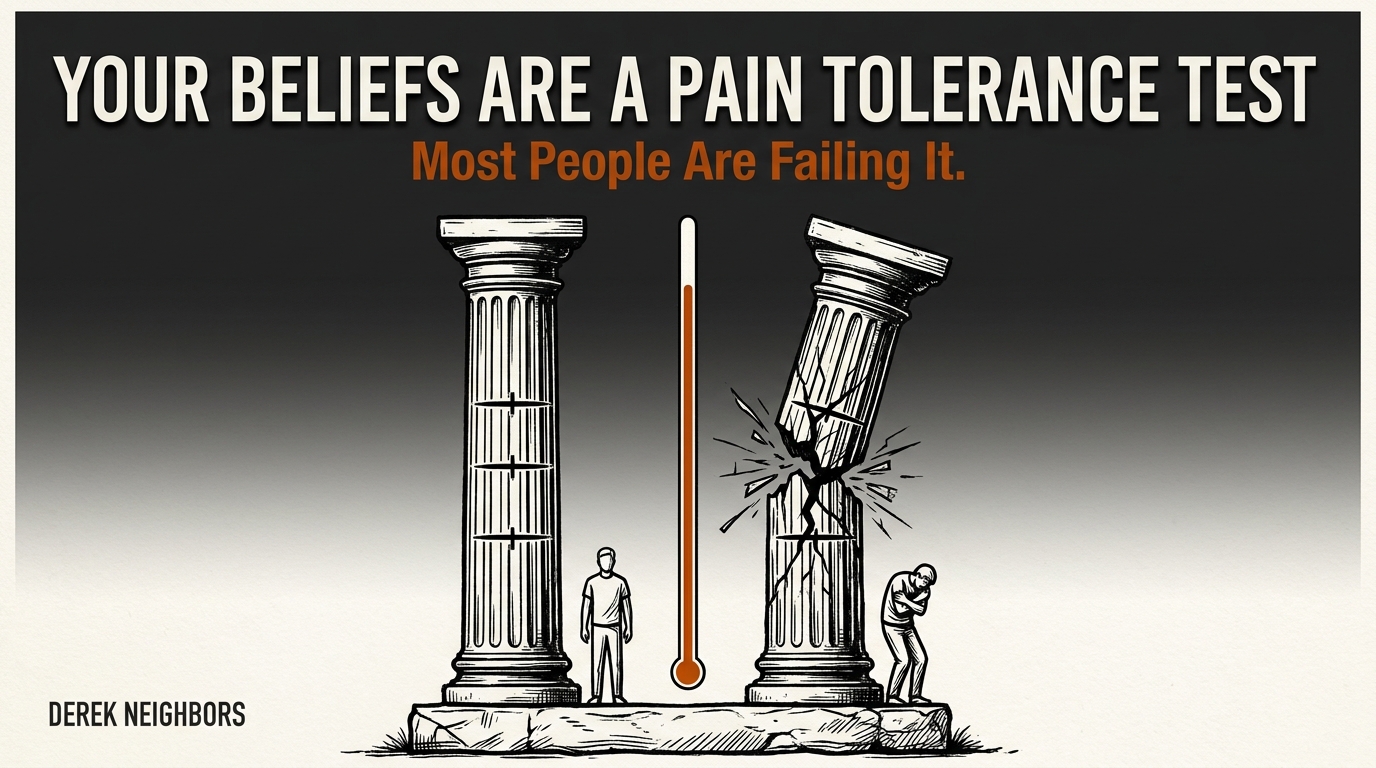
Recognize that your leadership reputation exists in two realms: how others perceive you and who you actually are. Use the gap between doxa and truth as a compass—when public opinion flatters you, stay humble; when it criticizes unfairly, stay the course. Build your character on substance rather than perception, knowing that genuine excellence eventually shapes its own reputation.
Historical Examples
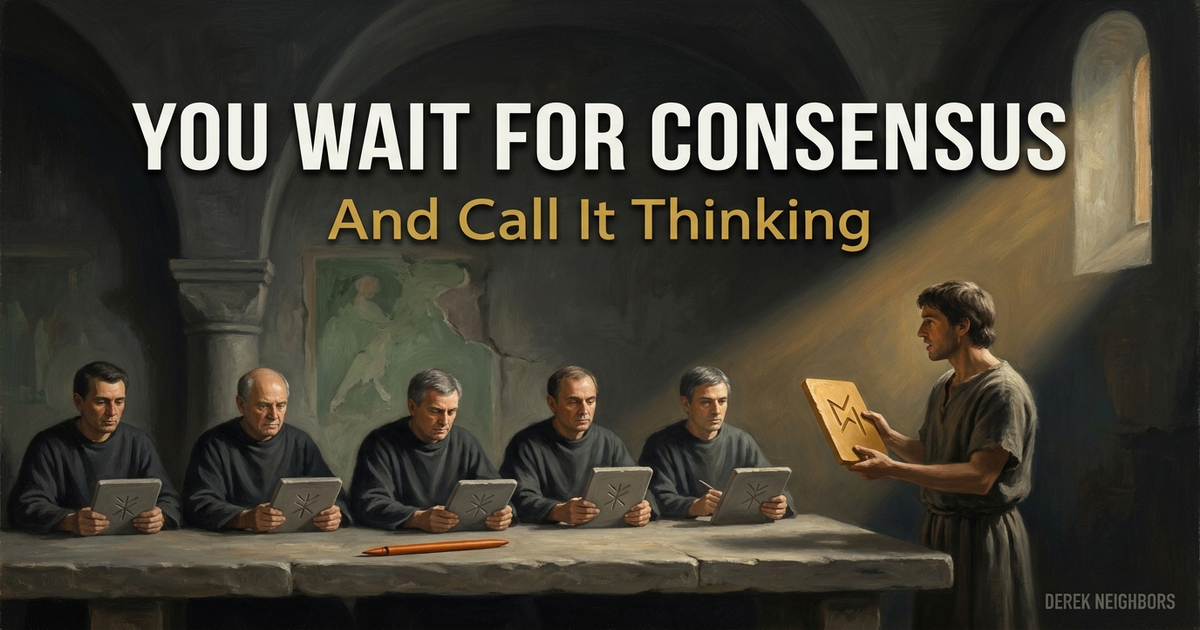
Plato’s Allegory of the Cave in Republic Book VII is the most enduring illustration of the doxa-episteme distinction in Western thought. The prisoners chained in the cave, watching shadows on the wall and believing them to be reality, represent the human condition within the realm of doxa. They hold confident opinions about what they see, they debate the patterns of the shadows, and they develop expertise in predicting which shadow will appear next. None of this constitutes knowledge because they have never examined the source of the shadows. When one prisoner is freed and turns toward the fire and then the sunlight, the painful process of adjusting to greater and greater reality represents the difficult work of moving from doxa to episteme. Plato’s point was not that the prisoners are stupid. They are doing the best they can with the information available to them. The problem is that they mistake their limited perspective for complete understanding.
Galileo’s conflict with the Ptolemaic system illustrates the institutional power of doxa. For over a millennium, the geocentric model of the universe was the dominant opinion in Western civilization, supported by Aristotelian physics, Church teaching, and common sense observation. The opinion was wrong, but it was held with absolute confidence by virtually everyone. When Galileo presented evidence for the heliocentric model, he was not merely challenging an astronomical theory. He was challenging the entire epistemological framework that treated received authority and consensus as adequate substitutes for empirical investigation. The Inquisition’s response demonstrated what happens when institutional power is invested in maintaining doxa: the truth is suppressed not because it is unpersuasive but because it threatens the authority that depends on the existing opinion.
The replication crisis in social psychology that emerged in the 2010s revealed how entire fields can operate within doxa while believing they possess episteme. Studies that had been cited thousands of times and taught in textbooks for decades failed to replicate when tested with rigorous methodology. Findings about priming effects, ego depletion, and stereotype threat, opinions that had been treated as established knowledge, turned out to rest on methodological foundations that could not support the conclusions drawn from them. The crisis demonstrated that peer review, institutional prestige, and citation counts are not adequate guarantees of episteme. They can sustain doxa indefinitely when the community lacks the will or the mechanisms to test its own foundations.
How to Practice Doxa
This week, identify one area where you have been making decisions based on what others think rather than what you know to be true. Write down the specific opinion driving your behavior and examine it: is it grounded in evidence or in social pressure? Practice separating your sense of identity from external validation. When you receive praise, ask whether it reflects genuine achievement. When you receive criticism, ask whether it contains useful truth. Build the habit of checking your beliefs against first principles rather than popular consensus. Keep a belief inventory: list five things you hold to be true about yourself and your work, then trace each belief back to its source. Did you arrive at it through your own investigation, or did you absorb it from the people around you? For each belief rooted in social consensus rather than personal evidence, design a test to verify or discard it. This practice of examining the foundations of your opinions is the first step toward distinguishing genuine knowledge from inherited assumption.
Application Examples
A marketing team adopts a content strategy because a competitor used it successfully. They replicate the competitor’s approach without investigating why it worked for that specific audience, product, and market position. The strategy fails because the conditions that made it effective for the competitor do not apply to their situation.
Adopting a strategy because it worked for someone else is operating from doxa. Understanding why it worked, identifying the causal mechanisms, and evaluating whether those mechanisms apply to your context is the work of converting doxa into episteme. The first approach copies. The second understands.
A professional describes herself as an introvert based on a personality assessment she took a decade ago. She has structured her career around this label, avoiding speaking opportunities, declining leadership roles that require public visibility, and limiting her professional network. When she examines the original assessment, she discovers it measured her preferences at a specific moment, not a fixed trait. The label became a doxa she never questioned.
Self-knowledge that relies on unexamined labels is a form of doxa about yourself. The person who has not investigated the foundations of their self-description is navigating their own life based on opinions about themselves rather than genuine understanding.
A CEO repeats the axiom ‘culture eats strategy for breakfast’ in every leadership meeting. When asked to explain specifically how the company’s culture has produced strategic outcomes or what mechanisms connect culture to performance in their context, she cannot. The phrase has become organizational doxa: repeated widely, believed confidently, understood by no one.
Organizational mantras that cannot be explained beyond their surface formulation are doxa operating at the institutional level. When a leadership team repeats phrases without understanding the mechanisms they describe, the phrases function as decoration rather than insight.
A student passes an exam by memorizing the correct answers to potential questions. She can reproduce the answers accurately but cannot explain why they are correct or apply the underlying principles to a novel problem. She has acquired true doxa, correct opinions, without episteme, understanding of causes.
Education that produces correct beliefs without understanding produces graduates who function well under familiar conditions and collapse under novel ones. The difference between the student who can reproduce answers and the student who can derive them from principles is the difference between doxa and episteme.
Common Misconceptions
Doxa is frequently treated as a synonym for “wrong.” Plato was careful to note that opinions can be correct. The problem with doxa is not inaccuracy but the absence of understanding. A correct opinion held without comprehension of its foundations is as vulnerable to displacement as an incorrect one because the holder has no means of distinguishing warranted confidence from unwarranted confidence. Another error is assuming that expertise eliminates doxa. Experts accumulate opinions within their domain as readily as novices do, and expert status can make those opinions more resistant to examination because the expert’s authority discourages the questioning that would test their foundations. A third misconception is that escaping doxa requires rejecting all popular opinion. Episteme is not the opposite of consensus. It is the informed understanding that can evaluate consensus rather than merely accepting or rejecting it. Some popular opinions are well-founded. The discipline is to examine each one rather than accepting or dismissing the entire category.
The concept that most changed my approach to leadership was recognizing how much of my decision-making was based on doxa rather than episteme. I had accumulated a large collection of opinions about management, strategy, and organizational design from books, conferences, podcasts, and the advice of people I respected. I held these opinions with confidence and deployed them regularly. But when I honestly examined their foundations, I discovered that most of them were beliefs I had absorbed from my environment rather than conclusions I had reached through my own investigation.
The humbling moment came during a strategy review where a board member asked me to explain, from first principles, why our go-to-market approach would work. I gave the standard narrative I had been telling for months. He pressed: “Why will that work? What is the causal mechanism?” I could not answer. I had a story, not an explanation. My strategy was doxa dressed in the vocabulary of episteme.
Since that moment, I have adopted a practice I call “foundation checking.” Before I present any strategic recommendation, I ask myself: can I explain why this will work, not just that it will? Can I identify the causal mechanisms rather than merely citing precedent or authority? If I cannot, I either do the work to develop genuine understanding or I present the recommendation honestly as a hypothesis rather than a conclusion.
This practice has slowed my decision-making, which was uncomfortable at first. But the decisions that survive the foundation check are dramatically more resilient than the ones I used to make on doxa alone. When conditions change, the person who understands why their strategy works can adapt. The person who merely believed it would work has no basis for adjustment and typically either doubles down on the failing approach or abandons it entirely for a new, equally unexamined opinion.
Frequently Asked Questions
What is doxa in Greek philosophy?
Doxa is the Greek concept of opinion, reputation, or common belief. Plato distinguished it from genuine knowledge (episteme), placing it in the realm of appearances and perceptions that may or may not align with deeper reality. In the Republic, Plato positioned doxa in the lower half of his divided line, representing a mode of cognition that falls short of true understanding because it lacks grounding in demonstrable causes.
What does doxa mean?
Doxa means both "opinion" (what seems true) and "glory" or "reputation" (how one appears to others). It comes from the verb dokein, meaning "to seem" or "to appear." In philosophical usage, it describes beliefs held without genuine understanding of their foundations. This double meaning reveals a deep Greek insight: the realm of opinion and the realm of reputation are the same domain, both governed by appearance rather than truth.
How do you practice awareness of doxa?
You develop awareness of doxa by examining which of your beliefs rest on evidence versus social consensus. Separate your identity from external validation. When making decisions, check whether you are following what you know or what others expect. A useful exercise is to track how many decisions you make in a week based on what you believe to be true versus what you believe others want, then honestly assess the ratio.
What is the difference between doxa and episteme?
Doxa is opinion or belief that may or may not be true, held without full understanding of its foundations. Episteme is systematic knowledge grounded in demonstrable causes and principles. The gap between them is the distance between thinking you know and actually knowing. Plato's entire philosophical project can be understood as the effort to move people from doxa to episteme, from the shadows of the cave to the light of genuine understanding.