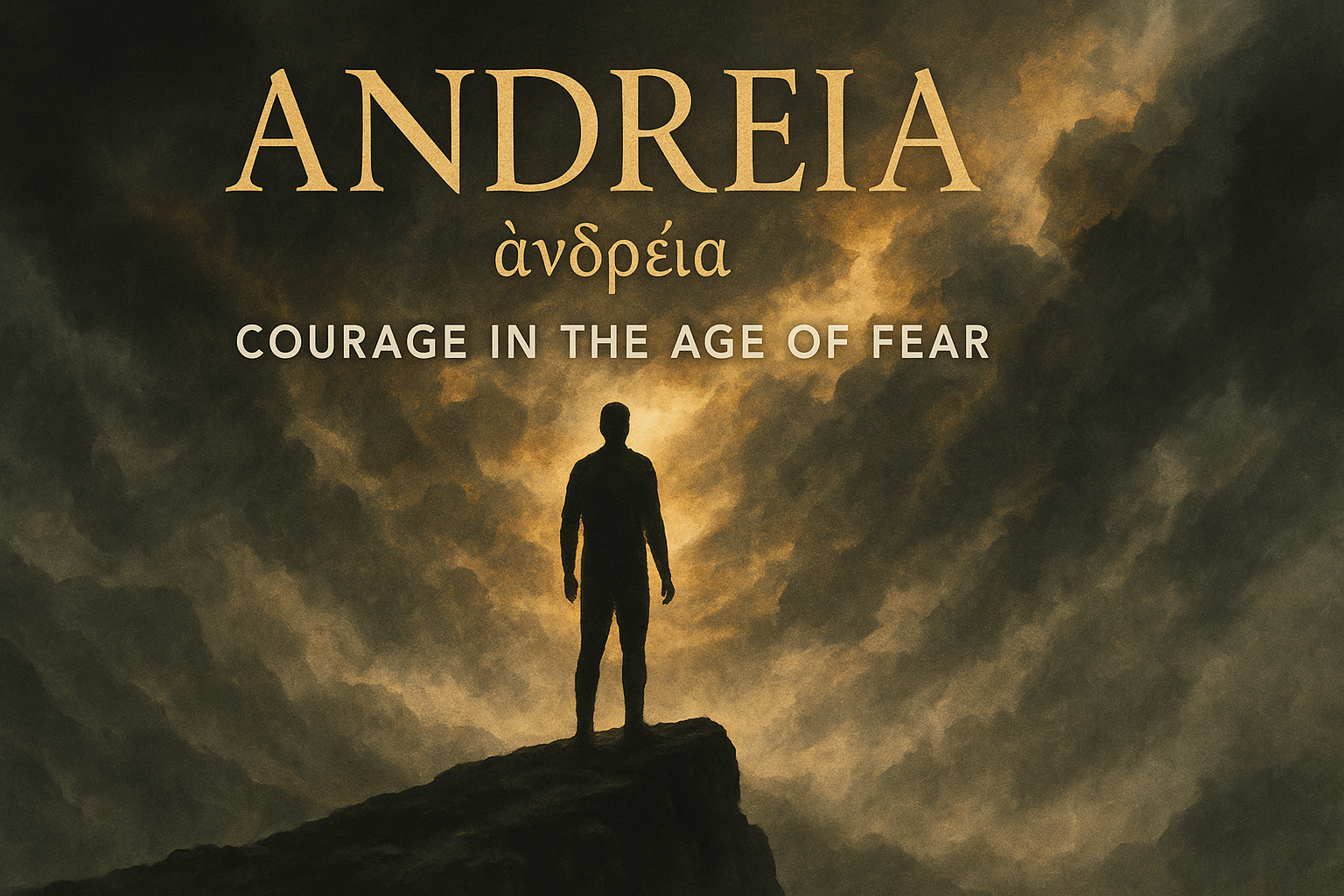
Andreia (ἀνδρεία): Meaning, Definition & Modern Application
ahn-DRAY-ah
Courage. The willingness to face what's difficult rather than retreat to what's comfortable, acting despite fear rather than in its absence.
Etymology
From aner (man, in the sense of a mature adult), originally meaning “manliness” or “manly valor.” In Homer, andreia described the physical bravery of warriors in battle. Plato expanded the concept in the Laches dialogue, arguing that true courage requires wisdom about what genuinely deserves fear. Aristotle further refined it as the mean between cowardice and recklessness, making courage a matter of character rather than testosterone.
Deep Analysis
Aristotle’s treatment of andreia in Nicomachean Ethics Book III established a framework for understanding courage that no subsequent philosopher has improved upon in its essentials. He defined andreia as the mean between two extremes: cowardice (excessive fear) and recklessness (deficient fear). The courageous person is not someone who feels no fear. They are someone who feels the appropriate amount of fear in the appropriate situations and acts rightly despite it. This distinction is critical because it separates genuine courage from the mere absence of fear, which Aristotle would have classified as insensibility or stupidity rather than virtue.
Plato’s Laches dialogue provides the dramatic foundation for the Greek philosophical investigation of courage. Socrates engages two Athenian generals, Laches and Nicias, in a discussion about what courage actually is. Laches initially defines it as standing firm in battle. Socrates dismantles this definition by pointing out that a soldier who retreats to gain tactical advantage can be more courageous than one who stands firm out of stubbornness. Nicias then proposes that courage is knowledge of what is truly fearful and what is not. Socrates shows that this definition collapses into the claim that courage is identical to all virtue, since knowing what to fear requires knowing the good. The dialogue ends in aporia, productive confusion, but the investigation establishes that courage requires wisdom. Physical bravery without phronesis is not virtue. It is recklessness that happens to survive.
The Greek expansion of andreia beyond the battlefield is one of the most important developments in the history of moral thought. Homer’s Iliad presents courage almost exclusively in military terms: Achilles, Ajax, and Hector are courageous because they face death in combat without flinching. By the time of the classical philosophers, courage had expanded to include moral courage (speaking truth to power, parrhesia), intellectual courage (pursuing uncomfortable ideas to their conclusions), and emotional courage (allowing yourself to be vulnerable in relationships). Each form of courage shares the same structure: you perceive a real cost or risk, you feel the pull toward avoidance, and you act rightly despite that pull.
Aristotle’s insistence that courage without wisdom is recklessness remains one of the most practically important claims in virtue ethics. The person who confronts their boss in a meeting without considering timing, audience, or framing is not being courageous. They are being impulsive. The person who speaks difficult truth at the right moment, in the right way, having considered the consequences and accepted them, is practicing andreia as Aristotle understood it. Phronesis determines when courage is appropriate, what form it should take, and how it should be expressed. Without practical wisdom, the impulse toward courage can produce more damage than cowardice.
The relationship between andreia and karteria (endurance) illuminates two distinct temporal dimensions of courage. Andreia faces acute moments of challenge: the decision to speak, to act, to confront. Karteria sustains you through prolonged difficulty: the months of recovery after a failure, the years of building something when progress is invisible, the sustained effort of maintaining integrity when no one is watching. Most people have more capacity for andreia than for karteria. It is easier to be brave for a moment than to be steadfast for a year. Genuine character requires both.
Megalopsychia, greatness of soul, interacts with andreia in a way that reveals the social dimension of courage. The great-souled person possesses the courage to claim their worth accurately. This is a specific form of moral courage that modern culture finds particularly challenging. The pressure to minimize yourself, to deflect praise, to present yourself as smaller than you are, requires a distinct act of courage to resist. Megalopsychia demands the andreia to be honest about your own excellence, which for many people is harder than confronting an external opponent.
The Greek understanding of courage carries a sobering implication: you cannot know whether you possess andreia until it is tested. Aristotle argued that virtue is revealed in action, not in intention. The person who believes they would speak truth to a tyrant but has never faced a situation requiring moral courage does not yet know whether they possess it. This is why the Greeks valued exposure to difficulty. Adversity does not build character from nothing. It reveals the character that is already present and provides the conditions for strengthening it through practice. The person who deliberately enters situations requiring courage is not seeking suffering. They are seeking the conditions under which their character can be tested and refined.
Modern Application
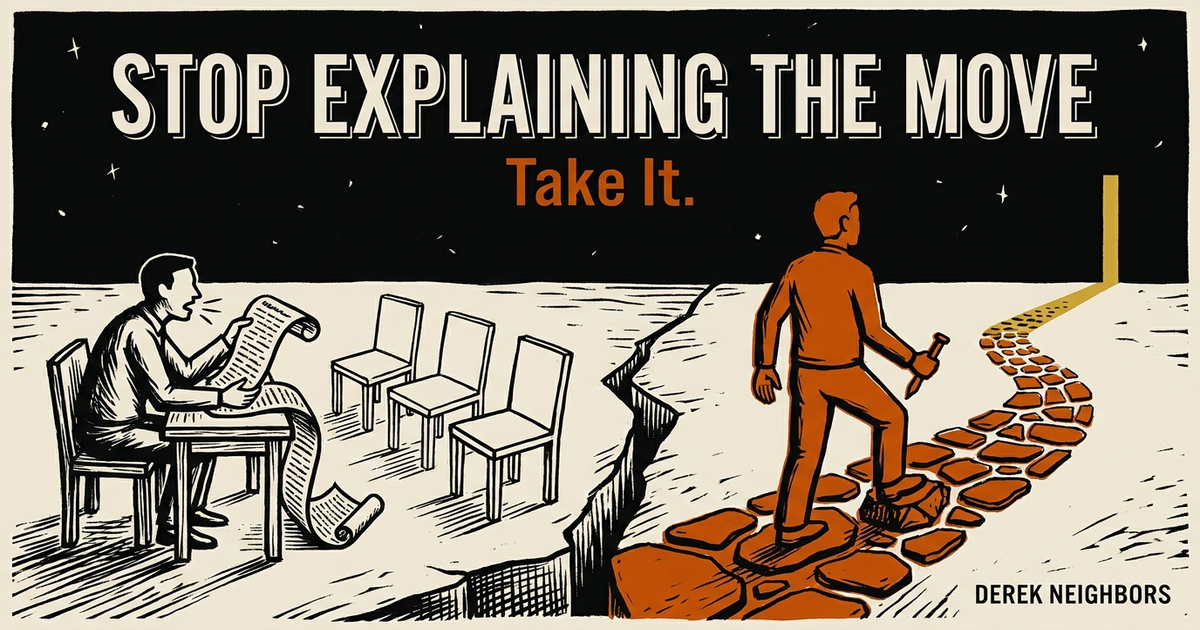
Andreia shows up in your willingness to have hard conversations, to take action before you feel ready, and to risk looking foolish in pursuit of what matters. It's not fearlessness. It's choosing character over comfort when the stakes are real.
Historical Examples
Socrates at his trial in 399 BCE demonstrated the form of andreia that the Greeks valued most: the courage to maintain your principles when doing so costs you everything. Faced with the choice between recanting his philosophical practice or accepting the death penalty, Socrates chose death. In the Apology, as recorded by Plato, Socrates argued that a person who has taken a stand based on what they believe to be right should not calculate the risk of death. “The difficulty is not in avoiding death,” he told the jury, “but in avoiding unrighteousness, for that runs faster than death.” His courage was not physical bravery. It was the moral courage to refuse compromise on the principles that defined his life.
Antigone, in Sophocles’ tragedy, embodies the andreia of conscience against institutional authority. When King Creon forbids the burial of her brother Polynices on penalty of death, Antigone buries him anyway, citing a moral law that supersedes the king’s decree. Her courage is expressed through the willingness to accept the full consequences of her action. She does not attempt escape or compromise. She acts on her conviction and faces the penalty. The play staged the fundamental tension between political authority and moral conscience, and Antigone’s andreia became a reference point for every subsequent thinker who argued that there are principles worth dying for.
Dietrich Bonhoeffer, the German theologian who participated in the plot to assassinate Adolf Hitler, represents andreia extended to its absolute limit. Bonhoeffer had safely escaped to the United States in 1939 but chose to return to Germany because he believed he could not participate in the reconstruction of German Christianity after the war if he had not shared in the suffering of the German people during it. His decision to join the conspiracy against Hitler required him to violate his own pacifist convictions, a form of moral complexity that required courage of the highest order. He was executed at Flossenburg concentration camp in April 1945, weeks before the war ended.
How to Practice Andreia
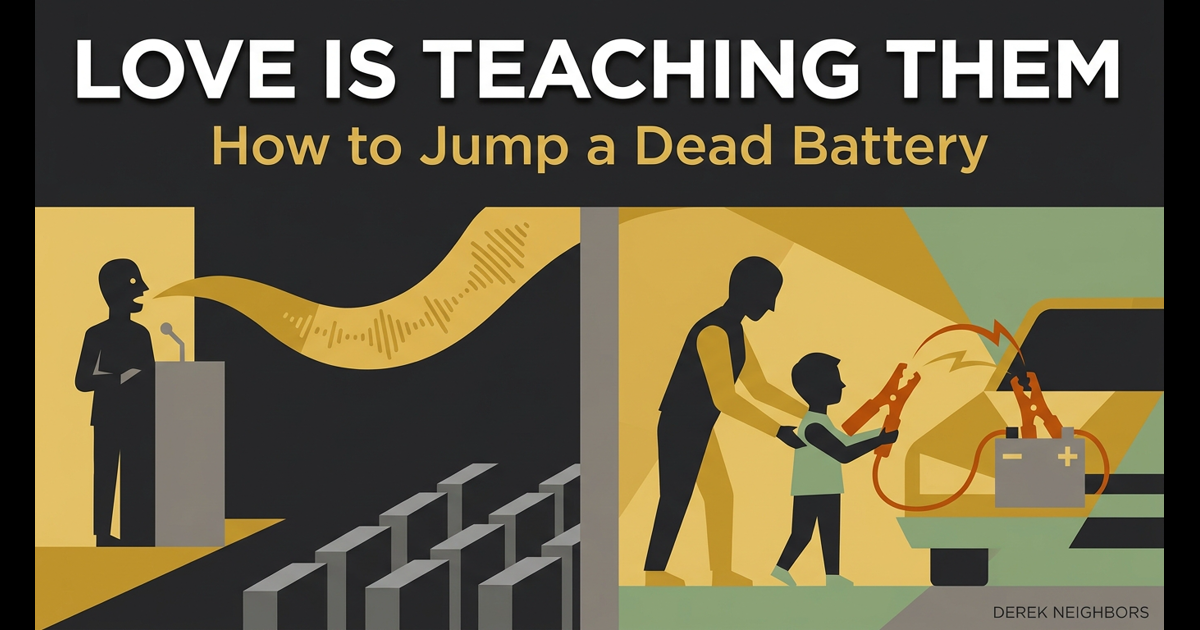
Identify one conversation you have been avoiding because it feels uncomfortable, and schedule it this week. Before entering it, write down what you fear will happen and what you know is true. After the conversation, note what actually occurred. This gap between feared and actual outcomes is where courage builds. Next, volunteer for one project or responsibility that stretches beyond your current comfort zone each quarter. Create a “courage log” where you record moments you chose the harder right over the easier wrong. Review it when your resolve weakens. Practice graduated exposure: start with small acts of courage in low-stakes situations and progressively raise the difficulty. Each time you act despite fear, your threshold for discomfort expands. Pair with a trusted colleague and commit to holding each other accountable for one courageous action per week. Aristotle taught that courage is a habit, not a feeling, and it strengthens through deliberate repetition.
Application Examples
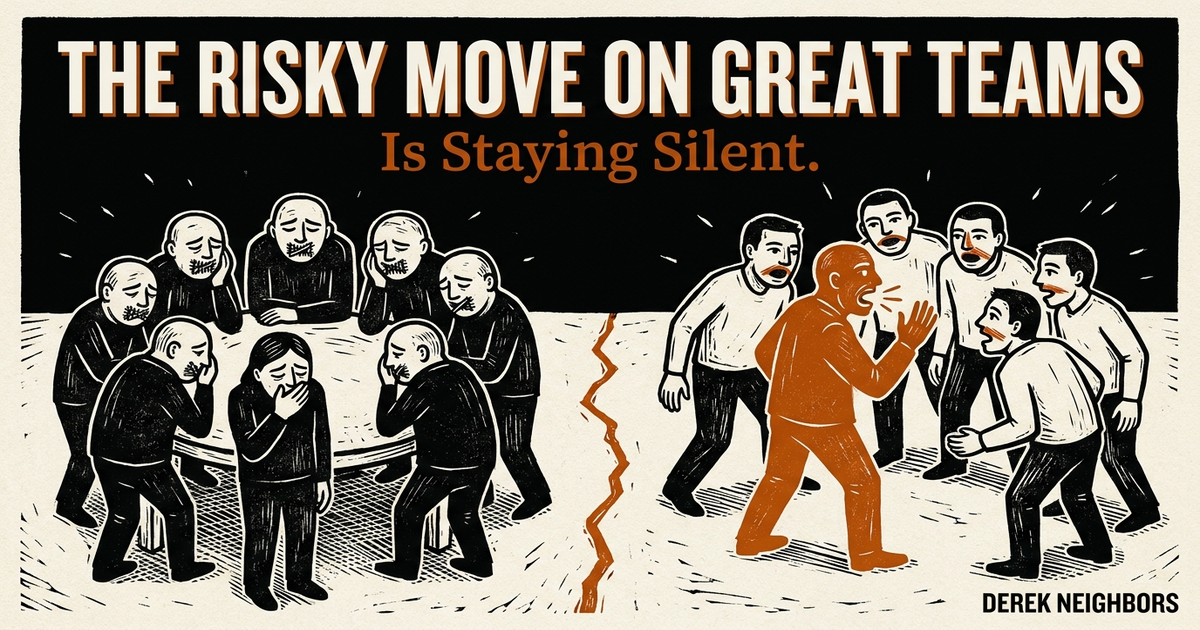
A product manager receives data showing that the company’s most profitable product line has a significant safety flaw. Reporting the flaw will trigger a recall that costs millions and may end her career at the company. Remaining silent allows the problem to persist, potentially harming customers. She reports the flaw.
Moral courage in business often requires risking your position to protect something more important than your position. The product manager’s andreia is expressed through the willingness to accept personal professional consequences in service of the right action. The courage here is not dramatic. It is the quiet decision to tell the truth when silence would be easier and safer.
A man recognizes that his closest friendship has become toxic, with his friend consistently undermining him and demanding loyalty without reciprocity. Ending the friendship means losing a twenty-year relationship and facing the social consequences within their shared community. He has the conversation.
Relational courage is among the most difficult forms of andreia because the consequences are intimate and prolonged. Ending a harmful relationship requires facing not only the other person’s reaction but the grief of loss and the uncertainty of life without a familiar, if destructive, connection.
A new CEO inherits a leadership team that includes a senior executive who is widely feared, politically powerful, and consistently underperforming. Every previous leader avoided the confrontation. The new CEO conducts a thorough assessment, documents the performance issues, and initiates the difficult process of replacing the executive despite the political fallout.
Institutional courage often means doing what a succession of predecessors avoided because the personal cost was too high. The CEO’s andreia is measured not by the confrontation itself but by the willingness to absorb the political consequences that made every prior leader choose avoidance.
A tenured professor presents research findings that contradict the dominant theory in her field, a theory she herself championed for a decade. Her data is clear, and publishing it means publicly acknowledging that her earlier work was wrong. She publishes.
Intellectual courage means following evidence wherever it leads, even when it leads to the destruction of your own prior positions. The professor’s andreia is expressed through the willingness to prioritize truth over reputation and to model for her students that changing your mind in the face of evidence is strength, not weakness.
Common Misconceptions
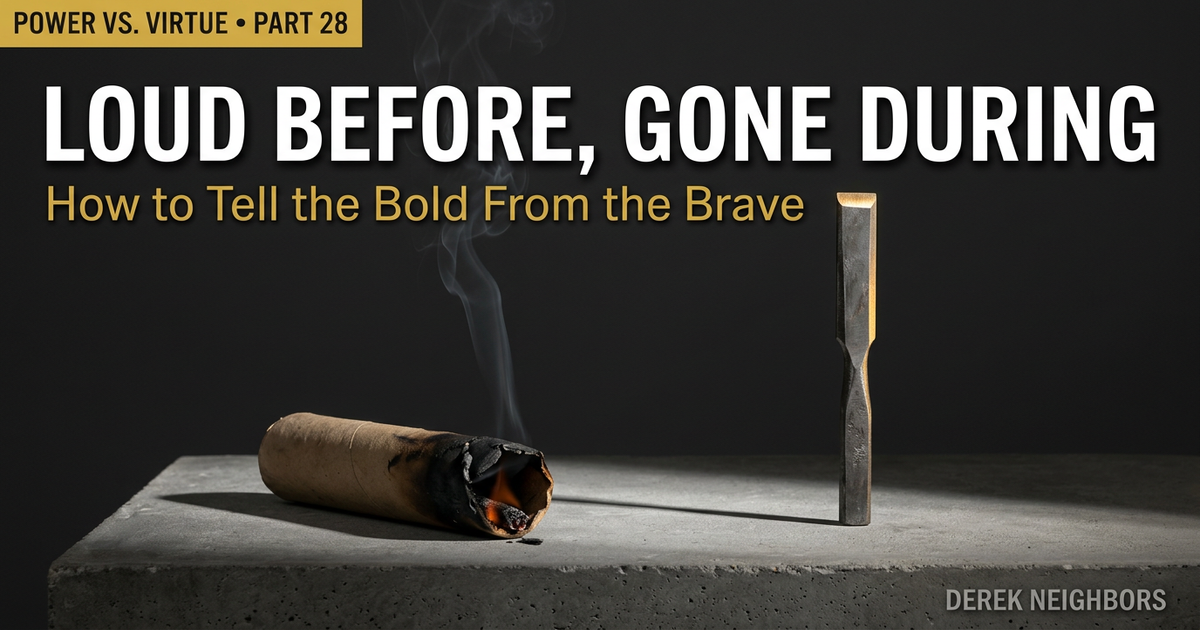
Courage is routinely confused with fearlessness. Aristotle was explicit: the person who feels no fear in a dangerous situation is not brave. They are insensible. Andreia requires feeling fear and acting rightly despite it. The experience of fear is what gives courage its moral significance. Without something to overcome, there is nothing courageous about the act. A related error is equating courage with aggression. The courageous person does not seek conflict. They engage with difficulty when it presents itself because the alternative, avoidance, carries a greater cost to their character or to others. The loudest person in the room is rarely the most courageous. Often the bravest act available is silence, patience, or restraint, forms of courage that do not look dramatic but cost just as much. Finally, many people believe courage is a trait you either possess or lack. Aristotle argued the opposite: andreia is a hexis, a stable disposition built through practice. You develop it by acting courageously in small situations until the capacity becomes reliable enough to deploy in large ones.
The form of courage I have needed most in my career is not the dramatic kind. It is the courage to have conversations I would rather avoid. For years, I accumulated a backlog of unsaid things: feedback I owed to colleagues, boundaries I needed to set with clients, disagreements I had with leadership decisions. Each individual avoidance was small. In aggregate, they created a professional life built on concealment.
A coach once asked me to list every conversation I was avoiding. The list had fourteen items. She told me to have three of them that week. The experience was revelatory. The conversations I had been dreading for months took ten minutes each. The consequences I had imagined were dramatically worse than the actual outcomes. One relationship improved. One ended, which was overdue. One produced a productive conflict that led to a better decision. None of the catastrophic scenarios I had been constructing in my head materialized.
That experience taught me something about the architecture of courage that Aristotle would have recognized. The cost of avoidance is always higher than the cost of confrontation, but the cost of avoidance is distributed over time in small, invisible increments while the cost of confrontation is concentrated in a single uncomfortable moment. Our instinct is to prefer the distributed, invisible cost. The discipline of andreia is choosing the concentrated, visible cost because you understand that the distributed alternative compounds into something far more destructive.
I now maintain a “courage queue” on my desk: a list of conversations and actions I am currently avoiding. Every Monday, I pick one and do it before anything else. The practice is not comfortable. It is effective. Aristotle was right that courage is a habit. Each completed confrontation lowers the activation energy for the next one. The queue never empties, because life continuously presents situations that require andreia. But the items on it get handled faster, and the paralysis of prolonged avoidance has become rare.
Frequently Asked Questions
What is andreia in Greek philosophy?
Andreia is the Greek virtue of courage, understood not as the absence of fear but as the capacity to act rightly despite it. Aristotle defined it as the mean between cowardice and recklessness, requiring both bravery and wisdom about what truly deserves fear. In Plato's Laches, Socrates explored the nature of courage through dialogue with two Athenian generals, concluding that true courage requires knowledge of what genuinely warrants fear and what does not.
What does andreia mean?
Andreia originally meant "manliness" or "manly valor," from the Greek word aner (man). Over time, Greek philosophers expanded its meaning to encompass moral courage, the willingness to face difficulty and act on principle regardless of personal risk. By the time Aristotle wrote the Nicomachean Ethics, andreia had evolved well beyond battlefield bravery to include the courage required for ethical action in everyday life.
How do you practice andreia?
You practice andreia by deliberately engaging with discomfort rather than avoiding it. Have the difficult conversations, take action before you feel ready, and volunteer for challenges that stretch your capabilities. Courage strengthens through use, like any other capacity. Start by identifying the specific fears that hold you back, then design small, concrete actions that directly confront each one until the fear loses its grip.
What is the difference between andreia and karteria?
Andreia is active courage, the willingness to confront difficulty and take decisive action despite fear. Karteria is patient endurance, the capacity to bear prolonged hardship without yielding. Andreia charges forward; karteria holds the line. A leader needs both: andreia for the moments that demand bold action, and karteria for the long stretches where progress is slow and the temptation to quit is constant.