Telos (τέλος): Meaning, Definition & Modern Application
TEH-los
The ultimate end, purpose, or goal toward which something naturally develops and at which it reaches completion. For Aristotle, every action and pursuit aims at some telos, with eudaimonia being the highest telos of human life—that for the sake of which all else is done.
Etymology
From the Greek telos, meaning “end,” “completion,” or “purpose.” The root appears in “teleology” (the study of purpose) and “telephone” (far-end sound). Aristotle built his ethics around the concept: every craft, inquiry, action, and pursuit aims at some good, and the supreme good is the telos of human life, eudaimonia. The word carries the sense of fulfillment and completion, not merely termination.
Deep Analysis
Aristotle’s teleological framework pervades his entire philosophy. Everything in nature, he argues, has a telos: an end, a purpose, a state of fulfillment toward which it naturally develops. The telos of an acorn is to become an oak tree. The telos of an eye is to see. The telos of a knife is to cut well. Understanding something requires understanding its telos because the purpose of a thing explains why it is structured the way it is. The eye has the structure it has because its telos is seeing. The knife has the structure it has because its telos is cutting. Strip away the purpose, and the structure becomes unintelligible.
The four causes that Aristotle identifies in the Physics and the Metaphysics place telos (the final cause) in a position of priority. The material cause is what something is made of. The formal cause is its structure or design. The efficient cause is what brought it into being. The final cause is the purpose it serves. Aristotle argues that the final cause is “the cause of causes” because it explains the other three. The material of the eye (biological tissue), the form of the eye (its specific structure), and the efficient cause (the biological process that produces it) are all explicable in terms of the telos: the eye exists for the sake of seeing. Without the final cause, the other causes are descriptions without explanations.
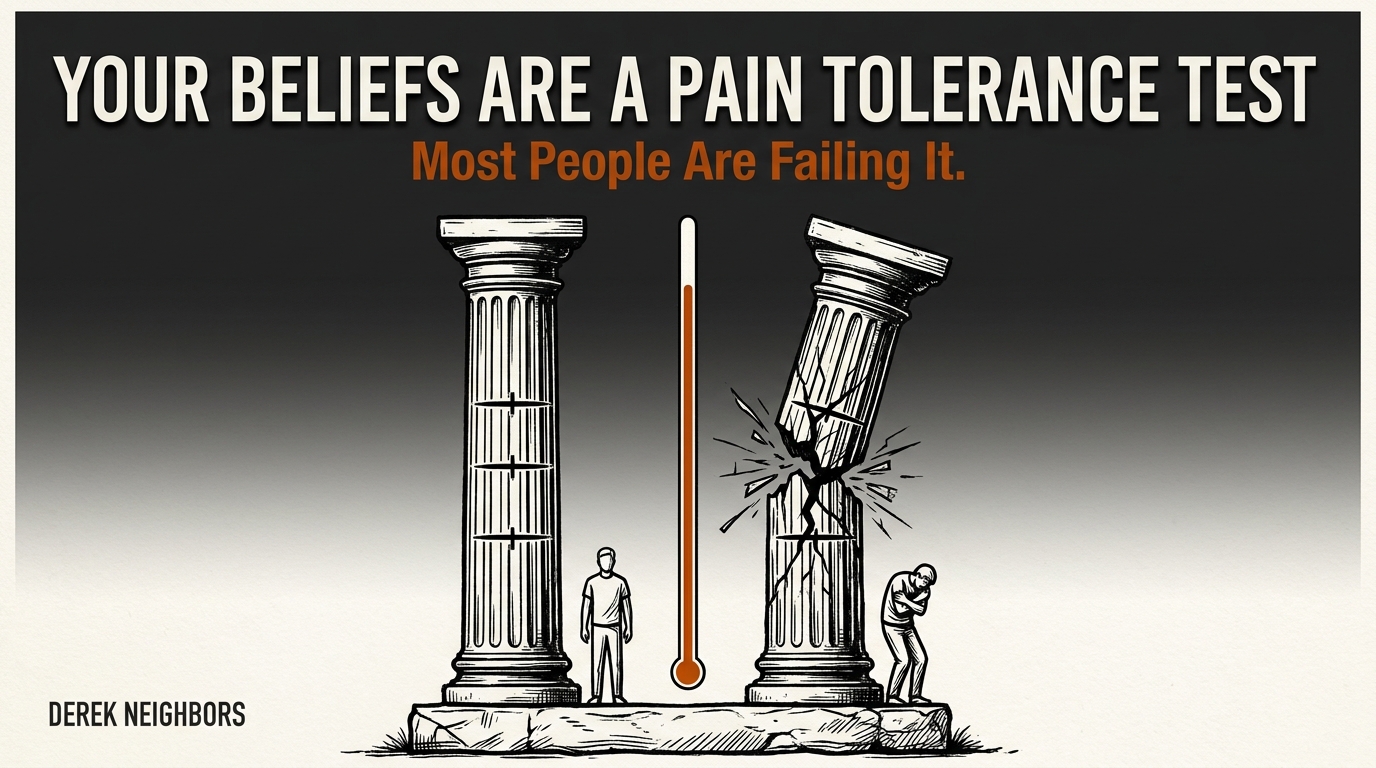
How telos differs from a mere goal is a distinction with enormous practical consequences. A goal is something you choose. A telos is the fulfillment of your nature. You can set a goal to become wealthy, famous, or powerful, and these goals may or may not have anything to do with your telos. The person who achieves their goals and experiences emptiness has typically achieved goals that were disconnected from their telos. The person who experiences deep fulfillment in their work has typically found alignment between their activity and the purpose that is natural to them. The difference is between constructing a purpose and discovering one.
Eudaimonia (human flourishing) is the telos of human life, according to Aristotle. But eudaimonia is not a state you arrive at. It is an activity, specifically, “activity of the soul in accordance with arete.” The telos of a human life is not the achievement of some final condition but the ongoing exercise of excellence throughout the course of a life. This means your telos is not something you accomplish and then possess. It is something you enact continuously. You are fulfilling your telos, or failing to, in every action and every moment.
Ergon (function, characteristic work) is the concept through which Aristotle connects telos to specific human activity. If you want to know the telos of something, identify its ergon, its characteristic function, the thing that only it can do. The ergon of a harpist is to play the harp. The arete of a harpist is to play the harp well. The telos of a harpist is the excellent exercise of their function. Applied to human beings: the human ergon, Aristotle argues, is the activity of the soul in accordance with reason. The human telos is the excellent exercise of this rational activity. Everything else, wealth, health, reputation, is instrumentally valuable insofar as it supports this exercise, but it is not the telos itself.
Prohairesis (moral choice) introduces a dimension of agency into the teleological framework. Unlike the acorn, which develops toward its telos automatically, the human being must choose to pursue their telos. You can choose to develop your rational capacities or to neglect them. You can choose to exercise virtue or to pursue pleasure. The acorn that fails to become an oak tree has been prevented by external circumstances. The human being who fails to fulfill their telos has, in most cases, chosen a different path. This is why prohairesis is the seat of moral responsibility: you are responsible for the choices that either fulfill or betray your nature.
The modern rejection of teleology, which began with the scientific revolution and reached its philosophical expression in the Enlightenment, eliminated telos from the natural world. Modern science explains biological structures through efficient causation (evolutionary mechanisms) rather than final causation (purposes). The eye is not for seeing in any purposive sense. It evolved through natural selection because organisms that could see survived better than those that could not. This mechanistic framework has been extraordinarily productive in the natural sciences. But its extension to human life has created a crisis: if there is no inherent telos, then the purpose of your life is whatever you decide it is. The freedom is exhilarating and the burden is crushing, because constructing a purpose is harder than discovering one.
Modern Application
You must clarify what you are ultimately building toward—not just quarterly targets, but the deeper purpose that gives meaning to your daily efforts. When you anchor decisions to your telos, distractions lose their power and sacrifice becomes sustainable. Define the end you seek, then work backward to align every action with that destination.
Historical Examples
Aristotle’s own intellectual career exemplifies the pursuit of telos through sustained inquiry. His surviving works span biology, physics, metaphysics, ethics, politics, rhetoric, logic, and poetics. The breadth is not dilettantism. It is the systematic pursuit of understanding across every domain of reality, driven by the conviction that understanding the telos of each domain, why things are the way they are and what they are for, is the highest activity of the human mind. Aristotle’s teleological framework is not merely a theoretical commitment. It is the organizing principle of his entire intellectual project.
Viktor Frankl, the Austrian psychiatrist and Holocaust survivor, developed logotherapy on the principle that the primary human motivation is the search for meaning, which he understood as the discovery of one’s telos. In Man’s Search for Meaning (1946), Frankl described how prisoners in the concentration camps who maintained a sense of purpose survived conditions that destroyed those who had lost their sense of meaning. Frankl’s famous quotation of Nietzsche, “He who has a why to live can bear almost any how,” is a restatement of the teleological principle: the person who knows their telos can endure circumstances that would break the person who has only goals.
The Japanese concept of ikigai, which translates roughly as “reason for being,” represents a cultural tradition of telos-discovery. The residents of Okinawa, one of the world’s “Blue Zones” known for exceptional longevity, attribute their health and vitality in part to the practice of identifying and pursuing their ikigai. Research by Dan Buettner and others suggests that having a clear sense of purpose is correlated with longer life, better health outcomes, and greater life satisfaction. While the correlation is not proof of causation, it is consistent with Aristotle’s claim that living in accordance with your telos produces eudaimonia.
How to Practice Telos
Write down your ultimate purpose in one sentence. Not your current goals, not your five-year plan, but the deepest answer to “what am I building toward?” Test this purpose by asking: would I still pursue this if no one ever knew? If yes, it is likely your genuine telos. Now audit your current activities: what percentage of your time directly serves this purpose? Identify one activity that does not serve your telos and eliminate it this week. Replace it with something that does. Revisit your telos statement quarterly, refining it as your understanding deepens. Share your telos with someone whose judgment you trust and ask whether your daily behavior is consistent with the purpose you have articulated. The gap between stated purpose and actual behavior reveals where your life has drifted off course. When making significant decisions, use your telos as the primary filter: does this move me toward my ultimate purpose or away from it? Aristotle taught that every action aims at some good, so examine which good your actions are actually pursuing versus the good you claim to value.
Application Examples
A company that started with a clear mission to democratize access to education has grown to the point where revenue growth has displaced the original purpose as the primary organizational driver. Employees who joined because of the mission now work on features designed to maximize engagement rather than learning. The company is more successful by every financial metric and has lost its telos.
Organizations have a telos in the same way that individuals do: a purpose that, when fulfilled, gives the work meaning and coherence. When the telos is displaced by a metric, especially a financial one, the organization continues to function but loses the orienting principle that made it worth building. Employees feel this displacement as a loss of meaning, even when their compensation increases.
A physician who entered medicine to relieve suffering finds herself spending most of her time on administrative tasks, insurance documentation, and institutional politics. She is successful in her career. She has not practiced medicine in the sense that motivated her to become a physician in years. The gap between her daily activity and her telos as a healer produces persistent dissatisfaction that no career advancement can address.
Telos is not a goal you can set aside and return to later. It is the purpose that gives your activity meaning. The physician’s dissatisfaction is not a morale problem to be solved with better work-life balance. It is a telos problem: her daily activity is misaligned with her nature as a healer. The solution requires restructuring her work to restore alignment, not adjusting her attitude toward the misalignment.
A leadership team debates the company’s five-year strategy. One faction argues for rapid growth through acquisition. Another argues for organic growth through product excellence. The debate is framed as a strategic choice, but it is actually a telos question: does this company exist to grow or to produce excellent work? The answer to the telos question determines which strategy is appropriate.
Strategic disagreements often conceal telos disagreements. The team arguing about growth strategy is actually arguing about the company’s purpose. Until the telos question is settled, the strategic debate is unresolvable because the criteria for evaluating strategies depend on what the company exists to accomplish.
A university measures its success by research output, rankings, and endowment size. A new president asks a simpler question: are our graduates living well? The question reframes the university’s telos from institutional prestige to human formation and reveals that many of the metrics being optimized have no connection to the institution’s actual purpose.
Institutional telos determines which metrics matter. When the telos is prestige, research output and rankings are the right metrics. When the telos is human formation, the right metrics are about the quality of graduates’ lives. The new president’s question is not naive. It is a telos question that exposes the gap between what the institution measures and what it exists to accomplish.
Common Misconceptions
Telos is not the same as a goal. Goals are things you choose and can change at will. Telos is the fulfillment of your nature, which is discovered rather than invented. You can set a goal to become wealthy, and that goal has no necessary connection to your telos. You can discover that your telos involves teaching, creating, or building, and this discovery constrains and directs your goals rather than being reducible to them. A second misconception treats teleology as requiring a cosmic designer. Aristotle’s telos does not require that someone designed the eye for seeing. It requires that the eye’s structure is intelligible in terms of what it does. You can reject the idea of cosmic design while still recognizing that human lives have a natural orientation toward specific forms of fulfillment.
I confused goals with purpose for years, setting ambitious targets and achieving many of them, only to encounter the predictable emptiness that follows achievement disconnected from meaning. The goals were mine in the sense that I chose them. They were not mine in the sense that they reflected who I actually am and what I am genuinely for.
The discovery of the difference between goals and telos came through a period of sustained discomfort. I had achieved enough of my goals to realize that the achievement itself was not producing the satisfaction I had expected. This is not an unusual experience. What was unusual was that I did not respond by setting bigger goals. Instead, I asked a different question: what am I actually for?
The answer was not something I invented. It was something I discovered by examining what had consistently given me the deepest sense of meaning, not pleasure or excitement, but the specific quality of fulfillment that comes from doing what you are meant to do. For me, that has consistently been the development of other people’s capabilities. When I help someone see something they could not see before, or do something they could not do before, I experience a quality of satisfaction that no personal achievement has ever matched.
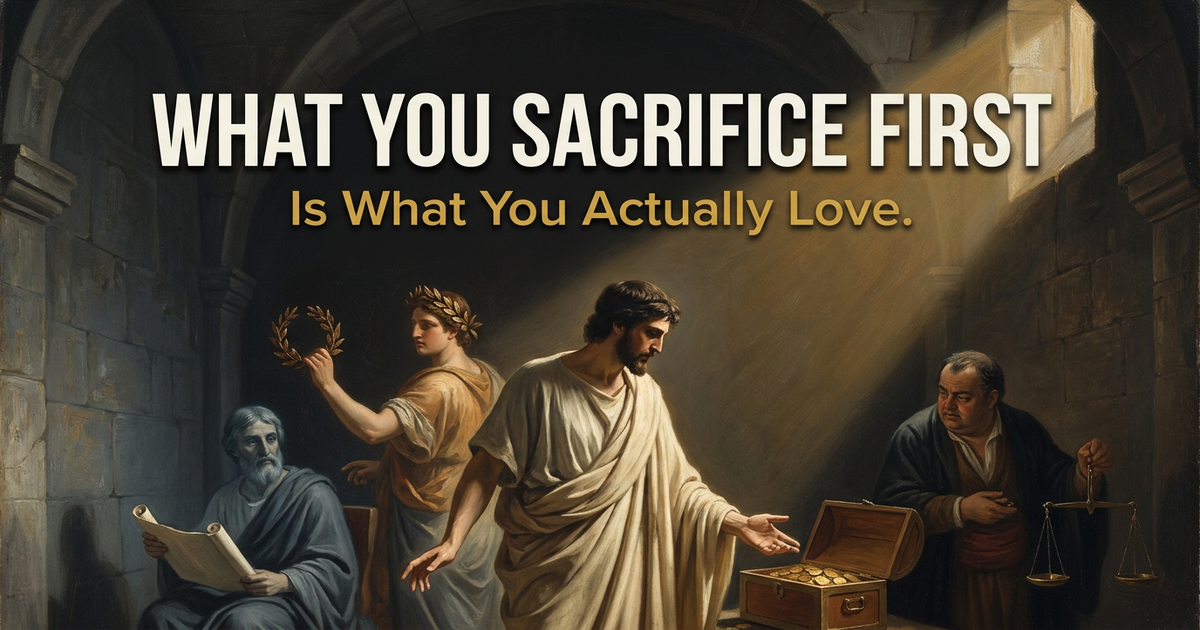
Recognizing this telos did not make my life easier. It made it more coherent. Decisions that used to require agonizing deliberation became clearer because I had a criterion that was not arbitrary. Does this opportunity align with my telos? If yes, pursue it. If no, decline it. The discipline of alignment is ongoing, because the world constantly presents attractive opportunities that are disconnected from your purpose. But the clarity that comes from knowing your telos, rather than merely having goals, is worth the discipline it requires.
Frequently Asked Questions
What is telos in Greek philosophy?
Telos is Aristotle's concept of the ultimate end, purpose, or goal toward which something naturally develops. Every action aims at some telos, and Aristotle identified eudaimonia (human flourishing) as the highest telos of human life, the end for which all other ends are pursued. He built his entire ethical framework around this concept, arguing that understanding your purpose is the prerequisite for living well.
What does telos mean?
Telos means end, completion, or purpose. It describes not mere termination but fulfillment, the state a thing reaches when it has fully realized its nature. The word appears in teleology (study of purpose) and telephone (far-end sound), and conveys the sense of purposeful direction. The Greek understanding was that everything in nature, including human life, moves toward the fulfillment of its inherent purpose.
How do you practice telos?
You practice telos by clarifying your ultimate purpose and aligning your daily actions with it. Write down your deepest aim, audit your time against it, eliminate activities that do not serve it, and revisit your purpose statement regularly as understanding deepens. Use your telos as the primary filter for every significant decision, asking whether each choice moves you toward or away from your ultimate purpose.
What is the difference between telos and ergon?
Telos is the ultimate end or purpose toward which you aim. Ergon is the characteristic function or work through which you pursue that end. A doctor's telos might be a healthy community; their ergon is the practice of medicine. Purpose directs; function executes. Clarity about your telos ensures that your ergon serves something meaningful rather than becoming activity for its own sake.