Phobos (φόβος): Meaning, Definition & Modern Application
FOH-boss
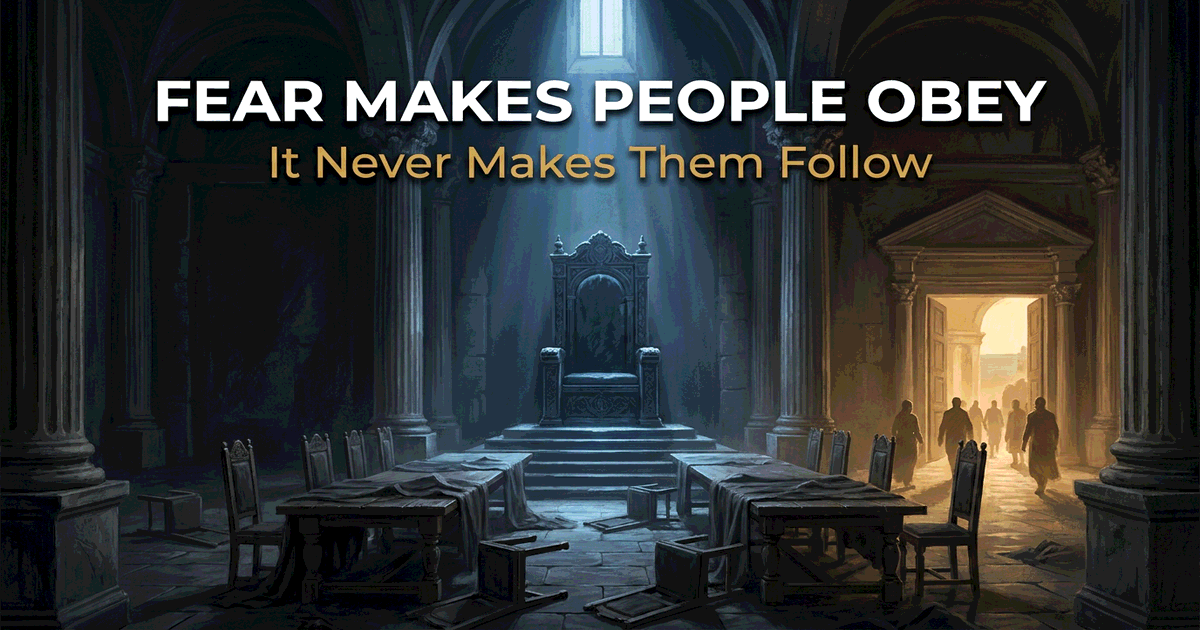
Fear understood not as mere cowardice but as a rational emotional response to genuine danger. In Aristotle's ethics, appropriate phobos serves as a guide to proper action when balanced with courage.
Etymology
From the Greek phobos (φόβος), meaning fear, terror, or flight. The root connects to phebomai, to flee or be put to flight. In mythology, Phobos was the personification of fear and son of Ares. The term evolved from describing physical flight from danger to encompassing the full spectrum of fearful emotional states, later giving rise to the English suffix ‘-phobia’ denoting irrational fears.
Deep Analysis
In the landscape of Greek ethical thought, phobos occupies a position far more nuanced than its English translation suggests. Where modern usage often conflates fear with weakness, the Greeks understood it as a fundamental emotional capacity requiring proper cultivation, not elimination.
Aristotle’s treatment in the Nicomachean Ethics places phobos at the center of his analysis of courage (andreia). The courageous person, he argues, is not fearless but fears the right things, at the right time, for the right reasons. In Book III, he identifies what genuinely merits fear: disgrace, harm to loved ones, and death in circumstances where dying serves no noble purpose. The person who fears none of these reveals not strength but a kind of moral insensibility, a failure to recognize genuine goods worth protecting.
This creates a productive tension within the virtue of courage itself. Courage requires phobos as its raw material. Without fear, there is no overcoming, no deliberate choice to act despite the pull toward self-preservation. The rash person, who rushes into danger without appropriate fear, may appear brave but actually demonstrates poor judgment about genuine threats. True courage emerges only when phobos and deliberate choice (prohairesis) work together.
Plato’s treatment in the Laches dialogue deepens this complexity. When Socrates questions the generals Laches and Nicias about the nature of courage, he exposes how easily we confuse fearlessness with wisdom. Nicias eventually defines courage as knowledge of what to fear and what to be confident about. This intellectualist position suggests that proper phobos requires understanding, not mere emotional management. You cannot fear rightly if you do not know what genuinely threatens your flourishing.
The Stoics developed this insight into a systematic psychology of fear. They distinguished between propatheiai, the initial involuntary impressions that arise when danger appears, and the pathē, the full emotional states that result from assenting to those impressions. When you see a snake, the initial startle is natural and unavoidable. But the subsequent judgment that something terrible will occur, and the fear that follows from that judgment, involves your assent. Epictetus emphasizes in the Discourses that it is not events themselves but our judgments about them that produce fear. This does not mean denying danger but refusing to add catastrophic interpretations to accurate threat assessment.
The relationship between phobos and practical wisdom (phronesis) deserves particular attention. Fear often serves as a rapid information processor, alerting us to threats before conscious deliberation catches up. The experienced general feels fear in certain tactical situations precisely because his pattern recognition has identified danger. This kind of educated fear represents accumulated wisdom, not weakness. The challenge lies in distinguishing this legitimate signal from the distorted fears that arise from false beliefs, past trauma, or excessive attachment to things outside our control.
Aristotle’s discussion of shame (aidos) illuminates another dimension of phobos. The fear of disgrace, he suggests in the Rhetoric, can motivate virtuous action by making vice psychologically costly. Young people especially benefit from this form of fear before their characters have fully formed. Yet excessive fear of others’ opinions becomes its own vice, preventing the parrhesia (frank speech) that genuine relationships and good citizenship require. The mature person fears genuine disgrace while remaining indifferent to mere reputation.
The paradox at the heart of phobos is this: we cannot simply decide not to fear. The Stoic sage may experience only the minimal propatheiai, but for the rest of us, fear will arise unbidden. What we can control is what we do next. Do we examine the fear, test its rationality, and act according to our best judgment? Or do we allow the fear to determine our actions without scrutiny? This is where phobos intersects with enkrateia (self-mastery) and reveals the daily practice of virtue.
Ultimately, the Greek understanding of phobos challenges the contemporary therapeutic goal of reducing all anxiety. Some fears deserve to be felt intensely because they protect things genuinely worth protecting. The question is never whether you will fear, but whether your fears are properly calibrated to reality and whether you possess the strength to act rightly despite them.
Modern Application
You cannot lead without understanding what you fear and why. Recognizing your *phobos* reveals what you truly value, because you only fear losing what matters to you. When you examine your fears honestly, you discover which ones serve as legitimate warnings and which have become invisible barriers to your growth and decision-making capacity.
Historical Examples
Socrates at his trial offers the clearest example of properly calibrated phobos. According to Plato’s Apology, when facing the death penalty, Socrates explicitly addresses fear: ‘To fear death, gentlemen, is no other than to think oneself wise when one is not, to think one knows what one does not know. No one knows whether death may not be the greatest of all blessings for a man, yet men fear it as if they knew that it is the greatest of evils.’ Socrates felt no terror at death because his reason told him it was not certainly an evil. He did, however, fear something intensely: living in a way that contradicted his philosophical mission. His phobos was calibrated to genuine goods.
Thucydides records a contrasting example in his account of the Athenian expedition to Sicily. The general Nicias, despite his considerable military experience, allowed fear to paralyze his judgment at critical moments. When the Athenian fleet needed to escape Syracuse harbor, Nicias delayed the retreat because of a lunar eclipse, his fear of divine displeasure overwhelming his tactical assessment. The Spartans used the delay to seal the harbor. The entire expedition was destroyed, and Nicias was executed. His phobos attached to the wrong object: he feared the gods’ anger more than the enemy’s spears, and this miscalibration proved fatal.
Marcus Aurelius in his Meditations provides a third model. He records his deliberate work to examine and reshape his fears. In Book II, he reminds himself that nothing can harm the ruling reason except the reason itself. His fear of death, disgrace, and physical pain receives constant scrutiny throughout the text. What emerges is not Stoic indifference but carefully cultivated appropriate concern. He feared becoming a tyrant, feared failing his duties, feared moral corruption. These were legitimate fears for an emperor. He worked to release fear of things outside his control while maintaining vigilant concern for his own choices. The Meditations themselves function as a fear-examination practice conducted over years of imperial rule.
How to Practice Phobos
Start each morning by naming one specific fear you are carrying into the day. Write it down precisely, avoiding vague language. Ask yourself: What am I actually afraid of losing here? Status? Security? Connection? Track this fear throughout the day, noting when it influences your decisions or causes you to hesitate.
Conduct a weekly fear inventory. Divide your fears into three categories: fears of things within your control, fears of things partially within your control, and fears of things entirely outside your control. Focus your attention only on the first two categories.
Practice voluntary discomfort to recalibrate your fear response. Once daily, do something small that triggers mild anxiety: speak first in a meeting, share an unpopular opinion, ask a direct question you have been avoiding. Notice how the anticipatory fear exceeds the actual experience.
Seek out one conversation per week that you have been avoiding due to fear. Before the conversation, articulate exactly what you fear will happen. After, record what actually occurred. This creates evidence against your catastrophic predictions.
Review your major decisions from the past month. Identify where fear was the primary driver versus where genuine prudence guided you. There is a difference between avoiding a bad investment and avoiding all investment because loss terrifies you.
Application Examples
A CEO must decide whether to pivot the company’s core product based on emerging market data. The fear of abandoning a successful existing line competes with the fear of missing a crucial market shift. Analysis paralysis sets in as both options feel dangerous.
Phobos reveals that both paths carry genuine risk. The question becomes which fear reflects reality more accurately and which outcome you could better recover from if wrong.
You have been avoiding a difficult conversation with a family member for months. Each time you consider raising the issue, you feel a knot in your stomach and find reasons to delay. The relationship slowly deteriorates through silence.
Your phobos of the conversation may be protecting you from short-term discomfort while exposing you to long-term relational damage. Examining what you actually fear, rejection, conflict, discovering unwelcome truths, allows rational evaluation.
A team lead notices that her best performer has been making subtle errors and seems disengaged. She fears the conversation because the employee might reveal problems she cannot solve, or worse, announce plans to leave. She avoids direct inquiry.
Leadership requires fearing the right things. The real threat is not the difficult conversation but the slow loss of a valuable team member while you protect yourself from uncomfortable knowledge.
A founder has bootstrapped a company to moderate success but now faces the choice of raising venture capital to scale. The fear of losing control battles against the fear of being outcompeted by better-funded rivals.
Phobos here functions as a values clarifier. What you fear losing most, autonomy or market position, reveals what you actually care about in building this company.
An executive must present quarterly results that include significant misses to a hostile board. The night before, fear disrupts sleep and the temptation to soften the data becomes strong.
The Aristotelian insight applies: fear disgrace more than discomfort. Honest presentation of failure preserves your reputation for integrity, while spin detected destroys it permanently.
Common Misconceptions
Fear signals weakness or inadequate preparation. Greek philosophers would find this view bizarre. Aristotle explicitly states that the person who fears nothing is not courageous but defective, lacking the emotional equipment necessary to recognize genuine threats. Appropriate fear reflects accurate perception of danger. The reckless person who charges into every threat without hesitation demonstrates not courage but poor judgment about what can genuinely harm important goods.
Overcoming fear means no longer feeling it. The Stoics did not aim to eliminate the initial impression of danger but to refrain from adding false judgments to accurate threat perception. Seneca acknowledged feeling the initial shock of fear while denying assent to catastrophic elaborations. The goal is not to become numb but to respond to fear with examination rather than automatic flight or paralysis.
Rational analysis can replace emotional fear responses. Plato’s discussion in the Republic acknowledges that the spirited part of the soul, which includes fear and anger, cannot simply be overridden by reason. It must be trained and habituated over time. You cannot think your way out of fear through a single insight. The philosophical project requires ongoing practice, repeatedly examining fears, testing them against reality, and acting despite them until your emotional responses become more accurate.
I spent years believing that good leaders project fearlessness. This belief nearly destroyed my effectiveness.
The turning point came during a particularly brutal organizational transformation I was facilitating. The company was hemorrhaging talent, morale had collapsed, and every intervention seemed to make things worse. I would wake at 3 AM with my heart racing, running catastrophic scenarios. During the day, I wore confidence like armor, projecting calm certainty I did not possess.
A mentor finally called me out. He noticed I was making increasingly safe recommendations, avoiding the bold interventions the situation actually required. My unacknowledged fear was driving my counsel toward mediocrity. When I finally admitted to the leadership team that I was genuinely worried about the path we were on, something shifted. They opened up about their own fears. We stopped performing confidence at each other and started having real conversations about genuine threats.
What I learned is that fear is information, often the most honest information in the room. When I feel phobos now, I pay attention. What specifically am I afraid of? Is this fear protecting something real or something I should be willing to lose? The executives I coach often struggle with the same pattern. They believe their job is to project invulnerability. But their teams can sense the disconnection between the confident words and the fearful decisions.
The practice I have found most useful is what I call the ‘fear behind the fear’ exercise. The surface fear is rarely the real one. You say you fear the product launch will fail, but underneath that is fear of looking incompetent, and underneath that is fear of being revealed as unworthy of your position. Get to the bottom fear, name it clearly, and you often find it has less power than you imagined.
I no longer aim for fearlessness. I aim for fear-accurate, to feel appropriate concern for things that genuinely threaten what matters while refusing to let phantom fears dictate my choices. This is harder than pretending you are not afraid, but infinitely more useful.
Frequently Asked Questions
What is the difference between phobos and cowardice?
Phobos is the natural emotional response to danger, which Aristotle considered morally neutral. Cowardice occurs when fear leads you to flee from things you should face or prevents appropriate action. The courageous person feels phobos but acts rightly despite it.
How did the Stoics view fear?
The Stoics considered fear a *pathos*, an irrational passion arising from false judgments about future evils. They distinguished between the initial involuntary shock at danger and the assent to fearful impressions. The goal was not to eliminate the initial response but to refuse assent to irrational fear.
Can fear ever be virtuous in Greek philosophy?
Yes, Aristotle argued that fearing the right things, for the right reasons, in the right measure is part of courage itself. Fearing disgrace and dishonor, for instance, reflects proper values. The person who fears nothing at all is not courageous but rash or insensible.