Energeia (ἐνέργεια): Meaning, Definition & Modern Application
en-ERG-ay-ah
The state of being at work, actuality, or the full realization of potential. In Aristotle's metaphysics, energeia is the complement to dynamis—where dynamis is the power to become, energeia is the becoming itself made actual. The oak tree is the energeia of the acorn's dynamis.
Etymology
From en (in) and ergon (work), literally “being at work” or “in activity.” Aristotle coined this term to describe the state of actuality as opposed to mere potentiality (dynamis). The word gave rise to “energy” in modern languages. For Aristotle, energeia was not a static state but a continuous activity: the eye seeing, the musician playing, the virtuous person acting virtuously. It captures the idea that reality is fundamentally active, not passive.
Deep Analysis
Aristotle coined the word energeia from en (in) and ergon (work), creating a term that literally means “being-in-the-work” or “at-work-ness.” This coinage was not arbitrary. Aristotle needed a word for something no previous philosopher had identified precisely: the state of a thing performing its function fully and completely. The eye seeing, the musician playing, the thinker thinking, each of these is energeia because each is an activity that is complete at every moment of its performance. You are not partially seeing while you see. You are not incompletely thinking while you think. The activity is whole in each instant.
The critical distinction between energeia and kinesis (motion, process) is one of Aristotle’s most important philosophical contributions. Kinesis is movement toward an endpoint that is external to the movement itself. Building a house is kinesis because the process is incomplete until the house is finished. The building is for the sake of the completed house. Once the house stands, the building stops. Energeia, by contrast, has no external endpoint. Seeing does not aim at a state of “having seen” that would make further seeing unnecessary. Living well does not aim at a moment of completion after which you stop living well. Energeia is its own purpose. The doing is the goal.
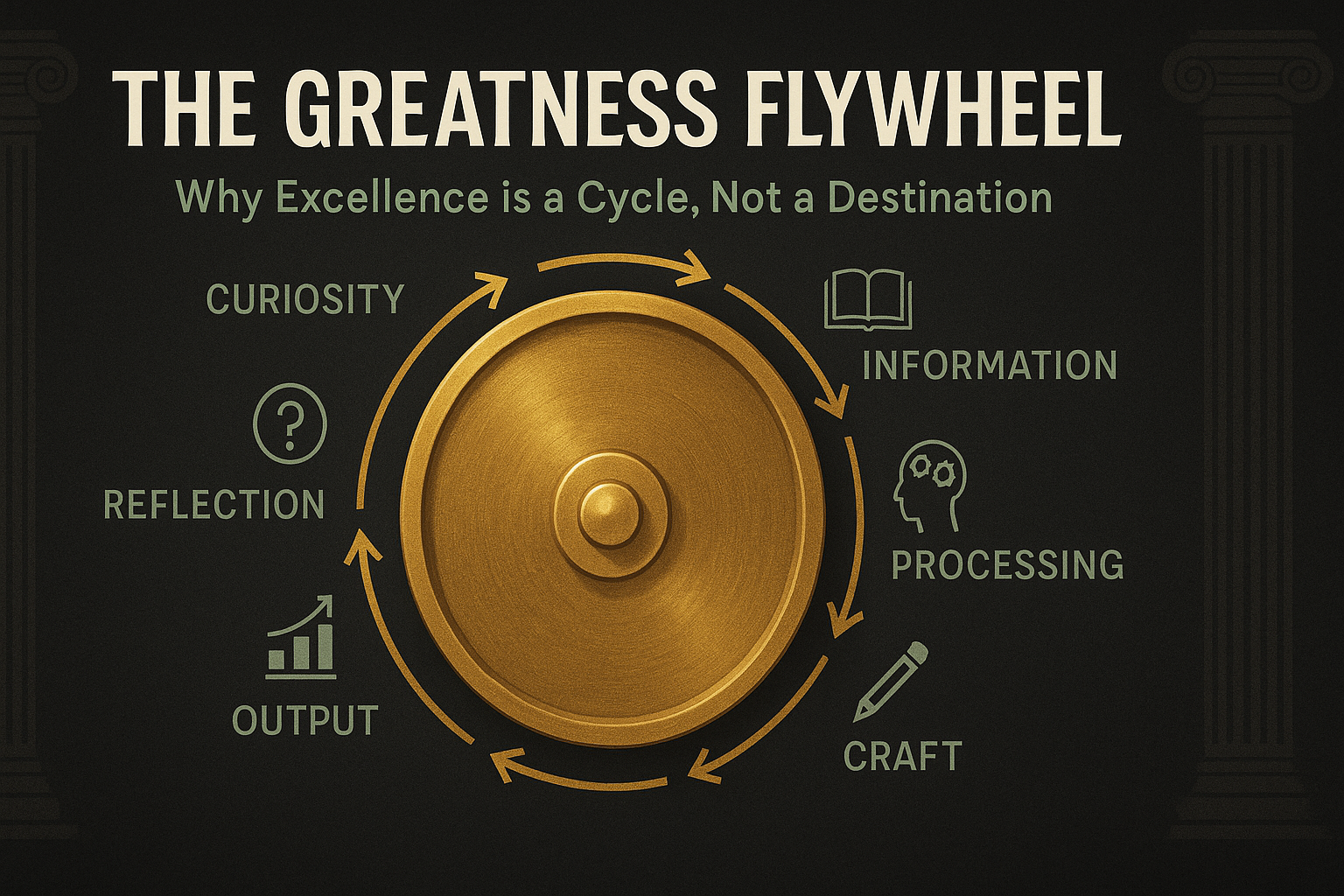
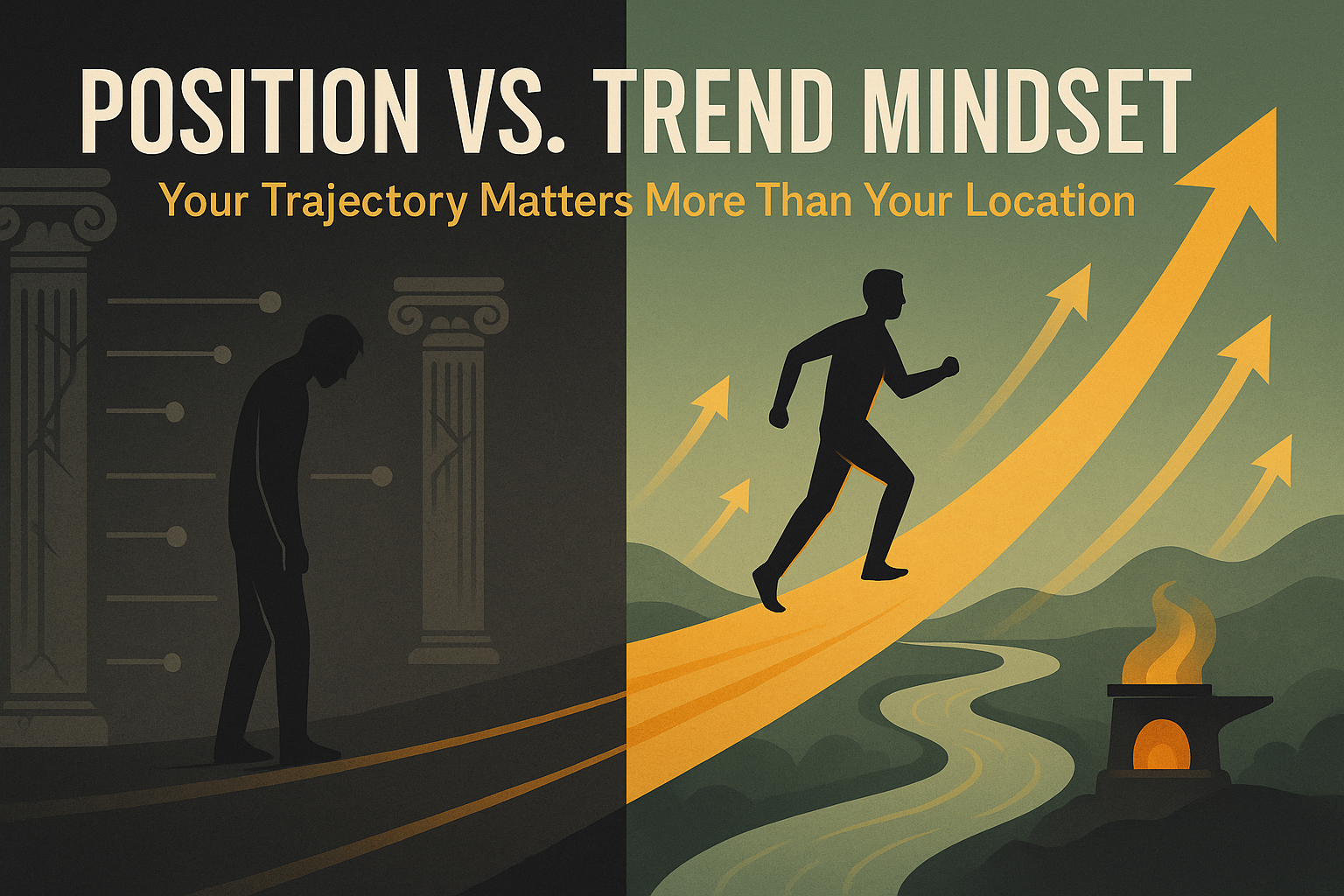
This distinction transforms how you think about excellence. If arete belongs to energeia rather than kinesis, then excellence is not a destination you arrive at. It is a state you inhabit through continuous activity. The person who “achieves excellence” and then stops being excellent has not achieved energeia. They completed a kinesis, a movement toward a goal, and then lost the state when the movement stopped. Genuine excellence is an ongoing activity that must be performed afresh in each moment. This is why Aristotle’s ethics focuses on character and habit rather than on isolated achievements: the virtuous person is not someone who did something excellent once but someone who reliably acts excellently as a sustained pattern of being.
The concept of ergon (characteristic function) provides the foundation for understanding what energeia means for human beings. Every thing has an ergon, and the energeia of that thing is the excellent performance of its function. The ergon of a knife is to cut; the energeia of an excellent knife is sharp, effective cutting. The ergon of a human being, Aristotle argued, is the activity of the soul in accordance with reason. Human energeia, therefore, is the excellent exercise of rational activity in all its dimensions: intellectual inquiry, moral judgment, practical decision-making, and creative production. The person who is fully at work as a human being exercises all these capacities at their highest level.
Dynamis (potentiality) exists for the sake of energeia, not the reverse. This priority claim has profound practical implications. Talent, natural ability, and untapped potential are all forms of dynamis. They have value only insofar as they are actualized into energeia. The person who possesses great potential but never exercises it fully is, in Aristotle’s framework, less complete than the person of moderate potential who is fully at work. This is a radical claim in a culture that celebrates potential and tolerates its waste. Aristotle would say that the person in full energeia, regardless of how modest their capabilities, is more genuinely alive than the person of great dynamis who coasts.
The modern concept closest to energeia is flow, as described by Mihaly Csikszentmihalyi. Flow states occur when a person is fully engaged in an activity that matches their skill level, where attention is completely absorbed and self-consciousness dissolves. But energeia is broader than flow. Flow is a psychological state. Energeia is a metaphysical condition. You can be in a state of energeia while experiencing difficulty, discomfort, or intense effort. The Socrates at his trial, maintaining his philosophical practice in the face of death, was in a state of energeia despite the absence of anything resembling flow. Energeia is about the completeness of your engagement with your function, not about the pleasure of the experience.
The relationship between energeia and telos (purpose) is that energeia is the activity by which you pursue your telos continuously, rather than a state you enter once you have reached it. The person whose telos is the practice of medicine does not stop being a doctor when they reach a certain level of competence. Their energeia is the ongoing practice of medicine at the highest level they can sustain. The telos gives direction. The energeia is the sustained movement within that direction.
Modern Application
Excellence isn't a destination you arrive at but a state of active realization. Your potential means nothing until you actualize it through deliberate effort. Stop treating capability as something you possess and start treating it as something you perform. The gap between who you could be and who you are closes only through energeia—the sustained work of making the possible actual.
Historical Examples
Aristotle’s own life illustrates energeia applied to intellectual work. He spent twenty years studying in Plato’s Academy, then served as tutor to the young Alexander of Macedon, and then founded his own school, the Lyceum, where he produced an astonishing body of work spanning logic, physics, biology, ethics, politics, rhetoric, and metaphysics. His productivity was not the product of kinesis, of checking off a research agenda. It was the product of a mind in continuous energeia, fully at work on the problems that engaged its highest capabilities. The breadth of his inquiry reflects the Greek understanding that the fully actualized human being engages their rational faculty across every domain rather than specializing in a narrow area.
Johann Sebastian Bach composed over a thousand works, including cantatas, concertos, sonatas, and the monumental Mass in B Minor and The Well-Tempered Clavier. His compositional practice was not project-driven. He composed because composition was his function, and exercising that function at the highest level was his mode of being. Even his most routine assignments, weekly cantatas for the Leipzig churches, received the full engagement of his craft. Bach did not produce masterworks occasionally among routine output. He brought energeia to every composition, which is why scholars continue to discover structural and harmonic innovations in pieces he wrote for ordinary Sunday services.
Simone Weil, the French philosopher and activist, described a concept she called “attention” that maps closely onto Aristotle’s energeia. In her essay “Reflections on the Right Use of School Studies with a View to the Love of God,” Weil argued that genuine attention, the complete focusing of one’s faculties on an object, is both the highest intellectual activity and a form of prayer. Her own life demonstrated this total engagement: she worked in factories to understand labor, fought in the Spanish Civil War, and wrote philosophical works of extraordinary depth while suffering from chronic illness. Her energeia was visible in the totality of her engagement with everything she undertook, regardless of the personal cost.
How to Practice Energeia
Choose one area where you have been planning, preparing, or waiting instead of doing. This week, shift from preparation mode to execution mode. Spend at least one hour daily in the active expression of your highest capability in this area. Notice the difference between thinking about excellence and performing it. Track your ratio of planning to doing and adjust it toward action. At the end of each day, identify the moments where you were genuinely “at work” in the Aristotelian sense, fully engaged in actualizing your potential, versus the moments where you were merely occupied. Create a daily energeia score: rate each hour on a scale from passive occupation to full active engagement. Review the scores weekly and identify patterns. What conditions produce your highest engagement? What drains it? Restructure your schedule to maximize the hours spent in genuine energeia. Aristotle taught that energeia is not a static achievement but a continuous activity, the eye seeing, the musician playing, the leader actively leading. The moment you stop performing your function with full engagement, energeia ceases.
Application Examples
Two programmers are given the same assignment. One treats the code as a deliverable: he writes it to meet the specification, passes the tests, and submits. The other treats the code as an expression of her craft: she writes it to be readable, maintainable, and elegant, regardless of whether the specification requires those qualities. Both deliver on time. The first completed a kinesis. The second performed energeia.
The difference between kinesis and energeia in professional work is the difference between completing a task and performing your function. The programmer who writes excellent code because excellence is her standard, not because the specification demands it, is in a state of energeia. Her standard exists independently of external requirements.
A retired executive who spent forty years building companies finds retirement devastating. Without the external structure of work, he feels purposeless. A friend suggests he is confusing kinesis (achieving business goals) with energeia (the ongoing exercise of his capabilities). The executive begins mentoring young entrepreneurs, not to achieve a specific outcome but to continue exercising the judgment, wisdom, and strategic thinking that constitute his function.
The crisis of retirement reveals whether a person’s professional life was kinesis or energeia. If it was kinesis, the work ends when the goal is reached or the career concludes. If it was energeia, the capacity continues to demand expression regardless of employment status.
A team lead who has built an exceptional team is promoted to a new division. In her old role, she was in a state of energeia: fully exercising her capabilities in every interaction. In the new role, she struggles because the challenges are unfamiliar, the team dynamics are different, and her established patterns do not transfer. She must rebuild her energeia in a new context rather than assuming the state will transfer automatically.
Energeia is not a permanent achievement. It is a state that must be maintained through continuous, context-appropriate engagement. The leader who was fully at work in one environment must do the work of becoming fully at work in the next. The capability transfers. The state of being at work does not.
A woodworker who has been building furniture for thirty years still approaches each piece with full engagement, adjusting his techniques to the specific characteristics of the wood, experimenting with joinery, and refusing to treat any project as routine. His neighbor, who took up woodworking as a retirement hobby, follows plans mechanically and produces identical pieces. Both build furniture. Only one is in a state of energeia.
Energeia in craft is the continuous engagement with the work that prevents routine from replacing attention. The craftsperson who brings fresh observation to familiar work, who adjusts to each unique circumstance rather than applying templates mechanically, is performing their function fully in each moment.
Common Misconceptions
Productivity measures output; energeia measures the quality of engagement. A person can be highly productive while operating far below their capacity, completing many tasks without being fully at work on any of them. Energeia is about the quality of engagement, not the quantity of output. Another misconception equates energeia with intensity or effort. You can exert enormous effort on a task while remaining fundamentally disengaged from it. Energeia is not about how hard you work but about how completely you exercise your function. A third error treats energeia as a state you achieve once and maintain permanently. Aristotle was clear that energeia is an activity, not an achievement. It must be performed continuously. The moment you stop being fully at work, energeia ceases. This is both the challenge and the dignity of the concept: excellence is never finished.
The distinction between energeia and kinesis reshaped how I think about my own work. For years, I measured my professional life through deliverables: projects completed, clients served, revenue generated. Each deliverable was a kinesis, a movement toward a goal that, once reached, was finished. The satisfaction of completion was real but fleeting. As soon as one goal was achieved, the next appeared, and the cycle continued without any sense of arrival.
The shift came when I started asking a different question. Instead of “what did I accomplish today?” I began asking “was I fully at work today?” The answers were sometimes uncomfortable. I could accomplish a great deal while operating at half capacity, producing adequate work through habit and efficiency without being genuinely engaged. On those days, the deliverables were complete but the energeia was absent.
The practice I developed was a daily energeia assessment. At the end of each day, I rate each significant block of time on a simple scale: was I fully engaged in the activity, partially engaged, or merely occupying the time? Over months of tracking, patterns emerged. My energeia was highest in one-on-one coaching conversations where I was fully present to the other person’s situation. It was lowest in administrative tasks that I performed through muscle memory without genuine attention. The insight was that my satisfaction with my work correlated almost perfectly with my energeia score, not with my productivity metrics.
I now structure my days to maximize the hours I spend in genuine energeia rather than maximizing the number of tasks I complete. This means fewer meetings, longer blocks of focused work, and a willingness to say no to activities that will be performed at half-capacity. The result is less total output and significantly higher-quality output. More importantly, the experience of working has changed from grinding through a task list to exercising my capabilities fully in the moments that matter.
Frequently Asked Questions
What is energeia in Greek philosophy?
Energeia is Aristotle's concept of actuality or being at work, the full realization of potential. It is the complement to dynamis (potentiality). Energeia describes not a static state but continuous active expression, like the eye seeing or the musician playing. Aristotle coined this term to capture his insight that reality is fundamentally active, not passive, and that being fully alive means being fully at work.
What does energeia mean?
Energeia literally means "being at work" or "in activity," from en (in) and ergon (work). Aristotle coined the term to capture the idea that reality is fundamentally active. It is the root of the modern English word energy. The concept conveys that the highest state of being is not rest but purposeful activity, the continuous expression of your capabilities in their fullest form.
How do you practice energeia?
You practice energeia by shifting from preparation to execution. Spend time in the active expression of your highest capability rather than planning or waiting. Track the ratio of doing to planning and adjust toward action. Excellence is performed, not possessed. Identify the one area where you have been over-preparing and commit to one hour of active execution today.
What is the difference between energeia and dynamis?
Energeia is actuality, the state of being fully at work and realized. Dynamis is potentiality, the capacity to become something. The acorn's dynamis becomes the oak tree's energeia. The transition from one to the other requires sustained, deliberate effort. Aristotle viewed energeia as the more fundamental concept because potentiality is always defined in relation to the actuality it aims toward.