Parrhesia (παρρησία): Meaning, Definition & Modern Application
par-ray-SEE-ah
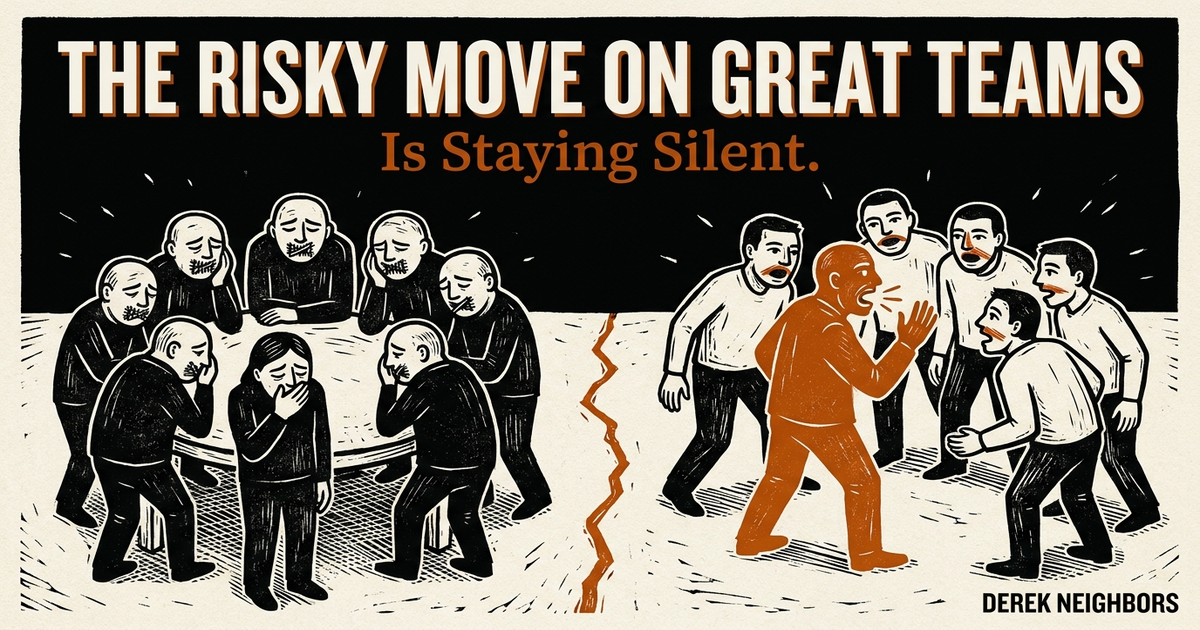
The courage to speak truth freely and frankly, especially to those in power, regardless of personal risk. In ancient philosophy, parrhesia was considered both a moral duty and a democratic virtue—the speaker accepts danger in service of truth.
Etymology
From pan (all, everything) and rhesis (speech, speaking), literally meaning “to say everything” or “free speech.” In Athenian democracy, parrhesia was a citizen’s right and duty to speak frankly in the assembly. Foucault’s later analysis traced how the concept evolved from a political right to a personal ethical practice, a form of truth-telling that puts the speaker at risk. The parrhesiastes speaks truth not for advantage but because truth demands to be spoken.
Deep Analysis
Michel Foucault devoted his final lecture series at the College de France, delivered between 1982 and 1984 and later published as Fearless Speech and The Government of Self and Others, to analyzing parrhesia as a practice central to democratic politics, philosophical practice, and ethical self-formation. Foucault identified four conditions that distinguish parrhesia from ordinary frank speech. First, the parrhesiastes says what they genuinely believe. Second, there is a risk involved: the speaker faces potential punishment, loss of favor, or social sanction. Third, the speech is directed toward someone who has the power to punish the speaker. Fourth, the speaker delivers the truth as a duty, not as a strategy.
The parrhesiastic contract, as Foucault described it, involves an implicit agreement between the speaker and the listener. The speaker agrees to risk their position by telling the truth. The listener agrees to receive the truth without punishing the speaker, even when the truth is unwelcome. This contract is inherently fragile. The more power the listener holds, the greater the temptation to punish unwelcome truth. And the greater the speaker’s awareness of this temptation, the stronger the pull toward silence, flattery, or selective truth-telling.
Athenian democracy depended on parrhesia as a civic duty. In the Assembly, every citizen had the right to speak (isegoria), but parrhesia was the specific obligation to speak the truth even when the truth was unpopular. Demosthenes exercised parrhesia when he warned the Athenians repeatedly about the threat posed by Philip of Macedon, even as the Assembly preferred reassuring messages from speakers who told them what they wanted to hear. The Athenians valued parrhesia in principle. In practice, they frequently punished it. Socrates’s execution in 399 BCE is the most famous case of a democratic society punishing its most dedicated practitioner of parrhesia.
The relationship between parrhesia and andreia (courage) is structural, not metaphorical. Parrhesia requires courage because it necessarily involves risk. The person who speaks truth only when it is safe to do so is not practicing parrhesia. They are practicing prudent honesty, which is a different thing entirely. Genuine parrhesia appears when the truth is unwelcome, when speaking it may cost you something real, and when remaining silent would be safer. The courage required is not physical but social and professional: the willingness to accept consequences for saying what needs to be said.
Phronesis (practical wisdom) is equally essential. Parrhesia without phronesis degenerates into recklessness. The person who tells everyone exactly what they think at all times, regardless of context, timing, or audience, is not practicing parrhesia. They are practicing indiscriminate bluntness. Parrhesia requires the wisdom to judge when truth-telling is necessary, which truths need to be spoken in this moment to this person, and how to deliver truth in a way that the listener can receive. This is why Foucault insisted that parrhesia is an ethical practice, not a personality trait. It requires ongoing judgment about when, where, how, and to whom truth should be spoken.
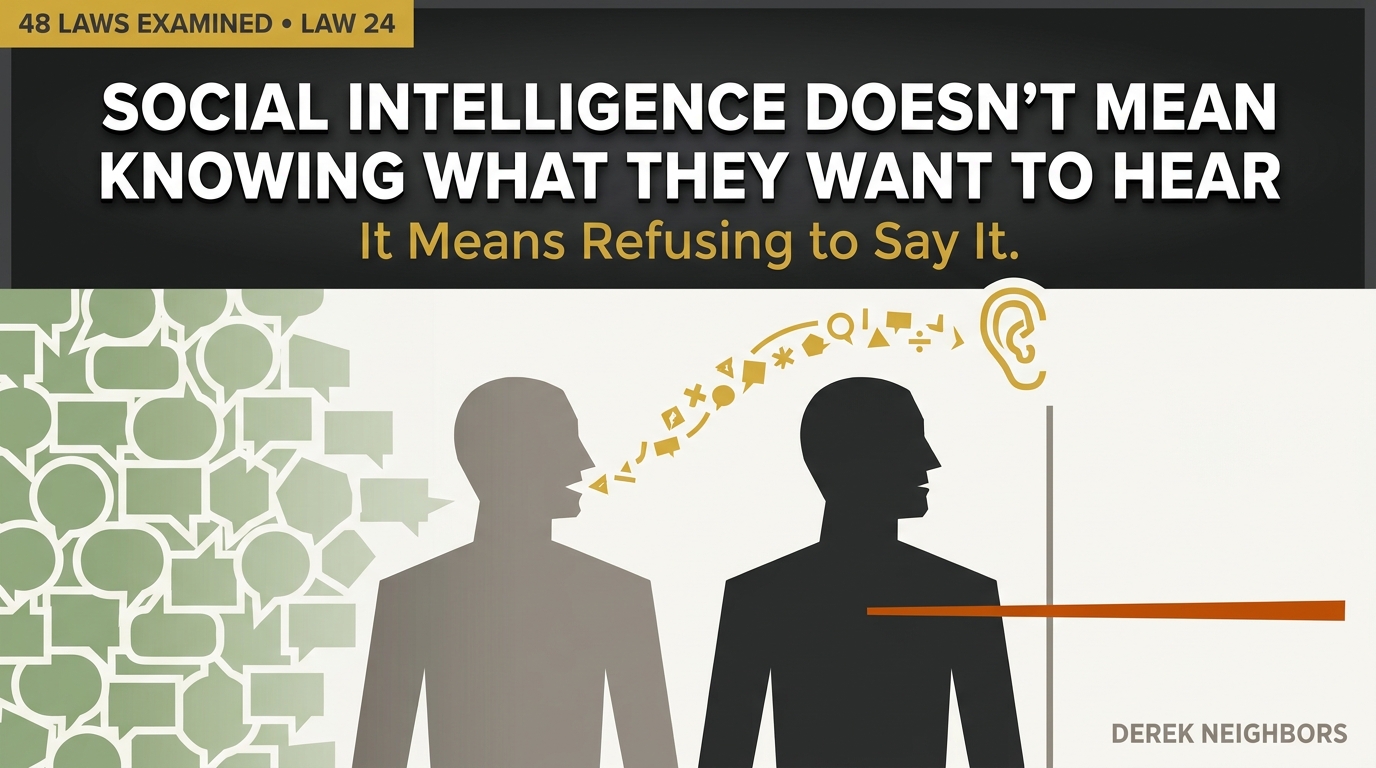
The relationship between parrhesia and flattery (kolakeia) illuminates the concept from the opposite direction. The flatterer tells people what they want to hear. The parrhesiastes tells people what they need to hear. The flatterer is motivated by self-interest: they gain favor by pleasing the powerful. The parrhesiastes is motivated by concern for truth and for the well-being of the person or community being addressed. In organizational life, the ratio of flattery to parrhesia is a reliable indicator of institutional health. Organizations where leaders hear only what they want to hear are organizations where the information flowing upward has been filtered to remove anything uncomfortable, and where the most important truths are the ones least likely to reach the people who need them.
Modern Application
You demonstrate parrhesia when you voice difficult truths your organization needs to hear, even when silence would be safer for your career. Cultivate this virtue by speaking with precision and goodwill, not recklessness—true parrhesia requires you to have earned the standing to be heard. Your willingness to risk comfort for truth is what separates authentic leadership from mere position-holding.
Historical Examples
Diogenes of Sinope, the fourth-century BCE Cynic philosopher, practiced parrhesia as a confrontational art form. When Alexander the Great reportedly visited Diogenes and asked what the philosopher wished from the most powerful man in the world, Diogenes replied, according to the account in Plutarch’s Life of Alexander, “Stand aside. You are blocking my sunlight.” Whether the encounter happened as recorded is uncertain, but the story exemplifies parrhesia in its purest form: truth delivered to power without deference, flattery, or strategic calculation. Diogenes’s parrhesia was directed not only at rulers but at Athenian society as a whole. He lived in a ceramic jar, begged for food, and publicly violated social norms to demonstrate that conventions the Athenians treated as necessary were arbitrary.
Antigone, in Sophocles’s tragedy, practices parrhesia by defying King Creon’s edict forbidding the burial of her brother Polyneices. Antigone tells Creon directly that his law violates a higher moral law and that she will disobey it regardless of the consequences. Creon condemns her to death. Antigone’s parrhesia is remarkable because she is speaking truth to power from a position of near-total vulnerability: a woman, in a patriarchal society, challenging the absolute authority of a king.
Dietrich Bonhoeffer, the German theologian who opposed the Nazi regime, exemplifies parrhesia in the twentieth century. Bonhoeffer could have remained safely in the United States, where he had been invited to teach. Instead, he returned to Germany in 1939 and joined the resistance. He preached, wrote, and organized against the regime, knowing the likely consequences. His execution at Flossenburg concentration camp in April 1945, weeks before the war ended, represents the ultimate cost of parrhesia: speaking truth to an authority willing to kill for it.
How to Practice Parrhesia
Identify one truth your organization needs to hear that nobody is saying. Write it down with as much precision as you can manage. Before delivering it, ensure you have earned credibility through competence and character. Speak with specificity and goodwill, not vague complaints or self-righteous accusations. After speaking, accept the consequences without resentment. Practice in lower-stakes environments first: give honest feedback to a peer this week, disagree respectfully in a meeting where you normally stay silent. Build your capacity for frank speech through graduated exposure. Keep a parrhesia log: each week, record one truth you spoke and one you withheld. For the withheld truth, write down what held you back and whether the silence served anyone’s genuine interest or merely your own comfort. Over time, the pattern of what you avoid saying reveals your specific courage gaps. Address these systematically by designing specific opportunities to practice truth-telling in the areas where you are weakest.
Application Examples
A senior engineer realizes during a product launch week that a critical security vulnerability exists in the shipping code. Fixing it would delay the launch by three weeks. The VP of Product has staked her quarterly goals on the launch date. The engineer presents the vulnerability to the VP, knowing the message will be unwelcome and that they may be pressured to find a workaround that does not actually resolve the issue.
Parrhesia in organizational life means delivering technical truth to people who have organizational incentive to reject it. The engineer’s obligation is to the truth of the situation, not to the VP’s quarterly goals. The VP’s obligation, if parrhesia is genuinely valued, is to receive the truth and adjust plans accordingly rather than pressuring the engineer to produce a different message.
A close friend is about to accept a job that, based on everything you know about their values and priorities, will make them miserable. They are excited about the salary and the title. You know they will interpret your concerns as jealousy or pessimism. You tell them anyway, specifically and honestly, what concerns you and why.
Parrhesia in friendship means caring more about your friend’s genuine well-being than about their comfort or your relationship’s ease. The risk is real: they may resent you for it. But a friendship where you withhold important truths to preserve harmony has already been compromised. You have chosen the friendship’s appearance over its substance.
A CEO addresses the company after a quarter of missed targets. The leadership team has prepared talking points that emphasize external factors: market conditions, supply chain disruptions, and competitive dynamics. The CEO sets the talking points aside and tells the company that the targets were missed because of internal execution failures that leadership must own and fix.
When leaders practice parrhesia about their own failures, they create permission for the entire organization to be honest about problems. When leaders deflect accountability through external attribution, they teach the organization that the official version of reality and the actual reality are different things. Parrhesia from the top is the single most powerful norm-setting act a leader can perform.
A physician tells a patient that the treatment plan the patient found online and wants to pursue is not supported by evidence and could be harmful. The patient is emotionally invested in the plan and responds with anger. The physician does not retreat into vague language or deference to the patient’s autonomy. She explains clearly why the proposed treatment is dangerous and what alternatives exist.
Parrhesia in professional contexts means maintaining your commitment to truth even when the person you are serving would prefer a different truth. The physician’s obligation is to the patient’s health, not the patient’s emotional comfort. Backing down in the face of the patient’s displeasure would be a failure of professional parrhesia.
A junior professor at a research university publicly challenges the methodology of a senior colleague’s widely cited study. The senior colleague is on the tenure committee. The junior professor publishes the critique anyway because the methodological flaw, if uncorrected, will influence a generation of graduate students. The professional risk is concrete and immediate. The obligation to the integrity of the field is clear.
Academic parrhesia means prioritizing truth over career advancement when the two conflict. The junior professor’s critique serves the field at the expense of their institutional position. The alternative, silence in exchange for tenure security, would preserve the professor’s career while allowing a methodological error to propagate through the discipline.
Common Misconceptions
Confusing parrhesia with the habit of saying whatever you think confuses a virtue with a personality trait. Parrhesia is not the absence of a filter between your thoughts and your mouth. It is the deliberate practice of speaking truth when doing so involves genuine risk and is directed toward the good of the listener or the community. The person who proudly announces “I tell it like it is” and proceeds to share unsolicited opinions about everyone’s shortcomings is not practicing parrhesia. They are practicing rudeness. A second error treats parrhesia as something only subordinates practice toward superiors. Parrhesia operates in every direction: leaders practice it when they give honest feedback to their teams, peers practice it when they challenge each other’s assumptions, and citizens practice it when they speak uncomfortable truths in public forums.
There was a specific moment when I learned what parrhesia costs and why it matters. I was in a meeting with a client whose entire strategic direction was built on an assumption I knew to be wrong. The assumption was flattering: it positioned the client’s team as innovative and forward-thinking. The reality was that the market had shifted, and the strategy would lead to significant losses within twelve months.
I had thirty seconds to choose. Agreeing with the strategy would preserve the relationship and the revenue it generated for my company. Challenging it would create conflict and risk the account. I challenged it. The room went cold. The client’s CEO asked, twice, whether I was certain. I laid out the evidence, point by point, knowing that each point was landing as a criticism of decisions his team had already made.
The account survived. The strategy changed. But what stayed with me was the physical experience of speaking unwelcome truth to someone with power over my livelihood. It was not an intellectual exercise. It was a full-body experience of risk: elevated heart rate, dry mouth, the awareness that the next sixty seconds would determine a significant professional relationship. I understand now why the Greeks linked parrhesia with andreia, courage. The courage required to speak truth to power is not metaphorical. It is physiological.
What I have learned since is that parrhesia is a practice that degrades without use. Every time you remain silent when truth is needed, the next silence comes easier. Every time you speak truth despite the risk, the next truth becomes slightly less terrifying. The practice builds on itself, and so does the avoidance. Choose carefully which muscle you are training.
Frequently Asked Questions
What is parrhesia in Greek philosophy?
Parrhesia is the Greek concept of frank, courageous truth-telling, especially to those in power. In Athenian democracy it was both a citizen's right and moral duty. The speaker accepts personal risk because truth demands to be spoken, regardless of consequences. Michel Foucault's later analysis traced how parrhesia evolved from a political right in the assembly to a personal ethical practice, a form of truth-telling that puts the speaker at genuine risk.
What does parrhesia mean?
Parrhesia literally means "to say everything" or "free speech," from pan (all) and rhesis (speech). It describes the practice of speaking truth frankly and openly, particularly when doing so involves risk to the speaker. The parrhesiastes, the one who practices parrhesia, speaks truth not for personal advantage but because they believe the truth must be said regardless of the cost to themselves.
How do you practice parrhesia?
You practice parrhesia by identifying truths that need to be spoken and delivering them with precision, goodwill, and earned credibility. Start with lower-stakes situations and build your capacity. The key is speaking for the sake of truth, not for self-promotion or complaint. Before delivering a difficult truth, ensure you have earned the standing to be heard through demonstrated competence and character, then speak with specificity rather than vague accusations.
What is the difference between parrhesia and andreia?
Parrhesia is specifically the courage to speak truth freely and frankly. Andreia is the broader virtue of courage in all its forms, including physical bravery, moral courage, and the willingness to face any kind of difficulty. Parrhesia is a specific expression of andreia applied to honest speech. You need andreia to practice parrhesia, but you can display andreia in many situations that do not require speaking at all.