Should You Hide Your Excellence to Protect Your Boss's Ego?
By Derek Neighbors on January 18, 2026
Power vs. Virtue: The 48 Laws Examined
A year-long examination of Robert Greene's 48 Laws of Power through the lens of ancient virtue ethics. Some laws we affirm, some we reframe, some we reject entirely.
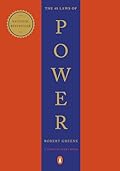
Robert Greene opens his famous book with Law 1: “Never outshine the master.”
The logic seems straightforward. Make those above you feel superior. Never let your talents overshadow theirs. If you appear more brilliant than your boss, you become a threat. And threats get eliminated.
Greene illustrates this with the story of Nicolas Fouquet, the French finance minister who threw such a lavish party that he made King Louis XIV feel inadequate. The result? Fouquet spent the rest of his life in prison.
The message is clear: Dim your light. Stay in the shadows. Protect yourself by making sure the person above you never feels threatened by your capability.
But is this wisdom or slow suicide?
The Tactical Truth
Let’s be honest about what Greene gets right.
Insecure leaders do punish people who threaten them. This is real. I’ve watched talented people get sabotaged, sidelined, and fired because they made someone above them look bad. Political realities exist in every organization. Some bosses are petty, fragile, and will absolutely destroy a rising star who threatens their position.
The danger Greene describes isn’t imaginary. People have lost jobs, opportunities, and relationships by threatening insecure people who held power over them.
If you’ve worked anywhere for any length of time, you’ve seen this happen. The talented employee who gets mysteriously passed over. The brilliant idea that gets buried because it wasn’t the boss’s idea. The promising career that derails because someone felt threatened.
So yes, the tactical truth has merit. Insecure people with power are dangerous.
But acknowledging the danger doesn’t mean accepting Greene’s solution.
The Character Cost
Here’s what Greene doesn’t account for: You become what you practice, over time.
A single act of strategic restraint doesn’t corrupt you. But make dimming your light a habit, a pattern repeated across months and years, and darkness becomes your default. Self-diminishment isn’t a temporary strategy you can maintain indefinitely and then simply turn off. The longer the pattern persists, the more it shapes who you become.
arete, the Greek concept of excellence, isn’t something you can put on a shelf and retrieve later. Unused capability decays. Holding back isn’t neutral. It’s corrosive. Every time you suppress your best work to protect someone’s ego, you train yourself to be less than you are.
Why does this matter philosophically? Because excellence isn’t optional. Aristotle argued that every human has an ergon, a proper function, and ours is the exercise of rational capacity. Self-diminishment sabotages this function. It’s not just bad strategy. It’s a failure to actualize what makes you human. And eudaimonia, genuine flourishing, requires the full development of your rational capacity. You cannot flourish while systematically suppressing your best self. The diminishment doesn’t just cost you outcomes. It costs you the life you were meant to live.
The identity fragmentation alone is exhausting. The gap between who you actually are and who you’re pretending to be creates constant internal conflict. You know you’re capable of more. You know you’re hiding. And that knowledge breeds resentment, both toward the person “making” you hide and toward yourself for agreeing to it.
But the deepest cost isn’t external. It’s the corruption of your own soul. Self-diminishment doesn’t just affect your career or your team. It warps who you are. The person who practices hiding becomes a hider. The gap between capability and expression grows until you forget what you were capable of. This is the real damage: not the missed promotions or buried ideas, but the slow erosion of the self that could have been.
You’re not just protecting yourself. You’re training yourself to protect mediocrity.
The ARETE Alternative
The Greeks had a different answer. They didn’t say hide your excellence. They said know when to deploy it.
kairos is the concept of perfect timing, the right moment for the right action. It’s not about whether to shine but when. The skilled archer doesn’t wave his bow around to prove he can shoot. He waits for the moment when his skill serves the mission, then he acts with precision.
phronesis, practical wisdom, is the capacity to know how to act virtuously in specific situations. It’s not a rule that applies the same way everywhere. It’s judgment, refined through experience, about what this moment requires.
The arete alternative isn’t self-diminishment. It’s strategic deployment.
Build your capability continuously. Develop excellence without fanfare. Then deploy it when the moment serves something larger than your ego or your boss’s ego. The carpenter doesn’t announce every hammer swing. He builds. When the structure is complete, it speaks for itself.
This is fundamentally different from Greene’s advice. Greene says make yourself less so others feel more. The virtue ethics approach says become more, but deploy your capability with wisdom about timing and context.
And here’s the crucial distinction: If you find yourself constantly needing to dim your light, the problem isn’t your excellence. It’s your environment.
Strategic patience in one room is wisdom. Chronic self-diminishment in every room is a pattern that will hollow you out.
But here’s what matters most: the obligation to excellence doesn’t depend on your ability to change rooms. Epictetus was a slave. He couldn’t choose his environment. He couldn’t walk away from a bad master. Yet he never argued that this suspended his obligation to virtue. The circumstances were indifferent. The obligation remained.
If you can change your environment, change it. If you cannot, develop excellence anyway. The constraint limits your tactics, not your duty. kairos and phronesis are capacities of the soul, accessible to anyone with rational capacity, regardless of material position. The slave can develop practical wisdom. The emperor can squander it. What you can do about your situation doesn’t determine what you owe to your own development.
The Ancient Wisdom
Marcus Aurelius was emperor of Rome, the most powerful man in the known world. He didn’t dim his light. He also didn’t wave it around to threaten or impress. He simply did his duty with excellence, led with wisdom, and let his actions speak.
The Meditations show a man who understood the difference between humility and self-diminishment. Humility isn’t making yourself less. It’s not making everything about you. Marcus focused on the mission, on duty, on what the moment required. He didn’t suppress his capability. He deployed it in service of something larger.
The Stoics understood the dichotomy of control. What’s in your control: your excellence, your development, your timing, your choice of environment. What’s not in your control: your boss’s insecurity, their reaction to your capability, their political games.
Focusing on what’s not in your control, trying to manage someone else’s fragile ego, is a losing game. You’ll never diminish yourself enough to make an insecure person secure. The goalposts will always move. The only winner in that game is the part of you that learns to stay small.
The Test
Ask yourself these questions honestly.
Are you holding back because the timing isn’t right, or because you’re afraid of what happens if you stop? One is wisdom. The other is fear. Here’s the test: kairos has an end date. You’re waiting for a specific moment to deploy. Fear has no end date. You’re always waiting, never deploying.
Would you need to dim your light in every room, or just this one? If every room requires you to shrink, examine honestly: is it the rooms, or is it you? Sometimes the common factor is environment selection. Sometimes it’s how you’re deploying your excellence. Arrogance sold as capability provokes resistance too. The honest person asks both questions.
What kind of person are you becoming by constantly holding back? The person who practices hiding becomes a hider. The person who practices excellence, deployed wisely, becomes excellent.
Is your capability serving the mission right now, or serving your political safety? These rarely align. Political safety usually requires holding back. The mission usually requires stepping forward. Know which one you’re choosing.
Final Thoughts
Greene’s Law 1 isn’t entirely wrong. Insecure people with power are dangerous, and ignoring that reality can cost you.
But his solution, chronic self-diminishment sold as strategy, costs you something worse. It costs you who you could become.
The arete path is different. Build without fanfare. Develop your capability relentlessly. Deploy it when the moment serves the mission, not when it serves your ego or protects someone else’s. And if you find yourself in an environment that consistently requires your diminishment, change the environment.
Excellence isn’t something to apologize for. It’s something you owe, not to your career, not to your organization, but to your soul’s proper actualization. The obligation exists because you have rational capacity, and that capacity demands expression. What you owe to yourself is more enduring than what you owe to any job.
The question isn’t whether to shine. The question is whether you have the wisdom to know when, and the courage to do it anyway.
If you’re ready to build excellence that doesn’t require diminishment, MasteryLab.co is where people committed to arete gather. Not to play political games. To become undeniable.