Eudaimonia (εὐδαιμονία): Meaning, Definition & Modern Application
yoo-dye-moh-NEE-ah
Human flourishing. The deep satisfaction of functioning as you were meant to function, living in alignment with your nature and purpose.
Etymology
From eu (good, well) and daimon (spirit, guiding force). Literally “having a good spirit” or “being well-spirited.” The ancient Greeks believed each person had an inner daimon, a guiding genius that represented their true nature. Eudaimonia meant living in harmony with this inner guide. Aristotle made it the central aim of his ethics, defining it not as a feeling but as an activity of the soul in accordance with virtue.
Deep Analysis
Aristotle’s function argument in Nicomachean Ethics Book I provides the logical foundation for eudaimonia. Just as the good of a flute player lies in playing the flute well, and the good of a sculptor lies in sculpting well, the good of a human being lies in performing the characteristically human function well. That function, Aristotle argued, is the activity of the soul in accordance with reason. Eudaimonia is therefore not a feeling but an activity: the excellent exercise of your rational and moral capacities over the course of a complete life.
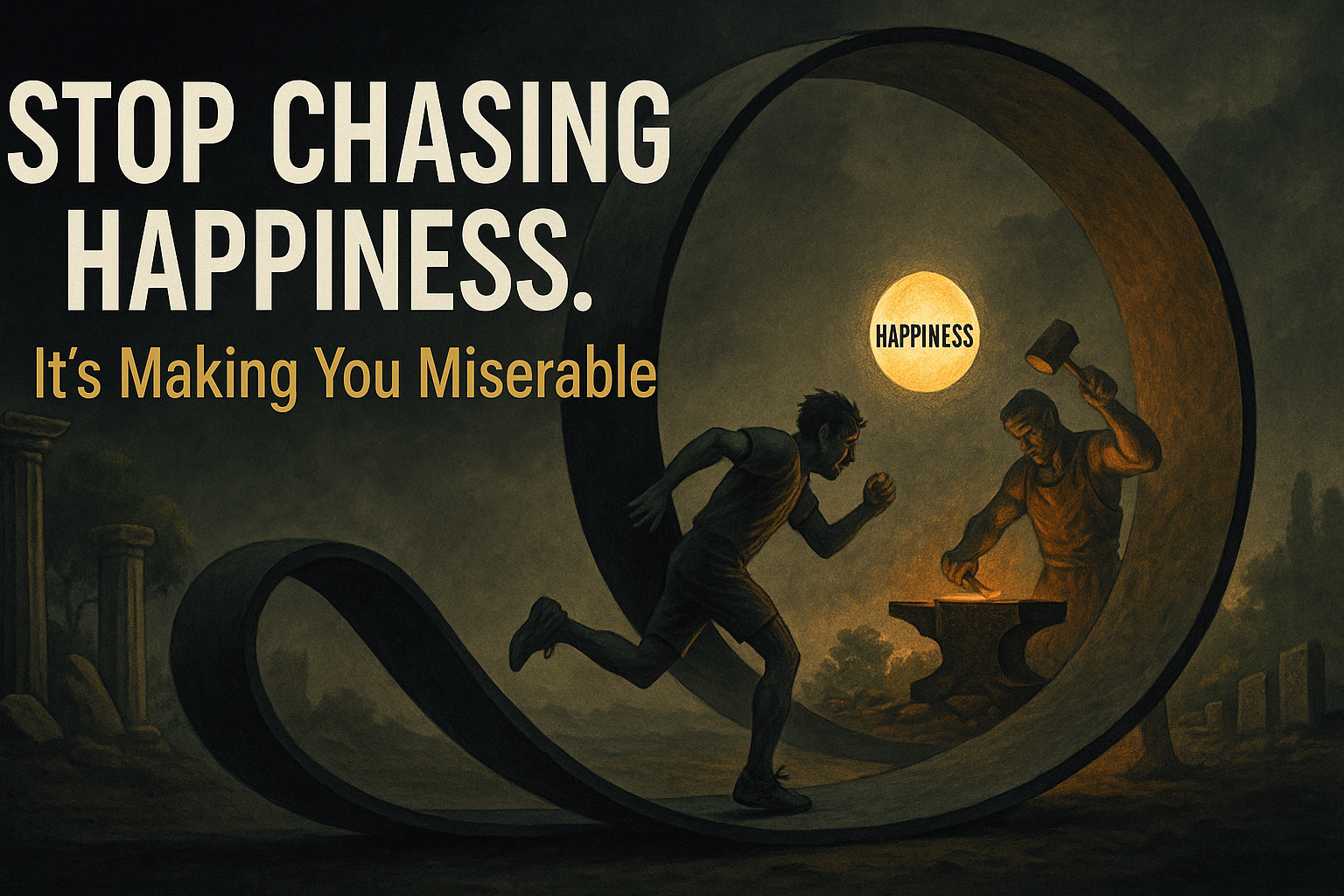
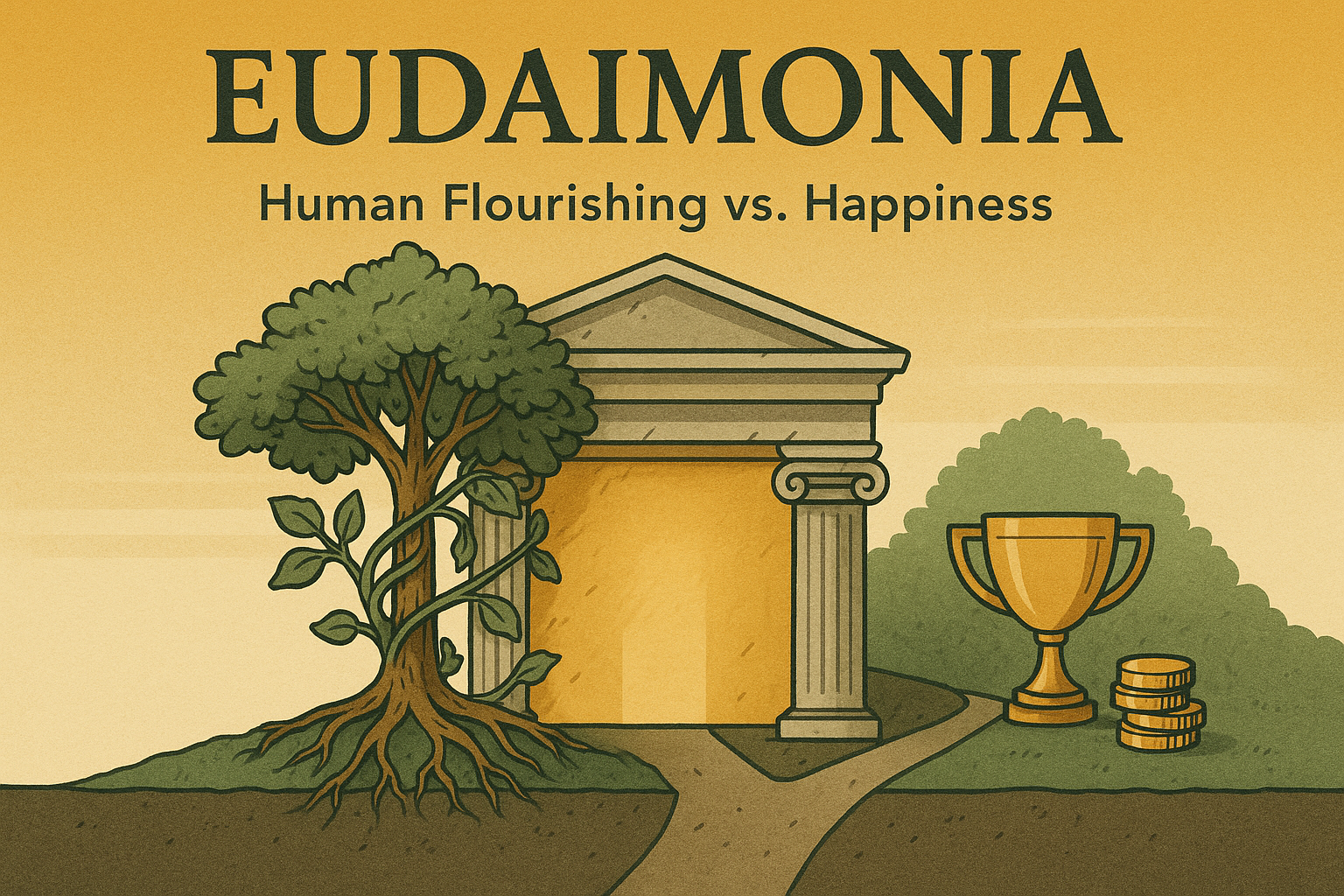
The translation problem with eudaimonia is not trivial. “Happiness” suggests a subjective emotional state that you either feel or do not feel. Eudaimonia is an objective condition. A person can be in a state of eudaimonia while experiencing difficulty, grief, or physical pain, as long as they are living virtuously and exercising their capabilities fully. Conversely, a person can experience constant pleasure while lacking eudaimonia entirely, if their pleasure is disconnected from virtue and purpose. The hedonist on a permanent vacation may feel happy. Aristotle would classify their life as deficient in flourishing.
The role of external goods in eudaimonia is one of Aristotle’s most controversial claims. He argued that some degree of external fortune is necessary for flourishing. The person who is severely impoverished, isolated, or subjected to extreme misfortune cannot fully exercise their rational capacities. A starving person cannot pursue philosophical contemplation. A person without friends cannot exercise the virtue of friendship. A person born into slavery lacks the material conditions for many forms of virtuous activity. This claim creates a tension with the Stoic position, which holds that virtue alone is sufficient for the good life regardless of external circumstances. Aristotle’s response was characteristically nuanced: external goods are necessary conditions for eudaimonia but not sufficient ones. You need a minimum of resources, relationships, and luck. But having them does not produce flourishing. Only the exercise of arete (excellence) does that.
Eudaimonia as a whole-life assessment is one of Aristotle’s most important and counterintuitive claims. He quoted Solon’s famous warning to King Croesus: “call no man happy until he is dead.” The point was not that happiness comes only after death. It was that eudaimonia is a judgment about the quality of an entire life, not about any particular moment within it. A person who lives virtuously for sixty years and then acts shamefully in old age has not achieved eudaimonia. A person who struggles for decades and then flourishes has. This long-term perspective radically changes how you evaluate your life: the question is not “am I happy right now?” but “is the trajectory of my life, taken as a whole, one of flourishing?”
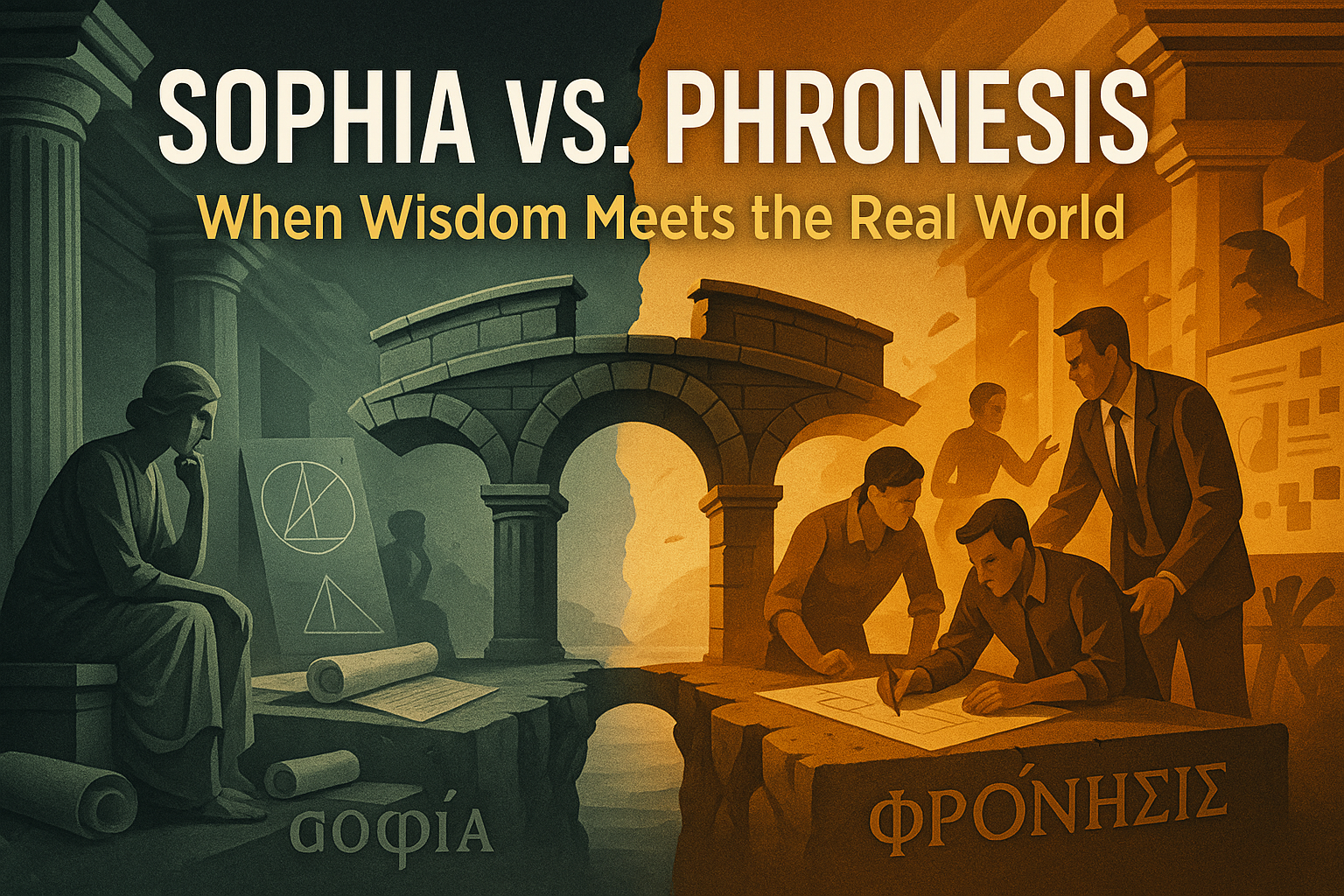
The relationship between eudaimonia and phronesis (practical wisdom) is essential. Phronesis is the intellectual virtue that enables you to navigate the specific complexities of actual life. Without phronesis, you cannot determine the right action in particular circumstances, which means you cannot exercise arete reliably, which means you cannot achieve eudaimonia. Phronesis is, in effect, the navigational instrument for the pursuit of flourishing. The person who possesses every moral virtue but lacks the wisdom to apply them appropriately will experience repeated failures of execution that undermine their flourishing.
Ergon (characteristic function) provides the objective standard against which eudaimonia is measured. If you do not know what your function is, you cannot assess whether you are performing it well. This is why self-knowledge is a prerequisite for flourishing: you must first understand what you are for, what your specific capacities equip you to do, before you can direct your efforts toward doing it excellently. The person who pursues goals that are misaligned with their actual capacities and character may achieve conventional success while missing eudaimonia entirely, because they have been excellent at the wrong things.
Modern positive psychology has rediscovered elements of eudaimonia under different names. Martin Seligman’s PERMA model (positive emotions, engagement, relationships, meaning, and accomplishment) maps onto Aristotle’s framework more closely than Seligman sometimes acknowledges. The emphasis on meaning and engagement over pleasure directly echoes Aristotle’s distinction between eudaimonia and hedonic happiness. The inclusion of relationships reflects Aristotle’s insistence that friendship is necessary for flourishing. The difference is that Aristotle provided a unified philosophical framework connecting these elements through the concept of virtue, while modern psychology treats them as independent variables.
Modern Application
Eudaimonia isn't happiness in the shallow sense. You experience it when your work connects to meaning, when you're developing your full potential, and when your daily actions align with your deepest values. It's what you're actually pursuing when you think you're chasing success.
Historical Examples
Aristotle’s own life illustrates eudaimonia in practice. He spent twenty years in Plato’s Academy, then founded his own school, the Lyceum, where he produced an extraordinary body of work covering virtually every domain of knowledge available in the ancient world. His daily activity, teaching, investigating, writing, and engaging with students and peers, was the exercise of his rational capabilities at their fullest. He was not pursuing a legacy. He was doing the work his capacities demanded. The legacy was a byproduct of a life lived in continuous energeia.
Solon’s encounter with King Croesus, as recorded by Herodotus, established the principle that eudaimonia is assessed over a complete life, not at any single moment. Croesus, the wealthiest king in the known world, asked Solon to name the happiest man alive, expecting Solon to name him. Solon named Tellus of Athens, an ordinary citizen who had raised good children, seen them prosper, served his city in battle, and died fighting with distinction. When Croesus pressed, Solon warned: “Count no man happy until he is dead.” Croesus later lost his kingdom to Persia, and Herodotus records that on the pyre, about to be burned alive, Croesus cried out Solon’s name three times, finally understanding the wisdom he had dismissed.
Viktor Frankl’s account in Man’s Search for Meaning provides a modern illustration of eudaimonia under extreme deprivation. In the Nazi concentration camps, Frankl observed that the prisoners who survived were not necessarily the strongest or healthiest but those who maintained a sense of meaning and purpose. Frankl’s own survival was sustained by his commitment to completing a manuscript on logotherapy and by his love for his wife, whom he did not know had died. His account confirms Aristotle’s claim that eudaimonia requires purpose and virtue rather than pleasant circumstances, and that a person exercising their capacities in service of meaning can experience a form of flourishing even under conditions designed to destroy them.
How to Practice Eudaimonia
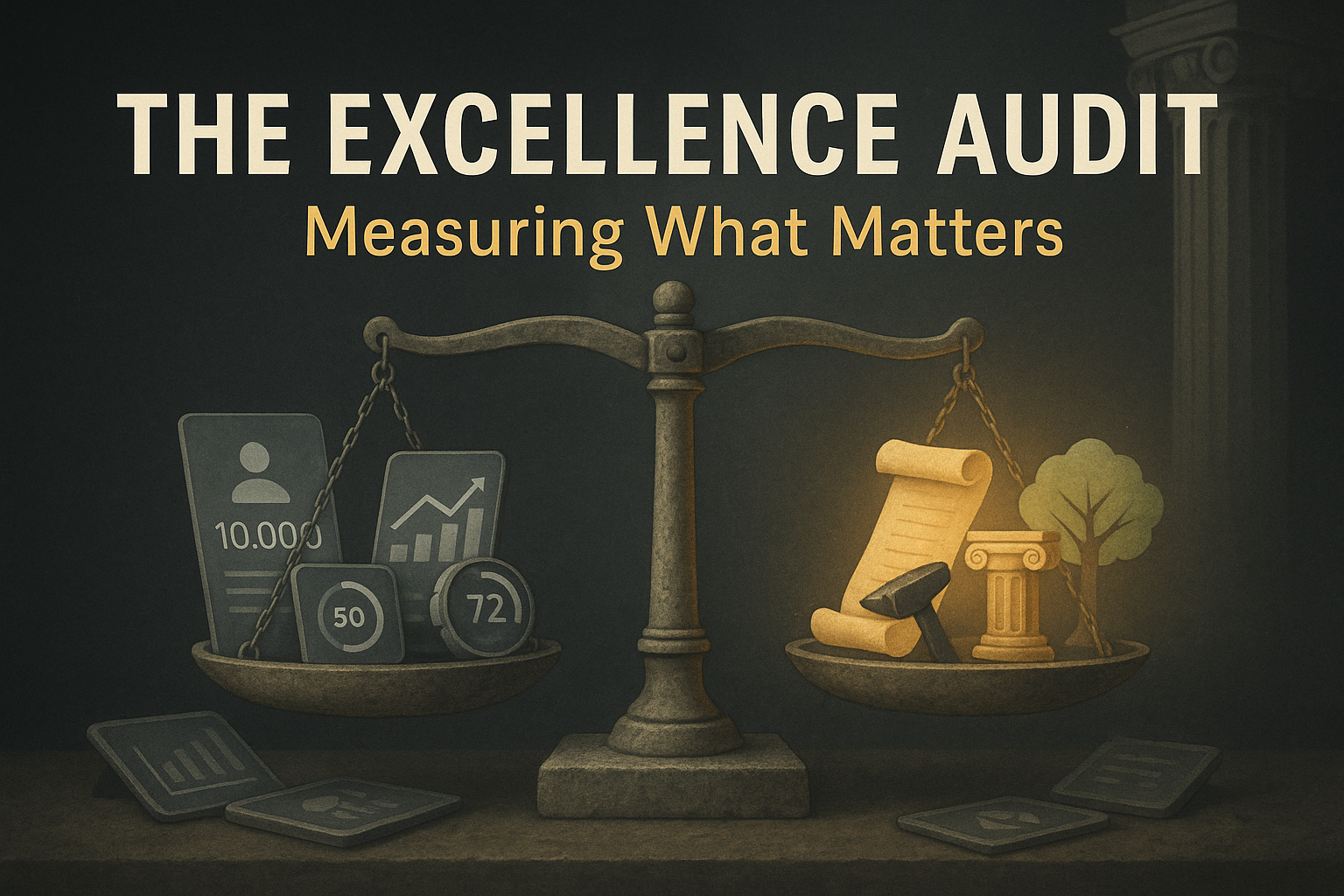
Define your three deepest values in writing, then audit your last week’s calendar against them. Where do they align? Where do they conflict? Make one concrete schedule change this week to close the gap. Each evening, rate the day on a simple scale: did your actions move you toward flourishing or away from it? Over a month, patterns will emerge showing which activities feed your sense of purpose and which drain it. Eliminate or reduce one draining activity per month. Build relationships with people who challenge you to grow, and distance yourself from those who encourage you to settle. Create a personal flourishing scorecard that tracks not only productivity but also depth of engagement, quality of relationships, and alignment with purpose. Review this scorecard weekly and use it to make one deliberate adjustment to how you spend your time. Aristotle taught that eudaimonia is an activity, not a feeling, so focus on what you do rather than how you feel.
Application Examples
A founder sells her company for a significant sum after ten years of building. The sale is celebrated as a success by everyone in her network. Six months later, she is deeply unhappy. She had defined flourishing as the achievement of a financial milestone. Having reached it, she discovers that the milestone was not the source of her flourishing. The daily exercise of building, leading, and solving problems was. The sale ended the activity that was producing her eudaimonia.
Eudaimonia is an activity, not an achievement. The founder flourished not because she was building toward a financial goal but because the building itself, the daily exercise of her capabilities in service of something meaningful, was the flourishing. When the activity stops, the flourishing stops, regardless of how much money is in the bank.
A retired teacher volunteers at a literacy program. She earns nothing, receives little recognition, and works with students who make slow progress. Her friends describe her retirement as modest. She describes it as the most fulfilling period of her life because she is exercising her core capabilities, teaching, connecting, and developing others, in service of something that matters.
Eudaimonia does not require material success, public recognition, or even visible results. It requires the excellent exercise of your capabilities in accordance with purpose. The retired teacher is flourishing because her daily activity aligns with her ergon, her characteristic function, and serves a purpose she genuinely values.
Two executives at the same company have identical compensation, identical titles, and similar responsibilities. One is deeply engaged, developing her team, wrestling with strategic challenges, and deriving meaning from the impact of her work. The other feels hollow, performing the functions of the role competently while sensing that none of it connects to what he actually cares about. Same external conditions, different relationship to eudaimonia.
External conditions are necessary but not sufficient for eudaimonia. Two people in identical circumstances can have radically different experiences of flourishing based on whether their daily activity engages their actual capabilities and connects to genuine purpose.
A social worker who has spent fifteen years helping families in crisis does not describe her work as pleasant. The cases are heartbreaking. The bureaucracy is frustrating. The resources are inadequate. But she describes herself as flourishing because the work engages her deepest capabilities and serves the purpose she has committed her life to. She would not trade her career for a more comfortable one.
Eudaimonia persists through difficulty when the difficulty is in service of something worthy. The social worker is not happy in the hedonic sense. She is flourishing in the Aristotelian sense: exercising her arete fully, contributing to her community, and living in alignment with her telos.
Common Misconceptions
Translating eudaimonia as “happiness” is the most pervasive misconception, one that has distorted the reception of Aristotle’s ethics for centuries. Happiness in the modern sense is a feeling. Eudaimonia is a condition of life assessed over its entirety. You can be eudaimon while experiencing grief, struggle, or physical pain, as long as your life is oriented toward virtue and purpose. Another error treats eudaimonia as achievable through a specific accomplishment: reaching a financial target, publishing a book, or retiring to a comfortable life. Eudaimonia is an ongoing activity, not a milestone. The moment you stop exercising your capabilities excellently, the flourishing ceases regardless of what you previously accomplished. A third misconception is that eudaimonia is purely individual. Aristotle was explicit that friendship, community, and contribution to others are necessary components. The person who flourishes in isolation is not fully flourishing because they have removed themselves from the communal context in which the highest virtues are exercised.
I spent most of my thirties pursuing what I thought was eudaimonia but was actually a curated version of conventional success. I optimized for the metrics my peer group valued: revenue growth, team size, speaking invitations, professional visibility. Each milestone produced a brief satisfaction followed by an immediate recalibration of the target. The goalpost moved with every achievement. The pattern should have been a signal. It was not, because the culture I operated in treated the moving goalpost as normal.
The disruption came when a health scare forced me to step away from work for several months. The removal of external structure revealed something I had been avoiding: the work I was doing, while impressive by external standards, was not engaging my actual capabilities. I was performing a role that required about 40% of what I was capable of and compensating for the unused 60% with busyness, achievement-chasing, and the constant pursuit of the next milestone.
When I returned, I redesigned my professional life around a different question. Instead of asking “what should I achieve next?” I asked “what activity engages my full capability in service of something I genuinely value?” The answer led to a significant career change. I traded a higher-status role for work that demanded more of me intellectually and morally while paying less and carrying less prestige. The external metrics went down. My sense of flourishing went up in a way that has sustained for years rather than dissipating after each achievement.
The Aristotelian framework made this transition intelligible. Eudaimonia is not the accumulation of achievements. It is the daily experience of exercising your capabilities at their fullest in service of something meaningful. When your work demands less than your best, you are surviving, not flourishing, regardless of how well you are compensated. The discipline of pursuing eudaimonia rather than success requires a willingness to walk away from rewards that are not aligned with your actual function.
Frequently Asked Questions
What is eudaimonia in Greek philosophy?
Eudaimonia is the Greek concept of human flourishing or living well. For Aristotle, it represents the highest human good, achieved through a life of virtuous activity in accordance with reason. It describes deep fulfillment rather than momentary pleasure. Aristotle devoted much of the Nicomachean Ethics to defining eudaimonia, concluding that it requires a complete life of virtue, not isolated moments of happiness.
What does eudaimonia mean?
Eudaimonia literally means "having a good spirit," from eu (good) and daimon (spirit or guiding force). It refers to the state of living in alignment with your true nature and purpose, functioning as you were designed to function. The ancient Greeks believed each person had an inner daimon representing their truest self, and eudaimonia meant living in harmony with that guiding force.
How do you practice eudaimonia?
You pursue eudaimonia by aligning your daily actions with your deepest values, developing your full potential through virtuous activity, and building meaningful relationships. It requires ongoing self-reflection and the courage to prioritize purpose over pleasure. Start by defining what flourishing looks like for you specifically, then audit your weekly schedule to identify where your time investment contradicts that vision.
What is the difference between eudaimonia and happiness?
Happiness in the modern sense often refers to a pleasant emotional state. Eudaimonia is deeper: it describes the objective condition of a life well-lived through virtue, purpose, and the full realization of human potential. You can experience eudaimonia during periods of difficulty if your struggle serves a worthy purpose. Aristotle would say a person living courageously through hardship in service of something meaningful is flourishing, while a person experiencing constant pleasure without purpose is not.