Hypokrisis (ὑπόκρισις): Meaning, Definition & Modern Application
hee-POK-ree-sis
The art of playing a role, originally denoting theatrical acting and rhetorical delivery. In philosophy, it evolved to signify the gap between one's performed persona and authentic character, the failure to embody one's professed values.
Etymology
From hypo (under, beneath) and krinein (to judge, decide, separate). The compound hypokrinesthai originally meant ‘to answer’ or ‘to interpret,’ particularly an oracle’s response. In Attic Greek, it became the standard term for theatrical acting, with hypokrites meaning ‘actor.’ The pejorative sense of pretense emerged later, as philosophers questioned when performance becomes deception.
Deep Analysis
The philosophical history of hypokrisis reveals a profound tension at the heart of human social existence: we cannot not perform, yet performance risks corrupting authenticity. Understanding this tension requires moving beyond simple condemnation of ‘hypocrisy’ to examine why the Greeks found the concept so philosophically fertile.
Aristotle treats hypokrisis extensively in his Rhetoric, where he discusses the art of delivery (hypokrisis) as essential to persuasive speech. For Aristotle, how you say something matters as much as what you say. The voice, gestures, and emotional expression of the speaker shape reception. Critically, Aristotle does not condemn this. He recognizes that truth poorly delivered may fail to persuade, while falsehood skillfully performed may triumph. This creates an uncomfortable reality: effective virtue may require performative skill.
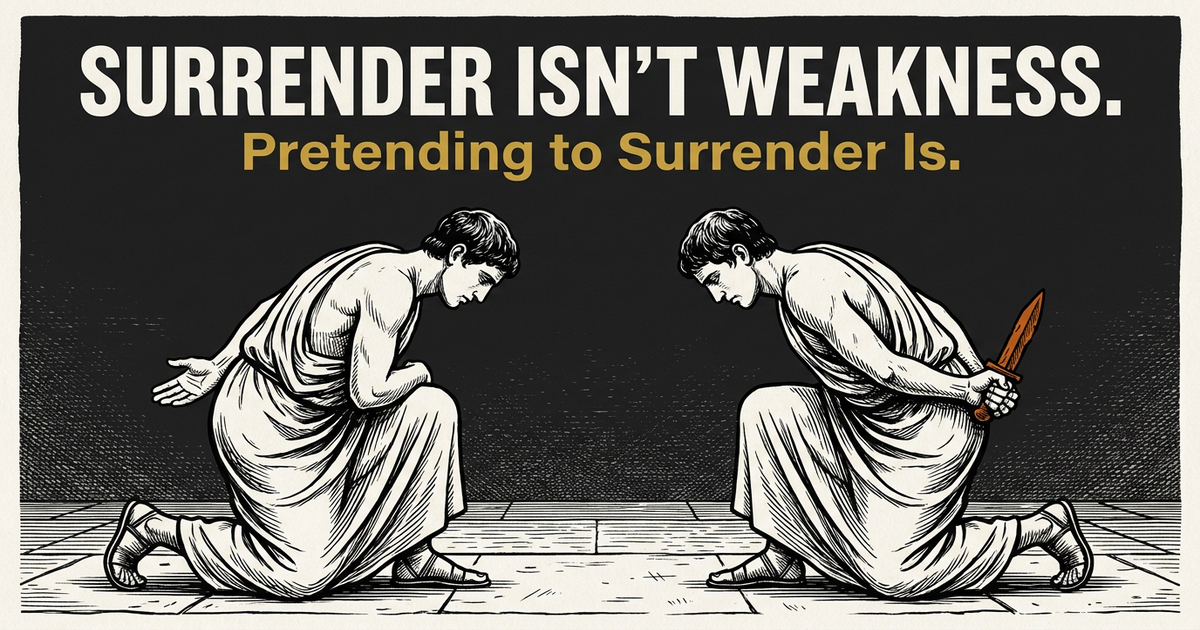
Yet Aristotle’s Nicomachean Ethics introduces a counterweight through his treatment of the truthful person (aletheutikos). This individual presents themselves accurately, neither exaggerating nor understating their qualities. The vice of pretense (alazoneia) involves claiming qualities one lacks, while false modesty (eironeia) involves denying qualities one possesses. Here we see hypokrisis beginning to acquire moral weight. The question becomes not whether to perform, but whether the performance accurately represents the performer.
Plato’s critique runs deeper. In the Republic, he expresses profound suspicion of mimetic arts, including theatrical performance. His concern is not surface-level deception but something more insidious: that repeatedly performing a character shapes the performer’s soul. The actor who plays villains risks becoming villainous. Performance bleeds into identity. This insight anticipates modern psychology’s recognition that we become what we pretend to be.
The Stoics offer yet another perspective. For thinkers like Epictetus, we are all assigned roles by fate. The slave, the senator, the exile each have their part to play. Wisdom lies not in escaping roles but in playing them excellently while maintaining internal freedom. The Stoic distinction between what is ‘up to us’ (eph’ hemin) and what is not suggests that external performance belongs partly to circumstances, while prohairesis, our capacity for choice, remains inviolable. Hypokrisis becomes problematic only when we confuse the role with the self, when we let external performances determine internal commitments.
The relationship between hypokrisis and parrhesia (frank speech) illuminates both concepts. Parrhesia demands speaking truth regardless of consequence, the antithesis of calculated performance. Yet even parrhesia involves delivery, timing, and judgment about when frankness serves. The parrhesiast is not artless but skilled in a different mode, performing authenticity rather than pretense.
Perhaps most challenging is hypokrisis’s connection to akrasia, weakness of will. The person who professes values they fail to enact may not be deliberately deceiving others. They may genuinely hold the values but lack the strength to embody them. Are they hypocritical or merely weak? The distinction matters enormously for moral assessment. Deliberate pretense deserves condemnation; struggled aspiration deserves support.
The deepest paradox emerges when we consider that the self we present may shape the self we become. William James noted that acting as if we have a virtue can develop that virtue. The gap between performance and reality may be a developmental space rather than merely a site of deception. The question becomes not whether the gap exists but in which direction we are moving: toward integration or further fragmentation.
For leaders, hypokrisis presents an inescapable challenge. Authority itself requires performance. Projecting confidence you do not feel may be necessary to steady others in crisis. Presenting unity you do not experience may preserve team cohesion. The leader who reveals every doubt and conflict may be authentic but ineffective. Yet the leader whose public persona detaches entirely from private reality becomes a dangerous fraud.
The resolution lies not in eliminating performance but in maintaining rigorous self-awareness about its presence and purpose. The examined performer knows when they are acting, why they are acting, and what gap exists between role and reality. They work to close that gap over time, using performance as aspiration rather than concealment. This is the philosophical labor of hypokrisis: not to stop acting, but to act with integrity.
Modern Application
When you lead, you perform. The question is whether your performance expresses or conceals your actual values. You must recognize that every meeting, every communication, every decision involves presentation. The danger lies not in performance itself, but in losing track of where the role ends and you begin. Authentic leadership requires you to close the gap between your public commitments and private conduct.
Historical Examples
Demosthenes, the great Athenian orator, understood hypokrisis as essential to political effectiveness. Plutarch records that when asked what was most important in oratory, Demosthenes replied ‘delivery’ (hypokrisis), and when asked what was second and third, gave the same answer each time. This was not cynicism about truth but recognition that how something is communicated determines whether it is heard. Demosthenes reportedly practiced declamation with pebbles in his mouth and while running uphill, treating delivery as seriously as content. His performance against Philip of Macedon in the Philippics demonstrates hypokrisis in service of genuine conviction: the theatrical skill deployed to communicate real alarm about real danger.
Alcibiades presents a more troubling case. Thucydides portrays him as a master performer who adapted his persona to every audience. In Sparta, he adopted Spartan austerity. In Persia, he displayed oriental luxury. In Athens, he played the democratic champion. His theatrical versatility achieved remarkable short-term results, gaining him influence across hostile cultures. Yet his very adaptability prevented lasting trust anywhere. As Plutarch notes, people never knew which Alcibiades was real, because perhaps none was. His political career ended in exile, killed by those who could trust neither his presence nor his absence. Alcibiades demonstrates how virtuosic hypokrisis untethered from stable character becomes self-destructive.
Marcus Aurelius’s Meditations reveal a leader acutely conscious of the performed nature of imperial authority. He reminds himself that the purple robe is merely dyed wool, that the ceremonies of power are performances. This awareness serves not cynicism but integrity: by recognizing that he plays a role, Marcus preserved space for private examination of whether he was playing it well. His philosophical journal was the backstage where the emperor could acknowledge fatigue, doubt, and moral struggle that the public role could never display. The gap between performed emperor and private philosopher was maintained consciously, allowing each to inform the other.
How to Practice Hypokrisis
Begin each morning by naming three things you will publicly commit to today, whether a deadline, a principle, or a promise. Track whether your private actions align with these commitments.
Conduct a weekly ‘integrity audit.’ Review your calendar and ask: Where did I say one thing and do another? Where did I perform agreement while harboring disagreement? Where did I present confidence I did not feel? Write these gaps down without judgment.
Seek feedback from someone who sees you in multiple contexts, such as a colleague who also knows you socially. Ask them directly: Where do you see inconsistency between what I profess and how I act?
Practice ‘role transparency.’ Before important interactions, state your intention aloud: ‘I am about to perform the role of confident leader, but internally I feel uncertain.’ This builds awareness of your performances.
Challenge yourself weekly to share one genuine uncertainty or limitation with your team. Notice the impulse to maintain your performed image. Observe what happens when you drop the mask.
End each day by asking: Did I act today, or did I act out? The first is conscious performance in service of purpose. The second is unconscious pretense in service of ego.
Application Examples
A CEO announces company values of transparency and employee wellbeing while privately directing HR to suppress salary range discussions and classify all departures as ‘voluntary’ to avoid unemployment claims. The executive team performs alignment in town halls while harboring significant disagreements.
Hypokrisis reveals itself not in single contradictions but in systematic patterns where organizational performance diverges from operational reality. Culture is not what is announced but what is tolerated.
A person publicly champions work-life balance on social media, offering advice about presence and mindfulness, while habitually checking email during family dinners and missing their children’s events for optional work meetings. They genuinely believe in balance while consistently failing to practice it.
The most dangerous form of hypokrisis involves deceiving oneself. This person is not lying to others; they are performing a self-concept that their behavior contradicts, trapped in the gap between aspiration and action.
A manager gives consistently positive performance reviews to avoid difficult conversations, then acts surprised when the same employees are laid off in restructuring. They perform supportiveness while withholding the honest feedback that might have prompted growth.
Performed kindness that prevents real development reveals hypokrisis as ultimately selfish. The manager protects their own comfort and image at the cost of their team members’ futures.
An elected official campaigns on fiscal responsibility and government efficiency, then secures earmarks for constituents and takes credit for programs they voted against. They perform different values for different audiences, calculating that voters attend to local benefits rather than voting records.
Political hypokrisis exploits the gap between theatrical presence and documentary record. It persists because audiences often prefer pleasing performances to uncomfortable truths.
A partner performs interest and engagement during conversations, making appropriate sounds and gestures, while mentally elsewhere. They have learned the signals of attentiveness without practicing actual attention. The other partner senses the disconnect but cannot articulate it.
Relational hypokrisis creates a peculiar loneliness: being with someone who is technically present but actually absent. The performance of intimacy without its substance corrodes trust at levels below conscious awareness.
Common Misconceptions
Hypokrisis originally meant deception, and its evolution to theatrical performance was later: the historical development is precisely reversed. The term began as theatrical craft, denoting the skill of answering or interpreting, and only acquired negative moral connotation centuries later. Understanding this history matters because it reveals that performance itself was not initially suspect.
Another error involves treating all gaps between stated values and behavior as hypokrisis. Sometimes the gap reflects weakness rather than pretense. A person who genuinely values health but eats poorly is not being hypocritical; they are being human. The distinction between aspirational failure and deliberate deception has significant moral weight. Condemning all imperfection as hypocrisy makes the concept useless.
Finally, many assume the solution to hypokrisis is radical transparency. If performance is the problem, surely eliminating all filtering and presenting raw, unedited selfhood is the answer. This misunderstands both social function and psychology. Some performance serves genuine communication. Some holding back serves others’ needs. The goal is not performanceless existence but conscious, purposeful performance aligned with authentic values.
I spent years as a professional performer before becoming a leadership coach. In theater, hypokrisis was craft. Learning to embody characters different from myself, to project emotions on cue, to make audiences believe in fictions: this was skilled work requiring discipline and practice. The transition to organizational work initially felt like abandoning performance for authenticity.
I was wrong. I simply changed stages.
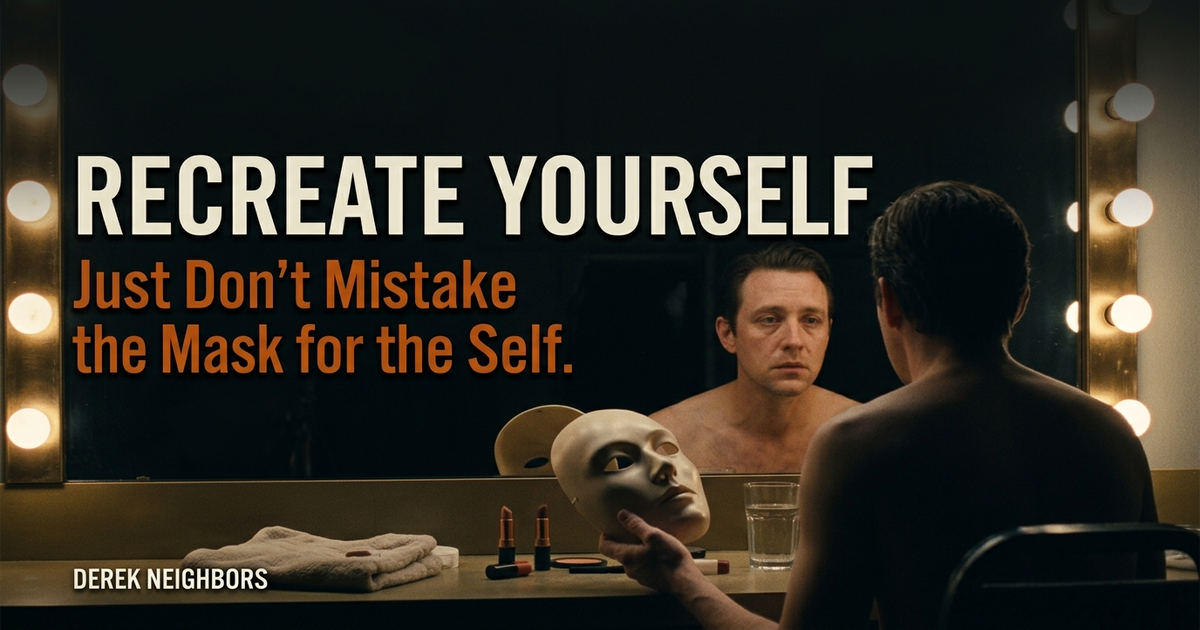
What I discovered working with executives is that everyone performs constantly. The question is never whether you are acting but whether you know you are acting. The most dangerous leaders I have worked with are those who have forgotten they have a persona. They have fused with their leadership image so completely that they cannot distinguish between strategic presentation and core self.
I remember working with a founder who had built an empire on visionary confidence. When market conditions turned, she could not acknowledge uncertainty even in private strategy sessions. She had performed certainty so long that doubt had become literally unspeakable. Her inability to separate role from self prevented the strategic flexibility her company desperately needed.
The opposite failure is equally instructive. A leader I coached insisted on ‘radical authenticity,’ sharing every doubt and fear with his team in real-time. His commitment to transparency was genuine. So was the anxiety it created in his organization. He had confused undisciplined emotional expression with authenticity, not recognizing that leadership itself requires considered performance. His team needed him to hold some things, to perform stability even when he did not feel it, so they could do their work.
The synthesis I have found is what I call ‘conscious performance.’ You recognize that every interaction involves presentation. You choose what you perform based on what serves the situation and aligns with your actual values. You maintain a private space where you acknowledge the gap between performed confidence and felt uncertainty. And you work, over time, to close that gap through genuine development.
When I catch myself performing values I do not actually hold, that is the signal for change. Not change of performance. Change of values or behavior. Hypokrisis becomes developmental fuel rather than characterological corruption. The mask reveals what the face should become.
Frequently Asked Questions
What is the difference between hypokrisis and healthy professional roles?
The distinction lies in intention and awareness. Consciously adapting your communication style for different audiences serves authentic purpose. Hypokrisis in its negative sense involves deceiving others about your actual values, capabilities, or intentions. The former is skilled adaptation; the latter is characterological fraud.
Is all performance hypocrisy in the modern sense?
No. The Greeks recognized that social life requires performance. An actor playing Oedipus is not lying. The problem arises when performance in daily life serves to manipulate rather than communicate, or when we lose awareness that we are performing at all. Self-deception about our own performances is the deeper danger.
How did hypokrisis change from neutral to negative meaning?
In classical Athens, hypokrisis was value-neutral, denoting skilled theatrical craft. The shift occurred as philosophers, particularly Plato and later Christian thinkers, began questioning the ethics of seeming versus being. By the Roman period and especially in New Testament Greek, the term had acquired its modern connotation of moral pretense and duplicity.