Prohairesis vs Akrasia: Key Differences in Greek Philosophy
Prohairesis and akrasia stand at opposite poles of human agency. Prohairesis is your capacity for deliberate moral choice, the power to align your actions with your values. Akrasia is the breakdown of that capacity, the experience of knowing what you should do and failing to do it. Every time you face a gap between your intention and your action, you are in the territory where these two concepts meet.
Definitions
Prohairesis
(προαίρεσις)
pro-HY-reh-sis
The faculty of moral choice and rational decision-making that defines human agency. For the Stoics, particularly Epictetus, prohairesis represents the ruling center of the self—the one thing entirely within your control and immune to external circumstances.
Akrasia
(ἀκρασία)
ah-KRAH-see-ah
Weakness of will—acting against your own better judgment. For Aristotle, akrasia occurs when you know what is good but fail to do it, overcome by passion, appetite, or momentary impulse.
Key Differences
| Aspect | Prohairesis | Akrasia |
|---|---|---|
| Direction | Prohairesis moves from knowledge to action. It is the faculty that translates your understanding of what is right into deliberate choice. | Akrasia breaks the connection between knowledge and action. It is the state where you know what is right but act against that knowledge. |
| Agency | Prohairesis represents full moral agency. You deliberate, choose, and act in alignment with your values. | Akrasia represents compromised agency. Something, whether appetite, emotion, or habit, overrides your rational judgment. |
| Character Implication | Strong prohairesis indicates well-developed character. The person with strong moral choice has integrated their values into their actions. | Frequent akrasia indicates character in need of development. The gap between knowing and doing reveals where growth is most needed. |
| Philosophical Puzzle | Prohairesis is philosophically straightforward. If you know what is good and choose it, your faculties are working as intended. | Akrasia is philosophically puzzling. How can you know the right action and still fail to take it? Socrates denied it was possible; Aristotle explained how it occurs. |
Direction
Prohairesis moves from knowledge to action. It is the faculty that translates your understanding of what is right into deliberate choice.
Akrasia breaks the connection between knowledge and action. It is the state where you know what is right but act against that knowledge.
Agency
Prohairesis represents full moral agency. You deliberate, choose, and act in alignment with your values.
Akrasia represents compromised agency. Something, whether appetite, emotion, or habit, overrides your rational judgment.
Character Implication
Strong prohairesis indicates well-developed character. The person with strong moral choice has integrated their values into their actions.
Frequent akrasia indicates character in need of development. The gap between knowing and doing reveals where growth is most needed.
Philosophical Puzzle
Prohairesis is philosophically straightforward. If you know what is good and choose it, your faculties are working as intended.
Akrasia is philosophically puzzling. How can you know the right action and still fail to take it? Socrates denied it was possible; Aristotle explained how it occurs.
When to Apply Each Concept
When to Choose Prohairesis
Strengthen prohairesis through deliberate decision-making practice. Before acting, pause to clarify what you value and what the situation demands. Epictetus made prohairesis central to Stoic practice, teaching that your capacity for choice is the one thing fully under your control. Exercise it consciously rather than drifting through decisions on autopilot.
When to Choose Akrasia
Confront akrasia honestly when you notice the gap between your intentions and your actions. Rather than berating yourself, examine the mechanism. Aristotle identified that akrasia typically occurs when strong emotions or appetites overpower deliberation. Designing your environment to reduce temptation and building habits that automate good choices are practical strategies for reducing akratic episodes.
Frequently Asked Questions
What is the difference between prohairesis and akrasia?
Prohairesis is the capacity for deliberate moral choice, the faculty that allows you to choose in accordance with your values. Akrasia is weakness of will, the failure to act on what you know is right. They describe opposite states of the relationship between knowledge and action. Prohairesis is that relationship functioning well. Akrasia is that relationship breaking down.
Did the Greeks believe akrasia was possible?
This was a major debate. Socrates denied akrasia, arguing that if you truly know the good, you will do it. Failure to act rightly indicates ignorance, not weakness. Aristotle disagreed, explaining that particular desires can overwhelm general knowledge in the moment of action. A person might know that excess is bad in general but be overwhelmed by a specific appetite in a particular situation.
How do you overcome akrasia?
Aristotle suggested that akrasia is overcome through habit formation and the development of enkrateia (self-control), which can eventually mature into full virtue. Practical strategies include removing sources of temptation, building automatic routines for virtuous behavior, and developing awareness of the moments when your rational judgment is most vulnerable to being overridden.
Articles Exploring Prohairesis or Akrasia (58)
Stop Celebrating Decimals
You are at 0.4 and there is a slide about it. Somebody made a chart. The number moved, so the room claps. A decimal is a position report, and treating it like an achievement pays you in advance for work you have not finished. The opposite error is quieter and more flattering, and it is the one that catches good people.

Sour Grapes Cost More Than the Grapes
Law 36 of the 48 Laws of Power tells you to disdain what you cannot have and to ignore your enemies, because ignoring them is the best revenge. Half of that is true. Attention makes things bigger, and you cannot hang your good on things outside your reach. Then Greene tells you to do it the way Aesop's fox did, by deciding the grapes were sour. The fox lied to himself, and the lie is the expensive part. The Stoics had a cheaper way to lose.

You Will Never Finish the Inbox. Stop Saving Depth for After.
Incoming work has no stop. If thinking, reading, and writing wait until the inbox is clean, they wait forever. Put depth on the calendar first.
Unspoken Expectations Are Premeditated Resentments
The ticket was green. I still sat in the review angry about a customer note, a rollback, and a demo that were never on the page. She asked when I had put those in writing. I had not. I was collecting a bill for a test I never handed out.
Stop Treating Yourself Like an Enemy You Have to Defeat
A rest day sat on the plan and I snuck a session anyway. Sitting still felt like losing the person I was becoming. I was occupying a part of myself that had a job: recover.
What You Tolerate, You Insist On
Three late Fridays in a row I covered the same miss and called it patience. A mentor named the lesson I was teaching. You cannot always change them. You can still change your side.

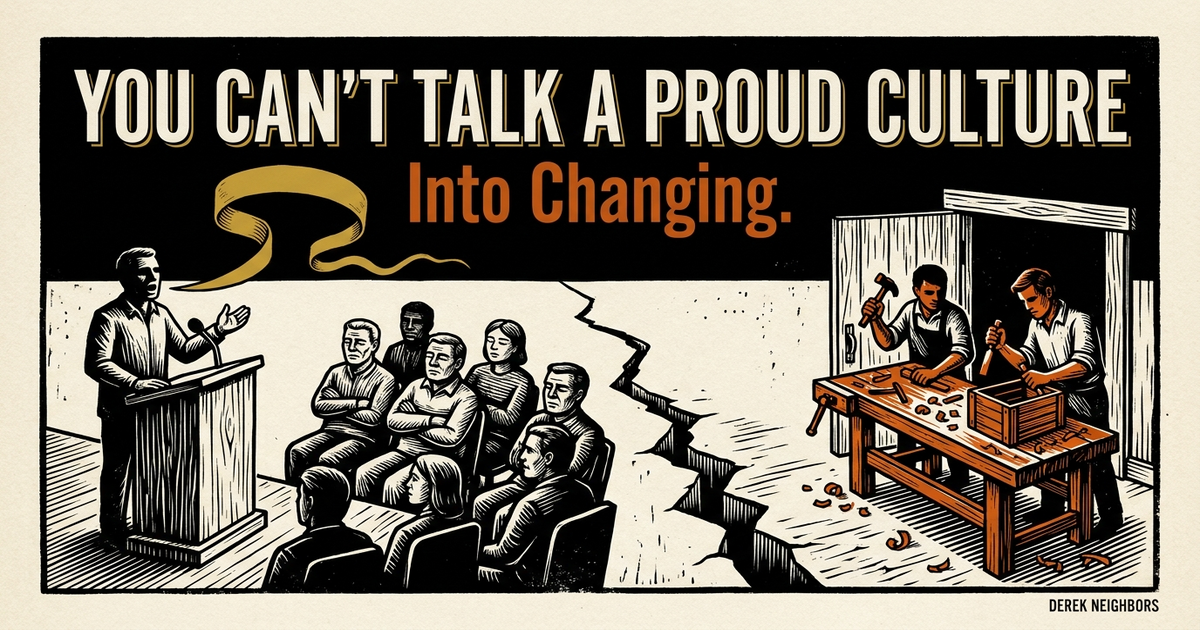
You Can't Talk a Proud Culture Into Changing
A strong culture will nod in the all-hands and return to the process that already made it proud. Conversion speeches bounce. The usable move is a small office with different rules and a scoreboard the old culture can see.
How You Leave Tells the Truth About Who You Are
We grade people on how they begin. The evidence of character is how they dissolve a living bond. Honorable closure tells the truth without turning the last hour into a trial, owns what you own without requiring a matching apology, and moves forward without needing the last word.

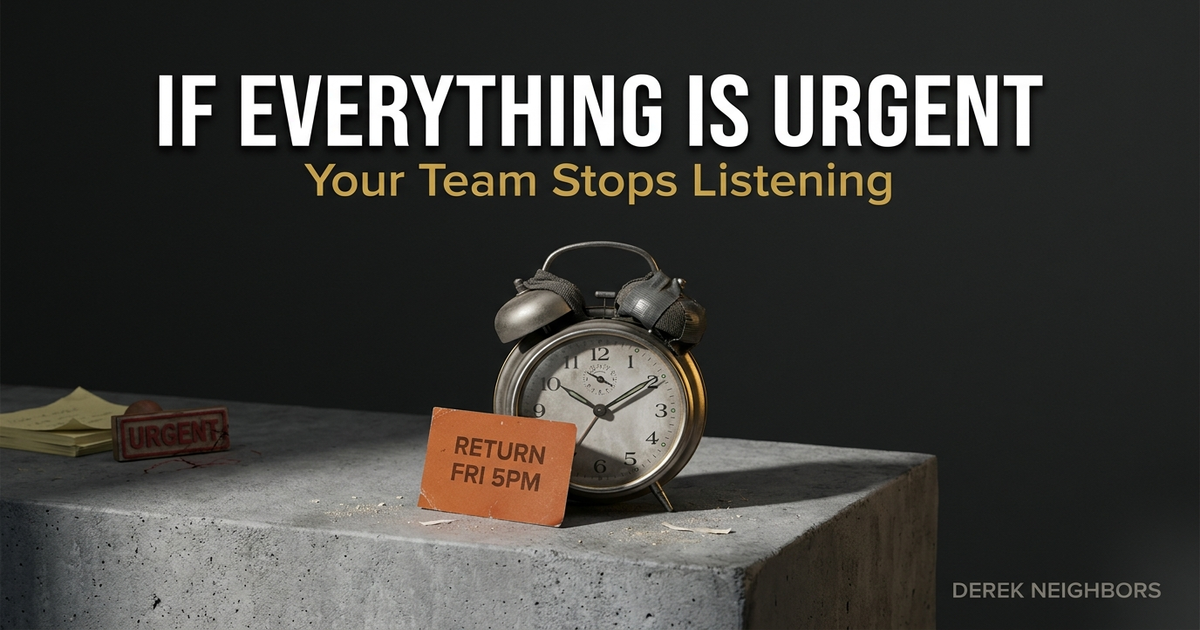
If Everything Is Urgent, Your Team Stops Listening
Constant fire drills train people to ignore you. Calm urgency is scarce pressure with a named end date, shared ownership, and language that matches the work. Restore the signal or lose the room.
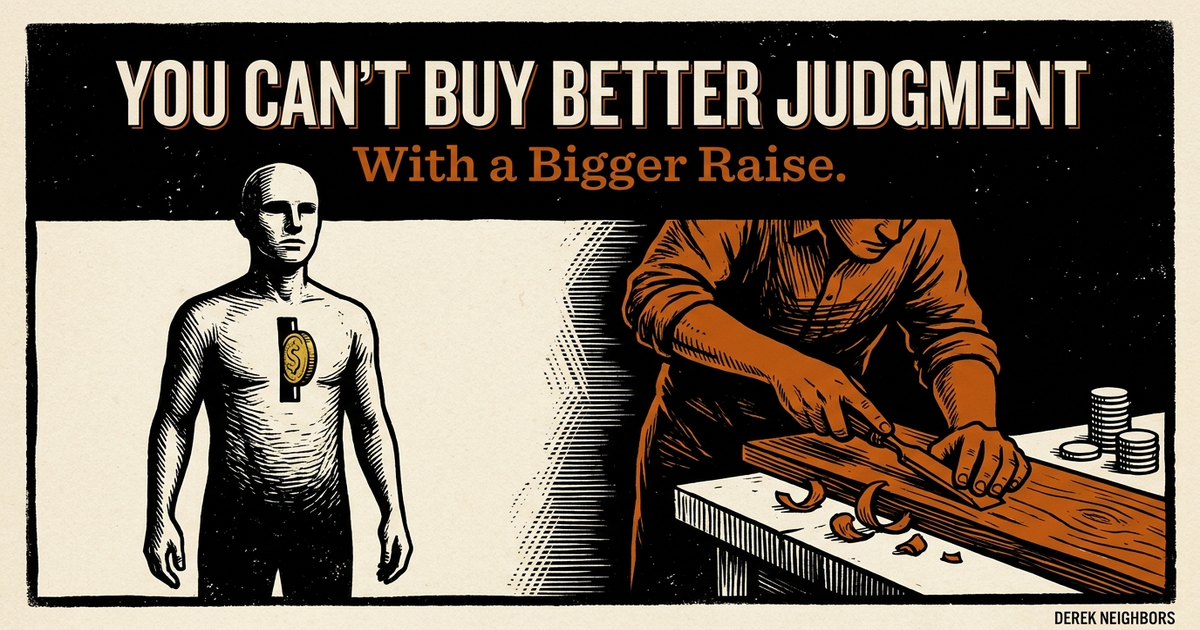
You Can't Buy Better Judgment With a Bigger Raise.
When every task gets read through the paycheck, excellence has already left. Fair pay removes the money crisis. Using raises as a lever for complex work buys worse judgment.
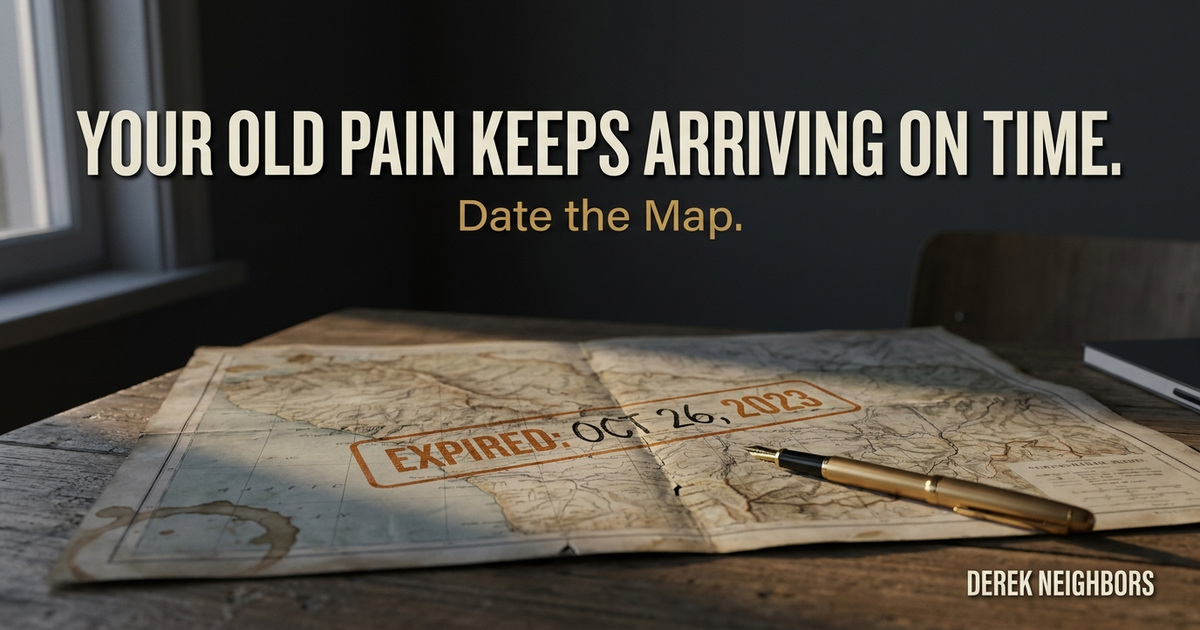
Your Old Pain Keeps Arriving On Time. Date the Map.
Korzybski said the map is not the territory. The harder problem is the undated map: a reaction that was right once and still fires on a present that has changed. Date the impression before you grant it authority.
Write Your Own Review First. Then Decide What Theirs Means.
Owning your career means owning the judgment. Write your own honest review before the meeting, then use theirs as information that updates your ledger.

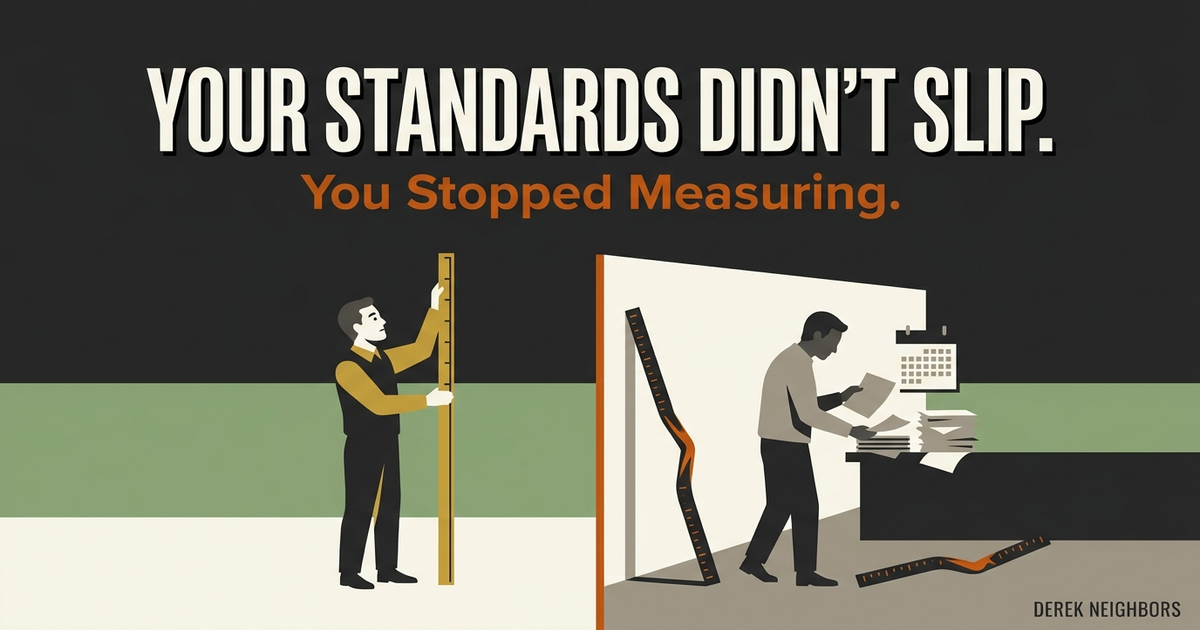
Your Standards Didn't Slip. You Stopped Measuring.
After the win you stopped looking at the bar, kept a fluent story about why, and called the soft week strategy. Rewards end. Standards renew. Measuring is the difference.
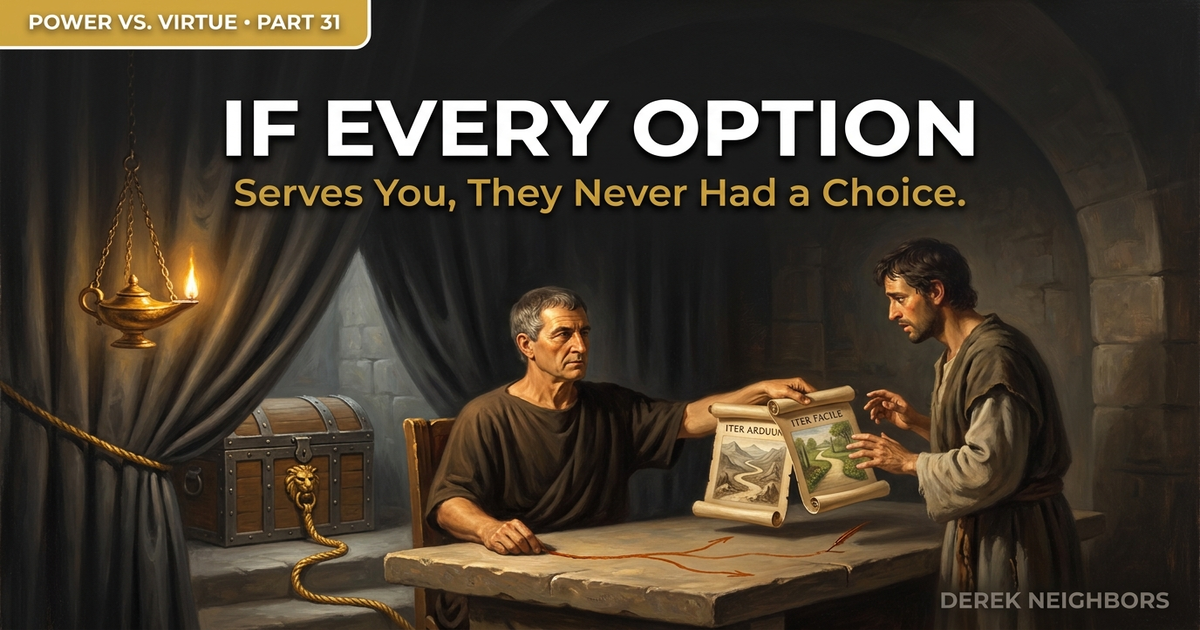
If Every Option Serves You, They Never Had a Choice
Law 31 of the 48 Laws of Power tells you to control the options: get others to play with the cards you deal. The tactical truth is real. Unstructured choice stalls rooms, and people defend outcomes they believe they chose. The character cost arrives when the menu is a rigged deck. Every door already belongs to the dealer. Discovery bankrupts trust. The operator trains contempt for other people's judgment. The ARETE alternative keeps framing as craft and restores real prohairesis: honest constraints, a shared end, and at least one exit that is not already yours.
Hard Times Build Character. Easy Times Expose It.
Training virtue for hard times is the easy half. The real exam starts when constraints fall away and the only person who can stop you is you. Hard times build the muscle. Easy times tell you what the muscle was for.

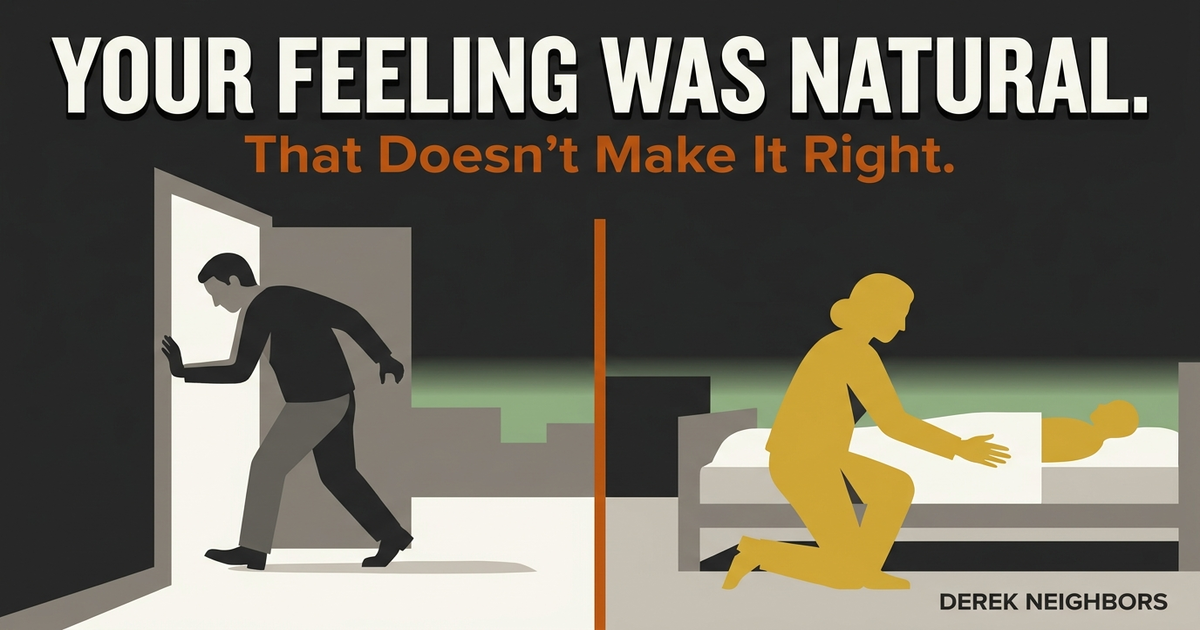
Your Feeling Was Natural. That Doesn't Make It Right.
A father leaves his sick daughter's bedside because watching her suffer is unbearable. He calls the flight natural. Epictetus calls the same impulse a tumor: also natural, also not good. Natural feeling is not a moral certificate. Duty to the people who depend on you outranks the story your nervous system tells when the room gets hard.
You Don't Need More Time. You Need Higher Stakes.
You keep shopping for more hours: earlier alarms, cleaner calendars, better tools. Seneca's diagnosis was sharper. Life is not short. Most of it gets wasted by people who do not feel its weight. A child, a diagnosis, a business with real customers compresses the day and somehow yields more. The compression did not steal the time. It exposed how much was already drifting. You need higher stakes, not another system.

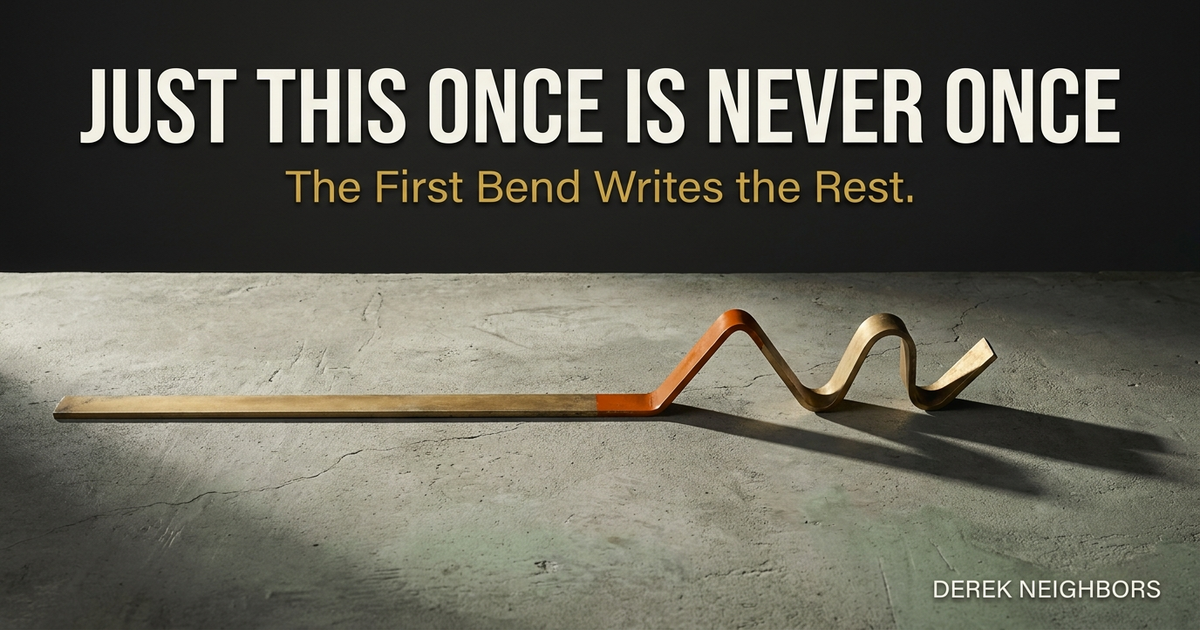
Just This Once Is Never Once
You said yes to the small ask and called it pragmatism. Access, politics, keeping the relationship warm. Temporary yeses do not stay temporary. They become precedent, then habit, then a person who can no longer refuse. Seneca thought proximity to Nero would become influence. It became rehearsal for folding. The only safe answer to 'just this once' is the no spoken before the first bend.
AI Was Supposed to Level the Field. It Widened the Gap.
The promise was equal access and a rising bottom. The mechanism runs the other way. AI does not replace discernment. It multiplies whatever quality of judgment already sits in the chair, which means the people who needed a leveler most are often the ones the tool harms first.

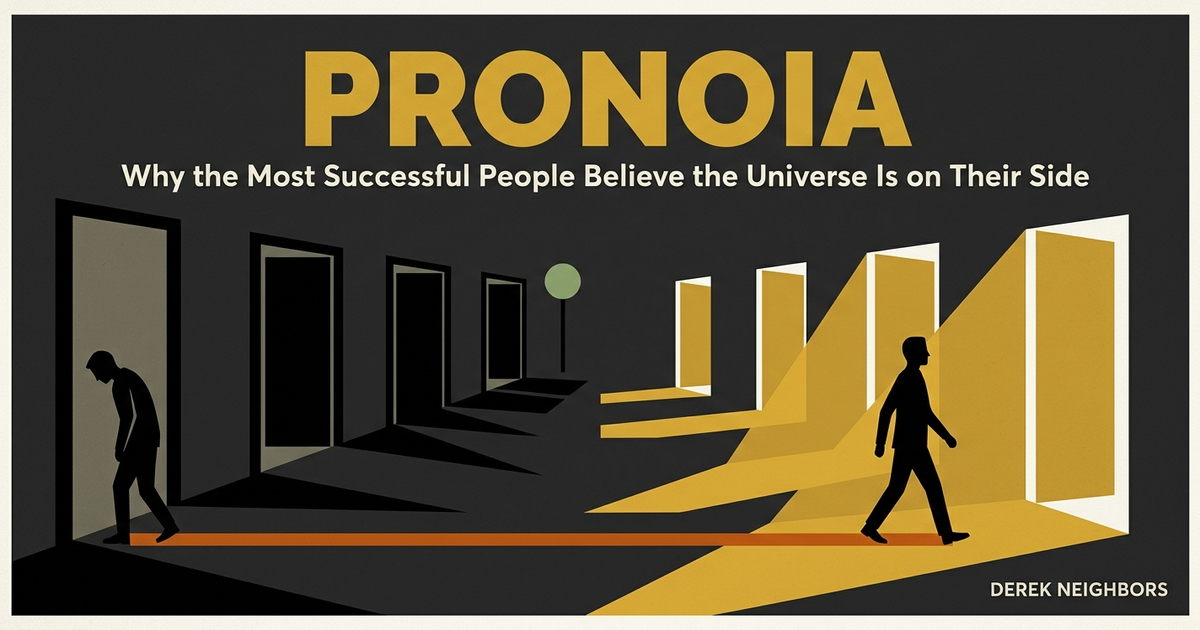
Pronoia: Why the Most Successful People Believe the Universe Is on Their Side
Some people move through the world braced for ambush. Others move through the same world convinced it keeps leaving doors unlocked for them. The second group looks delusional right up until you check the results. The Greeks called the ordered version of this trust pronoia, the Stoics built a cosmology on it, and the mechanism that makes it pay requires no mysticism at all. Your prior about the world is not a mood. It is a strategy, and it is the one you are running right now.
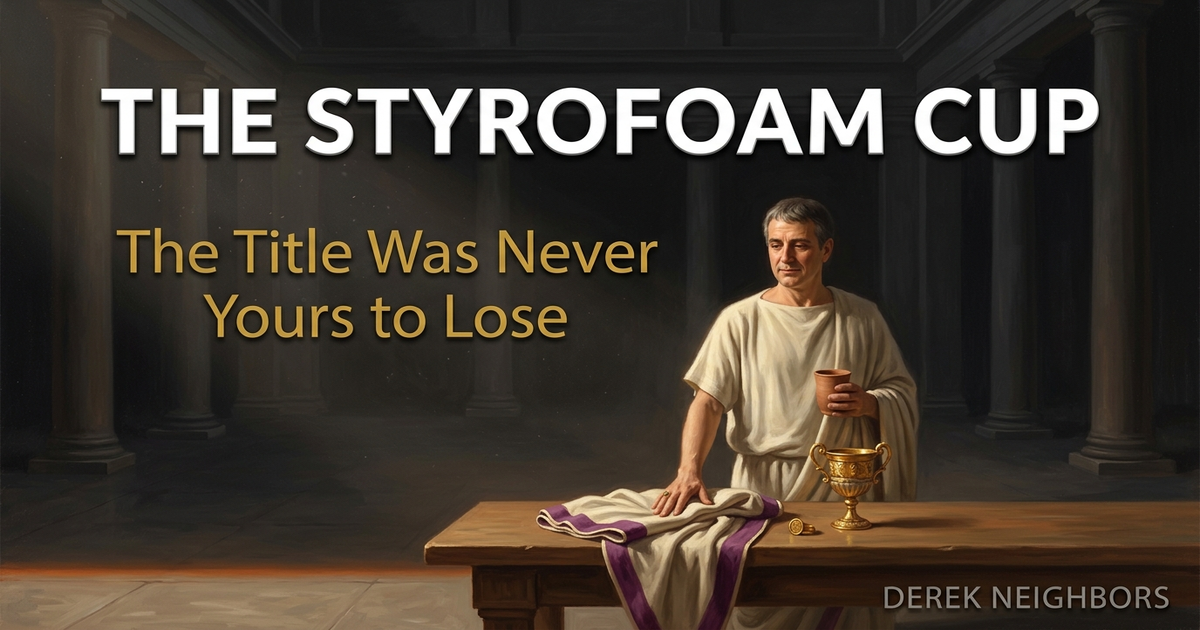
The Styrofoam Cup: The Title Was Never Yours to Lose
The ceramic cup, the car service, the upgraded seat, the jokes that got funnier with every promotion. All of it arrived as you rose, so it reads like a measurement of you. It never was. The deference is addressed to the chair, and the chair is on loan. The Stoics kept a running audit of exactly this, and the Greeks had a job title for the right way to hold borrowed power. Confuse the trappings for yourself and the confusion bills you twice: once while you hold the title, and once, brutally, on the day you hand it back.
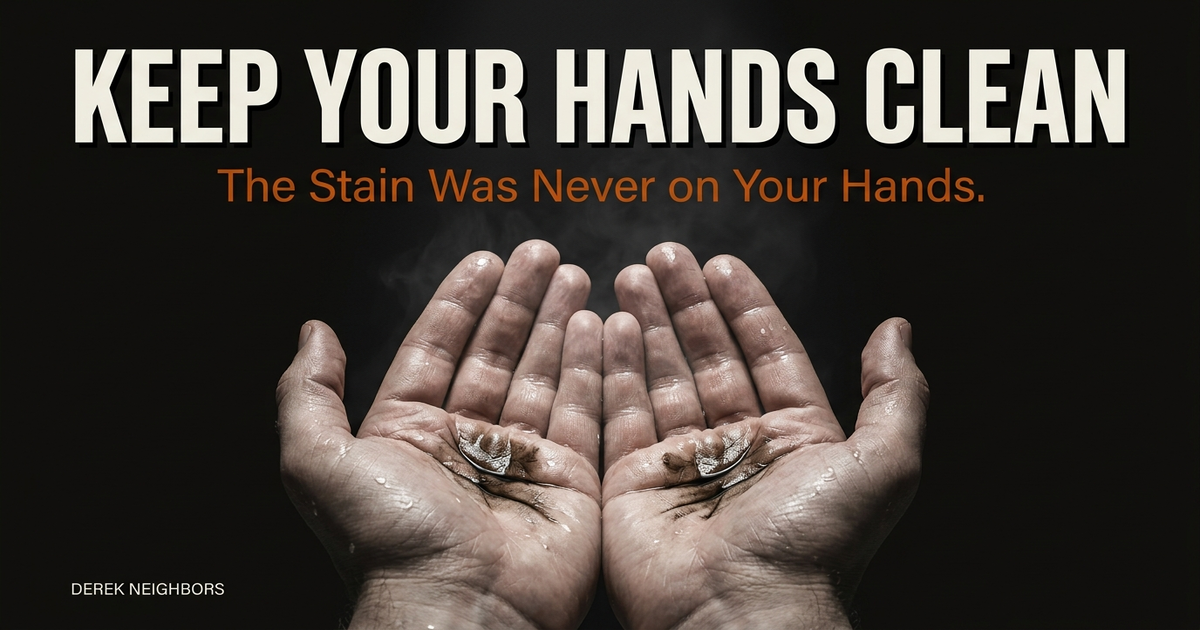
Keep Your Hands Clean. The Stain Was Never on Your Hands.
Law 26 of the 48 Laws of Power tells you to seem a paragon of civility while using scapegoats and cat's-paws to do your dirty work, so your hands stay spotless. The Greeks had a word for what that strategy ignores: miasma, the pollution that attaches to a deed and the one who willed it, no matter whose hands carried it out. You cannot wash it off by passing someone else the knife. There is a real way to keep your hands clean. It is the most literal one. Do not do the thing that stains.
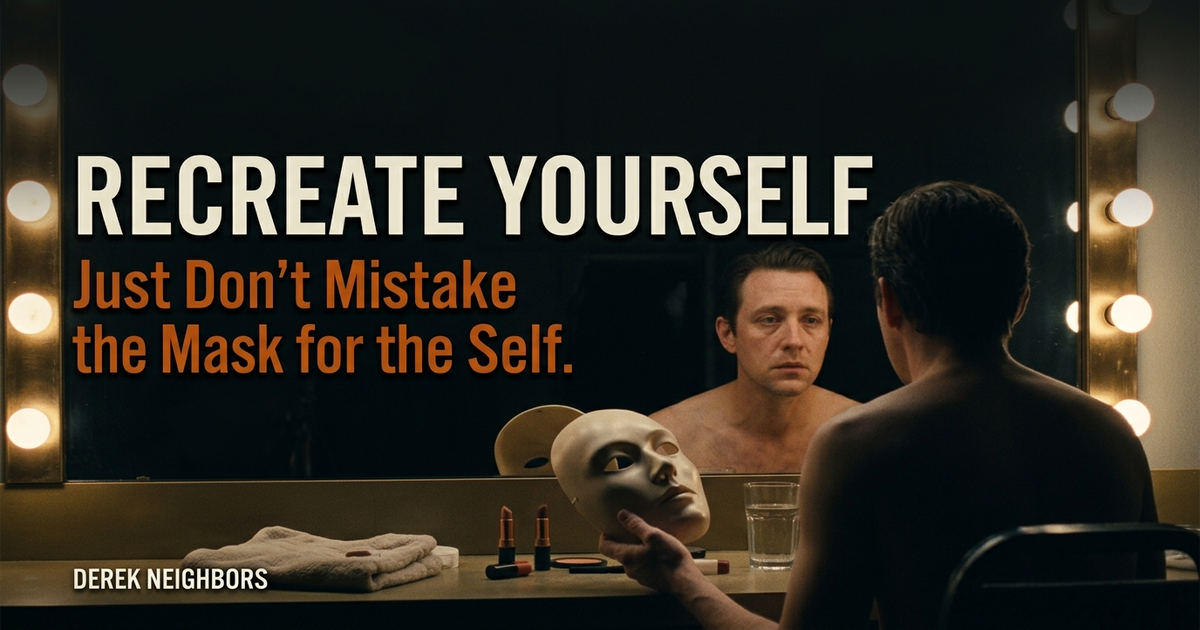
Recreate Yourself. Just Don't Mistake the Mask for the Self.
Law 25 of the 48 Laws of Power tells you to recreate yourself by seizing control of your image, becoming a memorable, protean figure who never bores the audience. The Greeks had a word for the thing you put on to face a crowd: prosopon, the mask an actor wore on stage. Greene's reinvention is mask-work, and a mask worn long enough fuses to the face. There is a real kind of self-recreation, but it runs the other direction. You forge the substance and let the appearance follow.
Your Response to Unfairness Reveals More About You Than the Unfairness Does
Three leaders take the same public hit. One escalates, one absorbs and redirects, one performs martyrdom for an audience. The unfairness was identical. The response was not. Between the stimulus and your reply lies the only territory where character actually lives, and most people never inspect what runs there.

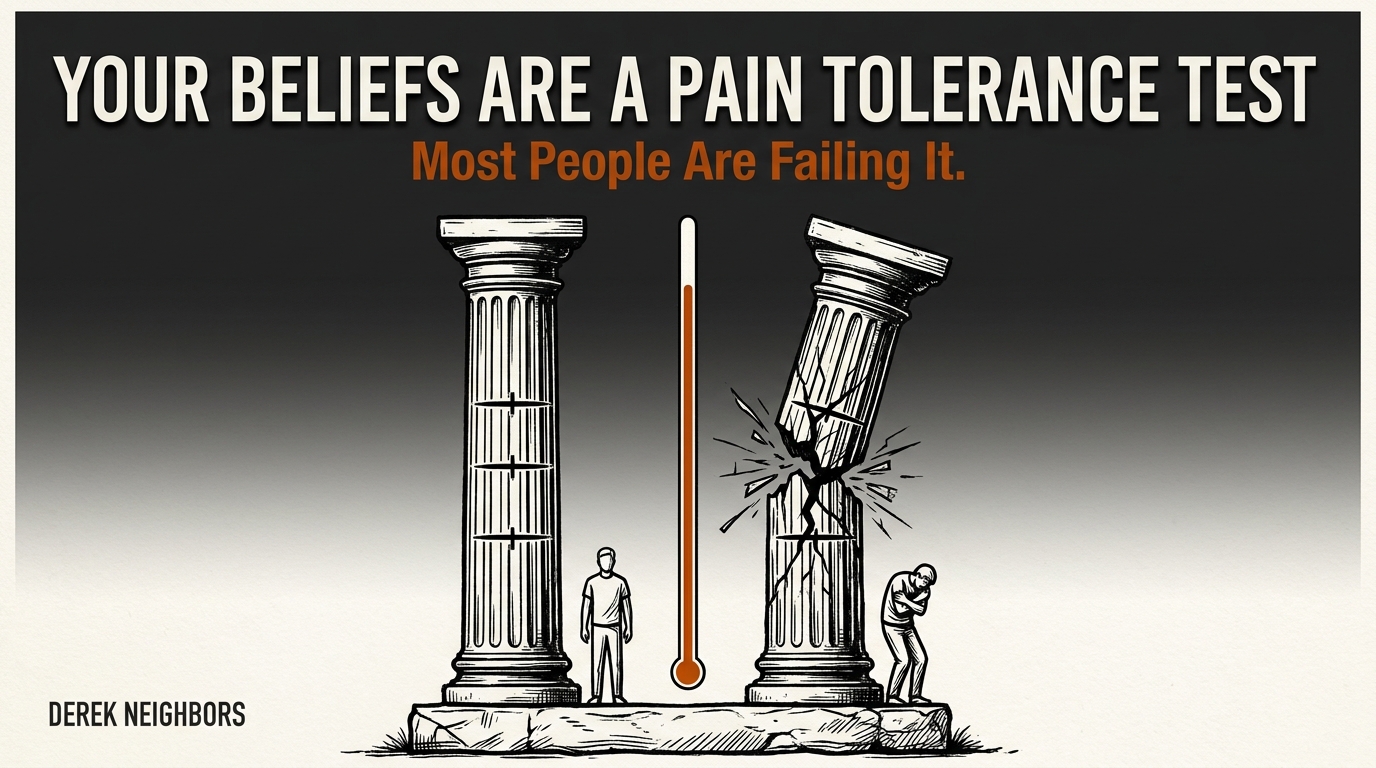
Your Beliefs Are a Pain Tolerance Test. Most People Are Failing It.
Two people take the same hit. Same diagnosis, same year, same loss of income. One keeps showing up. One disappears into the couch for six months. The difference is rarely willpower. It is the belief system running underneath, and belief systems can be scored. The Stoics built a scorecard without calling it that: internal control, suffering as training material, virtue as something worth the cost. Most modern frameworks fail on all three axes and then wonder why life feels unbearable.
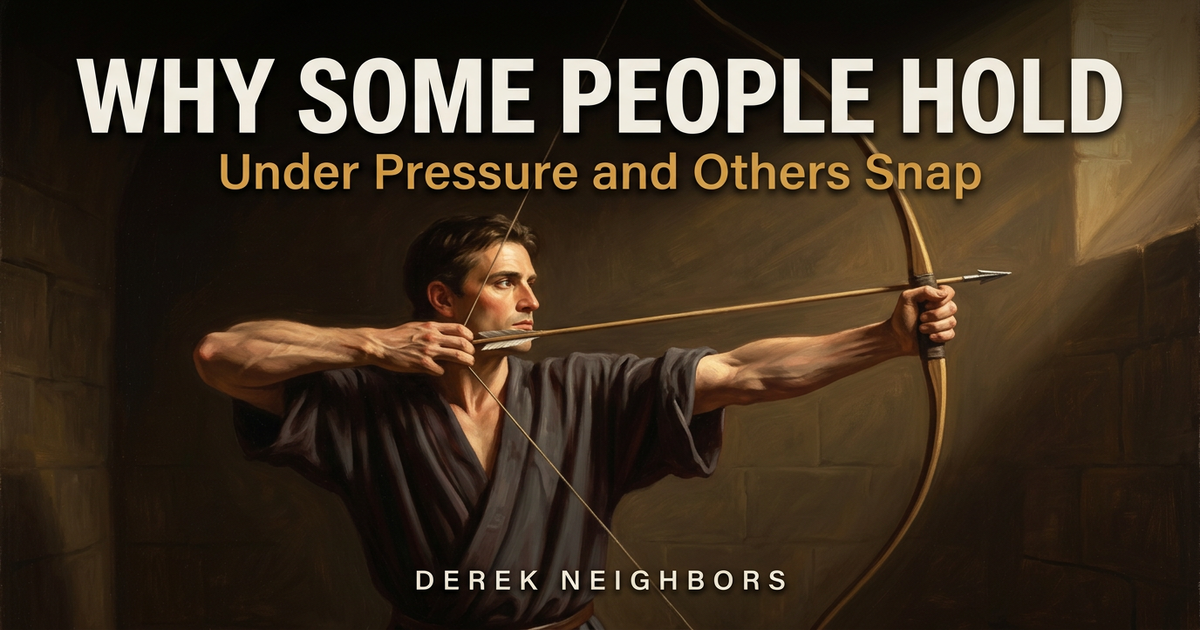
Why Some People Hold Under Pressure and Others Snap
Two people take the same hit. One holds. One snaps. The usual story says the first one had more willpower, as if character were fuel in a tank you spend down until you run dry. That model cannot explain why the same person holds one month and folds the next, or why the toughest-looking people break first. The Stoics ran a better model. They thought character was held together by tension, the way a structure is, and they had a precise word for that tension: tonos. Strong distributed tension holds under load. Slackness collapses. Rigidity snaps. You do not rise to pressure. You fall to the tension you keep when nothing is testing you.
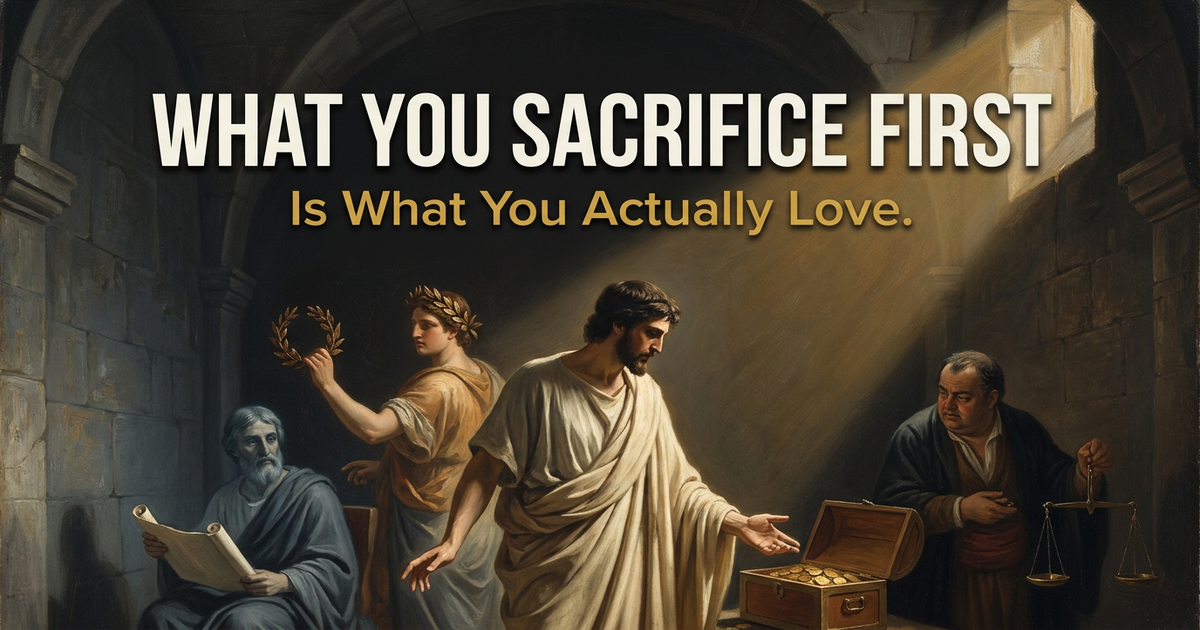
What You Sacrifice First Is What You Actually Love
Most people believe they hold their values in balance: family, work, health, growth, all weighted more or less equally. Plato argued that nobody actually lives this way. Every soul is ordered by a single ruling love, and everything else gets ranked beneath it. The proof is not in what you claim to value. The proof is in what you sacrifice first when two of your loves collide, because the thing you protect last is the thing you actually love.
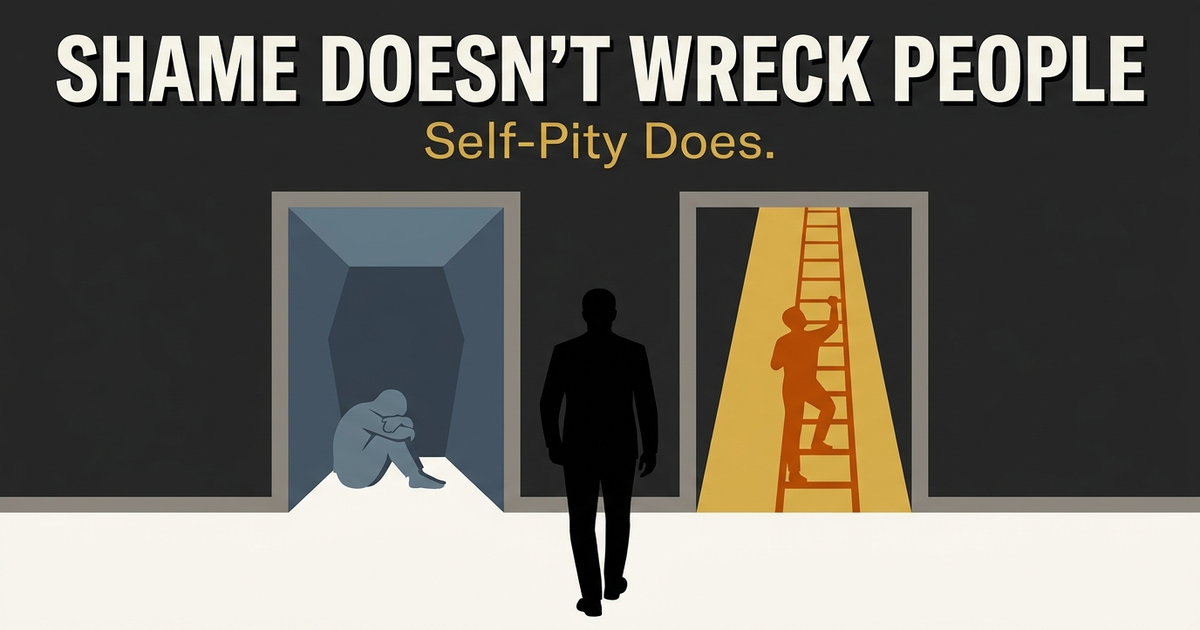
Shame Doesn't Wreck People. Self-Pity Does.
Shame is the recognition of the gap between who you are and who you wanted to be. The Greeks called it aidos and treated it as a moral faculty, not a wound to be silenced. The same shame, in two people facing the identical failure, produces two opposite trajectories. Self-pity sits in the gap and decorates it. Self-respect uses the gap as instruction. Most people pick the response that feels gentlest in the moment because the gentle one is the closer door. Decades later it turns out to be the most expensive door in their lives.
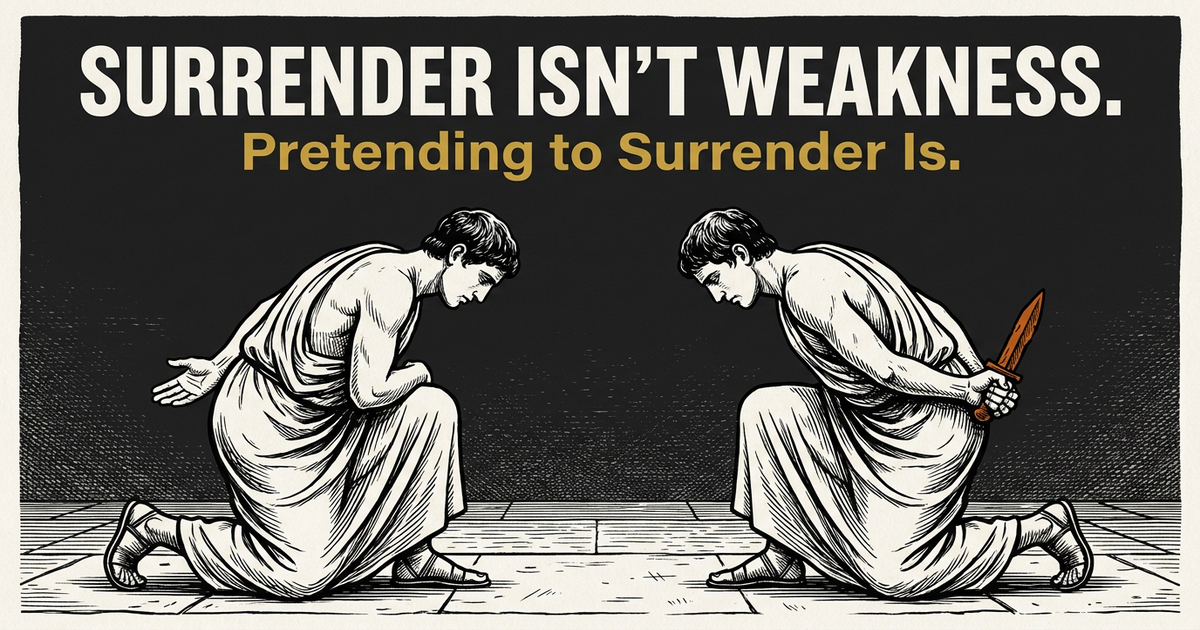
Surrender Isn't Weakness. Pretending to Surrender Is.
Greene's Law 22 tells you to surrender as a counter-trap. The tactic is real, and the Stoics knew the moves it copies. But Marcus Aurelius yielded to preserve his prohairesis. Greene's reader yields to spring an ambush. The heads can look identical; the ends diverge. The test that separates them is whether you could name, out loud, what you yielded for.
You're Asking Fear the Wrong Question.
There is a decision you have been circling for months. Two voices are arguing about it in your head. Voice one is fear, and fear's question sounds adult and responsible: will this be worth what it costs? Voice two is regret, and regret only asks one question, the one fear refuses to ask. The Stoic tradition built an entire decision discipline around the fact that human beings systematically ask the wrong question at the moment a choice is live. Epictetus had a name for the place where this gets decided. The Greeks called it the only domain that actually matters.
Don't Tell Your Team What They Did. Tell Them Who They're Becoming.
Almost every working leader can quote a single sentence said to them in early career that organized their identity for the next twenty years. Almost no leader can name a sentence they have offered, on the same terms, to someone they lead. The gap between the leader who shapes a person and the leader who manages output is, on close inspection, the gap between the review and the named becoming.
Knowing Better Doesn't Make You Better. Most Self-Help Stops at Step One.
The reader who has read seventy books on character is roughly the person they were five years ago. The gap is not a willpower failure. The gap is a method failure. Epictetus described the three-stage path that produces formed character, and the modern self-improvement industry has built a market by pretending the last two stages are optional.
The Future You're Killing Yourself For Doesn't Include You
The next milestone always arrives on schedule, but the person it was supposed to arrive for has already moved on to the next pursuit. The engine producing your wins is the engine evicting you from the life they were meant to build. The paradox is structural, not personal, and most ambitious people have been paying for it for decades without noticing the bill.
If Your Team Never Disagrees With You, You're Not Leading. You're Indoctrinating.
A team that always agrees with you is not aligned. It has been worn down. Most leaders are quietly running a sophistic operation, training reciters when they think they are developing thinkers. The Socratic test still applies, and most modern leaders fail it.
The Fall Was the First Wound. Bitterness Is the One You Choose.
Falls are not optional. Bitterness is. The first injury is something done to you. The second is the one you carry forward for years, every day, by choice. Ancient wisdom on the wound that is genuinely yours to refuse.
Stop Buying Productivity Apps. Your Disorganization Is a Character Problem.
Most adults have a folder of dead productivity apps and a quiet sense that they are uniquely undisciplined. They are not. They have run a ten-thousand-iteration experiment in which they said they would do something and then did not. The fix is not a better system. It is the ancient discipline of pistis, faithfulness to your own word, rebuilt one small kept promise at a time.
You Knew It Was Over Years Ago. You Just Couldn't Say It Out Loud.
The truth shows up in a thirty-second moment with no audience. Most people register it, file it, and spend the next five years pretending they didn't. The years of pretending are the actual cost.
The Scar You Think Everyone Sees Isn't There. You're the Only One Looking.
You assume your perception of how others treat you is data. A famous psychology experiment, and a much older Stoic discipline, both say it isn't. Most of what you think the room is responding to is being generated by the filter you brought into the room.
You Don't Have a Stress Problem. You Have a Control Problem.
Most people try to engineer their lives down to zero pressure. The Stoics tried something harder. They trained the response so the pressure stopped being decisive.
If You Can't Be Alone, You'll Never Be Free
Most people skip the foundation and wonder why their freedom feels so hollow. Schopenhauer named the prerequisite. The Greeks named the practice. You have been arranging your life to avoid both.
Every Productivity System You've Tried Failed for the Same Reason
You've tried Todoist, Notion, bullet journals, and time-blocking. They all collapsed the same way. The system was never the problem. The problem is you stopped believing your own word.
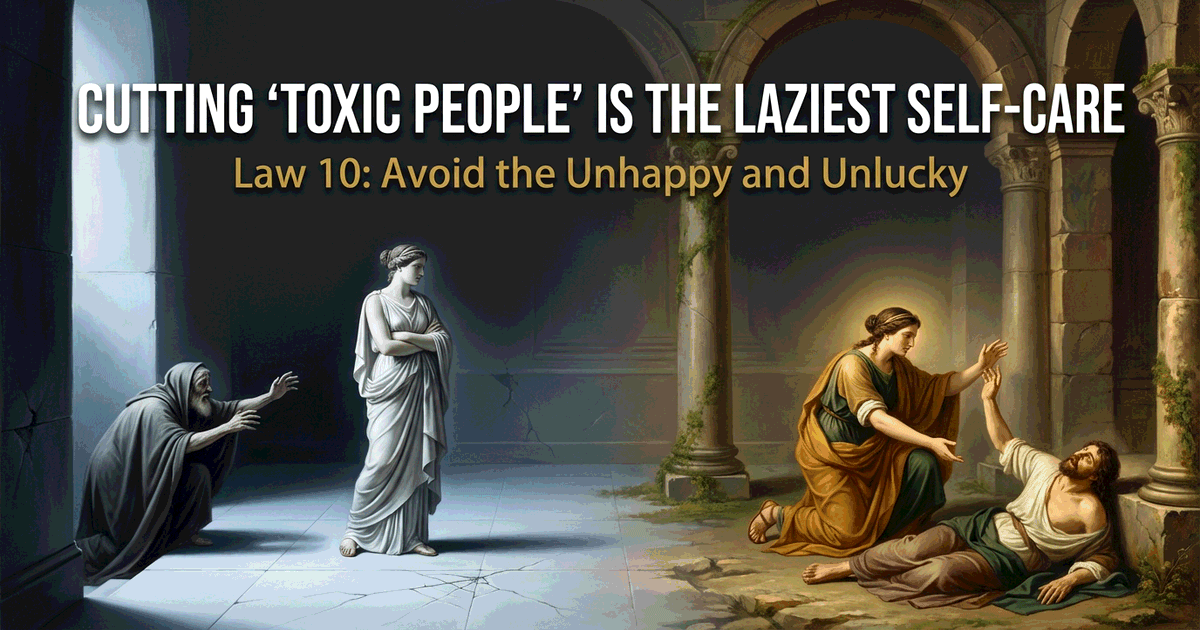
Cutting 'Toxic People' Out of Your Life Is the Laziest Form of Self-Care
Greene says avoid the unhappy and unlucky. The ancients say build yourself strong enough to sit with someone else's pain without losing your center. One protects your comfort. The other builds your character.
If You Have to Assert Your Authority, You've Already Lost It
The meeting goes quiet when a leader pulls rank. They think they won. The room knows better. The ancient Stoics understood that the highest expression of power isn't exercising it. It's choosing not to. The Greek concept of prohairesis reveals why the leaders with the most authority are the ones who almost never use it.
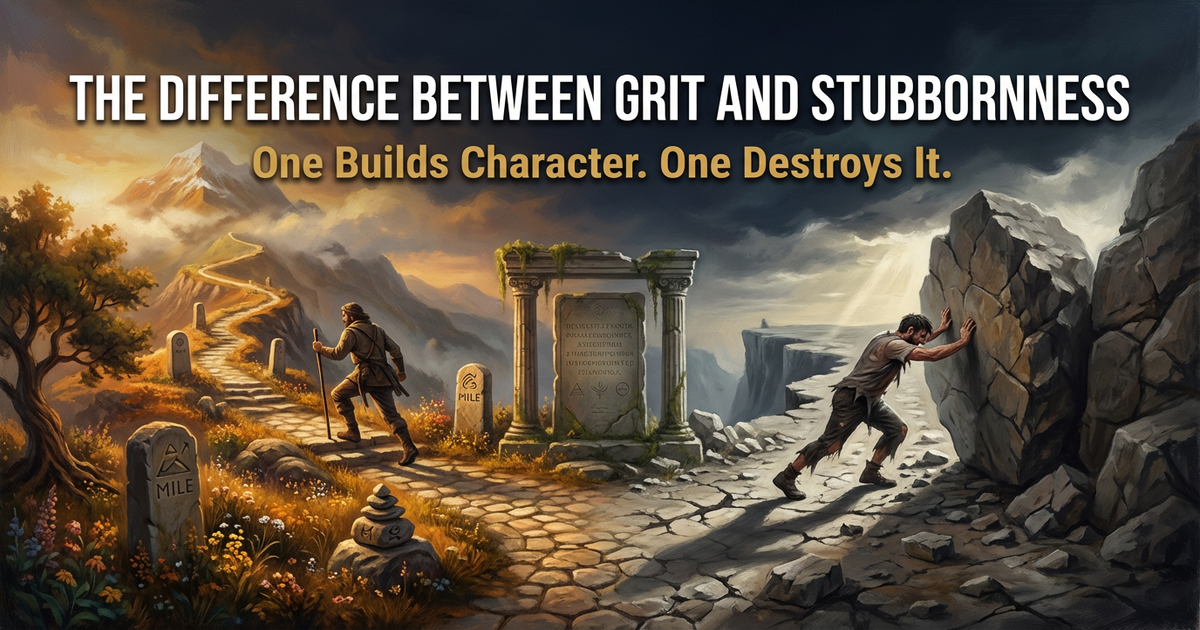
The Difference Between Grit and Stubbornness (One Builds Character, One Destroys It)
Angela Duckworth made grit famous. She didn't explain when it becomes stubbornness. The Stoics knew: prohairesis (moral choice) distinguishes persistence that builds character from ego that refuses to accept reality.
Your Integrity Isn't Holding You Back. Your Fear Is Hiding Behind It.
There's a story people tell themselves about why they haven't succeeded. It sounds like integrity. It's actually fear dressed in virtue's clothing.

Most People Need a Crisis to Try Their Hardest. That's a Character Flaw.
Crisis unlocks extraordinary performance. But needing crisis to access your best means your best isn't really yours. It belongs to whatever circumstances happen to arrive.
Why Your Parents Were Right: Nobody Ever Said Life Was Fair
Want in one hand and shit in the other. See which gets fuller faster. Working-class America didn't read the Stoics. They lived them.

Build Habits for Your Worst Day, Not Your Best
You've been designing habits for the version of you that exists after good sleep, full of motivation, in ideal conditions. That version shows up maybe 20% of the time. Here's how to build for the other 80%.

Your Backup Plan Is Why Your Main Plan Keeps Failing
You tell yourself the backup plan is smart, responsible, prudent. The Stoics knew better. Prohairesis, moral choice, is singular by nature. Every escape route you build is a promise to yourself that when things get hard enough, you'll quit.

Hard Work Stops Some People. Uncertainty Stops Everyone Else.
Andy Weir posted chapters of The Martian to his blog for 10 years. 3,000 readers. No validation. No proof it mattered. Then the breakthrough. The separator isn't talent or work ethic, it's tolerance for uncertainty.

Why Do Smart People Overcomplicate Everything?
The Greeks understood something we've forgotten, true wisdom reveals itself through simplicity, not complexity. Intelligence is finding the simple truth, not creating elaborate frameworks.

Stop Counting Other People's Money: It's Making You Poor
Every moment you spend obsessing over others' achievements is a moment not creating your own. Envy doesn't just feel bad, it actively steals the fuel you need for your own work.
Akrasia: Why You Sabotage What You Know Is Right
You know exactly what you should do. You've known for months. So why aren't you doing it? The ancient Greeks had a word for this: akrasia, acting against your better judgment. And they understood it's the ultimate killer of excellence.
The Discipline Gateway: Why Real Freedom Costs More, Not Less
The brutal truth about freedom: it's not the absence of constraints, it's the wisdom to choose the right ones.
The False Path Trap: Why Clear Roads to Lesser Goals Kill Excellence
I chose government safety over startup fire, and it didn't just stall my career, it eroded my soul. The trap of 'practical' choices that kill excellence.
Andreia: The Courage to Lead Through Uncertainty
The Greeks understood that courage isn't the absence of fear, it's the commitment to excellence despite uncertainty. This ancient virtue transforms how you lead through risk, change, and the unknown.
The Duty Doctrine: When Circumstances Change But Mission Remains
Your circumstances will change. Your duty will not. Discover how ancient Stoic wisdom provides unwavering guidance for modern leaders when everything else shifts.
The Skinner's Law Productivity Revolution: Hacking Motivation Through Pain and Pleasure
Discover how B.F. Skinner's revolutionary insights into pain and pleasure can engineer unstoppable motivation. Learn the five-method framework that turns behavioral psychology into practical productivity mastery.