Telos vs Eudaimonia: Key Differences in Greek Philosophy
People often use purpose and flourishing interchangeably, as though having a purpose and living well are the same thing. They are not. Telos is a structural concept. It applies to everything: a knife has a telos (cutting), an eye has a telos (seeing), an acorn has a telos (becoming an oak). Telos names the end, the purpose, the completion toward which something naturally develops. It is a formal category that explains why things exist and what they are for. Eudaimonia is a substantive concept. It is the specific answer to the question: what is the human telos? Aristotle’s response was that the human telos is eudaimonia, which he defined as activity of the soul in accordance with virtue across a complete life. Eudaimonia is not any purpose. It is the particular condition of living well, of exercising your distinctly human capacities with excellence. The distinction matters because confusing the structural question (does this thing have a purpose?) with the substantive answer (the purpose of human life is flourishing) produces two characteristic errors. The first error is assuming that any purpose will do. If telos and eudaimonia were the same thing, then simply having a direction in life would be sufficient for flourishing. But you can pursue goals with great efficiency and still fail to flourish. A person devoted to accumulating wealth has a telos, but that telos does not constitute eudaimonia if it requires sacrificing health, relationships, and character. Having a purpose is necessary but not sufficient. The purpose must be the right one. The second error runs in the opposite direction: assuming that flourishing requires no particular aim. If eudaimonia could be achieved without a telos, then a pleasant, comfortable life with no overarching direction would qualify. But Aristotle is explicit that eudaimonia involves activity, not passivity. It requires the ongoing exercise of your best capacities in pursuit of genuine goods. Flourishing is not a state you drift into. It is a condition you actively maintain through purposeful engagement with the world. Telos gives you the framework for asking what anything is for. Eudaimonia tells you what you, as a human being, are ultimately for. The framework without the answer is empty formalism. The answer without the framework is vague aspiration. Together, they provide both the structure and the content of a well-directed life. When you evaluate your own trajectory, both questions deserve attention. Do you have a telos, a direction that gives your efforts coherence and your choices a standard for evaluation? And does that telos point toward eudaimonia, toward the kind of life that fulfills your capacity for excellence and contributes to the flourishing of those around you? For full guides, see telos and eleutheria, inner freedom as the foundation for choosing a purpose you can actually pursue.
Definitions
Telos
(τέλος)
TEH-los
The ultimate end, purpose, or goal toward which something naturally develops and at which it reaches completion. For Aristotle, every action and pursuit aims at some telos, with eudaimonia being the highest telos of human life—that for the sake of which all else is done.
Eudaimonia
(εὐδαιμονία)
yoo-dye-moh-NEE-ah
Human flourishing. The deep satisfaction of functioning as you were meant to function, living in alignment with your nature and purpose.
Key Differences
| Aspect | Telos | Eudaimonia |
|---|---|---|
| Generality | Telos applies to all things. Every natural entity, every artifact, every human activity has a telos: the purpose or end for which it exists or toward which it develops. | Eudaimonia applies specifically to human life. It is the condition of living well and exercising distinctly human capacities with excellence across a complete life. |
| Nature | Telos is a structural, formal concept. It names the category of final causation without specifying the content for any particular thing. | Eudaimonia is a substantive condition. It specifies what the good human life actually looks like: virtuous activity, practical wisdom, and meaningful engagement. |
| Multiplicity | Many different things have different teloi. The telos of a knife differs from the telos of an eye, which differs from the telos of the polis. Telos is plural and context-dependent. | Eudaimonia names one specific state: human flourishing. While it may be expressed differently in different lives, it represents a single standard of what it means to live well as a human being. |
| Philosophical Function | Telos explains why things exist and how they should be evaluated. Understanding a thing's telos tells you what counts as its successful functioning. | Eudaimonia defines the human good. It answers the most fundamental ethical question: what kind of life is worth living? |
| Relationship to Action | Telos identifies direction. It tells you what something is aimed at, providing the criterion for evaluating whether it is functioning well or poorly. | Eudaimonia describes the destination. It tells you what the fulfilled human life looks like, providing the standard against which all particular purposes are measured. |
Generality
Telos applies to all things. Every natural entity, every artifact, every human activity has a telos: the purpose or end for which it exists or toward which it develops.
Eudaimonia applies specifically to human life. It is the condition of living well and exercising distinctly human capacities with excellence across a complete life.
Nature
Telos is a structural, formal concept. It names the category of final causation without specifying the content for any particular thing.
Eudaimonia is a substantive condition. It specifies what the good human life actually looks like: virtuous activity, practical wisdom, and meaningful engagement.
Multiplicity
Many different things have different teloi. The telos of a knife differs from the telos of an eye, which differs from the telos of the polis. Telos is plural and context-dependent.
Eudaimonia names one specific state: human flourishing. While it may be expressed differently in different lives, it represents a single standard of what it means to live well as a human being.
Philosophical Function
Telos explains why things exist and how they should be evaluated. Understanding a thing's telos tells you what counts as its successful functioning.
Eudaimonia defines the human good. It answers the most fundamental ethical question: what kind of life is worth living?
Relationship to Action
Telos identifies direction. It tells you what something is aimed at, providing the criterion for evaluating whether it is functioning well or poorly.
Eudaimonia describes the destination. It tells you what the fulfilled human life looks like, providing the standard against which all particular purposes are measured.
When to Apply Each Concept
When to Choose Telos
Apply telos thinking when you need to evaluate whether something is functioning well. Ask what it is for. A team, a tool, an institution, or a practice can only be assessed as good or bad relative to its purpose. Telos thinking clarifies what success looks like before you try to achieve it.
When to Choose Eudaimonia
Apply eudaimonia thinking when the question is specifically about human well-being. Not every purpose serves flourishing. Before committing to a direction, ask whether pursuing this telos will contribute to or detract from the kind of life that constitutes genuine human excellence.
Frequently Asked Questions
What is the difference between telos and eudaimonia?
Telos is the Greek concept of purpose or final cause, applicable to all things. It asks what something is for and what its completion looks like. Eudaimonia is specifically human flourishing, the condition of living well through virtuous activity across a complete life. Eudaimonia is the answer to the question: what is the human telos? Telos is the structural concept. Eudaimonia is the substantive content.
Is eudaimonia the human telos?
Yes. Aristotle argued explicitly in the Nicomachean Ethics that eudaimonia is the human telos, the ultimate end toward which all human activity is directed. Every other good, such as wealth, health, friendship, or honor, is pursued either for the sake of eudaimonia or as a component of it. Eudaimonia alone is pursued for its own sake and is sufficient in itself.
Telos vs eudaimonia in Aristotle?
In Aristotle's system, telos is a general metaphysical concept: everything that exists has a telos, a purpose that explains its existence and function. Eudaimonia is the specific application of teleological thinking to human life. It is what you get when you ask the question 'What is the human telos?' and answer it through careful analysis of what makes human beings distinctive and what constitutes their highest activity.
Can you have a telos without eudaimonia?
Yes. You can pursue a purpose with great dedication and still fail to flourish. A person whose telos is the accumulation of power or wealth has a clear direction, but that direction does not constitute eudaimonia unless it is integrated with virtue, wisdom, and the development of distinctly human excellence. Having a telos is necessary for eudaimonia, but the telos must be the right one.
Articles Exploring Telos or Eudaimonia (93)
You Can List a Good Life. Can You Say What Makes It Good?
Ask what a good life is and you get a list: health, money, family, respect, a decent house. Hippias gave Socrates almost the same list 2,400 years ago and could not say what made any of it good. A list with no reason behind it has no way to stop growing. Here is what happened when mine grew, and how to turn a list into an account you can use on the next thing that catches your eye.

The Load Already Had a Job
I came off a long run and opened the watch before I sat down. The hills did not register. The number did. The old load already had a job. The watch applied for it.
Calm Is Not the Goal
Most people bought Stoicism as a way to feel less and keep the room smooth. The old practice trained you to say the thing that costs you the room. If your week got calmer and your answers got softer, check what you stopped saying.
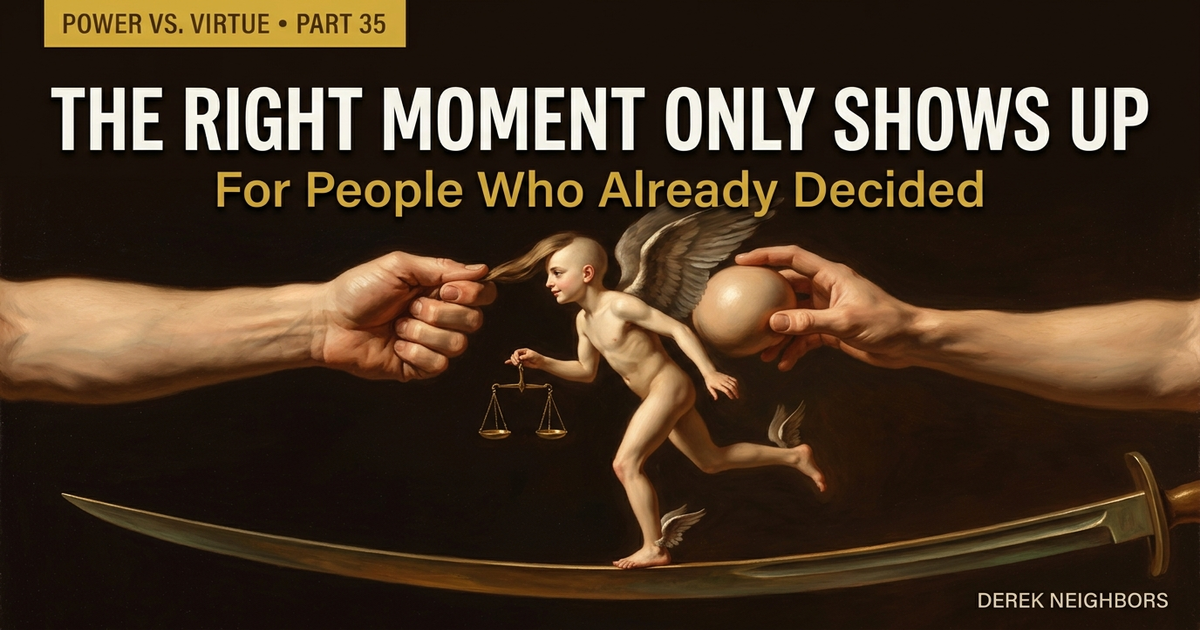
The Right Moment Only Shows Up for People Who Already Decided
Law 35 of the 48 Laws of Power tells you to master the art of timing, and this series agrees with it. The same move lands or dies on when you make it, hurry reads as fear, and rooms punish people who cannot wait. Then the law tells you to seem patient and to sniff out the spirit of the times, and its hero is a man who survived every regime by standing for nothing. Kairos is the right moment for something. Decide the something first, or the moment never comes.
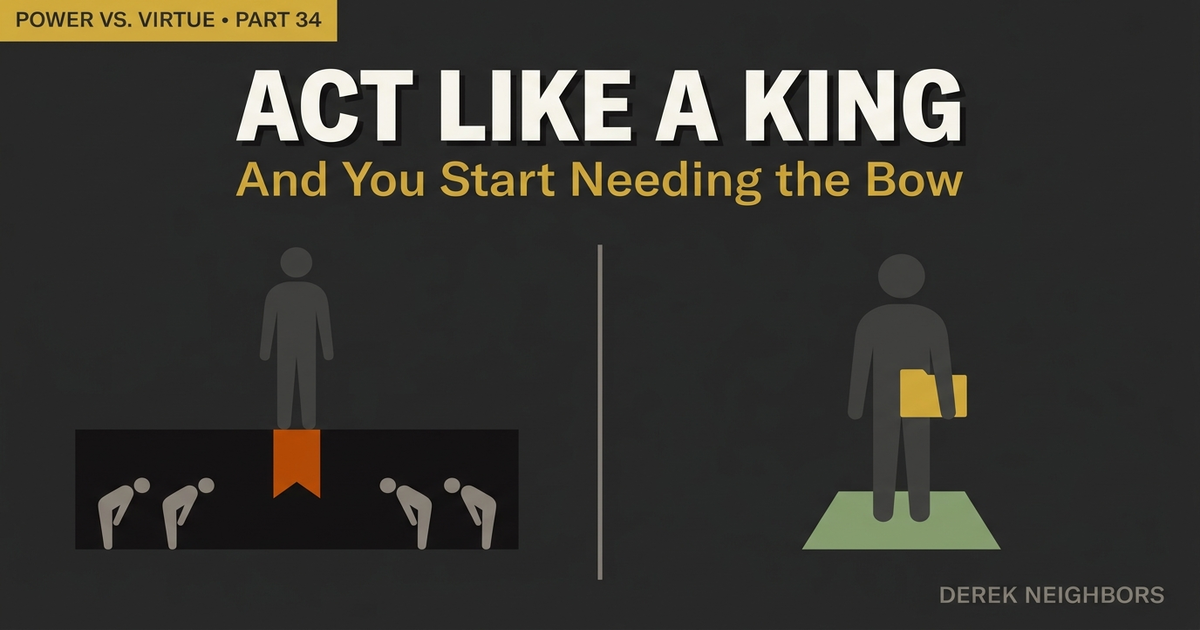
Act Like a King and You Start Needing the Bow
Law 34 of the 48 Laws of Power tells you to act like a king so the room treats you like one. The tactical truth is real. Rooms copy how you price yourself, and cheap familiarity can collapse the work. The character cost arrives when bearing becomes a standing request for deference. You start needing the bow. The ARETE alternative still holds a standard for how you are treated, then roots that standard in inner sufficiency instead of a court.
Your Five-Year Plan Is Built From Last Year
I sat through an offsite that wrote 2029 as last year with nicer fonts. The futures worth living stay invisible until you stack skills, relationships, and harder rooms.

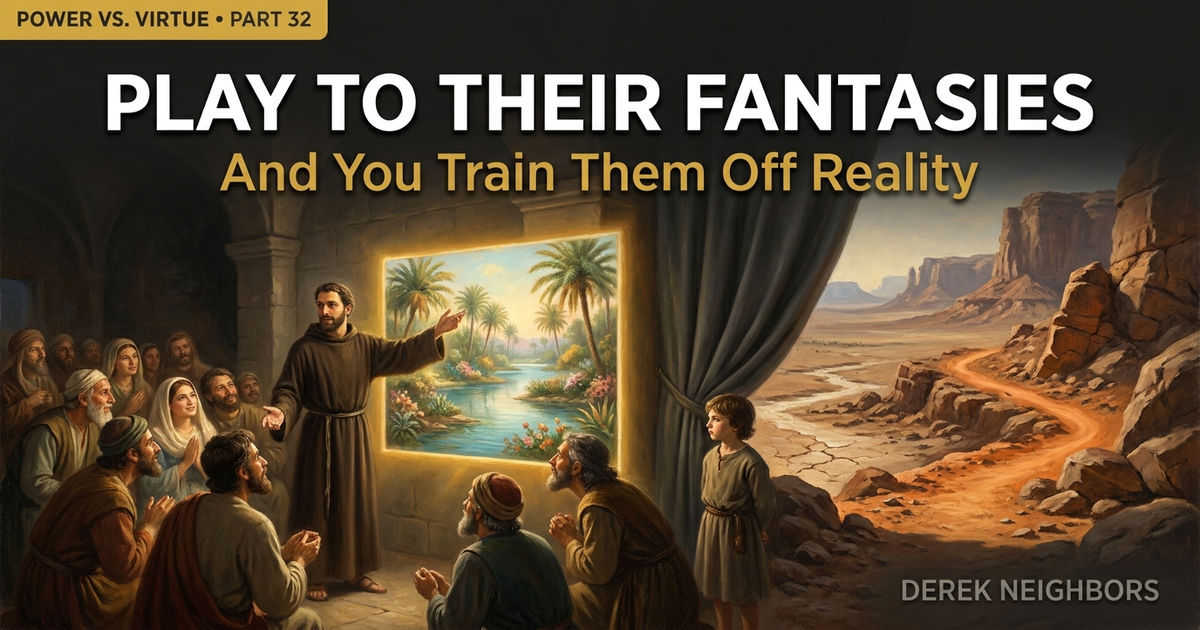
Play to Their Fantasies and You Train Them Off Reality
Law 32 of the 48 Laws of Power tells you to play to people's fantasies: become the oasis of romance in a harsh world, avoid ugly truth, and gain power from the hunger for soft stories. The tactical truth is real. Pleasant pictures gather crowds, and disenchantment makes people angry. The character cost arrives when fantasy becomes your operating system. You train judgment off reality. When the mirage breaks, you earn the rage. The ARETE alternative keeps hope aimed at a hard path people can walk, and restores frank speech that can still lead.
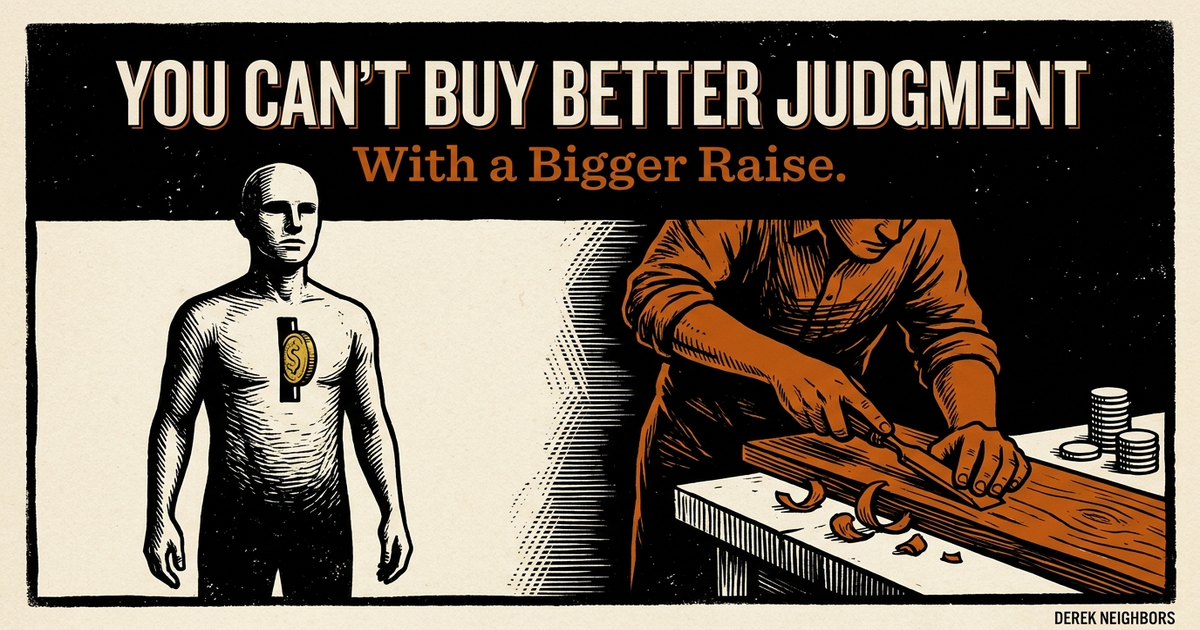
You Can't Buy Better Judgment With a Bigger Raise.
When every task gets read through the paycheck, excellence has already left. Fair pay removes the money crisis. Using raises as a lever for complex work buys worse judgment.
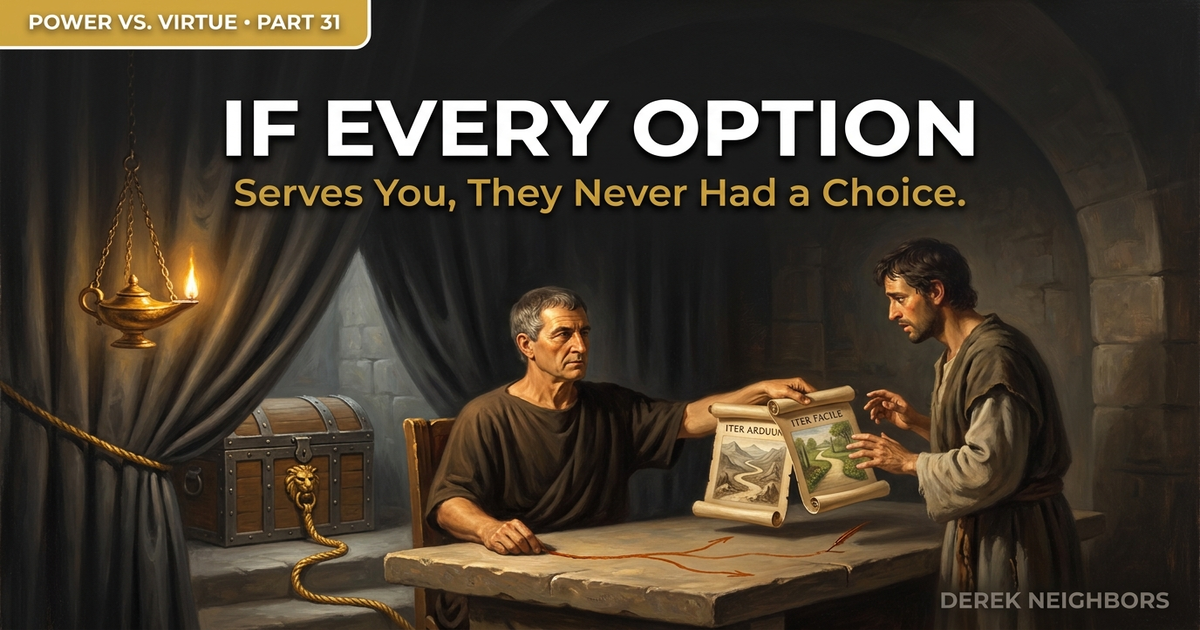
If Every Option Serves You, They Never Had a Choice
Law 31 of the 48 Laws of Power tells you to control the options: get others to play with the cards you deal. The tactical truth is real. Unstructured choice stalls rooms, and people defend outcomes they believe they chose. The character cost arrives when the menu is a rigged deck. Every door already belongs to the dealer. Discovery bankrupts trust. The operator trains contempt for other people's judgment. The ARETE alternative keeps framing as craft and restores real prohairesis: honest constraints, a shared end, and at least one exit that is not already yours.
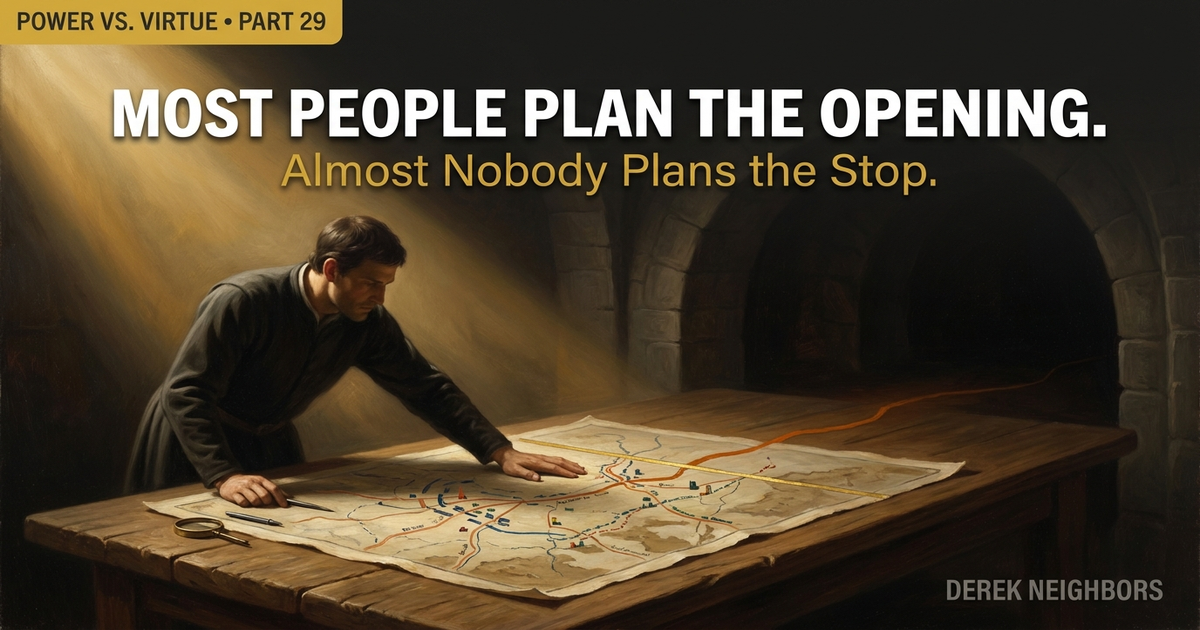
Most People Plan the Opening. Almost Nobody Plans the Stop.
Law 29 of the 48 Laws of Power tells you to plan all the way to the end, and this series agrees with it. Vague plans collapse into improvisation, improvisation is crisis-to-crisis living, and the people who cannot name a stop get owned by whoever can. Greene's evidence is Balboa, who discovered the Pacific and still lost his head, versus Bismarck, who unified Germany and then refused the siren of more. The ancient correction is simple: the ending has to be a worthy end, not just a clever exit, and naming it is what makes bold action safe to start.
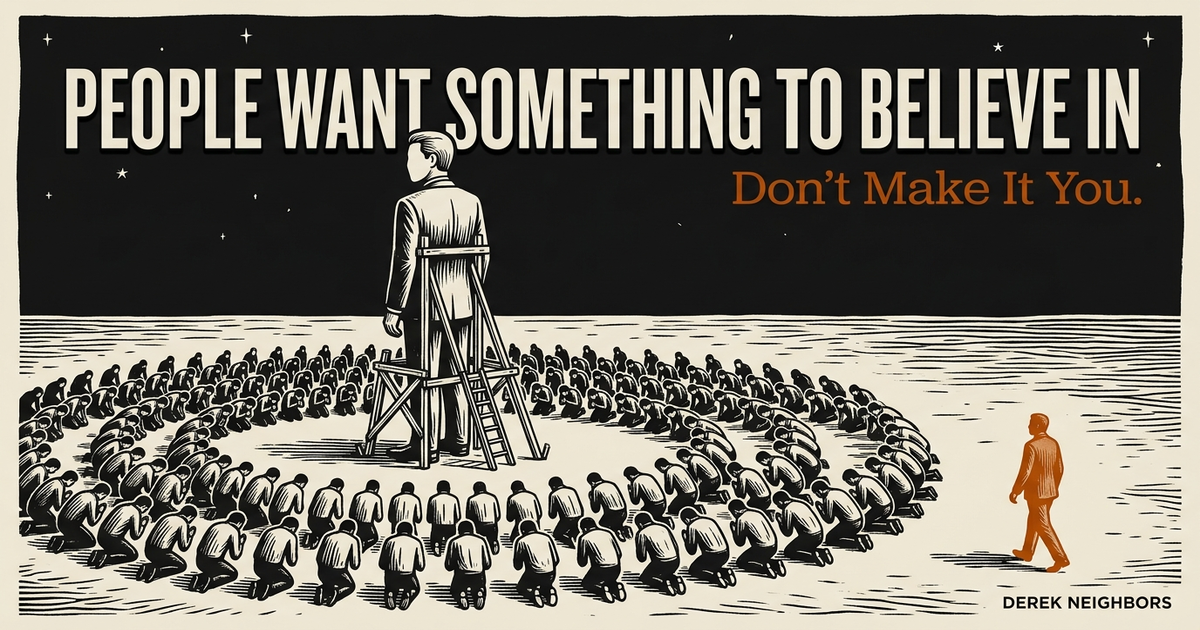
People Want Something to Believe In. Don't Make It You.
Law 27 of the 48 Laws of Power tells you to play on people's need to believe and create a cultlike following. Keep your words vague, favor enthusiasm over thinking, hand out rituals, collect the devotion. The need Greene identified is real. People are starving for something worth believing in. The law fails at the harvest. The Greeks called his method goeteia, the enchanter's craft that bypasses judgment instead of building it, and they left us a portrait of exactly where it ends: a con man with a puppet snake god who opened his rites by expelling every skeptic in the crowd, because one honest question would have brought the whole thing down.
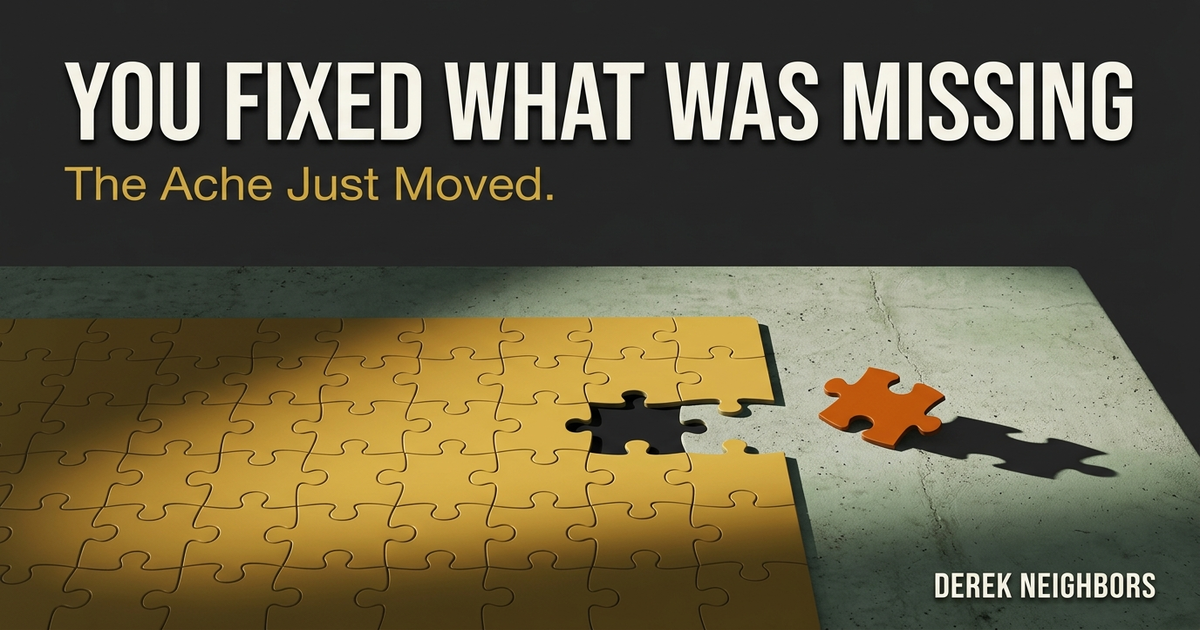
You Fixed What Was Missing. The Ache Just Moved.
You spent years wanting the thing. You got it. A season later, something else is the thing. Single people ache for partnership and partnered people ache for solitude. The overworked ache for rest and the rested ache for purpose. Most people read the moving ache as proof they chose wrong or that gratitude is broken in them. Plato had a different answer: desire has lack in its lineage and cannot be separated from it. Scarcity never resolves. It relocates. Meaning follows the gap, and the mature move is an honest inventory of the current gap, not another round of chasing.
Living the Dream Is Mostly Grunt Work. That's the Good News.
The day you finally get the dream is the day it stops feeling like one. Fear shows up, the calendar disappears, and the summit moment never comes. Most people read this as failure. It's the strongest evidence yet that the dream became real.

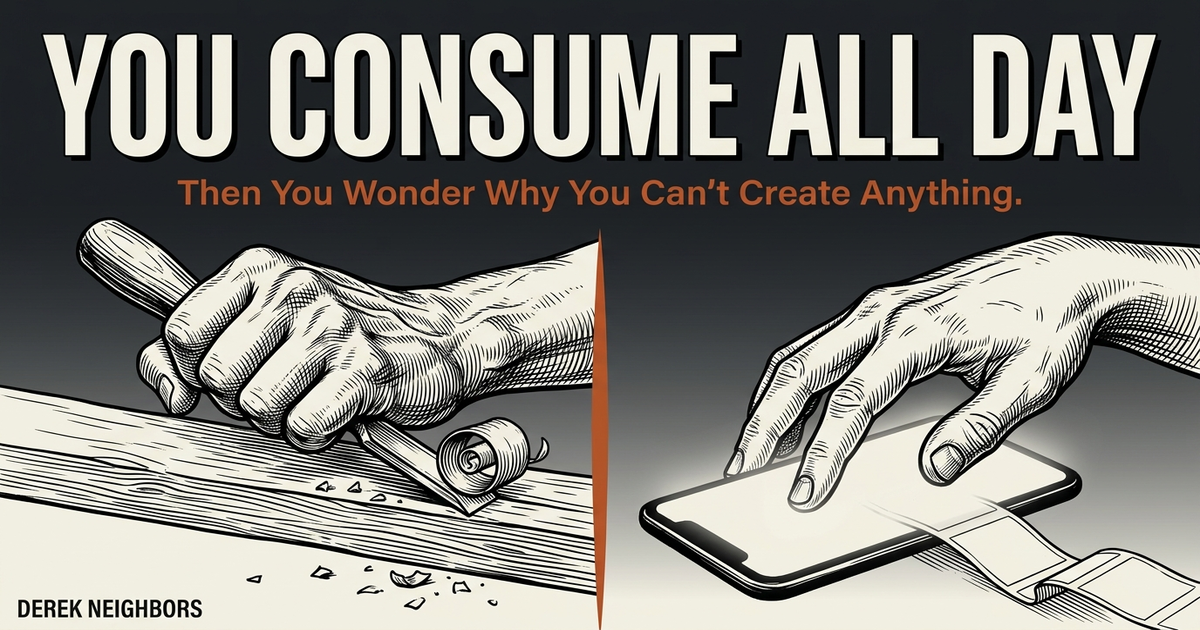
You Consume All Day. Then You Wonder Why You Can't Create Anything.
Two people spend the same free evening. One opens a feed and consumes for three hours. The other picks up a tool that fights back and makes something clumsy and real. From the outside both are relaxing. A year later one of them can do a dozen things with their hands and the other can only find things other people made. Every tool trains you. A craft tool demands skill and leaves capability in you. A capture tool demands only your appetite and hands you consumption you rent from an algorithm. The line was never analog versus digital. It is whether the thing in your hand is finishing you into a maker or a consumer.
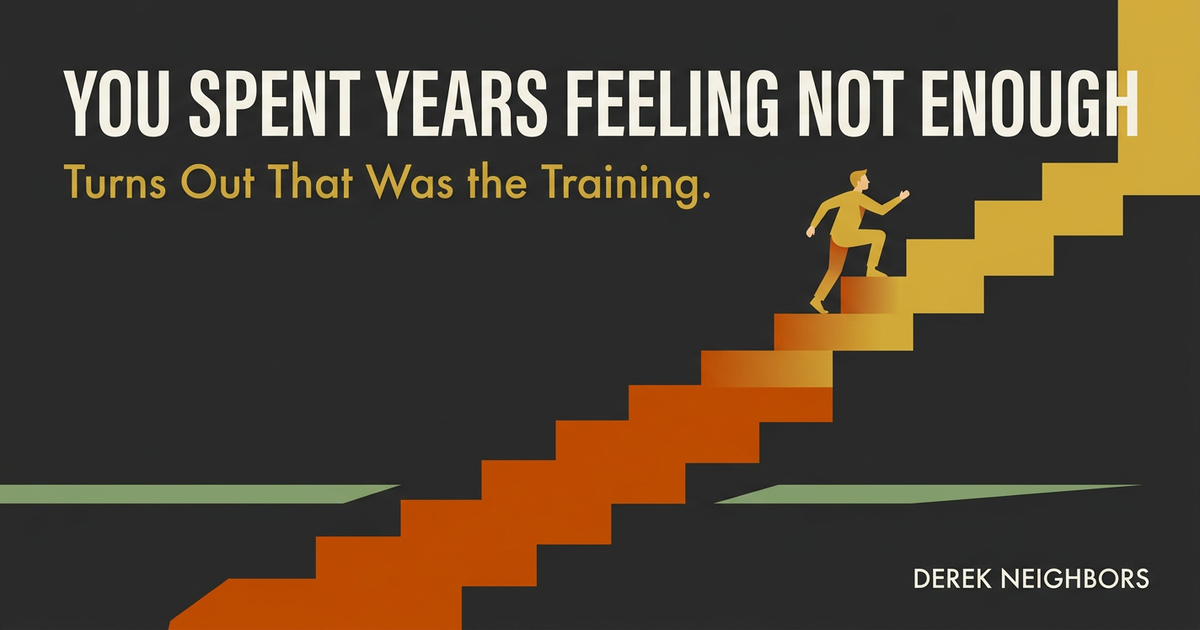
You Spent Years Feeling Not Enough. Turns Out That Was the Training.
There is a low hum a lot of people grow up with: the sense that you are a little behind, a little short, that everyone else got a manual you missed. Most spend decades trying to silence it. Some go dead. Some go bitter. But that ache was never measuring your worth. It was pointing. The years of feeling not enough were formation, training you in the one thing comfort can never teach, the refusal to settle. The work of adulthood is not curing the engine that lack built. It is aiming it without the self-contempt it once carried.
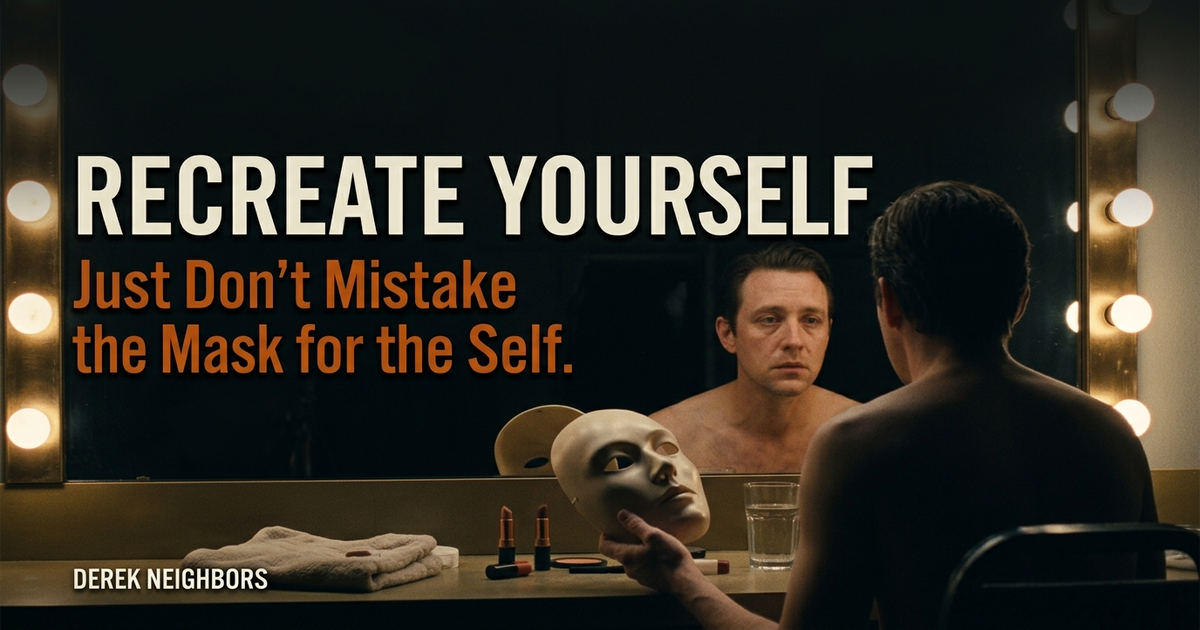
Recreate Yourself. Just Don't Mistake the Mask for the Self.
Law 25 of the 48 Laws of Power tells you to recreate yourself by seizing control of your image, becoming a memorable, protean figure who never bores the audience. The Greeks had a word for the thing you put on to face a crowd: prosopon, the mask an actor wore on stage. Greene's reinvention is mask-work, and a mask worn long enough fuses to the face. There is a real kind of self-recreation, but it runs the other direction. You forge the substance and let the appearance follow.
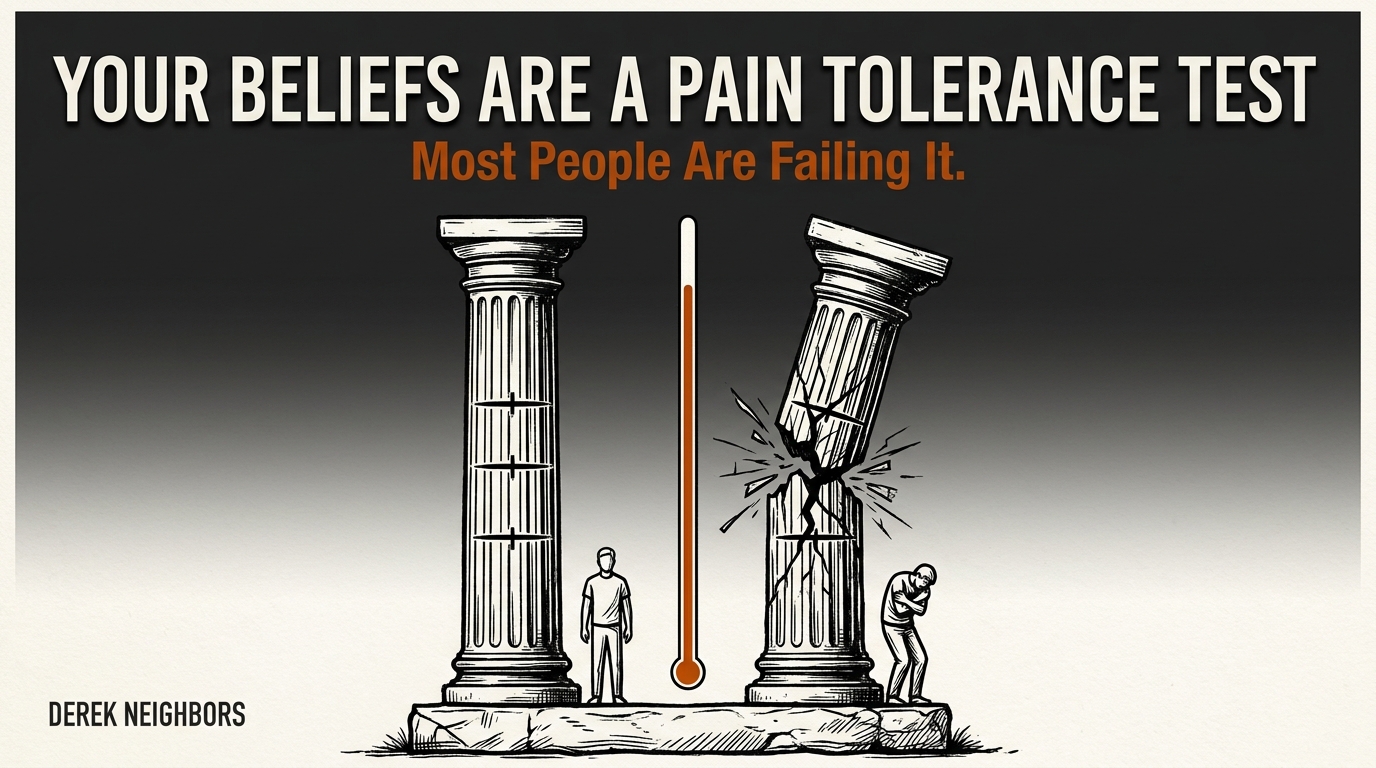
Your Beliefs Are a Pain Tolerance Test. Most People Are Failing It.
Two people take the same hit. Same diagnosis, same year, same loss of income. One keeps showing up. One disappears into the couch for six months. The difference is rarely willpower. It is the belief system running underneath, and belief systems can be scored. The Stoics built a scorecard without calling it that: internal control, suffering as training material, virtue as something worth the cost. Most modern frameworks fail on all three axes and then wonder why life feels unbearable.
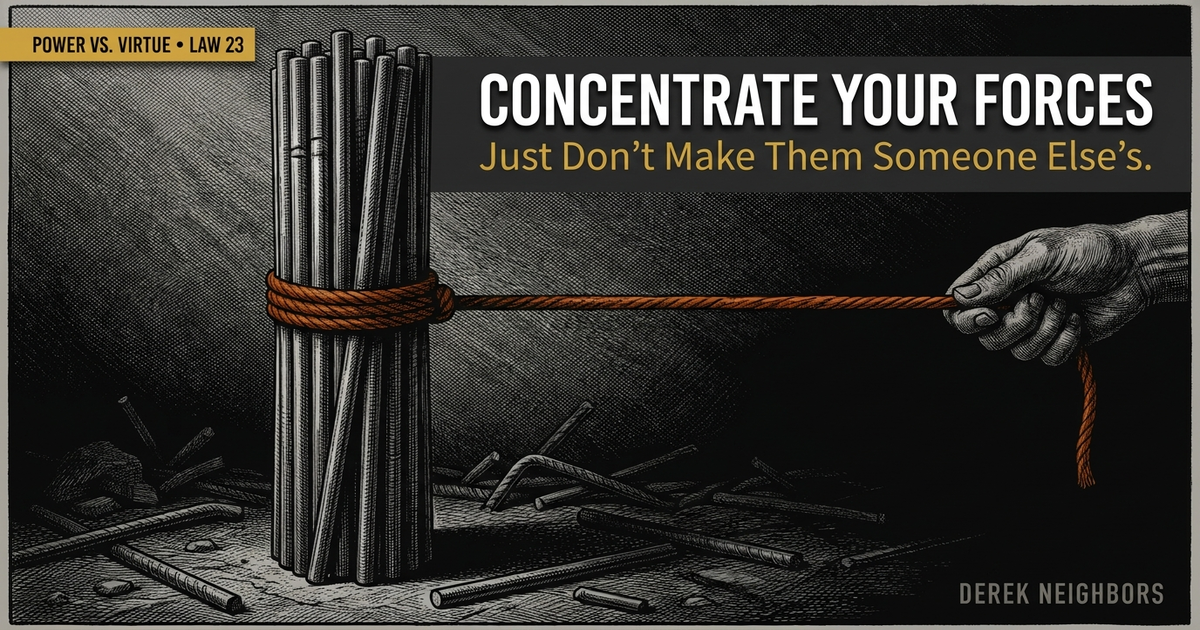
Concentrate Your Forces. Just Don't Make Them Someone Else's.
Greene's Law 23 welds two opposite ideas together. Concentrate your forces at their strongest point is some of the most virtue-aligned advice in the book. Find the one patron, the fat cow to milk, is the trap. Both feel like focus. One builds a foundation you own. The other lends your forces to a hand that can drop you.
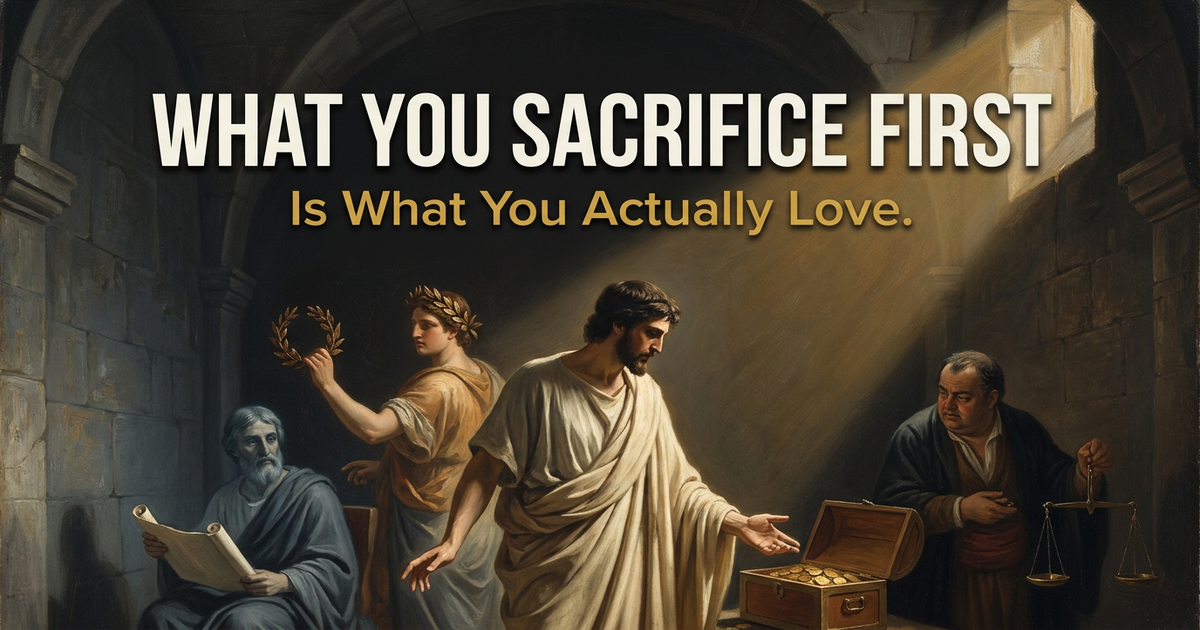
What You Sacrifice First Is What You Actually Love
Most people believe they hold their values in balance: family, work, health, growth, all weighted more or less equally. Plato argued that nobody actually lives this way. Every soul is ordered by a single ruling love, and everything else gets ranked beneath it. The proof is not in what you claim to value. The proof is in what you sacrifice first when two of your loves collide, because the thing you protect last is the thing you actually love.
Carry a Hundred Pounds Up a Mountain. Your Worry List Won't Fit.
Modern comfort has gifted the average mind enough idle capacity to host a daily inventory of anxieties, resentments, and dreads that primitive life would not have permitted. Malakia is the Greek word for the moral failure this produces, softness as a settled disposition that organizes a life around the avoidance of effort. The cure is not therapy or another book. It is the deliberate, repeated practice of putting a real load on the body, large enough and long enough that the simulated load in the mind cannot fit on the climb. Askesis as training. Ponos as productive toil. The pack on the back is not penance. It is the cure for the part of the mind that was about to be eaten by the surplus capacity comfort produces.

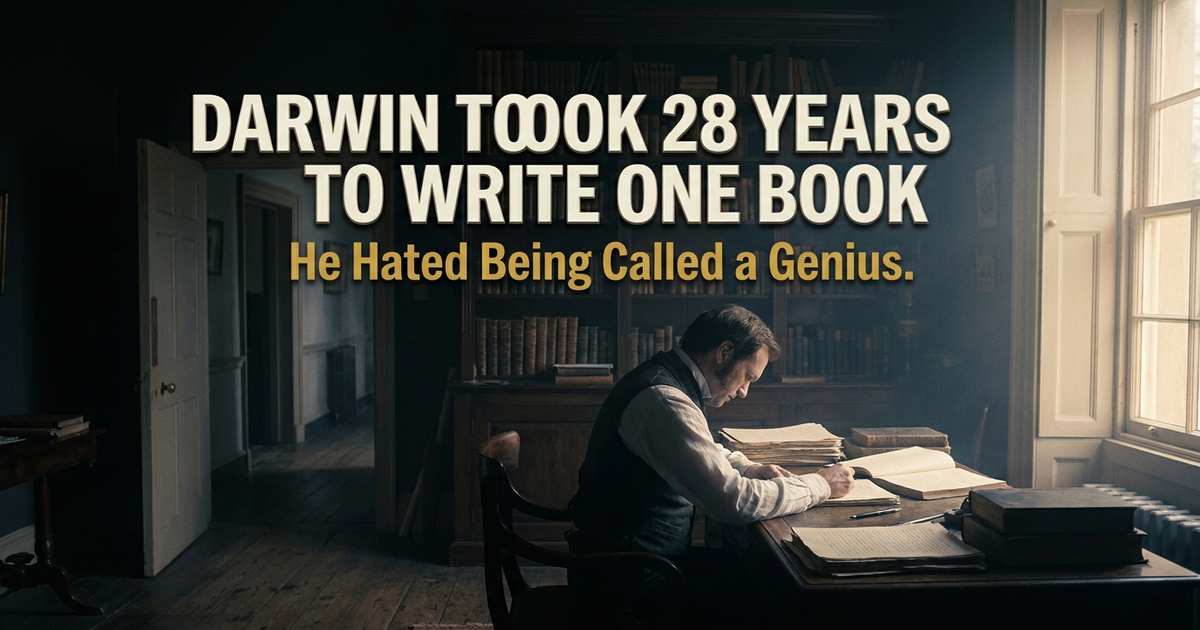
Darwin Took 28 Years to Write One Book. He Hated Being Called a Genius.
Charles Darwin spent twenty-eight years between the HMS Beagle's return in 1836 and the publication of On the Origin of Species in 1859. Eight of those years he spent classifying barnacles. He described himself in his autobiography as not a quick thinker or writer. The word the public eventually used for him was genius. He hated it. Genius is a hindsight label we paste onto a long, mostly invisible accumulation of patient daily work, and the lightning-bolt myth of insight survives because it lets the rest of us off the hook for not enduring the years of karteria, patient endurance, the actual builders endured.
Your Work Family Has an Expiration Date. Most People Discover It Too Late.
The retirement party promise was honest in the moment. The silence three months later is structural. Most workplace bonds rest on four scaffolds that disappear the day the project does, and the bitterness most leaders carry into their late careers comes from expecting utility friendships to behave like virtue friendships. Aristotle mapped three kinds of philia 2,400 years ago. The leadership move is to know which kind you have, identify the one or two candidates for the third kind, and invest on purpose outside the project's calendar.

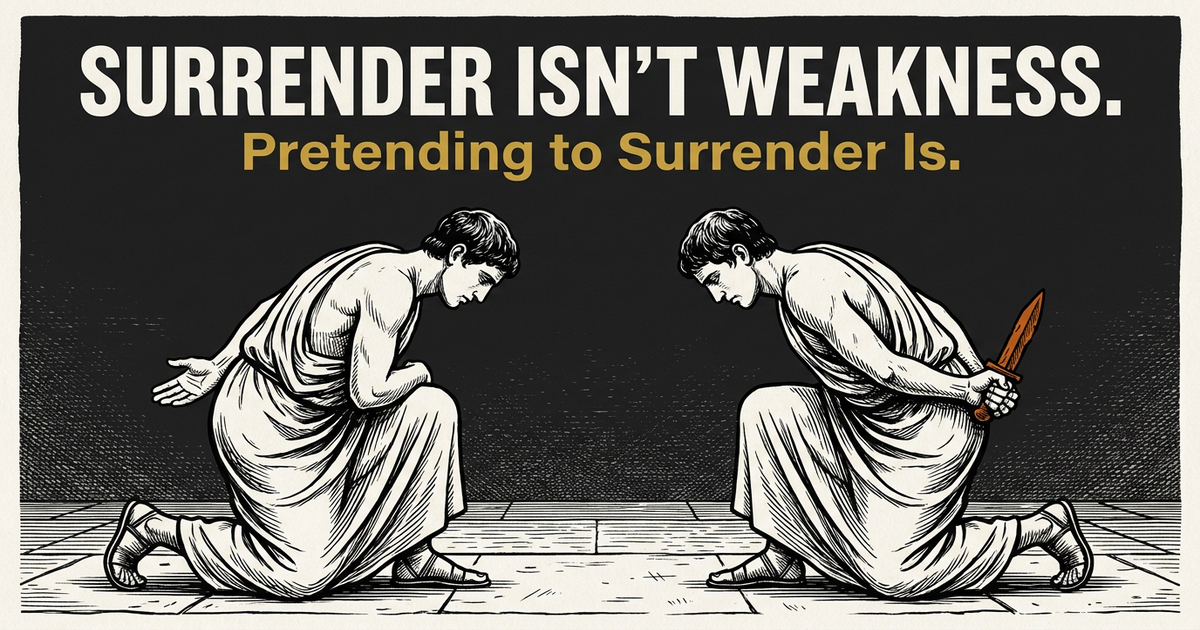
Surrender Isn't Weakness. Pretending to Surrender Is.
Greene's Law 22 tells you to surrender as a counter-trap. The tactic is real, and the Stoics knew the moves it copies. But Marcus Aurelius yielded to preserve his prohairesis. Greene's reader yields to spring an ambush. The heads can look identical; the ends diverge. The test that separates them is whether you could name, out loud, what you yielded for.
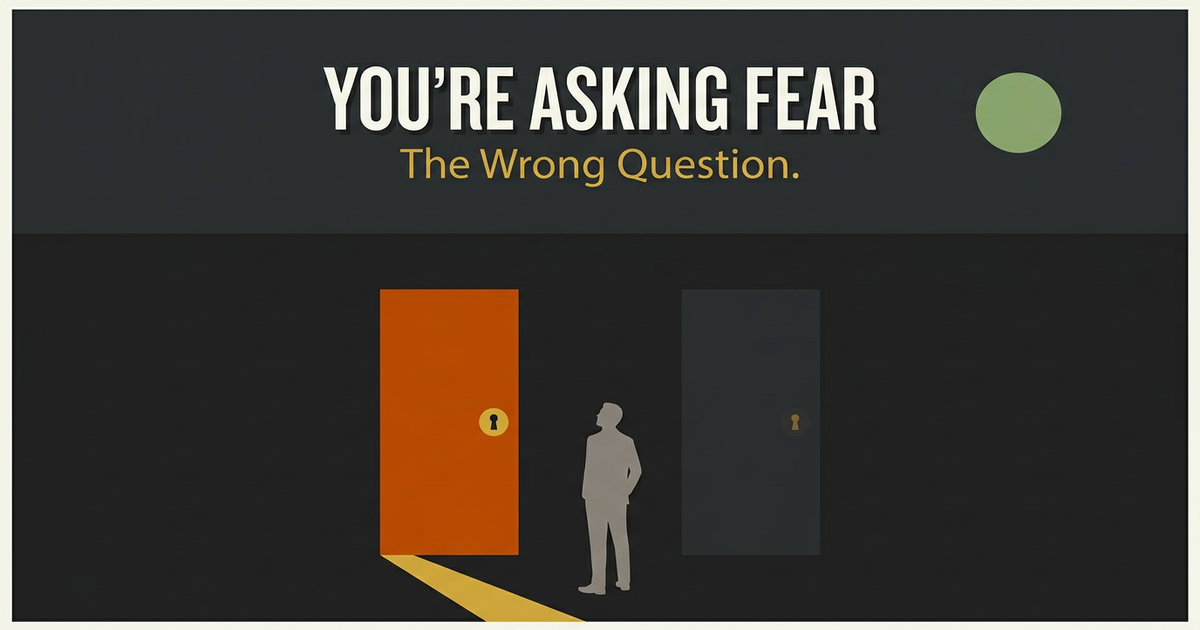
You're Asking Fear the Wrong Question.
There is a decision you have been circling for months. Two voices are arguing about it in your head. Voice one is fear, and fear's question sounds adult and responsible: will this be worth what it costs? Voice two is regret, and regret only asks one question, the one fear refuses to ask. The Stoic tradition built an entire decision discipline around the fact that human beings systematically ask the wrong question at the moment a choice is live. Epictetus had a name for the place where this gets decided. The Greeks called it the only domain that actually matters.
You Don't Need More. You Need to Strip Your Life Down on Purpose.
We have engineered constraint out of ordinary days and cannot understand why ordinary days no longer move us. The ancient world knew the answer. They built deliberate practices around removing inputs, not adding them. The Sabbath was an amputation. Askēsis was training. Autarkeia was the freedom of needing less. This is the protocol for a thirty-day voluntary sabbath that gets the meaning back into the small things you have stopped noticing.

Acting Dumb to Get Ahead Works. Until You Can't Stop Acting.
Greene's Law 21 tells you to play the fool so your marks lower their guard. The tactic is real. The Greeks invented it. But Socrates played dumb to make people wiser, and Greene plays dumb to make people poorer. The mask is identical. The cost of running the wrong one is that you eventually cannot take it off.
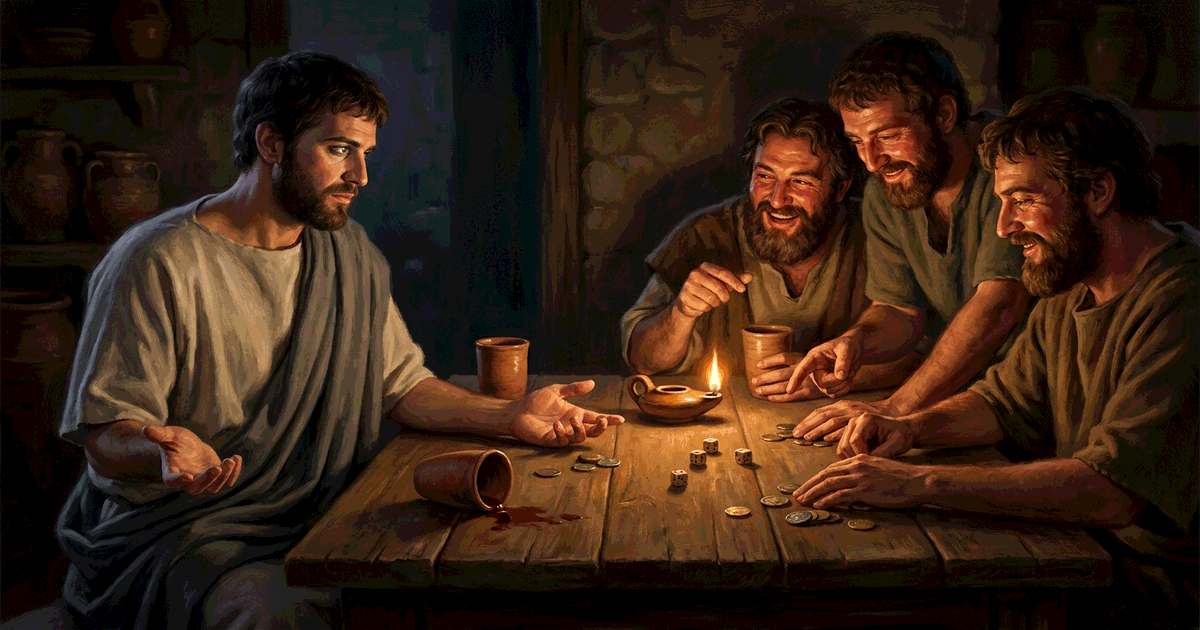
The Future You're Killing Yourself For Doesn't Include You
The next milestone always arrives on schedule, but the person it was supposed to arrive for has already moved on to the next pursuit. The engine producing your wins is the engine evicting you from the life they were meant to build. The paradox is structural, not personal, and most ambitious people have been paying for it for decades without noticing the bill.

If Your Team Never Disagrees With You, You're Not Leading. You're Indoctrinating.
A team that always agrees with you is not aligned. It has been worn down. Most leaders are quietly running a sophistic operation, training reciters when they think they are developing thinkers. The Socratic test still applies, and most modern leaders fail it.

You Don't Have to Be the Best. You Just Have to Still Be Here.
You probably aren't the best in your field. That matters far less than you think. Almost everyone you compare yourself to has already quit, or is about to. The strategy that compounds is staying.

Your Hard Start Was Worth More Than Their Soft Landing
The hardship that felt like a disadvantage was the only education that holds up under pressure. Privilege has an expiration date. Formation does not.
If You Can't Be Alone, You'll Never Be Free
Most people skip the foundation and wonder why their freedom feels so hollow. Schopenhauer named the prerequisite. The Greeks named the practice. You have been arranging your life to avoid both.
Your Potential Isn't Waiting. It's Disappearing.
We talk about untapped potential like it's a savings account, sitting there earning interest while you figure things out. Aristotle had a different word for it. And his version has an expiration date.
If You Need to Destroy Your Enemies, You Were Never Really Winning
Greene says leave nothing to chance and annihilate your opponent completely. But total destruction requires total obsession with another person's existence. The Greeks called this failure of character, not strength. Megalopsychia, greatness of soul, means your purpose is too large for any single enemy to define.
You Know Exactly What You Don't Want. That's Why You're Stuck.
Ask someone what they want and watch them struggle. Ask what they don't want and the words pour out. All that clarity is pointed backwards, and it's the reason you can't move forward.
Your Brain Solves Problems While You Do Nothing
The Default Mode Network does your brain's most sophisticated cognitive work when you stop trying. The ancient Greeks built their civilization around this principle. Modern hustle culture has buried it.
You Stopped Growing and Didn't Even Notice
You can look back ten years and barely recognize who you were. You can acknowledge enormous personal transformation. And yet, right now, you believe you're basically done becoming. Psychology calls this the end of history illusion. The Greeks called it the opposite of flourishing.
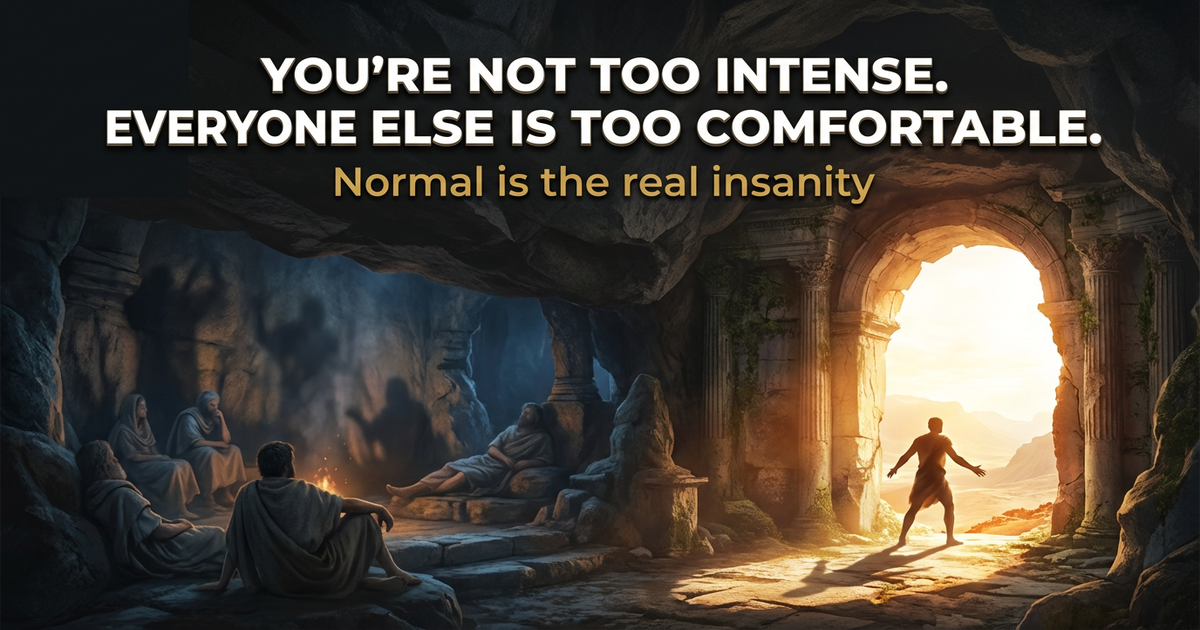
You're Not Too Intense. Everyone Else Is Too Comfortable.
What society labels 'crazy' or 'too intense' is actually the natural fulfillment of human purpose. The real madness is accepting a diminished life. Normal isn't sanity. It's collective surrender.
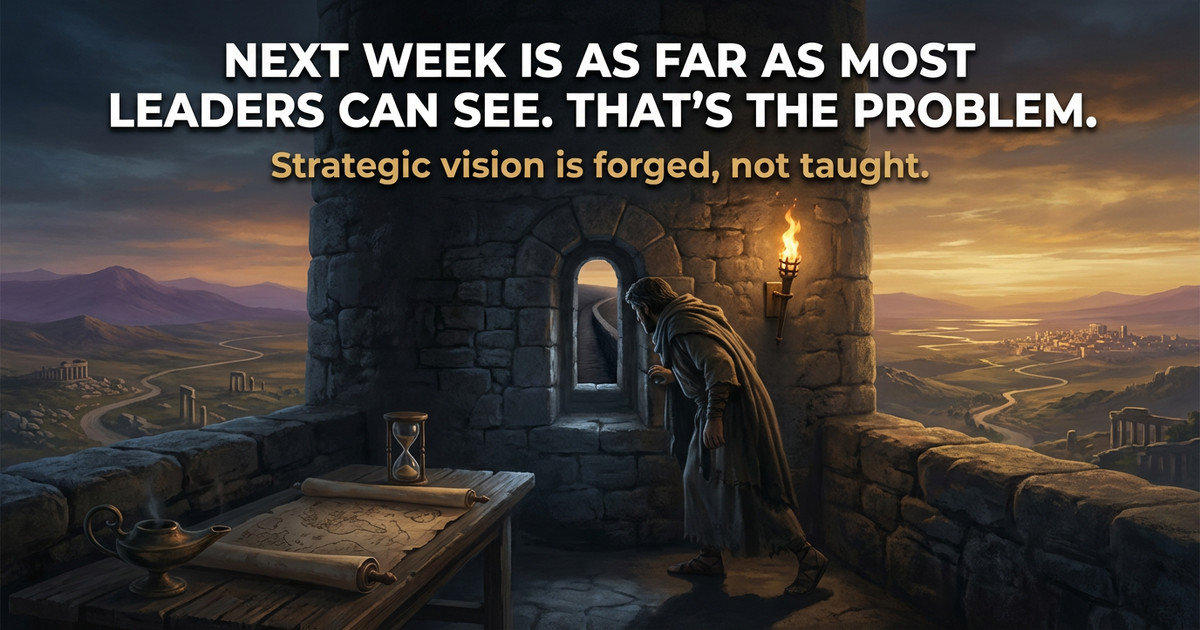
Next Week Is As Far As Most Leaders Can See. That's the Problem.
The inability to see beyond immediate tasks isn't a skill gap. It's a character limitation. Strategic vision is a cultivated virtue, not an innate talent. Small picture thinking is underdeveloped character.
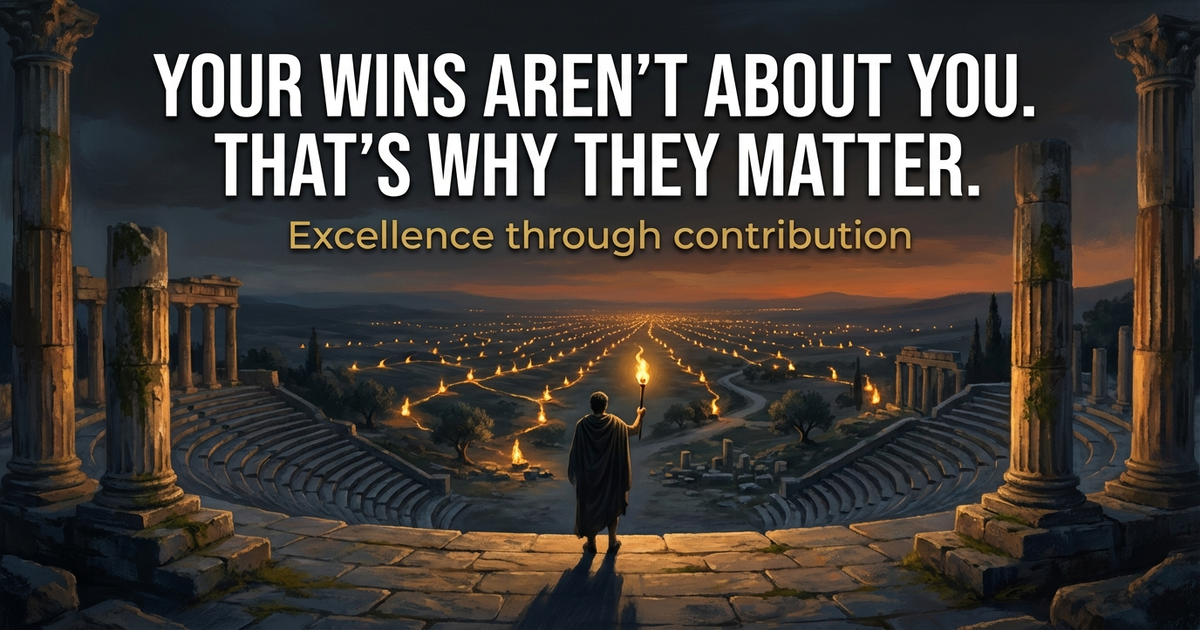
Your Wins Aren't About You. That's Why They Matter.
Achievement for its own sake is accumulation, not excellence. The Greeks understood that individual flourishing and communal contribution aren't separate goals. Your wins matter precisely because they're not about you.
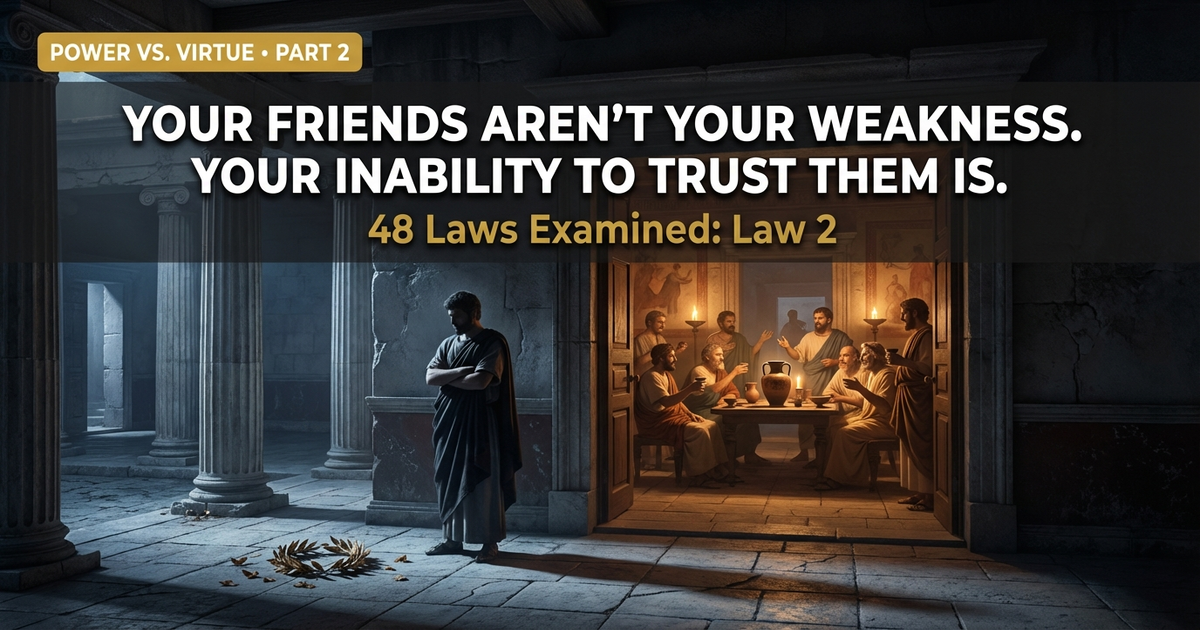
Your Friends Aren't Your Weakness. Your Inability to Trust Them Is.
Greene's second law of power tells you to distrust friends and hire enemies. The tactical truth is real: friends can betray you. But the solution isn't strategic isolation. It's wisdom about who to let close.
Should You Hide Your Excellence to Protect Your Boss's Ego?
Greene's first law of power tells you to never outshine the master. The tactical truth is real: insecure leaders punish excellence. But the solution isn't dimming your light. It's knowing when to deploy it. The Greeks called it kairos.

Why Authenticity Has Nothing to Do With Being Yourself
Authenticity has become a personal branding buzzword. The Greeks knew better. True authenticity isn't about expressing your real self. It's about refusing to fragment into different versions for different audiences. Wholeness, not performance.
What Do You Actually Want? (Most People Never Answer This)
You're not anxious. You're unclear. The mind that hasn't decided what it wants will constantly point out what's missing. Clarity isn't a luxury. It's the foundation.

Stop Asking 'What Should I Do?' Start Asking 'Who Should I Become?'
Everyone optimizes their actions. Almost no one optimizes who they're becoming. The obsession with tactics keeps people trapped while the strategic question goes unanswered.

What If Your 'Personal Best' Is Actually Your Personal Belief?
Everyone treats their personal best as an objective measurement. But what if it's actually a prophecy? What if the limit you keep hitting is the limit you keep expecting to hit?
Want Better Leaders? Stop Naming Them.
The best coaches figured this out decades ago. Saban's Process. Belichick's expectations. Cignetti's explicit no-captains policy. When you designate leaders, everyone else stops leading.

Most Success Is Just Avoiding Obvious Mistakes
Everyone's chasing brilliance while tripping over obvious errors. The uncomfortable truth about success isn't that you need to be smarter. You need to stop being dumb.
The Fastest Path to Opportunity Is Through the Work Nobody Wants
Everyone's competing for the spotlight. Meanwhile, opportunity waits in the tasks everyone avoids. The dirty work doorway isn't just a path to success. It's the only path that isn't crowded.
The Most Dangerous Thing You Can Do Is Become Excellent
Your pursuit of excellence isn't neutral. It's an act of rebellion against every force that profits from your weakness, distraction, and mediocrity.

The Couples Who Fight Are the Couples Who Last
Happy couples don't fight. That's the story we tell ourselves. Then we watch peaceful marriages end without warning. The truth? Antifragile bonds are forged through navigated conflict, not polished harmony.

If Money Is Why They Stay, Money Is Why They'll Leave.
Pay them well and they'll stay. Pay them more and they'll work harder. It sounds logical until you watch your highest-paid people leave for less money. The myth of compensation-driven loyalty is destroying teams.
Stop Asking Why This Is Happening. Start Asking What It's Teaching.
The ancient Greeks understood something we've forgotten—every difficulty is training when you ask the right question. The shift from 'why me?' to 'what's this teaching?' changes everything.

Stop Babying Your Team. Start Building Them.
The ancient concept of paideia required both challenge and care. High expectations without support breaks people. High support without expectations keeps them small. Real leadership integrates both.
You're Better Off Missing Moon Shots Than Hitting Layups
You think success is about the win. It's actually about what the attempt makes you become. The goals you miss build more character than the ones you hit.

You Don't Get Fewer Problems. You Get Better Ones.
Your problems aren't proof you're failing. They're proof of where you've climbed. Each level of success doesn't reduce difficulty, it upgrades it.
Your Life Right Now Is Just Your Last 90 Days Playing Out
Your fitness, your bank account, your relationships, your opportunities right now aren't revealing your identity. They're showing you what you've been doing for the past 30-90 days. That's not philosophy. That's physics.
Forgiveness Isn't About Them. It's the Most Selfish Thing You Can Do.
Every minute you spend resenting someone is energy you're not using to build your life. The Stoics knew what we forgot: forgiveness releases you from the prison, not them from consequences.
Stop Chasing Happiness. It's Making You Miserable.
The more directly you pursue happiness, the more it evades you. Kant knew what we forgot: happiness only arrives as a byproduct of living virtuously, not as a target to optimize for.
Stop Chasing Job Security. Build Skills They Can't Take Away.
Job security is dead. The people who recover fastest from layoffs aren't the ones with the best titles, they're the ones who built skills that travel. Here's what autarkeia teaches us about real security.
Good Vibes Only Will Keep You Weak Forever
Good vibes only doesn't protect you from negativity. It protects you from growth. Every time you positive-think your way past difficult emotions, you're training yourself to be weaker.
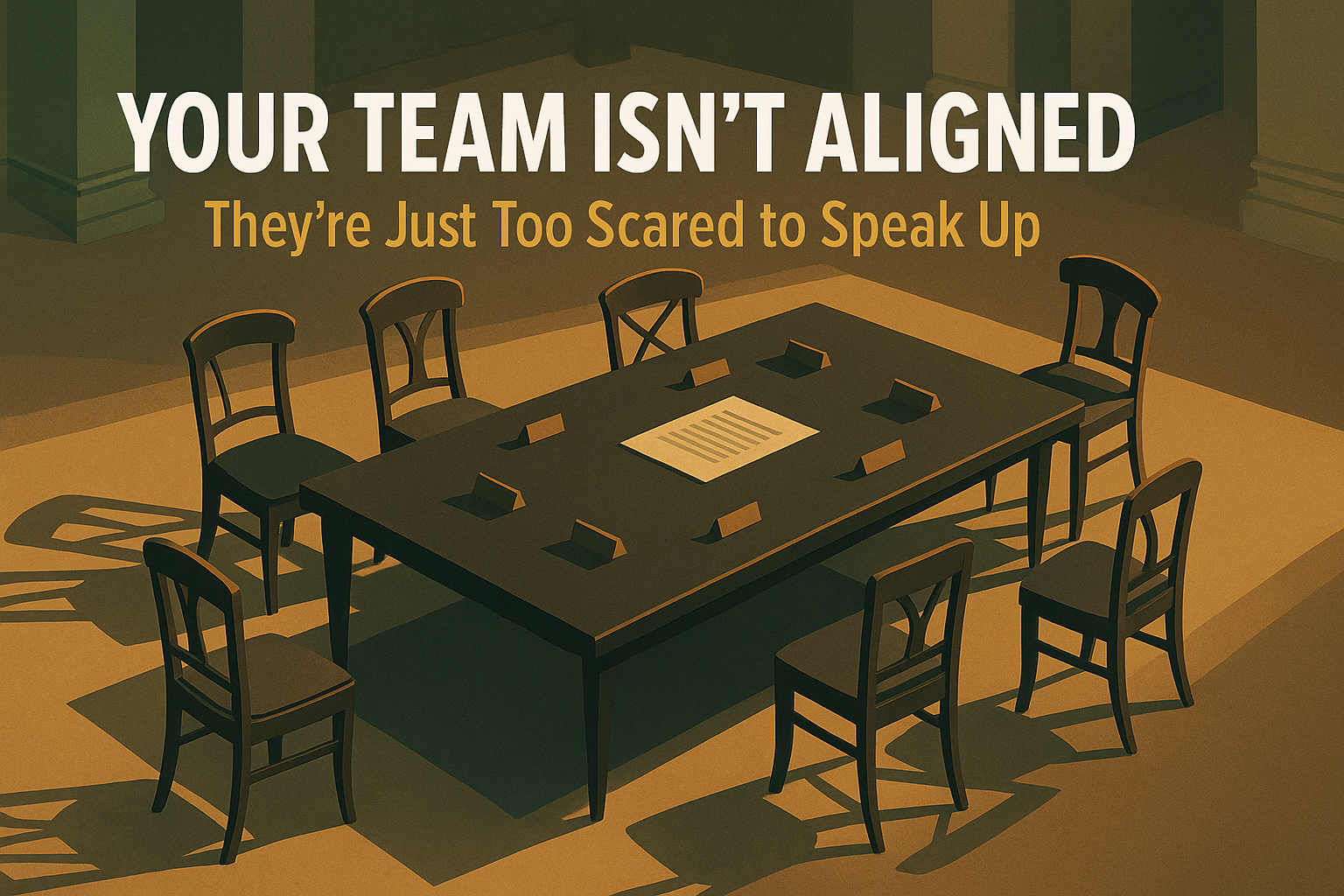
Your Team Isn't Aligned. They're Just Too Scared to Speak Up
When teams nod along in meetings, we celebrate alignment. But what if everyone's privately disagreeing? The Abilene Paradox shows how silence becomes performative agreement and why andreia (courage) matters more than consensus.
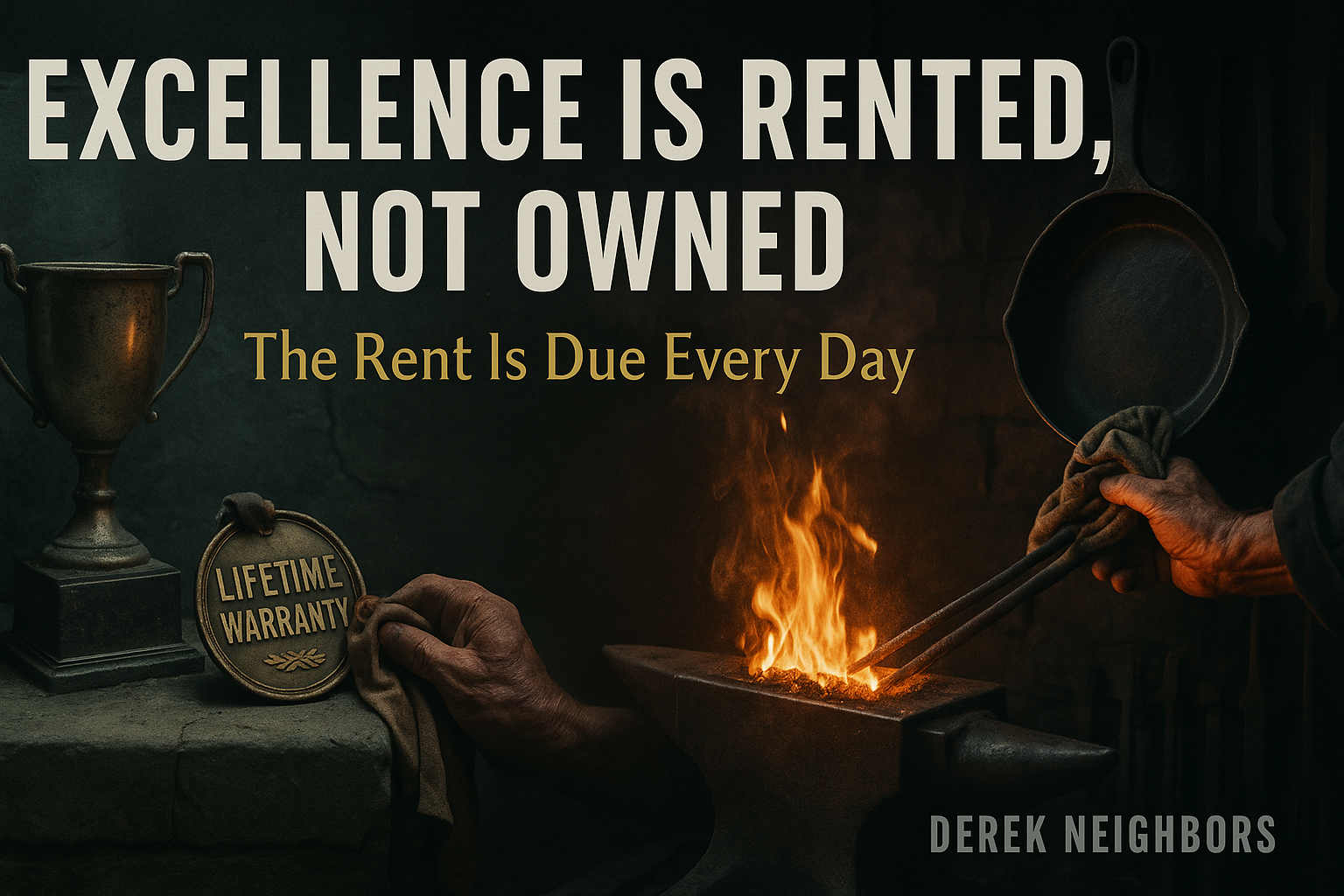
Excellence Is Rented, Not Owned: The Rent Is Due Every Day
Grandma's cast iron pan lasted 60 years with daily care. My 'lifetime warranty' pan died in 18 months with neglect. Excellence isn't owned—it's rented. And the rent is due every single day.
Stop Waiting for Flow - Start Training It Like Every Other Skill
You can spend another year waiting for flow to happen, or you can spend the next 12 weeks training it like the ancient Greeks did, systematically, progressively, relentlessly.

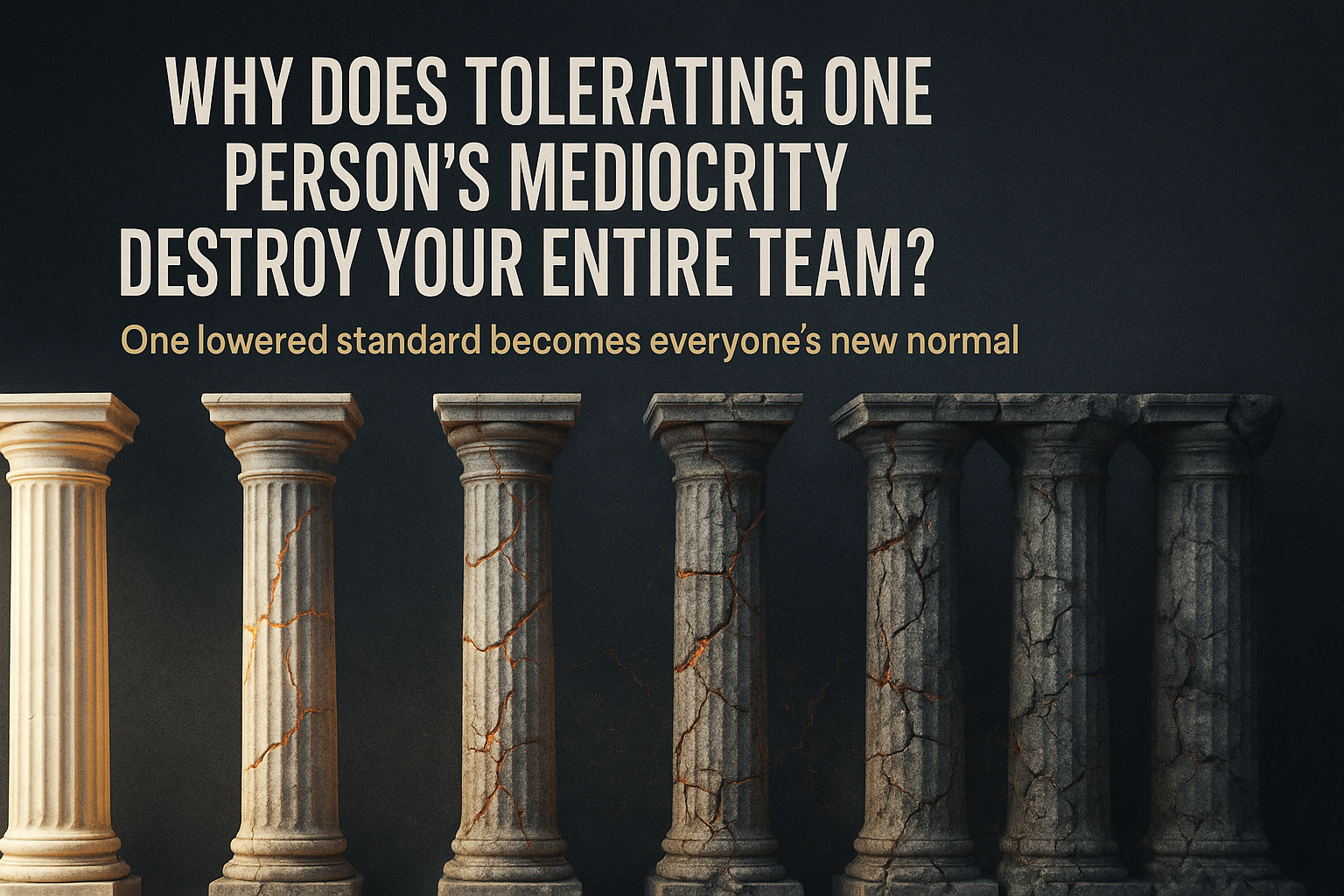
Why Does Tolerating One Person's Mediocrity Destroy Your Entire Team?
Mediocrity spreads like wildfire once you signal it's acceptable. Leaders who tolerate good enough from one person send a message to everyone that standards are negotiable. Excellence demands eliminating compromises at the source before they become cultural norms.
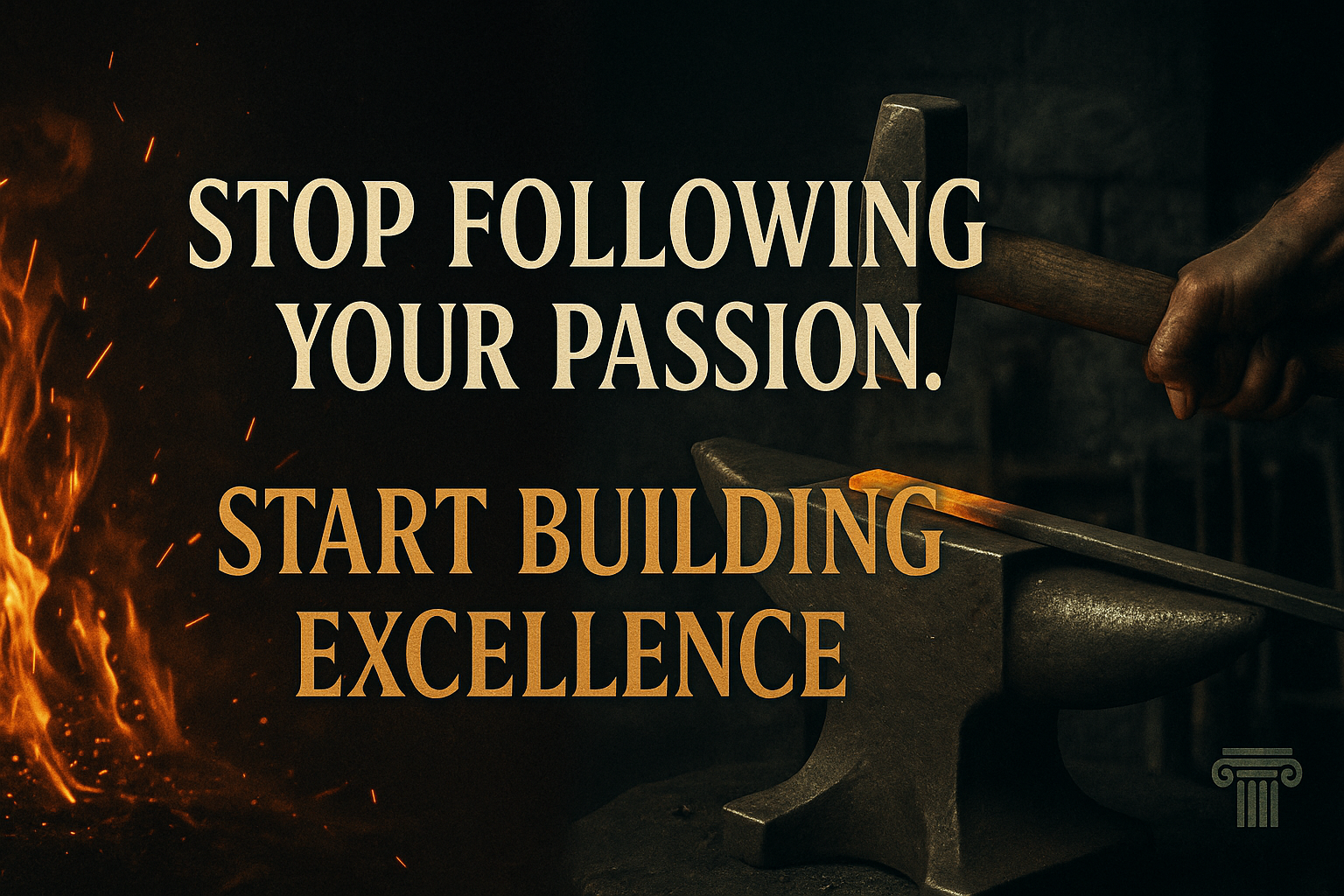
Stop Following Your Passion. Start Building Excellence.
Passion is self-focused and fleeting. Excellence through service is other-focused and enduring. The Greeks never told anyone to follow their passion. They built character through craft. Here's why that matters for your work.
Akrasia: Why You Sabotage What You Know Is Right
You know exactly what you should do. You've known for months. So why aren't you doing it? The ancient Greeks had a word for this: akrasia, acting against your better judgment. And they understood it's the ultimate killer of excellence.
Why Trying Harder Makes You Worse (And How to Let Excellence Flow)
You built the conditions. You trained your attention. Now stop trying so hard. The excellence you're forcing toward shows up when you allow it to emerge.
The Organizational Excellence Delusion
Most companies aren't consciously choosing mediocrity. They're living in a complete fantasy about their own capabilities while demanding breakthrough results from infrastructure designed for average performance.
Why Leaders Who Don't Need Applause Get All the Respect
The leaders who command the most respect don't need your applause to do the work. And that's exactly why you can't stop watching them.

Strategic Imperfection: Why Good Enough Beats Perfect Every Time
Perfectionism isn't high standards. It's fear management. Strategic imperfection creates more progress than perfect ever could.
The Discipline Gateway: Why Real Freedom Costs More, Not Less
The brutal truth about freedom: it's not the absence of constraints, it's the wisdom to choose the right ones.
Why Leaders Who Don't Endorse Others Stay Relationally Poor
Your willingness to risk your reputation for someone else's growth reveals everything about your actual confidence in your leadership.
The Vibe Code Fallacy: Why Playing It Safe Is the Riskiest Strategy
When smart engineers choose the safety of understanding over the risk of adaptation, they're not avoiding debt, they're accumulating it. The compound cost of caution might be the riskiest strategy of all.
The Output Stage: Where Excellence Meets Impact (Arete)
Output (Arete) is where internal mastery becomes external transformation. Discover how to bridge personal excellence to world-changing impact through systematic application of ancient wisdom.
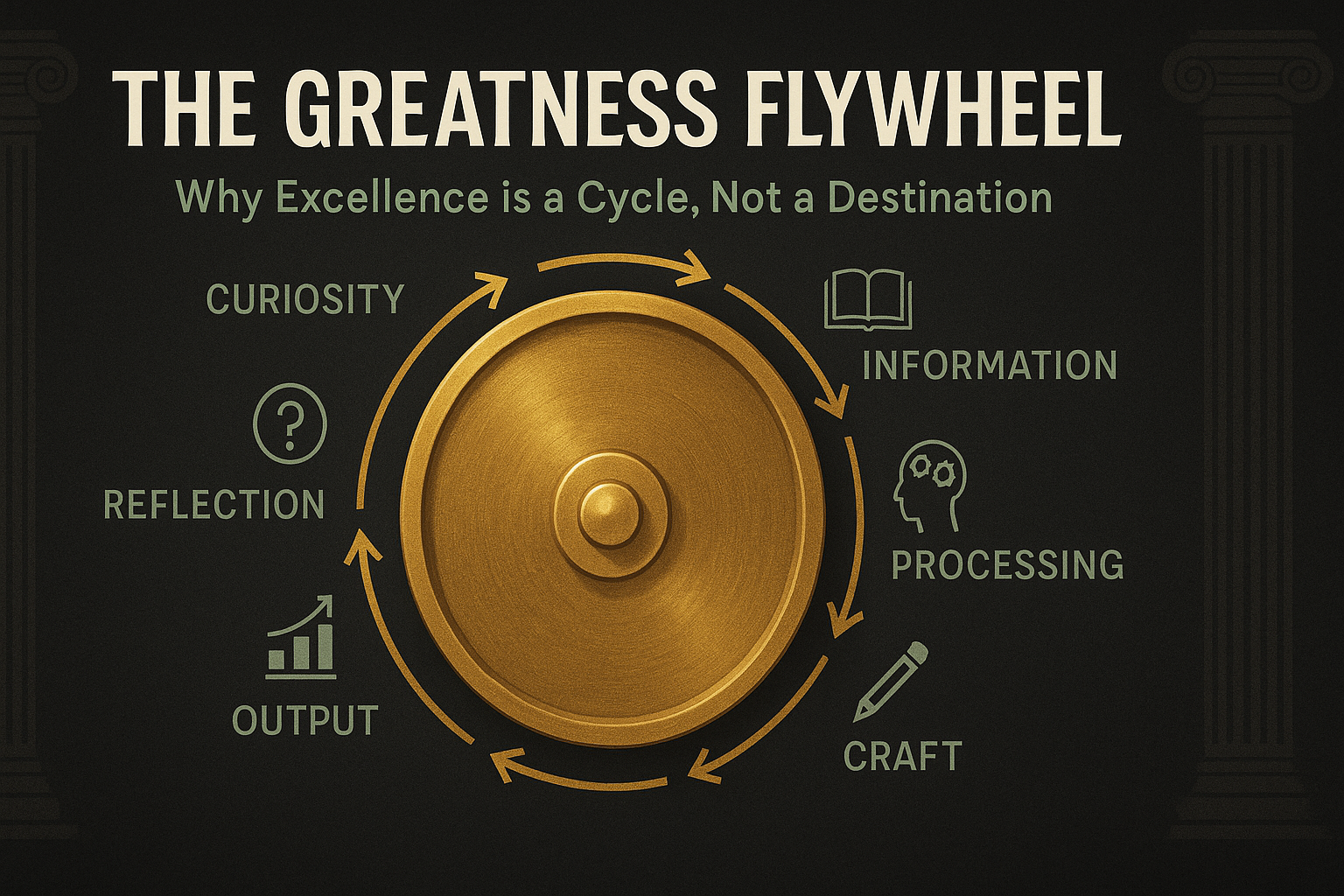
The Greatness Flywheel: Why Excellence is a Cycle, Not a Destination
Excellence isn't a destination you arrive at once and maintain through willpower. Excellence is a flywheel. The six-stage cycle that transforms ancient Greek wisdom into systematic excellence methodology.
The Unlimited Courage Question: The Single Test That Cuts Through All Self-Deception
Most people disguise cowardice as prudence. Here's the single question that cuts through all self-deception and reveals what you're really running from.
The Brutal Honesty Test: Do You Really Want What You Say You Want?
Most people torture themselves pursuing goals they don't actually want. The framework for distinguishing authentic desire from sophisticated self-torture.

The Philosopher King: Ancient Wisdom for Modern Leadership Integration
Plato's most radical leadership idea wasn't about power or position, it was about character. The philosopher king represents the ultimate integration of wisdom, excellence, courage, and transformation. Here's how to stop managing systems and start transforming people.
The Magic Pill Trap: Why True Endurance, in Running, Leadership, and Life, Can't Be Hacked
Trail running exposes the magic pill trap poisoning all growth: Want endurance? Embrace sustained discomfort, no hacks allowed.
Sophia vs. Phronesis: When Wisdom Meets the Real World
Why brilliant strategies fail and how ancient Greek wisdom provides the solution through integrating theoretical and practical wisdom.
The Completion Paradox: Why Finishing Matters More Than Starting
You don't have a motivation problem. You have a completion problem. Every unfinished project is evidence that you can't trust yourself to follow through. Here's how to build the character that finishes what it starts.
The Excellence Audit: Measuring What Matters
Most people track what's easy to measure rather than what actually drives excellence. Learn how to audit your metrics and ensure you're measuring character development, not just performance theater.
The Natural Rhythms vs. Discipline False Choice: Integration Not Avoidance
Most productivity advice forces you to fight your authentic rhythms, creating internal conflict and unsustainable systems. Here's the Natural Rhythms Integration Model that honors both authenticity and growth.
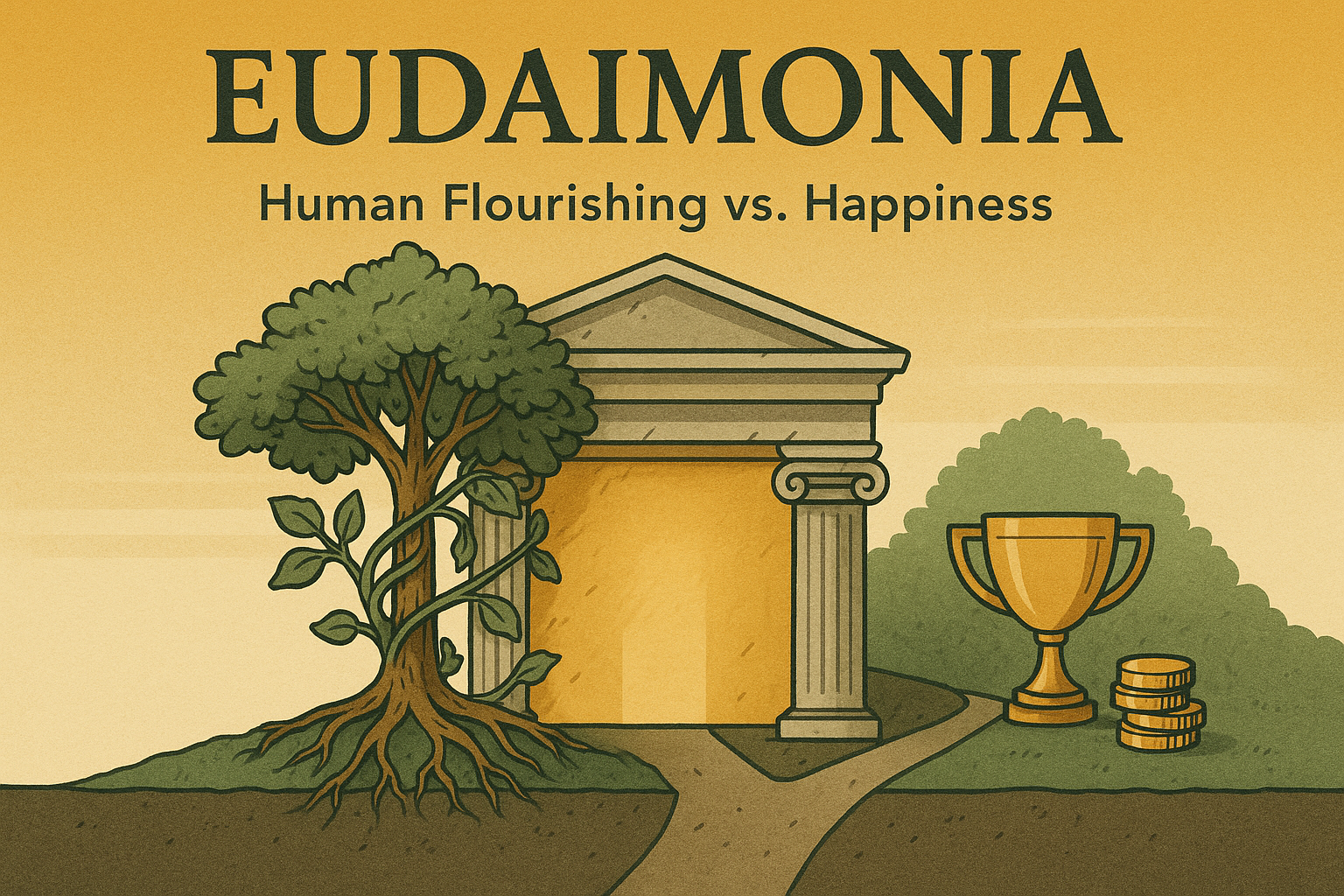
Eudaimonia: Human Flourishing vs. Happiness in Modern Leadership
Most leaders chase happiness and end up empty. Ancient wisdom reveals why: they're pursuing the wrong goal. Eudaimonia, human flourishing, transforms everything about how you lead and why it matters.
Creating Environments for Excellence: The SPACE Model
Excellence isn't just about individual character, it's about creating environments where excellence becomes natural, inevitable, and sustainable for everyone. Here's how leaders architect the conditions for human flourishing.
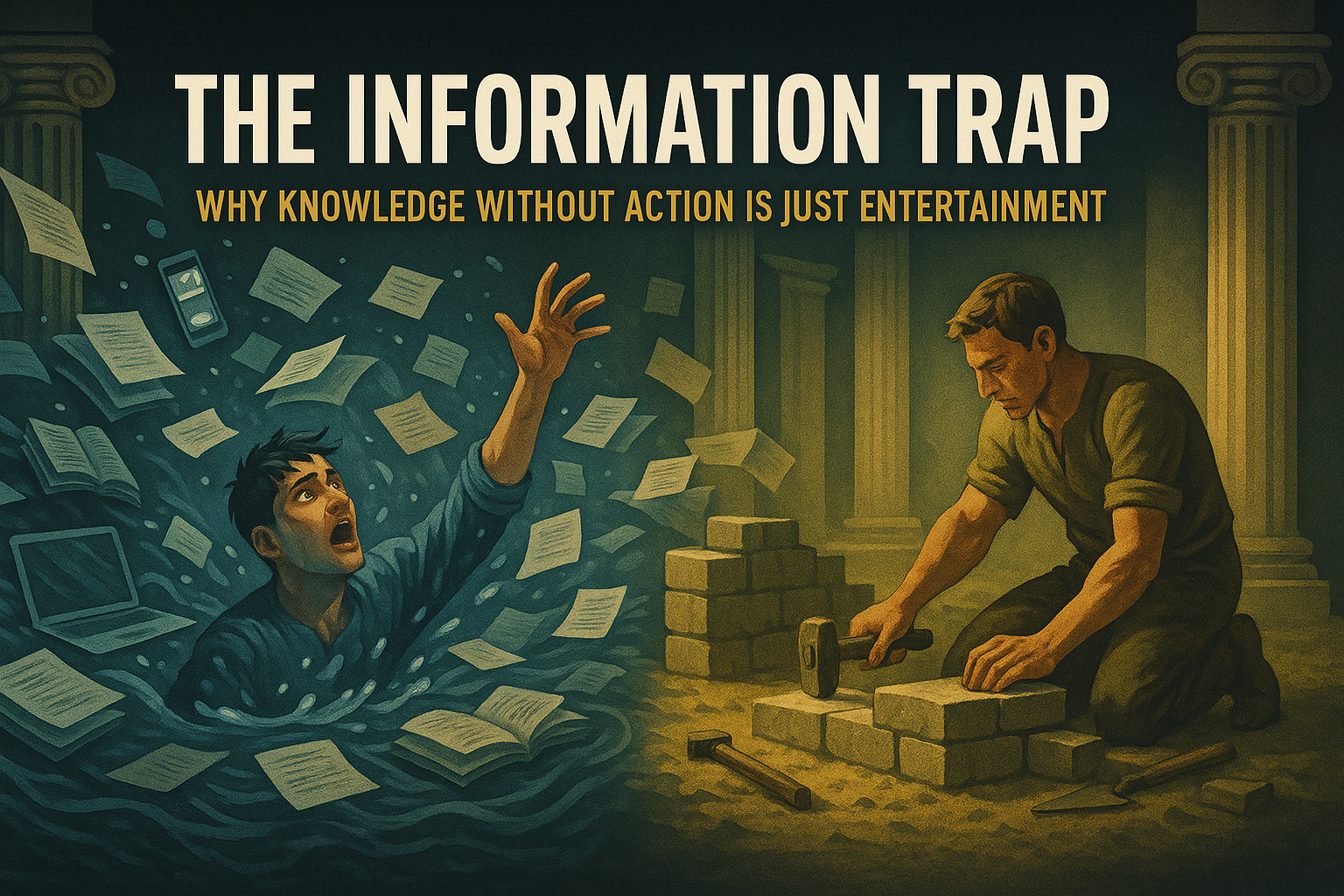
The Information Trap: Why Knowledge Without Action Is Just Entertainment
Most of your learning is actually entertainment in disguise. Here's why information without action is intellectual hoarding, and how to transform from consumer to creator through practical implementation.
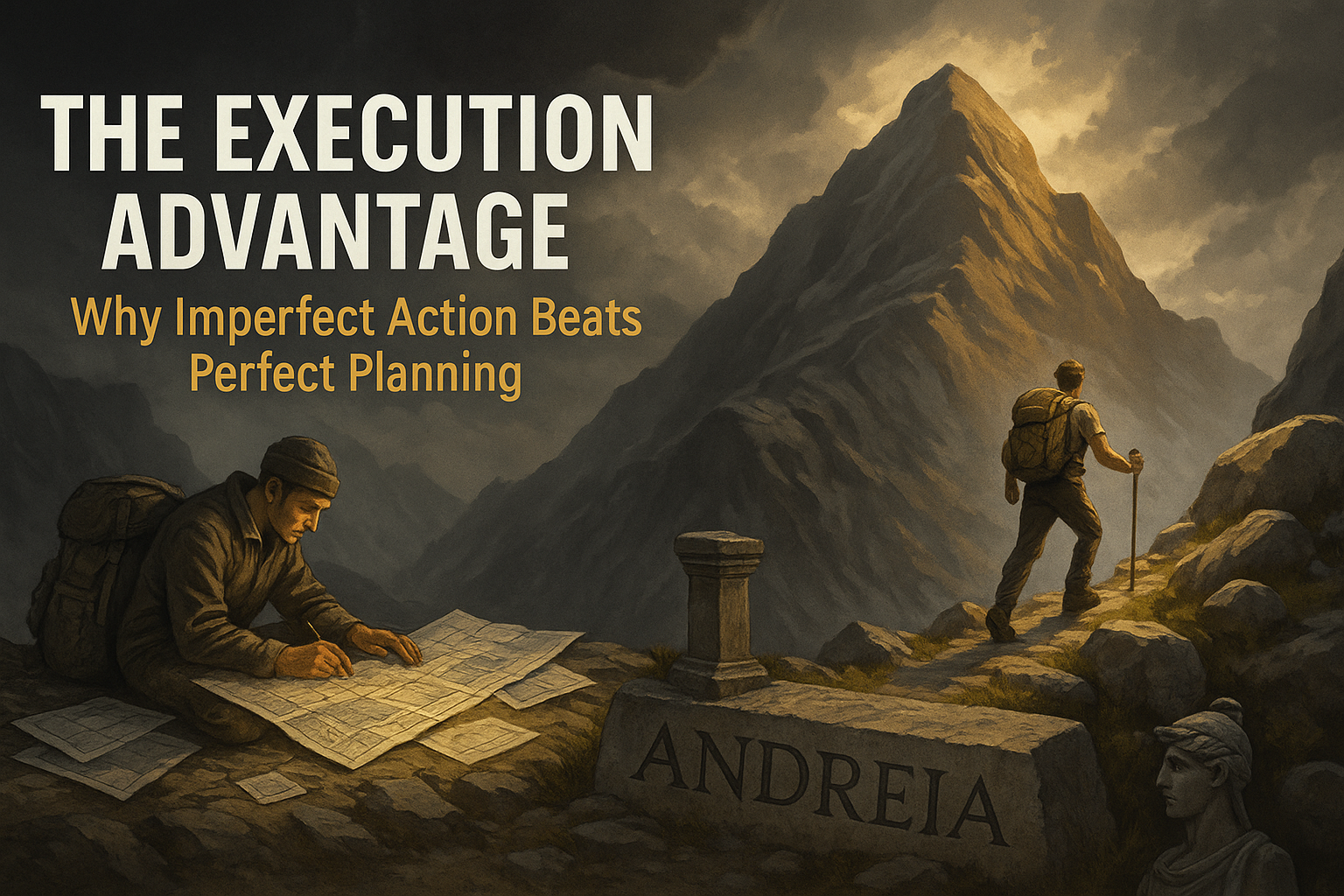
The Execution Advantage: Why Imperfect Action Beats Perfect Planning
Perfect plans are usually perfectly wrong. Here's why imperfect action creates better results than perfect planning, and how to build the execution advantage through courage and rapid iteration.
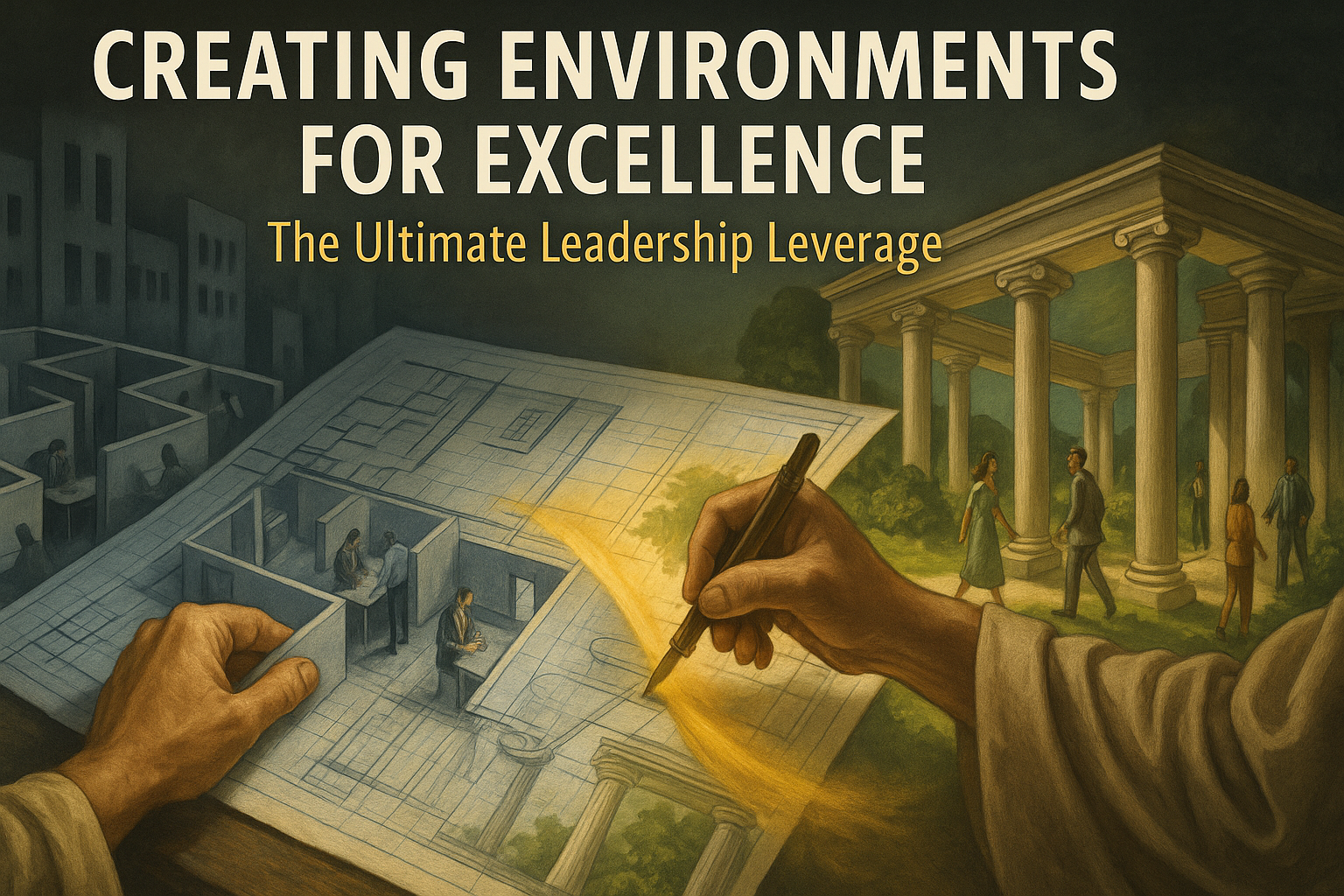
Creating Environments for Excellence: The Ultimate Leadership Leverage
Most leaders try to control people. Great leaders design environments. Here's why environmental design is the ultimate leadership leverage and how to create conditions where excellence becomes inevitable.
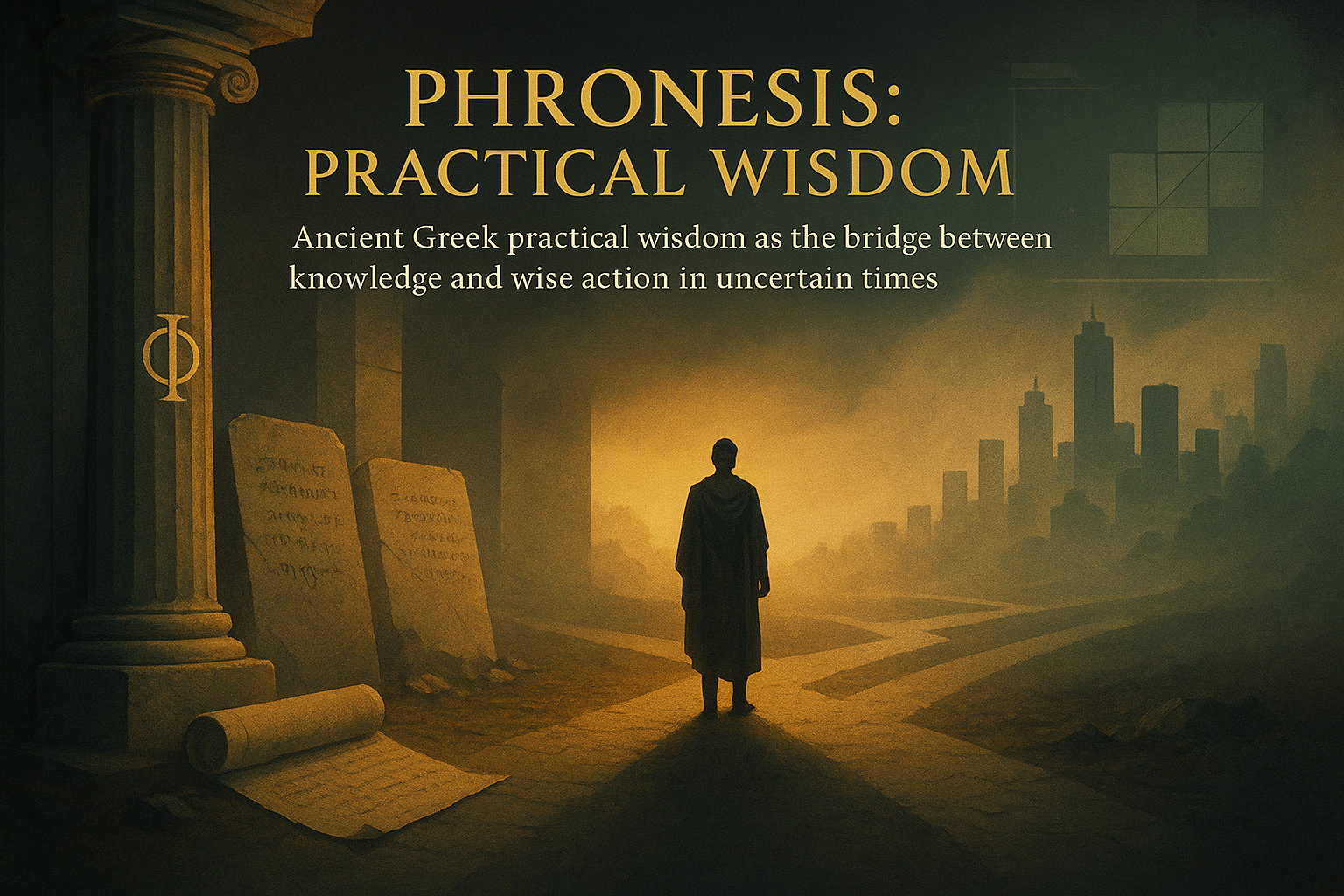
Phronesis: The Lost Art of Practical Wisdom
The ancient Greeks had a word for the leadership skill we desperately need today: phronesis. It's not about having all the answers, it's about acting wisely when you don't.
The Authority of Example: Leading Without Position
The most influential people don't have the biggest titles. They have something more powerful, the authority of example. Here's how to lead through character, not position.

Breaking Through: How Resistance Shapes Your Transformation
Every breakthrough begins with a breakdown. Resistance isn't blocking your transformation, it's forging it.

The Path to Excellence and Fulfillment: Areté and Eudaimonia in Modern Life
True success isn't about external achievements—it's about mastering yourself. Learn how to integrate Areté and Eudaimonia into your daily life for deep fulfillment.
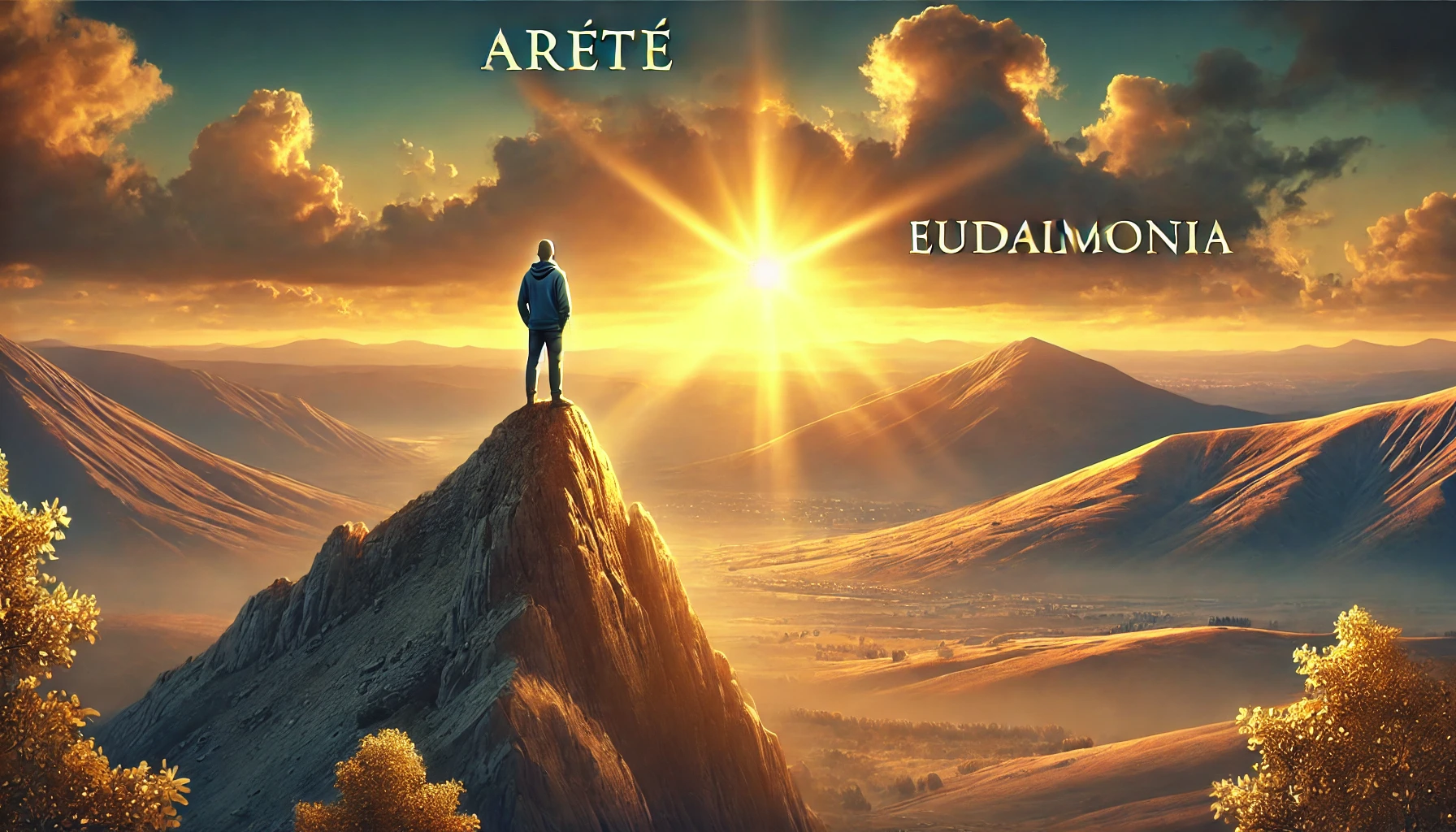
Arete & Eudaimonia: The Cornerstone Philosophy of Excellence
The path to true excellence isn't found in quick fixes or surface, level achievements. It's discovered through the ancient wisdom of arete and eudaimonia, principles that have guided the greatest minds for over 2,000 years.