The Fastest Path to Opportunity Is Through the Work Nobody Wants
By Derek Neighbors on December 7, 2025
My first programming job, I got assigned the work nobody wanted.
Form field setup. Eight hundred forms sitting in the backlog. Tedious, painful work that required moving files around manually and testing each one by hand. When my coworkers found out about my assignment, the reactions were predictable. “Sucker.” “Sorry, man.” “Gotta pay your dues.”
Day one, I learned the process. Day two, I asked every question I could think of. Day three, I automated the file moving and form generation.
The next week, I cleared the entire 800-form backlog.
Immediately, they assigned me integrations. Another job everyone avoided. Within three months, I’d fixed two broken integrations and built two new ones that sales had told customers would take months. Six months in, I was building the web version of our software. One year from my first day, I was writing the next generation system for the company.
One year from “sucker” to building the company’s future.
Everyone told me I was paying my dues. They expected years of grunt work before I’d earn better assignments. Instead, the dirty work became a fast-track. The path nobody wanted was empty. And that was the opportunity.
The Standard
The people who accelerate their careers share a pattern. They build reputation before they need it. They develop skills in low-stakes environments before the stakes get high. They become known as the person who handles things. They accumulate trust through consistent action, not impressive announcements.
The ancient Greeks had a word for this: philotimia. Love of honor through action. They understood that honor came from contribution, not position. True ambition shows itself through willingness to serve, not demand for recognition. The person who volunteers for hard work demonstrates character that credentials can’t replicate.
You see this everywhere once you know what to look for. The person who takes meeting notes without being asked. The one who cleans up the codebase nobody wants to touch. The leader who has the difficult conversation everyone else avoids. The team member who volunteers for the project with no glory attached.
The path to influence runs through usefulness, not visibility. That’s not a career hack. That’s how character becomes the foundation of real capability.
The Gap
Modern career advice is obsessed with visibility. Build your personal brand. Network strategically. Make sure the right people see your work. Everyone’s competing for the same high-profile opportunities, the same prestigious projects, the same visible wins.
The result is predictable. Crowded paths, commoditized efforts, diminishing returns. When everyone’s fighting for the spotlight, the spotlight becomes worthless.
The avoidance patterns are everywhere. The glamour seeker only volunteers for projects with executive visibility. The credit calculator measures every task by its recognition potential. The strategic networker builds relationships based entirely on what people can do for them. The credential collector pursues titles instead of capabilities.
The gap exists because short-term thinking dominates. Reputation seems more valuable than competence. The dirty work is genuinely unpleasant. And nobody teaches this path because it doesn’t sell courses or look good on a conference slide.
But the hidden cost is brutal. Skills remain shallow because they never faced real difficulty. The problem isn’t talent, it’s focus. Reputation stays fragile because it’s built on appearance, not substance. When these people get tested, they crack. They avoided every test along the way.
The Greeks called this ponos: toil, labor, the difficult work that builds capacity. They didn’t romanticize hard work. They understood its function. ponos wasn’t punishment. It was the price of capability. The person who avoids all ponos remains permanently weak.
The Path
The dirty work doorway has four steps. None of them are complicated. All of them require swallowing your pride.
First, identify what everyone avoids. What projects sit in the backlog for months because nobody wants to touch them? What conversations never happen because they’re uncomfortable? What skills does nobody want to develop because the learning curve is steep? What relationships go unmaintained because they require effort? The answers are obvious once you start looking. They’re the things people complain about but never volunteer for.
Second, volunteer before you’re ready. Don’t wait until you feel qualified. The dirty work doesn’t require expertise. It builds expertise. Raise your hand when others stay silent. Accept the assignment everyone else declines. The qualification comes from doing the work, not from preparing to do the work.
Third, execute without fanfare. Do the work without announcing it. Don’t immediately seek credit or recognition. Let results speak before you do. Build evidence, not claims. Whether anyone notices is outside your control. What you become through the work is not.
Fourth, compound the trust. Each completed difficult task creates access to the next one, building a greatness flywheel that accelerates with every revolution. Trust accumulates faster than credentials. Reputation as the person who handles things opens every door. The network you build through shared difficulty is unbreakable because it’s based on demonstrated value, not performed potential.
Aristotle called this ergon: proper function. Everything has a proper function. A knife’s ergon is to cut. A leader’s ergon is to develop others. But you don’t arrive at your highest function by skipping the foundational ones. Usefulness builds the capacities that higher functions require. The person who serves well develops the character to lead well. That’s not a detour from your ergon. That’s how you grow into it.
This requires ego death around “beneath me” thinking. It requires patience for the compound effect to work. It requires tolerance for invisible labor. But the internal work always works. Character compounds even when recognition doesn’t, because excellence is rented, not owned, and the rent builds equity in who you become.
And it remains correct even when it doesn’t lead to recognition. The internal transformation is guaranteed. The external reward is common but not promised. If you walk through the dirty work doorway and never get promoted, you still possess something no one can take: the character you built and the skills you developed. That’s not a consolation prize. That’s the actual prize.
The Test
You know you’re progressing when you stop calculating visibility before volunteering. When difficult tasks feel less like burden and more like opportunity. When people start coming to you with problems, not just assignments. When your reputation arrives in rooms before you do.
The intermediate markers are clear. You get invited to conversations you weren’t invited to before. People trust you with sensitive information. Leadership asks your opinion on things outside your role. Opportunities find you instead of you finding them.
The advanced signs are unmistakable. You have influence without formal authority. Your endorsement carries weight. People want to work with you specifically. The dirty work you once did is now handled by others you’ve developed.
Ask yourself the diagnostic questions. What unglamorous task have you volunteered for in the last 30 days? What skill are you developing that nobody’s asking you to develop? What relationships are you building with people who can’t help your career right now? What work are you doing that nobody will ever see?
If you can’t answer those questions, you’re on the crowded path. You’re competing for visibility instead of building usefulness. You’re playing a game with diminishing returns.
The Mastery
When you’ve walked through the dirty work doorway enough times, something shifts. You stop worrying about visibility because your work creates its own. Opportunities become abundant because you’ve built trust at scale. Your career becomes anti-fragile. Setbacks become setups because you have skills and relationships that can’t be taken away.
The ultimate realization is simple but profound. The dirty work wasn’t the price of success. It was the success. Finishing matters more than starting, and each finished piece of unglamorous work builds the next opportunity. The skills you built through difficulty are the only ones that matter when difficulty arrives. The relationships forged in shared hardship are the only ones that last when things get hard. The person you became through the work is who you actually wanted to be.
This is arete in career form: becoming excellent through action, not aspiration. This is eudaimonia earned: flourishing that comes from living your proper function. This is character that can’t be counter-offered, that credentials can’t replicate, that circumstances can’t take away.
Final Thoughts
Here’s the challenge. Look at your calendar for the next week. Identify one task, project, or conversation that everyone else is avoiding. Volunteer for it before anyone asks. Execute it without announcing it.
The path is empty because people won’t take it, not because it doesn’t work. Nearly every person worth admiring walked through the dirty work doorway. The only question is whether you’re too proud to follow.
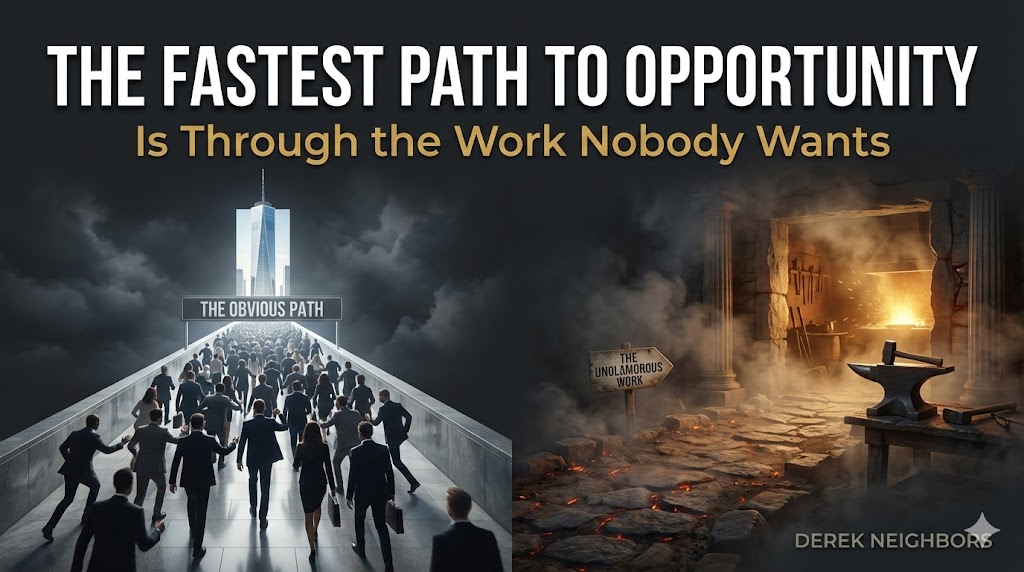
The line for high-profile opportunities is long. The line for hard, thankless work is empty. That’s not a bug. That’s the opportunity.
Ready to stop competing for crowded opportunities and start building through the work others avoid? MasteryLab provides the framework and community for people who understand that the fastest path to excellence runs through difficulty, not around it.