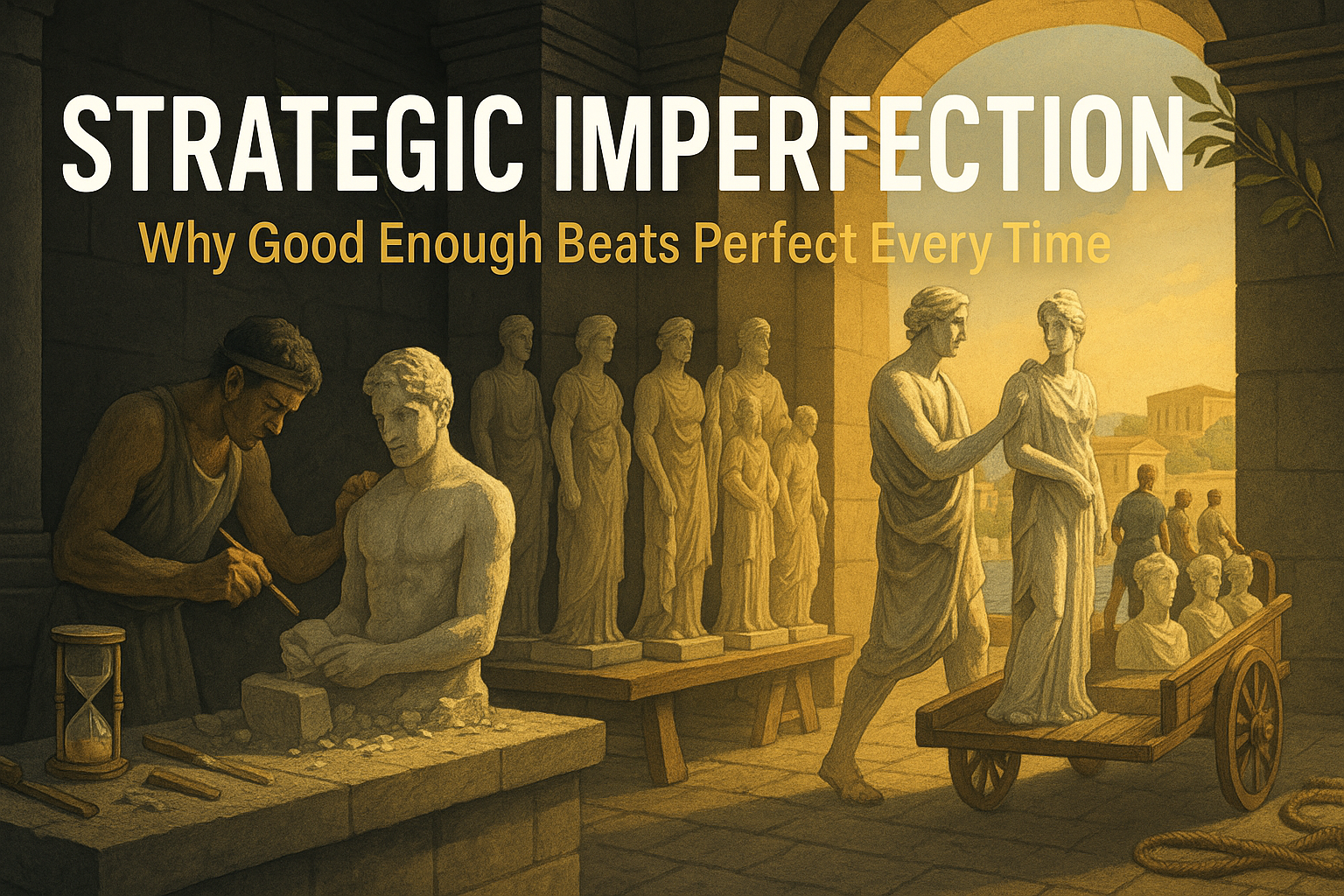
Arete (ἀρετή): Meaning, Definition & Modern Application
ah-reh-TAY
Excellence of function. Not achievement or outcome, but becoming excellent through consistent action and the full expression of your capabilities.
Etymology
From the Greek root ar-, meaning “fitting” or “suitable.” Arete originally described any thing performing its function superbly, whether a sharp knife or a fast horse. Homer used it to praise warrior prowess in the Iliad, but by Aristotle’s time the word had expanded to encompass moral and intellectual virtue. The shift reflects Greece’s evolving understanding that human excellence requires character, not merely skill.
Modern Application
You pursue arete by showing up fully every day, executing on what matters, and developing the character to sustain high performance. It shifts your focus from what you accomplish to who you become through the work.
How to Practice Arete
Start each morning by identifying the one thing that demands your best effort today, then execute it before anything else. At day’s end, conduct a brief self-audit: where did you bring full capability, and where did you coast? Track these reflections in a journal to spot patterns. When you notice recurring gaps between your standard and your output, design a specific drill to close them. Pair with someone who will hold you accountable to your own stated standard, not theirs. Each week, choose one skill within your domain and practice it with deliberate intensity for thirty focused minutes. Seek feedback from someone who performs at a level above yours, and implement one adjustment before the next session. Review your journal monthly to measure trajectory. Excellence compounds through honest daily reps, not occasional heroics. The goal is not perfection but a consistent upward slope in the quality of your effort.
Frequently Asked Questions
What is arete in Greek philosophy?
Arete is the Greek concept of excellence or virtue. It refers to fulfilling your highest potential and performing your function with the greatest possible skill and moral character. For Aristotle, arete was not a single trait but the full expression of human capability in action. He argued in the Nicomachean Ethics that arete is developed through habitual practice, making it a quality you build through consistent effort rather than something you are born with.
What does arete mean?
Arete means excellence of function. The word originally described anything performing its purpose superbly, from a sharp knife to a swift horse. Applied to humans, it encompasses both moral virtue and practical skill, the combination of good character and competent action. Homer used it primarily for warrior prowess, but by the classical period it had expanded to include intellectual, moral, and civic dimensions of excellence.
How do you practice arete?
You practice arete through deliberate daily action aimed at excellence in your specific domain. This means consistently showing up fully, refining your craft, conducting honest self-assessments, and developing the character traits that sustain high performance over time. Aristotle taught that virtue is formed through repetition, so the key is designing daily habits that close the gap between your current performance and your highest standard.
What is the difference between arete and success?
Success is an external outcome measured by others' standards. Arete is an internal standard of excellence focused on becoming the best version of yourself through sustained effort and virtue. You can achieve success without arete, and you can embody arete without conventional success. The ancient Greeks would have recognized that a wealthy person who achieved their fortune through corruption lacked arete entirely, while a person who pursued excellence with integrity possessed it regardless of material outcome.