Sophrosyne vs Enkrateia: Key Differences in Greek Philosophy
Both sophrosyne and enkrateia involve managing your desires, but they represent fundamentally different relationships with those desires. Enkrateia is fighting yourself to do the right thing. Sophrosyne is no longer needing to fight because your desires have been aligned with reason. The distinction reveals whether you are controlling yourself through effort or have genuinely transformed your character.
Definitions
Sophrosyne
(σωφροσύνη)
soh-froh-SOO-nay
Self-mastery and moderation. The discipline to regulate yourself internally when nothing external compels you to continue.
Enkrateia
(ἐγκράτεια)
en-KRAH-tay-ah
The mastery of self through the power of will over impulse and appetite. For Aristotle and the Stoics, enkrateia represents the disciplined control where reason governs desire, distinct from sophrosyne in that the struggle against temptation remains consciously felt.
Key Differences
| Aspect | Sophrosyne | Enkrateia |
|---|---|---|
| Internal Experience | Sophrosyne involves a harmonious soul where desires naturally align with reason. The temperate person wants what is good. | Enkrateia involves an internal struggle where reason overrides desire. The self-controlled person wants what is bad but chooses not to act on it. |
| Level of Development | Sophrosyne represents a higher stage of character development. It indicates that virtuous habits have reshaped your desires themselves. | Enkrateia represents an earlier stage. It indicates strength of will but shows that the underlying desires have not yet been transformed. |
| Effort Required | Sophrosyne operates with relative ease. When your character is well-formed, the right choice feels natural rather than forced. | Enkrateia requires ongoing effort. Each decision involves a conscious battle between what you want and what you know is right. |
| Stability | Sophrosyne is stable because the person's desires support right action. There is no internal force pulling toward excess. | Enkrateia is less stable because it depends on continued willpower. Fatigue, stress, or emotional upheaval can overwhelm self-control. |
Internal Experience
Sophrosyne involves a harmonious soul where desires naturally align with reason. The temperate person wants what is good.
Enkrateia involves an internal struggle where reason overrides desire. The self-controlled person wants what is bad but chooses not to act on it.
Level of Development
Sophrosyne represents a higher stage of character development. It indicates that virtuous habits have reshaped your desires themselves.
Enkrateia represents an earlier stage. It indicates strength of will but shows that the underlying desires have not yet been transformed.
Effort Required
Sophrosyne operates with relative ease. When your character is well-formed, the right choice feels natural rather than forced.
Enkrateia requires ongoing effort. Each decision involves a conscious battle between what you want and what you know is right.
Stability
Sophrosyne is stable because the person's desires support right action. There is no internal force pulling toward excess.
Enkrateia is less stable because it depends on continued willpower. Fatigue, stress, or emotional upheaval can overwhelm self-control.
When to Apply Each Concept
When to Choose Sophrosyne
Aim for sophrosyne as a long-term developmental goal. Through sustained practice, reflection, and habit formation, you can reshape your desires so that moderation becomes your default rather than your discipline. When you notice that healthy choices require decreasing effort, you are developing sophrosyne.
When to Choose Enkrateia
Practice enkrateia as an immediate strategy when your desires conflict with your values. It is the starting point for anyone working to change behavior. When you know what you should do but do not want to do it, enkrateia is the virtue that gets you through. Honor it as a genuine strength while recognizing that character development can eventually reduce the need for it.
Frequently Asked Questions
What is the difference between sophrosyne and enkrateia?
Sophrosyne is temperance or moderation, a state where your desires naturally align with reason and you want what is genuinely good. Enkrateia is self-control, the capacity to override bad desires through willpower. Aristotle considered sophrosyne the superior state because the temperate person has transformed their character, while the self-controlled person is still fighting their own impulses.
Is enkrateia a virtue in Greek philosophy?
Aristotle considered enkrateia praiseworthy but not a full virtue. It demonstrates strength of will and commitment to doing right, which puts it above weakness (akrasia). However, it falls short of true virtue because the desires themselves remain disordered. Enkrateia is an important stepping stone toward sophrosyne rather than the final destination.
How do you develop sophrosyne from enkrateia?
The path from enkrateia to sophrosyne runs through sustained practice. By consistently choosing right action despite contrary desires, you gradually reshape those desires through habit. Over months and years, what once required willpower becomes natural preference. Aristotle's insight was that virtue is formed through repetition, and repeated virtuous action transforms not only behavior but the underlying desires that drive behavior.
Articles Exploring Sophrosyne or Enkrateia (52)
Make Someone Untouchable and the Failure Is Already Yours
A founding architect nobody was allowed to question. A senior engineer who questioned him once and got moved. Two years of pull requests with zero comments that everyone called quality. Then the migration that took the platform down, with a root cause that had been raised in the one review that got silenced. Athens ran the same story with Alcibiades in 415 BC and lost a fleet. The moment an organization decides someone is beyond reproach, the failure that follows belongs to everyone who agreed, and there is an old Greek word for the thing they got backwards.
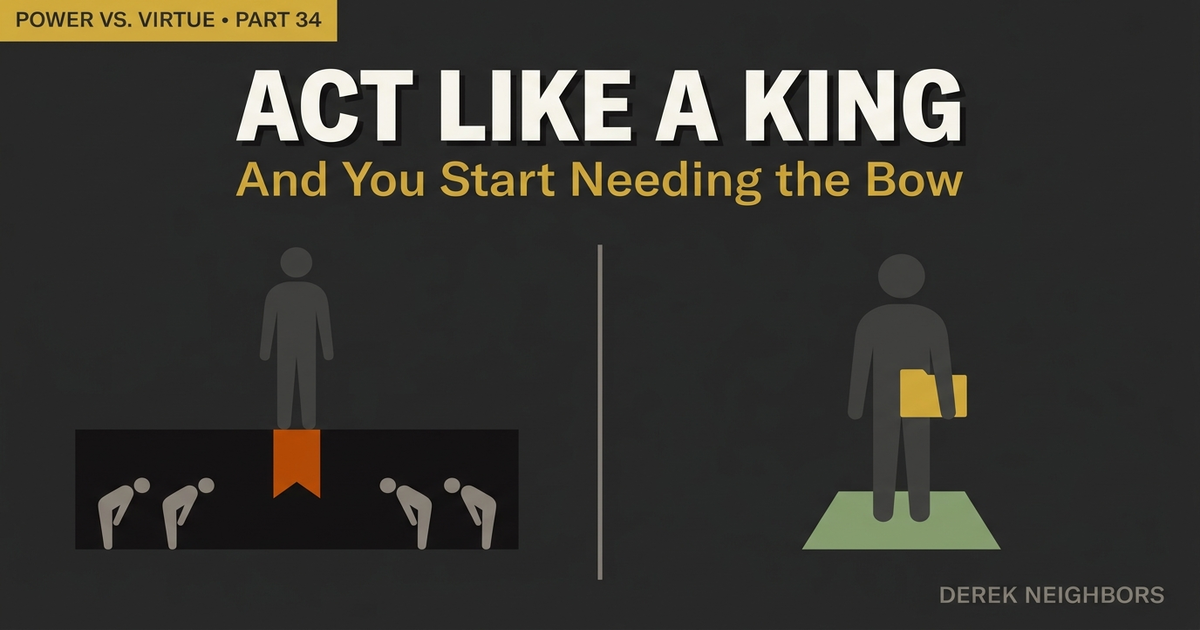
Act Like a King and You Start Needing the Bow
Law 34 of the 48 Laws of Power tells you to act like a king so the room treats you like one. The tactical truth is real. Rooms copy how you price yourself, and cheap familiarity can collapse the work. The character cost arrives when bearing becomes a standing request for deference. You start needing the bow. The ARETE alternative still holds a standard for how you are treated, then roots that standard in inner sufficiency instead of a court.
Stop Treating Yourself Like an Enemy You Have to Defeat
A rest day sat on the plan and I snuck a session anyway. Sitting still felt like losing the person I was becoming. I was occupying a part of myself that had a job: recover.
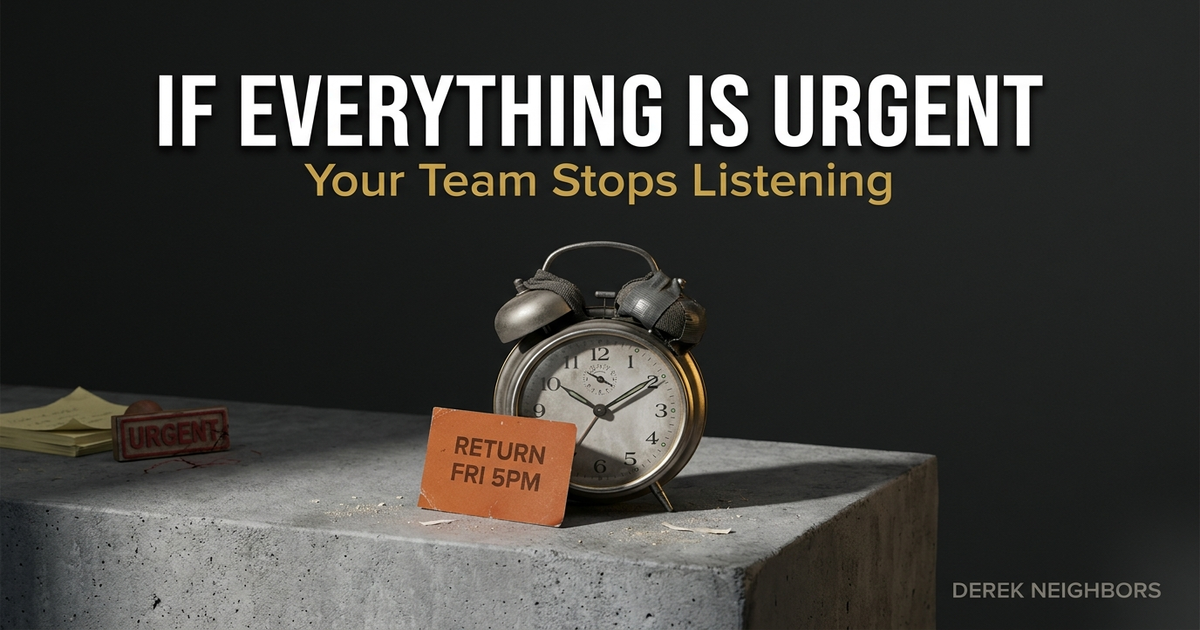
If Everything Is Urgent, Your Team Stops Listening
Constant fire drills train people to ignore you. Calm urgency is scarce pressure with a named end date, shared ownership, and language that matches the work. Restore the signal or lose the room.
Hard Times Build Character. Easy Times Expose It.
Training virtue for hard times is the easy half. The real exam starts when constraints fall away and the only person who can stop you is you. Hard times build the muscle. Easy times tell you what the muscle was for.

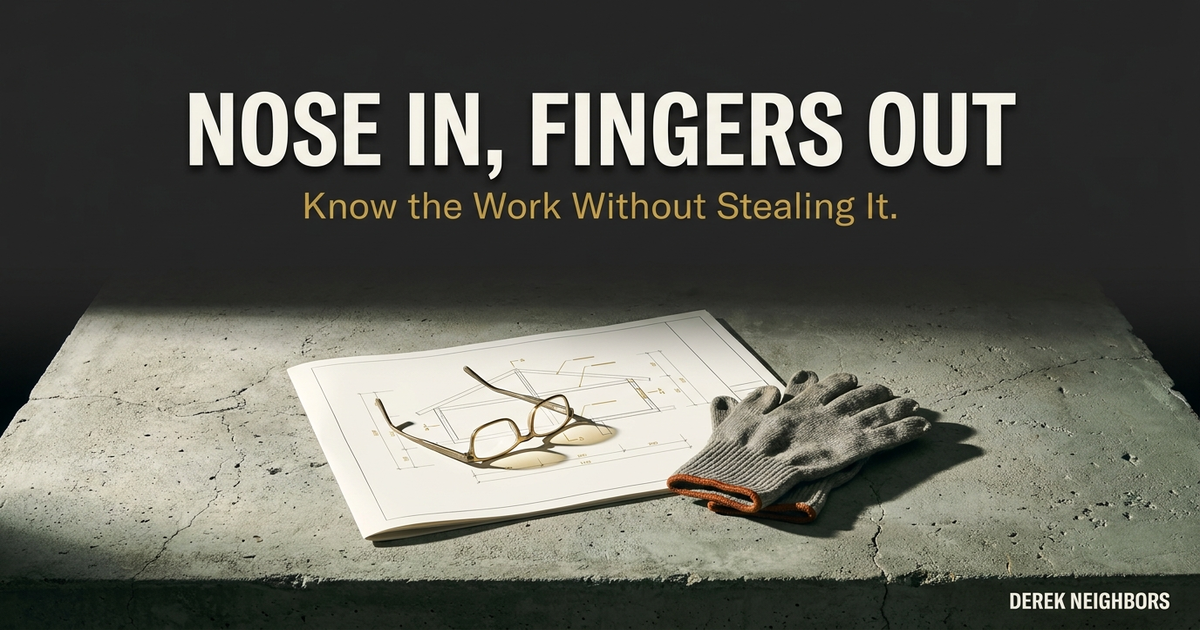
Nose In, Fingers Out. Know the Work Without Stealing It.
After you promote out of the work, people still expect you to know it. Most leaders answer with one of two failures: fingers in every decision, or a polite disappearance that looks like trust. The craft answer is older and sharper. Stay educated. Stop owning choices that are not yours.
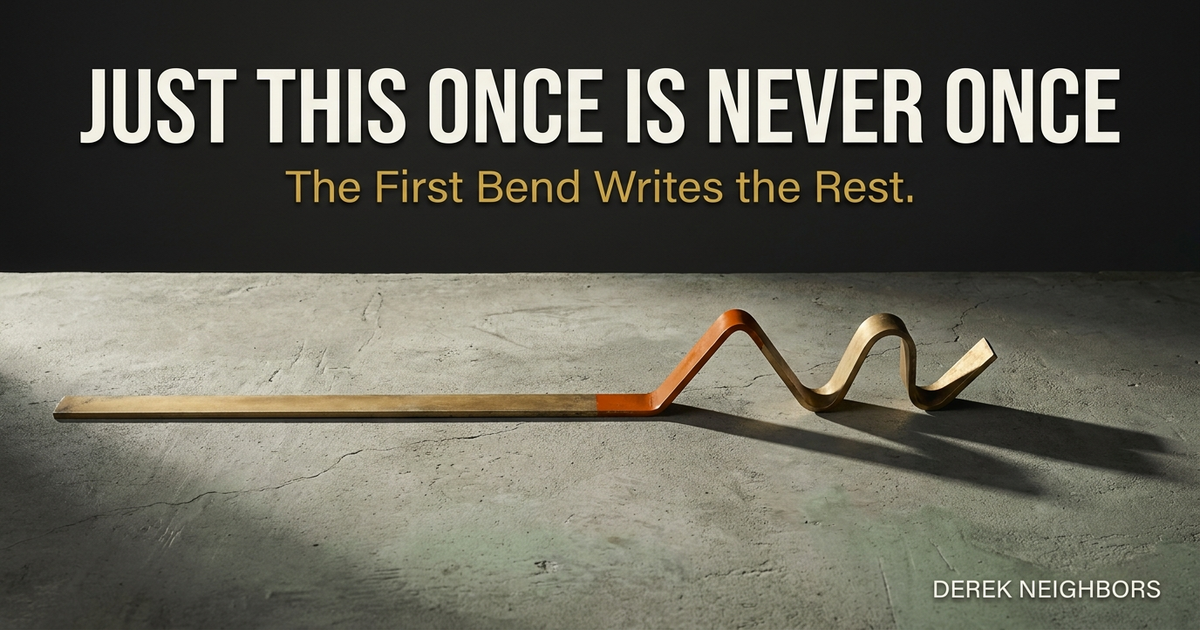
Just This Once Is Never Once
You said yes to the small ask and called it pragmatism. Access, politics, keeping the relationship warm. Temporary yeses do not stay temporary. They become precedent, then habit, then a person who can no longer refuse. Seneca thought proximity to Nero would become influence. It became rehearsal for folding. The only safe answer to 'just this once' is the no spoken before the first bend.
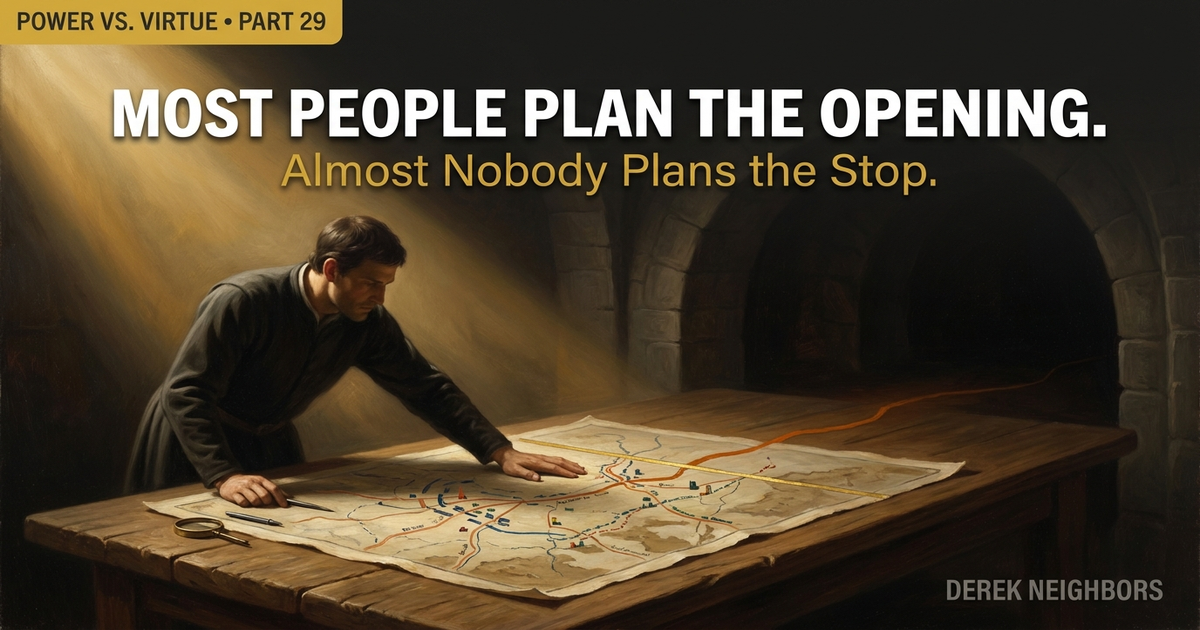
Most People Plan the Opening. Almost Nobody Plans the Stop.
Law 29 of the 48 Laws of Power tells you to plan all the way to the end, and this series agrees with it. Vague plans collapse into improvisation, improvisation is crisis-to-crisis living, and the people who cannot name a stop get owned by whoever can. Greene's evidence is Balboa, who discovered the Pacific and still lost his head, versus Bismarck, who unified Germany and then refused the siren of more. The ancient correction is simple: the ending has to be a worthy end, not just a clever exit, and naming it is what makes bold action safe to start.
Your Response to Unfairness Reveals More About You Than the Unfairness Does
Three leaders take the same public hit. One escalates, one absorbs and redirects, one performs martyrdom for an audience. The unfairness was identical. The response was not. Between the stimulus and your reply lies the only territory where character actually lives, and most people never inspect what runs there.

Your Successor Can't Lead While You're Still in the Room
Most leaders treat succession as a problem of finding the right person. The harder problem comes after. Your continued presence, offered as help, keeps the team loyal to you and the successor leading in your shadow. The Greeks had a discipline for the deliberate withdrawal that finishes the job: anachoresis. The handoff that looks like loss is the only move that completes the work, and it is the one most leaders refuse to make.

Concentrate Your Forces. Just Don't Make Them Someone Else's.
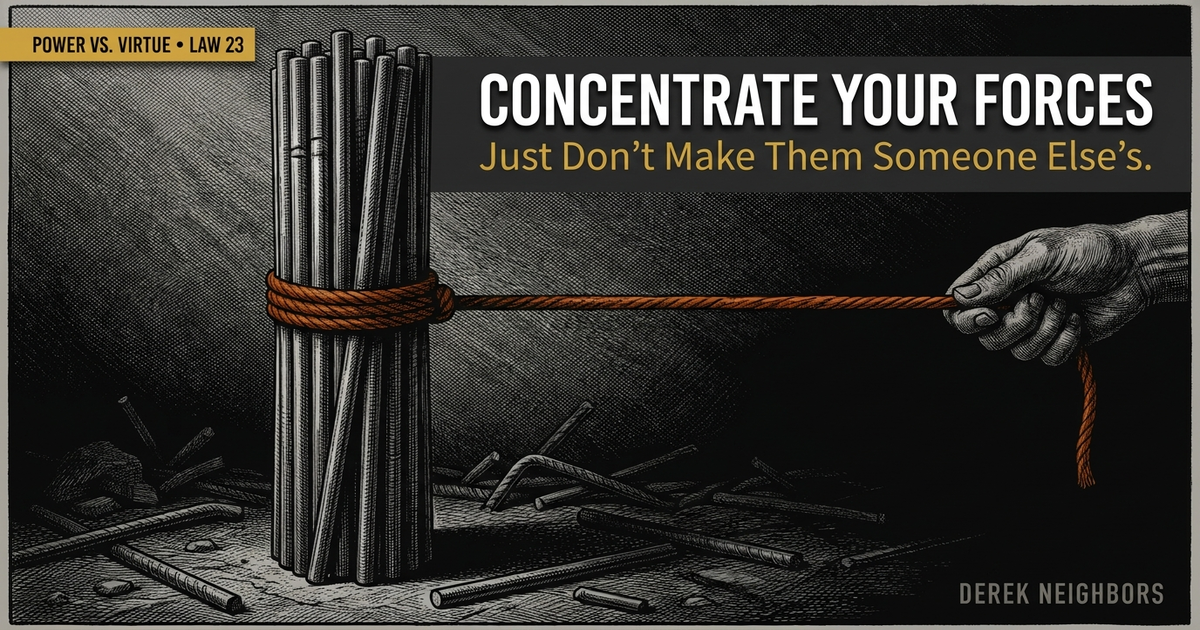
Greene's Law 23 welds two opposite ideas together. Concentrate your forces at their strongest point is some of the most virtue-aligned advice in the book. Find the one patron, the fat cow to milk, is the trap. Both feel like focus. One builds a foundation you own. The other lends your forces to a hand that can drop you.
Carry a Hundred Pounds Up a Mountain. Your Worry List Won't Fit.
Modern comfort has gifted the average mind enough idle capacity to host a daily inventory of anxieties, resentments, and dreads that primitive life would not have permitted. Malakia is the Greek word for the moral failure this produces, softness as a settled disposition that organizes a life around the avoidance of effort. The cure is not therapy or another book. It is the deliberate, repeated practice of putting a real load on the body, large enough and long enough that the simulated load in the mind cannot fit on the climb. Askesis as training. Ponos as productive toil. The pack on the back is not penance. It is the cure for the part of the mind that was about to be eaten by the surplus capacity comfort produces.

Surrender Isn't Weakness. Pretending to Surrender Is.
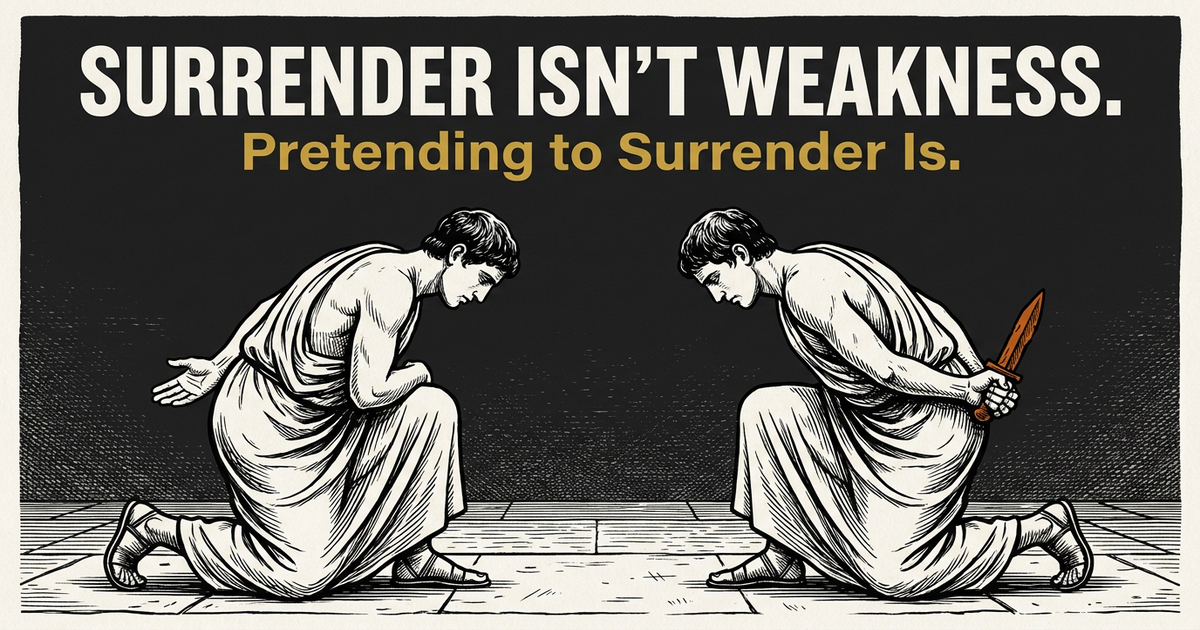
Greene's Law 22 tells you to surrender as a counter-trap. The tactic is real, and the Stoics knew the moves it copies. But Marcus Aurelius yielded to preserve his prohairesis. Greene's reader yields to spring an ambush. The heads can look identical; the ends diverge. The test that separates them is whether you could name, out loud, what you yielded for.
Stop Trying Harder. Start Moving Like Water.
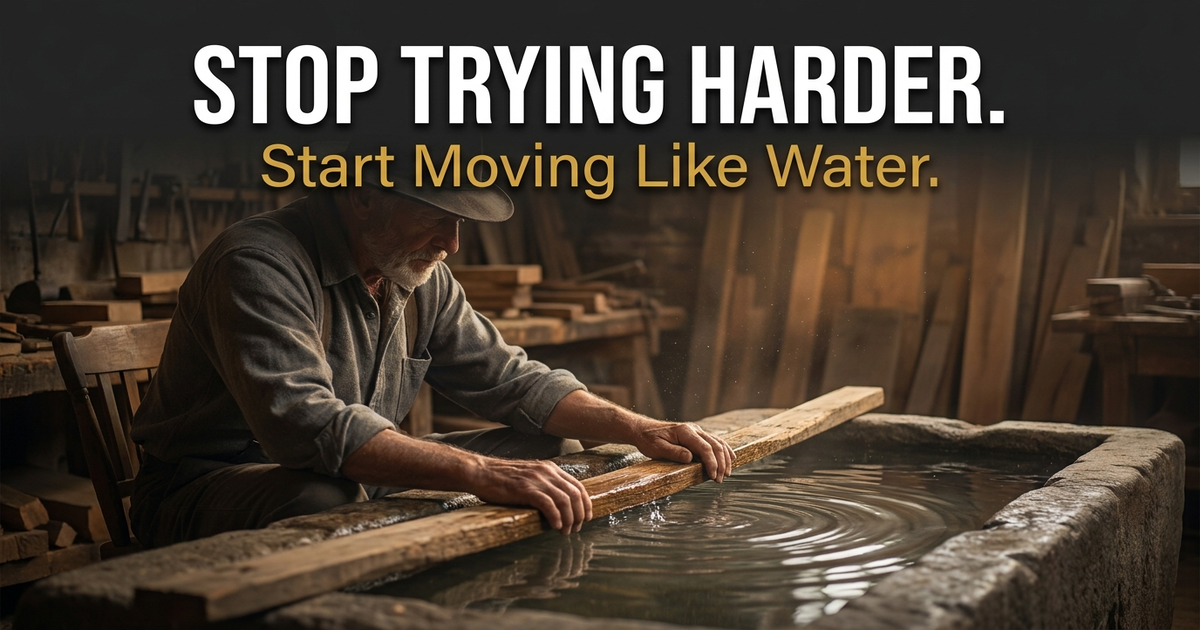
The mythology that says excellence comes from gripping tighter is a Western misread of how skilled humans actually perform. Four hundred years ago, a swordsman named Miyamoto Musashi described the working stance every senior craftsman, surgeon, musician, and distance runner eventually finds: mizu no kokoro, the water mind. Alert without rigidity. Fitted to the moment. Impossible to tense up. The novice grips. The master flows. This is the investigation into why, and the training that gets you across the threshold.
Acting Dumb to Get Ahead Works. Until You Can't Stop Acting.
Greene's Law 21 tells you to play the fool so your marks lower their guard. The tactic is real. The Greeks invented it. But Socrates played dumb to make people wiser, and Greene plays dumb to make people poorer. The mask is identical. The cost of running the wrong one is that you eventually cannot take it off.
Your Burnout Isn't a Schedule Problem. It's a Stewardship Problem.
The productivity industry has been selling calendar tools to people whose problem was never on the calendar. You can engineer your week perfectly and still arrive at Friday burned alive. The category you are missing has a Greek name and a four-thousand-year track record. Stewardship, not scheduling, is the lever ambitious people keep refusing to pull.
Your Self-Doubt Is a Tax on Everyone Around You
We treat self-deprecation as humility. Aristotle saw it as the same failure of self-knowledge as arrogance, just from the opposite side. The cost lands on the people around you.

You Don't Have a Stress Problem. You Have a Control Problem.
Most people try to engineer their lives down to zero pressure. The Stoics tried something harder. They trained the response so the pressure stopped being decisive.
One Slip Doesn't Set You Back a Day. It Sets You Back Months.
You tell yourself one day off won't matter. But momentum doesn't degrade on a schedule. It collapses. And the rebuild costs more than you think.
Disappear Often Enough and People Stop Noticing When You Return
Law 16 says use absence to increase respect. The Stoics practiced withdrawal too, but for a completely different reason. One builds depth. The other builds delusion.
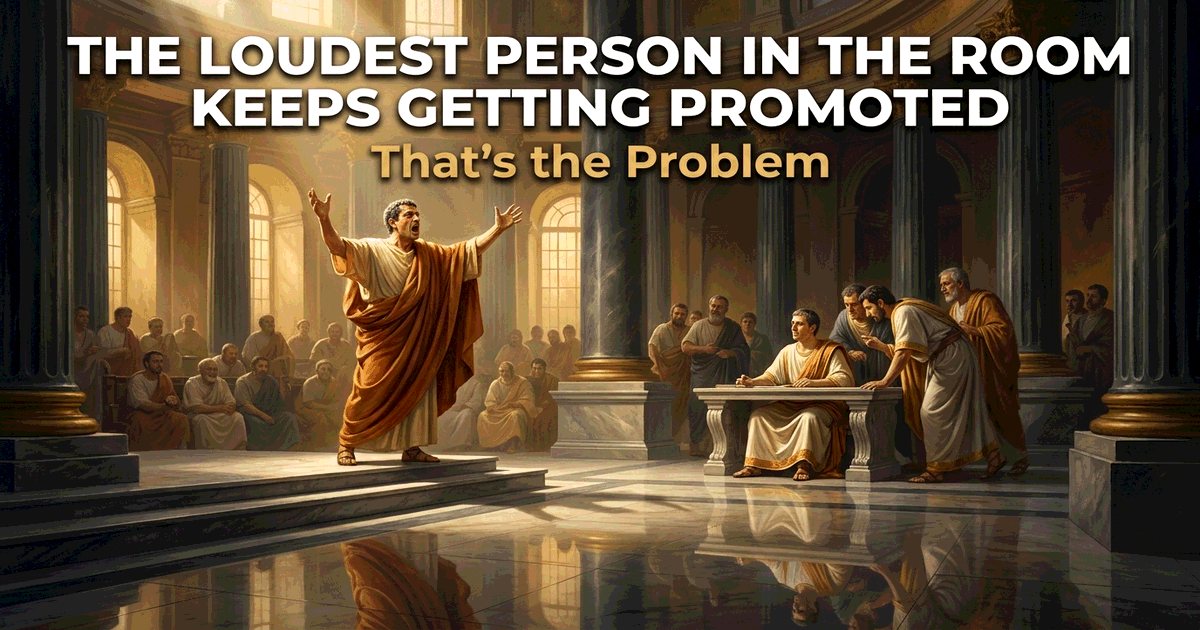
The Loudest Person in the Room Keeps Getting Promoted. That's the Problem.
The person who speaks first, speaks loudest, and projects the most certainty keeps getting the corner office. Meanwhile, the person the team actually trusts gets passed over. The ancient Greeks had a name for both patterns.
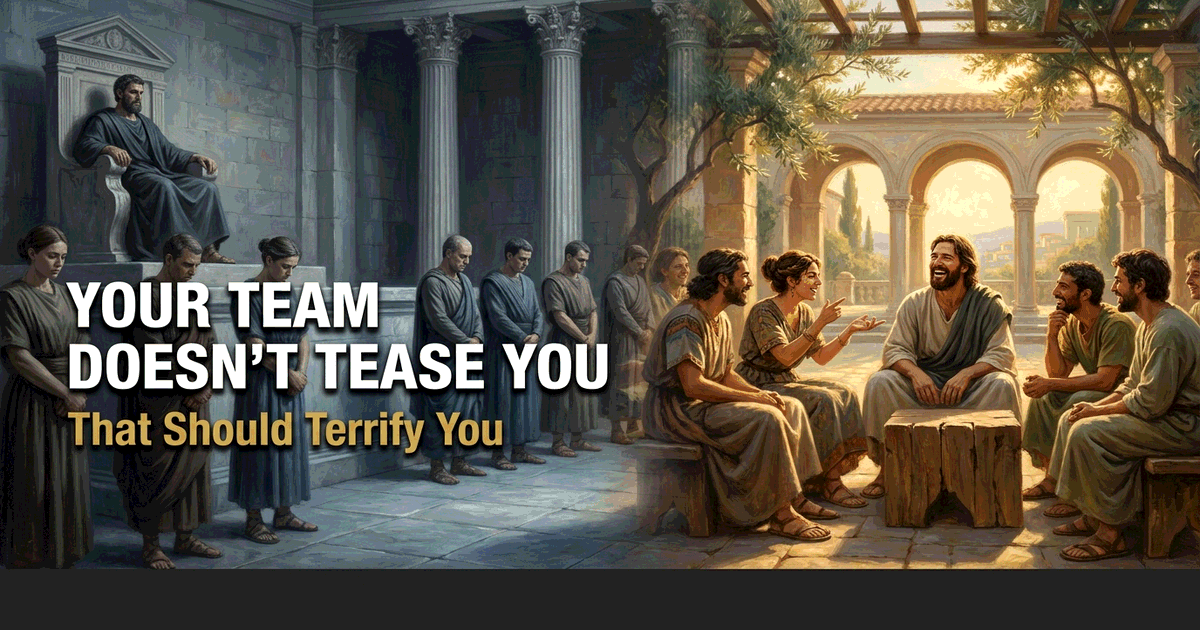
Your Team Doesn't Tease You. That Should Terrify You.
The capacity to receive what you give is the mark of integrated character. Leaders who dish out sharp feedback but bristle when it comes back their way reveal something they would rather not face: their strength was a performance all along.
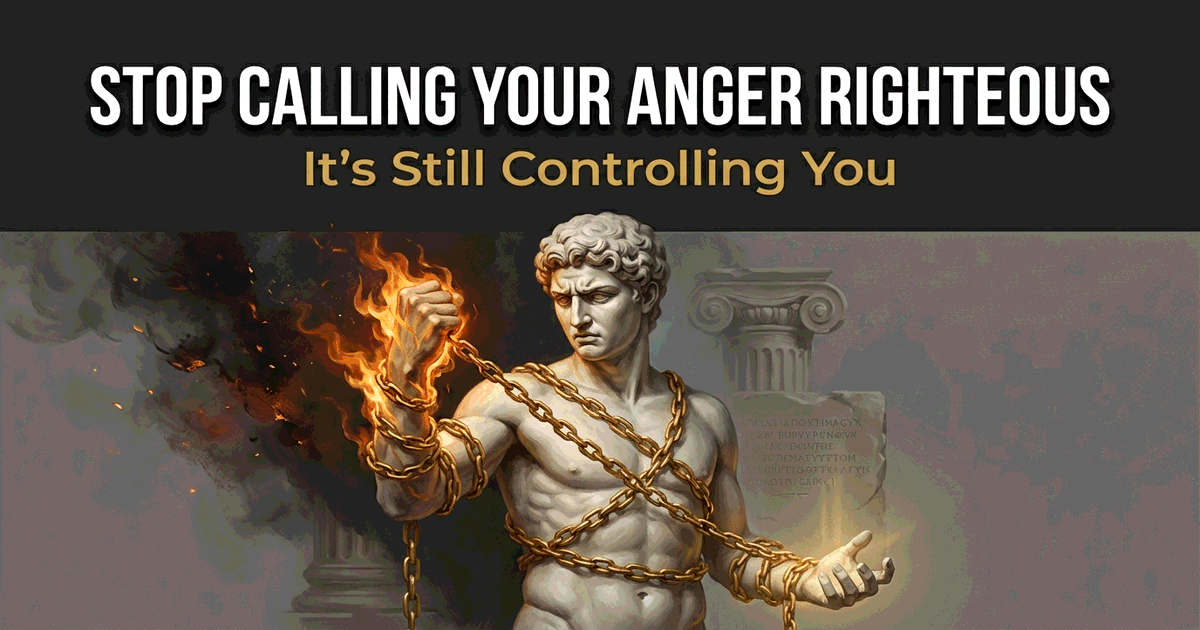
Stop Calling Your Anger Righteous. It's Still Controlling You.
Marcus Aurelius argued that kindness requires more courage than fury. The Stoics rejected righteous anger as philosophy's most dangerous illusion, and modern neuroscience proves them right.
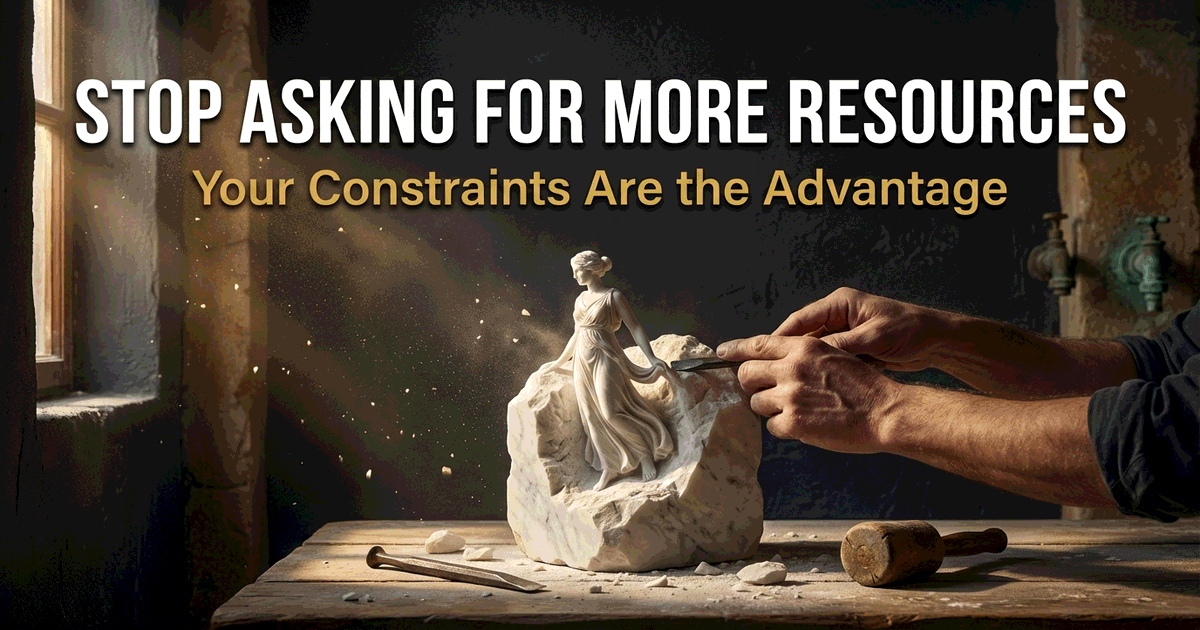
Stop Asking for More Resources. Your Constraints Are the Advantage.
The meeting where someone asks for more budget, more headcount, more time is almost never about resources. It's about avoiding the harder question of what to cut. The paradox: limitations don't block great work. They force it.
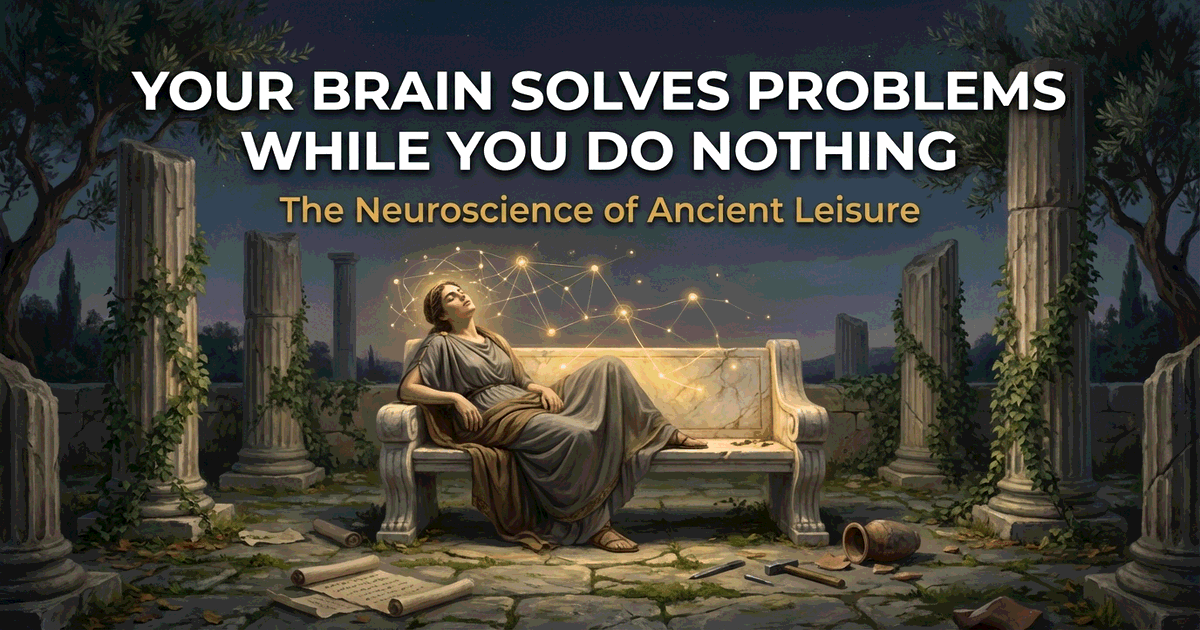
Your Brain Solves Problems While You Do Nothing
The Default Mode Network does your brain's most sophisticated cognitive work when you stop trying. The ancient Greeks built their civilization around this principle. Modern hustle culture has buried it.
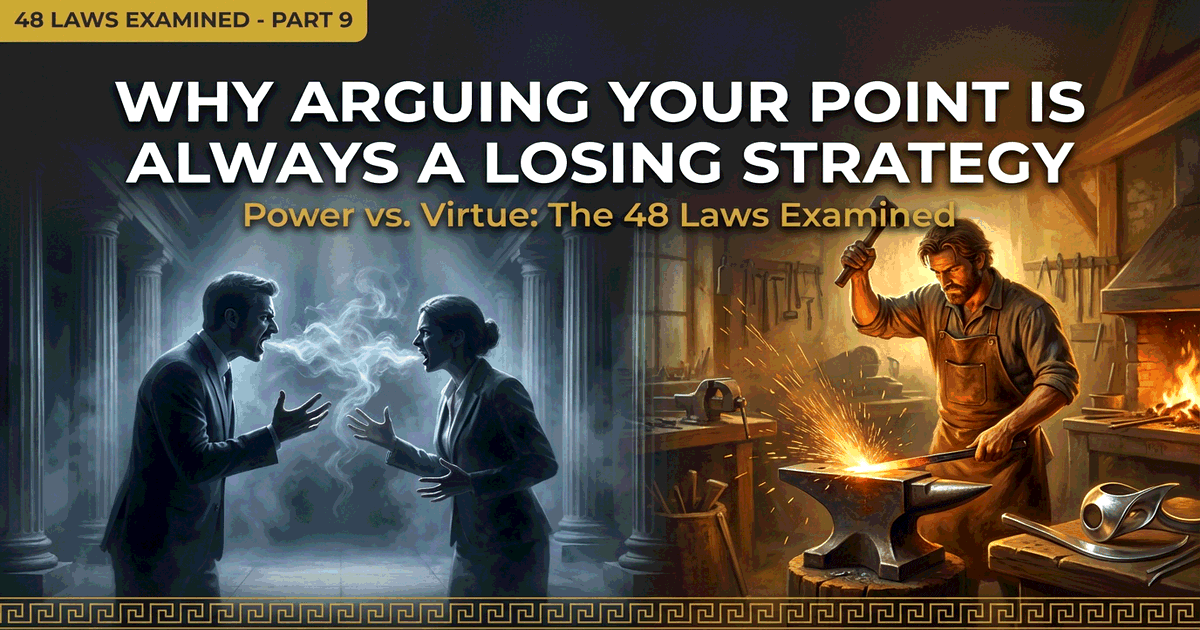
Why Arguing Your Point Is Always a Losing Strategy
For the second time in this series, Greene and the ancient philosophers agree. Demonstrate, don't argue. But they agree for different reasons, and the difference reveals whether you're performing power or practicing excellence.
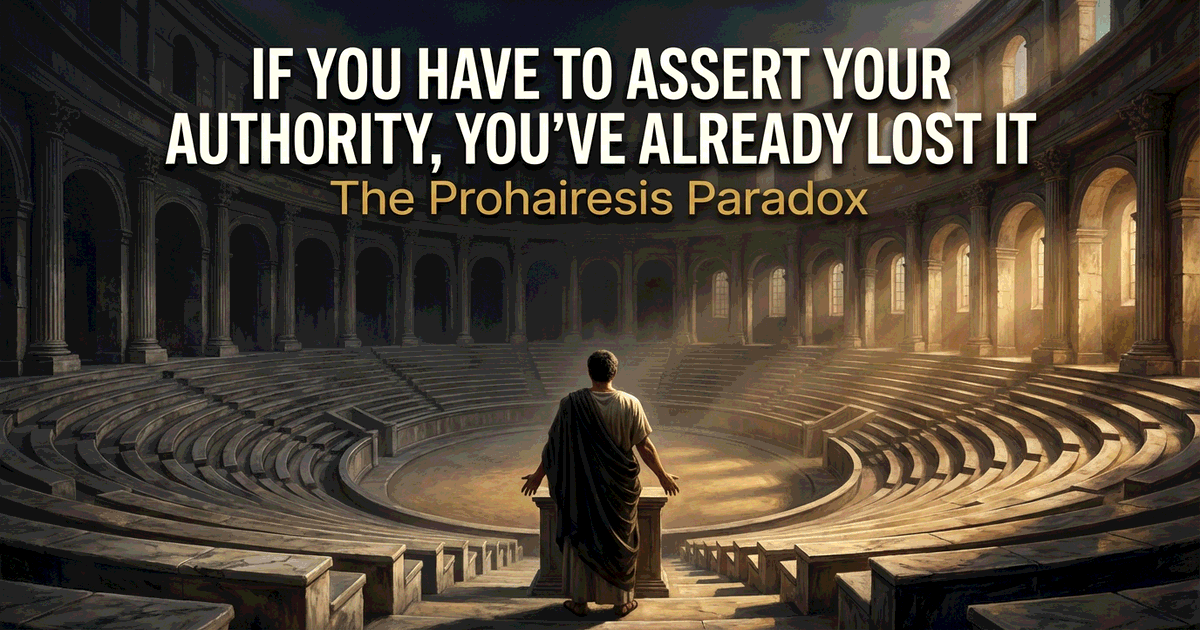
If You Have to Assert Your Authority, You've Already Lost It
The meeting goes quiet when a leader pulls rank. They think they won. The room knows better. The ancient Stoics understood that the highest expression of power isn't exercising it. It's choosing not to. The Greek concept of prohairesis reveals why the leaders with the most authority are the ones who almost never use it.
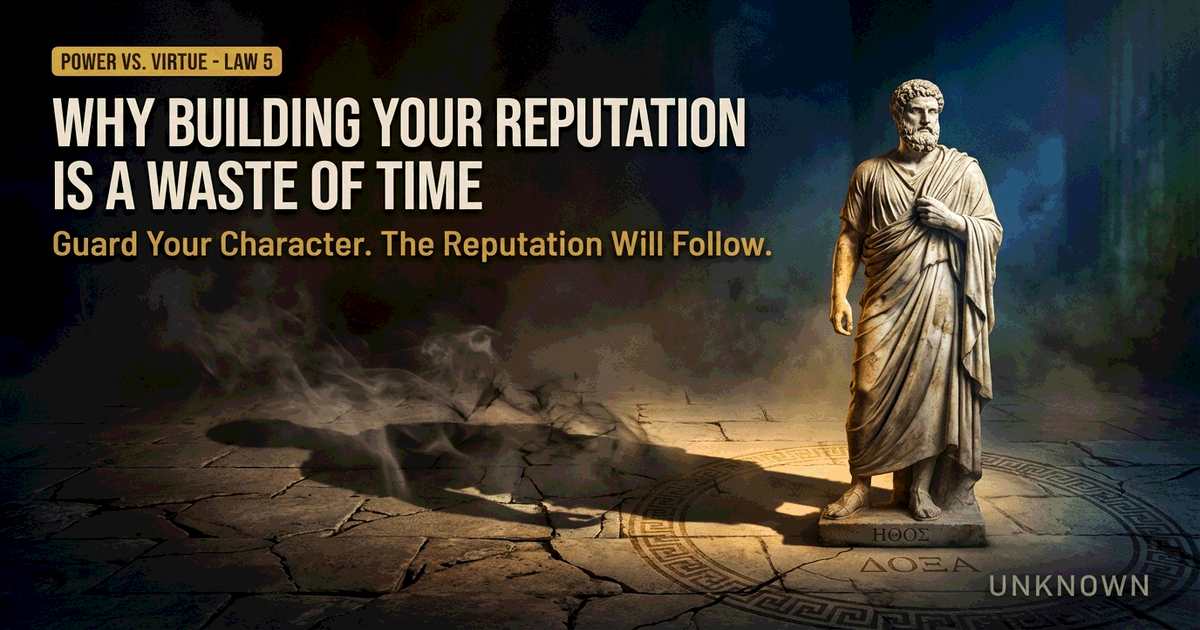
Why Building Your Reputation Is a Waste of Time
Greene says guard your reputation with your life. The Greeks say build character worth remembering. One requires constant maintenance. The other requires consistent choices. The difference explains why some reputations survive scrutiny and others collapse the moment the spotlight shifts.
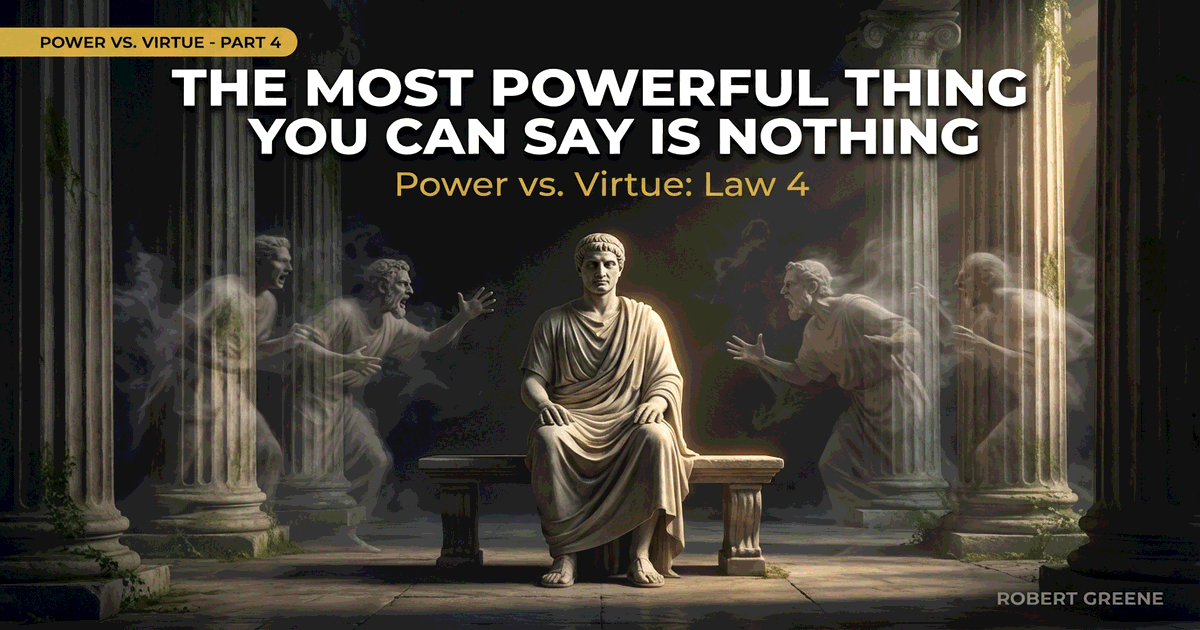
The Most Powerful Thing You Can Say Is Nothing
For the first time in this series, Greene and the ancient philosophers agree. Say less. Mean more. But they agree for different reasons, and the difference reveals everything about power versus virtue.
Hats, Haircuts, and Tattoos: Why You're Making Every Decision at the Wrong Speed
Most people spend 45 minutes choosing a Netflix show and 20 minutes choosing a mortgage. The problem isn't indecision. It's miscalibration. Phronesis (practical wisdom) demands matching speed to stakes.

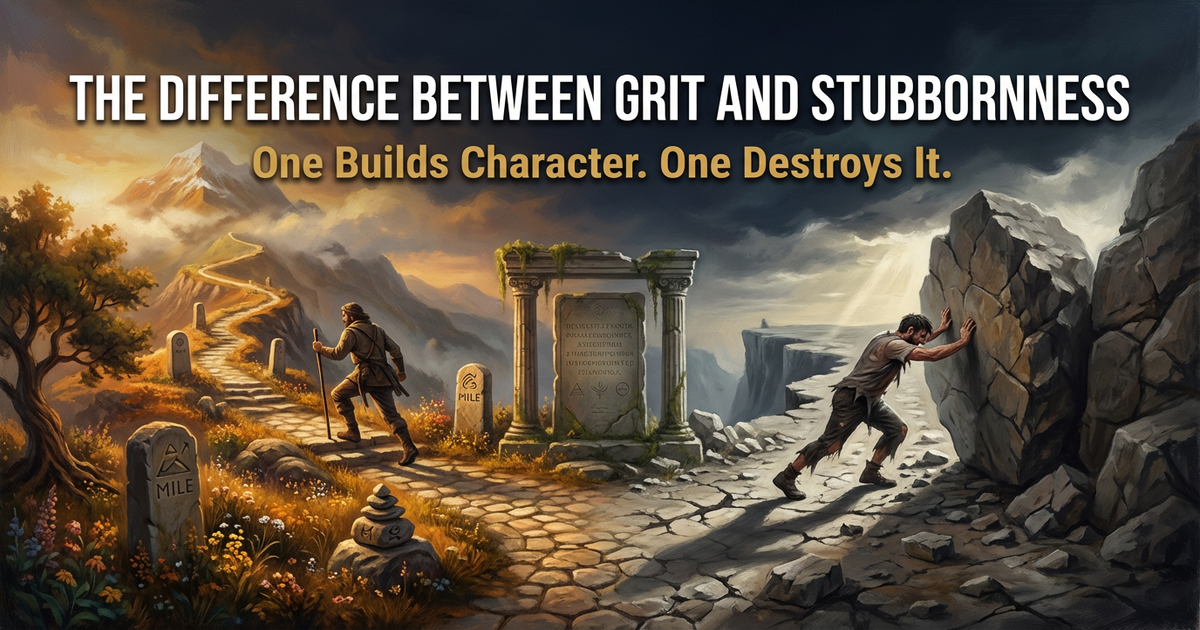
The Difference Between Grit and Stubbornness (One Builds Character, One Destroys It)
Angela Duckworth made grit famous. She didn't explain when it becomes stubbornness. The Stoics knew: prohairesis (moral choice) distinguishes persistence that builds character from ego that refuses to accept reality.
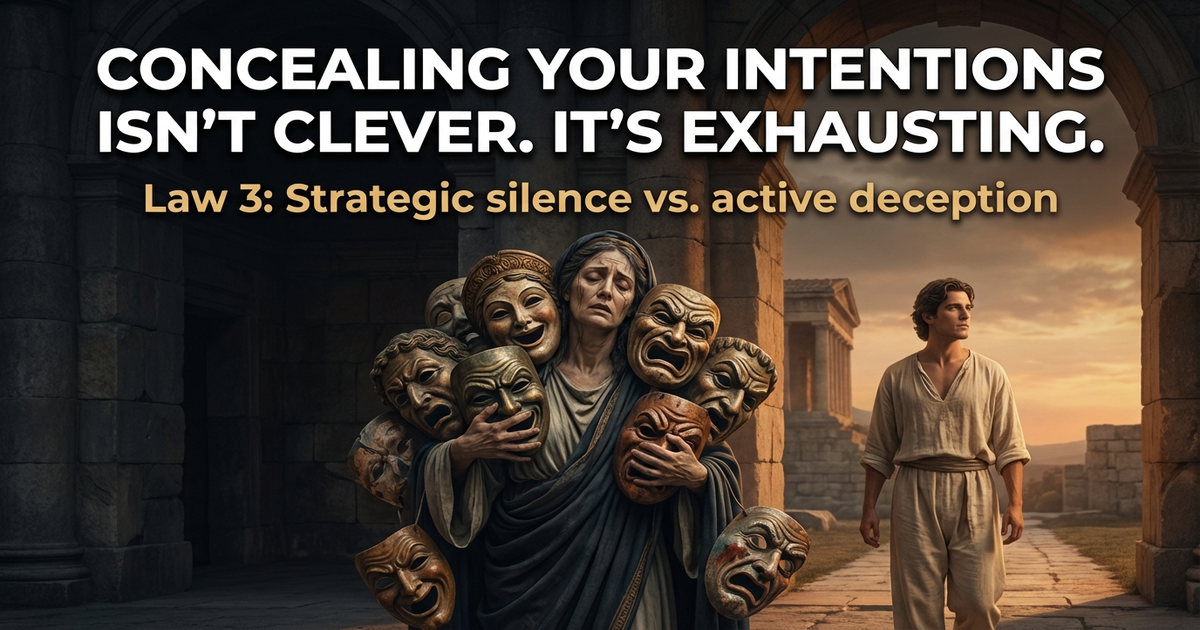
Concealing Your Intentions Isn't Clever. It's Exhausting.
Greene's Law 3 conflates wisdom with manipulation. Strategic silence is phronesis. Active deception is a cognitive tax that compounds into exhaustion and isolation.
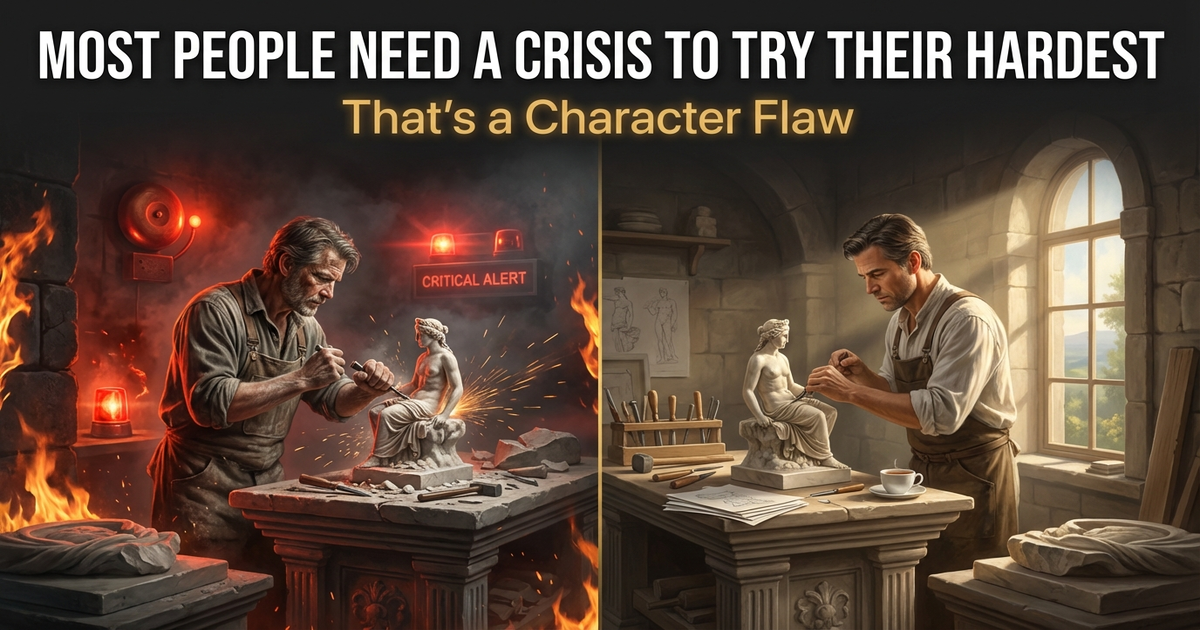
Most People Need a Crisis to Try Their Hardest. That's a Character Flaw.
Crisis unlocks extraordinary performance. But needing crisis to access your best means your best isn't really yours. It belongs to whatever circumstances happen to arrive.
Your Goals Aren't Too Big. Your Sacrifices Are Too Small.
You don't have an ambition problem. You have a payment problem. Everyone wants the dream. Almost no one wants to pay what it actually costs.

If You Want to Lead, You Don't Get to Have "Your" Problems Anymore
Leadership is not just influence. It is load. If everything becomes your emergency, the system is broken. Fix it with decision clarity, steady presence, and practical restraint.

Most Success Is Just Avoiding Obvious Mistakes
Everyone's chasing brilliance while tripping over obvious errors. The uncomfortable truth about success isn't that you need to be smarter. You need to stop being dumb.
Hard Work Stops Some People. Uncertainty Stops Everyone Else.
Andy Weir posted chapters of The Martian to his blog for 10 years. 3,000 readers. No validation. No proof it mattered. Then the breakthrough. The separator isn't talent or work ethic, it's tolerance for uncertainty.
Why Do Smart People Overcomplicate Everything?
The Greeks understood something we've forgotten, true wisdom reveals itself through simplicity, not complexity. Intelligence is finding the simple truth, not creating elaborate frameworks.

Delayed Gratification Isn't Self-Control. It's the Foundation of All Virtue.
Everyone got the marshmallow test wrong. They turned it into a success predictor. The Stoics understood the real truth 2,000 years ago: delayed gratification isn't about outcomes, it's about character.

Forgiveness Isn't About Them. It's the Most Selfish Thing You Can Do.
Every minute you spend resenting someone is energy you're not using to build your life. The Stoics knew what we forgot: forgiveness releases you from the prison, not them from consequences.
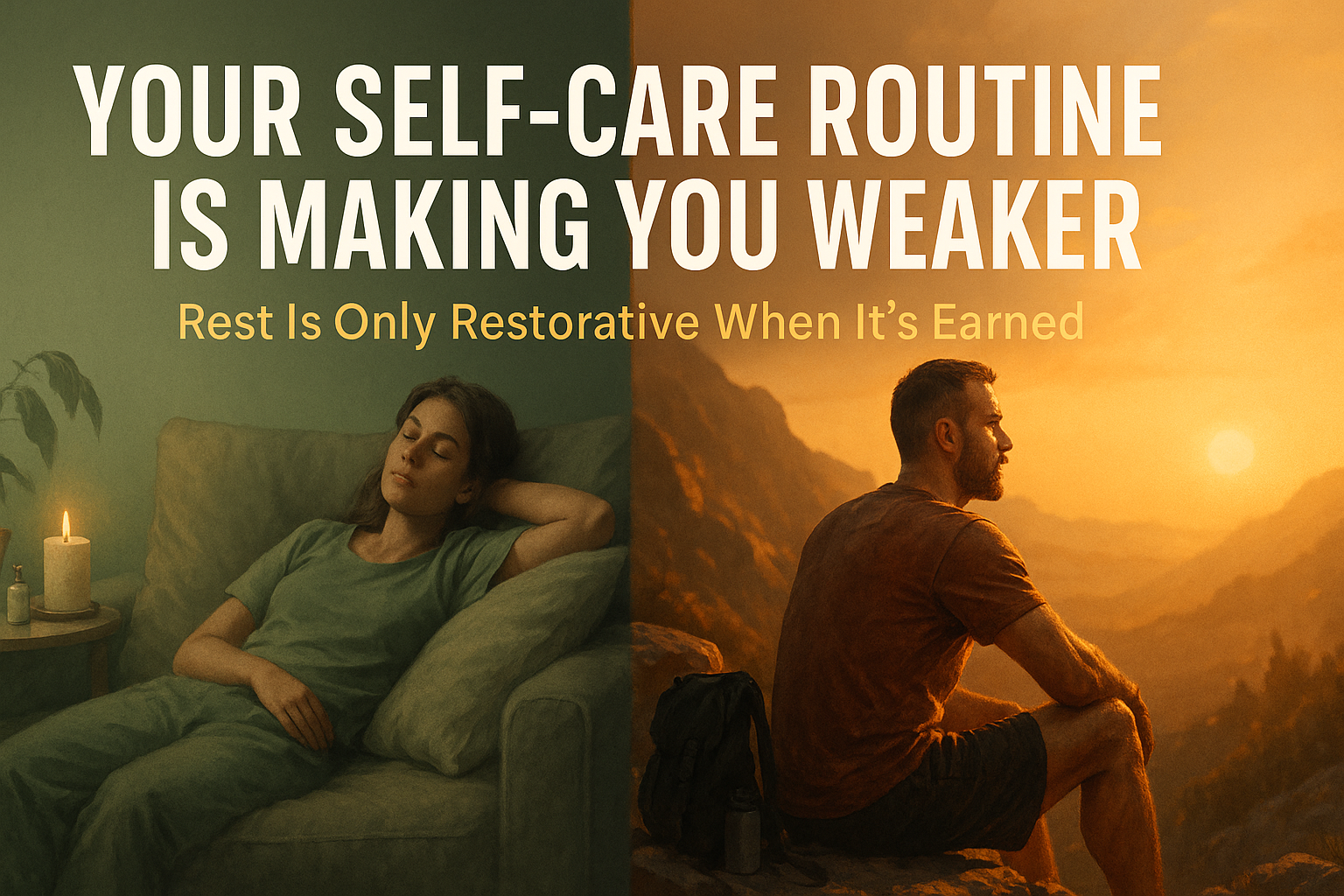
Your Self-Care Routine Is Making You Weaker
Modern self-care culture produces people who need more support to handle less challenge. Rest is only restorative when preceded by genuine exertion. Without the depletion, there's nothing to restore.
You're Not Less Talented. You're Less Focused.
What looks like exceptional talent is usually exceptional attention. The people crushing it aren't more gifted, they've just built the character discipline to ignore everything except what matters most.
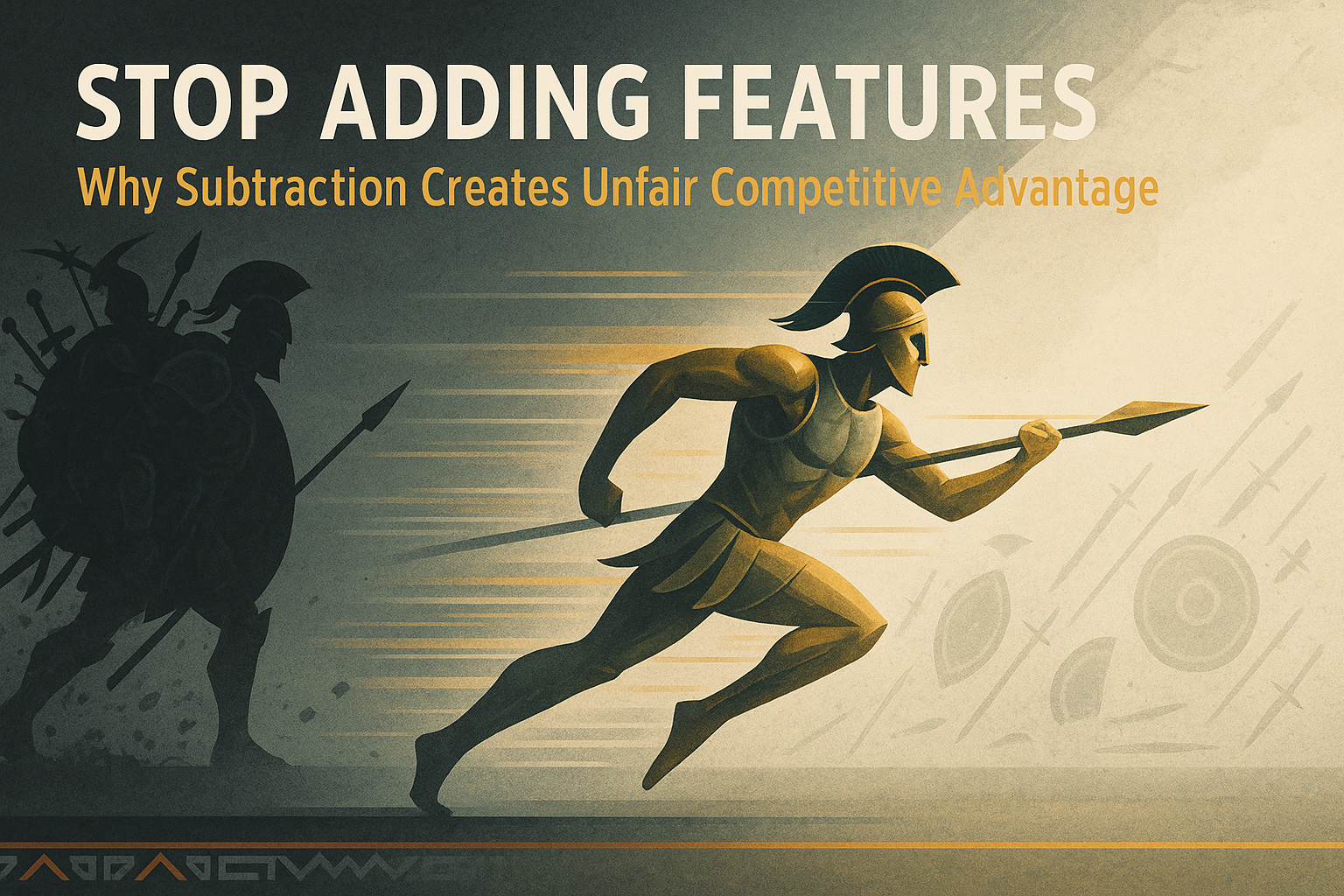
Stop Adding Features: Why Subtraction Creates Unfair Competitive Advantage
Every feature you add slows every decision. Every process you maintain steals focus. While everyone accumulates complexity, strategic subtraction creates unfair competitive advantage. The lighter you are, the faster you move.
Stop Following Your Passion. Start Building Excellence.
Passion is self-focused and fleeting. Excellence through service is other-focused and enduring. The Greeks never told anyone to follow their passion. They built character through craft. Here's why that matters for your work.
Stop Chasing Flow. Build It.
Flow doesn't show up when you beg it. It shows up when you remove what blocks it. The people who hit flow states most aren't gifted, they're disciplined about building the right conditions.

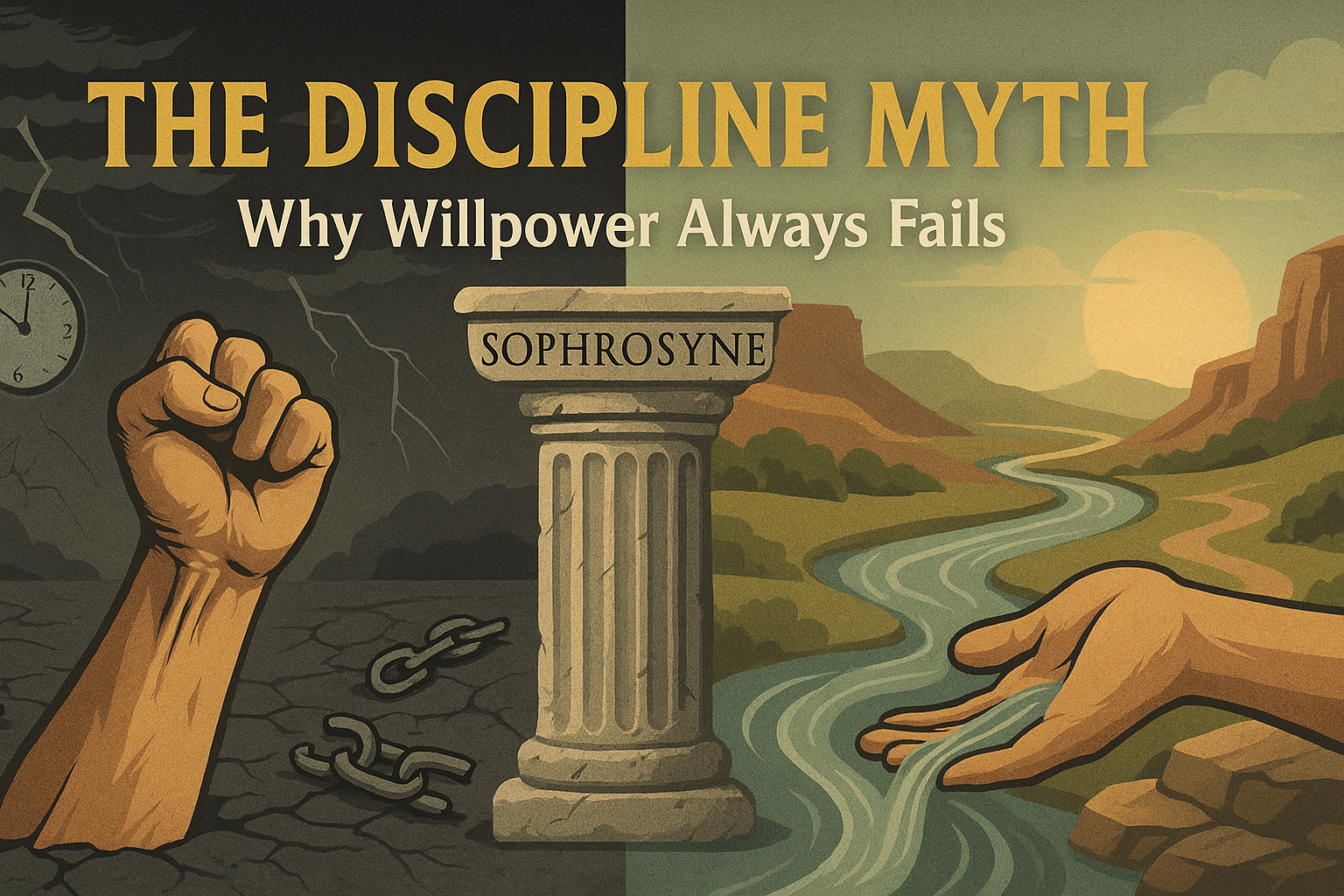
The Discipline Myth: Why Willpower Always Fails
Most people think discipline means forcing yourself to do things you don't want to do. This fundamental myth keeps people trapped in cycles of failure and self-recrimination.
The Position vs. Trend Mindset: Why Your Trajectory Matters More Than Your Current Location
The fundamental difference between position thinking (comparing to others) and trend thinking (tracking your own trajectory). Why your direction matters more than your location.

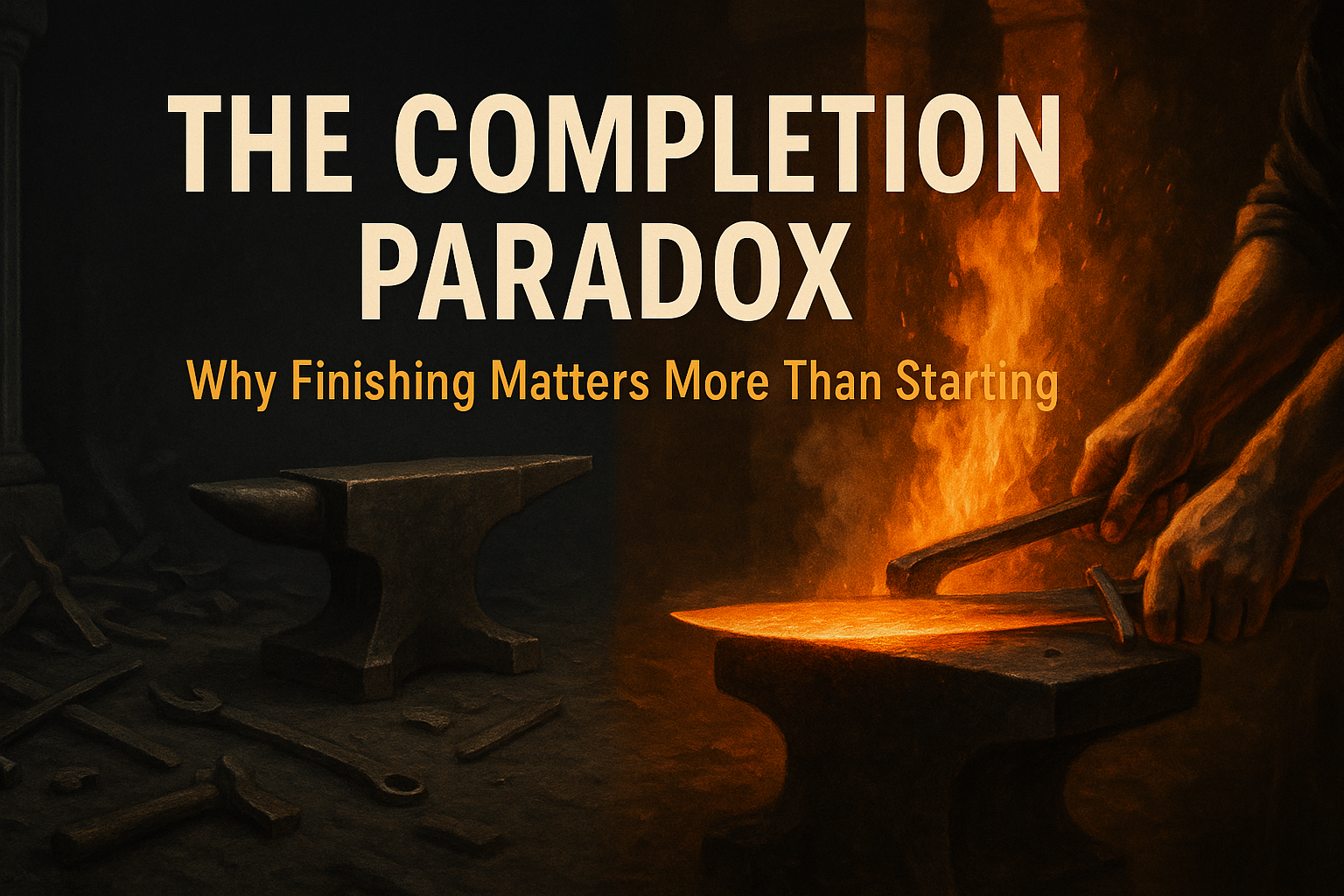
The Completion Paradox: Why Finishing Matters More Than Starting
You don't have a motivation problem. You have a completion problem. Every unfinished project is evidence that you can't trust yourself to follow through. Here's how to build the character that finishes what it starts.
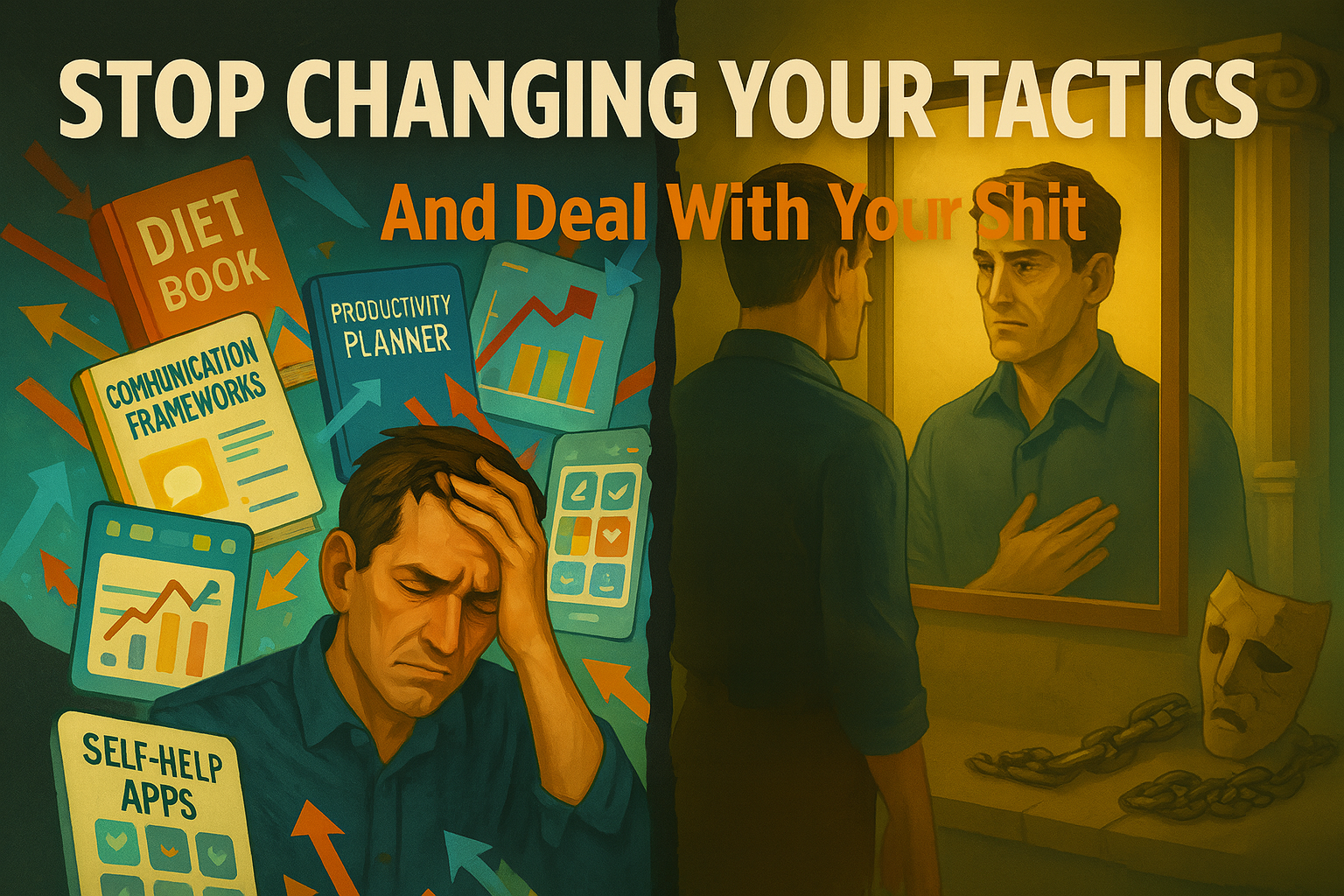
Stop Changing Your Tactics and Deal With Your Shit
You're not struggling with willpower. You're not lacking the right system. You're protecting the disease by treating the symptoms.
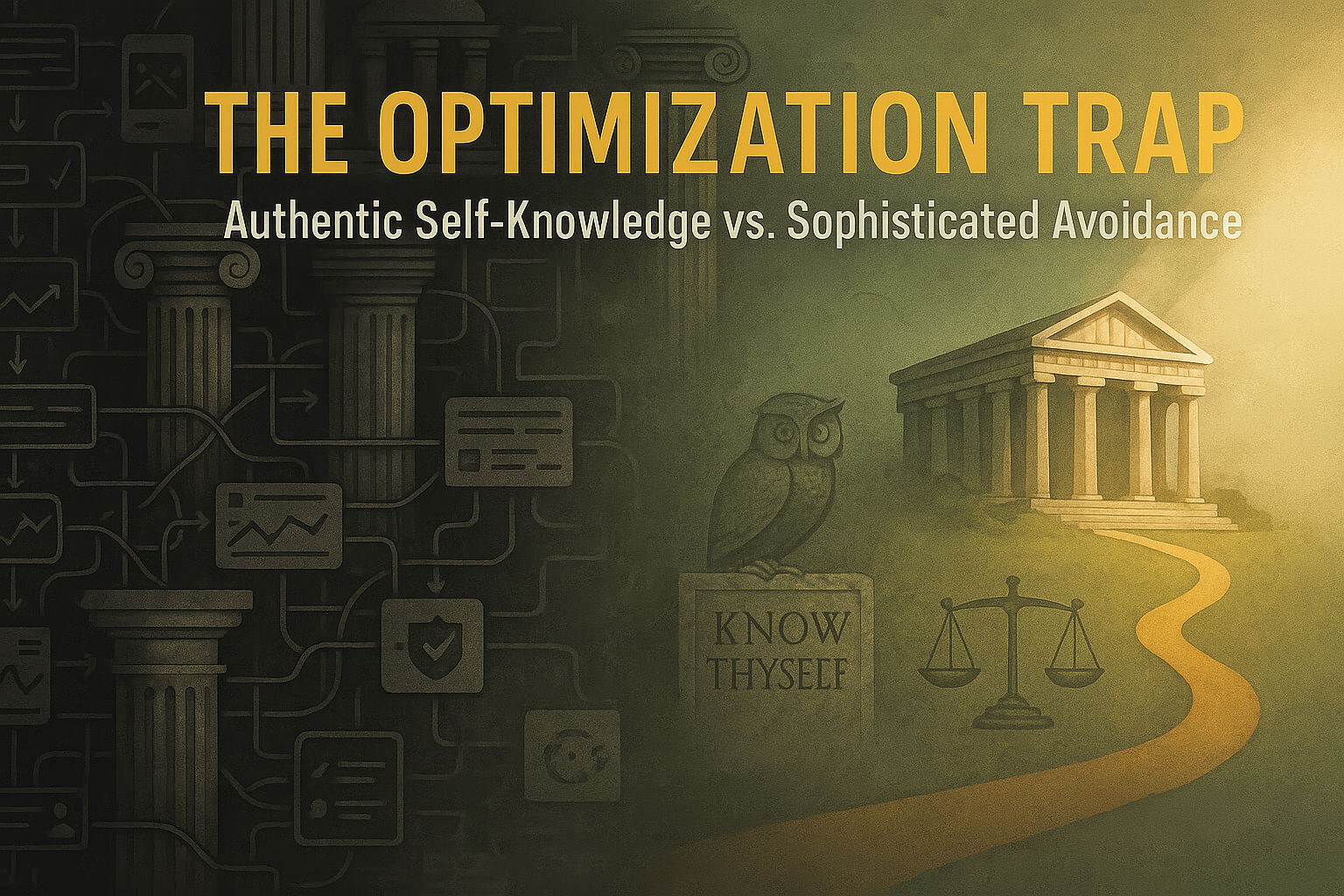
The Optimization Trap: Authentic Self-Knowledge vs. Sophisticated Avoidance
How intelligent people use optimization as sophisticated avoidance, creating elaborate systems to avoid simple transformations. Includes the 5-question diagnostic framework.
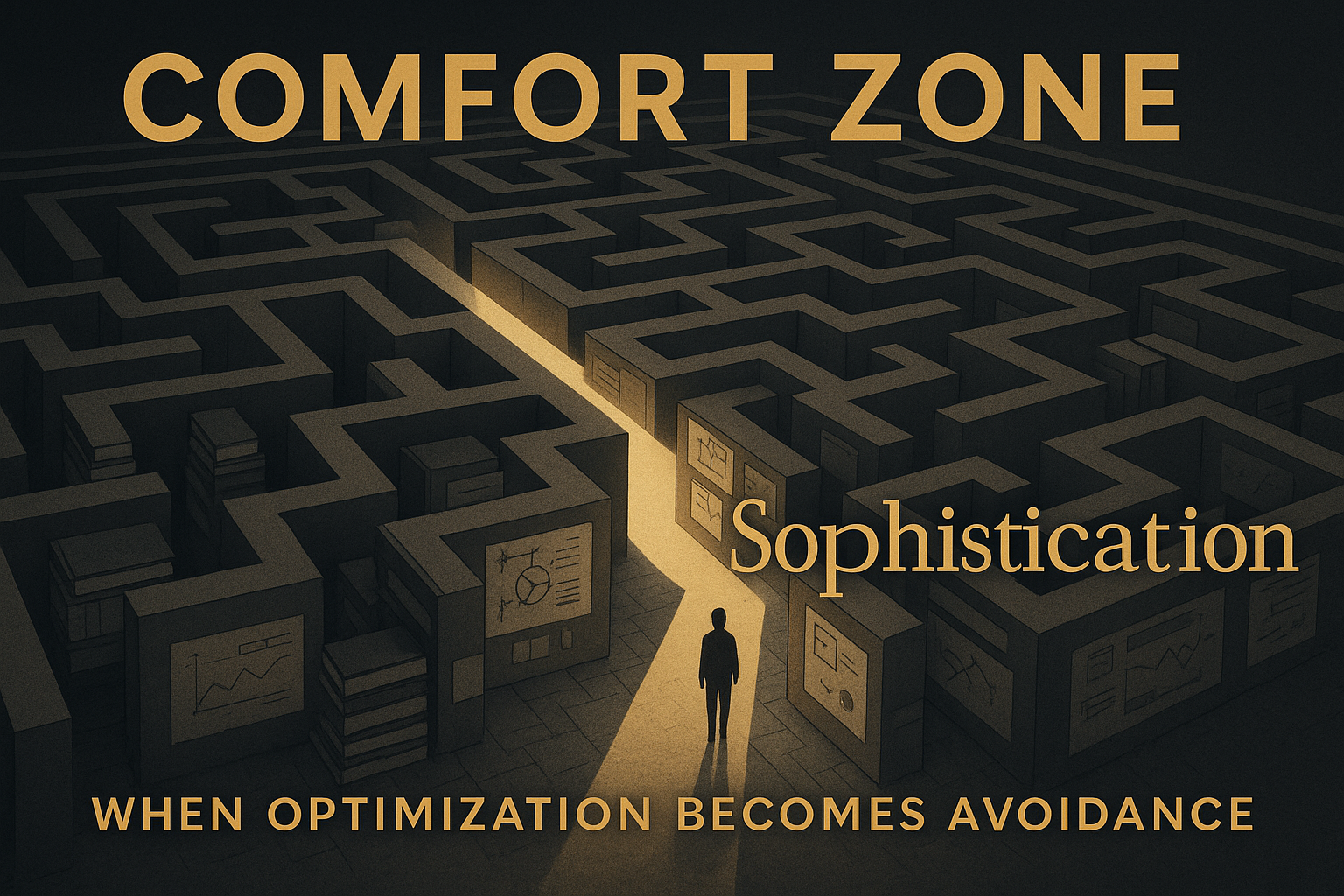
The Comfort Zone Sophistication: When Optimization Becomes Elaborate Avoidance
Intelligence can become a barrier to growth when it creates sophisticated comfort zones. Here's how to recognize when your optimization becomes elaborate avoidance, and what to do about it.
The Problem Solver's Paradox: How Winners Create Value Through Solutions
The most indispensable people aren't those who avoid problems, they're those who actively seek them out and solve them effectively. Here's the framework for building that rare and valuable skill.