Phronesis vs Sophia: Key Differences in Greek Philosophy
Both phronesis and sophia translate as ‘wisdom,’ but they point to fundamentally different capacities. Understanding where each applies changes how you make decisions, pursue knowledge, and develop expertise. If you conflate them, you risk becoming the person who knows everything and can do nothing, or the person who acts decisively but never asks why.
Definitions
Phronesis
(φρόνησις)
FROH-neh-sis
Practical wisdom. The capacity to discern the right action in specific situations, particularly knowing what not to do.
Sophia
(σοφία)
soh-FEE-ah
Theoretical wisdom. The ability to see clearly, cutting through noise to identify what’s actually true and understanding the deeper principles beneath surface patterns.
Key Differences
| Aspect | Phronesis | Sophia |
|---|---|---|
| Type of Knowledge | Phronesis is practical knowledge concerned with particular situations. It tells you what to do in this moment, given these circumstances. | Sophia is theoretical knowledge concerned with universal truths. It seeks understanding of what is eternally and necessarily the case. |
| How It's Acquired | Phronesis develops through lived experience, deliberation, and repeated practice in real situations where the stakes are genuine. | Sophia develops through contemplation, study, and systematic inquiry into first principles and the nature of reality. |
| Domain of Application | Phronesis operates in the domain of human affairs: ethics, politics, leadership, and daily life where variables shift and context matters. | Sophia operates in the domain of unchanging truths: mathematics, metaphysics, and the fundamental structure of the cosmos. |
| Relationship to Action | Phronesis is inseparable from action. You cannot possess practical wisdom without demonstrating it through sound decisions. | Sophia can exist independently of action. A person can hold deep theoretical understanding without ever applying it practically. |
| Who Exemplifies It | Aristotle pointed to experienced statesmen and leaders as exemplars of phronesis, people who navigated complex human situations wisely. | Aristotle identified philosophers and mathematicians as exemplars of sophia, people who grasped the deepest truths about reality. |
Type of Knowledge
Phronesis is practical knowledge concerned with particular situations. It tells you what to do in this moment, given these circumstances.
Sophia is theoretical knowledge concerned with universal truths. It seeks understanding of what is eternally and necessarily the case.
How It's Acquired
Phronesis develops through lived experience, deliberation, and repeated practice in real situations where the stakes are genuine.
Sophia develops through contemplation, study, and systematic inquiry into first principles and the nature of reality.
Domain of Application
Phronesis operates in the domain of human affairs: ethics, politics, leadership, and daily life where variables shift and context matters.
Sophia operates in the domain of unchanging truths: mathematics, metaphysics, and the fundamental structure of the cosmos.
Relationship to Action
Phronesis is inseparable from action. You cannot possess practical wisdom without demonstrating it through sound decisions.
Sophia can exist independently of action. A person can hold deep theoretical understanding without ever applying it practically.
Who Exemplifies It
Aristotle pointed to experienced statesmen and leaders as exemplars of phronesis, people who navigated complex human situations wisely.
Aristotle identified philosophers and mathematicians as exemplars of sophia, people who grasped the deepest truths about reality.
When to Apply Each Concept
When to Choose Phronesis
Lean on phronesis when you face decisions with no clear formula, where context determines the right course. Leadership challenges, ethical dilemmas, and situations requiring you to read the room and act with good judgment all demand practical wisdom. If the answer cannot be found in a textbook, you need phronesis.
When to Choose Sophia
Lean on sophia when you need to step back from immediate circumstances and understand underlying principles. Designing systems, building foundational knowledge, and pursuing questions about why things work as they do all benefit from theoretical wisdom. When you need depth of understanding rather than speed of action, sophia serves you.
Frequently Asked Questions
What is the difference between phronesis and sophia?
Phronesis is practical wisdom, the capacity to discern the right action in particular circumstances. Sophia is theoretical wisdom, the understanding of universal truths and first principles. Aristotle considered sophia the higher form of wisdom in the abstract, but argued that phronesis is indispensable for living well because it guides actual decisions and actions.
Is phronesis the same as sophia?
No. Phronesis and sophia are distinct intellectual virtues in Aristotle's framework. Phronesis deals with the variable and particular, guiding action in human affairs. Sophia deals with the necessary and universal, seeking knowledge of eternal truths. A person can possess one without the other, though the complete life requires both.
When should you use phronesis vs sophia?
Use phronesis when navigating decisions that depend on context, timing, and human variables, such as leadership, conflict resolution, and ethical judgment. Use sophia when pursuing fundamental understanding of principles, structures, and truths that hold regardless of circumstance. Most real-world situations call for phronesis, while sophia supports the deep learning that makes phronesis more effective over time.
Can you have sophia without phronesis?
Yes. Aristotle recognized that brilliant theoreticians can lack practical judgment entirely. A person might understand the deepest truths about justice in the abstract but fail to act justly in a specific situation. Sophia without phronesis produces the absent-minded philosopher who cannot navigate ordinary life. Phronesis without sophia produces the shrewd operator who never examines first principles.
Articles Exploring Phronesis or Sophia (78)
Cutting 'Toxic People' Out of Your Life Is the Laziest Form of Self-Care
Greene says avoid the unhappy and unlucky. The ancients say build yourself strong enough to sit with someone else's pain without losing your center. One protects your comfort. The other builds your character.
Self-Sufficiency Isn't Isolation. Most People Confuse the Two.
Greene says make others come to you. The Stoics say build a foundation so solid that who moves first becomes irrelevant. One is a tactic. The other is character.
The Plumber Will Outlast the Programmer. History Already Proved It.
Every technological revolution from steam to computing followed the same playbook. AI follows it too, with a cruel twist: the people doing execution-level knowledge work get displaced while skilled trades thrive.

You Don't Need More Willpower. You Need a Better Sequence.
The people with the most discipline often needed the least of it. They sequenced their changes so well that each one created gravitational pull toward the next.
Why Staying Silent Is the Most Expensive Thing You'll Ever Do
Every swallowed truth is a down payment on becoming someone you don't recognize. The Greeks had a word for what's missing: parrhesia.
Hats, Haircuts, and Tattoos: Why You're Making Every Decision at the Wrong Speed
Most people spend 45 minutes choosing a Netflix show and 20 minutes choosing a mortgage. The problem isn't indecision. It's miscalibration. Phronesis (practical wisdom) demands matching speed to stakes.

The Difference Between Grit and Stubbornness (One Builds Character, One Destroys It)
Angela Duckworth made grit famous. She didn't explain when it becomes stubbornness. The Stoics knew: prohairesis (moral choice) distinguishes persistence that builds character from ego that refuses to accept reality.
Concealing Your Intentions Isn't Clever. It's Exhausting.
Greene's Law 3 conflates wisdom with manipulation. Strategic silence is phronesis. Active deception is a cognitive tax that compounds into exhaustion and isolation.
Next Week Is As Far As Most Leaders Can See. That's the Problem.
The inability to see beyond immediate tasks isn't a skill gap. It's a character limitation. Strategic vision is a cultivated virtue, not an innate talent. Small picture thinking is underdeveloped character.
Should You Hide Your Excellence to Protect Your Boss's Ego?
Greene's first law of power tells you to never outshine the master. The tactical truth is real: insecure leaders punish excellence. But the solution isn't dimming your light. It's knowing when to deploy it. The Greeks called it kairos.

What Do You Actually Want? (Most People Never Answer This)
You're not anxious. You're unclear. The mind that hasn't decided what it wants will constantly point out what's missing. Clarity isn't a luxury. It's the foundation.

Stop Asking 'What Should I Do?' Start Asking 'Who Should I Become?'
Everyone optimizes their actions. Almost no one optimizes who they're becoming. The obsession with tactics keeps people trapped while the strategic question goes unanswered.

Stop Fixing Your Team's Problems. You're Making Them Helpless.
The best thing you can do for your team is stop rescuing them. Every problem you solve for them is capability they never develop. Coaching builds warriors. Rescuing creates dependents.
If You Want to Lead, You Don't Get to Have "Your" Problems Anymore
Leadership is not just influence. It is load. If everything becomes your emergency, the system is broken. Fix it with decision clarity, steady presence, and practical restraint.
The Elimination Discipline: Why Cutting the Good Unlocks the Great
Most people stay mediocre not because they lack talent, but because they refuse to give up anything. The hardest cut isn't the bad work. It's the good work that's in the way.

The Boring Truth About Excellence: Why Mastery Looks Ordinary Until It Doesn't
We expect excellence to look impressive. But the most exceptional people spend most of their time doing things that look completely ordinary. Here's the boring truth about how mastery is actually built.
Stop Defending Yourself: Most Arguments Don't Deserve Your Energy
The instinct to defend yourself is older than language. But in the modern world, this instinct has become a trap that drains the energy you need for your actual work.
Most Success Is Just Avoiding Obvious Mistakes
Everyone's chasing brilliance while tripping over obvious errors. The uncomfortable truth about success isn't that you need to be smarter. You need to stop being dumb.
You're Not Getting Ready. You're Hiding.
Preparation is the most sophisticated form of procrastination. It feels productive. It looks responsible. And it keeps you exactly where you are.

Your Backup Plan Is Why Your Main Plan Keeps Failing
You tell yourself the backup plan is smart, responsible, prudent. The Stoics knew better. Prohairesis, moral choice, is singular by nature. Every escape route you build is a promise to yourself that when things get hard enough, you'll quit.

Why Do Smart People Overcomplicate Everything?
The Greeks understood something we've forgotten, true wisdom reveals itself through simplicity, not complexity. Intelligence is finding the simple truth, not creating elaborate frameworks.
Delayed Gratification Isn't Self-Control. It's the Foundation of All Virtue.
Everyone got the marshmallow test wrong. They turned it into a success predictor. The Stoics understood the real truth 2,000 years ago: delayed gratification isn't about outcomes, it's about character.

Your Life Right Now Is Just Your Last 90 Days Playing Out
Your fitness, your bank account, your relationships, your opportunities right now aren't revealing your identity. They're showing you what you've been doing for the past 30-90 days. That's not philosophy. That's physics.

Forgiveness Isn't About Them. It's the Most Selfish Thing You Can Do.
Every minute you spend resenting someone is energy you're not using to build your life. The Stoics knew what we forgot: forgiveness releases you from the prison, not them from consequences.
Your Team Isn't Aligned. They're Just Too Scared to Speak Up
When teams nod along in meetings, we celebrate alignment. But what if everyone's privately disagreeing? The Abilene Paradox shows how silence becomes performative agreement and why andreia (courage) matters more than consensus.
You're Not Less Talented. You're Less Focused.
What looks like exceptional talent is usually exceptional attention. The people crushing it aren't more gifted, they've just built the character discipline to ignore everything except what matters most.
From Leader Driven to Process Bloated: How Trust Erosion Kills Cultures
Nobody chooses bureaucracy. But every approval layer you add is proof you chose fear over trust, rules over judgment, and protecting yourself over building excellence.
Why Does Tolerating One Person's Mediocrity Destroy Your Entire Team?
Mediocrity spreads like wildfire once you signal it's acceptable. Leaders who tolerate good enough from one person send a message to everyone that standards are negotiable. Excellence demands eliminating compromises at the source before they become cultural norms.
Your People Are Telling You What They Need. You're Just Not Listening.
Your people are already telling you what they need. They're showing you where the problems are. But you're not hearing them because listening requires something you don't want to give: your certainty, your expertise, your agenda, your ego.

Akrasia: Why You Sabotage What You Know Is Right
You know exactly what you should do. You've known for months. So why aren't you doing it? The ancient Greeks had a word for this: akrasia, acting against your better judgment. And they understood it's the ultimate killer of excellence.
The Organizational Excellence Delusion
Most companies aren't consciously choosing mediocrity. They're living in a complete fantasy about their own capabilities while demanding breakthrough results from infrastructure designed for average performance.
Strategic Imperfection: Why Good Enough Beats Perfect Every Time
Perfectionism isn't high standards. It's fear management. Strategic imperfection creates more progress than perfect ever could.
AI-First Leadership: Guiding Organizational Transformation
Most leaders want AI transformation results without undergoing the leadership metamorphosis it requires. Here's what AI-first leadership actually demands.
Why Leaders Who Don't Endorse Others Stay Relationally Poor
Your willingness to risk your reputation for someone else's growth reveals everything about your actual confidence in your leadership.
AI First Culture: Organizational and Process Transformation
Culture doesn't just eat strategy for breakfast. Culture will devour your AI transformation, shit out the bones, and ask for seconds.
The Internal Locus Revolution: Why Everything Is On You (And That's Your Advantage)
Most people spend their lives as victims of circumstances they created. Here's why accepting that you're both the source and solution to your problems is the ultimate advantage.
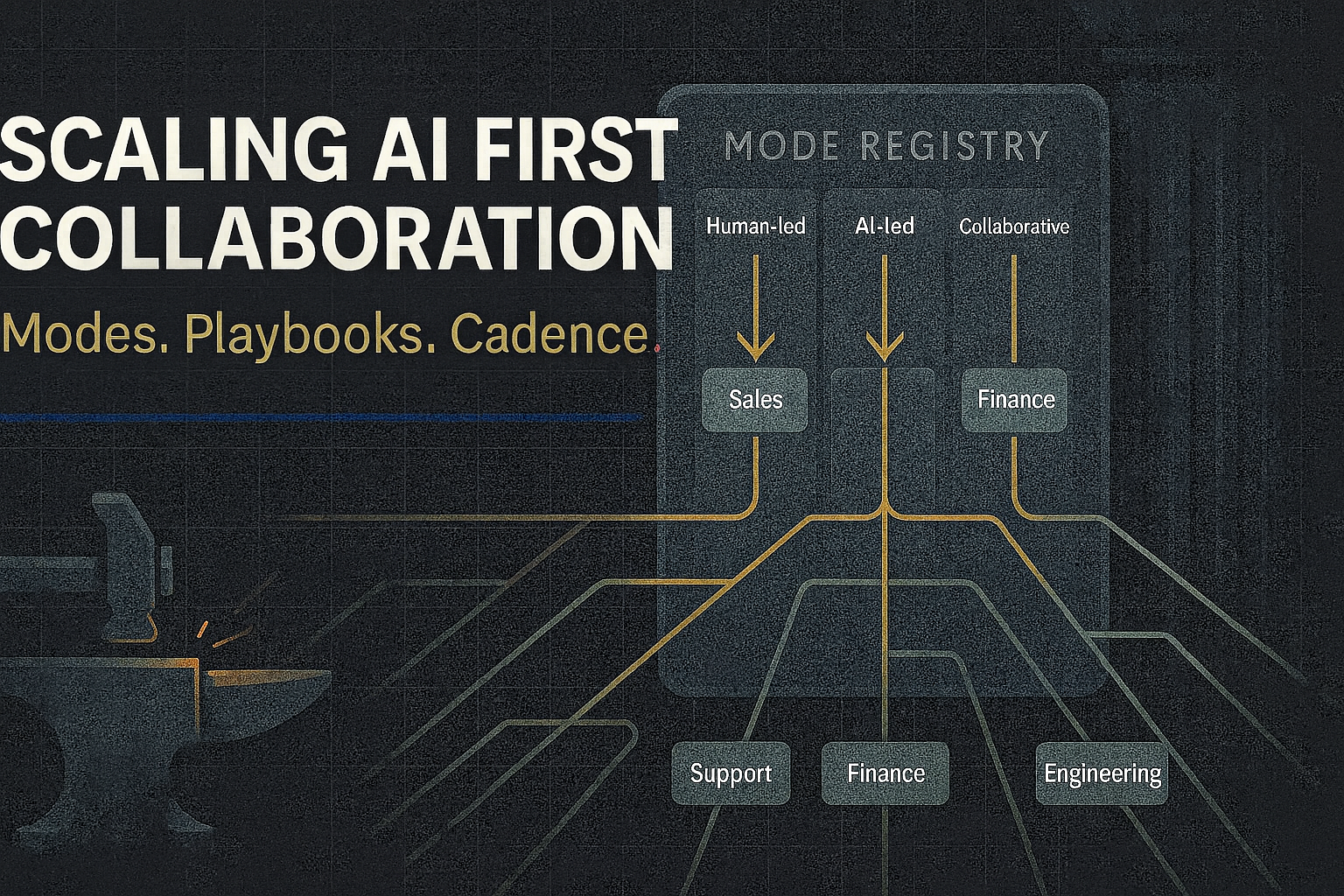
Scaling AI First Collaboration Across the Organization
Scaling AI First isn't 'more tools for more teams.' It's mode discipline, runnable playbooks, and iteration systems that make capability compound across functions.
Why Greatness Demands Imbalance
True greatness cannot be evenly distributed across all areas of life simultaneously. Excellence requires strategic imbalance, knowing when and where to concentrate your full intensity, and having the wisdom to let other areas temporarily receive less attention.
AI First: The Identity Revolution
The real AI revolution isn't about the technology. It's about who you become when you stop fighting it and start forging yourself in its fire.
The Character Foundation: Why Most Leadership Development Gets It Backwards
The $366 billion leadership development industry teaches techniques before character, skills before being. Here's why 70% of programs fail and how character-based leadership endures.
Stop Serving From Weakness: Why Most Servant Leaders Fail
Most 'servant leaders' are just weak managers who've convinced themselves that avoiding difficult decisions is virtuous. Real servant leadership requires character strength.
AI First: The Mindset Shift That Changes Everything
The fundamental mindset architecture that separates AI leaders from AI laggards. Three core shifts with practical implementation frameworks grounded in ancient wisdom.
The Vibe Code Fallacy: Why Playing It Safe Is the Riskiest Strategy
When smart engineers choose the safety of understanding over the risk of adaptation, they're not avoiding debt, they're accumulating it. The compound cost of caution might be the riskiest strategy of all.
The Reflection Stage: Where Wisdom Begins and Excuses Die
Prosoche, the Stoic practice of disciplined reflection—transforms raw experience into actionable wisdom. Part 7 of The Greatness Flywheel series shows how systematic reflection accelerates excellence by preventing repeated mistakes and compounding learning.
The Craft Stage: When Skill Becomes Second Nature (Techne)
You don't have a knowledge problem. You have a craft problem. Most people understand excellence intellectually but lack the embodied competence to execute it consistently. Techne bridges the gap between knowing and doing.
The Processing Engine: Why Smart People Can't Convert Knowledge Into Action
You consume endless information but produce mediocre results. The problem isn't what you know, it's how you process what you know. Smart people excel at input but fail at transformation. Time to build your Processing Engine.
The Curiosity Lie: Why Your Questions Keep You Comfortable
Real curiosity isn't about asking smart questions, it's about pursuing the brutal ones you've been avoiding because they might change everything.
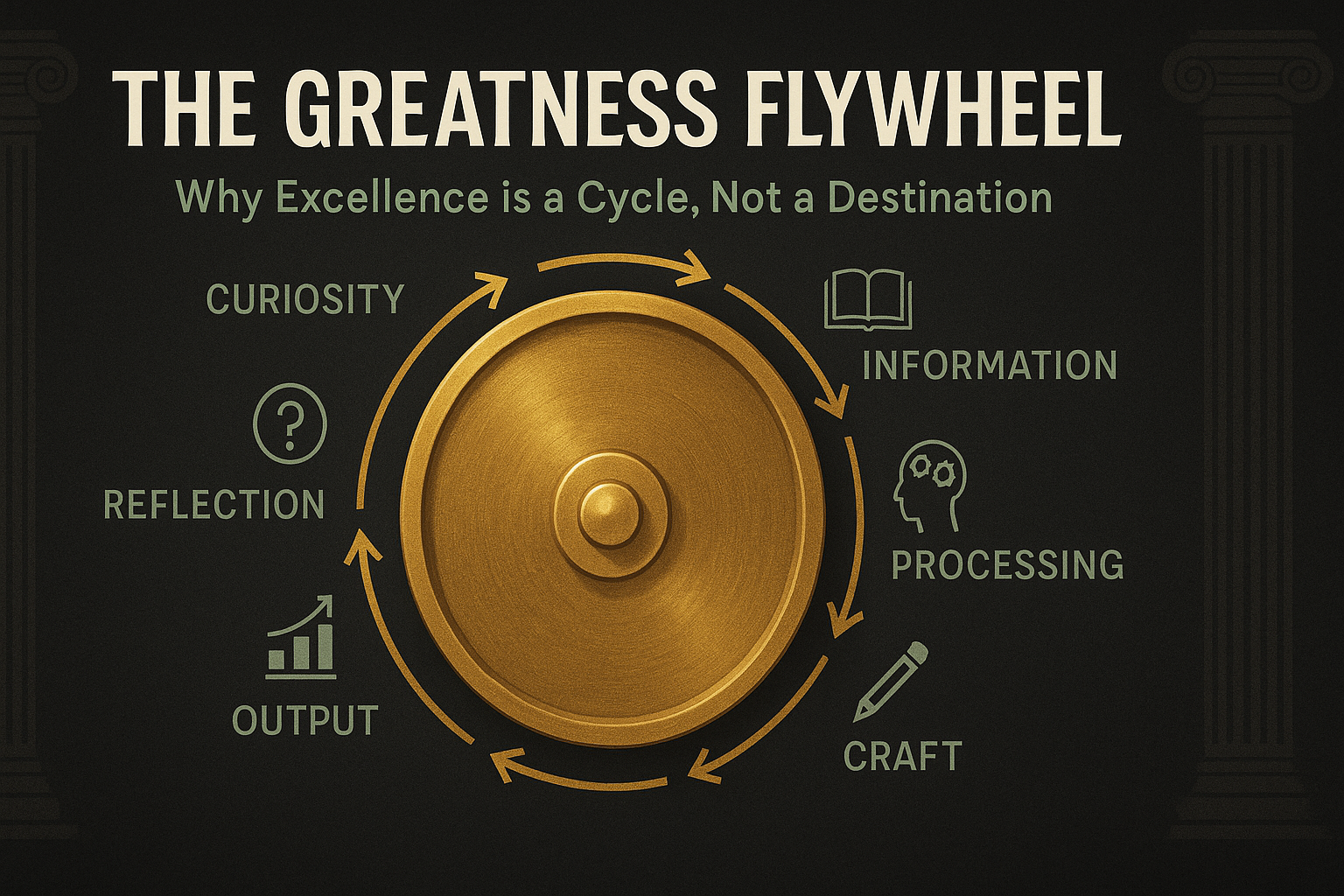
The Greatness Flywheel: Why Excellence is a Cycle, Not a Destination
Excellence isn't a destination you arrive at once and maintain through willpower. Excellence is a flywheel. The six-stage cycle that transforms ancient Greek wisdom into systematic excellence methodology.
The Unlimited Courage Question: The Single Test That Cuts Through All Self-Deception
Most people disguise cowardice as prudence. Here's the single question that cuts through all self-deception and reveals what you're really running from.
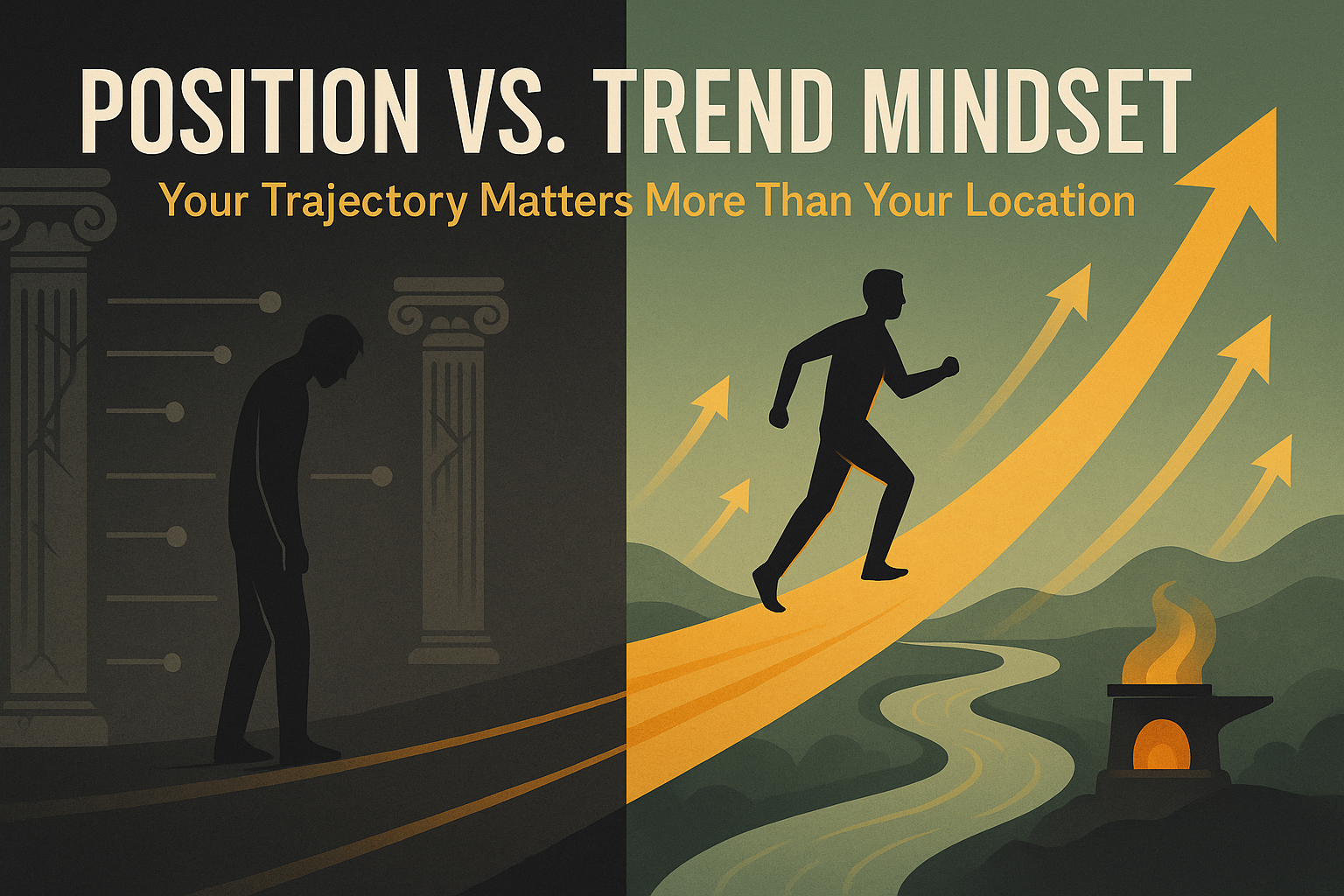
The Position vs. Trend Mindset: Why Your Trajectory Matters More Than Your Current Location
The fundamental difference between position thinking (comparing to others) and trend thinking (tracking your own trajectory). Why your direction matters more than your location.
The Brutal Honesty Test: Do You Really Want What You Say You Want?
Most people torture themselves pursuing goals they don't actually want. The framework for distinguishing authentic desire from sophisticated self-torture.
The Philosopher King: Ancient Wisdom for Modern Leadership Integration
Plato's most radical leadership idea wasn't about power or position, it was about character. The philosopher king represents the ultimate integration of wisdom, excellence, courage, and transformation. Here's how to stop managing systems and start transforming people.
Metanoia: The Transformation Mindset for Leaders
The Greeks understood that lasting change requires complete transformation of mind, heart, and character. Most organizational change fails because leaders try to change everything except themselves. Here's the ancient solution.
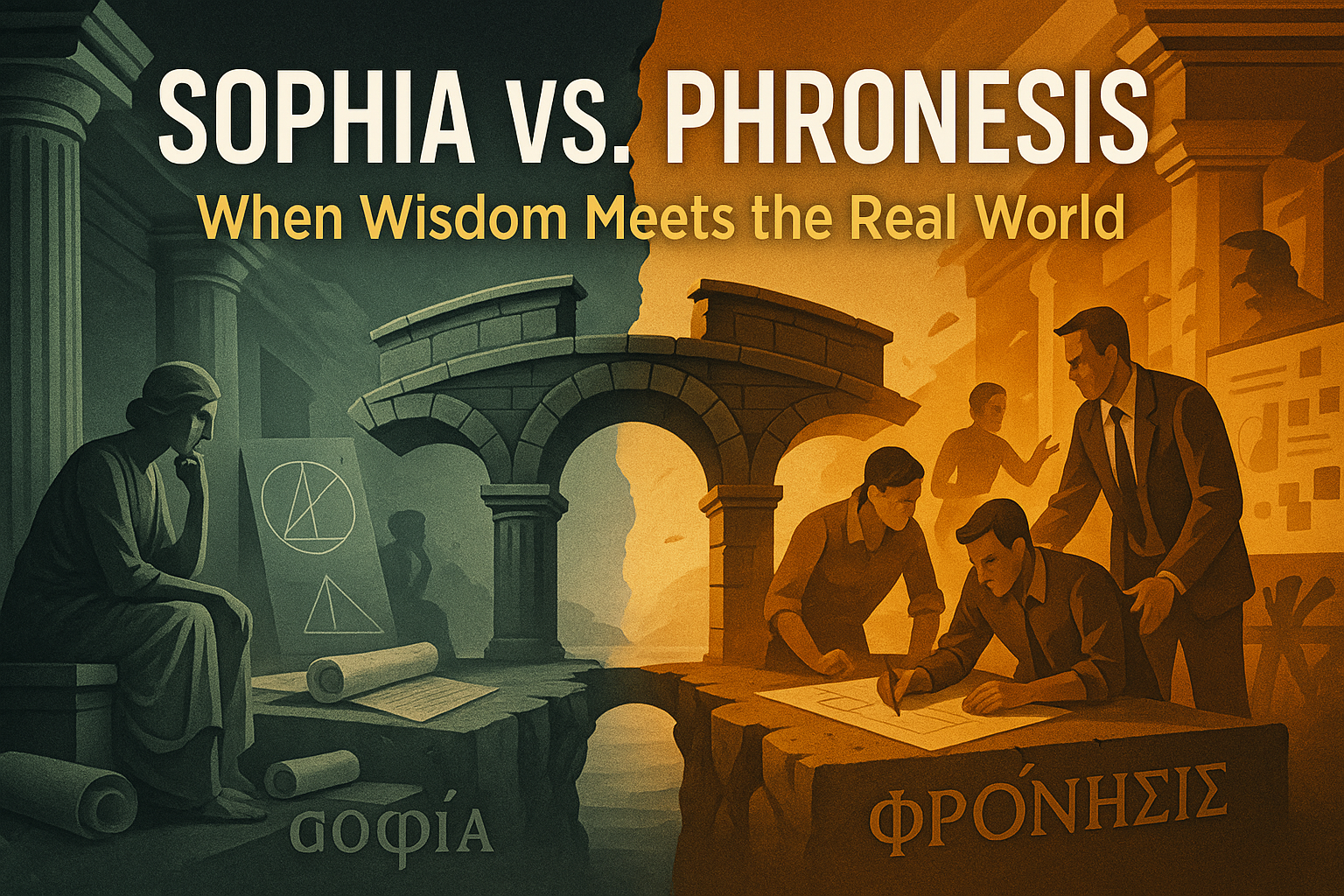
Sophia vs. Phronesis: When Wisdom Meets the Real World
Why brilliant strategies fail and how ancient Greek wisdom provides the solution through integrating theoretical and practical wisdom.
The Completion Paradox: Why Finishing Matters More Than Starting
You don't have a motivation problem. You have a completion problem. Every unfinished project is evidence that you can't trust yourself to follow through. Here's how to build the character that finishes what it starts.
Stop Changing Your Tactics and Deal With Your Shit
You're not struggling with willpower. You're not lacking the right system. You're protecting the disease by treating the symptoms.
The Art of Running Away: When Flight is Wisdom and When It's Weakness
How to tell when leaving is strategic wisdom versus fear-based avoidance. The uncomfortable truth about when running away is the courageous choice.
The Resistance Diagnostic: Is This Teaching Me or Am I Just Running Away?
How to tell when resistance is teaching you versus when you're using your intelligence to avoid what needs to be done. The uncomfortable truth about sophisticated avoidance.
The Optimization Trap: Authentic Self-Knowledge vs. Sophisticated Avoidance
How intelligent people use optimization as sophisticated avoidance, creating elaborate systems to avoid simple transformations. Includes the 5-question diagnostic framework.
The Excellence Audit: Measuring What Matters
Most people track what's easy to measure rather than what actually drives excellence. Learn how to audit your metrics and ensure you're measuring character development, not just performance theater.
The Natural Rhythms vs. Discipline False Choice: Integration Not Avoidance
Most productivity advice forces you to fight your authentic rhythms, creating internal conflict and unsustainable systems. Here's the Natural Rhythms Integration Model that honors both authenticity and growth.
Andreia: The Courage to Lead Through Uncertainty
The Greeks understood that courage isn't the absence of fear, it's the commitment to excellence despite uncertainty. This ancient virtue transforms how you lead through risk, change, and the unknown.
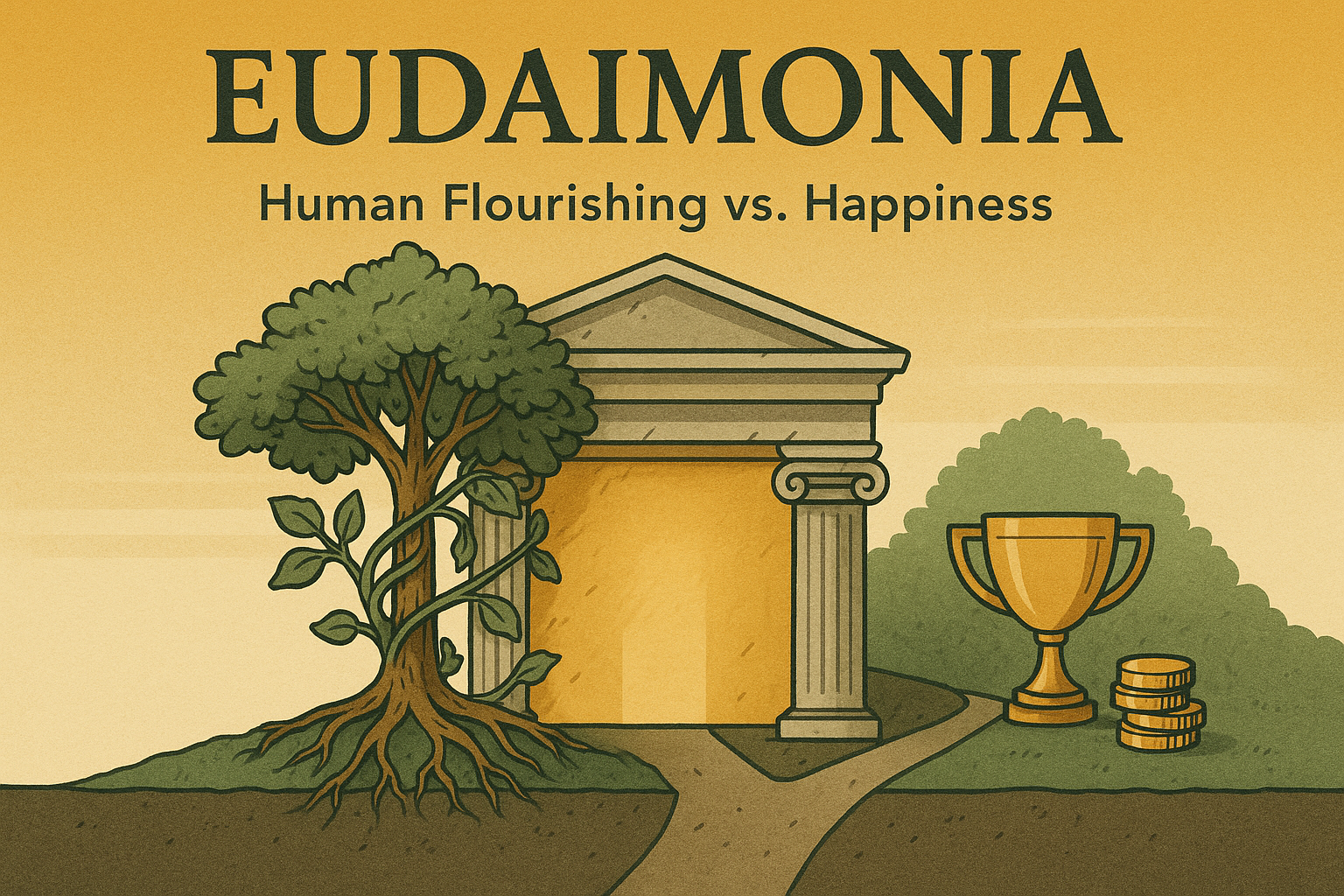
Eudaimonia: Human Flourishing vs. Happiness in Modern Leadership
Most leaders chase happiness and end up empty. Ancient wisdom reveals why: they're pursuing the wrong goal. Eudaimonia, human flourishing, transforms everything about how you lead and why it matters.
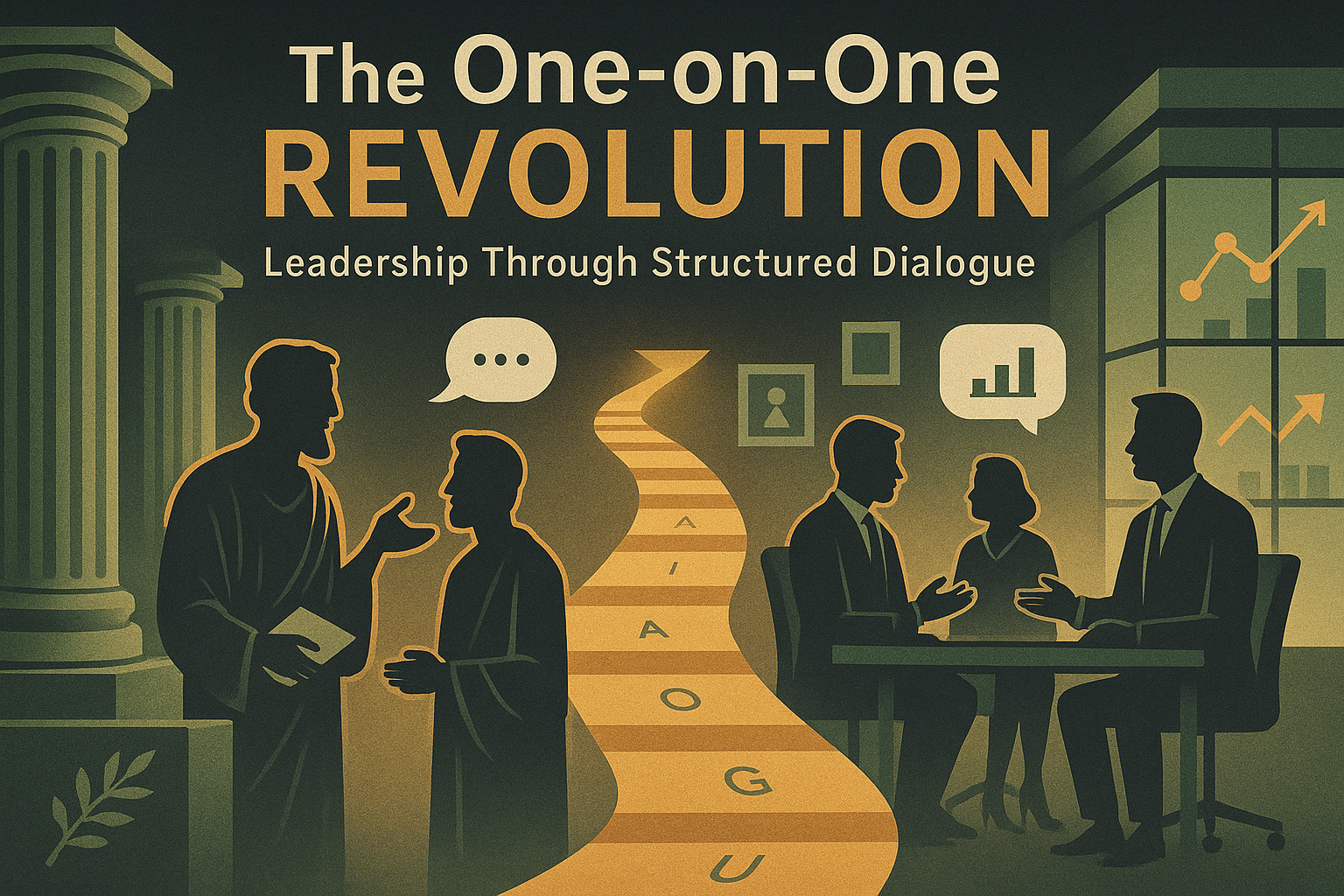
The One-on-One Revolution: Leadership Through Structured Dialogue
Most one-on-ones are glorified status updates disguised as leadership development. The DIALOGUE method transforms individual conversations into systematic leadership multiplication, creating leaders who create more leaders through structured excellence.
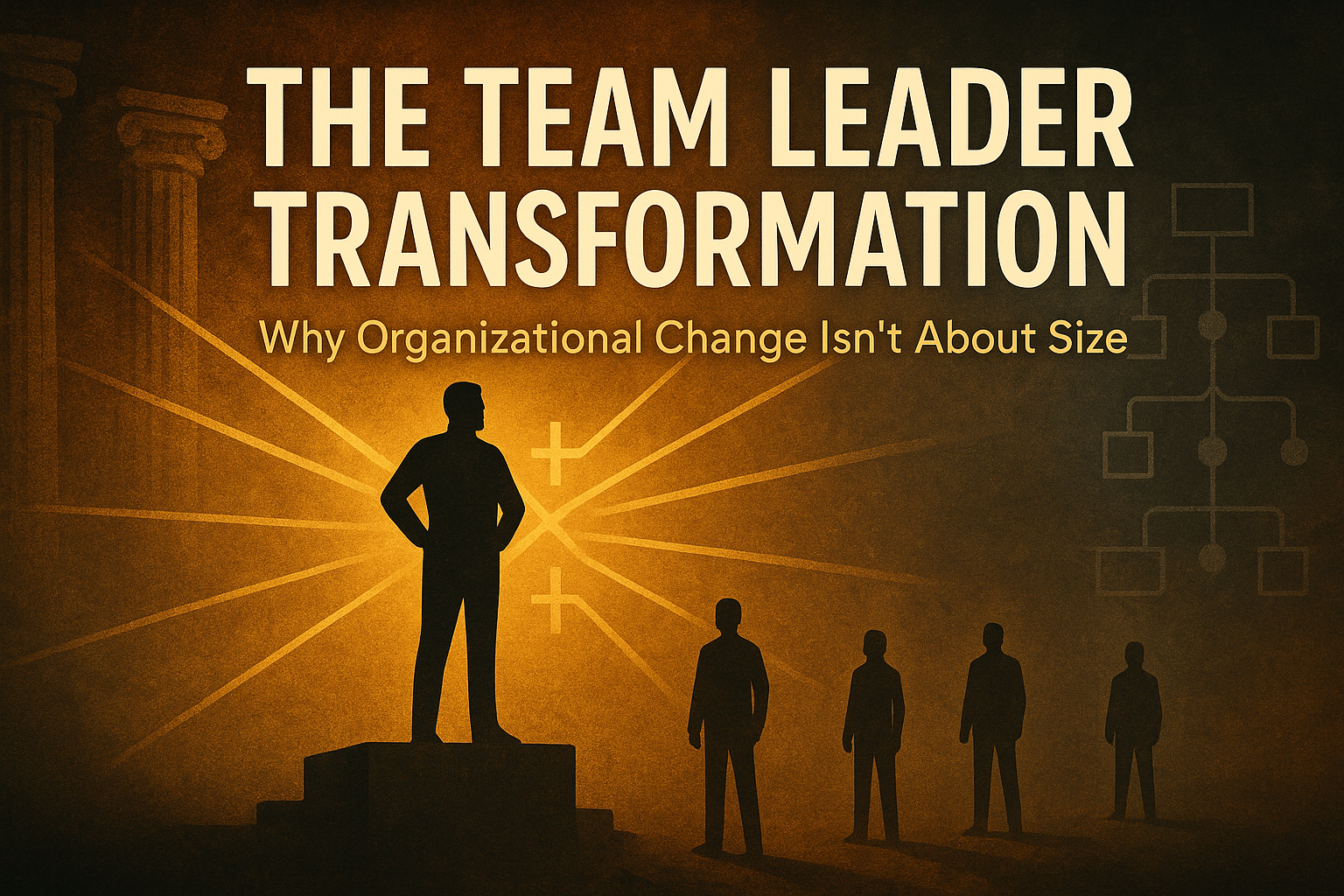
The Team Leader Transformation: Why Organizational Change Isn't About Size
Companies obsess over team size while ignoring the fundamental truth: transformation happens at the leader level, not the team level. Size is a symptom, leadership is the cause.
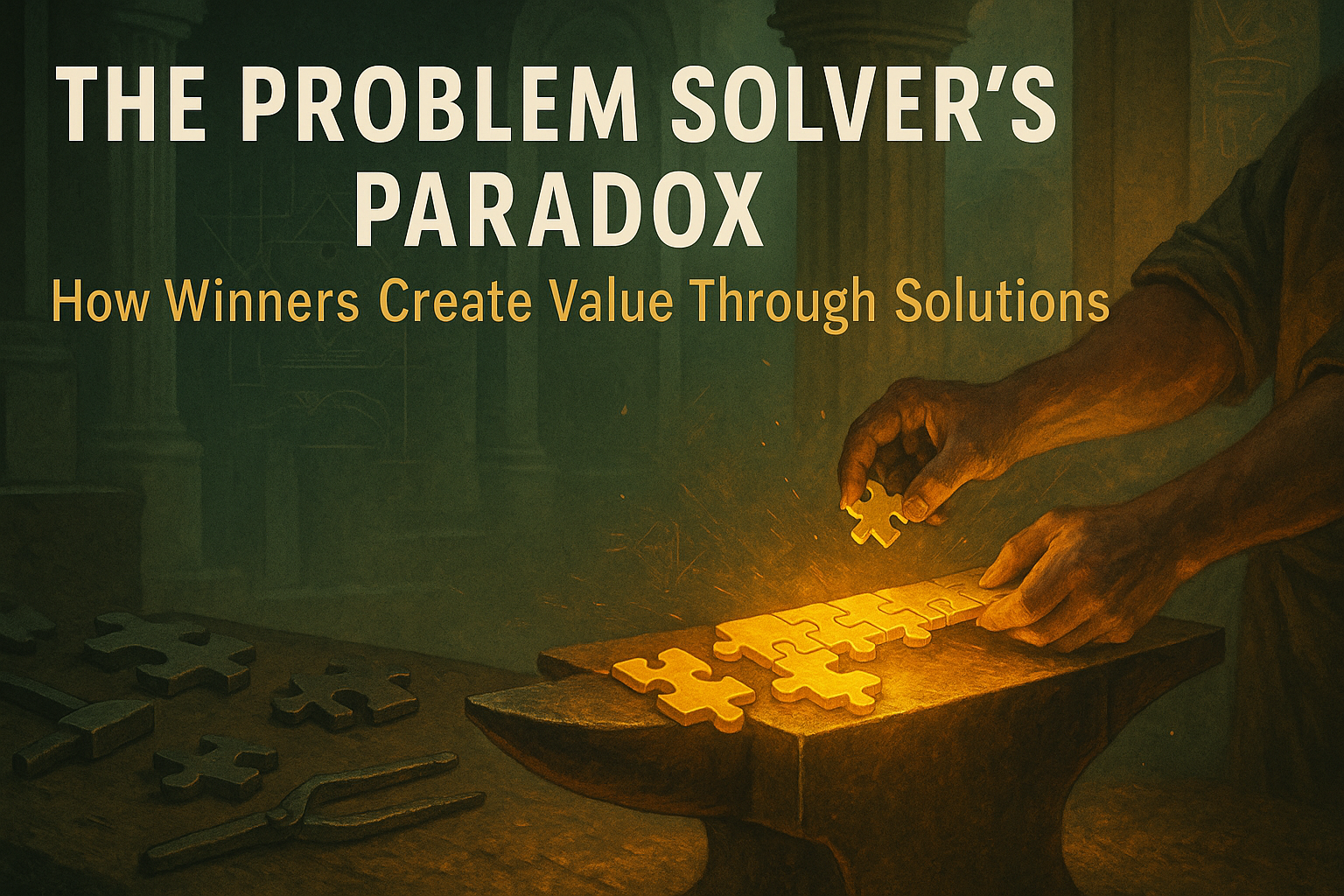
The Problem Solver's Paradox: How Winners Create Value Through Solutions
The most indispensable people aren't those who avoid problems, they're those who actively seek them out and solve them effectively. Here's the framework for building that rare and valuable skill.
Building AI-First Teams: The Leadership Transformation
The future belongs to leaders who can build teams that don't just use AI tools, but think AI-first. This requires a fundamental transformation in how we hire, develop, and structure technical teams.
AI Fluency: The New Technical Literacy
Just as literacy transformed society, AI fluency is becoming the fundamental skill that separates those who thrive from those who struggle in the modern workplace. It's not about coding, it's about thinking.
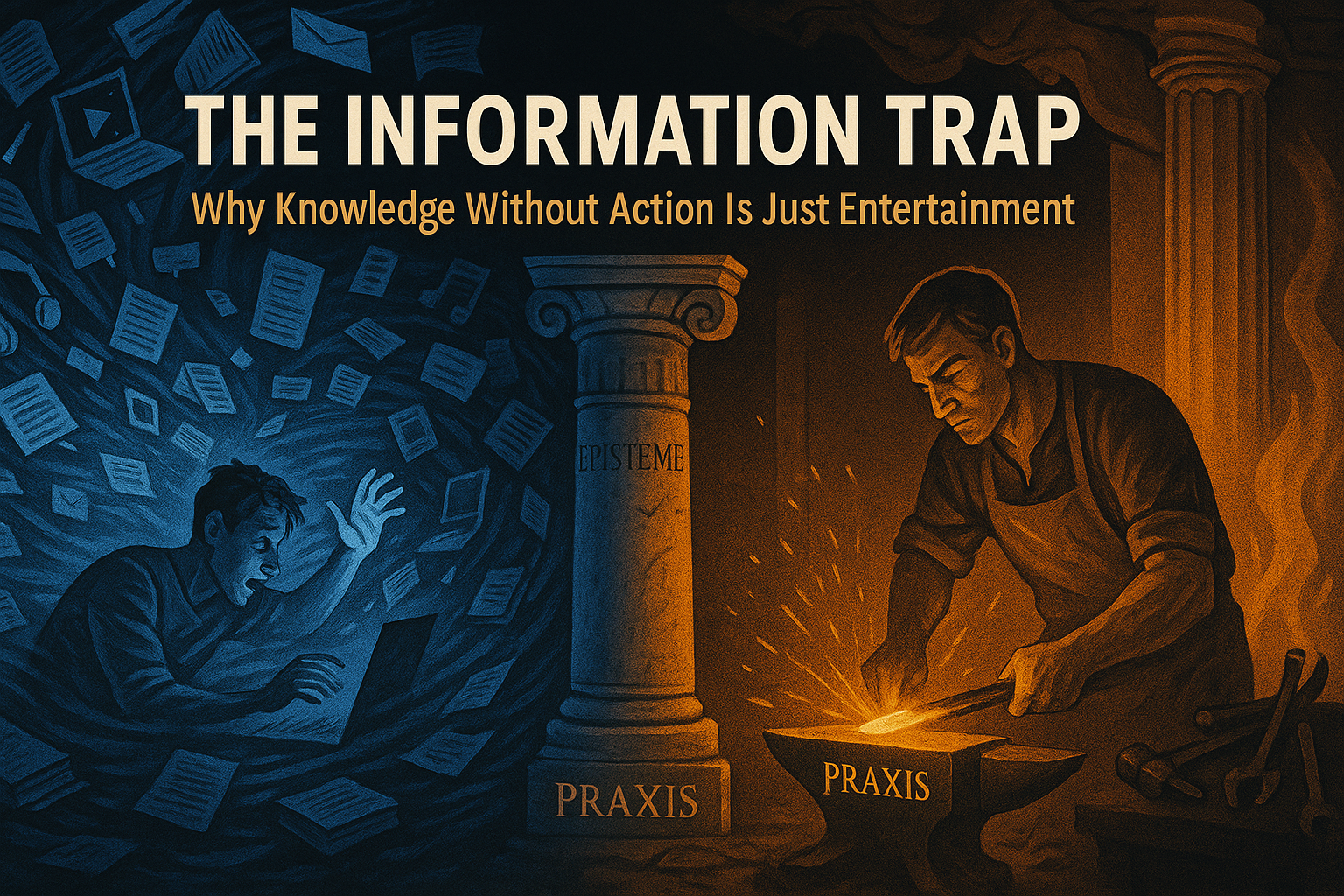
The Information Trap: Why Knowledge Without Action Is Just Entertainment
You don't need another course. You need to start doing. The journey itself holds every lesson you need to learn. The internet gave us infinite information and infinite excuses.
The Fear-Excellence Connection: Why Fear Is Excellence's Companion, Not Its Enemy
The self-help industry got fear completely wrong. Every person operating at excellence has learned to dance with fear, not defeat it. Fear isn't your enemy, it's your compass pointing toward what matters most.
The Disney Churro Effect: Why Context Kills Quality Judgment
Your 5-star vacation restaurant would get 2 stars at home. Context isn't an excuse for mediocrity, it's a test of your standards. The Disney Churro Effect is killing your judgment, and you don't even know it's happening.

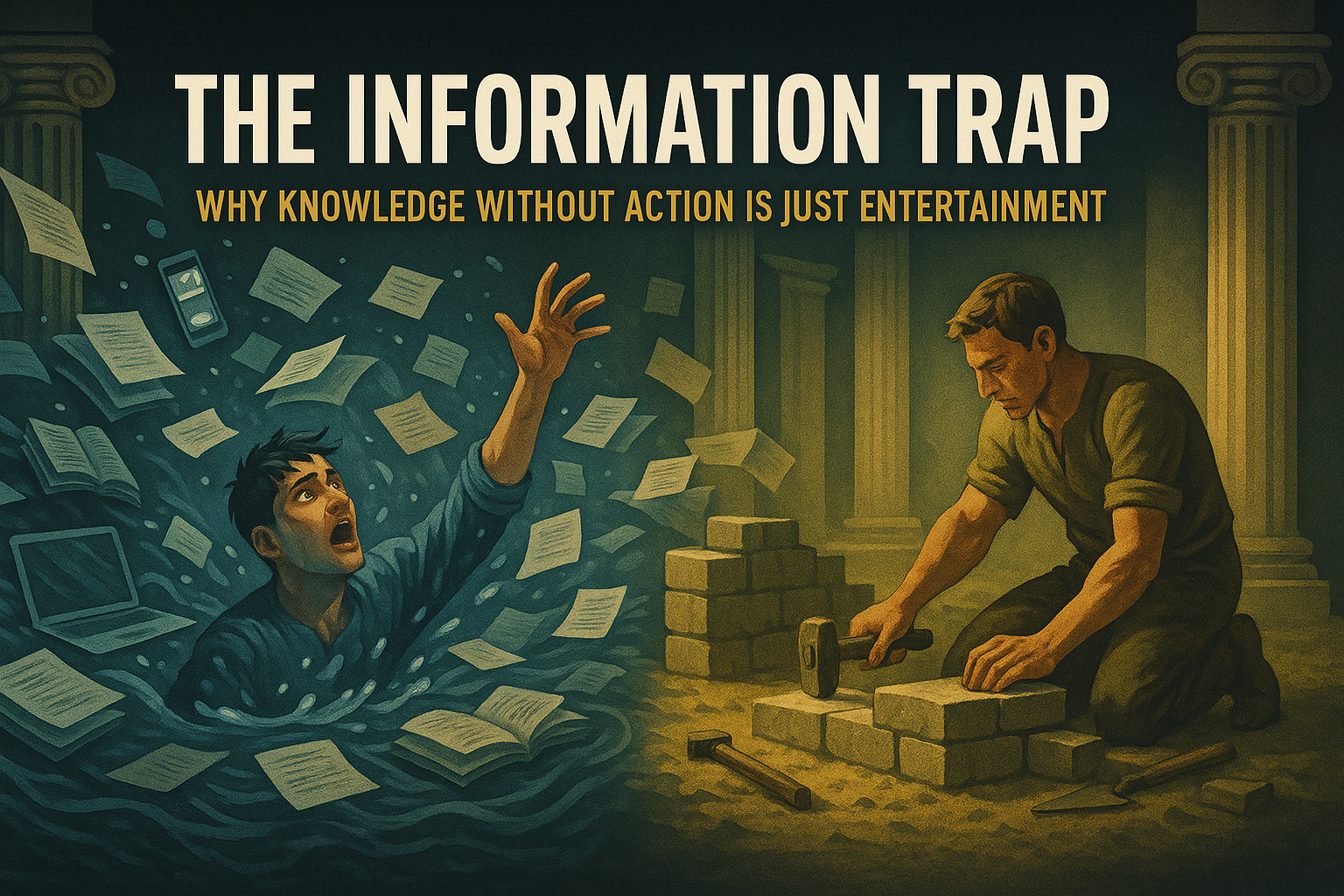
The Information Trap: Why Knowledge Without Action Is Just Entertainment
Most of your learning is actually entertainment in disguise. Here's why information without action is intellectual hoarding, and how to transform from consumer to creator through practical implementation.
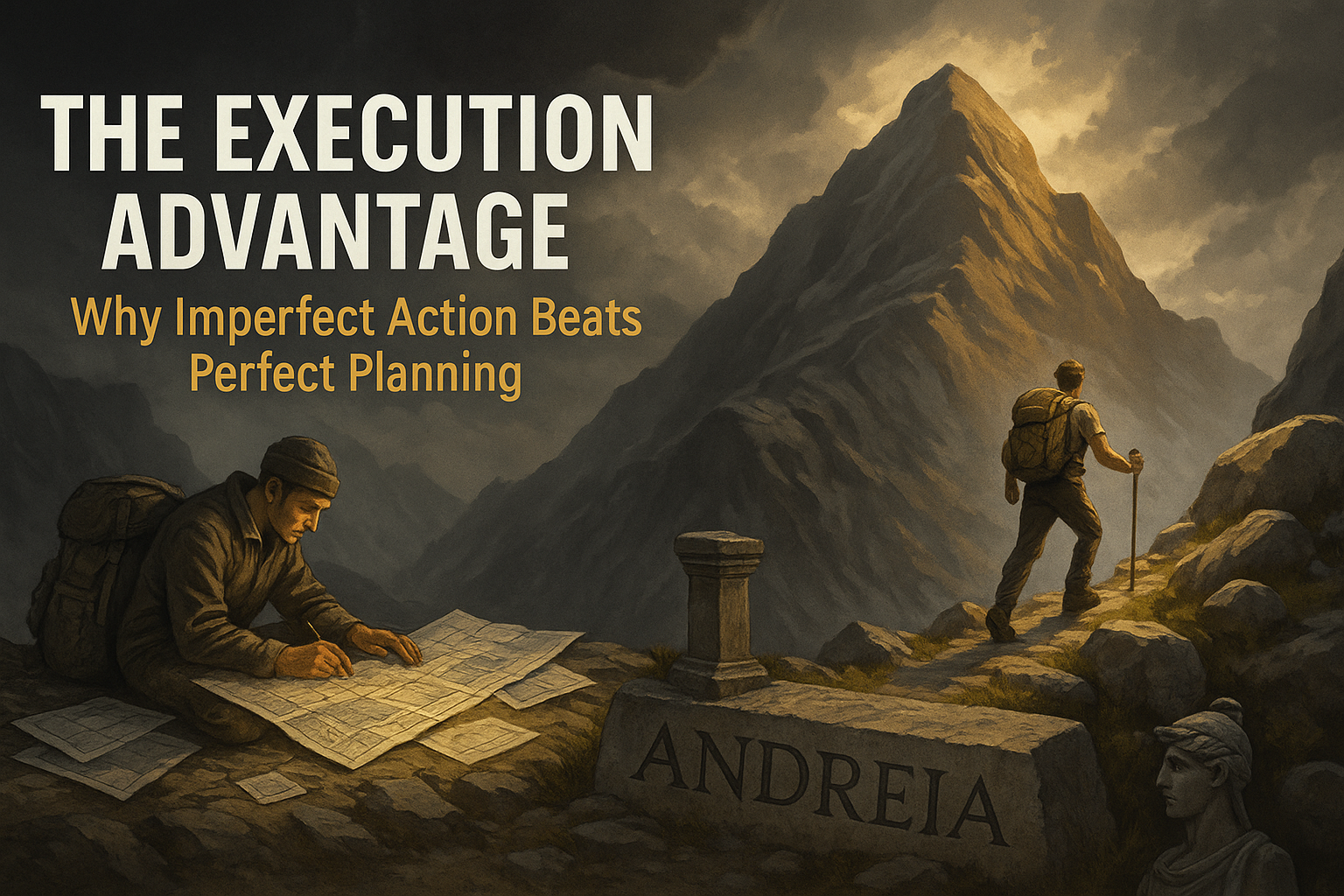
The Execution Advantage: Why Imperfect Action Beats Perfect Planning
Perfect plans are usually perfectly wrong. Here's why imperfect action creates better results than perfect planning, and how to build the execution advantage through courage and rapid iteration.
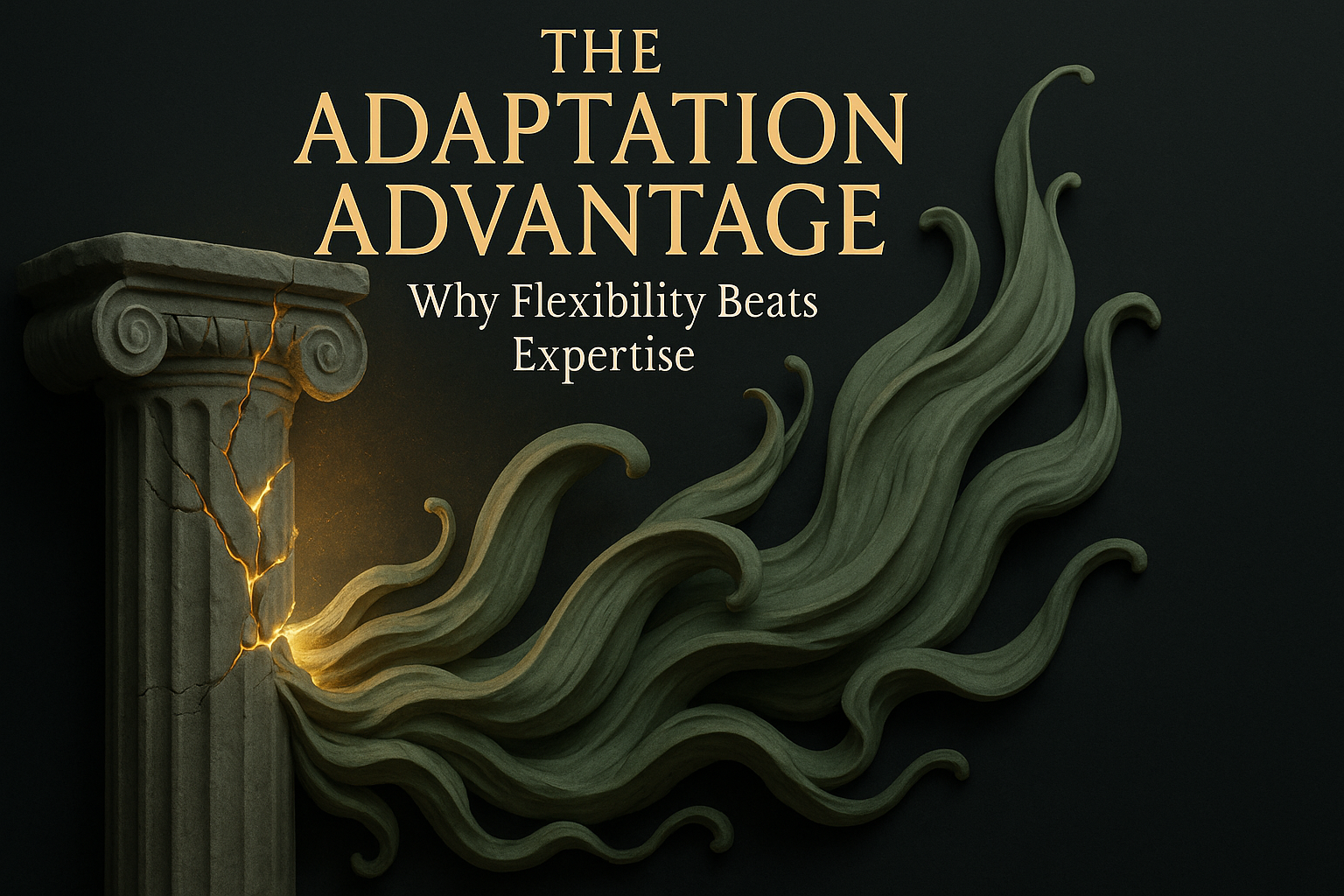
The Adaptation Advantage: Why Flexibility Beats Expertise
In the AI age, your expertise might be your biggest liability. Here's why flexibility beats depth, and how to build your adaptation advantage before it's too late.
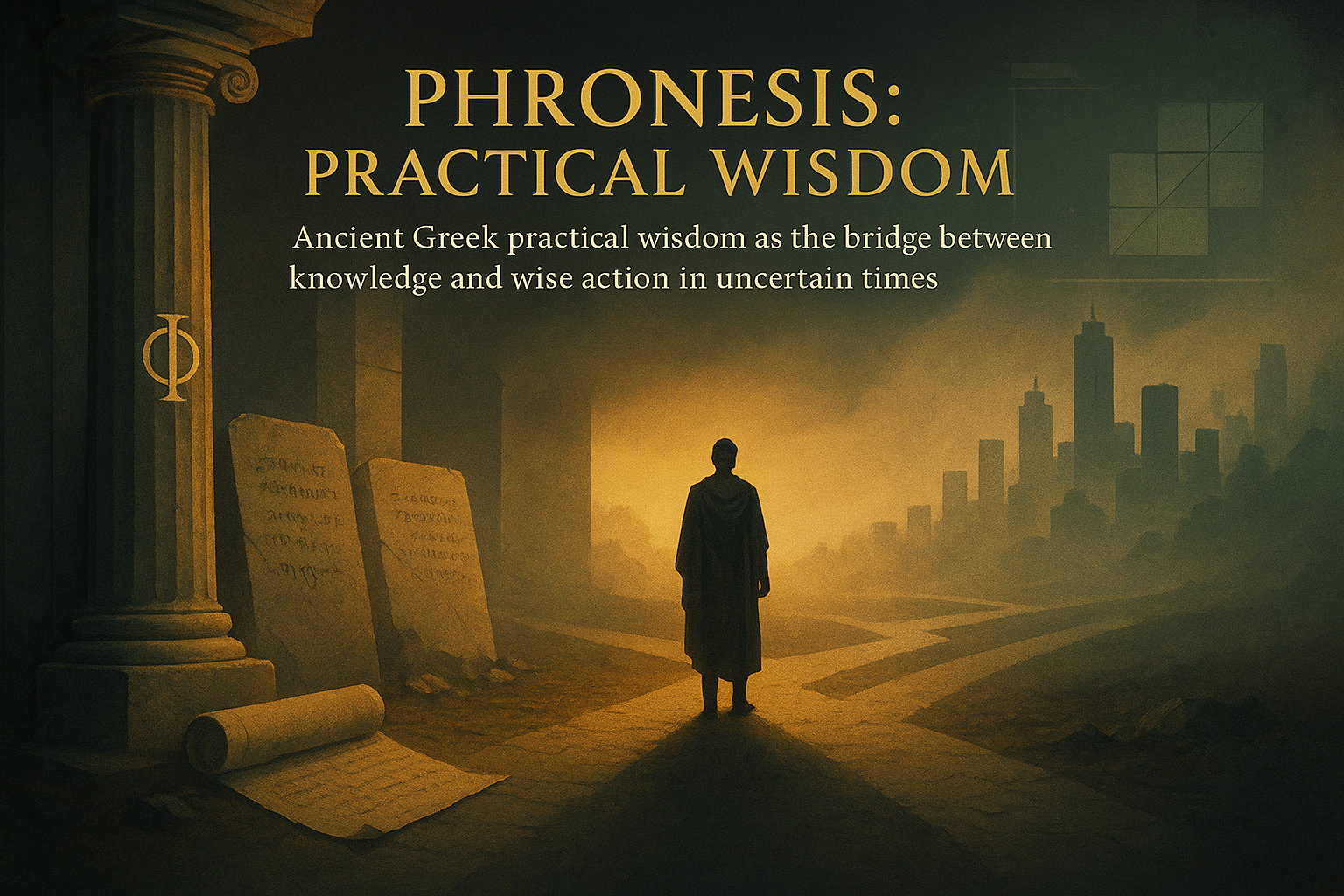
Phronesis: The Lost Art of Practical Wisdom
The ancient Greeks had a word for the leadership skill we desperately need today: phronesis. It's not about having all the answers, it's about acting wisely when you don't.
The Authority of Example: Leading Without Position
The most influential people don't have the biggest titles. They have something more powerful, the authority of example. Here's how to lead through character, not position.

The FSD Paradox: Why We Resist the Future We Actually Want
I'm a motorsports enthusiast who loves manual transmissions. So why do I hate driving rental cars now? The rental car experience taught me something uncomfortable about human nature, and why we resist the very technologies that would improve our lives.
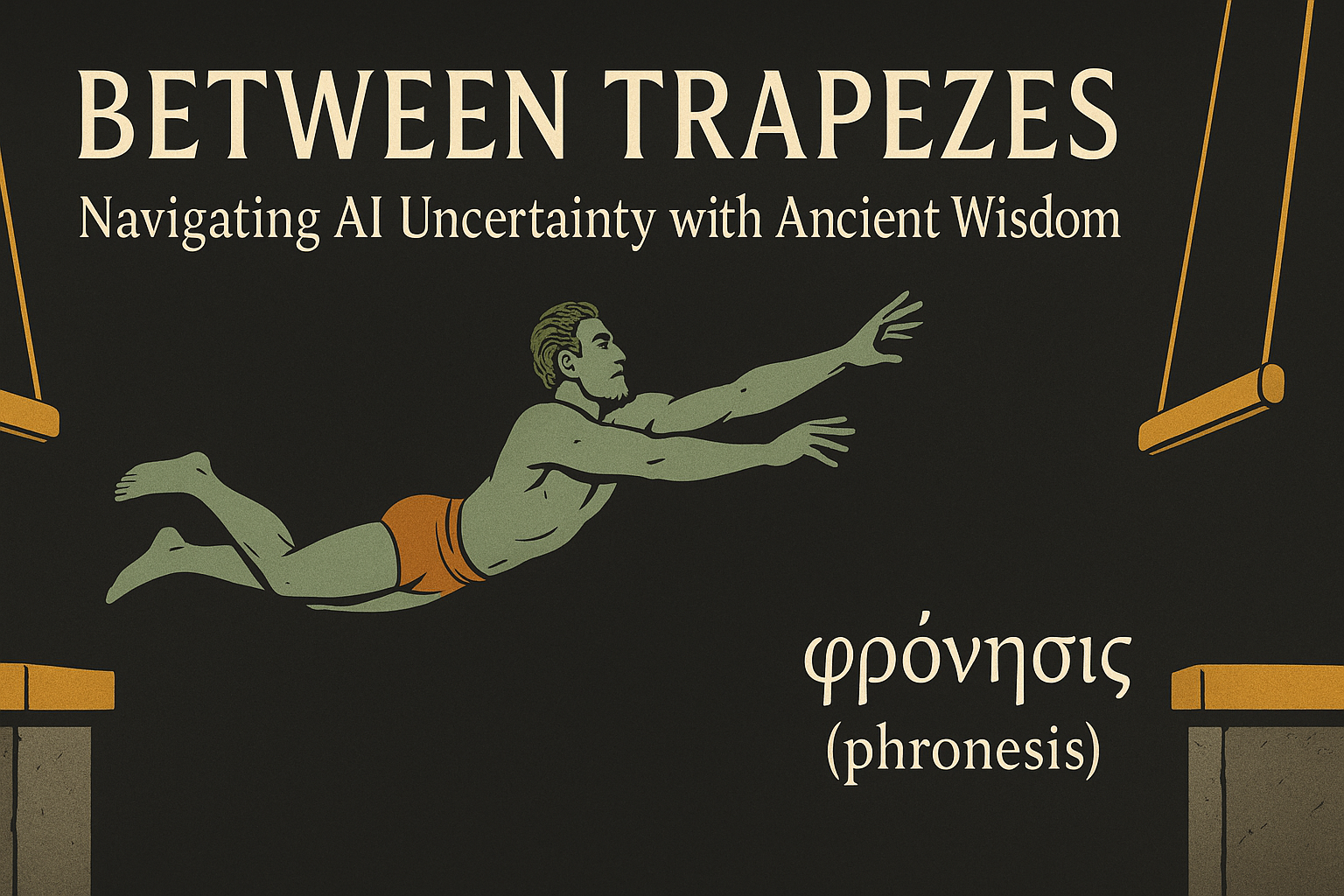
Between Trapezes: Navigating AI Uncertainty with Ancient Wisdom
In the moment between letting go of one trapeze and grasping the next, there's a space where everything depends on trust, timing, and practical wisdom. For leaders navigating AI transformation, this moment isn't a crisis, it's where excellence is forged.