Ergon vs Energeia: Key Differences in Greek Philosophy
The relationship between ergon and energeia is written into the Greek language itself. Energeia literally means ‘being-at-work,’ combining en (in) with ergon (work, function). Aristotle coined the term to describe what happens when a function is actively being performed, the transition from having a capacity to exercising it. Ergon identifies your characteristic function. It answers what you are for. The ergon of a musician is making music. The ergon of a leader is guiding others toward collective action. The ergon of a human being is rational activity exercised with excellence. But naming a function is not the same as performing it. Energeia is the live performance of that function. It is the musician playing, the leader deciding, the person reasoning through a difficult question in real time. Without energeia, ergon remains a description on a shelf, accurate but inert. This distinction exposes a pervasive form of self-deception. Knowing your function feels like progress. You identify your strengths, clarify your role, articulate what you are uniquely positioned to do. And then you stop. The identification becomes a substitute for the exercise. You call yourself a writer who is not writing, a leader who is not leading, an athlete who is not training. You possess the ergon. You withhold the energeia. Aristotle was unambiguous about the priority: actuality comes before potentiality in every sense that matters. A function that exists only as a description has not been realized. The harpist who never plays, the doctor who never treats patients, the philosopher who never thinks through hard problems. They possess ergon in name only. Energeia is where ergon becomes real. The practical implication is that self-knowledge without self-expression is incomplete. Understanding what you are for matters only insofar as it motivates you to do it. When you catch yourself saying ‘I am a builder’ but you have not built anything recently, or ‘I am a teacher’ but you are not currently teaching anyone, the gap between ergon and energeia is your most urgent problem. Aristotle’s concept of eudaimonia depends on this distinction. Flourishing is not a function you possess but an activity you perform. It requires the sustained energeia of your highest capacities across a complete life. Dormant virtue, unexercised talent, and unrealized potential may look impressive on a resume, but they contribute nothing to the life actually lived.
Definitions
Ergon
(ἔργον)
EHR-gon
The characteristic function, task, or work that defines what something is meant to do. In Aristotle’s philosophy, every being has an ergon—and human flourishing depends on performing our distinctive function (rational activity) with excellence.
Energeia
(ἐνέργεια)
en-ERG-ay-ah
The state of being at work, actuality, or the full realization of potential. In Aristotle’s metaphysics, energeia is the complement to dynamis—where dynamis is the power to become, energeia is the becoming itself made actual. The oak tree is the energeia of the acorn’s dynamis.
Key Differences
| Aspect | Ergon | Energeia |
|---|---|---|
| Nature | Ergon is the characteristic function or capacity. It describes what something is for, its proper work, independent of whether it is currently being exercised. | Energeia is the active exercise of that function. It describes the function in motion, being performed in the present moment. |
| Temporal Dimension | Ergon is enduring and stable. Your characteristic function persists whether you are actively engaged in it or not. A sleeping doctor still has the ergon of healing. | Energeia exists in the present moment. It requires active engagement and ceases when the activity stops. The doctor heals only while practicing medicine. |
| Relationship to Identity vs Performance | Ergon defines identity. It tells you what you are by nature or training. It is the foundation of self-understanding. | Energeia defines performance. It tells you what you are doing right now. It is the proof that identity is not merely nominal. |
| Dependency | Ergon can exist without energeia. A capacity can remain dormant, unused, or untested. Potential function does not require active expression. | Energeia cannot exist without ergon. You cannot exercise a function you do not possess. Active performance presupposes an underlying capacity. |
| Measurement | Ergon is measured by examining what a thing is designed or suited to do. Assessment looks at capacity, training, and natural endowment. | Energeia is measured by observing what a thing is actually doing. Assessment looks at output, engagement, and the quality of present activity. |
Nature
Ergon is the characteristic function or capacity. It describes what something is for, its proper work, independent of whether it is currently being exercised.
Energeia is the active exercise of that function. It describes the function in motion, being performed in the present moment.
Temporal Dimension
Ergon is enduring and stable. Your characteristic function persists whether you are actively engaged in it or not. A sleeping doctor still has the ergon of healing.
Energeia exists in the present moment. It requires active engagement and ceases when the activity stops. The doctor heals only while practicing medicine.
Relationship to Identity vs Performance
Ergon defines identity. It tells you what you are by nature or training. It is the foundation of self-understanding.
Energeia defines performance. It tells you what you are doing right now. It is the proof that identity is not merely nominal.
Dependency
Ergon can exist without energeia. A capacity can remain dormant, unused, or untested. Potential function does not require active expression.
Energeia cannot exist without ergon. You cannot exercise a function you do not possess. Active performance presupposes an underlying capacity.
Measurement
Ergon is measured by examining what a thing is designed or suited to do. Assessment looks at capacity, training, and natural endowment.
Energeia is measured by observing what a thing is actually doing. Assessment looks at output, engagement, and the quality of present activity.
When to Apply Each Concept
When to Choose Ergon
Think in terms of ergon when you need to identify what you or your team should be doing. Role clarity, strengths assessment, and hiring decisions all benefit from asking: ‘What is the characteristic function here?’ Before you can evaluate performance, you must establish what the role demands.
When to Choose Energeia
Think in terms of energeia when you need to evaluate whether the function is actually being performed. When identity claims feel hollow, when job descriptions do not match daily reality, or when you suspect that potential is being left on the table, energeia is the diagnostic lens. The question is not ‘What are you for?’ but ‘Are you doing it right now?’
Frequently Asked Questions
What is the difference between ergon and energeia?
Ergon is the characteristic function of something, what it is for. Energeia is that function being actively performed, what it is doing. A pianist's ergon is making music. When the pianist sits at the keyboard and plays, that is energeia. Aristotle distinguished them because possessing a function and exercising it are fundamentally different states, and the exercised state is the one that matters.
How are ergon and energeia connected in Aristotle?
The connection is etymological and philosophical. Energeia literally means being-at-work (en + ergon). Aristotle created the term to capture the moment when a capacity shifts from dormant to active. In the Metaphysics, he argued that energeia is prior to and more complete than mere potential, because the purpose of any function is to be exercised, not merely possessed.
What does energeia mean in relation to ergon?
Energeia means the actualization of ergon, the point at which function becomes activity. If ergon is the what (what something is for), energeia is the doing (that function in motion). Aristotle used energeia to describe the most complete state of anything: a thing is most fully itself when it is actively performing its characteristic function.
Why does Aristotle connect ergon and energeia?
Aristotle connects them because he believed that actuality is the purpose of potentiality. A function exists in order to be exercised. An acorn exists to become an oak. A skill exists to be practiced. Ergon without energeia is incomplete because the function has not fulfilled its reason for existing. This is why Aristotle defined eudaimonia not as having virtues but as actively exercising them.
Articles Exploring Ergon or Energeia (43)
Stop Celebrating Decimals
You are at 0.4 and there is a slide about it. Somebody made a chart. The number moved, so the room claps. A decimal is a position report, and treating it like an achievement pays you in advance for work you have not finished. The opposite error is quieter and more flattering, and it is the one that catches good people.

The Load Already Had a Job
I came off a long run and opened the watch before I sat down. The hills did not register. The number did. The old load already had a job. The watch applied for it.
You Optimized Away Everything Worth Doing
Anyone can walk over and drop a golf ball in the hole. Golf exists because you agreed to use a stick from far away. Remove that rule and you did not make golf efficient. You deleted golf. Most of us are running the same move on our lives: treating every obstacle as a defect, removing the ones that made an activity worth doing, and then wondering why the free time feels like a void. Bernard Suits called the alternative the lusory attitude. The Greeks called the space it fills schole. Here is how to tell which obstacles to remove and which ones to keep.
Your Best Work Gets Discussed in Rooms You'll Never Enter
A head of engineering got a call from a CEO he had never met. The new CTO had sat two desks from him four years earlier and remembered one Saturday migration that did not lose a row. It was never on a slide. It was discussed in a room he was not in.
Your Five-Year Plan Is Built From Last Year
I sat through an offsite that wrote 2029 as last year with nicer fonts. The futures worth living stay invisible until you stack skills, relationships, and harder rooms.

Code Got Cheap. Building Did Not.
A ticket used to be the whole job: receive the ask, type the code, argue that you matched it. Cheap code ends that identity before lunch. What remains is deciding whether the thing should exist.

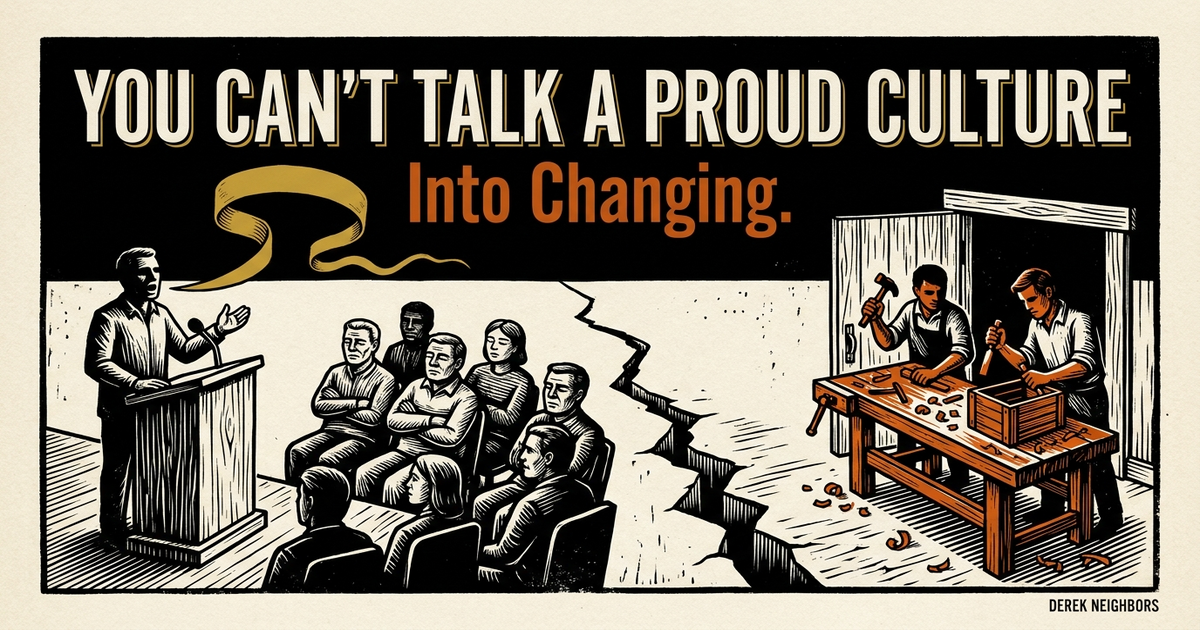
You Can't Talk a Proud Culture Into Changing
A strong culture will nod in the all-hands and return to the process that already made it proud. Conversion speeches bounce. The usable move is a small office with different rules and a scoreboard the old culture can see.
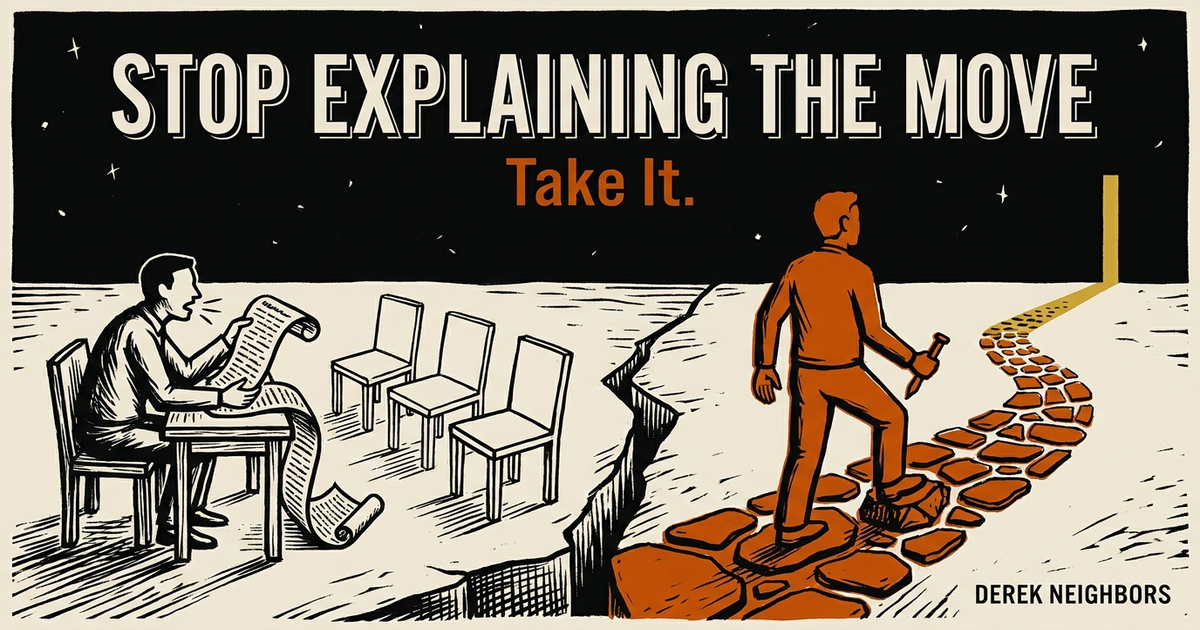
Stop Explaining the Move. Take It.
Preemptive defense feels responsible. It often spends the attention and nerve your practice needed. Ancient courage puts the step first and the account second, and only when an account is actually owed.
Nose In, Fingers Out. Know the Work Without Stealing It.
After you promote out of the work, people still expect you to know it. Most leaders answer with one of two failures: fingers in every decision, or a polite disappearance that looks like trust. The craft answer is older and sharper. Stay educated. Stop owning choices that are not yours.

You Don't Need More Time. You Need Higher Stakes.
You keep shopping for more hours: earlier alarms, cleaner calendars, better tools. Seneca's diagnosis was sharper. Life is not short. Most of it gets wasted by people who do not feel its weight. A child, a diagnosis, a business with real customers compresses the day and somehow yields more. The compression did not steal the time. It exposed how much was already drifting. You need higher stakes, not another system.

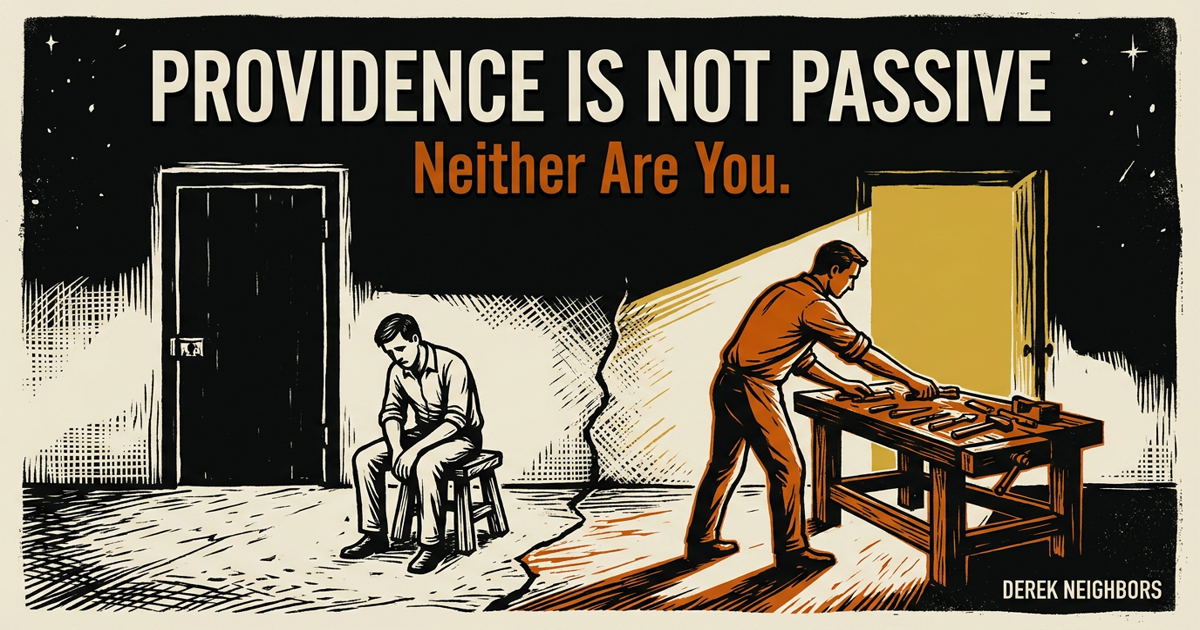
Providence Is Not Passive. Neither Are You.
Believing the universe is on your side means nothing if your calendar proves you are waiting. The Stoics welded trust in providence to being-at-work. Pronoia without energeia is costume. This is the challenge: meet the field armed, or stop calling the wait faith.
The Machines Picked an Operating System. It Wasn't Windows.
For fifty years the operating system argument was a matter of taste, and taste kept Windows on seventy percent of the world's desktops. Then computers got a new user. AI agents work through shell commands, text streams, and small tools chained together, and that describes a design philosophy written down at Bell Labs in 1978. The machines were never going to vote on familiarity. They compose with whatever was built for composition, and the gap between the two kinds of operating system is about to become the gap between working infrastructure and legacy.

Living the Dream Is Mostly Grunt Work. That's the Good News.
The day you finally get the dream is the day it stops feeling like one. Fear shows up, the calendar disappears, and the summit moment never comes. Most people read this as failure. It's the strongest evidence yet that the dream became real.

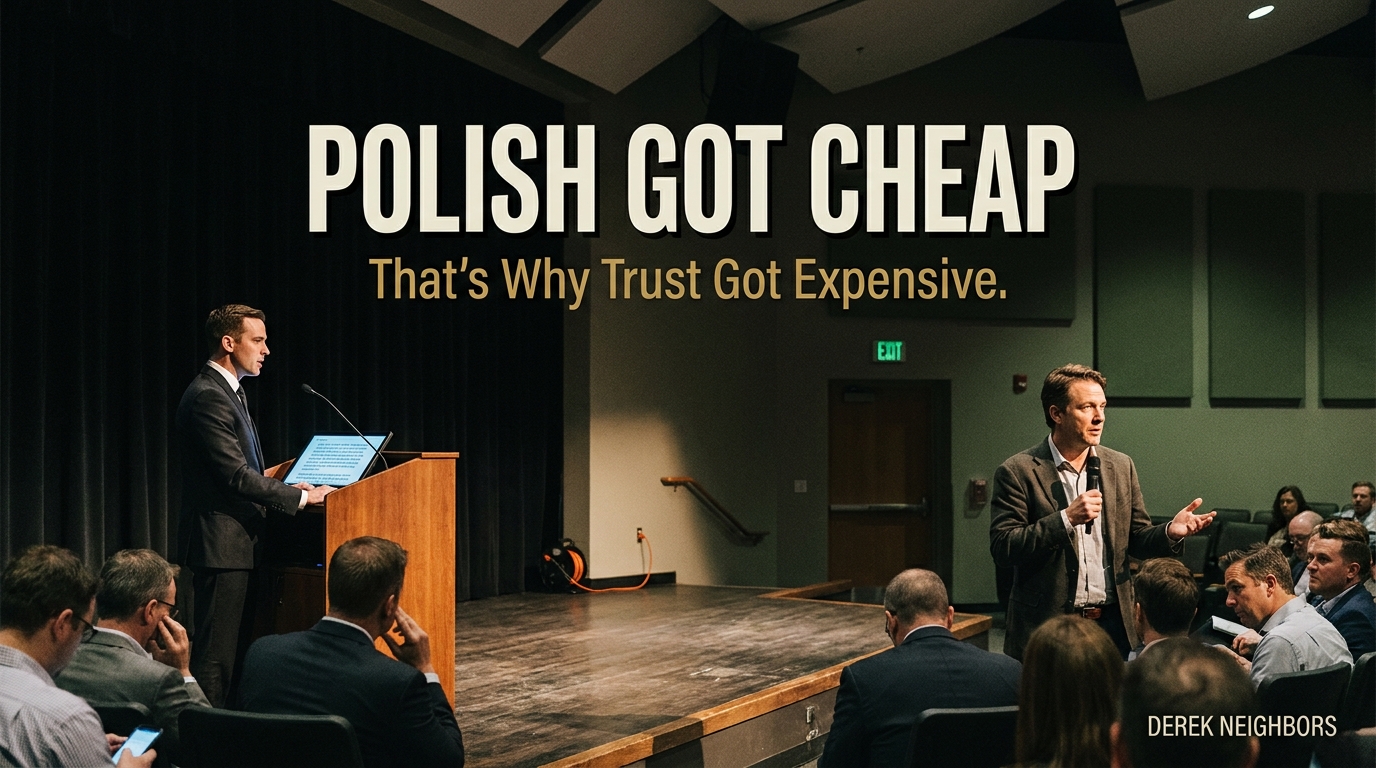
Polish Got Cheap. That's Why Trust Got Expensive.
A flawless apology used to mean someone sat with the weight. Now it often means someone was not in the room. AI made sounding right cheap, and audiences rewired what they trust: hesitation, disclosed uncertainty, and speech that could have embarrassed you.
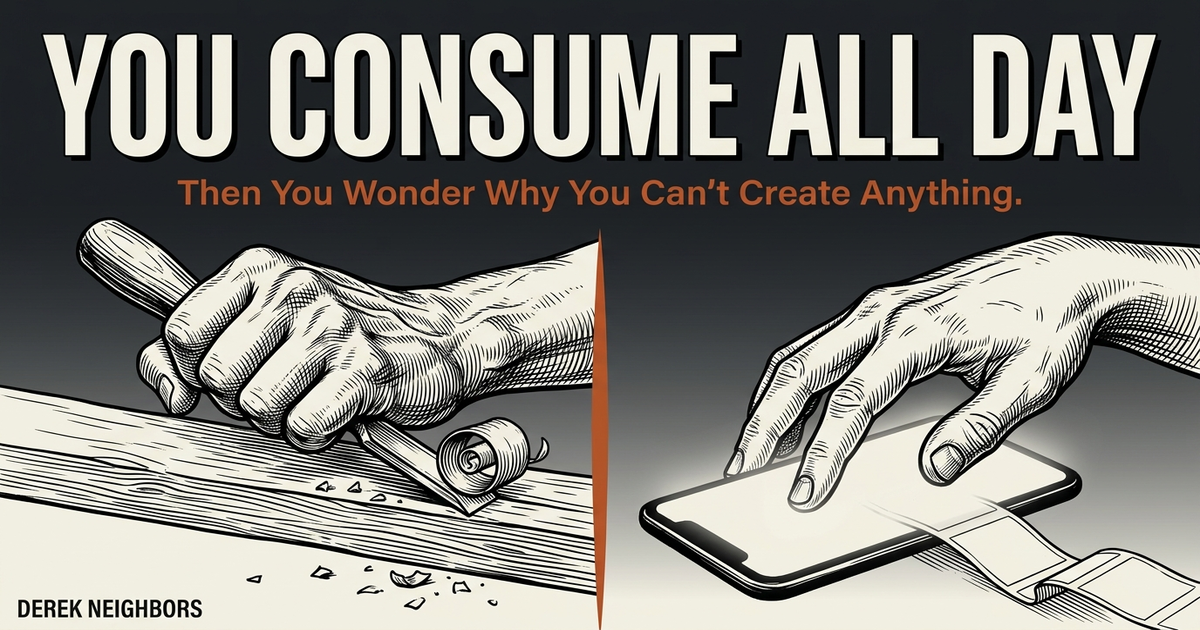
You Consume All Day. Then You Wonder Why You Can't Create Anything.
Two people spend the same free evening. One opens a feed and consumes for three hours. The other picks up a tool that fights back and makes something clumsy and real. From the outside both are relaxing. A year later one of them can do a dozen things with their hands and the other can only find things other people made. Every tool trains you. A craft tool demands skill and leaves capability in you. A capture tool demands only your appetite and hands you consumption you rent from an algorithm. The line was never analog versus digital. It is whether the thing in your hand is finishing you into a maker or a consumer.
You're Not a Blank Slate. You're a Block of Marble.
The self-development industry treats you as a blank slate waiting for a better blueprint, so you keep importing other people's designs and calling it growth. The Greeks worked from the opposite premise. Pindar told his readers to become who they are, having learned it. The Stoics built a whole theory, oikeiosis, around development as progressive alignment with your own nature. Michelangelo said the figure already lives in the marble. The question isn't who you should become. It's who is already in the stone, and what has to come off.

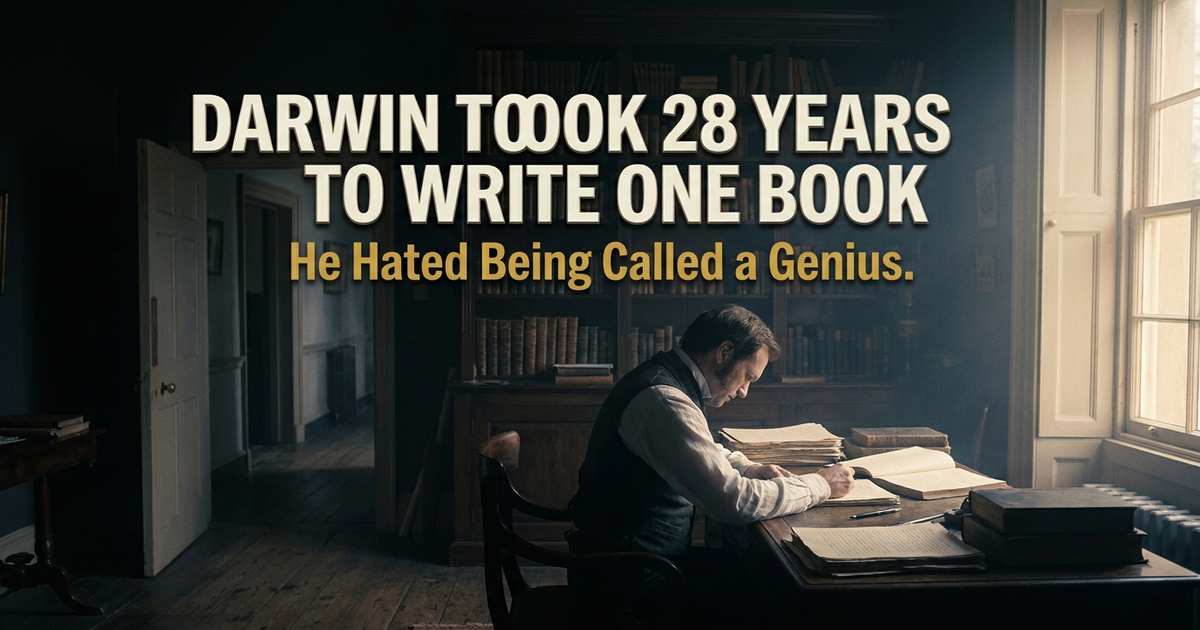
Darwin Took 28 Years to Write One Book. He Hated Being Called a Genius.
Charles Darwin spent twenty-eight years between the HMS Beagle's return in 1836 and the publication of On the Origin of Species in 1859. Eight of those years he spent classifying barnacles. He described himself in his autobiography as not a quick thinker or writer. The word the public eventually used for him was genius. He hated it. Genius is a hindsight label we paste onto a long, mostly invisible accumulation of patient daily work, and the lightning-bolt myth of insight survives because it lets the rest of us off the hook for not enduring the years of karteria, patient endurance, the actual builders endured.
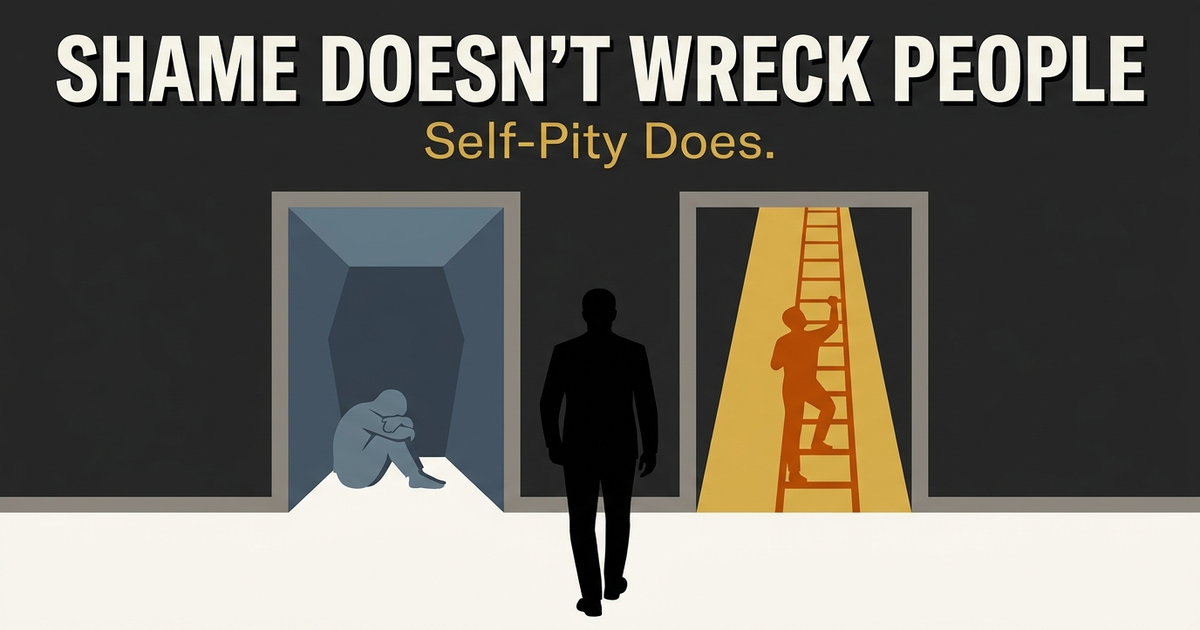
Shame Doesn't Wreck People. Self-Pity Does.
Shame is the recognition of the gap between who you are and who you wanted to be. The Greeks called it aidos and treated it as a moral faculty, not a wound to be silenced. The same shame, in two people facing the identical failure, produces two opposite trajectories. Self-pity sits in the gap and decorates it. Self-respect uses the gap as instruction. Most people pick the response that feels gentlest in the moment because the gentle one is the closer door. Decades later it turns out to be the most expensive door in their lives.
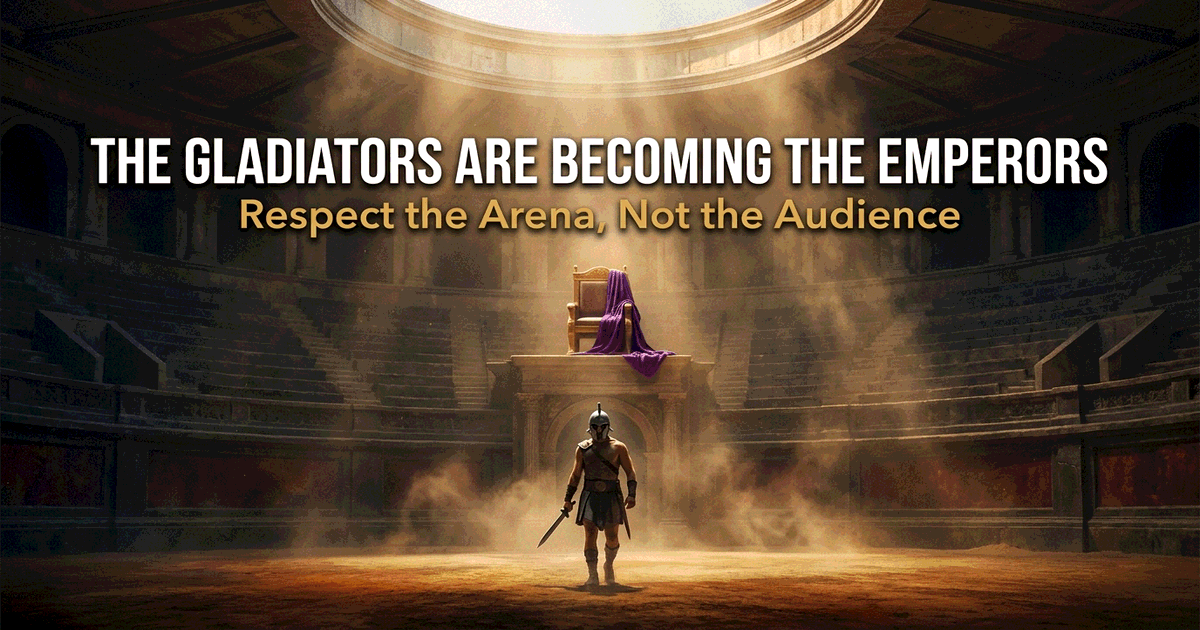
The Gladiators Are Becoming the Emperors. Respect the Arena, Not the Audience.
Last week the Daily Stoic guy lost his composure on YouTube because Ivanka Trump praised Marcus Aurelius. The same week, SpaceX offered sixty billion dollars for a company whose 25-year-old CEO does every podcast himself. These are the same story.
Your Potential Isn't Waiting. It's Disappearing.
We talk about untapped potential like it's a savings account, sitting there earning interest while you figure things out. Aristotle had a different word for it. And his version has an expiration date.

You Don't Want to Change. You Want to Feel Better.
You've read the books, hired the coach, attended the retreat. Six months later, the same patterns are running. The same conflicts repeat. The vocabulary improved. The behavior didn't. The effort was real. The misunderstanding was deeper: what change actually requires.
Why Arguing Your Point Is Always a Losing Strategy
For the second time in this series, Greene and the ancient philosophers agree. Demonstrate, don't argue. But they agree for different reasons, and the difference reveals whether you're performing power or practicing excellence.
Taking Credit for Your Team's Work Will Destroy Everything You've Built
Greene says get others to do the work and take the credit. The Greeks say earn your honor through what you actually contribute. One builds empires that depend on resentful people staying. The other builds teams that grow stronger because people choose to stay.
You Stopped Growing and Didn't Even Notice
You can look back ten years and barely recognize who you were. You can acknowledge enormous personal transformation. And yet, right now, you believe you're basically done becoming. Psychology calls this the end of history illusion. The Greeks called it the opposite of flourishing.
You're Not Too Intense. Everyone Else Is Too Comfortable.
What society labels 'crazy' or 'too intense' is actually the natural fulfillment of human purpose. The real madness is accepting a diminished life. Normal isn't sanity. It's collective surrender.
Your Best Days Aren't Behind You. Unless You Keep Looking Back.
The glory days trap isn't about memory. It's about identity. Living in the past is a form of self-protection that guarantees self-limitation.
Most People Need a Crisis to Try Their Hardest. That's a Character Flaw.
Crisis unlocks extraordinary performance. But needing crisis to access your best means your best isn't really yours. It belongs to whatever circumstances happen to arrive.

Should You Hide Your Excellence to Protect Your Boss's Ego?
Greene's first law of power tells you to never outshine the master. The tactical truth is real: insecure leaders punish excellence. But the solution isn't dimming your light. It's knowing when to deploy it. The Greeks called it kairos.

Why Authenticity Has Nothing to Do With Being Yourself
Authenticity has become a personal branding buzzword. The Greeks knew better. True authenticity isn't about expressing your real self. It's about refusing to fragment into different versions for different audiences. Wholeness, not performance.
What If Your 'Personal Best' Is Actually Your Personal Belief?
Everyone treats their personal best as an objective measurement. But what if it's actually a prophecy? What if the limit you keep hitting is the limit you keep expecting to hit?
The Elimination Discipline: Why Cutting the Good Unlocks the Great
Most people stay mediocre not because they lack talent, but because they refuse to give up anything. The hardest cut isn't the bad work. It's the good work that's in the way.

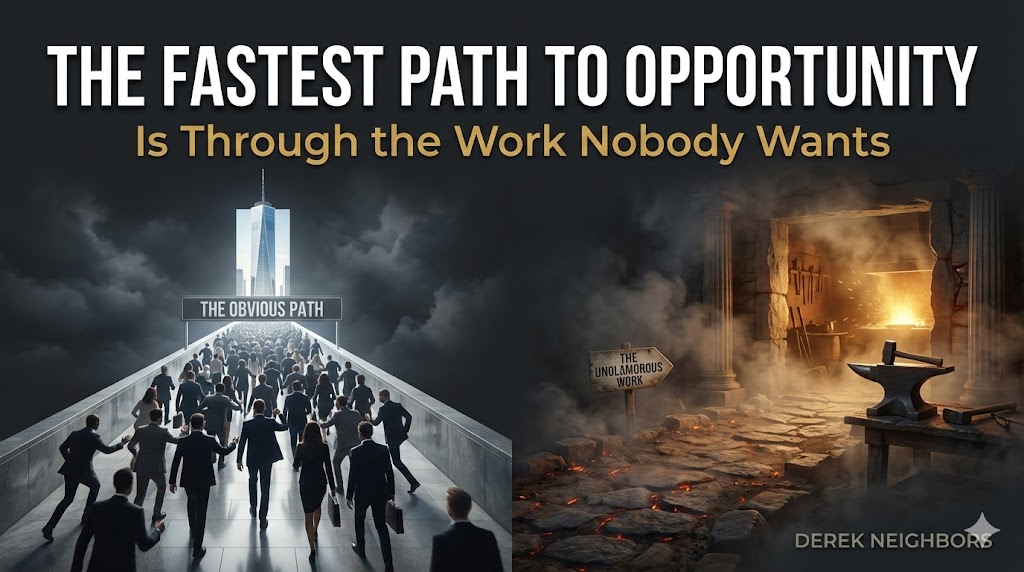
The Fastest Path to Opportunity Is Through the Work Nobody Wants
Everyone's competing for the spotlight. Meanwhile, opportunity waits in the tasks everyone avoids. The dirty work doorway isn't just a path to success. It's the only path that isn't crowded.
Good Intentions Are Why Most Dreams Die
Everyone celebrates good intentions. 'At least their heart was in the right place.' But intentions aren't neutral. They're a sophisticated form of self-deception that lets you feel virtuous about dreams you're not actually building.

You're Working Hard. On the Wrong Things.
The myth of 'work on your weaknesses' has created generations of well-rounded mediocrity. What if the thing that comes easily to you is exactly where your leverage lives?

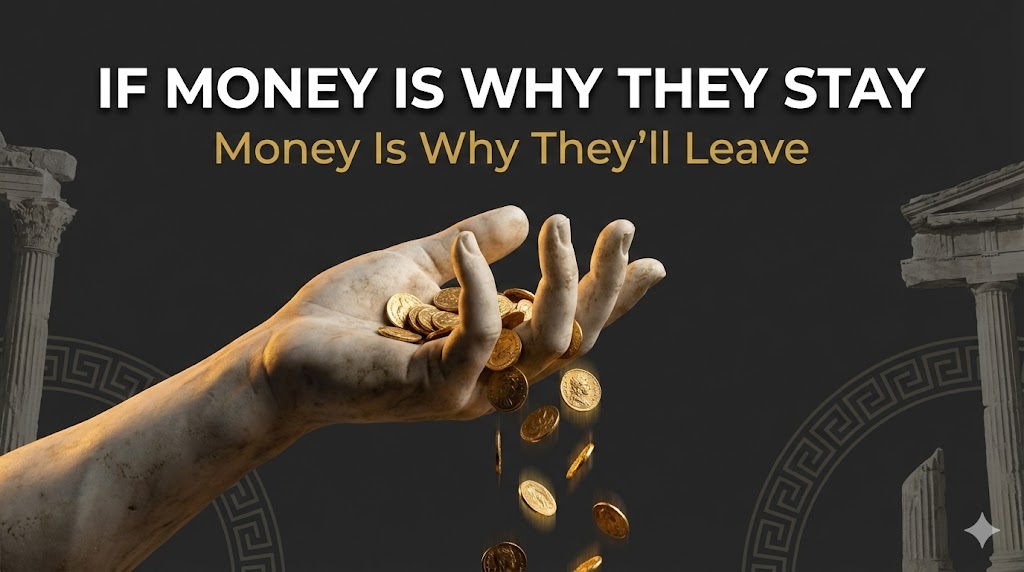
If Money Is Why They Stay, Money Is Why They'll Leave.
Pay them well and they'll stay. Pay them more and they'll work harder. It sounds logical until you watch your highest-paid people leave for less money. The myth of compensation-driven loyalty is destroying teams.
You're Not Getting Ready. You're Hiding.
Preparation is the most sophisticated form of procrastination. It feels productive. It looks responsible. And it keeps you exactly where you are.

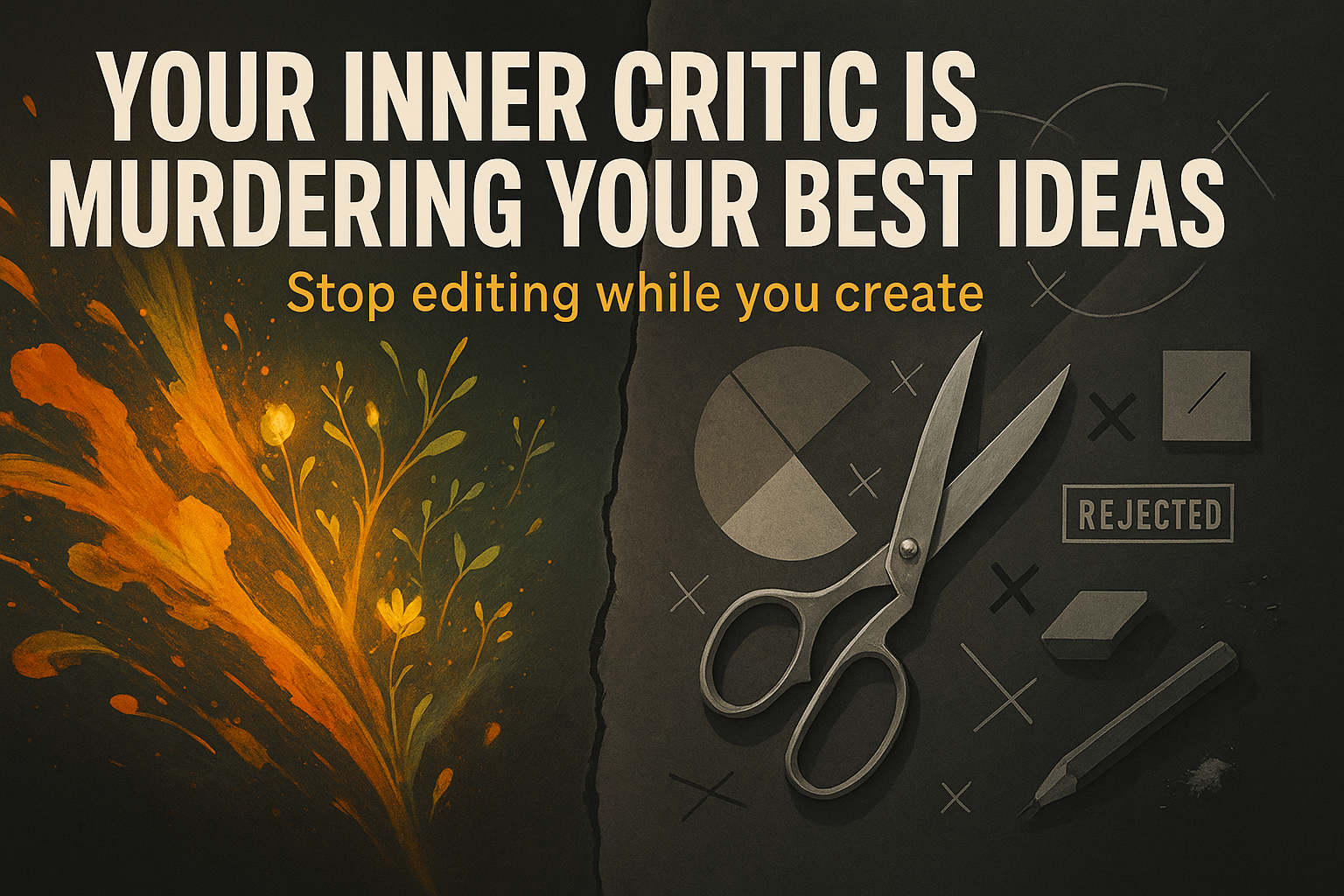
Your Inner Critic Is Murdering Your Best Ideas in the Crib
Your inner critic isn't the enemy. But letting it judge while you create guarantees mediocrity. Excellence requires opposite mindsets—and knowing when to deploy each.
Stop Waiting for Flow - Start Training It Like Every Other Skill
You can spend another year waiting for flow to happen, or you can spend the next 12 weeks training it like the ancient Greeks did, systematically, progressively, relentlessly.

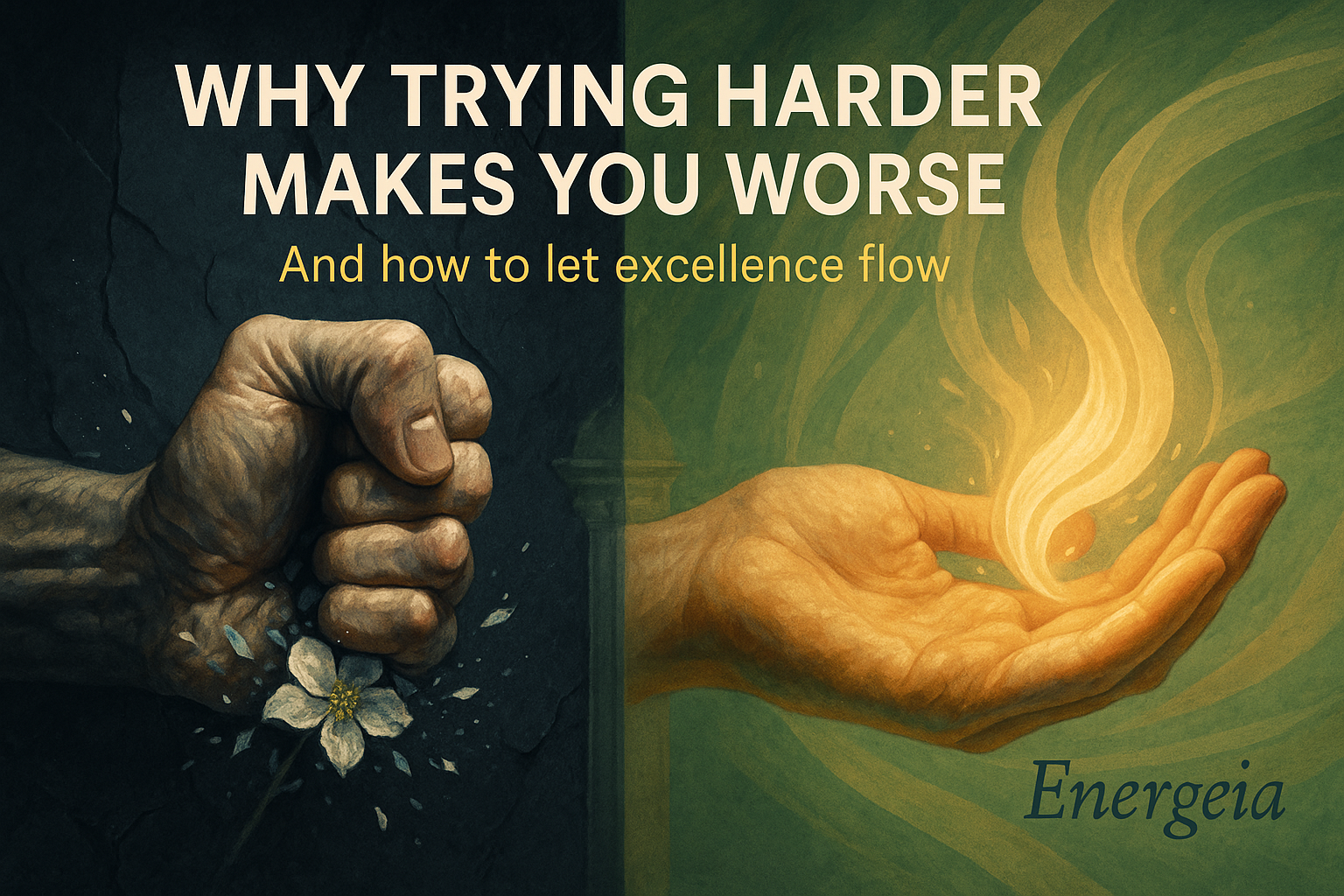
Why Trying Harder Makes You Worse (And How to Let Excellence Flow)
You built the conditions. You trained your attention. Now stop trying so hard. The excellence you're forcing toward shows up when you allow it to emerge.
Manage Attention, Not Hours: How to Do Work That Matters
You don't need more hours, you need cleaner attention. When you defend attention, deep work shows up and the needle finally moves.
Stop Chasing Flow. Build It.
Flow doesn't show up when you beg it. It shows up when you remove what blocks it. The people who hit flow states most aren't gifted, they're disciplined about building the right conditions.
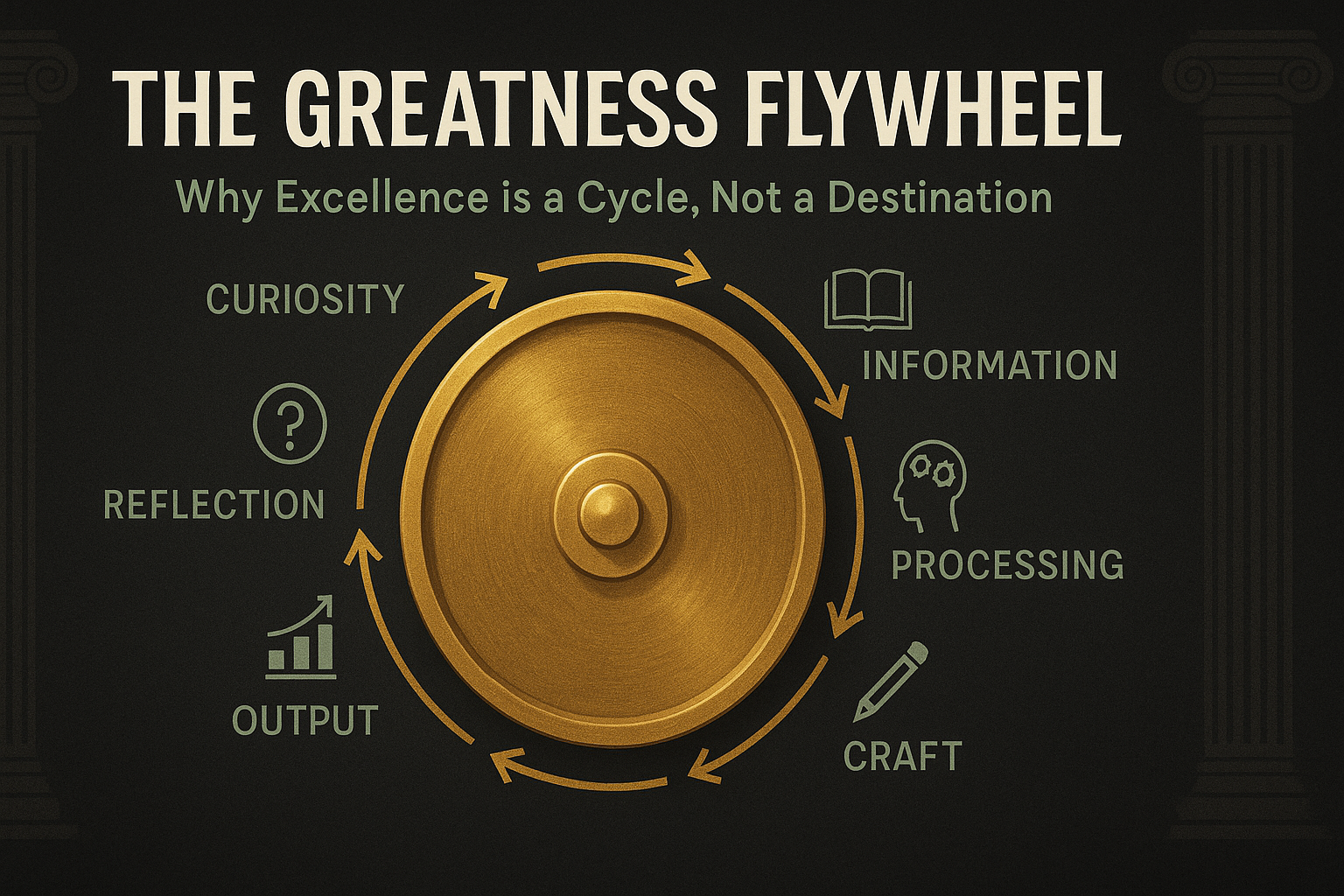
The Greatness Flywheel: Why Excellence is a Cycle, Not a Destination
Excellence isn't a destination you arrive at once and maintain through willpower. Excellence is a flywheel. The six-stage cycle that transforms ancient Greek wisdom into systematic excellence methodology.
The Position vs. Trend Mindset: Why Your Trajectory Matters More Than Your Current Location
The fundamental difference between position thinking (comparing to others) and trend thinking (tracking your own trajectory). Why your direction matters more than your location.