Askesis vs Ponos: Key Differences in Greek Philosophy
Askesis and ponos both involve effort and discomfort, but they differ in structure and purpose. Askesis is the disciplined training regimen you design and follow. Ponos is the productive struggle you encounter within that training and beyond it. Askesis is the plan. Ponos is the burn. You need the discipline of askesis to ensure that the struggle of ponos leads somewhere meaningful.
Definitions
Askesis
(ἄσκησις)
AS-kay-sis
Disciplined training and practice aimed at self-mastery, originally athletic exercise but extended by Stoics to mean rigorous spiritual conditioning. The deliberate cultivation of virtue through repeated effort and voluntary hardship.
Ponos
(πόνος)
POH-nos
The toil, labor, and productive struggle necessary for achieving anything of worth. In Greek thought, ponos was not mere suffering but purposeful exertion—the price demanded by excellence and the forge through which virtue is shaped.
Key Differences
| Aspect | Askesis | Ponos |
|---|---|---|
| Structure | Askesis is structured and intentional. It involves planned exercises, routines, and practices designed to develop specific capacities. | Ponos can be structured or unstructured. Productive struggle arises both in planned training and in the unexpected challenges life presents. |
| Agency | Askesis is chosen deliberately. You select your training regimen and commit to it as an act of will. | Ponos can be chosen or imposed. Sometimes you seek out difficulty; other times difficulty finds you. |
| Purpose | Askesis aims at self-mastery and character development through systematic practice. The goal is transformation through discipline. | Ponos aims at growth through effort and toil. The goal is strengthening through the productive application of labor. |
| Emotional Tone | Askesis carries a tone of monastic discipline. It evokes the image of the athlete or philosopher in rigorous daily training. | Ponos carries a tone of honest labor and sweat. It evokes the image of the worker giving full effort to a difficult task. |
Structure
Askesis is structured and intentional. It involves planned exercises, routines, and practices designed to develop specific capacities.
Ponos can be structured or unstructured. Productive struggle arises both in planned training and in the unexpected challenges life presents.
Agency
Askesis is chosen deliberately. You select your training regimen and commit to it as an act of will.
Ponos can be chosen or imposed. Sometimes you seek out difficulty; other times difficulty finds you.
Purpose
Askesis aims at self-mastery and character development through systematic practice. The goal is transformation through discipline.
Ponos aims at growth through effort and toil. The goal is strengthening through the productive application of labor.
Emotional Tone
Askesis carries a tone of monastic discipline. It evokes the image of the athlete or philosopher in rigorous daily training.
Ponos carries a tone of honest labor and sweat. It evokes the image of the worker giving full effort to a difficult task.
When to Apply Each Concept
When to Choose Askesis
Embrace askesis when you need to build a deliberate practice for long-term development. Designing your morning routine, committing to a physical training program, or establishing a regular writing practice all exemplify askesis. It is the virtue of the person who understands that transformation requires consistent, planned effort.
When to Choose Ponos
Embrace ponos when facing the difficulty inherent in meaningful work. When the training gets hard, when the project demands more than you expected, or when growth requires genuine suffering, ponos is the frame that makes struggle productive rather than punishing. It is the virtue of finding meaning and growth in the sweat itself.
Frequently Asked Questions
What is the difference between askesis and ponos?
Askesis is disciplined training, a structured practice aimed at developing virtue and capability. Ponos is productive struggle, the toil and effort that produces growth. Askesis provides the framework; ponos is what you experience within it. A training regimen is askesis. The burning muscles and mental fatigue you feel during that training are ponos.
Is askesis the same as asceticism?
Modern asceticism is derived from askesis but has narrowed in meaning. The original Greek askesis referred broadly to any disciplined training practice, whether physical, mental, or moral. It did not necessarily involve deprivation or self-denial. The Stoics and early Christians later emphasized the self-denial aspects, which gave us the modern sense of asceticism as harsh self-restriction.
How do askesis and ponos work together?
Askesis creates the conditions for productive ponos. Without disciplined structure, struggle is random and often wasted. Without genuine effort, discipline becomes empty routine. The most effective development happens when you design a rigorous practice (askesis) and then engage fully with the difficulty it produces (ponos). Each concept needs the other to produce lasting growth.
Articles Exploring Askesis or Ponos (40)
Stop Celebrating Decimals
You are at 0.4 and there is a slide about it. Somebody made a chart. The number moved, so the room claps. A decimal is a position report, and treating it like an achievement pays you in advance for work you have not finished. The opposite error is quieter and more flattering, and it is the one that catches good people.
The Load Already Had a Job
I came off a long run and opened the watch before I sat down. The hills did not register. The number did. The old load already had a job. The watch applied for it.
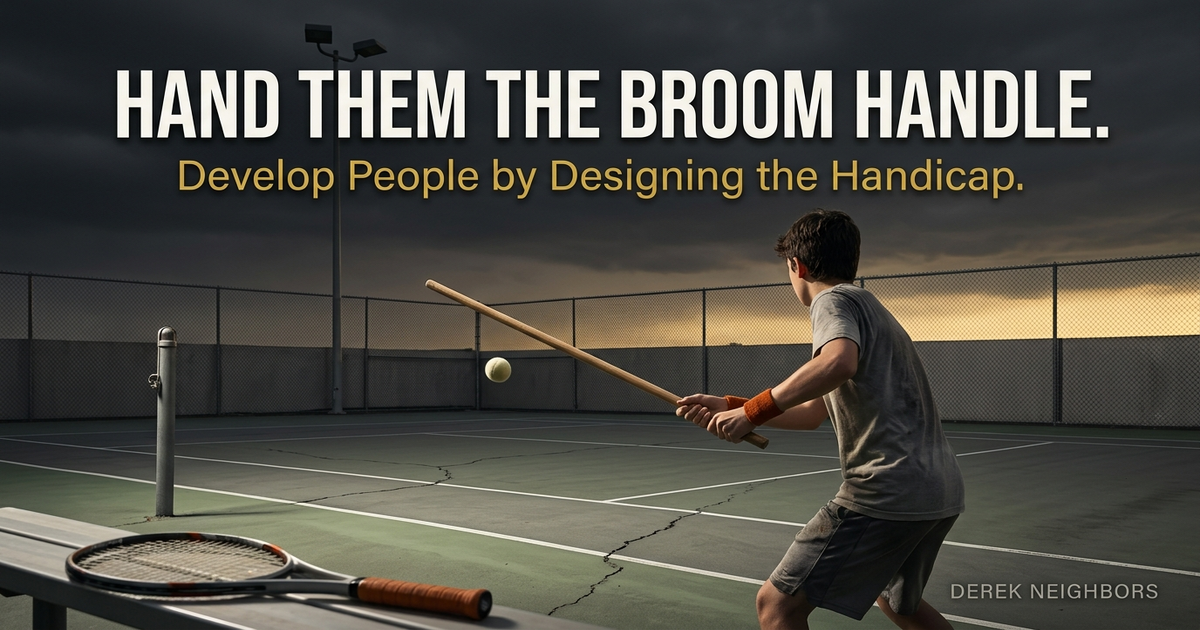
Hand Them the Broom Handle
The story goes that Arthur Ashe learned to see the ball with a broom handle, because a racket made hitting it too easy. I hand people the racket all day: agents, templates, last quarter's deck, a runbook for everything. I want them on it. And I keep meeting people who can operate every tool we own and cannot tell you why the ball went where it went. The fix is a handicap you design on purpose: one skill, one task, a date, and the racket handed straight back.
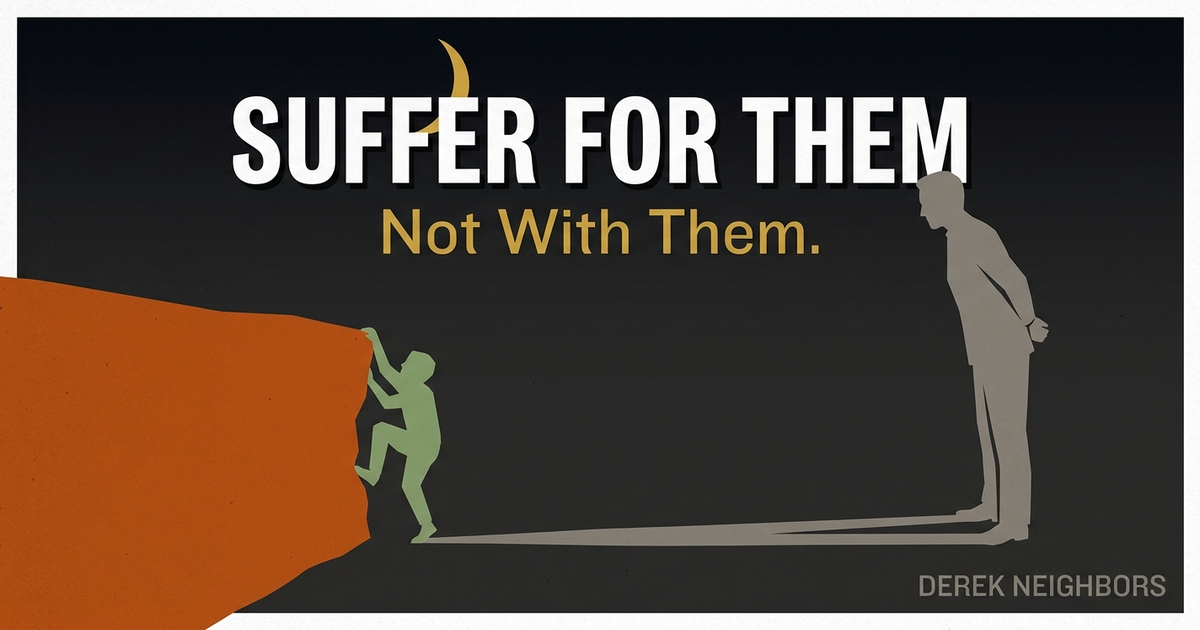
Suffer For Them, Not With Them
Two senior engineers watch the same junior stall on the same ugly ticket. One takes it off their board and saves the sprint. The other clears an afternoon, sits two desks away, and lets the migration fail on the junior's watch. From the outside those look like the same amount of care. They are opposites. Rescue ends your pain in one move and postpones theirs to a point where it is expensive. The harder thing is to carry a cost on their behalf and let the struggle do what it was for.
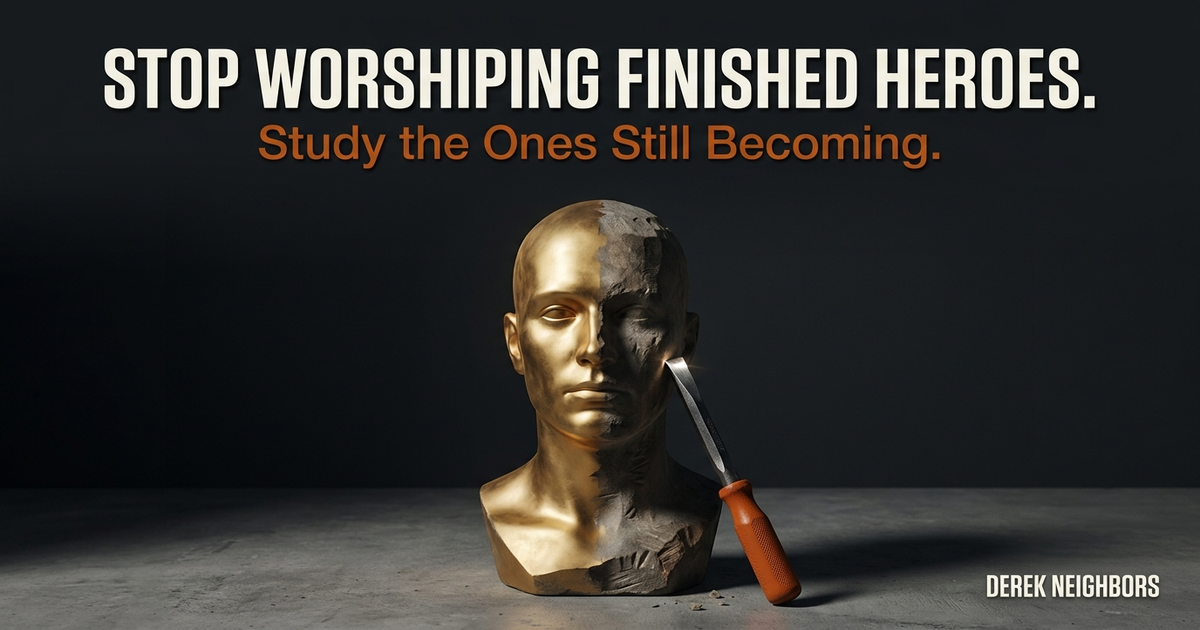
Stop Worshiping Finished Heroes. Study the Ones Still Becoming.
Polished heroes erase the path. Study the unfinished ones whose bad days are still visible, and you get permission to keep swinging instead of waiting to feel finished.
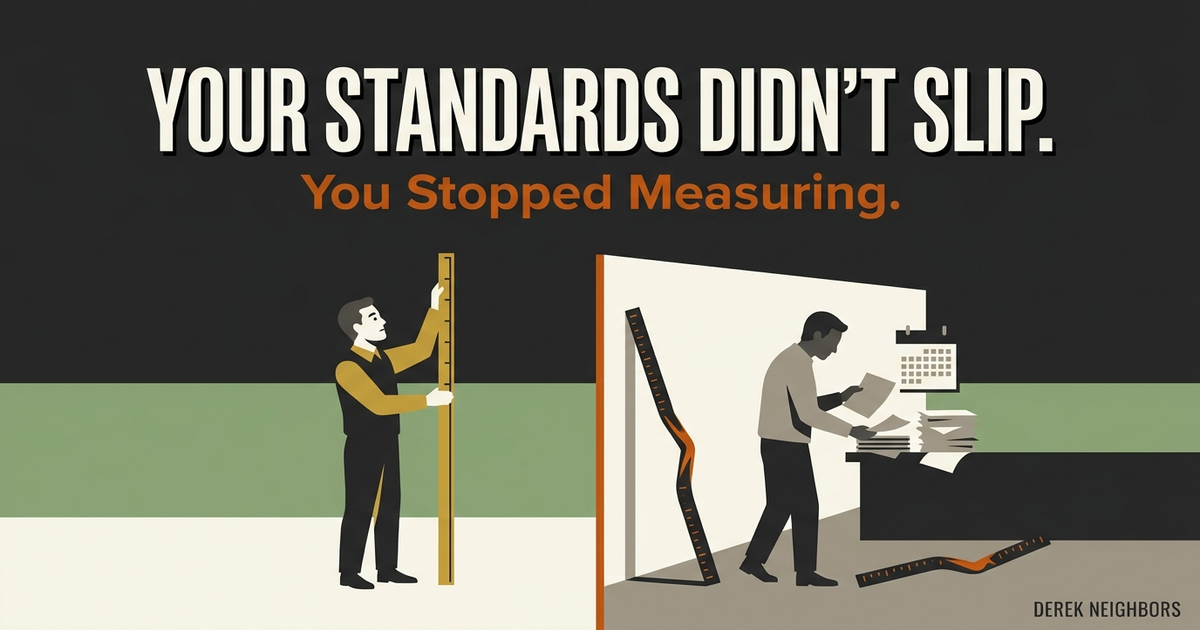
Your Standards Didn't Slip. You Stopped Measuring.
After the win you stopped looking at the bar, kept a fluent story about why, and called the soft week strategy. Rewards end. Standards renew. Measuring is the difference.
Hard Times Build Character. Easy Times Expose It.
Training virtue for hard times is the easy half. The real exam starts when constraints fall away and the only person who can stop you is you. Hard times build the muscle. Easy times tell you what the muscle was for.

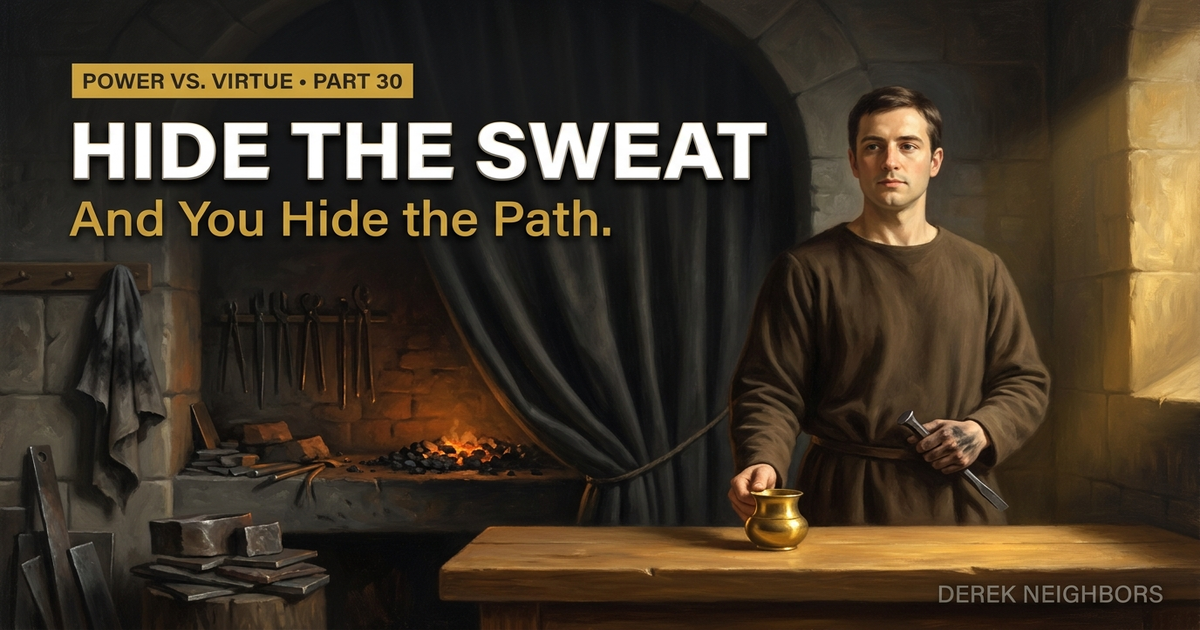
Hide the Sweat and You Hide the Path
Law 30 of the 48 Laws of Power tells you to make your accomplishments seem effortless. Hide the toil. Conceal the tricks. Act as if you could do much more. The tactical truth is real: audiences confuse rehearsal with weakness, and clean execution reads as competence. The character cost arrives when concealment becomes mystique. Juniors never see the path. Effort becomes shame. Your identity fuses to a costume of natural gift. The ARETE alternative is Castiglione's sprezzatura rebuilt on Greek hexis: earned ease from practice, ponos honored in the forge, techne that can still teach.
You Don't Need More Time. You Need Higher Stakes.
You keep shopping for more hours: earlier alarms, cleaner calendars, better tools. Seneca's diagnosis was sharper. Life is not short. Most of it gets wasted by people who do not feel its weight. A child, a diagnosis, a business with real customers compresses the day and somehow yields more. The compression did not steal the time. It exposed how much was already drifting. You need higher stakes, not another system.

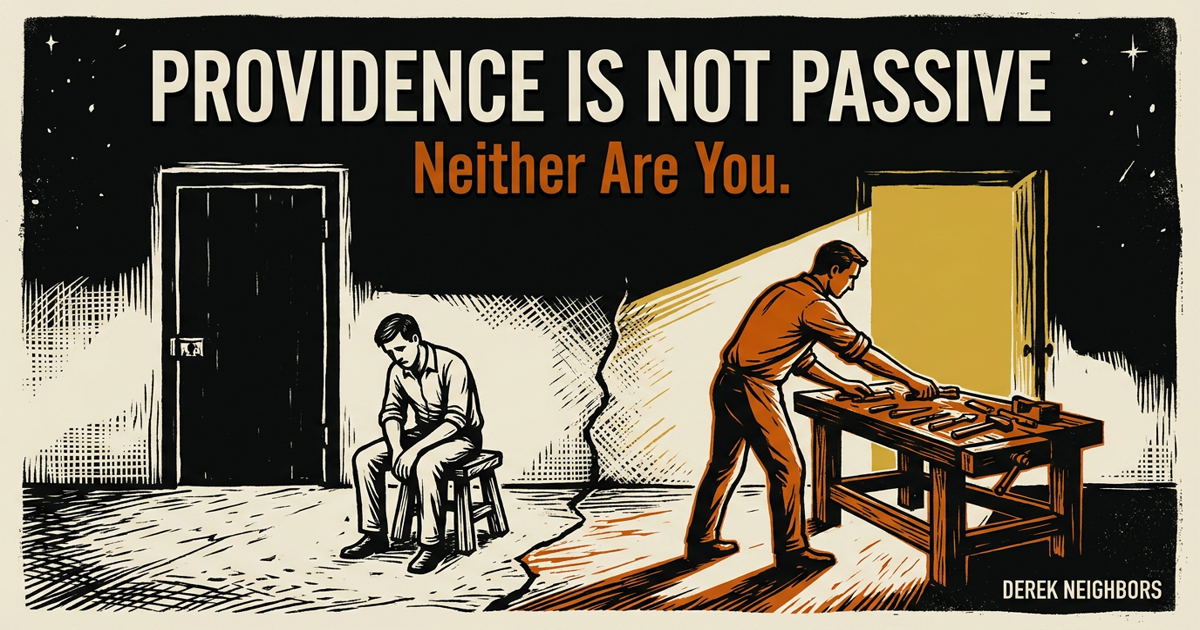
Providence Is Not Passive. Neither Are You.
Believing the universe is on your side means nothing if your calendar proves you are waiting. The Stoics welded trust in providence to being-at-work. Pronoia without energeia is costume. This is the challenge: meet the field armed, or stop calling the wait faith.
Living the Dream Is Mostly Grunt Work. That's the Good News.
The day you finally get the dream is the day it stops feeling like one. Fear shows up, the calendar disappears, and the summit moment never comes. Most people read this as failure. It's the strongest evidence yet that the dream became real.

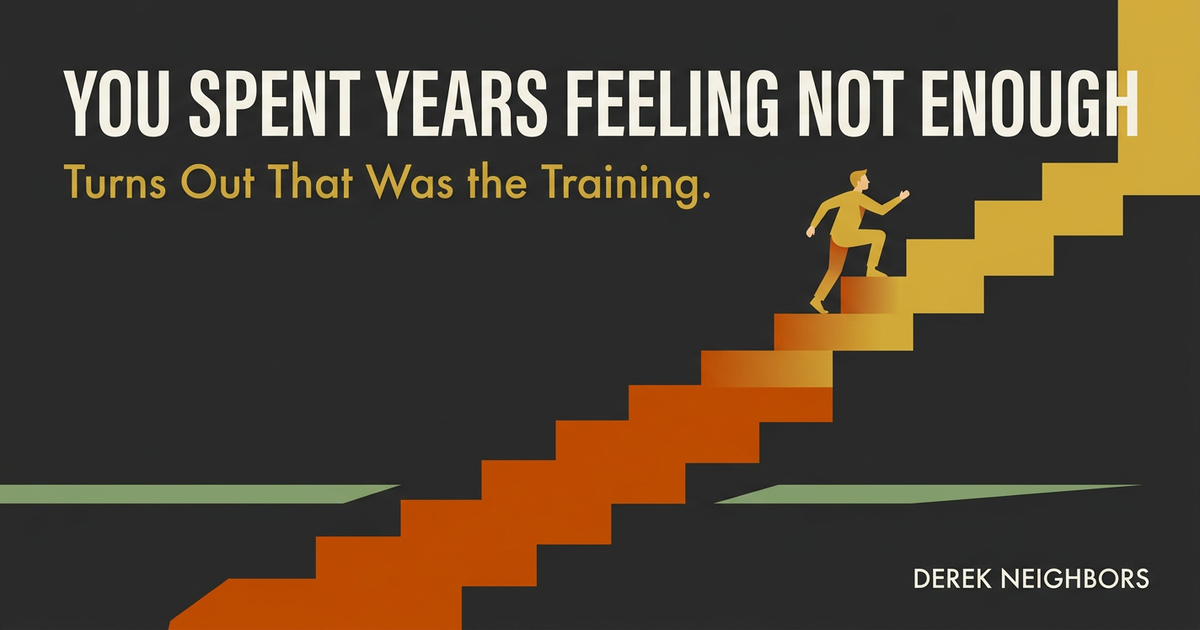
You Spent Years Feeling Not Enough. Turns Out That Was the Training.
There is a low hum a lot of people grow up with: the sense that you are a little behind, a little short, that everyone else got a manual you missed. Most spend decades trying to silence it. Some go dead. Some go bitter. But that ache was never measuring your worth. It was pointing. The years of feeling not enough were formation, training you in the one thing comfort can never teach, the refusal to settle. The work of adulthood is not curing the engine that lack built. It is aiming it without the self-contempt it once carried.
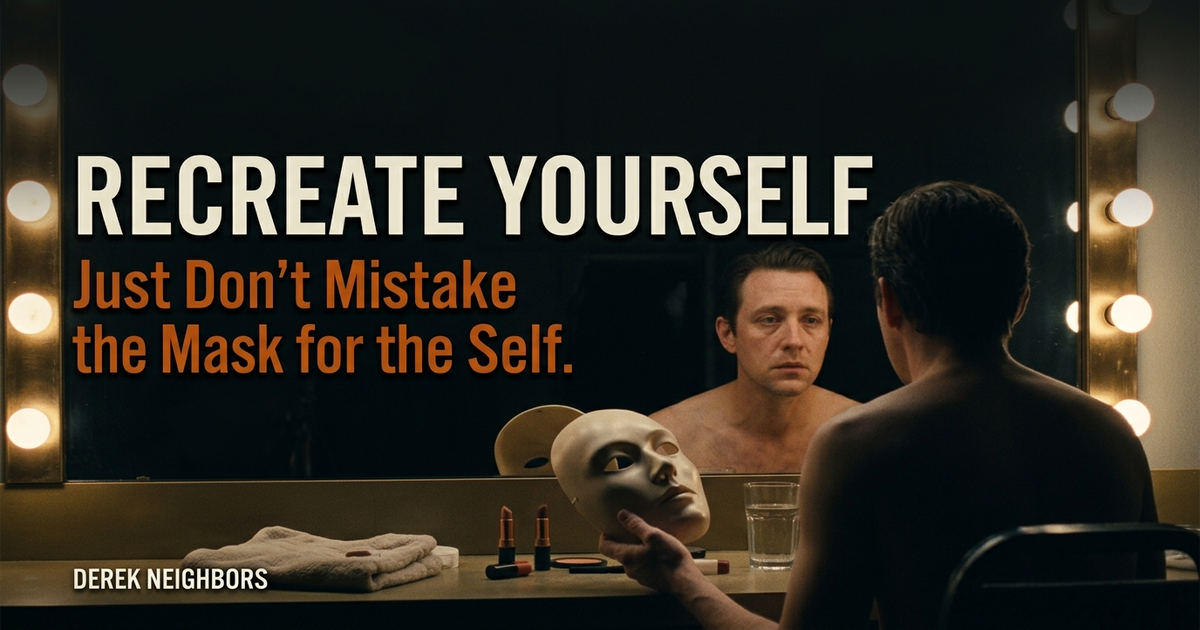
Recreate Yourself. Just Don't Mistake the Mask for the Self.
Law 25 of the 48 Laws of Power tells you to recreate yourself by seizing control of your image, becoming a memorable, protean figure who never bores the audience. The Greeks had a word for the thing you put on to face a crowd: prosopon, the mask an actor wore on stage. Greene's reinvention is mask-work, and a mask worn long enough fuses to the face. There is a real kind of self-recreation, but it runs the other direction. You forge the substance and let the appearance follow.
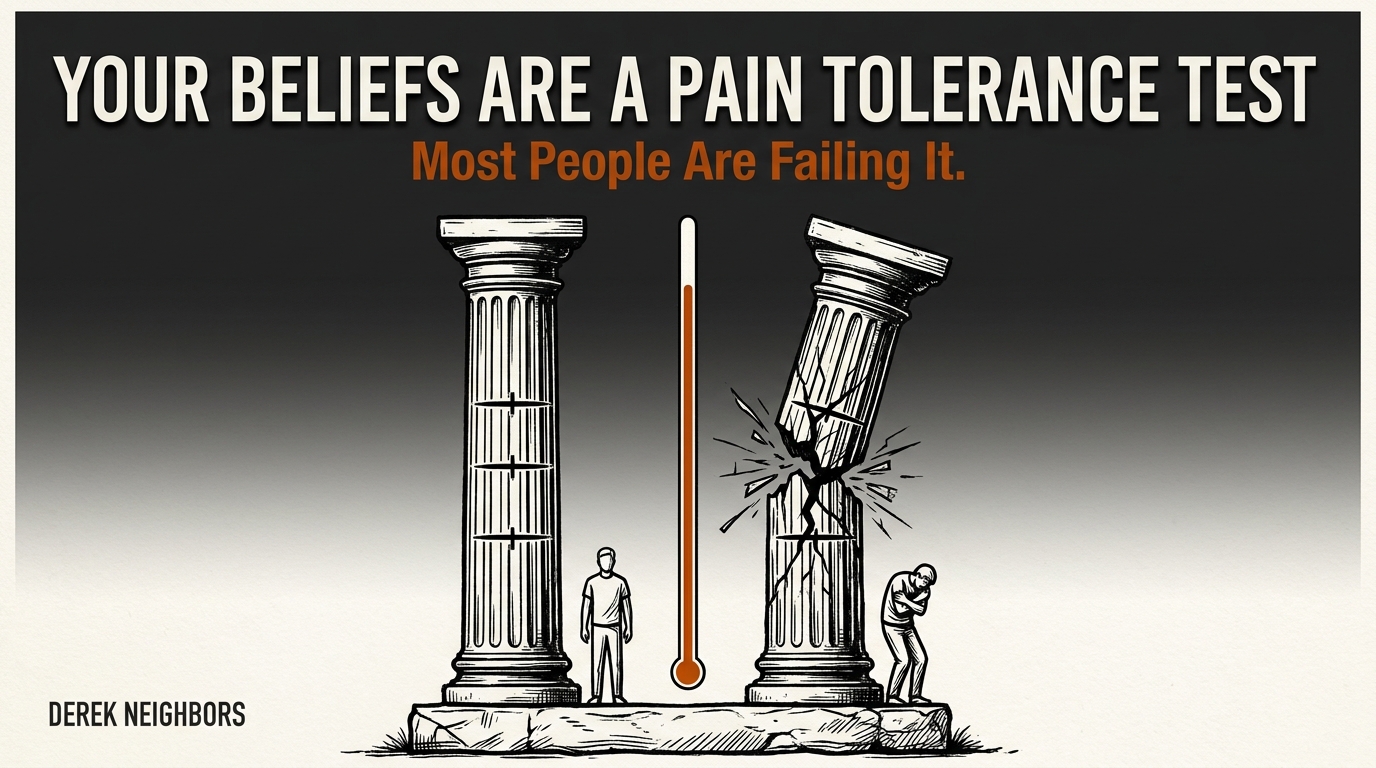
Your Beliefs Are a Pain Tolerance Test. Most People Are Failing It.
Two people take the same hit. Same diagnosis, same year, same loss of income. One keeps showing up. One disappears into the couch for six months. The difference is rarely willpower. It is the belief system running underneath, and belief systems can be scored. The Stoics built a scorecard without calling it that: internal control, suffering as training material, virtue as something worth the cost. Most modern frameworks fail on all three axes and then wonder why life feels unbearable.
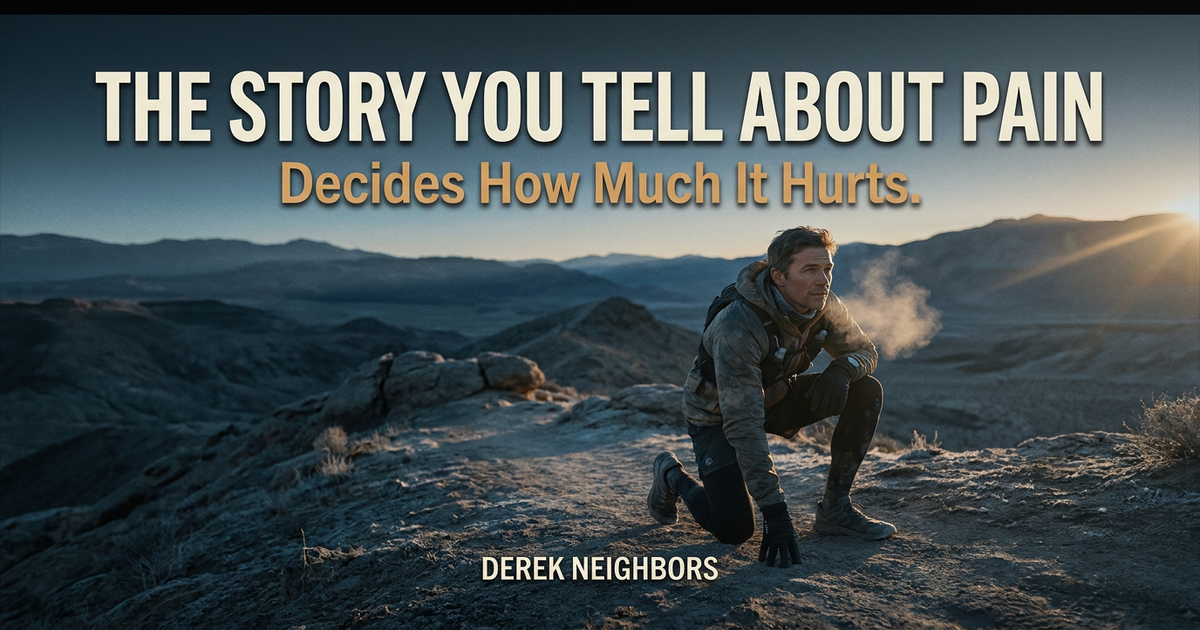
The Story You Tell About Pain Decides How Much It Hurts
Two soldiers and two civilians take the same wound. The soldiers ask for less morphine. The injury is identical, so the difference is not in the tissue. It is in the meaning. Cicero spent a book on this, the Stoics built a whole practice around it, and modern pain science has now mapped the lever they were pulling. Pain has two parts: the signal the body sends and the story your mind wraps around it. The signal is mostly fixed. The story is not, and the story does most of the damage.
You're Not a Blank Slate. You're a Block of Marble.
The self-development industry treats you as a blank slate waiting for a better blueprint, so you keep importing other people's designs and calling it growth. The Greeks worked from the opposite premise. Pindar told his readers to become who they are, having learned it. The Stoics built a whole theory, oikeiosis, around development as progressive alignment with your own nature. Michelangelo said the figure already lives in the marble. The question isn't who you should become. It's who is already in the stone, and what has to come off.

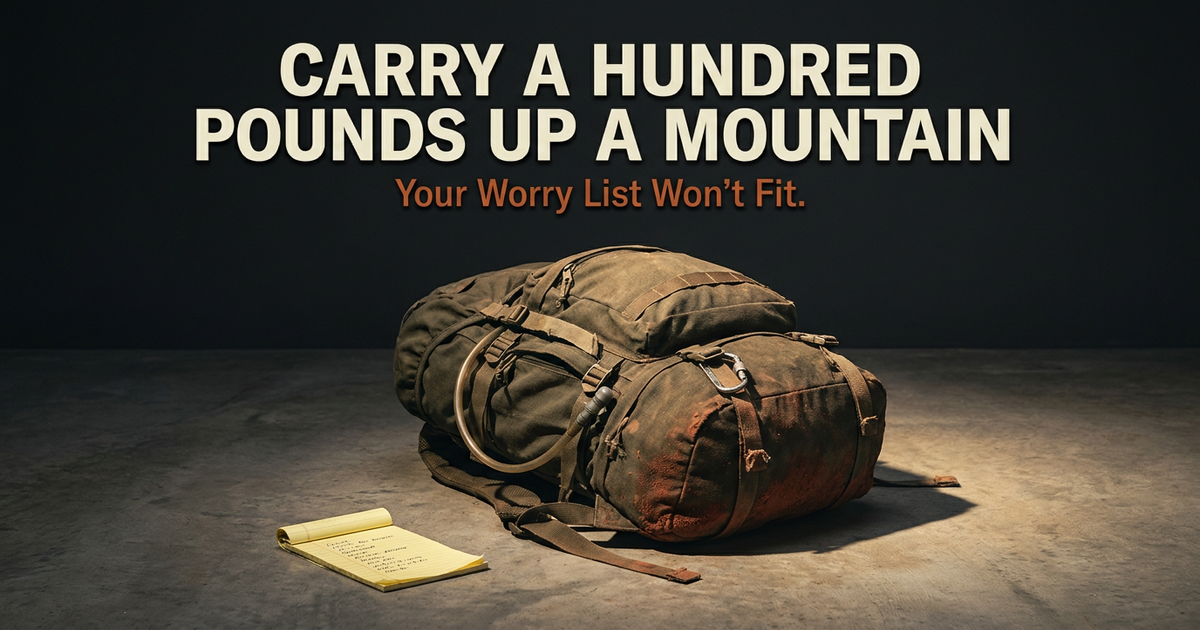
Carry a Hundred Pounds Up a Mountain. Your Worry List Won't Fit.
Modern comfort has gifted the average mind enough idle capacity to host a daily inventory of anxieties, resentments, and dreads that primitive life would not have permitted. Malakia is the Greek word for the moral failure this produces, softness as a settled disposition that organizes a life around the avoidance of effort. The cure is not therapy or another book. It is the deliberate, repeated practice of putting a real load on the body, large enough and long enough that the simulated load in the mind cannot fit on the climb. Askesis as training. Ponos as productive toil. The pack on the back is not penance. It is the cure for the part of the mind that was about to be eaten by the surplus capacity comfort produces.
You Don't Need More. You Need to Strip Your Life Down on Purpose.
We have engineered constraint out of ordinary days and cannot understand why ordinary days no longer move us. The ancient world knew the answer. They built deliberate practices around removing inputs, not adding them. The Sabbath was an amputation. Askēsis was training. Autarkeia was the freedom of needing less. This is the protocol for a thirty-day voluntary sabbath that gets the meaning back into the small things you have stopped noticing.
Knowing Better Doesn't Make You Better. Most Self-Help Stops at Step One.
The reader who has read seventy books on character is roughly the person they were five years ago. The gap is not a willpower failure. The gap is a method failure. Epictetus described the three-stage path that produces formed character, and the modern self-improvement industry has built a market by pretending the last two stages are optional.
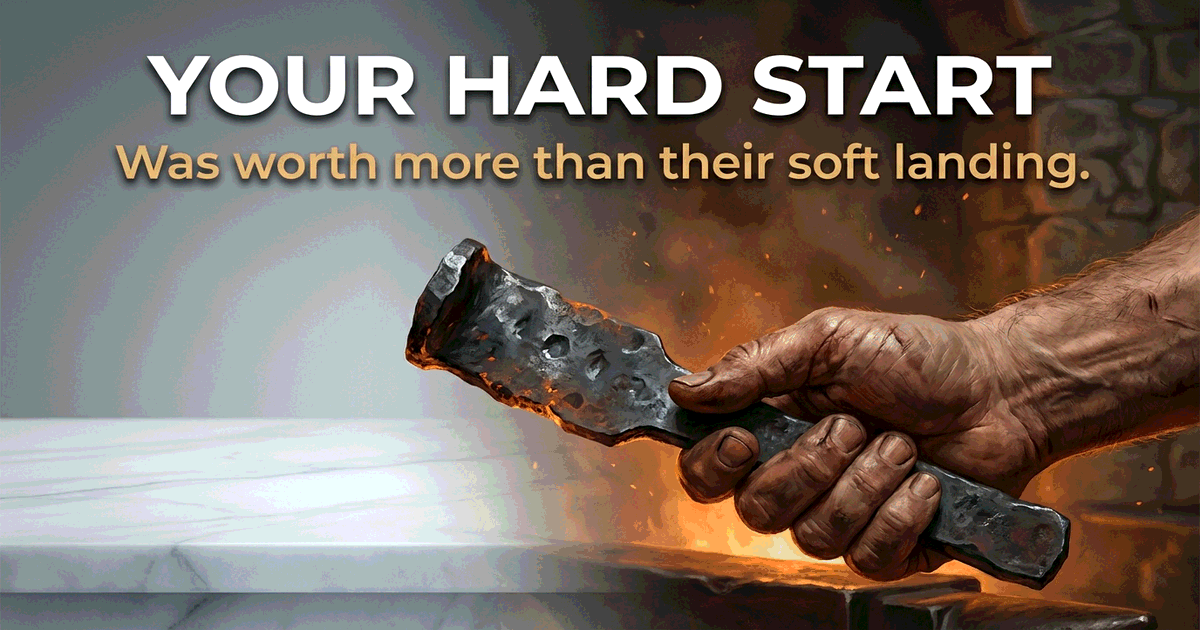
Your Hard Start Was Worth More Than Their Soft Landing
The hardship that felt like a disadvantage was the only education that holds up under pressure. Privilege has an expiration date. Formation does not.
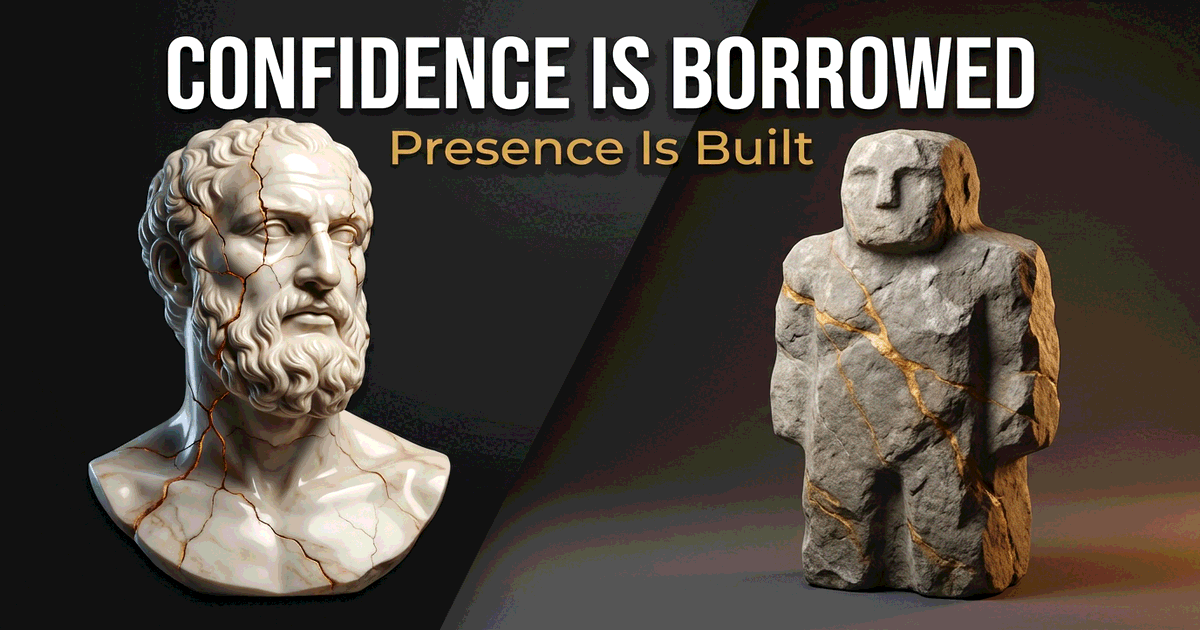
Confidence Is Borrowed. Presence Is Built.
The confidence industry sells you something that expires. The Greeks pursued something better: the capacity to be fully here regardless of what happens next.
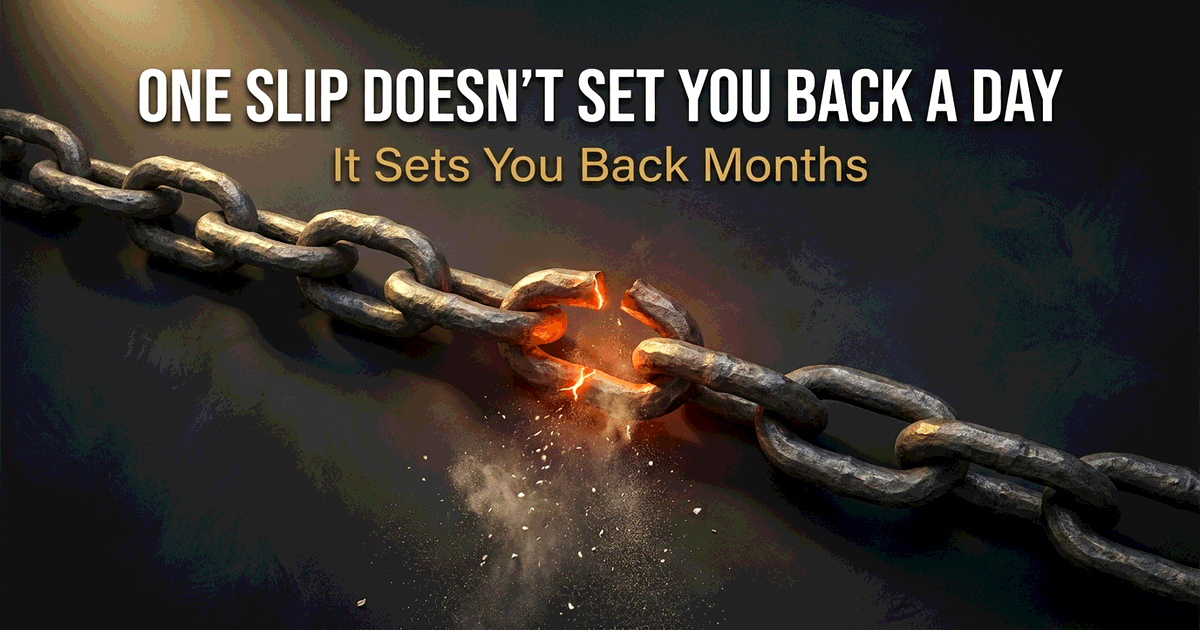
One Slip Doesn't Set You Back a Day. It Sets You Back Months.
You tell yourself one day off won't matter. But momentum doesn't degrade on a schedule. It collapses. And the rebuild costs more than you think.
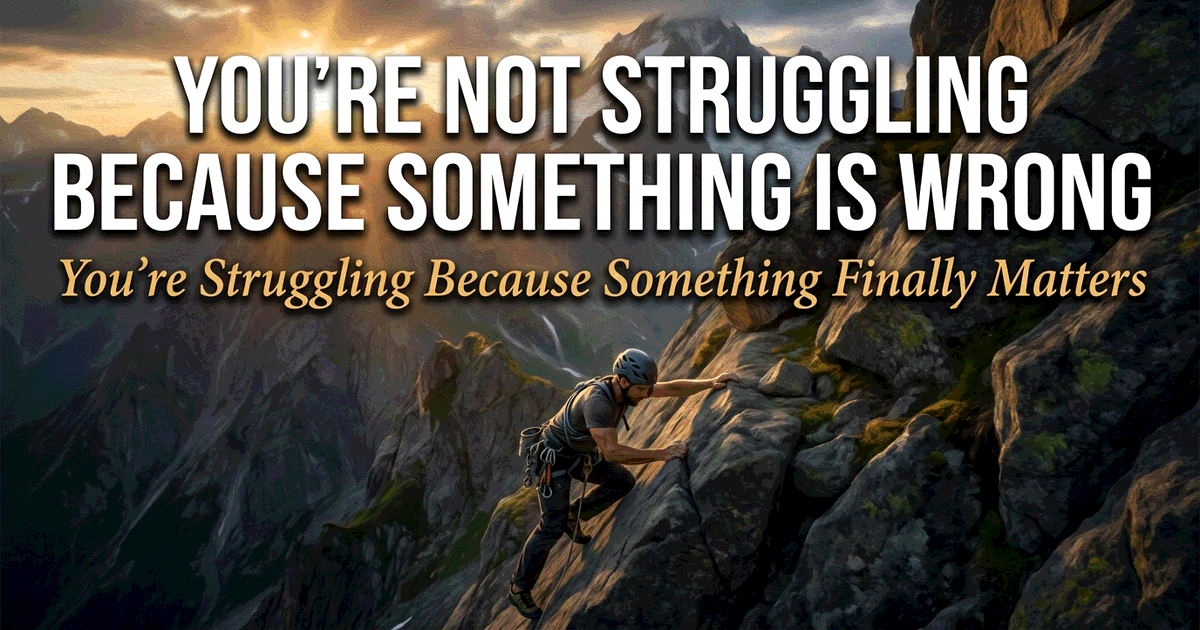
You're Not Struggling Because Something Is Wrong. You're Struggling Because Something Finally Matters.
Comfort culture has convinced you that if something feels hard, you're doing it wrong. The Greeks built an entire civilization on the opposite idea. Struggle isn't the obstacle. It's the signal.
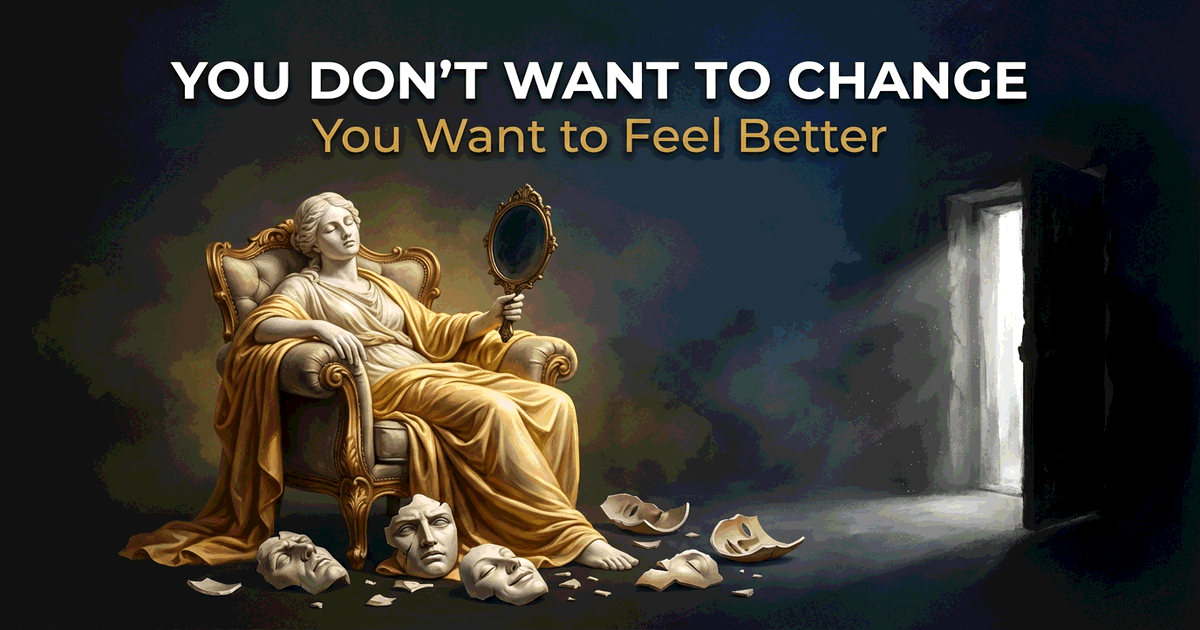
You Don't Want to Change. You Want to Feel Better.
You've read the books, hired the coach, attended the retreat. Six months later, the same patterns are running. The same conflicts repeat. The vocabulary improved. The behavior didn't. The effort was real. The misunderstanding was deeper: what change actually requires.
Your Goals Aren't Too Big. Your Sacrifices Are Too Small.
You don't have an ambition problem. You have a payment problem. Everyone wants the dream. Almost no one wants to pay what it actually costs.

AI Is Making Life Easier. That Might Be the Worst Thing That Ever Happened to Us.
Three miles from anything, my calf seized. No Uber. No shortcut. Just pain and the choice to keep moving. AI is removing that choice from everything. And that might be destroying us.

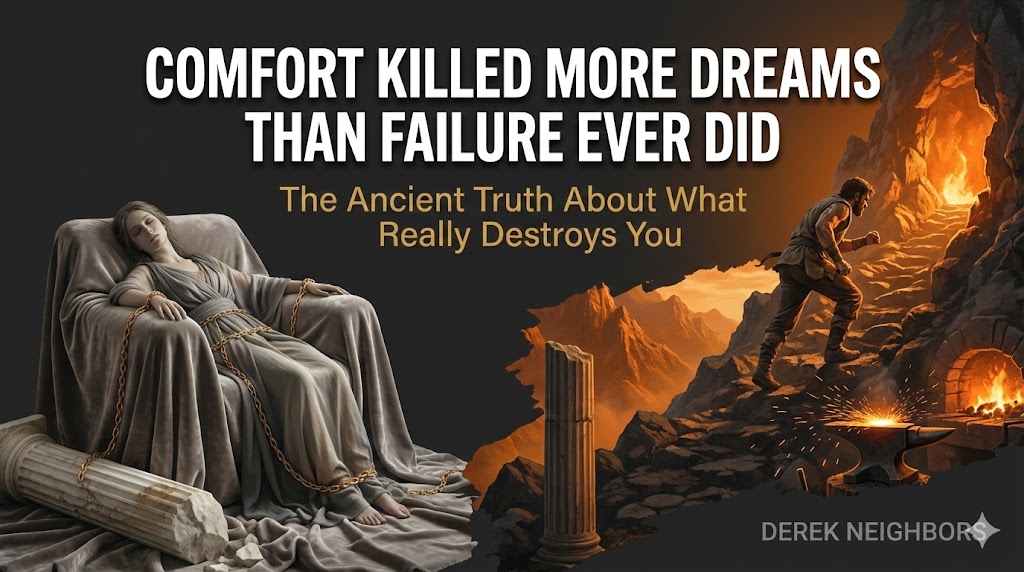
Comfort Killed More Dreams Than Failure Ever Did
Everyone fears failure. Almost nobody fears comfort. The ancients understood why that's backwards. Comfort doesn't protect dreams. It suffocates them slowly while you're too numb to notice.
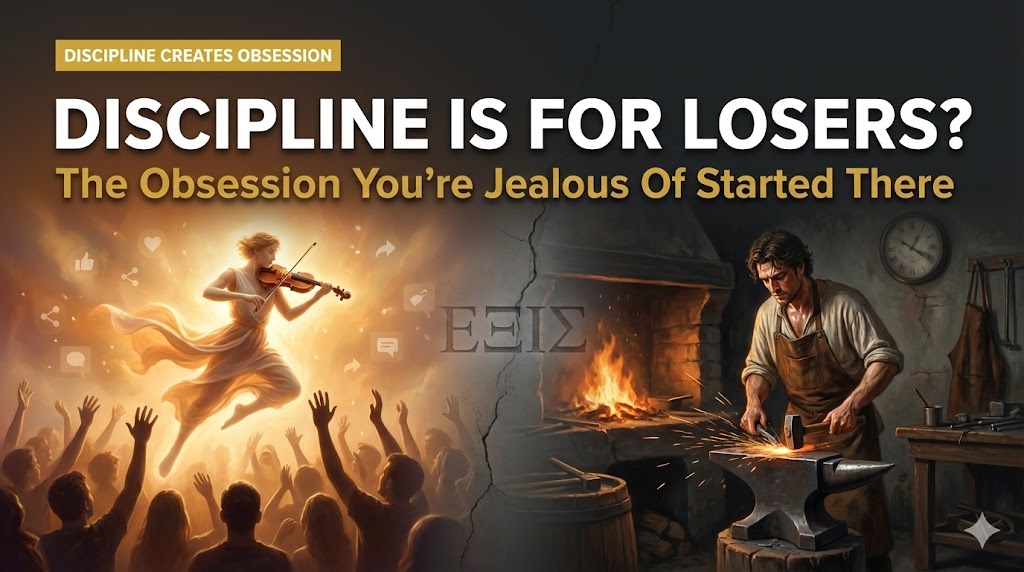
"Discipline Is for Losers"? The Obsession You're Jealous Of Started There
The person calling discipline 'for losers' is watching masters and missing the decades of discipline underneath. What looks like obsession is hexis. The discipline came first.
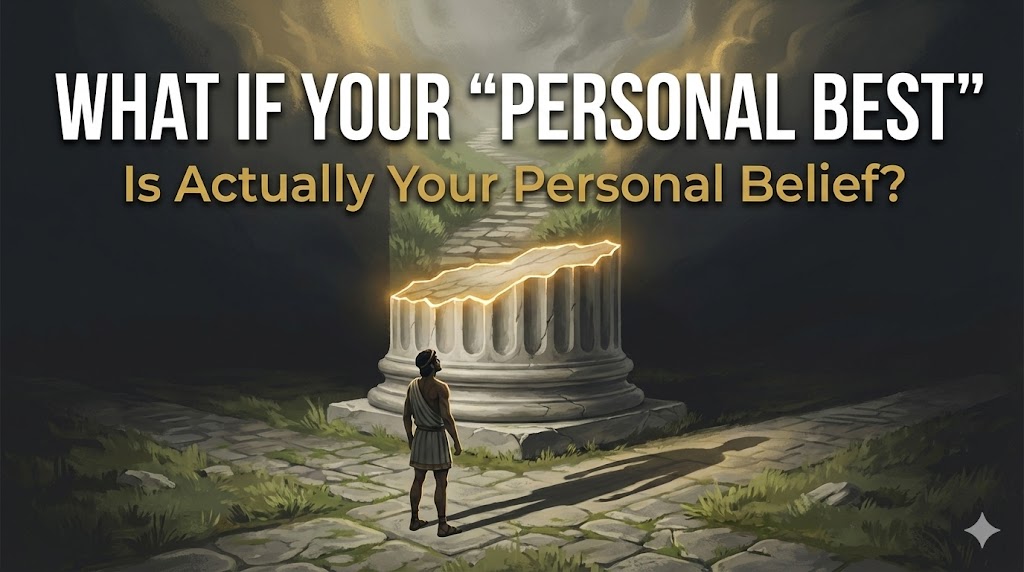
What If Your 'Personal Best' Is Actually Your Personal Belief?
Everyone treats their personal best as an objective measurement. But what if it's actually a prophecy? What if the limit you keep hitting is the limit you keep expecting to hit?
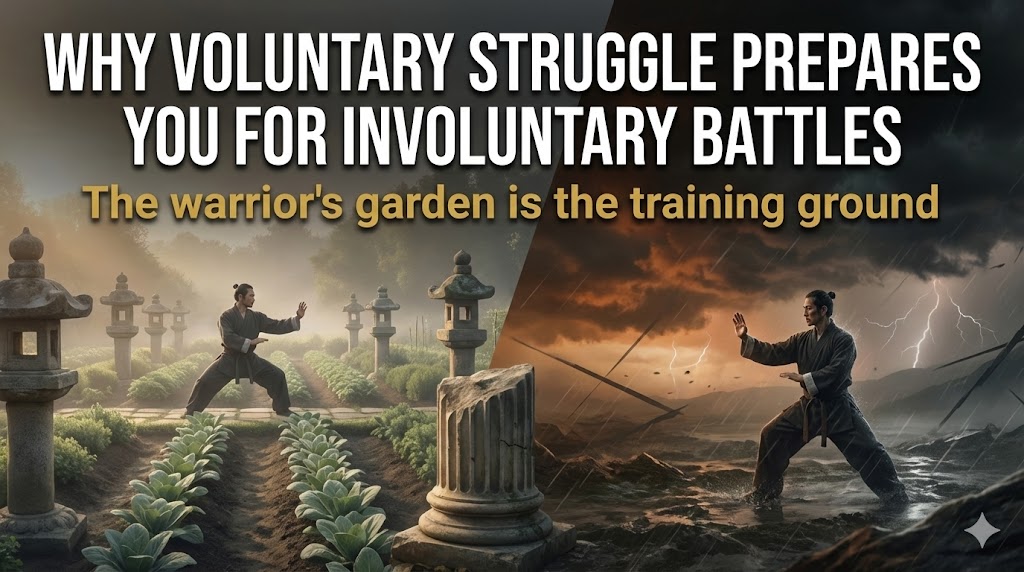
Why Voluntary Struggle Prepares You for Involuntary Battles
The conditions you train in are the conditions you're prepared for. Every voluntary struggle is a deposit against the involuntary battles life doesn't schedule.
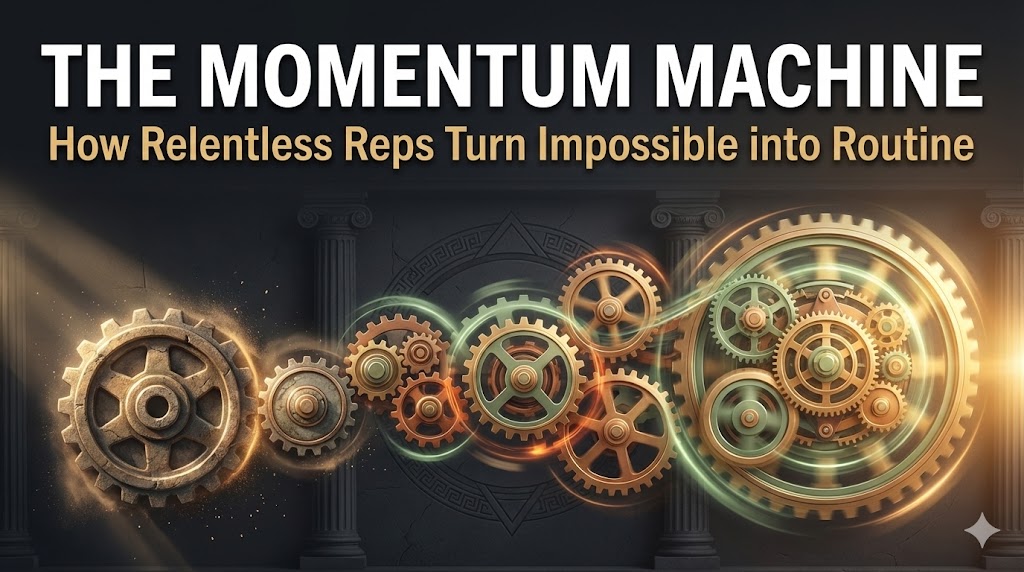
The Momentum Machine: How Relentless Reps Turn Impossible into Routine
The difference between extraordinary achievement and constant restarting isn't talent or luck. It's whether you've built a momentum machine that runs even when motivation dies.
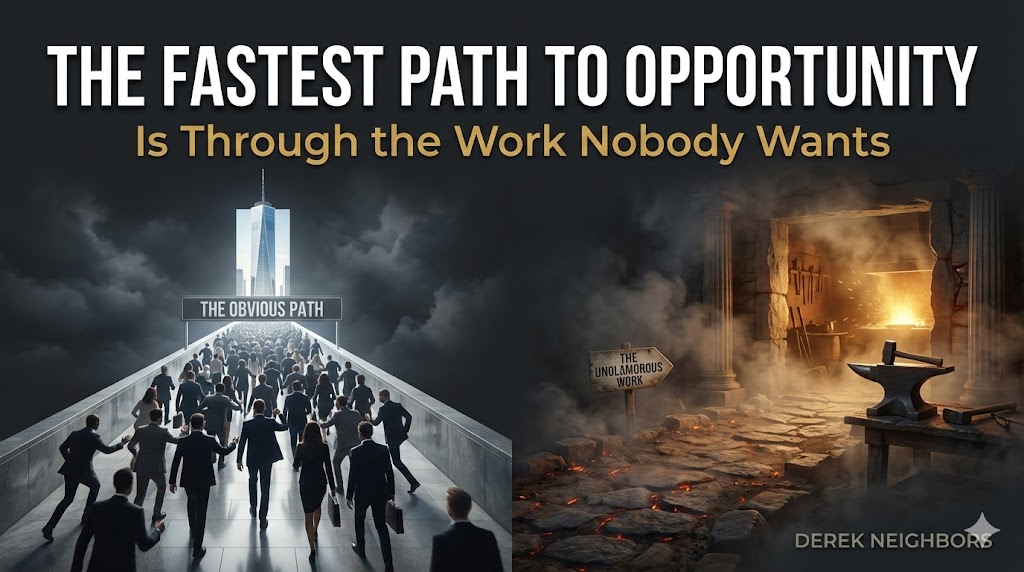
The Fastest Path to Opportunity Is Through the Work Nobody Wants
Everyone's competing for the spotlight. Meanwhile, opportunity waits in the tasks everyone avoids. The dirty work doorway isn't just a path to success. It's the only path that isn't crowded.
Stop Asking Why This Is Happening. Start Asking What It's Teaching.
The ancient Greeks understood something we've forgotten—every difficulty is training when you ask the right question. The shift from 'why me?' to 'what's this teaching?' changes everything.

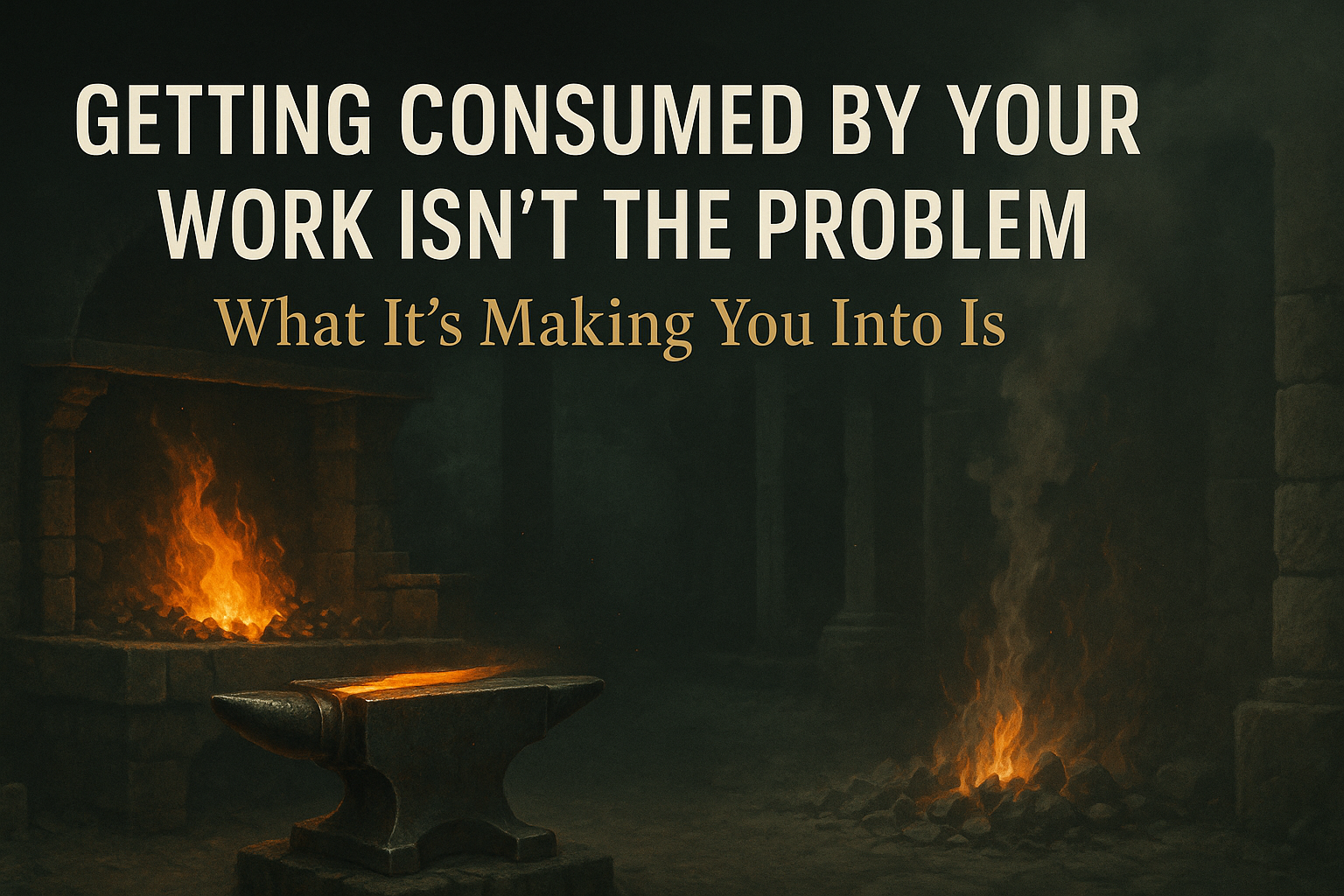
Getting Consumed by Your Work Isn't the Problem. What It's Making You Into Is.
Work-life balance won't save you from being consumed. Everything significant consumes you. The question isn't whether work will consume you, but what you're becoming through that consumption. Choose the fire that forges you.
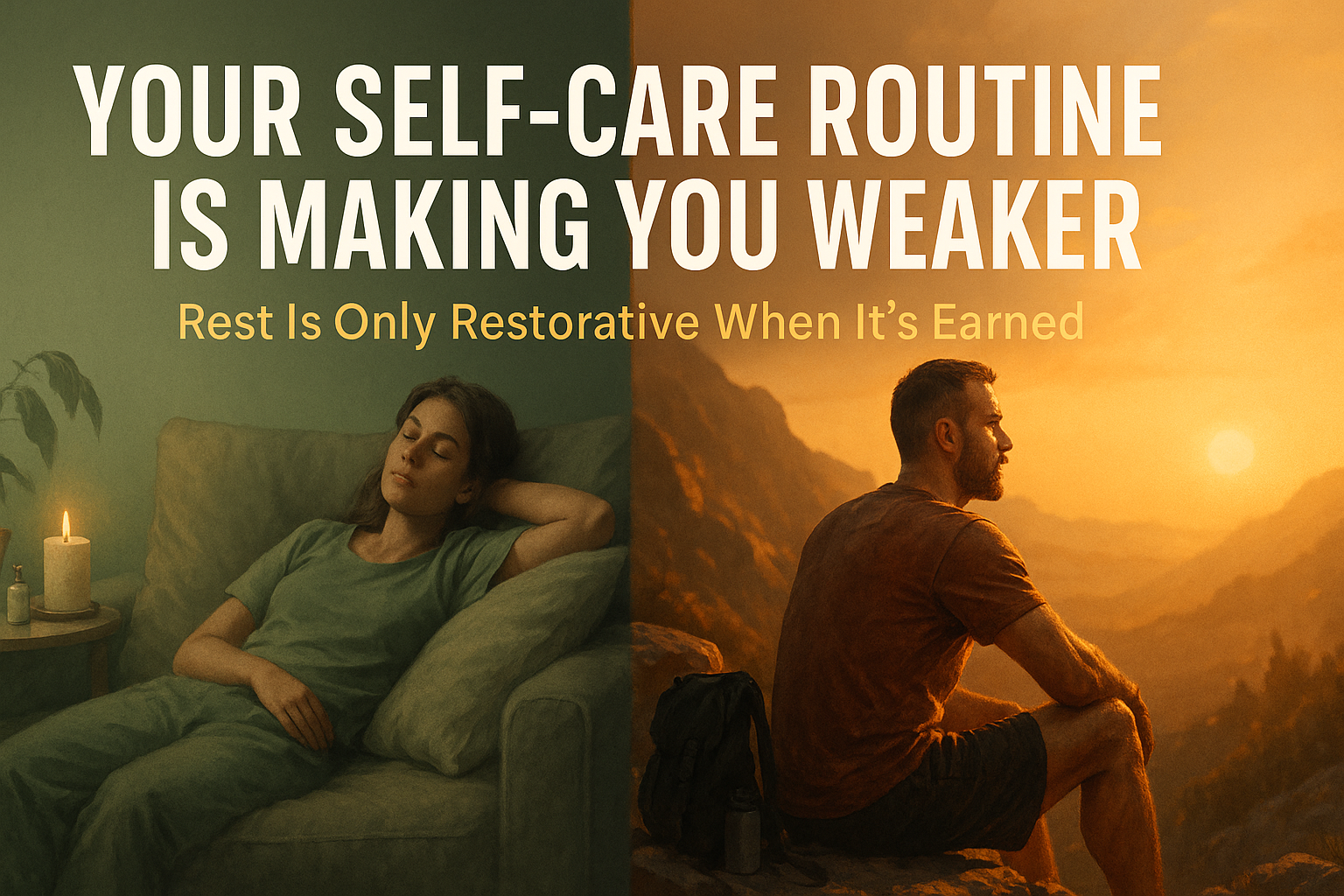
Your Self-Care Routine Is Making You Weaker
Modern self-care culture produces people who need more support to handle less challenge. Rest is only restorative when preceded by genuine exertion. Without the depletion, there's nothing to restore.
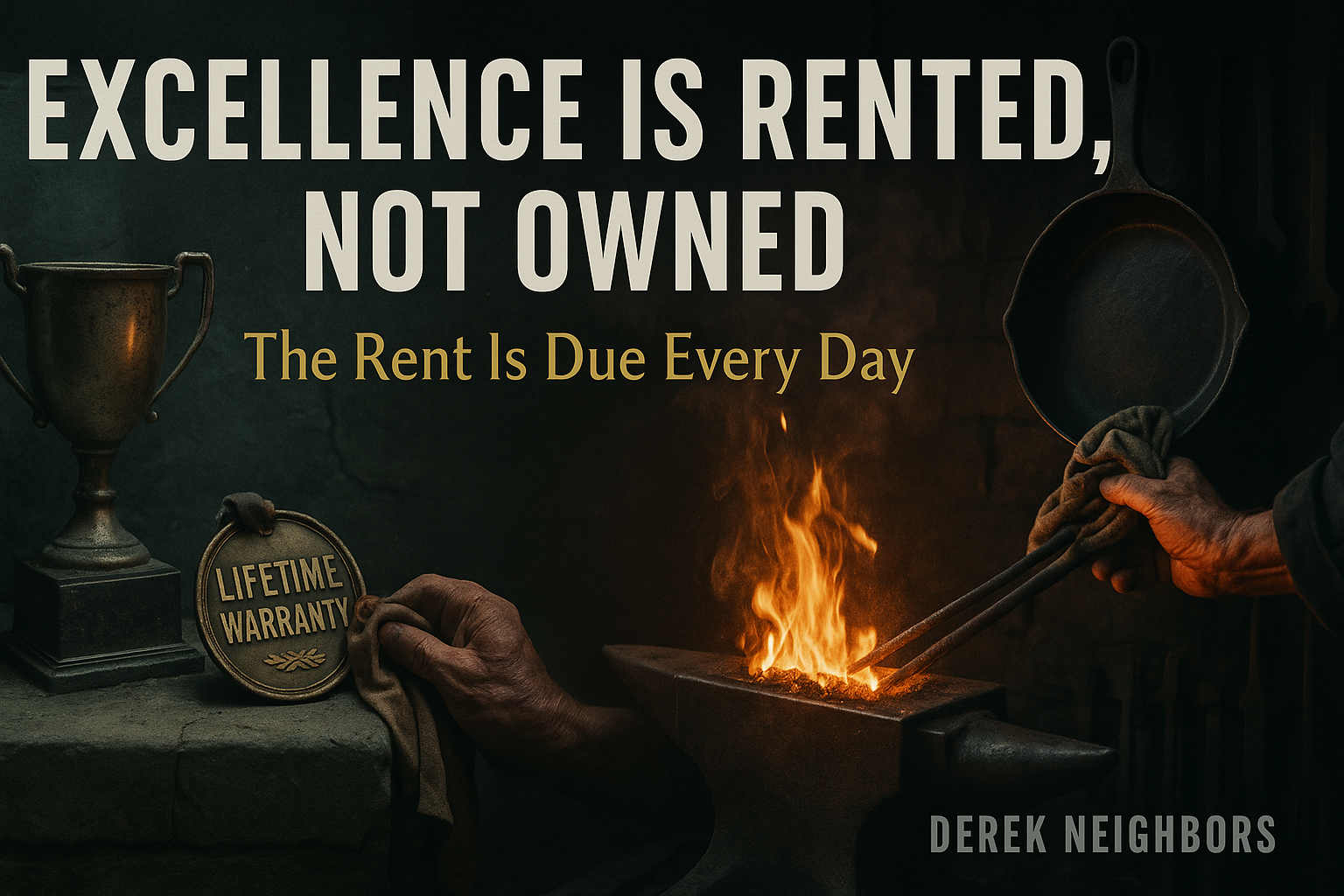
Excellence Is Rented, Not Owned: The Rent Is Due Every Day
Grandma's cast iron pan lasted 60 years with daily care. My 'lifetime warranty' pan died in 18 months with neglect. Excellence isn't owned—it's rented. And the rent is due every single day.
Stop Waiting for Flow - Start Training It Like Every Other Skill
You can spend another year waiting for flow to happen, or you can spend the next 12 weeks training it like the ancient Greeks did, systematically, progressively, relentlessly.

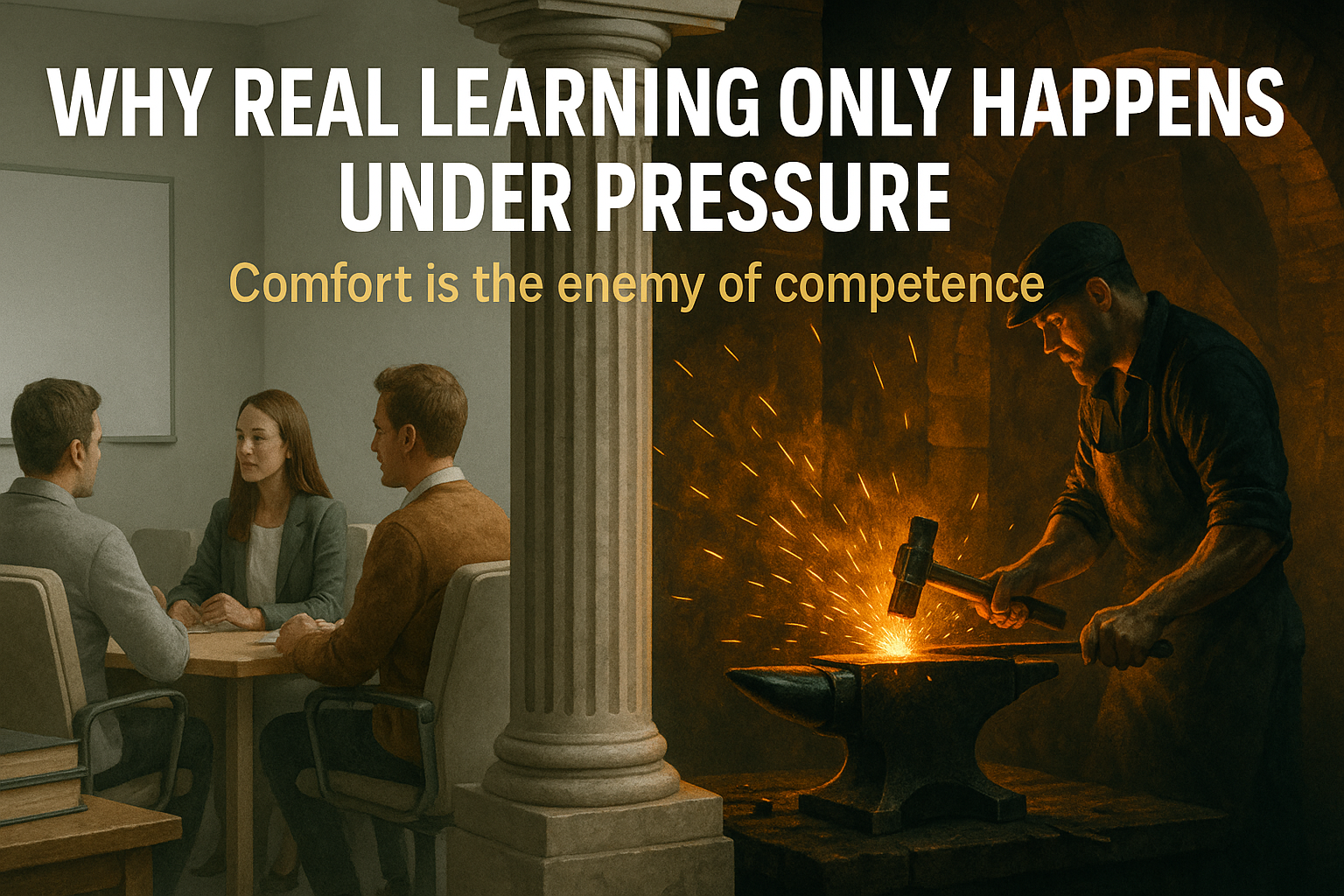
Why Real Learning Only Happens Under Pressure
Real competence emerges when comfort dies and stakes are real. The professionals who thrive in crisis weren't trained in safe environments, they were forged under pressure.
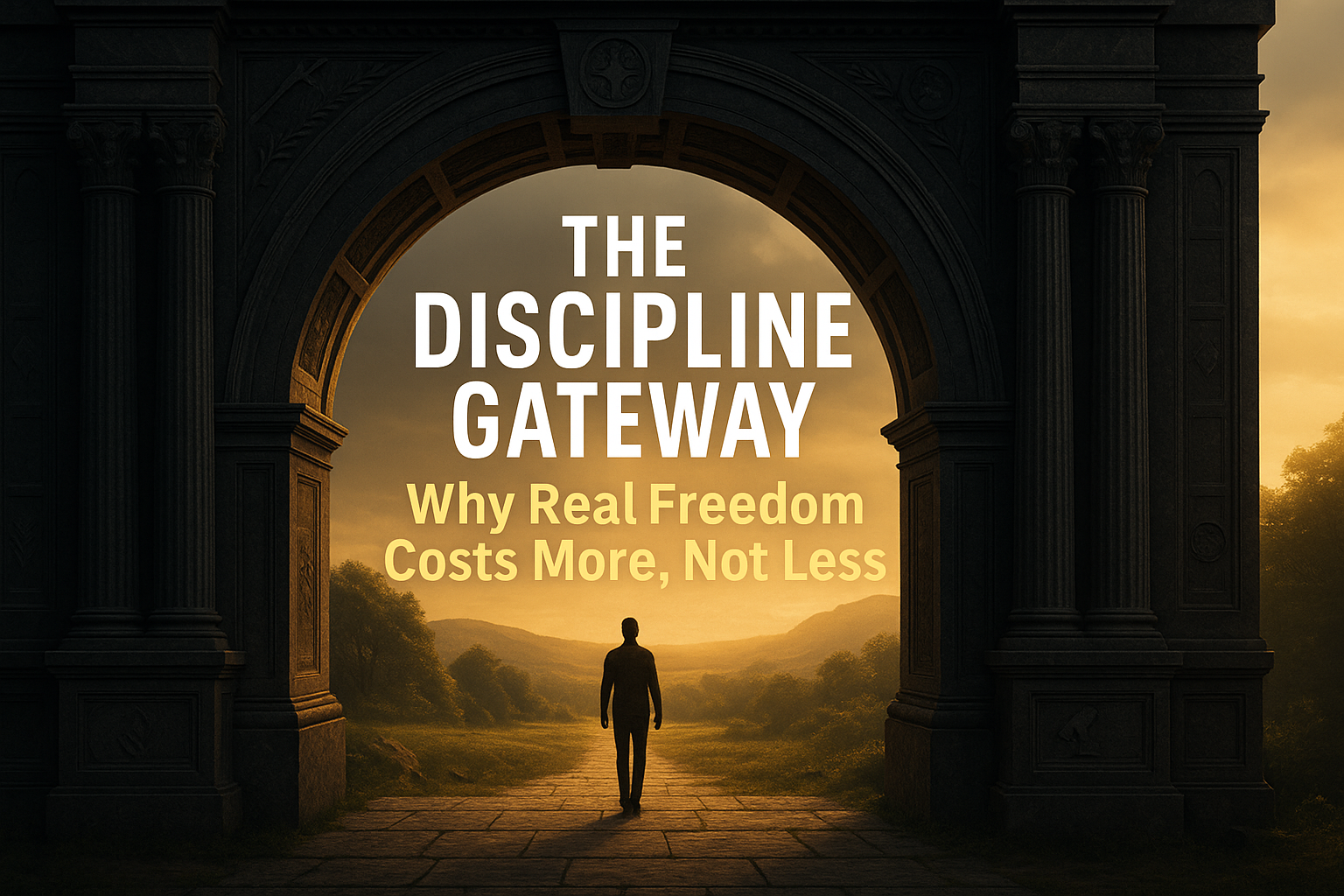
The Discipline Gateway: Why Real Freedom Costs More, Not Less
The brutal truth about freedom: it's not the absence of constraints, it's the wisdom to choose the right ones.
Breaking Through: How Resistance Shapes Your Transformation
Every breakthrough begins with a breakdown. Resistance isn't blocking your transformation, it's forging it.
