Recommended Books
Books that have shaped how I think about excellence, leadership, and the craft of building things that matter. Referenced across my writing, tested against real practice.
Curated Collections
Deep-dive reading lists organized by theme, each with editorial commentary on why these books matter.
Best Books on Stoic Philosophy
12 booksCurated Stoic philosophy reading list from a practitioner, not an academic. Books on Marcus Aurelius, Seneca, Epictetus, and modern Stoic practice.


 +8
+8
Best Books on Practical Wisdom & Decision-Making
13 booksBooks on judgment, mental models, and strategic thinking. A curated list for practitioners who want to make better decisions under uncertainty.


 +9
+9
Best Books on Leadership Character
13 booksBooks on principled leadership, character development, and leading by example. Curated for leaders who know tactics without character is empty.


 +9
+9
Best Books on Discipline & Mastery
15 booksBooks on deliberate practice, self-discipline, and expertise building. A curated list for those committed to the long road of craft development.


 +11
+11
Best Books on Human Flourishing
13 booksBooks on living well, meaning, purpose, and building a good life. A curated list grounded in the ancient pursuit of eudaimonia.

 +9
+9
Most Referenced
The books that keep showing up across my writing. Referenced the most because they've influenced my thinking the most.

Site Reliability Engineering: How Google Runs Production Systems
by Betsy Beyer, Chris Jones, Jennifer Petoff, Niall Richard Murphy
Describes the Wheel of Misfortune, where engineers replay a past outage as if it were live. The best working model I know for rehearsing a bad day before it happens.


Strangers to Ourselves: Discovering the Adaptive Unconscious
by Timothy D. Wilson
Wilson co-wrote the stockings study and spent the next twenty-five years on the same question: how much do we know about why we do what we do? Less than we think, and he shows how to learn more by watching what you do instead of asking yourself why.


Prediction Machines: The Simple Economics of Artificial Intelligence
by Ajay Agrawal, Joshua Gans, Avi Goldfarb
The cleanest argument for why cheaper prediction makes judgment worth more. Read it as the economics under this piece: when generating options gets cheap, deciding which one counts is where the value goes.
Co-Intelligence: Living and Working with AI
by Ethan Mollick
A practical book from someone who uses the models every day. His advice to bring AI into everything you do is the right default, and it leaves you with the question this piece answers: once it is in everything, what is left for you?
The Most Human Human: What Artificial Intelligence Teaches Us About Being Alive
by Brian Christian
Christian prepared to compete as a human in a Turing test and came out with a sharp case that machines keep showing us which parts of our work were rote all along. Every time a machine takes something over, it shows you what was left.
Politics
by Aristotle (trans. Carnes Lord)
Book III, chapter 13, tells the story of the tyrant cutting the tallest ears of wheat and compares it to ostracism. Book V, chapter 11, puts removing the outstanding on the list of ways a tyrant keeps power, next to keeping people from knowing each other.

The Enigma of Reason
by Hugo Mercier and Dan Sperber
Two cognitive scientists argue that human reasoning evolved mainly to argue: to justify ourselves and to judge other people's reasons. It explains why smart people in a review get sharper at defending and no better at checking their own design.

Rethinking Positive Thinking: Inside the New Science of Motivation
by Gabriele Oettingen
The researcher behind the positive-fantasy studies explains why dreaming about the result drains you, and lays out WOOP, the four-step method that turns the dream into a plan. The source for most of this article.


The Progress Principle: Using Small Wins to Ignite Joy, Engagement, and Creativity at Work
by Teresa Amabile and Steven Kramer
Built on nearly 12,000 diary entries from people at work. It shows that what keeps a team going is progress on meaningful work today, not the picture of where the work ends up.



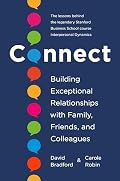
Connect: Building Exceptional Relationships with Family, Friends, and Colleagues
by David L. Bradford and Carole Robin
From the Stanford course known as Touchy Feely. The 15 percent rule, stretching a little past your comfort zone instead of all the way, is the most practical advice I know for going one level deeper.
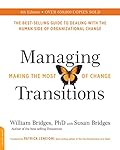
Managing Transitions: Making the Most of Change
by William Bridges and Susan Bridges
Separates the change, which happens on the day you announce it, from the transition people go through afterward, which starts with what they are losing. The best book on why announcements are not enough.
On Rhetoric: A Theory of Civic Discourse
by Aristotle (trans. George A. Kennedy)
Book I explains why the speaker's character carries more weight than the argument, and Book II names the three things that make people trust a speaker: good sense, good character, and goodwill toward the listener.


Awakening Compassion at Work: The Quiet Power That Elevates People and Organizations
by Monica C. Worline and Jane E. Dutton
Treats compassion at work as something an organization does, not only something a person feels, and shows how teams can be set up to move fast when someone is suffering.


The First 90 Days: Proven Strategies for Getting Up to Speed Faster and Smarter
by Michael D. Watkins
The standard playbook for leadership transitions. Watkins makes the case that the impressions a new leader creates early are hard to undo, and that the important relationships have to be built on purpose in the first months.
Becoming a Manager: How New Managers Master the Challenges of Leadership
by Linda A. Hill
Hill followed new managers through their first year. Her finding that the hard lessons are about people, and that a title brings less authority than it seems to, is the backdrop for every first conversation with a former peer.

Good Boss, Bad Boss: How to Be the Best... and Learn from the Worst
by Robert I. Sutton
Sutton's research-backed look at what separates the best bosses from the worst, including why bosses rarely see themselves the way their people do, and how to turn a bad boss into useful instruction instead of a lasting grudge.
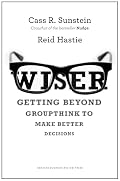
Wiser: Getting Beyond Groupthink to Make Groups Smarter
by Cass R. Sunstein and Reid Hastie
The research on why groups amplify the errors of their members instead of correcting them, and why the order and status of speakers decides which information ever reaches the table. Practical fixes for leaders who want the hidden facts heard.


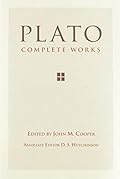
Plato: Complete Works
by Plato (ed. John M. Cooper)
The Hippias Major is in here in Paul Woodruff's translation, along with the dialogues where Socrates keeps asking people to give an account of things they are sure they know. Read the Hippias Major in one sitting. It is short, funny, and still unsettling.
Meditations
by Marcus Aurelius (trans. Gregory Hays)
Private notes from an emperor who made mistakes that cost other people a great deal. Book 8 has his short definition of regret as a reproach aimed at yourself, and the rest of the book keeps turning him back toward what he owes the people around him.

Ultralearning: Master Hard Skills, Outsmart the Competition, and Accelerate Your Career
by Scott H. Young
Young's case for learning projects with a deadline and a real output. Read it with this piece in mind and every one of his principles gets faster when the output is an explanation to a student you named in advance.

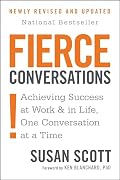
Fierce Conversations: Achieving Success at Work and in Life One Conversation at a Time
by Susan Scott
Scott's argument that the conversation is the relationship, and that the cost of a conversation you keep not having is paid by the other person in wasted effort and false hope. Practical scripts for saying the hard sentence first.

Thanks for the Feedback: The Science and Art of Receiving Feedback Well
by Douglas Stone and Sheila Heen
The receiver's side of the exchange. Stone and Heen explain how feedback gets decoded, why the same sentence lands differently from different people, and how to pull a real verdict out of a reviewer who is softening it.

The Five Dysfunctions of a Team: A Leadership Fable
by Patrick Lencioni
Lencioni's case that teams commit to decisions they argued against, as long as they were heard and the call was made clearly. The book is about the moment the discussion ends and what the leader owes the room at that moment.
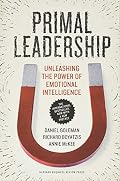
Primal Leadership: Unleashing the Power of Emotional Intelligence
by Daniel Goleman, Richard Boyatzis, and Annie McKee
Six leadership styles, one of them commanding, with the research on when each one helps and when it corrodes. The authors reserve the commanding style for crises and turnarounds, which is the calibration argument with data behind it.


Seeing Like a State: How Certain Schemes to Improve the Human Condition Have Failed
by James C. Scott
Scott shows what happens when rules are imposed from above without the local knowledge that made the original practice work. It is the large-scale version of a linter setting nobody can explain.

The Human Use of Human Beings: Cybernetics and Society
by Norbert Wiener
Wiener named cybernetics after the Greek helmsman and spent this book on what people should do once machines handle the mechanical work. His answer in 1950 is the same as the argument here: the human role is steering, and a person used as a checking device is being wasted.

Turn the Ship Around!: A True Story of Turning Followers into Leaders
by L. David Marquet
A submarine captain moves decision ownership to the people who have the information and replaces permission with intent. It is the closest thing to a manual for moving people from approving work to owning the turn.

Superforecasting: The Art and Science of Prediction
by Philip E. Tetlock and Dan Gardner
Tetlock spent decades scoring confident experts against the record. The people who beat them talked in probabilities, updated often, and sounded less sure on camera. This is the evidence that the hedge is the expertise.
Sources of Power: How People Make Decisions
by Gary Klein
Klein studied firefighters, nurses, and pilots deciding under real uncertainty. Experienced people did not compute options; they recognized the situation and knew what it usually did next. That recognition is what the clauses in a competent person's answer are made of.
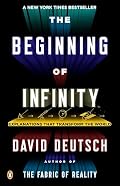
The Beginning of Infinity: Explanations That Transform the World
by David Deutsch
Deutsch's case that knowledge grows by making and testing, never by absorbing. The strongest argument I know for why a decade of change rewards the people who are creating explanations instead of collecting them.


The Innovator's Dilemma: When New Technologies Cause Great Firms to Fail
by Clayton M. Christensen
Christensen shows that the technology that ends you always looks like a toy first. That is why the people who built with the toy get to decide what the fork becomes, and the people who read about it get the summary.
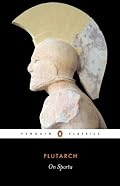
On Sparta
by Plutarch (trans. Richard Talbert)
The Life of Lycurgus is the oldest account of a working society that ran on a few trained-in rules instead of a statute book. Plutarch records that one of the founding laws forbade written laws, and then shows what that produced for several centuries.
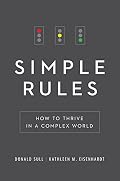
Simple Rules: How to Thrive in a Complex World
by Donald Sull and Kathleen M. Eisenhardt
Sull and Eisenhardt spent a decade studying why a handful of rules beats a thick manual in companies, hospitals, and armies. The best chapters are on how to write a rule that a person can run at the moment of decision without checking with anyone.
Emergence: The Connected Lives of Ants, Brains, Cities, and Software
by Steven Johnson
Johnson's tour of systems that produce rich behavior with nobody in charge, from ant colonies to city neighborhoods to early software. Useful for seeing that the flock is the normal case in nature, and the forty-page rulebook is the odd one.
Naturally Selected: The Evolutionary Science of Leadership
by Mark van Vugt and Anjana Ahuja
The book behind the research in this piece. Van Vugt's argument is that followership is older than leadership and that people carry an ancient checklist for who deserves to be followed. Read it and the six needs stop looking like a survey result.

The Culture Code
by Daniel Coyle
Coyle spent four years inside teams that work and found they run on small, constant belonging signals rather than big speeches. Useful for seeing what affiliation looks like when it is being supplied well, and why it cannot substitute for the other five.



Mindstorms: Children, Computers, and Powerful Ideas
by Seymour Papert
Papert's argument that people learn by building things they care about, and that the computer is a material to build with rather than a subject to study, is the original version of this essay, written forty years before the model made it obvious.
The Pragmatic Programmer: Your Journey to Mastery, 20th Anniversary Edition
by David Thomas and Andrew Hunt
The craft-first account of what a programmer actually knows: how to think about a problem, how to read code, how to keep learning. Almost none of it is syntax, which is why it still holds after the syntax stopped mattering.

A Philosophy of Software Design
by John Ousterhout
The architectural understanding that transfers: where complexity comes from, what an interface owes its caller, why deep modules beat shallow ones. This is the layer you need to direct a model, and Ousterhout teaches it in under two hundred pages.
Days of Grace: A Memoir
by Arthur Ashe and Arnold Rampersad
Ashe's own account of how he was trained, who trained him, and what a disciplined childhood on a segregated court turned into. The broom handle story lives in a newsletter, and this book is where you find the man who would have made sense of it.
A Beautiful Constraint: How to Transform Your Limitations into Advantages
by Adam Morgan and Mark Barden
Morgan and Barden treat constraints as a design input rather than a problem to escape, and their method for asking what a limit makes possible is the same move a leader makes when building a broom handle for someone else.
The Landmark Thucydides: A Comprehensive Guide to the Peloponnesian War
by Robert B. Strassler (editor)
Book six holds the Sicilian debate: Alcibiades's speech, Nicias's attempt to scare the assembly with a giant estimate, and the vote that granted it. The clearest ancient record of an organization that could not check its most gifted member, with maps and notes that make the disaster legible.
How the Mighty Fall: And Why Some Companies Never Give In
by Jim Collins
Collins's first stage of decline is hubris born of success: the moment a company decides its record exempts it from the discipline that built the record. This essay is that stage at the level of a single person, and Collins's markers apply to both.
Bad Blood: Secrets and Lies in a Silicon Valley Startup
by John Carreyrou
The most documented modern case of a prodigy nobody was allowed to question, and of a board, investors, and employees who each decided the story was too precious to check. Every chapter is the turning point of this essay at a larger scale.
The Grasshopper: Games, Life and Utopia
by Bernard Suits
The source of the lusory attitude and the definition this essay runs on. Suits wrote it as a comic dialogue with a dying grasshopper, and the argument underneath is serious: once all necessary work is done, playing games is what remains of the good life. Read it for the golf example and the utopia chapters.
Homo Ludens: A Study of the Play-Element in Culture
by Johan Huizinga
Huizinga's 1938 argument that play is older than culture and that law, war, poetry, and philosophy all began inside the magic circle of agreed rules. The book that makes it impossible to call play childish, and the historical backbone behind the Greek agon in this piece.

Flow: The Psychology of Optimal Experience
by Mihaly Csikszentmihalyi
The research on why activities with clear rules and a difficulty matched to your skill produce the most absorbing hours of a life. Csikszentmihalyi's autotelic activity is Suits's game measured in a lab, and his chapters on work and play show why the optimized life produces so few of those hours.

The Gift of Failure: How the Best Parents Learn to Let Go So Their Children Can Succeed
by Jessica Lahey
A teacher and parent on why the rescue reflex is the most damaging thing loving adults do, and what it costs kids to be spared every consequence. The clearest field manual for the F-as-introduction argument, written by someone who watched the rescued kids arrive in her classroom.
The Road Less Traveled
by M. Scott Peck
Peck defines love as the will to extend yourself for another person's growth, which is the definition this essay runs on. His chapters on discipline and on the difference between love and dependency explain why the rescuer and the steward feel the same and act as opposites.
Antifragile: Things That Gain from Disorder
by Nassim Nicholas Taleb
Taleb's argument that some systems need stressors to grow, and that removing volatility from them makes the eventual break catastrophic, is the mechanism behind every postponed failure in this piece. Read it for why small early pain beats large late pain, in bodies, companies, and people.
The Coddling of the American Mind
by Greg Lukianoff and Jonathan Haidt
A book-length account of what happens when a culture decides that protecting people from difficulty is the same as caring for them. The safetyism chapters show the compounding cost at generational scale: the rescued do not get stronger, they get more rescuable.
Different: Escaping the Competitive Herd
by Youngme Moon
A Harvard Business School professor on how competition makes products more alike, not better, as everyone benchmarks against the same standards. The clearest book-length case that chasing best practices produces sameness the customer can no longer tell apart.
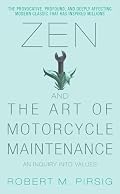
Zen and the Art of Motorcycle Maintenance
by Robert M. Pirsig
Pirsig's whole inquiry is the gap this essay lives in: quality is real, everyone recognizes it, and no procedure fully captures it. Read it for the difference between following the manual and caring about the thing the manual is for.
Good Strategy Bad Strategy
by Richard Rumelt
Rumelt shows that most of what passes for strategy is template-filling, goals and buzzwords arranged in the standard format. Real strategy starts with a diagnosis of your specific situation, which is precisely what no borrowed playbook contains.
Good to Great
by Jim Collins
Collins found that breakthrough companies had no breakthrough moment. The flywheel builds turn by turn while doom-loop companies lurch from program to program, rally to rally. The best research-backed case that repeatability compounds and bursts do not.

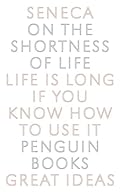
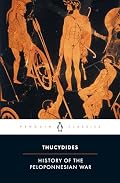
History of the Peloponnesian War
by Thucydides (trans. Rex Warner)
Book 3, sections 82 and 83, is the Corcyra passage this essay leans on: two factions sharing one city, and Thucydides' cold account of what happens to words, loyalty, and judgment once civil strife passes a certain line. Read it for the mechanism, not the body count.
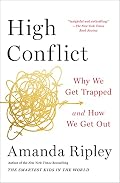
High Conflict: Why We Get Trapped and How We Get Out
by Amanda Ripley
Ripley's distinction between good conflict and high conflict, where the fight becomes about the fight, is the clearest modern statement of the threshold. Every exit she documents involved distance from the environment that fed it.


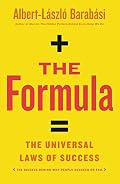
The Formula: The Universal Laws of Success
by Albert-László Barabási
A network scientist shows that performance is bounded and success is unbounded because success is a property of the network, not the performer. When the work is hard to measure, the people who watched it decide. This is the math under the essay.
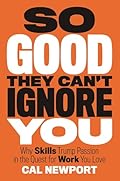
So Good They Can't Ignore You
by Cal Newport
Newport's career-capital argument is the practical cousin of this piece. Rare and valuable work is the currency. What he leaves implicit, and this essay makes explicit, is that the currency only moves when someone who watched you earn it carries it somewhere.

















The Histories
by Herodotus (trans. Aubrey de Sélincourt)
Herodotus keeps returning to the same warning Greene later packaged as a law: look to the end of what you are considering. Fortune often shows a man a glimpse of happiness and then ruins him. Useful as the ancient companion to ending-first thinking.

Laches and Charmides
by Plato (trans. Rosamond Kent Sprague)
Socrates asks two decorated Athenian generals to define the courage they practice for a living, and neither can do it. Endurance fails as a definition, because endurance without wisdom is only boldness. The dialogue ends unresolved, which is the point: if the professionals cannot tell courage from its counterfeit, you should check your own definition before praising your own boldness.

Courage Is Calling: Fortune Favors the Brave
by Ryan Holiday
The modern practitioner's companion to this law. Holiday works the Stoic sources into a usable argument that fear is a signal to be weighed rather than obeyed, and that courage is built through repetition at small stakes. Where Greene teaches audacity as leverage over others, Holiday teaches it as a discipline over yourself. The difference is the subject of this article.
Learned Optimism
by Martin Seligman
The research that moved optimism from temperament to skill. Seligman's studies of insurance salespeople showed optimistic explanatory style predicting who sold more and who survived the brutal first year, and his reframing model is the closest modern psychology comes to a pronoia training manual.
Pronoia Is the Antidote for Paranoia
by Rob Brezsny
The book that took a sociologist's term for a delusion and turned it into a practice. Brezsny is wilder and weirder than the Stoics, but the core wager is the same one Marcus made: read the world as conspiring to help you and watch what that reading makes you do.
The Art of UNIX Programming
by Eric S. Raymond
The fullest statement of the design philosophy this article argues has become the native grammar of AI tooling. Raymond spells out the rules of composition, modularity, and text as universal interface, decades before agents made those rules urgent for everyone.
The Art of Living: The Classical Manual on Virtue, Happiness, and Effectiveness
by Epictetus (interpreted by Sharon Lebell)
The Enchiridion opens with the sentence this article is built on: some things are up to us and some are not, and reputation and office sit on the second list. Epictetus taught the audit as a daily practice, and he taught it as a former slave who had watched powerful men confuse themselves with their positions.
How the Mighty Fall
by Jim Collins
Collins traced the stages of organizational decline through the data and found what Plato would have predicted: the fall starts in the psyche, with hubris and denial, long before it reaches the income statement. The empirical companion to this article's claim that the numbers report the wound late.

Steve Jobs
by Walter Isaacson
The fullest account of the Apple evidence used here. Read the 1997 chapters closely and notice how little of what Jobs did first was financial. The product-line massacre and the Think Different campaign were operations on the company's identity, performed before anyone could believe in a strategy.
Only the Paranoid Survive
by Andrew S. Grove
Grove's account of leading Intel through the memory-chip exit is a masterclass in keeping an organization's nerve intact while amputating its founding business. Proof that a company can lose its original identity and keep its spirit, which is the harder and more important half.
Alexander the False Prophet (in Lucian: Selected Dialogues)
by Lucian (trans. C. D. N. Costa)
The ancient world's great debunking. Lucian watched Alexander build a fake oracle around a puppet snake god, documented every mechanism, and nearly died for it. Two thousand years before Greene wrote the playbook, Lucian published the exposé, including the detail Greene omits: the charlatan's first move is always to get the skeptics out of the room.
The True Believer: Thoughts on the Nature of Mass Movements
by Eric Hoffer
The modern classic on the hunger Greene wants you to farm. Hoffer, a longshoreman philosopher, mapped why frustrated people crave mass movements and how interchangeable the objects of devotion turn out to be. Read it to understand the need itself, and why exploiting it requires contempt for the people who carry it.
Symposium
by Plato (trans. Alexander Nehamas and Paul Woodruff)
The source for everything in this article. Diotima's myth of Eros, conceived by Resource and Poverty, is the oldest and still the sharpest account of why desire cannot be satisfied out of existence. Read it for the argument at 200e that you can only want what you lack, and watch the whole self-help industry go quiet.
Stumbling on Happiness
by Daniel Gilbert
The modern research on why the thing you get never feels the way the wanting predicted. Gilbert's work on affective forecasting and adaptation is the empirical floor under this article's claim that closing a gap does not retire the wanting machinery, it re-aims it.
Wanting: The Power of Mimetic Desire in Everyday Life
by Luke Burgis
If this article explains why the ache moves, Burgis explains where it moves to: we borrow our next gap from the people we watch. His distinction between thin desires we catch from others and thick desires that survive inventory is the practical companion to the trade test.

Essays and Aphorisms
by Arthur Schopenhauer (trans. R.J. Hollingdale)
The darkest version of this argument, worth reading precisely because it goes too far. Schopenhauer saw that satisfied desire immediately produces a new one and concluded life swings between pain and boredom. This article accepts his diagnosis and rejects his verdict: the open gap is not a curse, it is the shape of being alive.

Meno
by Plato (trans. G.M.A. Grube)
The original demonstration of teaching through deliberate confusion. Socrates refuses to hand the slave boy the answer, stings him into admitted perplexity instead, and then observes that the numbing did the boy no harm, because now he wants to search. This short dialogue is the entire argument of this article, made twenty-four centuries earlier.
How Children Fail
by John Holt
Holt watched classrooms for years and found students who had learned one skill to perfection: producing whatever behavior makes the teacher supply the answer. His account of answer-pulling strategies is the sharpest description ever written of what dependence looks like from the student's side of the desk.
Make It Stick
by Peter C. Brown, Henry L. Roediger III, Mark A. McDaniel
The research case for desirable difficulty. Retrieval that costs effort builds durable capability, while smooth, complete presentation produces fluency that evaporates. This is the cognitive science underneath the deliberate gap: the struggle you are tempted to remove is the mechanism doing the teaching.
Ultralearning
by Scott H. Young
A field manual for the receiving end of this article: what it looks like when someone owns the learning loop outright. Young's projects show what becomes possible for a person who never waits for a curriculum, and his directness principle explains why real problems beat polished explanations.

The Shallows
by Nicholas Carr
Carr's thesis is that the tools we use do not just do things for us, they reshape how we think. Read it to understand the mechanism underneath this article: a capture tool is not neutral, it trains your attention and your capacities in a specific direction, whether you chose that direction or not.
Oedipus Rex
by Sophocles (trans. Robert Fagles)
The clearest dramatization of miasma in the Greek canon. A plague sits on Thebes because a polluting deed went unanswered, and the pollution does not care that the doer's hands look clean or that he acted in ignorance. Read it as the ancient world's verdict on the idea that you can launder a deed through distance and appearance.
Macbeth
by William Shakespeare
The most famous study of a stain that no water reaches. The Macbeths outsource and disguise, and the guilt does not stay outsourced. 'Out, damned spot' is the same insight the Greeks named miasma, dramatized as the slow discovery that the pollution was never on the hands at all.
The Gifts of Imperfection
by Brené Brown
The necessary counterweight. Some of the not-enough feeling is real damage that needs healing, not fuel, and Brown is the best guide to telling shame from a healthy reach. The honest reframe in this article only works if you can distinguish the ache that points from the ache that only punishes, and that distinction is her whole subject.
The Enchiridion
by Epictetus (trans. Robin Hard)
Epictetus uses the actor metaphor (you are given a part in a play; your job is to play it well) but draws the line Greene erases: the role is assigned and external, the faculty of choice that plays it is yours and is never the role. The whole Stoic distinction between the mask and the man lives in chapter 17.
The Presentation of Self in Everyday Life
by Erving Goffman
The modern sociological account of life as theater, front stage and back stage, and the labor of impression management. Read it as a clear-eyed map of exactly the territory Greene tells you to live in permanently, and as a quiet argument for why no one can survive there without a back stage that is real.

The Oresteia (Agamemnon)
by Aeschylus (trans. Robert Fagles)
The chorus delivers the line pathei mathos, learning comes through suffering. The play is the place to test it honestly, because the suffering in it is enormous and most of the characters learn nothing at all. Aeschylus is not promising that pain teaches. He is describing the narrow conditions under which it can.
Black Box Thinking
by Matthew Syed
The best modern treatment of why two industries facing the same failures, aviation and medicine, produced opposite safety records. The difference was not the failures. It was whether the failure was investigated honestly or buried to protect reputations. The whole book is an argument that failure only teaches when someone does the reckoning.
The Hellenistic Philosophers, Volume 1
by A.A. Long and D.N. Sedley
The standard scholarly source on Stoic physics in English, including the texts where pneuma and tonos do their real work. If you want to see that the tension model of the soul is not a metaphor I invented but a literal piece of Stoic doctrine, the primary fragments are here with commentary. Dense, but the place the whole tonos picture comes from.
A Guide to the Good Life: The Ancient Art of Stoic Joy
by William B. Irvine
The most accessible modern on-ramp to Stoic practice. Irvine translates the ancient discipline into habits a contemporary person can actually run, which is the bridge between the physics of tonos and the daily reps that build it. Start here if the primary sources feel too far away.
The Body Keeps the Score
by Bessel van der Kolk
Van der Kolk shows how tension and load live in the body, not just the mind, and how a nervous system with no tolerance for stress collapses while a trained one holds. A modern, evidence-based companion to the ancient claim that tone is physical before it is moral.

The Painful Truth: The New Science of Why We Hurt and How We Can Heal
by Monty Lyman
A physician's tour of modern pain neuroscience, including why tissue damage and pain are not the same thing and how the brain constructs the experience you feel. The science behind catastrophizing, context, and reappraisal, written for people who suspect their pain is more editable than they were told.
Philosophy as a Way of Life
by Pierre Hadot
Hadot's account of ancient philosophy as a set of lived spiritual exercises is the best entry point in print to prosoche as the foundational Stoic practice. He argues that attention was not preliminary to wisdom; it was the wisdom. Reading him reframes most of what we now call mindfulness back into the older, harder, more useful tradition.
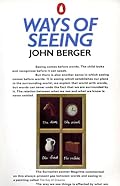
Ways of Seeing
by John Berger
Berger's four-essay companion to his BBC series argues that the act of looking is never neutral and is almost always undertrained. He makes the case for seeing as a discipline that has to be reclaimed against centuries of habit. The most direct modern bridge between the ancient practice and contemporary visual life.
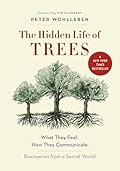
The Hidden Life of Trees
by Peter Wohlleben
Wohlleben spent forty years walking the same forest and writes from the precise moment when accumulated trained observation crosses over into a kind of knowledge unavailable to faster minds. The book itself is the argument for how slow patient seeing pays compounding dividends.
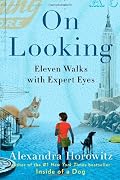
On Looking: Eleven Walks with Expert Eyes
by Alexandra Horowitz
Horowitz walks the same city block eleven times with eleven different experts, each of whom sees a different city. The book is a working demonstration that perception is a trained domain-specific skill, not a fixed personal trait. Most direct empirical companion to this article's curriculum.
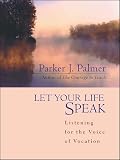
Let Your Life Speak: Listening for the Voice of Vocation
by Parker J. Palmer
Palmer spent half a career pursuing borrowed ideals of what an important life looked like, and the book is his account of the wreckage and the recovery. His central claim, that vocation is listened for rather than willed into existence, is the modern devotional version of oikeiosis.

Ecce Homo: How One Becomes What One Is
by Friedrich Nietzsche
Nietzsche took his subtitle from Pindar's line and spent the book on a paradox this article walks past more quickly: that becoming yourself requires not knowing the goal in advance, lest you ruin the organic process of getting there. Read it for the strange, funny, uncomfortable depth under the slogan.
Blink: The Power of Thinking Without Thinking
by Malcolm Gladwell
The mainstream tour of expert intuition: the art historians who knew the statue was fake without being able to say why, the tennis coach who could call double faults before the racket hit the ball. Gladwell is more interested in the speed of expert judgment than in its muteness, but the case studies are the most accessible collection of the phenomenon in print.

Shop Class as Soulcraft: An Inquiry into the Value of Work
by Matthew B. Crawford
A philosopher-turned-motorcycle-mechanic's defense of knowledge that lives in the hands. Crawford's account of diagnosing a bike by feel, against the shop manual's flowchart, is the lived texture of everything Polanyi formalized. Read it to understand why the most valuable knowledge in your organization is probably held by people who would fail a written test on it.
What Got You Here Won't Get You There
by Marshall Goldsmith
Goldsmith catalogs the senior-leader habits that quietly sabotage the next stage, most of them variations on adding value when no one asked. His chapter on the compulsion to win and to contribute names the exact reflex a departing leader has to kill: the need to improve the successor's decision is the need to stay in charge of it.
The Reasons of Love
by Harry Frankfurt
The best modern philosophical treatment of why what you love, rather than what you believe or what you choose, is the thing that actually defines you. Frankfurt's idea of volitional necessity, the things you cannot bring yourself to betray, is the contemporary version of Plato's ruling love. Short, rigorous, and unusually readable for analytic philosophy.

You Are What You Love
by James K. A. Smith
A modern recovery of Augustine's ordo amoris, the order of loves, for readers who want the practical version. Smith's argument is that your loves are trained by your habits long before your beliefs catch up, which is why your calendar and your reflexes reveal your ruling love more honestly than your stated principles do.

The Comfort Crisis
by Michael Easter
The strongest twenty-first-century empirical case for the Greek protocol, built on contemporary cognitive and behavioral research. Easter's central observation, that modern comfort produces a specific cluster of symptoms unrecognized by any pre-industrial society, is the same observation the Stoics made about the relationship between malakia and the daily mental discontent of comfortable Romans. Easter rebuilds the case in vocabulary the modern reader will accept. Read it after Hesiod and Epictetus to see the architecture of the argument hold across twenty-eight hundred years.
The Science of Yoga
by William J. Broad
Useful for the displacement-vs-relaxation distinction. Broad's careful physiological accounting of how sustained physical demand restructures cognitive load gives the modern reader the mechanism the Greeks named without instrumentation. Read against the Greek protocol for the difference between practices that cushion the soul against the inventory of concerns and practices that structurally evict the inventory from working memory. The first is what the wellness industry sells. The second is the older and harder cure.
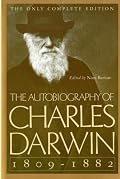
The Autobiography of Charles Darwin
by Charles Darwin (ed. Nora Barlow)
The primary source for Darwin's own description of himself. The 1958 Barlow edition restores material the family edited out of the earlier versions, including Darwin's own assessment of his mind as slow, patient, and unremarkable in any way that anyone meeting him for the first time would have noticed. Read it for the texture of how the man inside the work actually understood the work, which is the opposite of how the public eventually understood him.

Charles Darwin: Voyaging
by Janet Browne
First volume of the definitive modern biography. Browne is meticulous about the actual texture of the years between the Beagle's return and the start of the barnacle decade, which is where most popular accounts of Darwin skip. The book is long because the life was long and the work accumulated slowly, which is the same point this article is trying to make.
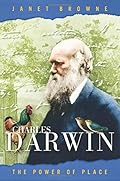
Charles Darwin: The Power of Place
by Janet Browne
Second volume. The chapters on the barnacle years and the writing of Origin are the closest a reader can get to the day-to-day experience of the long middle of a great work. Browne's research into the correspondence with pigeon breeders and barnacle taxonomists shows what the accumulation actually looked like, which is mostly unphotographable patient effort over a very long period of time.
Shame and Necessity
by Bernard Williams
The philosophical treatment of shame as a moral perception (rather than as a guilt-by-rule emotion) that the modern psychological tradition almost forgot. Williams's argument that the Greeks understood shame as a more honest moral faculty than the modern guilt-vs-shame dichotomy allows is the academic anchor for everything this article asserts.
The Emotions of the Ancient Greeks
by David Konstan
Scholarly treatment of aidos in its full Greek context. Konstan's careful philology rebuilds what aidos meant before modern translations turned it into 'shame' with all that English word's baggage. Read this if you want to know what Aristotle and the tragedians actually meant when they used the word, which is much closer to a moral faculty than to an emotion to be processed.
The Four Loves
by C.S. Lewis
The modern restatement of Aristotle's philia categories with a different frame around them. Lewis is especially clear that friendship of pleasure (companionship, shared enjoyment) is real friendship that has not yet become the thing it could become. The chapter on philia alone is worth the book.

Bowling Alone
by Robert Putnam
The structural account of the collapse of weak ties in modern American life. Putnam is not writing about workplace friendships specifically, but every diagnostic he runs applies one layer down to the question of why corporate intimacy has gotten thinner over the last forty years. Useful background for understanding why the math is harder now than it was for your father's generation.
How to Know a Person
by David Brooks
The practical companion to the argument here. Brooks's specific contribution is on the skill of seeing other people deeply, which is the prerequisite skill for any virtue friendship to form. Without it, you keep manufacturing utility friendships you mistake for the third kind.
Lives
by Plutarch (trans. various, Modern Library edition)
Read the lives of Fabius Maximus and Aristides side by side. Fabius won by yielding ground deliberately, the general so committed to strategic concession that Rome called him the Cunctator, the Delayer. Aristides refused to yield his integrity even when politically expedient yielding would have saved his career. Two opposite illustrations of yielding inside a public life.

The Top Five Regrets of the Dying
by Bronnie Ware
Eight years of palliative-care notes turned into a book. The number-one regret of the dying is not failed attempts. It is unattempted ones. The data behind every assertion this article makes about how the deathbed audit actually runs.

Zen in the Art of Archery
by Eugen Herrigel
A Western academic spends years inside a Japanese archery school and discovers, slowly and uncomfortably, that the bow does not yield to effort. The book is the cleanest available account of a striving Westerner meeting the water-mind stance and being forced to release everything he thought he knew about practice.

The Life-Giving Sword
by Yagyu Munenori (trans. William Scott Wilson)
Musashi's contemporary, a courtly sword instructor for the Tokugawa shoguns. Same era, same fundamental insight, slightly different vocabulary. Useful as a triangulation point so you can see the working stance was a cultural finding, not one swordsman's personal style.
Flow
by Mihaly Csikszentmihalyi
The modern psychological mapping of the state Musashi described in metaphor. Csikszentmihalyi spent thirty years interviewing surgeons, musicians, chess players, and rock climbers and arrived at the same description: optimal performance is not high effort, it is fitted absorption.
The Sabbath
by Abraham Joshua Heschel
Heschel argues that the Sabbath is not a day off but a deliberate cathedral built in time, an architecture of refusal that protects meaning from the relentless press of production. The deepest single argument for why a weekly stripping is structural, not optional.

The Last Days of Socrates
by Plato (trans. Christopher Rowe)
The Apology, Euthyphro, Crito, and Phaedo, where Socratic irony is on full display and on trial. Athens killed Socrates partly because powerful men did not enjoy being made to feel less wise than they had assumed. Read it to see what the honorable version of playing dumb actually costs the person who does it.
Paideia: The Ideals of Greek Culture
by Werner Jaeger
Jaeger's three-volume study is still the definitive treatment of *paideia* as a formative practice rather than a curriculum. He shows how the Greeks treated the shaping of a person as the central work of culture, and how that shaping happened through naming, modeling, and direct speech between older and younger people. The book is long and dense. It is also the source code for the older tradition of leadership the modern review system has quietly replaced.
The Heart Aroused
by David Whyte
Whyte is a poet who has spent his career inside corporate leadership conversations. He argues, more clearly than any leadership writer I have read, that the work of a serious leader is partly the work of naming what is becoming in the people around them. The book is unfashionable in the right ways and worth the time.
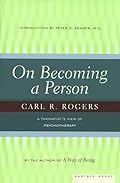
On Becoming a Person
by Carl Rogers
Rogers' insistence that being seen accurately is the precondition for becoming oneself is the modern psychological restatement of the ancient *paideia* principle. He is writing about therapy. The principle transfers cleanly to leadership and explains why so many people remember one mentor and forget twenty managers.
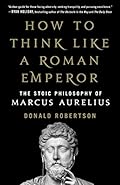
How to Think Like a Roman Emperor
by Donald Robertson
Robertson is a working cognitive therapist who reads the Stoics as practitioners. His treatment of Marcus Aurelius shows what *melete* actually looked like as a daily practice rather than a literary device. A useful corrective for anyone who has read the *Meditations* without ever practicing them.
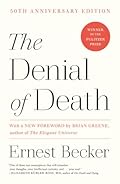
The Denial of Death
by Ernest Becker
Becker's thesis is that much of human striving is an attempt to outrun mortality by accumulating proof of significance. The book is heavy, but it gives the strongest psychological account of why the engine described in this post never stops on its own and why the practice of *parousia* is necessarily a discipline against, not with, the engine.
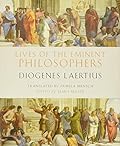
Lives of the Eminent Philosophers
by Diogenes Laertius
Diogenes Laertius is the ancient source for the genealogy of the Socratic schools. Books II, VI, and VII track the descent from Socrates through Antisthenes, Aristippus, Plato, and eventually Zeno of Citium. Useful for any leader who wants to see how one teacher's formation produces wildly divergent intellectual inheritances over generations.

The Fifth Discipline
by Peter Senge
Senge's treatment of mental models and team learning is the most useful modern restatement of the formation-versus-indoctrination distinction in organizational terms. The chapter on the team-as-learning-system pairs naturally with the Socratic argument here.

The Power of Habit
by Charles Duhigg
Duhigg traces how the loop of cue, routine, and reward becomes character over time. The book is useful for understanding why self-trust is not a feeling but a pattern, and why broken micro-promises quietly rewire the nervous system to expect failure.

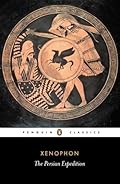
Anabasis
by Xenophon
Xenophon's firsthand account of leading the Ten Thousand fifteen hundred miles back to the Black Sea is the original case study in how narrative meaning carries an army when data, supply, and intel have all failed. Required reading for anyone who suspects the modern decision problem is a meaning problem in disguise.
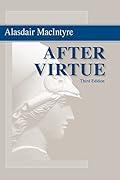
After Virtue
by Alasdair MacIntyre
MacIntyre's diagnosis of the modern condition as the loss of a coherent narrative tradition is the philosophical backbone of this argument. He explains, more rigorously than any contemporary author, why information without story produces the directionlessness that defines the present age.





Endure: Mind, Body, and the Curiously Elastic Limits of Human Performance
by Alex Hutchinson
Hutchinson's research into the science of endurance reveals that our perceived limits are psychological, not physical. The sensation of struggle is a signal from the brain, and how we interpret that signal determines whether we push through or quit.

Quiet: The Power of Introverts in a World That Can't Stop Talking
by Susan Cain
Cain's research demonstrates how Western culture systematically overvalues extroverted traits in leadership selection, producing organizations that mistake confidence for competence. Her work provides the empirical foundation for understanding why dominant personalities get promoted despite producing worse outcomes.
Grit
by Angela Duckworth
Duckworth's research demonstrates that talent (dynamis) without sustained effort produces nothing, while effort counts twice, once to build skill and again to produce achievement. Her findings empirically confirm Aristotle's philosophical insight that potential without actualization is meaningless.
On Anger (De Ira)
by Seneca
Seneca's three-book treatise on anger remains the most thorough ancient analysis of the emotion that fuels Law 15. His argument that anger promises strength but delivers captivity maps precisely onto the dynamic of obsessive destruction: the person who must crush their enemy has already been captured by them.
The Courage to Be Disliked
by Ichiro Kishimi and Fumitake Koga
This Adlerian psychology dialogue dismantles the idea that past trauma determines present direction. Its argument that we choose our lifestyles based on goals rather than causes challenges the anti-vision trap at its root, showing how etiology keeps people stuck while teleology liberates them.
The Six Pillars of Self-Esteem
by Nathaniel Branden
Branden identifies self-trust and the practice of personal integrity as foundational pillars of psychological health. His insight that self-esteem is built through kept promises to yourself, not through affirmation, directly supports the character-based view of organization.

De Amicitia (On Friendship)
by Cicero
Cicero's treatise on friendship argues that genuine friendship can only exist between people of good character, and that any friendship based on utility or advantage is inherently fragile. His insistence that true friendship requires goodwill directed at the other person for their own sake is the precise antithesis of Law 14's instrumental approach to human connection.
Games People Play
by Eric Berne
Berne's transactional analysis reveals the hidden scripts running beneath social interactions. His framework for understanding psychological games maps precisely onto Law 14's dynamics: the spy initiates a game with a concealed agenda, and the target participates without knowing the real rules. Understanding these patterns is the first step toward refusing to play them.

De Beneficiis (On Benefits)
by Seneca
Seneca's most thorough treatment of giving, receiving, and gratitude. He argues that the quality of a benefit depends entirely on the spirit in which it is given. A gift designed to create obligation corrupts the giver and the receiver. The framework dismantles Law 13's assumption that self-interest is the only honest motivator.

Lying
by Sam Harris
Harris makes the philosophical case for radical honesty in under 100 pages. His argument that even small deceptions corrupt relationships and self-knowledge maps directly onto the character cost of treating honesty as a selective tool rather than a consistent practice.

Influence: The Psychology of Persuasion
by Robert Cialdini
Cialdini's research on the reciprocity principle explains exactly why Law 12 works psychologically. Understanding the mechanism of obligation created through gifts and favors is the first step toward recognizing when generosity is genuine and when it is extraction wearing a pleasant face.
Turn the Ship Around!
by L. David Marquet
Marquet's story of transforming a nuclear submarine crew from dependent followers into independent leaders is the practical playbook for building autarkeia in organizations. His intent-based leadership model distributes decision-making authority to the people closest to the information.

Multipliers: How the Best Leaders Make Everyone Smarter
by Liz Wiseman
Wiseman's research quantifies the difference between leaders who amplify capability and leaders who diminish it. Her distinction between multipliers and diminishers maps directly onto the difference between building autarkeia and manufacturing dependency.

The Technology Trap: Capital, Labor, and Power in the Age of Automation
by Carl Benedikt Frey
The definitive history of how technological revolutions reshape labor markets. Frey traces the pattern from the Industrial Revolution through computing, showing why the displacement curve always looks the same.

Humble Leadership
by Edgar Schein
Schein argues that effective leadership requires moving from transactional to relational dynamics. His framework for building genuine trust through vulnerability and accurate attribution of contribution aligns with the philotimia-based approach to leadership honor.

The Dichotomy of Leadership
by Jocko Willink and Leif Babin
Willink and Babin tackle the tension at the heart of this article: when to lead from the front and when to step back. Their battlefield-tested framework for knowing when to exercise authority and when restraint serves the mission better gives practical shape to the ancient wisdom of prohairesis.

Status Anxiety
by Alain de Botton
De Botton traces the psychological machinery behind reputation obsession and reveals how the need for others' approval corrodes the very character that would earn genuine respect. An unflinching look at why guarding reputation often destroys the thing worth guarding.
Tiny Habits
by BJ Fogg
Stanford behavior scientist Fogg's research reveals why anchor habits, single changes that create platforms for subsequent change, succeed where ambitious overhauls fail. His evidence-based approach to sequencing behavioral change is the modern laboratory validation of ancient wisdom about patient, ordered transformation.

Algorithms to Live By
by Brian Christian and Tom Griffiths
Computer science applied to human decision-making. The optimal stopping problem and explore/exploit trade-off provide mathematical backing for why calibrating decision effort to decision stakes produces better outcomes than uniform deliberation.


Tribe: On Homecoming and Belonging
by Sebastian Junger
NYT bestseller exploring why modern society's emphasis on self-sufficiency is making us miserable. Junger shows that humans evolved to need tight-knit groups and that our epidemic of loneliness stems from abandoning tribal connection for strategic isolation.

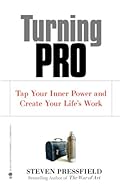
Turning Pro
by Steven Pressfield
Pressfield's overlooked gem about the identity shift that changes everything. The amateur asks what to do. The professional has already decided who they are. The book is about that moment of turning, when identity crystallizes and action becomes obvious.




Can't Hurt Me: Master Your Mind and Defy the Odds
by David Goggins
Goggins embodies the article's thesis in extreme form. His journey from 300 pounds to Navy SEAL to ultramarathon runner demonstrates what happens when you refuse to accept belief-imposed limits. Raw proof that the ceiling is painted on.


Relentless: From Good to Great to Unstoppable
by Tim S. Grover
Michael Jordan's trainer reveals the psychology of elite performers and the relentless mindset that separates good from unstoppable. The cleaners, closers, and coolers framework illuminates what drives exceptional achievement.









Radical Candor: Be a Kick-Ass Boss Without Losing Your Humanity
by Kim Scott
Scott's framework for caring personally while challenging directly. Ruinous empathy (high care, low challenge) and obnoxious aggression (high challenge, low care) both fail. Only radical candor - both together - builds teams.




















All Books
775 books referenced across my articles
No books found
No books match the current filter criteria.