Prosoche vs Askesis: Key Differences in Greek Philosophy
The Stoics built their entire practical philosophy on two capacities that most people develop in isolation when they would be far more powerful in combination. Prosoche is attention, the practice of sustained, watchful awareness directed at your own mental life. It means monitoring your impressions, judgments, and emotional responses in real time, catching yourself at the moment an impression arises and before you grant it your assent. Marcus Aurelius practiced prosoche when he examined his own reactions to court politics and asked whether his anger was justified by reality or generated by his interpretation. Epictetus taught prosoche as the primary Stoic discipline: if you cannot observe your own thoughts with clarity, every other practice is compromised. Askesis is training, structured exercise designed to build specific capacities through deliberate, repeated practice. The Stoics practiced askesis when they exposed themselves to discomfort to build endurance, when they rehearsed philosophical principles until those principles became automatic responses, and when they practiced speaking the truth in progressively more difficult situations. Askesis is the gymnasium of character: you build strength through systematic effort directed at specific weaknesses. The relationship between prosoche and askesis is reciprocal, and understanding that reciprocity is essential for making either one effective. Prosoche without askesis produces a person who sees their own patterns clearly but cannot change them. You notice your anger arising, you observe your fear taking hold, you watch yourself making the same mistake again, but you lack the trained capacity to respond differently. Insight without strength is a spectator sport. Askesis without prosoche produces a person who trains rigorously but blindly. You build endurance, you practice discipline, you develop habits of self-control, but you cannot perceive which capacity actually needs development in a given moment. Strength without insight is a blunt instrument. The Stoics recognized that the two must work together in a continuous cycle. Prosoche reveals what needs training: you notice a pattern of reactivity, a persistent judgment error, a habitual response that does not serve you. Askesis provides the means to change what prosoche reveals: you design practices that target the specific weakness, you repeat those practices until new patterns replace old ones, and you build the capacity that was lacking. Then prosoche monitors the results, detecting whether the training is working, whether new problems have emerged, and whether your self-perception remains accurate. Pierre Hadot’s study of ancient philosophy as a way of life emphasized that prosoche was considered the fundamental Stoic attitude, the continuous vigilance that made all other spiritual exercises meaningful. Without the clarity that attention provides, training becomes mechanical repetition. Without the capacity that training builds, attention becomes frustrated observation. For the training side and the freedom to keep practicing, see askesis and eleutheria.
Definitions
Prosoche
(προσοχή)
pro-so-KAY
Attention to oneself; the continuous vigilant awareness of one’s thoughts, judgments, and impulses that the Stoics considered foundational to philosophical practice. Prosoche is the watchful presence of mind that catches impressions before they become automatic reactions.
Askesis
(ἄσκησις)
AS-kay-sis
Disciplined training and practice aimed at self-mastery, originally athletic exercise but extended by Stoics to mean rigorous spiritual conditioning. The deliberate cultivation of virtue through repeated effort and voluntary hardship.
Key Differences
| Aspect | Prosoche | Askesis |
|---|---|---|
| Mode | Prosoche is receptive awareness. It involves watching, observing, and perceiving what is happening in your mental life without immediately trying to change it. | Askesis is active training. It involves structured exercises designed to build specific capacities through deliberate repetition and progressive challenge. |
| Primary Faculty | Prosoche engages attention and perception. The primary faculty at work is the capacity to notice, to observe your own impressions and judgments as they arise. | Askesis engages will and discipline. The primary faculty at work is the capacity to commit to difficult practices and sustain them over time despite resistance. |
| Timing | Prosoche is continuous present-moment awareness. It operates as an ongoing background practice, always monitoring, always attending to what is happening right now. | Askesis is scheduled deliberate practice. It operates in defined periods of training, specific exercises undertaken at specific times to develop specific capacities. |
| What It Develops | Prosoche develops clarity of perception. Through sustained practice, you become increasingly able to see your own mental patterns, biases, and habitual reactions with accuracy. | Askesis develops strength of character. Through repeated training, you build the capacity to act on what you know to be right even when impulse, habit, or circumstance resist. |
| Failure Mode | Prosoche fails through distraction. When attention lapses, impressions pass through unexamined, judgments form automatically, and habitual responses take over without awareness. | Askesis fails through complacency. When training stagnates, existing capacities plateau, and the person rests on past development without addressing new weaknesses. |
Mode
Prosoche is receptive awareness. It involves watching, observing, and perceiving what is happening in your mental life without immediately trying to change it.
Askesis is active training. It involves structured exercises designed to build specific capacities through deliberate repetition and progressive challenge.
Primary Faculty
Prosoche engages attention and perception. The primary faculty at work is the capacity to notice, to observe your own impressions and judgments as they arise.
Askesis engages will and discipline. The primary faculty at work is the capacity to commit to difficult practices and sustain them over time despite resistance.
Timing
Prosoche is continuous present-moment awareness. It operates as an ongoing background practice, always monitoring, always attending to what is happening right now.
Askesis is scheduled deliberate practice. It operates in defined periods of training, specific exercises undertaken at specific times to develop specific capacities.
What It Develops
Prosoche develops clarity of perception. Through sustained practice, you become increasingly able to see your own mental patterns, biases, and habitual reactions with accuracy.
Askesis develops strength of character. Through repeated training, you build the capacity to act on what you know to be right even when impulse, habit, or circumstance resist.
Failure Mode
Prosoche fails through distraction. When attention lapses, impressions pass through unexamined, judgments form automatically, and habitual responses take over without awareness.
Askesis fails through complacency. When training stagnates, existing capacities plateau, and the person rests on past development without addressing new weaknesses.
When to Apply Each Concept
When to Choose Prosoche
Practice prosoche as a continuous background discipline. Before you can train effectively, you must see clearly. When you notice recurring emotional patterns, persistent judgment errors, or automatic reactions that do not serve you, prosoche is the capacity that makes these visible. It is the diagnostic tool that precedes the intervention.
When to Choose Askesis
Engage askesis when prosoche has revealed a specific capacity that needs development. Design exercises that target the weakness. Practice them consistently. Increase the difficulty gradually. Askesis is the intervention that follows the diagnosis, the training that translates insight into changed behavior.
Frequently Asked Questions
What is the difference between prosoche and askesis?
Prosoche is attention, the sustained awareness of your own impressions, judgments, and reactions. Askesis is training, the structured practice designed to build specific capacities and strengthen character. Prosoche tells you what needs to change. Askesis provides the means to change it. Both are central to Stoic practice and are most effective in combination.
Prosoche vs askesis in Stoic philosophy?
In Stoic philosophy, prosoche is the fundamental attitude of continuous self-monitoring, watching your impressions as they arise and evaluating them before granting assent. Askesis is the tradition of spiritual exercises designed to build philosophical capacities. Pierre Hadot identified prosoche as the foundational Stoic practice that makes all other exercises meaningful, while askesis provides the structured training through which philosophical principles become lived dispositions.
What is prosoche in Stoicism?
Prosoche is the Stoic practice of sustained attention to one's own mental life. It involves monitoring impressions as they arise, observing judgments as they form, and maintaining awareness of your emotional and cognitive responses in real time. Epictetus taught that prosoche is the most important discipline because without clear awareness of your own mental processes, you cannot exercise the rational control that Stoic philosophy demands.
How do attention and training work together in Stoic practice?
Attention (prosoche) reveals what needs training. Training (askesis) builds the capacity to act on what attention reveals. A Stoic practitioner uses prosoche to identify patterns of reactivity, judgment errors, and habitual responses that fall short of wisdom. They then design askesis exercises targeting those specific weaknesses. Prosoche monitors the results of the training, creating a continuous cycle of awareness, practice, and refinement.
Articles Exploring Prosoche or Askesis (56)
Nobody Checks On the People Who Are Fine
Attention flows to the fire. It flows to the new hire, the struggling report, the loud problem, and the escalation that lands at four on a Friday. The people quietly carrying the load get silence, and silence reads as a verdict. Then one of them resigns and everyone calls it sudden, after months of nobody asking.

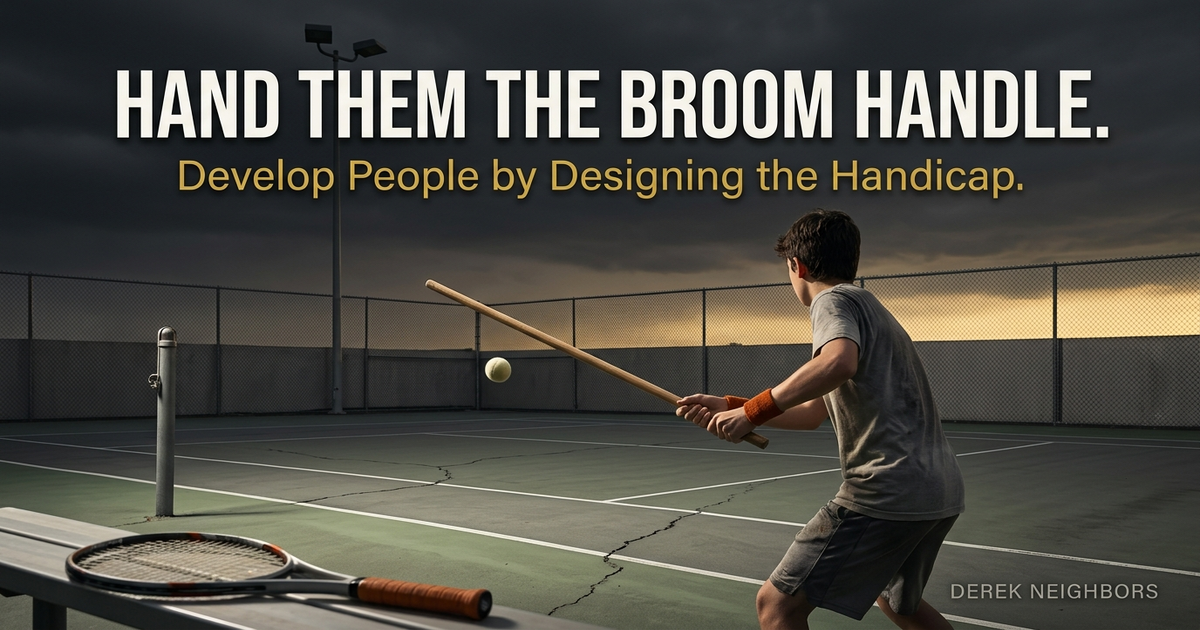
Hand Them the Broom Handle
The story goes that Arthur Ashe learned to see the ball with a broom handle, because a racket made hitting it too easy. I hand people the racket all day: agents, templates, last quarter's deck, a runbook for everything. I want them on it. And I keep meeting people who can operate every tool we own and cannot tell you why the ball went where it went. The fix is a handicap you design on purpose: one skill, one task, a date, and the racket handed straight back.
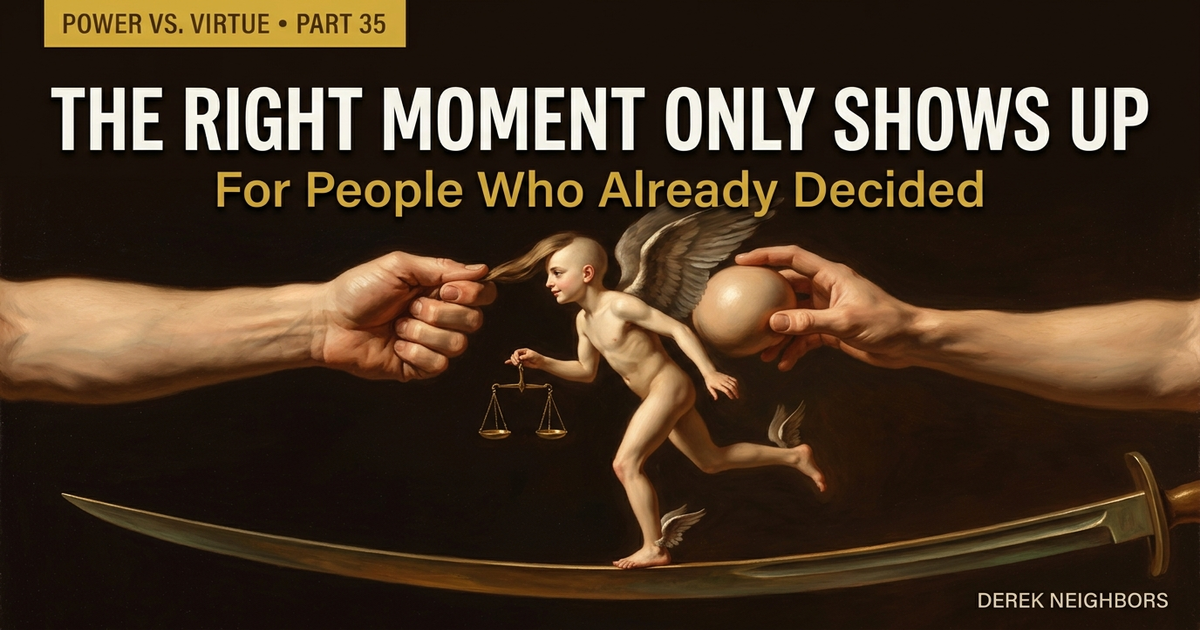
The Right Moment Only Shows Up for People Who Already Decided
Law 35 of the 48 Laws of Power tells you to master the art of timing, and this series agrees with it. The same move lands or dies on when you make it, hurry reads as fear, and rooms punish people who cannot wait. Then the law tells you to seem patient and to sniff out the spirit of the times, and its hero is a man who survived every regime by standing for nothing. Kairos is the right moment for something. Decide the something first, or the moment never comes.
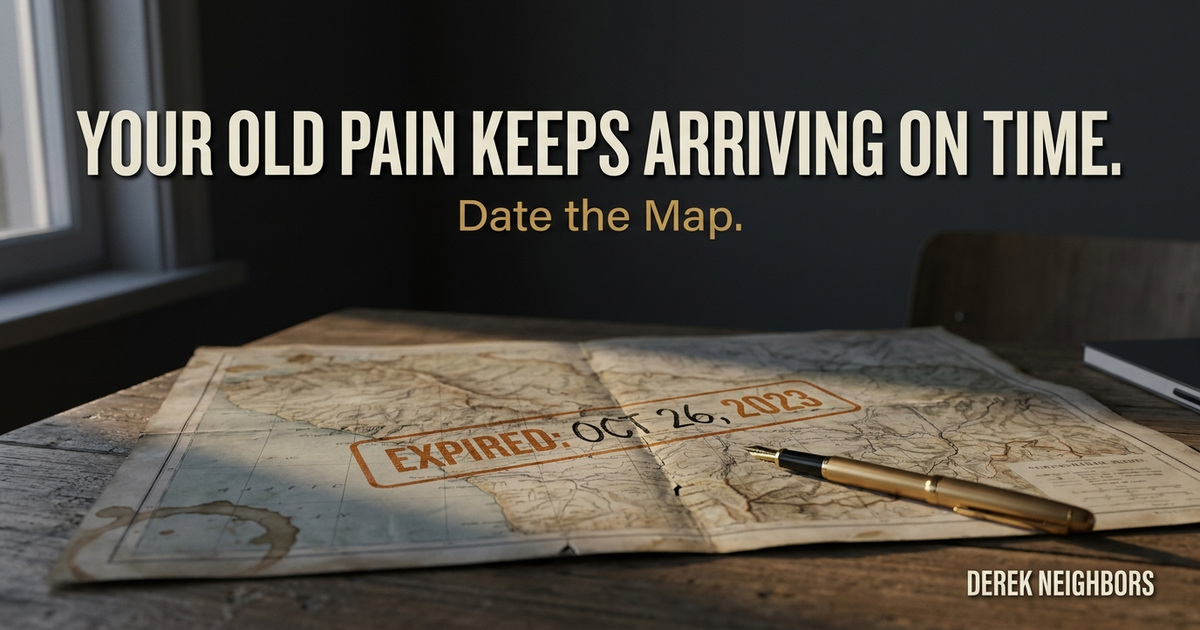
Your Old Pain Keeps Arriving On Time. Date the Map.
Korzybski said the map is not the territory. The harder problem is the undated map: a reaction that was right once and still fires on a present that has changed. Date the impression before you grant it authority.
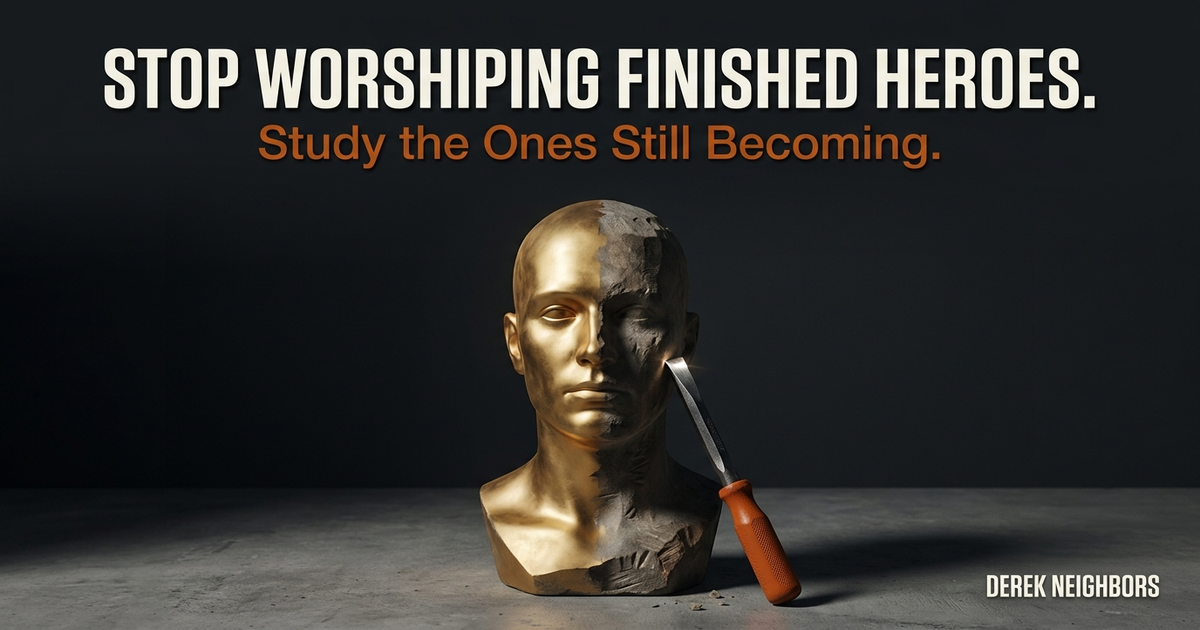
Stop Worshiping Finished Heroes. Study the Ones Still Becoming.
Polished heroes erase the path. Study the unfinished ones whose bad days are still visible, and you get permission to keep swinging instead of waiting to feel finished.
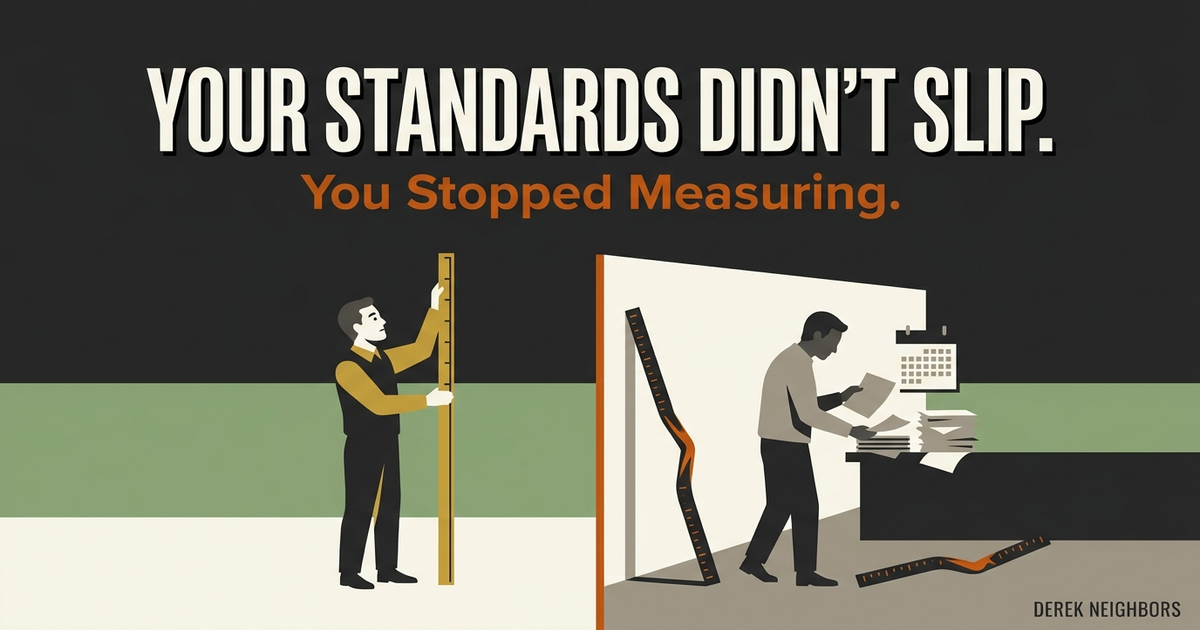
Your Standards Didn't Slip. You Stopped Measuring.
After the win you stopped looking at the bar, kept a fluent story about why, and called the soft week strategy. Rewards end. Standards renew. Measuring is the difference.
Hard Times Build Character. Easy Times Expose It.
Training virtue for hard times is the easy half. The real exam starts when constraints fall away and the only person who can stop you is you. Hard times build the muscle. Easy times tell you what the muscle was for.

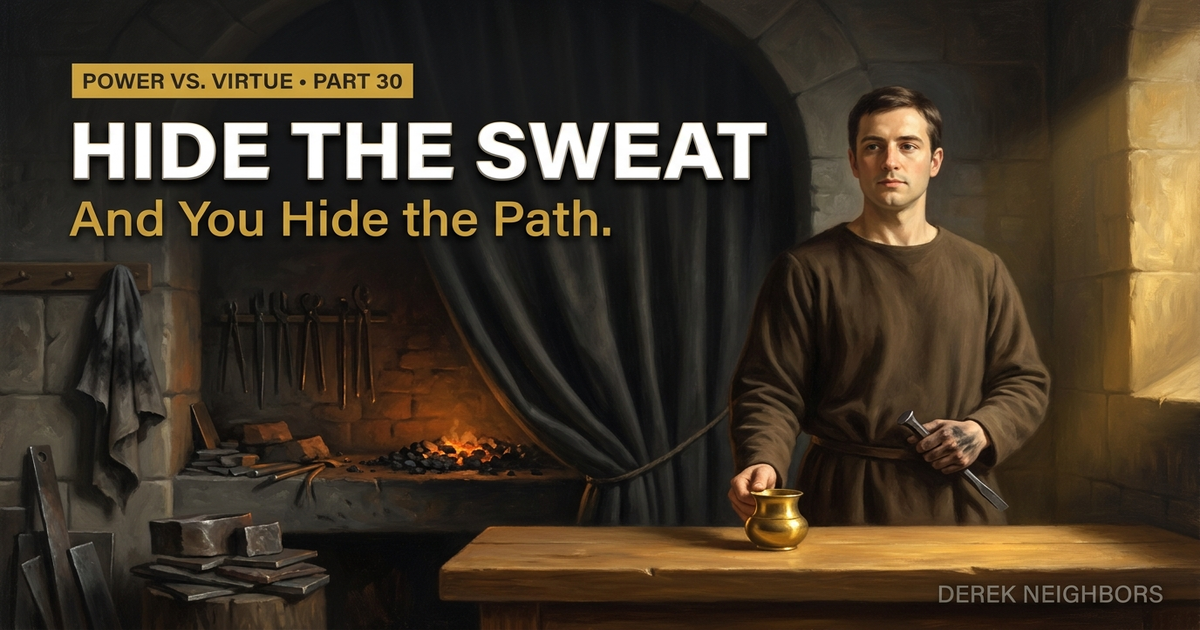
Hide the Sweat and You Hide the Path
Law 30 of the 48 Laws of Power tells you to make your accomplishments seem effortless. Hide the toil. Conceal the tricks. Act as if you could do much more. The tactical truth is real: audiences confuse rehearsal with weakness, and clean execution reads as competence. The character cost arrives when concealment becomes mystique. Juniors never see the path. Effort becomes shame. Your identity fuses to a costume of natural gift. The ARETE alternative is Castiglione's sprezzatura rebuilt on Greek hexis: earned ease from practice, ponos honored in the forge, techne that can still teach.
You Don't Need More Time. You Need Higher Stakes.
You keep shopping for more hours: earlier alarms, cleaner calendars, better tools. Seneca's diagnosis was sharper. Life is not short. Most of it gets wasted by people who do not feel its weight. A child, a diagnosis, a business with real customers compresses the day and somehow yields more. The compression did not steal the time. It exposed how much was already drifting. You need higher stakes, not another system.

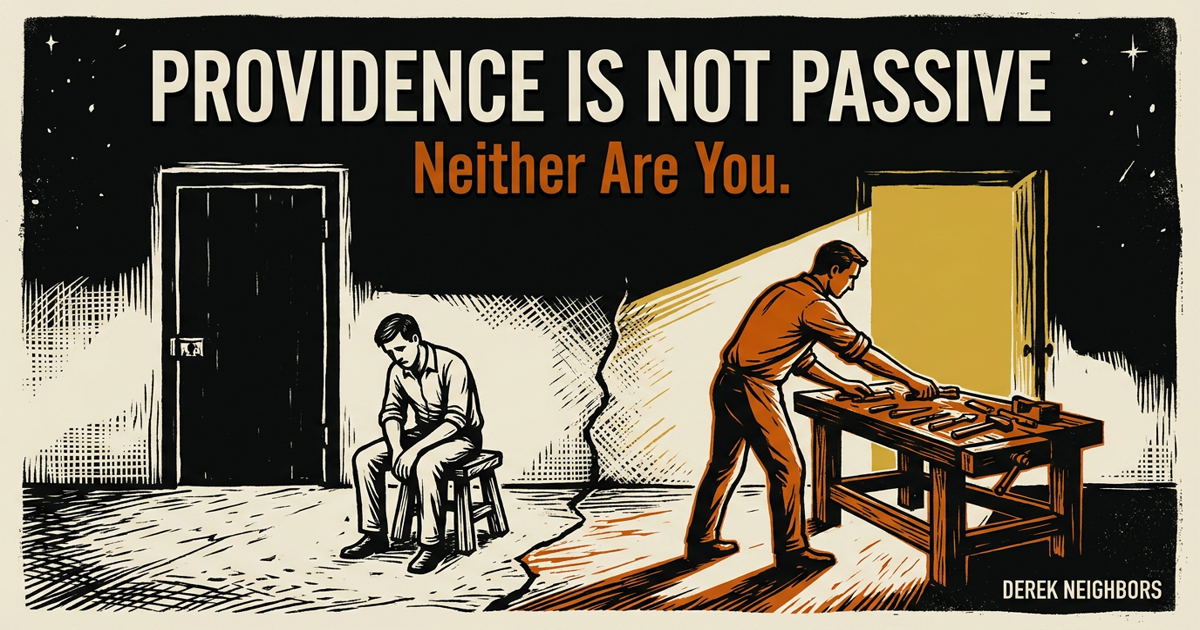
Providence Is Not Passive. Neither Are You.
Believing the universe is on your side means nothing if your calendar proves you are waiting. The Stoics welded trust in providence to being-at-work. Pronoia without energeia is costume. This is the challenge: meet the field armed, or stop calling the wait faith.
Recreate Yourself. Just Don't Mistake the Mask for the Self.
Law 25 of the 48 Laws of Power tells you to recreate yourself by seizing control of your image, becoming a memorable, protean figure who never bores the audience. The Greeks had a word for the thing you put on to face a crowd: prosopon, the mask an actor wore on stage. Greene's reinvention is mask-work, and a mask worn long enough fuses to the face. There is a real kind of self-recreation, but it runs the other direction. You forge the substance and let the appearance follow.
Your Response to Unfairness Reveals More About You Than the Unfairness Does
Three leaders take the same public hit. One escalates, one absorbs and redirects, one performs martyrdom for an audience. The unfairness was identical. The response was not. Between the stimulus and your reply lies the only territory where character actually lives, and most people never inspect what runs there.

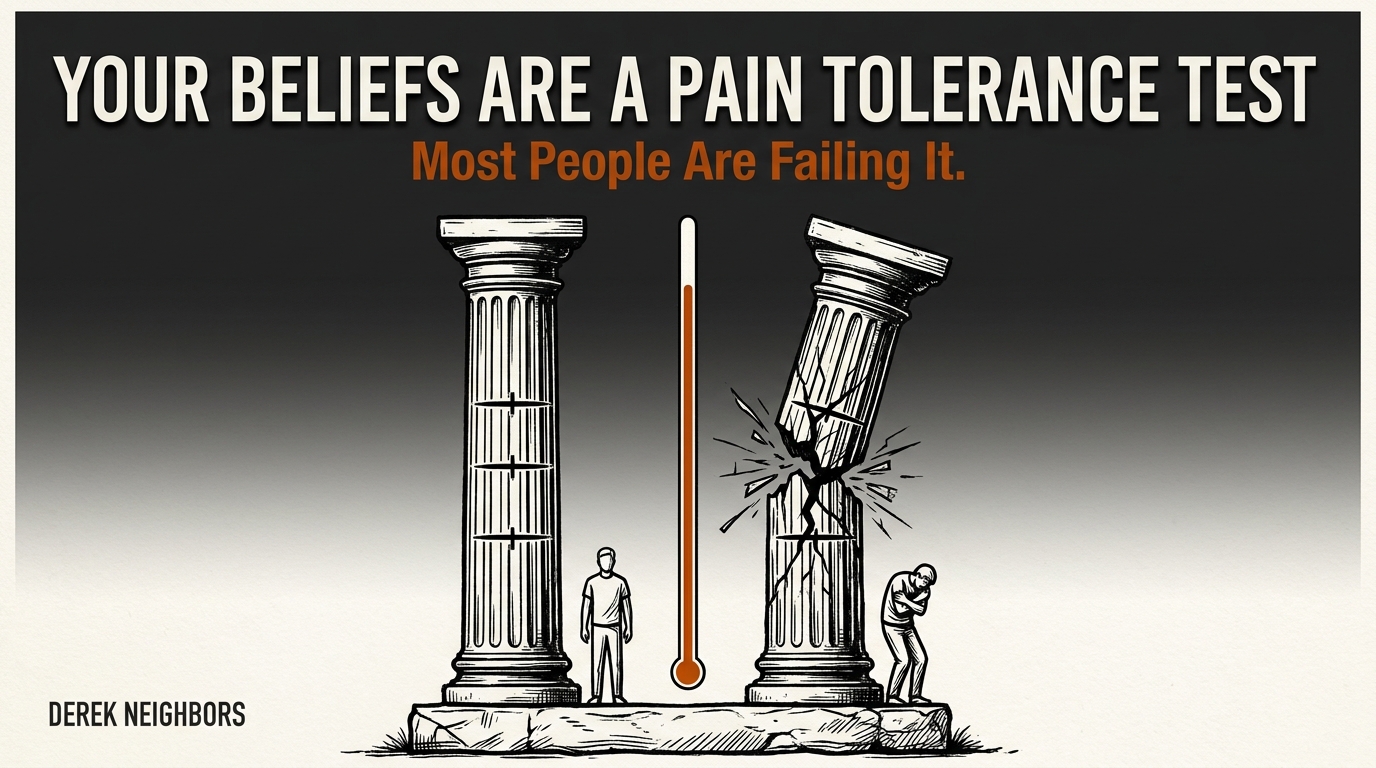
Your Beliefs Are a Pain Tolerance Test. Most People Are Failing It.
Two people take the same hit. Same diagnosis, same year, same loss of income. One keeps showing up. One disappears into the couch for six months. The difference is rarely willpower. It is the belief system running underneath, and belief systems can be scored. The Stoics built a scorecard without calling it that: internal control, suffering as training material, virtue as something worth the cost. Most modern frameworks fail on all three axes and then wonder why life feels unbearable.
The Story You Tell About Pain Decides How Much It Hurts
Two soldiers and two civilians take the same wound. The soldiers ask for less morphine. The injury is identical, so the difference is not in the tissue. It is in the meaning. Cicero spent a book on this, the Stoics built a whole practice around it, and modern pain science has now mapped the lever they were pulling. Pain has two parts: the signal the body sends and the story your mind wraps around it. The signal is mostly fixed. The story is not, and the story does most of the damage.

The Best People in Any Room Aren't Smarter. They See More.
Sit beside a top performer for a week and the myth dies fast. They are not smarter, not faster, not better credentialed. They notice what everyone else walks past. The Stoics named the practice prosoche, sustained deliberate attention. The Greeks distinguished aisthesis (sense-perception) from theoria (patient contemplative seeing) because the territory was that important. Modern life trains the opposite: scan, scroll, miss. The rare few who deliberately train their eyes catch the early signal, draw gratitude from what is already in front of them, and exert quiet influence in rooms where everyone else is performing. This is a ninety-day curriculum.
You're Not a Blank Slate. You're a Block of Marble.
The self-development industry treats you as a blank slate waiting for a better blueprint, so you keep importing other people's designs and calling it growth. The Greeks worked from the opposite premise. Pindar told his readers to become who they are, having learned it. The Stoics built a whole theory, oikeiosis, around development as progressive alignment with your own nature. Michelangelo said the figure already lives in the marble. The question isn't who you should become. It's who is already in the stone, and what has to come off.

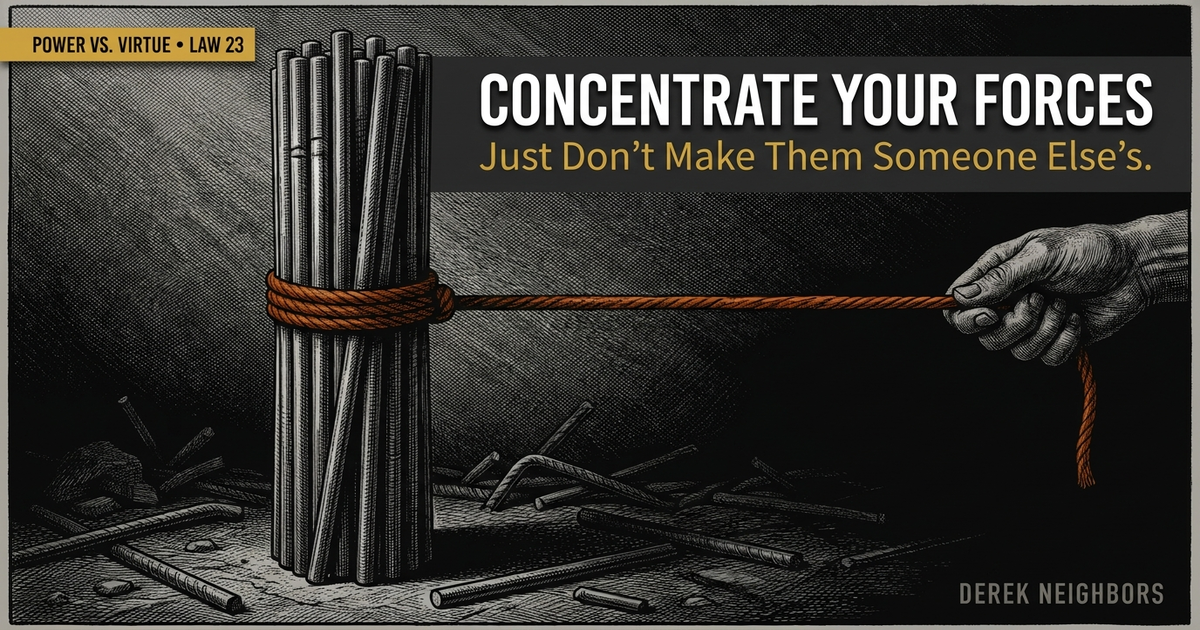
Concentrate Your Forces. Just Don't Make Them Someone Else's.
Greene's Law 23 welds two opposite ideas together. Concentrate your forces at their strongest point is some of the most virtue-aligned advice in the book. Find the one patron, the fat cow to milk, is the trap. Both feel like focus. One builds a foundation you own. The other lends your forces to a hand that can drop you.
Carry a Hundred Pounds Up a Mountain. Your Worry List Won't Fit.
Modern comfort has gifted the average mind enough idle capacity to host a daily inventory of anxieties, resentments, and dreads that primitive life would not have permitted. Malakia is the Greek word for the moral failure this produces, softness as a settled disposition that organizes a life around the avoidance of effort. The cure is not therapy or another book. It is the deliberate, repeated practice of putting a real load on the body, large enough and long enough that the simulated load in the mind cannot fit on the climb. Askesis as training. Ponos as productive toil. The pack on the back is not penance. It is the cure for the part of the mind that was about to be eaten by the surplus capacity comfort produces.

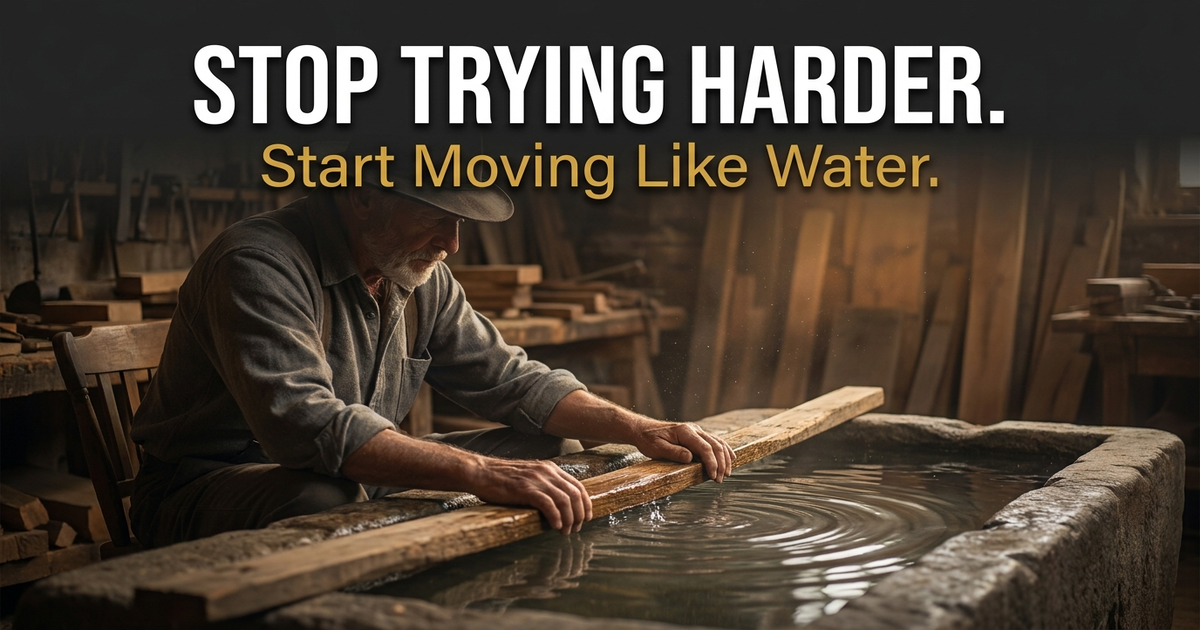
Stop Trying Harder. Start Moving Like Water.
The mythology that says excellence comes from gripping tighter is a Western misread of how skilled humans actually perform. Four hundred years ago, a swordsman named Miyamoto Musashi described the working stance every senior craftsman, surgeon, musician, and distance runner eventually finds: mizu no kokoro, the water mind. Alert without rigidity. Fitted to the moment. Impossible to tense up. The novice grips. The master flows. This is the investigation into why, and the training that gets you across the threshold.
You Don't Need More. You Need to Strip Your Life Down on Purpose.
We have engineered constraint out of ordinary days and cannot understand why ordinary days no longer move us. The ancient world knew the answer. They built deliberate practices around removing inputs, not adding them. The Sabbath was an amputation. Askēsis was training. Autarkeia was the freedom of needing less. This is the protocol for a thirty-day voluntary sabbath that gets the meaning back into the small things you have stopped noticing.
Knowing Better Doesn't Make You Better. Most Self-Help Stops at Step One.
The reader who has read seventy books on character is roughly the person they were five years ago. The gap is not a willpower failure. The gap is a method failure. Epictetus described the three-stage path that produces formed character, and the modern self-improvement industry has built a market by pretending the last two stages are optional.
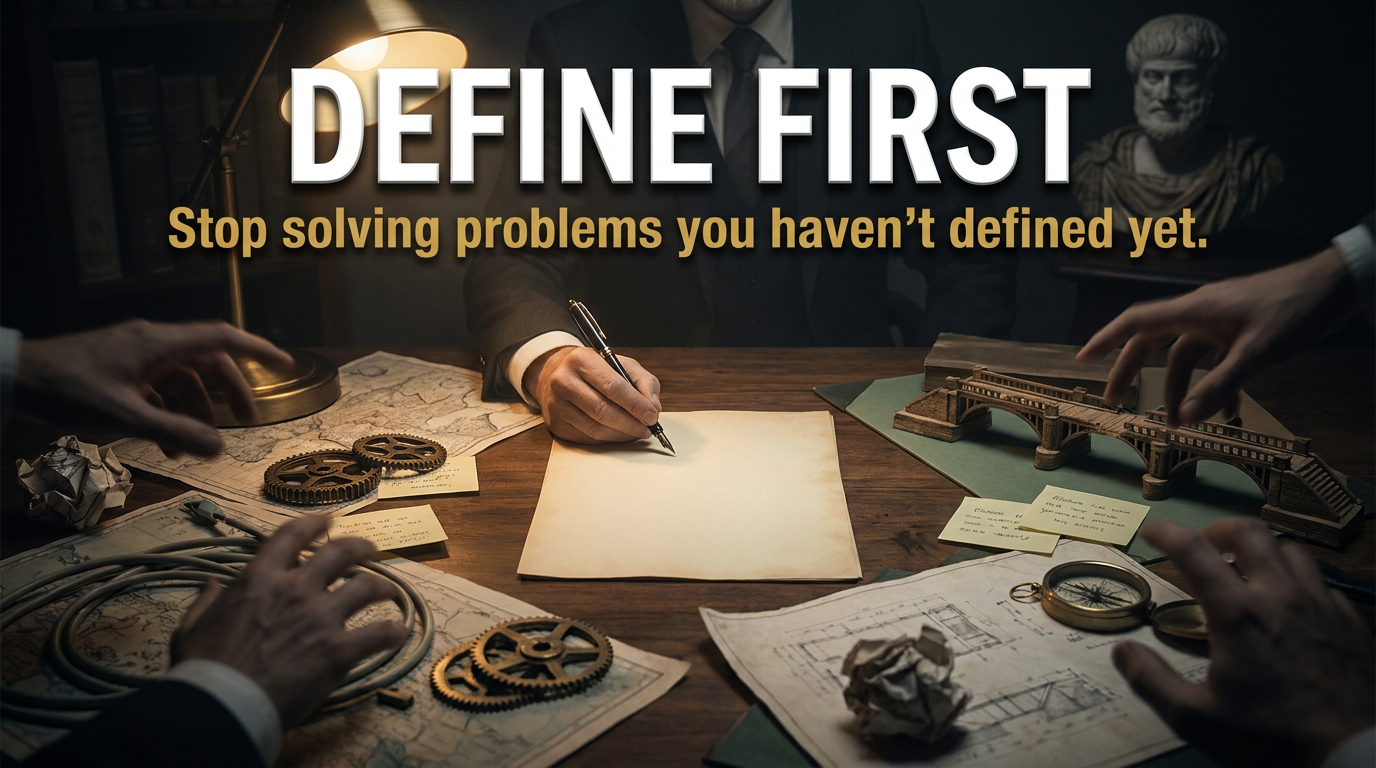
Stop Solving Problems You Haven't Defined Yet
Motion feels responsible. Definition feels slow. That is why so many teams spend weeks solving symptoms with impressive energy while the real problem keeps reproducing itself underneath the work.
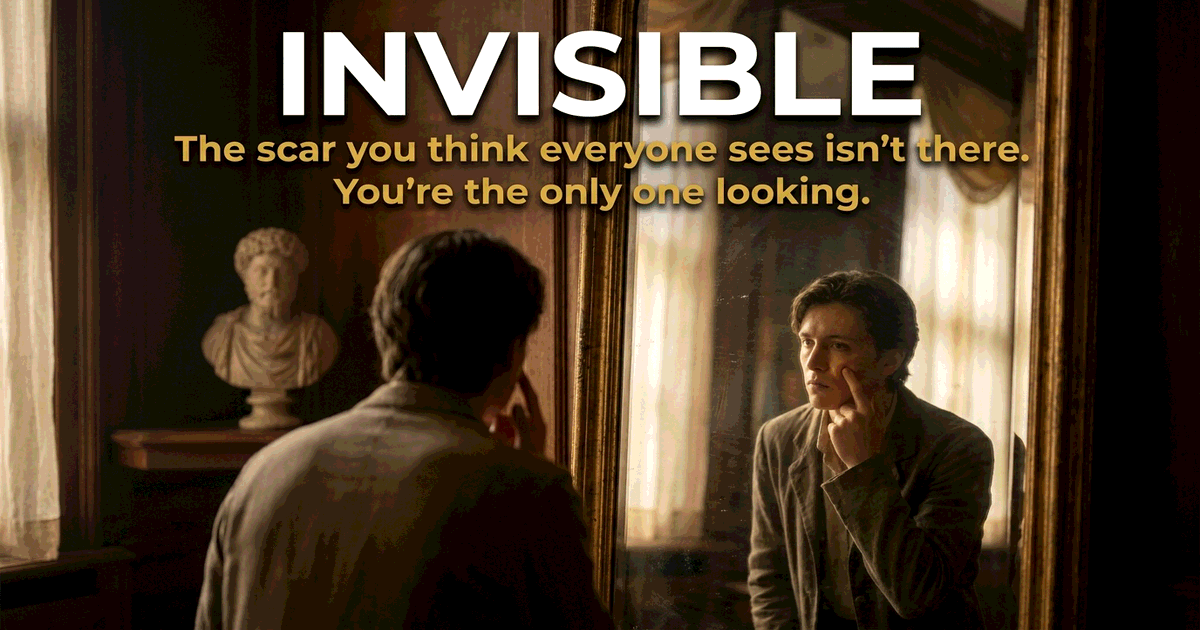
The Scar You Think Everyone Sees Isn't There. You're the Only One Looking.
You assume your perception of how others treat you is data. A famous psychology experiment, and a much older Stoic discipline, both say it isn't. Most of what you think the room is responding to is being generated by the filter you brought into the room.
Your Old Job Is Still Running You. You Just Don't Work There Anymore.
You left the job four years ago. The wiring didn't leave with it. Calm feels suspicious. Rest feels like falling behind. You manufacture deadlines that don't exist. Drive doesn't explain that. Years of corporate conditioning do.

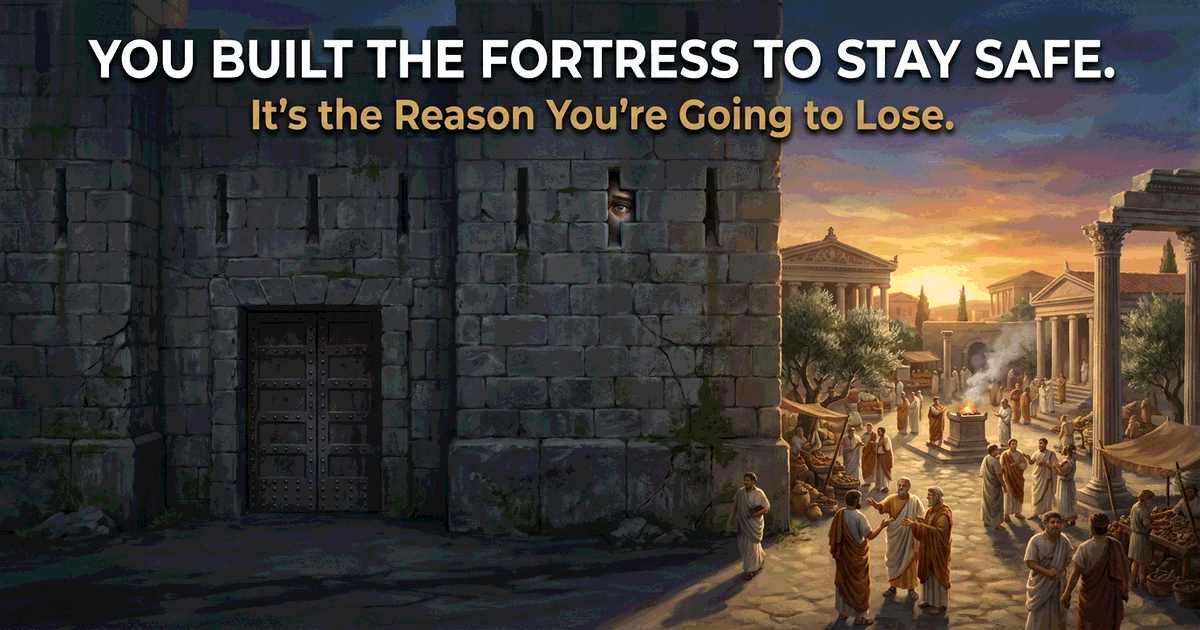
You Built That Fortress to Stay Safe. It's the Reason You're Going to Lose.
Greene says don't build fortresses because they make you a target. The Greeks had a deeper warning: humans were never built for life behind walls. The word for someone who isolated was idiotes.
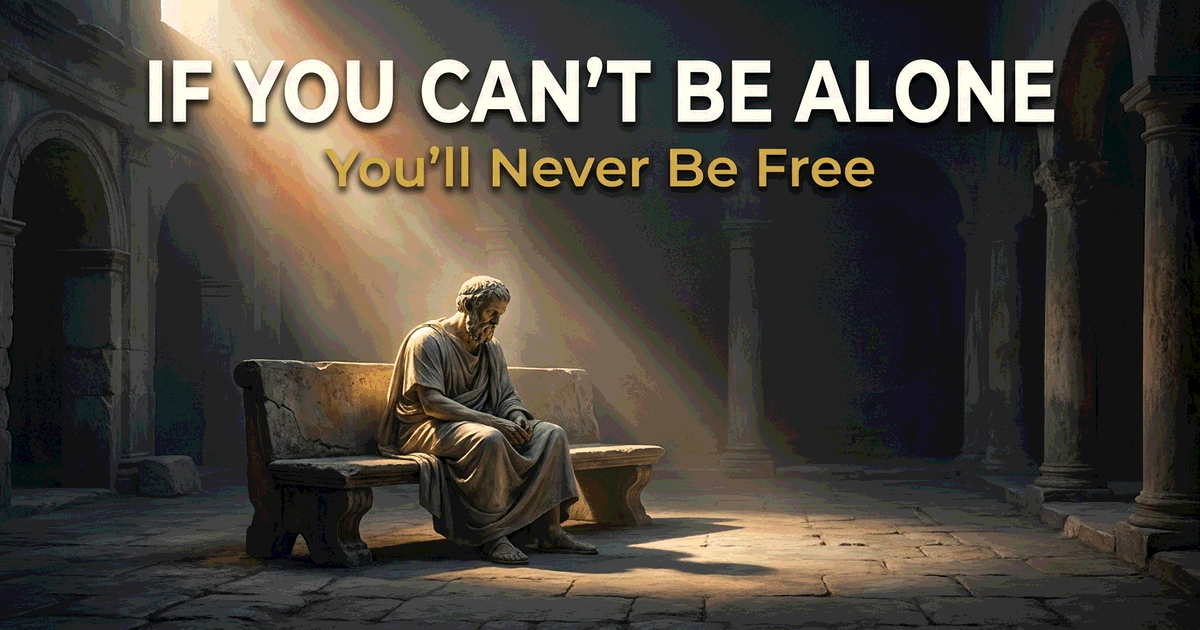
If You Can't Be Alone, You'll Never Be Free
Most people skip the foundation and wonder why their freedom feels so hollow. Schopenhauer named the prerequisite. The Greeks named the practice. You have been arranging your life to avoid both.
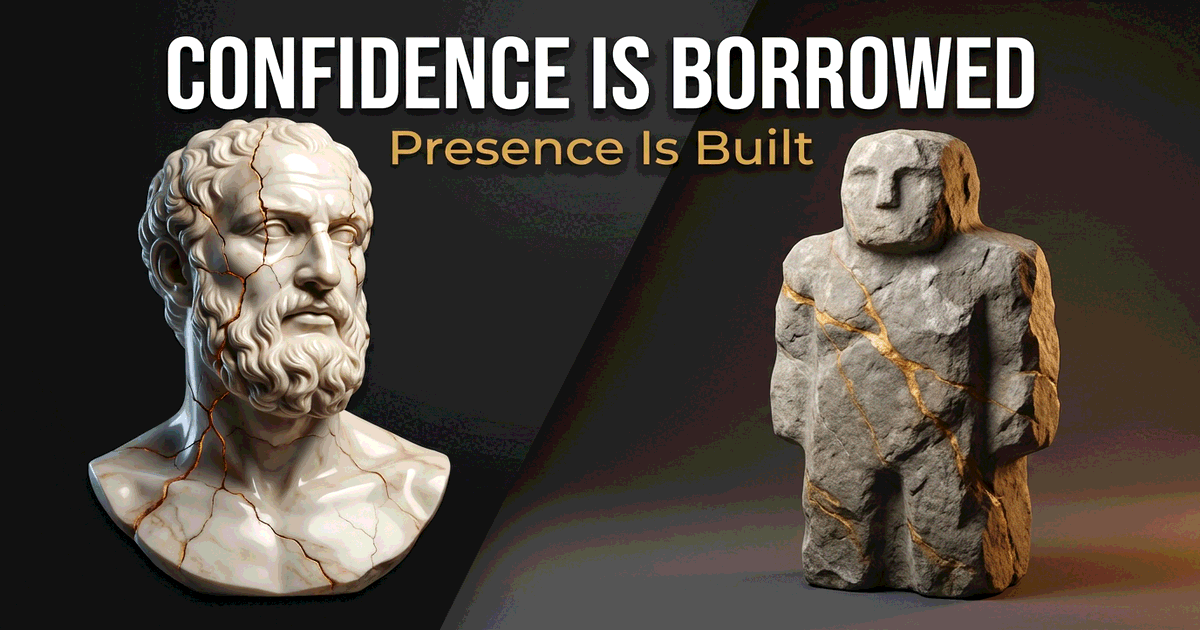
Confidence Is Borrowed. Presence Is Built.
The confidence industry sells you something that expires. The Greeks pursued something better: the capacity to be fully here regardless of what happens next.
One Slip Doesn't Set You Back a Day. It Sets You Back Months.
You tell yourself one day off won't matter. But momentum doesn't degrade on a schedule. It collapses. And the rebuild costs more than you think.
Deep Work Is Dying. The Few Who Protect It Will Run Everything.
In a world engineered to fragment your attention, the ability to think deeply about one problem for two hours has become a competitive advantage so rare it borders on superpower. The ancients called this capacity technē. We forgot it. Time to remember.
You Know Exactly What You Don't Want. That's Why You're Stuck.
Ask someone what they want and watch them struggle. Ask what they don't want and the words pour out. All that clarity is pointed backwards, and it's the reason you can't move forward.
If You've Never Questioned Your Beliefs, You Don't Actually Hold Them
Cicero's Academic Skeptics didn't doubt because they were weak. They doubted because they understood something about conviction that most people never will. Unexamined certainty disguises itself as strength while producing the brittleness that shatters under the first real challenge.
Stop Calling Your Anger Righteous. It's Still Controlling You.
Marcus Aurelius argued that kindness requires more courage than fury. The Stoics rejected righteous anger as philosophy's most dangerous illusion, and modern neuroscience proves them right.
You Don't Want to Change. You Want to Feel Better.
You've read the books, hired the coach, attended the retreat. Six months later, the same patterns are running. The same conflicts repeat. The vocabulary improved. The behavior didn't. The effort was real. The misunderstanding was deeper: what change actually requires.
Solomon's Paradox: The Psychology of Being Wiser for Others Than Yourself
You dispense clarity to friends while drowning in your own confusion. Modern psychology calls it Solomon's Paradox. The ancient Greeks had a practice to fix it.
Why Arguing Your Point Is Always a Losing Strategy
For the second time in this series, Greene and the ancient philosophers agree. Demonstrate, don't argue. But they agree for different reasons, and the difference reveals whether you're performing power or practicing excellence.
The Most Powerful Thing You Can Say Is Nothing
For the first time in this series, Greene and the ancient philosophers agree. Say less. Mean more. But they agree for different reasons, and the difference reveals everything about power versus virtue.
Hats, Haircuts, and Tattoos: Why You're Making Every Decision at the Wrong Speed
Most people spend 45 minutes choosing a Netflix show and 20 minutes choosing a mortgage. The problem isn't indecision. It's miscalibration. Phronesis (practical wisdom) demands matching speed to stakes.

AI Is Making Life Easier. That Might Be the Worst Thing That Ever Happened to Us.
Three miles from anything, my calf seized. No Uber. No shortcut. Just pain and the choice to keep moving. AI is removing that choice from everything. And that might be destroying us.

Comfort Killed More Dreams Than Failure Ever Did
Everyone fears failure. Almost nobody fears comfort. The ancients understood why that's backwards. Comfort doesn't protect dreams. It suffocates them slowly while you're too numb to notice.

What If Your 'Personal Best' Is Actually Your Personal Belief?
Everyone treats their personal best as an objective measurement. But what if it's actually a prophecy? What if the limit you keep hitting is the limit you keep expecting to hit?
Why Voluntary Struggle Prepares You for Involuntary Battles
The conditions you train in are the conditions you're prepared for. Every voluntary struggle is a deposit against the involuntary battles life doesn't schedule.
The Momentum Machine: How Relentless Reps Turn Impossible into Routine
The difference between extraordinary achievement and constant restarting isn't talent or luck. It's whether you've built a momentum machine that runs even when motivation dies.
Stop Asking Why This Is Happening. Start Asking What It's Teaching.
The ancient Greeks understood something we've forgotten—every difficulty is training when you ask the right question. The shift from 'why me?' to 'what's this teaching?' changes everything.

Excellence Is Rented, Not Owned: The Rent Is Due Every Day
Grandma's cast iron pan lasted 60 years with daily care. My 'lifetime warranty' pan died in 18 months with neglect. Excellence isn't owned—it's rented. And the rent is due every single day.
Stop Waiting for Flow - Start Training It Like Every Other Skill
You can spend another year waiting for flow to happen, or you can spend the next 12 weeks training it like the ancient Greeks did, systematically, progressively, relentlessly.

Your Focus App Isn't Working: Stop Tracking Distractions, Start Training Focus
Your focus app was never designed to make you focused. It was designed to make you dependent. Real focus comes from training attention like a muscle, not from tracking every distraction and optimizing dashboards.
Akrasia: Why You Sabotage What You Know Is Right
You know exactly what you should do. You've known for months. So why aren't you doing it? The ancient Greeks had a word for this: akrasia, acting against your better judgment. And they understood it's the ultimate killer of excellence.
Why Trying Harder Makes You Worse (And How to Let Excellence Flow)
You built the conditions. You trained your attention. Now stop trying so hard. The excellence you're forcing toward shows up when you allow it to emerge.
Manage Attention, Not Hours: How to Do Work That Matters
You don't need more hours, you need cleaner attention. When you defend attention, deep work shows up and the needle finally moves.
Stop Chasing Flow. Build It.
Flow doesn't show up when you beg it. It shows up when you remove what blocks it. The people who hit flow states most aren't gifted, they're disciplined about building the right conditions.
The Reflection Stage: Where Wisdom Begins and Excuses Die
Prosoche, the Stoic practice of disciplined reflection—transforms raw experience into actionable wisdom. Part 7 of The Greatness Flywheel series shows how systematic reflection accelerates excellence by preventing repeated mistakes and compounding learning.
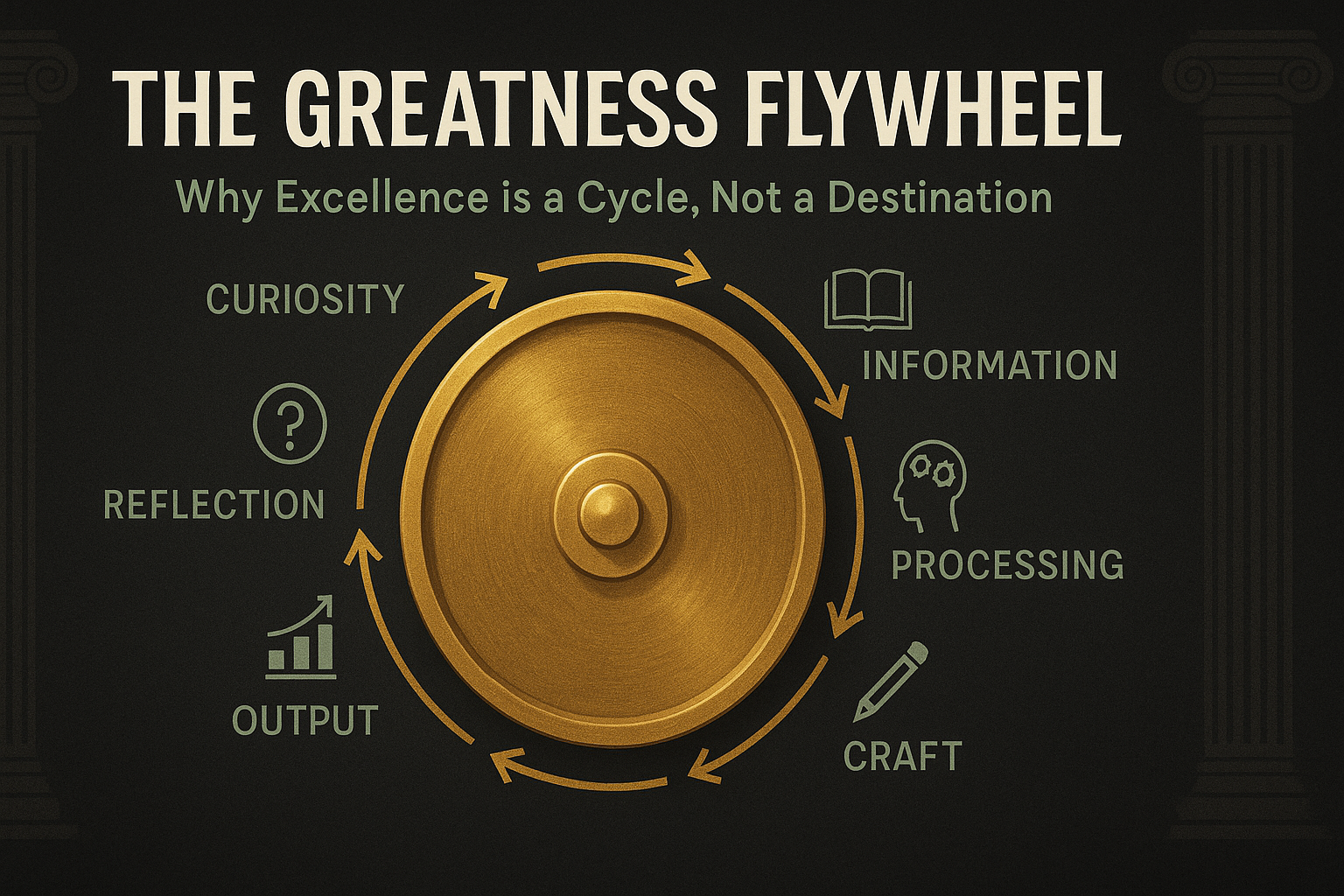
The Greatness Flywheel: Why Excellence is a Cycle, Not a Destination
Excellence isn't a destination you arrive at once and maintain through willpower. Excellence is a flywheel. The six-stage cycle that transforms ancient Greek wisdom into systematic excellence methodology.
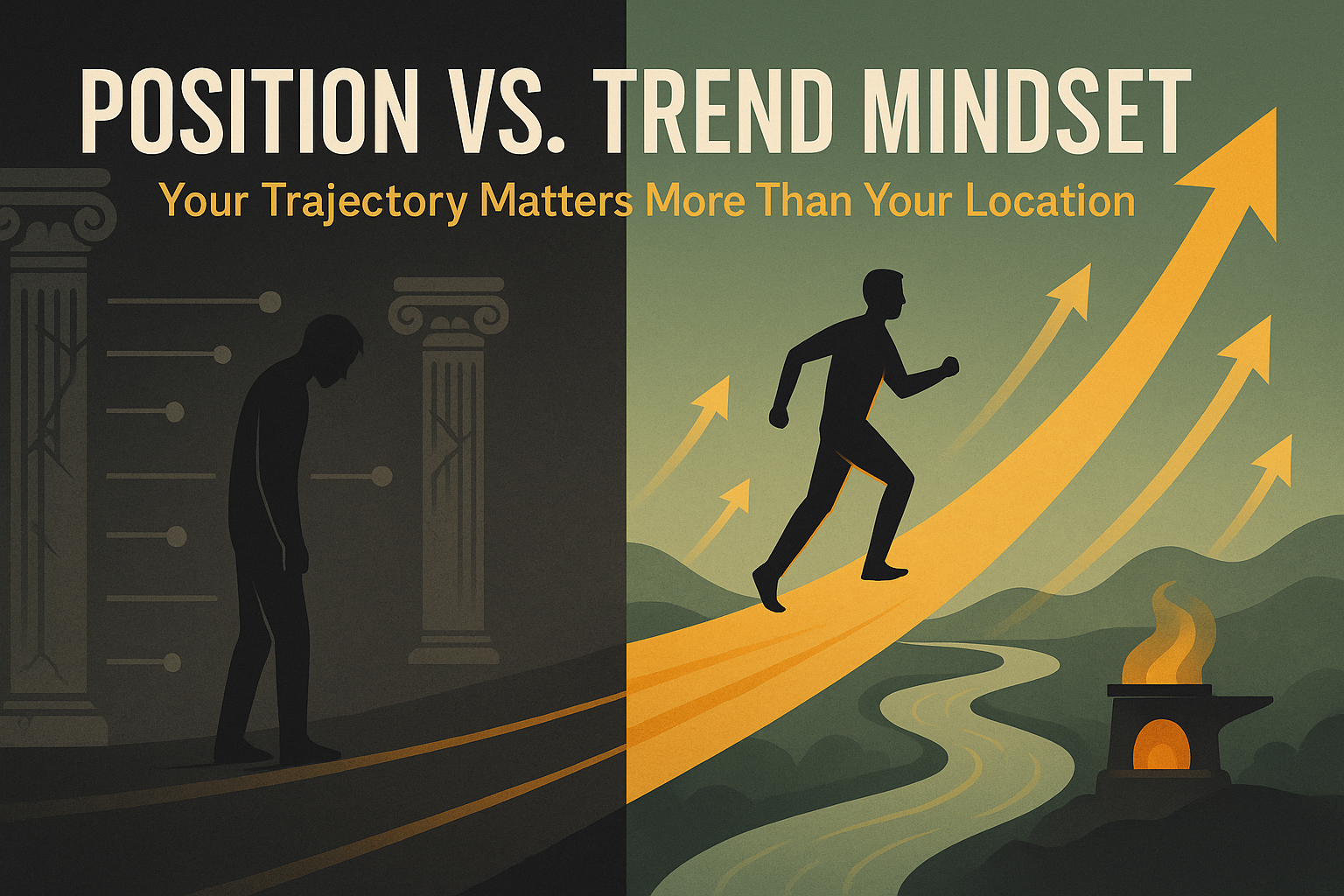
The Position vs. Trend Mindset: Why Your Trajectory Matters More Than Your Current Location
The fundamental difference between position thinking (comparing to others) and trend thinking (tracking your own trajectory). Why your direction matters more than your location.
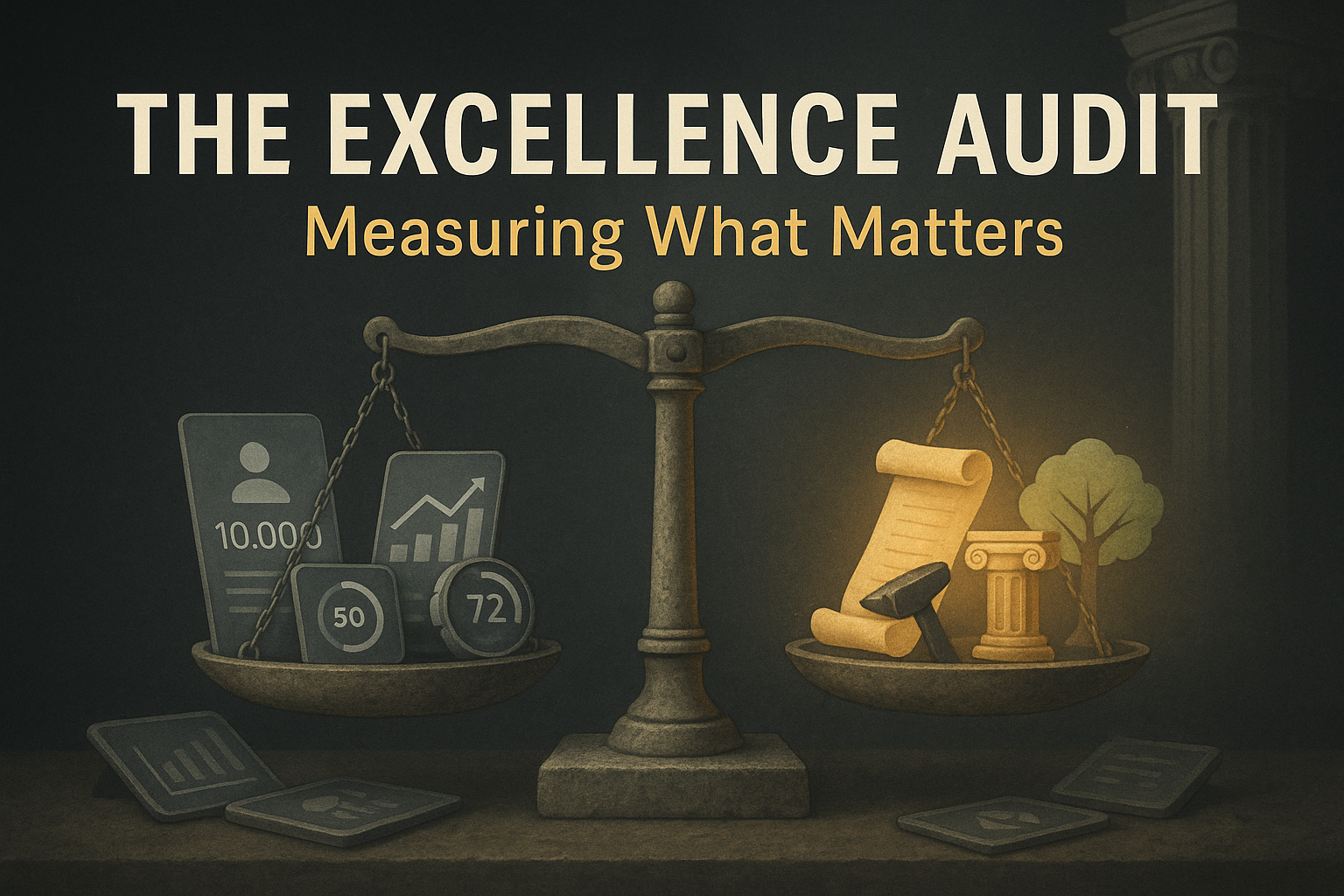
The Excellence Audit: Measuring What Matters
Most people track what's easy to measure rather than what actually drives excellence. Learn how to audit your metrics and ensure you're measuring character development, not just performance theater.
The Duty Doctrine: When Circumstances Change But Mission Remains
Your circumstances will change. Your duty will not. Discover how ancient Stoic wisdom provides unwavering guidance for modern leaders when everything else shifts.
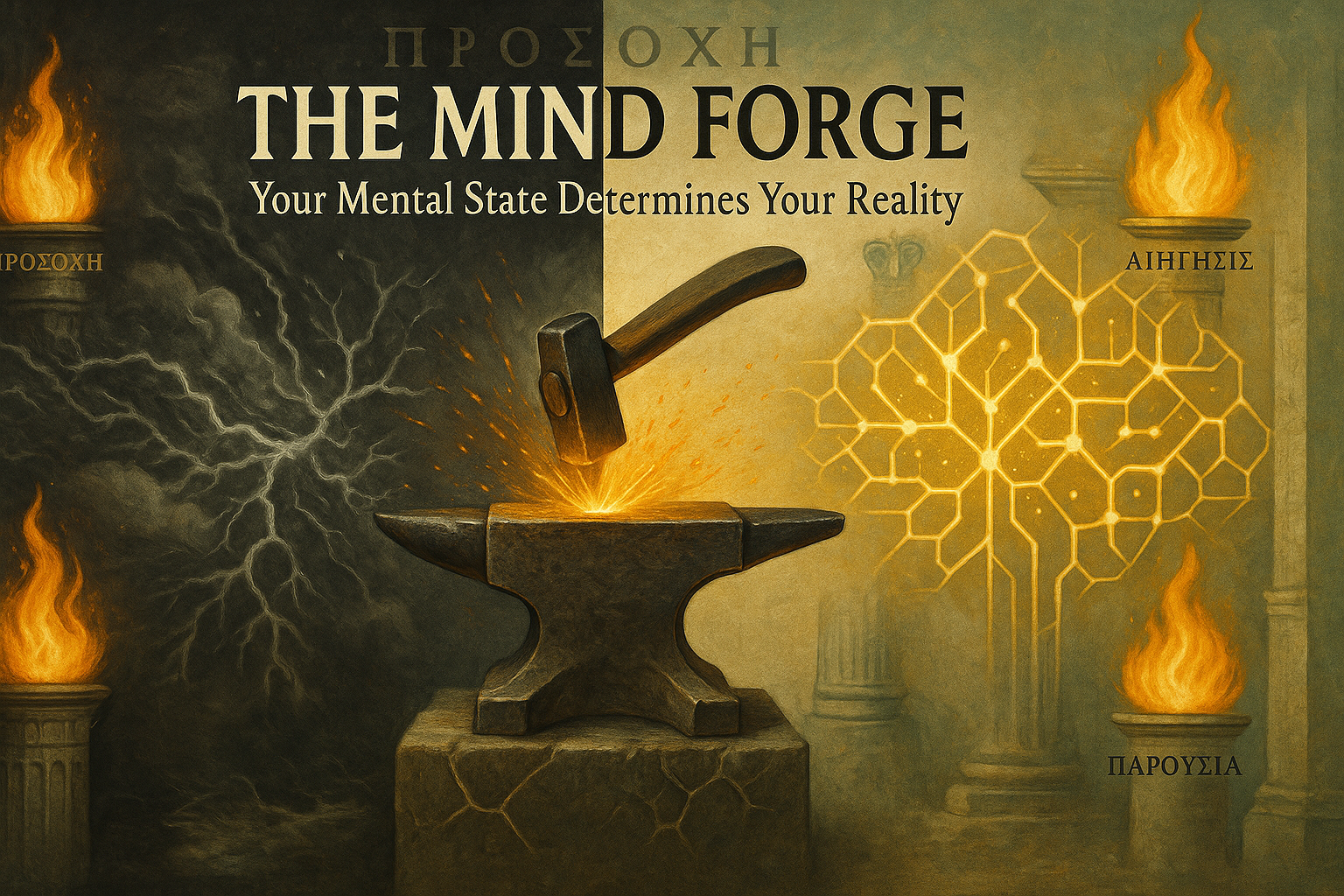
The Mind Forge: Why Your Mental State Determines Your Reality
Your mind is either your forge or your prison. The Stoics knew what modern neuroscience confirms: mental state determines reality. Here's how to forge mental excellence through the Four Furnaces framework.