Doxa vs Aletheia: Key Differences in Greek Philosophy
One of the oldest and most consequential distinctions in Western thought separates what people believe from what is actually the case. Doxa is belief, opinion, the human tendency to form convictions about the world based on perception, culture, and experience. Aletheia is truth, but in the Greek sense it carries a meaning that the English word misses: unconcealment, the process by which reality reveals itself when the coverings of appearance are stripped away. Parmenides drew this distinction at the very beginning of Greek philosophy in his poem, which presents two paths: the Way of Truth (aletheia) and the Way of Appearance (doxa). The Way of Truth leads to understanding of what genuinely is. The Way of Appearance leads through the shifting, unreliable world of human perception and belief. Parmenides was clear: most people walk the Way of Appearance and never know it. The relationship between doxa and aletheia is not simple opposition. Doxa is not inherently false. You can hold a true opinion. The problem is that doxa, by its nature, cannot guarantee its own accuracy. A belief that happens to be true feels identical to a belief that happens to be false. Both arrive with the same subjective conviction. Both feel like they are telling you how things really are. Aletheia, by contrast, is truth as disclosure, the moment when reality stands unconcealed before you. The difference is not between feeling certain and being uncertain. It is between seeing the surface of things and seeing through to what lies beneath. Heidegger’s reading of the Greek aletheia emphasized this active quality. Truth is not a static property of statements. It is an event, something that happens when concealment gives way to revelation. Every act of genuine understanding involves a struggle against the coverings that doxa naturally produces. Your culture conceals. Your habits of perception conceal. Your preferences and fears conceal. Aletheia is what remains when those layers are peeled back. The practical implication strikes at how you evaluate your own beliefs. If doxa forms naturally through the passive absorption of cultural norms, personal experiences, and the opinions of people around you, then your default cognitive state is one of concealment. You do not see reality. You see reality filtered through layers of interpretation. Reaching aletheia requires deliberate, sustained effort to question those layers. This is not a one-time achievement. The tendency toward doxa is constant, because new experiences generate new opinions, and new cultural pressures generate new concealments. The pursuit of aletheia is a practice, not a destination. You do not arrive at truth once and possess it permanently. You maintain it through the ongoing discipline of questioning what you believe and why you believe it.
Definitions
Doxa
(δόξα)
DOK-sah
Opinion, reputation, or common belief as distinguished from true knowledge (episteme). In ancient Greek thought, doxa represents the realm of appearance and popular perception—what most people believe to be true, which may or may not align with deeper reality.
Aletheia
(ἀλήθεια)
ah-LAY-thay-ah
Truth as unconcealment. Not merely accurate statements, but the fundamental orientation toward reality as it actually is, the state of being unhidden.
Key Differences
| Aspect | Doxa | Aletheia |
|---|---|---|
| Nature | Doxa is a human construct, shaped by perception, culture, experience, and the interpretive frameworks each person carries. It is how things appear to you. | Aletheia is reality itself unconcealed. It is not a human construction but the way things actually are when the layers of appearance have been removed. |
| Stability | Doxa shifts with perception, context, and social influence. What seemed true yesterday may seem false today as circumstances change or new information arrives. | Aletheia remains constant regardless of who perceives it or under what conditions. Truth does not depend on the observer's perspective or cultural moment. |
| Effort Required | Doxa forms naturally and passively. You do not need to work to have opinions. They accumulate through exposure to the world, often without deliberate reflection. | Aletheia requires active, disciplined inquiry. Uncovering truth demands that you question your assumptions, challenge your perceptions, and resist the pull of comfortable beliefs. |
| Social Dimension | Doxa is shaped by social consensus. Shared beliefs, cultural narratives, and popular opinion all contribute to forming individual doxa. Agreement makes doxa feel more reliable than it is. | Aletheia is independent of consensus. A truth that no one acknowledges remains true. A belief that everyone shares can still be false. The number of believers is irrelevant to aletheia. |
| Relationship to Action | Doxa can mislead because it offers no internal guarantee of accuracy. Acting on doxa means acting on beliefs that may or may not correspond to reality. | Aletheia provides a reliable foundation for action. When you act on truth rather than belief, your actions are grounded in the way things actually are, not in how they appear. |
Nature
Doxa is a human construct, shaped by perception, culture, experience, and the interpretive frameworks each person carries. It is how things appear to you.
Aletheia is reality itself unconcealed. It is not a human construction but the way things actually are when the layers of appearance have been removed.
Stability
Doxa shifts with perception, context, and social influence. What seemed true yesterday may seem false today as circumstances change or new information arrives.
Aletheia remains constant regardless of who perceives it or under what conditions. Truth does not depend on the observer's perspective or cultural moment.
Effort Required
Doxa forms naturally and passively. You do not need to work to have opinions. They accumulate through exposure to the world, often without deliberate reflection.
Aletheia requires active, disciplined inquiry. Uncovering truth demands that you question your assumptions, challenge your perceptions, and resist the pull of comfortable beliefs.
Social Dimension
Doxa is shaped by social consensus. Shared beliefs, cultural narratives, and popular opinion all contribute to forming individual doxa. Agreement makes doxa feel more reliable than it is.
Aletheia is independent of consensus. A truth that no one acknowledges remains true. A belief that everyone shares can still be false. The number of believers is irrelevant to aletheia.
Relationship to Action
Doxa can mislead because it offers no internal guarantee of accuracy. Acting on doxa means acting on beliefs that may or may not correspond to reality.
Aletheia provides a reliable foundation for action. When you act on truth rather than belief, your actions are grounded in the way things actually are, not in how they appear.
When to Apply Each Concept
When to Choose Doxa
Recognize doxa at work when you notice yourself accepting a claim because it is popular, comfortable, or repeated often. Doxa is not always wrong, but it requires testing before you can treat it as reliable. The moment you catch yourself believing something without being able to explain why, you have identified doxa in operation.
When to Choose Aletheia
Pursue aletheia when the cost of being wrong is high, when you are making commitments that depend on accurate understanding, or when you sense that your current beliefs may be protecting you from an uncomfortable reality. The pursuit of truth is uncomfortable precisely because it strips away the reassuring concealments that doxa provides.
Frequently Asked Questions
What is the difference between doxa and aletheia?
Doxa is belief or opinion, the cognitive state of accepting something as true based on perception and experience. Aletheia is truth in the Greek sense of unconcealment, reality revealing itself when the coverings of appearance are removed. Doxa may or may not correspond to reality. Aletheia is reality itself, disclosed through disciplined inquiry.
Doxa vs aletheia in Greek philosophy?
Parmenides drew the foundational distinction in his poem, presenting the Way of Truth (aletheia) and the Way of Appearance (doxa) as two paths of understanding. Plato built on this in the Republic's allegory of the cave, where prisoners mistake shadows (doxa) for reality (aletheia). The movement from doxa to aletheia became the defining task of Greek philosophical education.
What does aletheia mean vs doxa?
Aletheia literally means un-concealment or un-forgetting in Greek. It implies that truth is something covered over by default and must be actively uncovered. Doxa comes from the verb *dokein*, meaning to seem or to appear. Aletheia is what is. Doxa is what seems. The contrast between seeming and being runs through the entire Greek philosophical tradition.
How did Parmenides distinguish doxa from aletheia?
Parmenides presented his distinction as two paths a thinker can follow. The Way of Truth leads to understanding of what truly is: unchanging, unified, and complete. The Way of Appearance leads through the world as mortals perceive it: changing, multiple, and deceptive. Parmenides argued that most people never leave the Way of Appearance because they trust their senses, which present a world of change and diversity that conceals the deeper unity of being.
Articles Exploring Doxa or Aletheia (30)
When the Boss Speaks First, the Room Stops Arguing
You opened the incident review with your best guess and asked the room to push back. Nobody did, and you took the quiet as agreement. The engineer who had the real cause in a dashboard never said it, because after you spoke, saying it meant disagreeing with you. Rank does not have to overrule anyone. Going first is enough.
Soft Feedback Is Kind to You and Expensive to Them
You saw the problem ten minutes into the design review and said 'solid start, think about the failure cases.' They heard approval and built for three weeks on a design you knew was cracked. Softening the verdict spared you one bad minute. They paid for it in weeks, in a public correction, and in praise from you they can no longer trust. You kept the comfort and they got the bill.

Certainty Is How Ignorance Sounds Before the Work Corrects It
Two people answer the same question. One is sure. One says it depends, and names what it depends on. The room believes the sure one, and six weeks later the other one is cleaning it up. Certainty is a feeling, and it reports nothing about the world. Here is what the work does to it, and how to hear the difference.
If You Don't Say What It Means, Someone Else Will
The architecture review ran well. Real questions, real answers, on time. Three days later the team is building the thing you thought you had talked them out of. You were right in that room, and the version of it that survived into Monday was written by somebody else. A room never leaves with nothing.
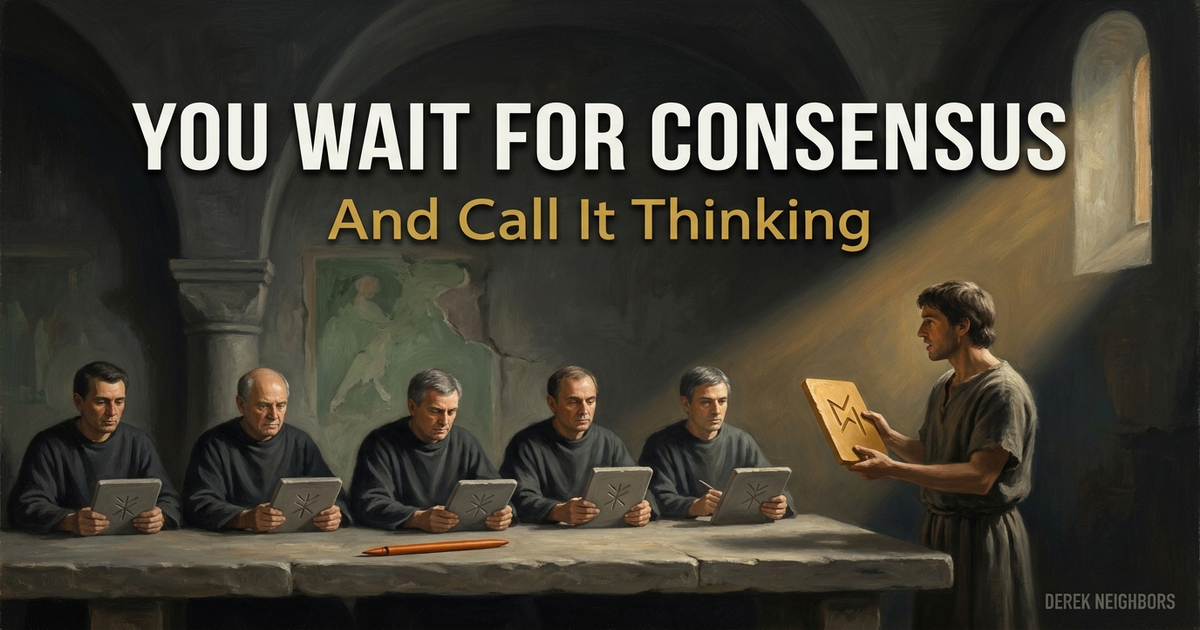
You Wait for Consensus and Call It Thinking
The original thought is already in the room. What is missing is the person willing to say it while it can still lose. Consensus is a tool. It is a poor substitute for a first speaker.
Play to Their Fantasies and You Train Them Off Reality
Law 32 of the 48 Laws of Power tells you to play to people's fantasies: become the oasis of romance in a harsh world, avoid ugly truth, and gain power from the hunger for soft stories. The tactical truth is real. Pleasant pictures gather crowds, and disenchantment makes people angry. The character cost arrives when fantasy becomes your operating system. You train judgment off reality. When the mirage breaks, you earn the rage. The ARETE alternative keeps hope aimed at a hard path people can walk, and restores frank speech that can still lead.

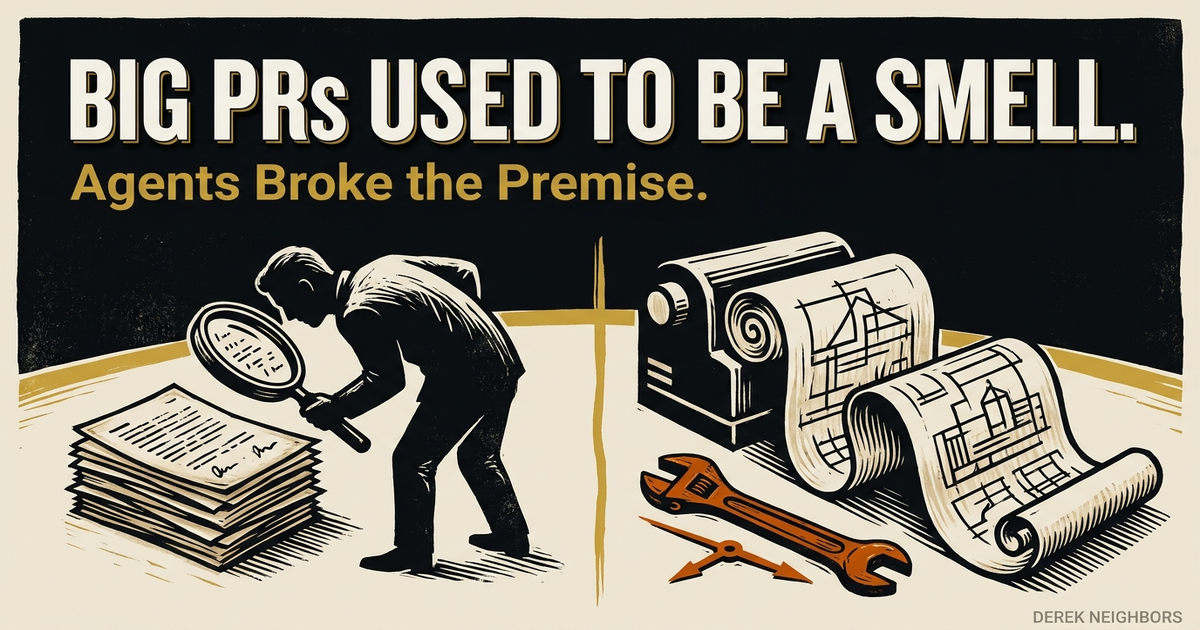
Big PRs Used to Be a Smell. Agents Broke the Premise.
A craftsman friend recoils at huge agent PRs. The disgust is real. The absolute rule is not. Small PRs protected human memory and slow forensics. Agents change both. Keep atomic commits and fast recovery. Stop worshiping line count as excellence.
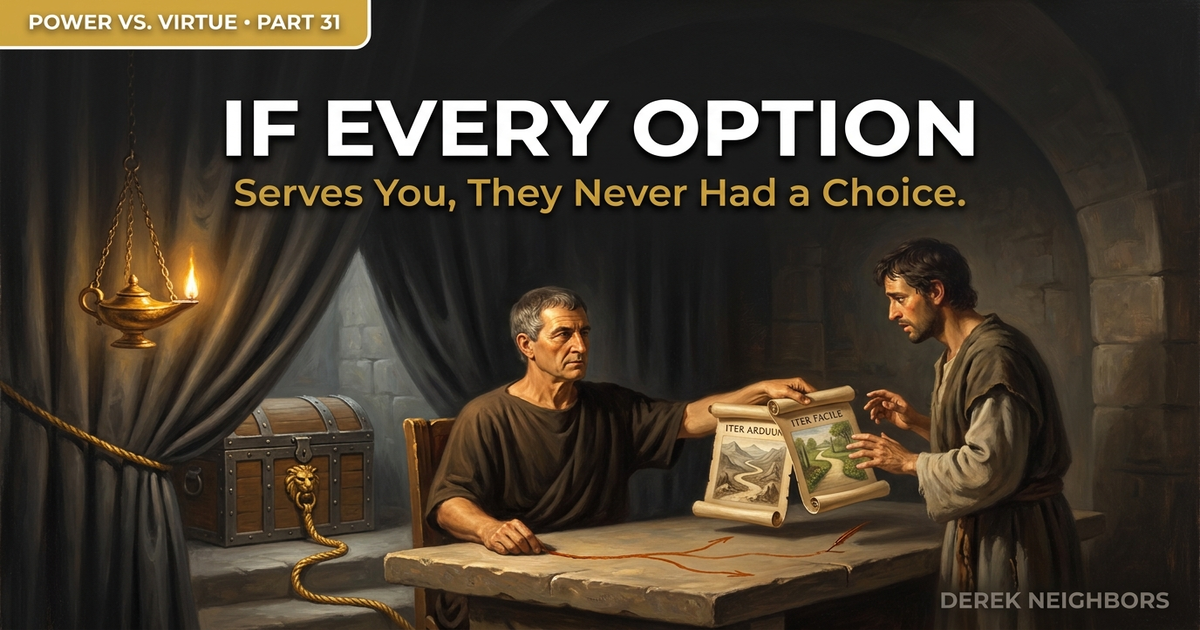
If Every Option Serves You, They Never Had a Choice
Law 31 of the 48 Laws of Power tells you to control the options: get others to play with the cards you deal. The tactical truth is real. Unstructured choice stalls rooms, and people defend outcomes they believe they chose. The character cost arrives when the menu is a rigged deck. Every door already belongs to the dealer. Discovery bankrupts trust. The operator trains contempt for other people's judgment. The ARETE alternative keeps framing as craft and restores real prohairesis: honest constraints, a shared end, and at least one exit that is not already yours.
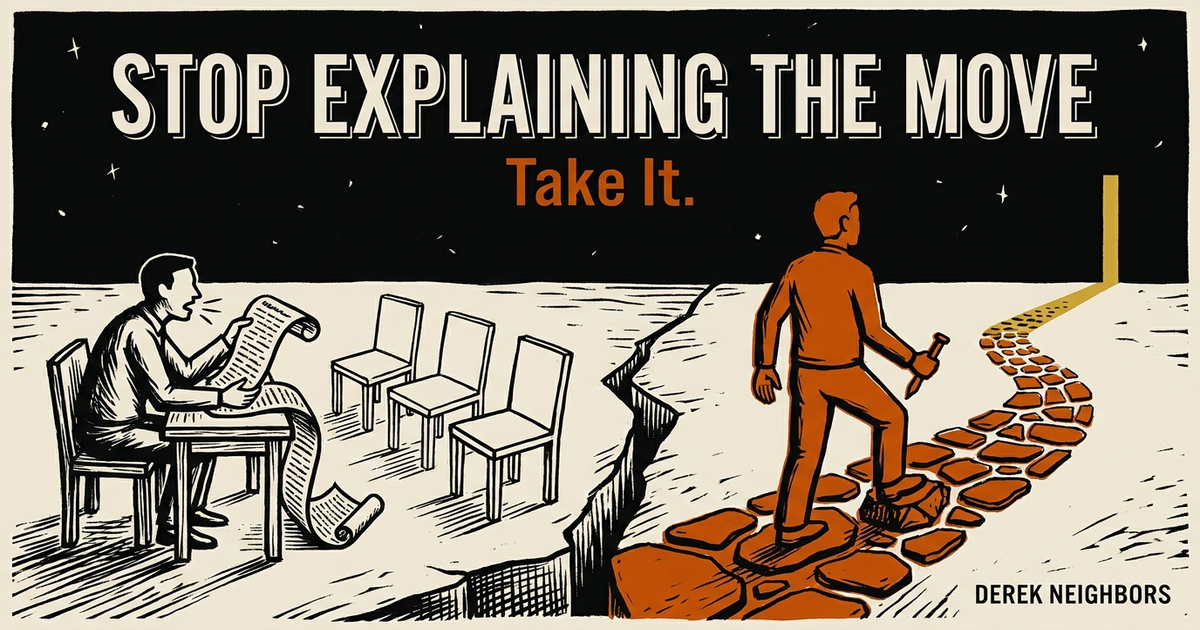
Stop Explaining the Move. Take It.
Preemptive defense feels responsible. It often spends the attention and nerve your practice needed. Ancient courage puts the step first and the account second, and only when an account is actually owed.
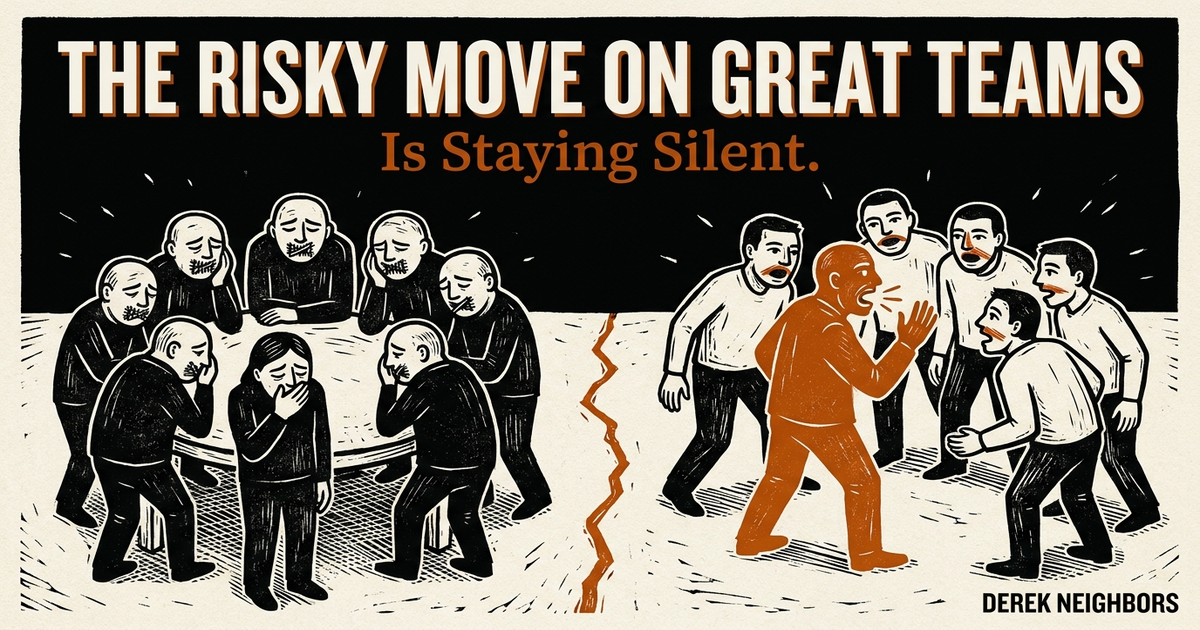
The Risky Move on Great Teams Is Staying Silent
Great teams do not wait for braver people. They install a ritual where declaring the miss is expected and staying quiet is the move that stands out. Calling a Safety is the pattern. Your calendar is the test.
Your Team Isn't Aligned. You Just Share Vocabulary.
The dangerous failure mode on a leadership team is not disagreement. It is the false agreement that arrives when everyone uses the same word and means something different. The plan looks aligned. It ships broken. The Stoics treated definition as the first act of clarity. Publish a glossary before you publish a strategy.

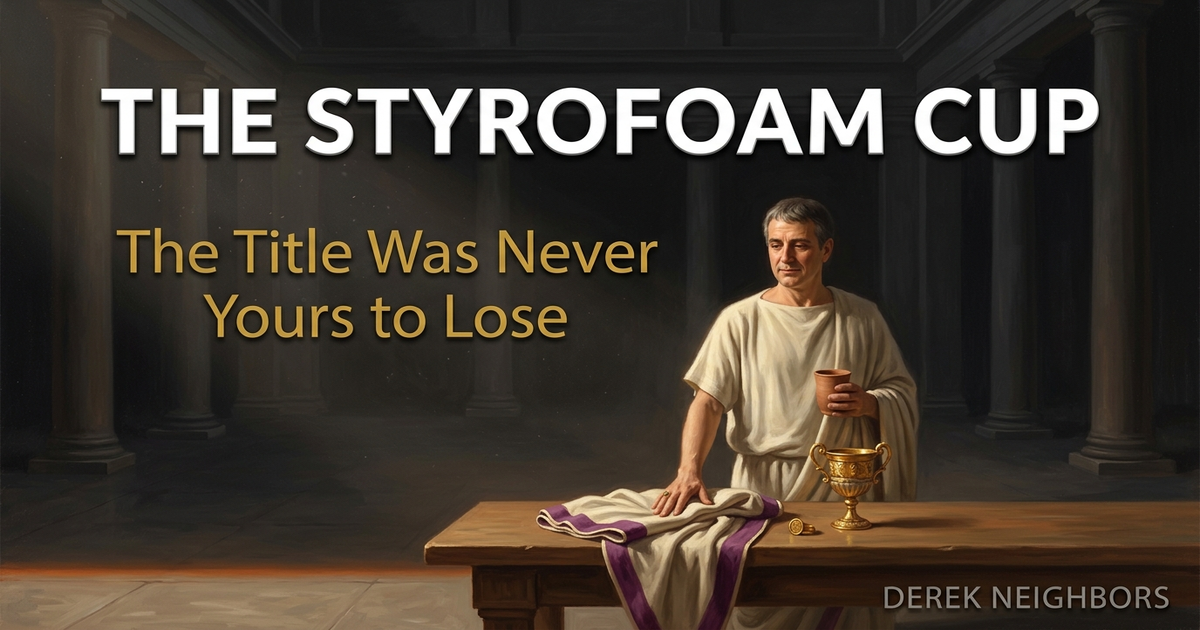
The Styrofoam Cup: The Title Was Never Yours to Lose
The ceramic cup, the car service, the upgraded seat, the jokes that got funnier with every promotion. All of it arrived as you rose, so it reads like a measurement of you. It never was. The deference is addressed to the chair, and the chair is on loan. The Stoics kept a running audit of exactly this, and the Greeks had a job title for the right way to hold borrowed power. Confuse the trappings for yourself and the confusion bills you twice: once while you hold the title, and once, brutally, on the day you hand it back.
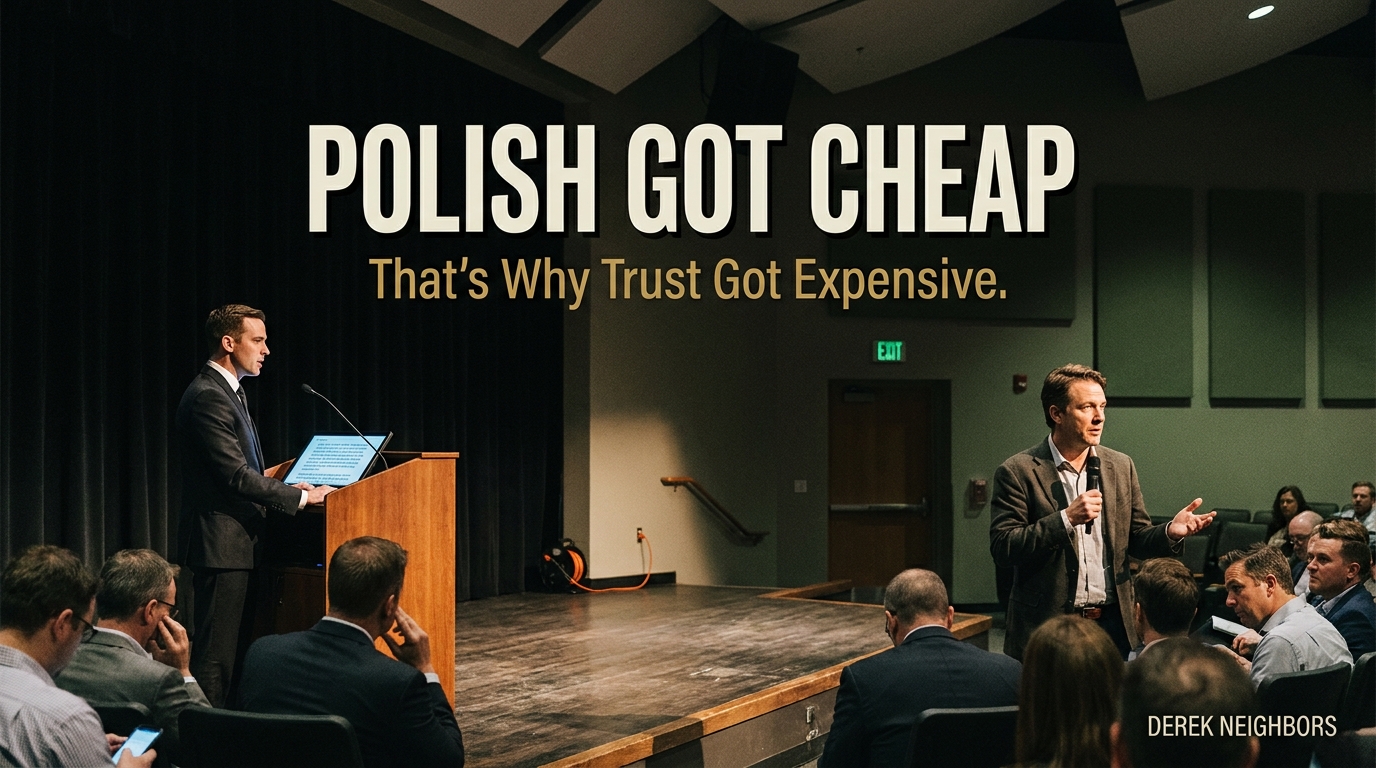
Polish Got Cheap. That's Why Trust Got Expensive.
A flawless apology used to mean someone sat with the weight. Now it often means someone was not in the room. AI made sounding right cheap, and audiences rewired what they trust: hesitation, disclosed uncertainty, and speech that could have embarrassed you.
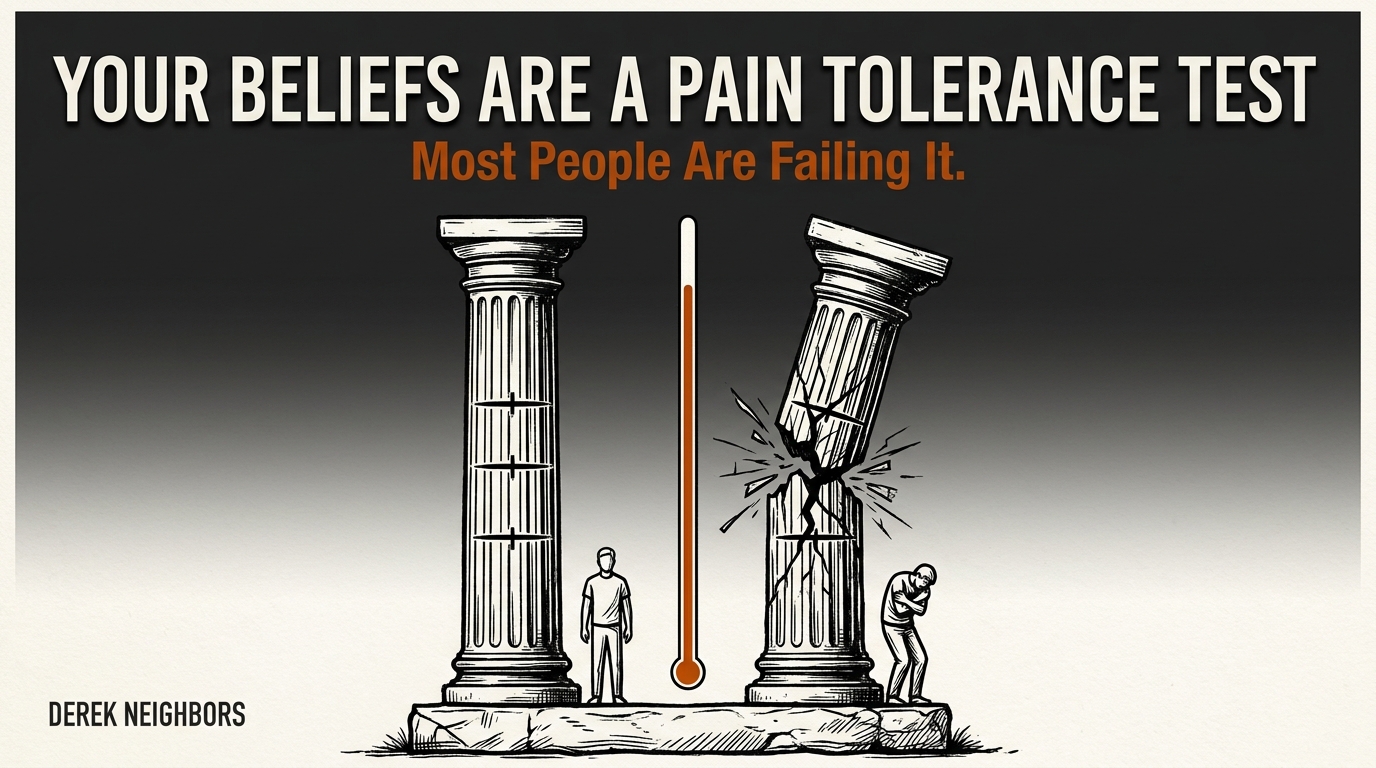
Your Beliefs Are a Pain Tolerance Test. Most People Are Failing It.
Two people take the same hit. Same diagnosis, same year, same loss of income. One keeps showing up. One disappears into the couch for six months. The difference is rarely willpower. It is the belief system running underneath, and belief systems can be scored. The Stoics built a scorecard without calling it that: internal control, suffering as training material, virtue as something worth the cost. Most modern frameworks fail on all three axes and then wonder why life feels unbearable.
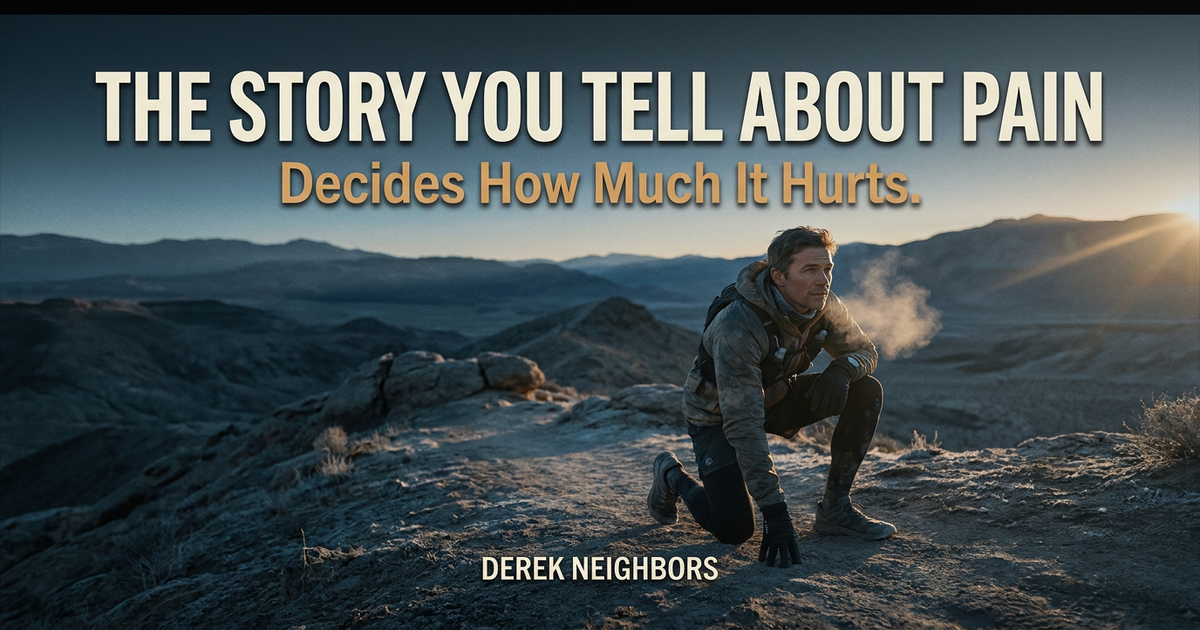
The Story You Tell About Pain Decides How Much It Hurts
Two soldiers and two civilians take the same wound. The soldiers ask for less morphine. The injury is identical, so the difference is not in the tissue. It is in the meaning. Cicero spent a book on this, the Stoics built a whole practice around it, and modern pain science has now mapped the lever they were pulling. Pain has two parts: the signal the body sends and the story your mind wraps around it. The signal is mostly fixed. The story is not, and the story does most of the damage.
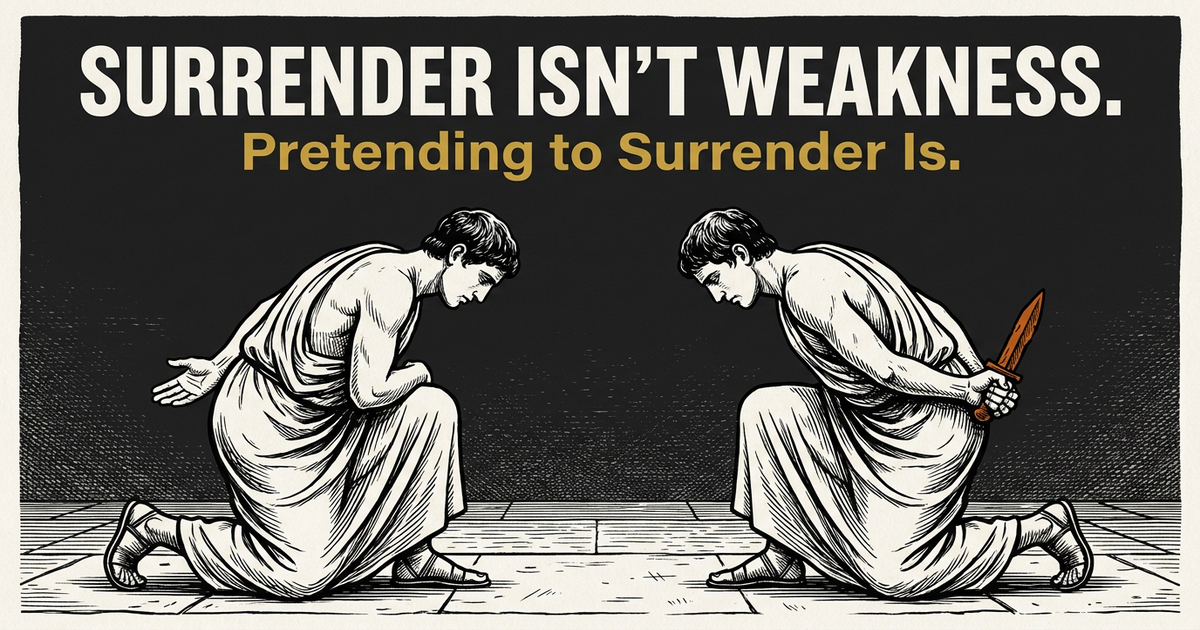
Surrender Isn't Weakness. Pretending to Surrender Is.
Greene's Law 22 tells you to surrender as a counter-trap. The tactic is real, and the Stoics knew the moves it copies. But Marcus Aurelius yielded to preserve his prohairesis. Greene's reader yields to spring an ambush. The heads can look identical; the ends diverge. The test that separates them is whether you could name, out loud, what you yielded for.
Acting Dumb to Get Ahead Works. Until You Can't Stop Acting.
Greene's Law 21 tells you to play the fool so your marks lower their guard. The tactic is real. The Greeks invented it. But Socrates played dumb to make people wiser, and Greene plays dumb to make people poorer. The mask is identical. The cost of running the wrong one is that you eventually cannot take it off.
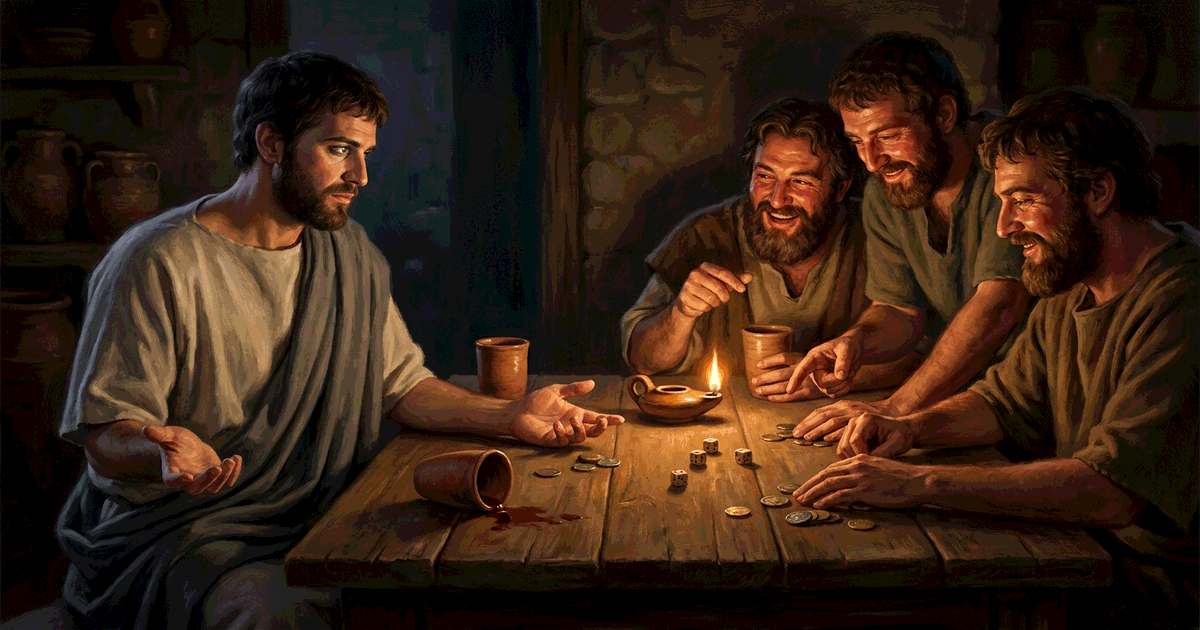
If Your Team Never Disagrees With You, You're Not Leading. You're Indoctrinating.
A team that always agrees with you is not aligned. It has been worn down. Most leaders are quietly running a sophistic operation, training reciters when they think they are developing thinkers. The Socratic test still applies, and most modern leaders fail it.

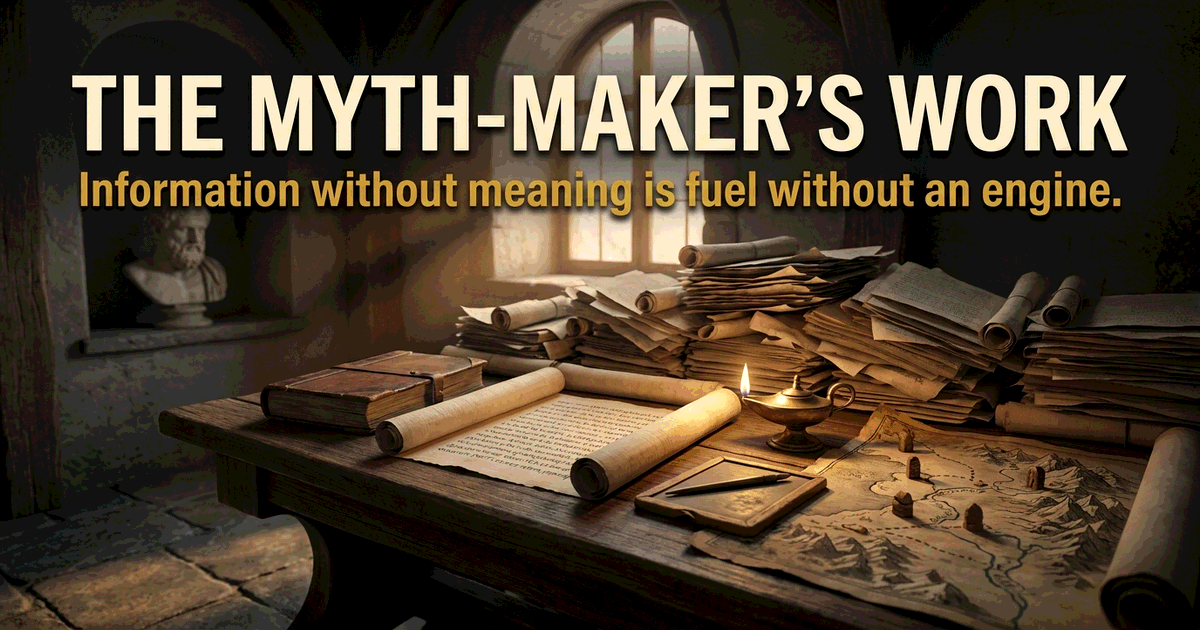
You're Drowning in Information and Starving for Meaning
We have more facts than any generation in history and less sense of what they mean. The ancient discipline of mythos, narrative meaning, is what turns information into direction. Without it, you are not informed. You are buried.
You Knew It Was Over Years Ago. You Just Couldn't Say It Out Loud.
The truth shows up in a thirty-second moment with no audience. Most people register it, file it, and spend the next five years pretending they didn't. The years of pretending are the actual cost.
If You've Never Questioned Your Beliefs, You Don't Actually Hold Them
Cicero's Academic Skeptics didn't doubt because they were weak. They doubted because they understood something about conviction that most people never will. Unexamined certainty disguises itself as strength while producing the brittleness that shatters under the first real challenge.
Solomon's Paradox: The Psychology of Being Wiser for Others Than Yourself
You dispense clarity to friends while drowning in your own confusion. Modern psychology calls it Solomon's Paradox. The ancient Greeks had a practice to fix it.
The Most Dangerous Liars Tell the Truth
Greene says use selective honesty and generosity to disarm your victim. The Greeks say truth spoken from calculation corrupts the speaker, the listener, and every honest conversation that follows. One creates a short-term advantage. The other creates a permanent disability.
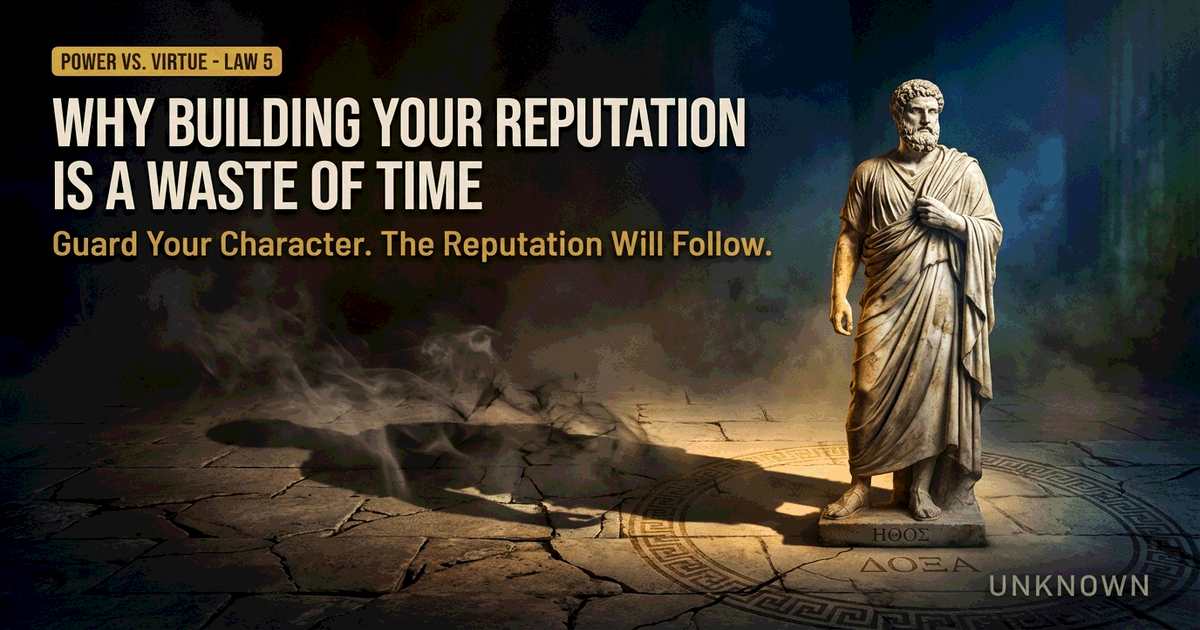
Why Building Your Reputation Is a Waste of Time
Greene says guard your reputation with your life. The Greeks say build character worth remembering. One requires constant maintenance. The other requires consistent choices. The difference explains why some reputations survive scrutiny and others collapse the moment the spotlight shifts.
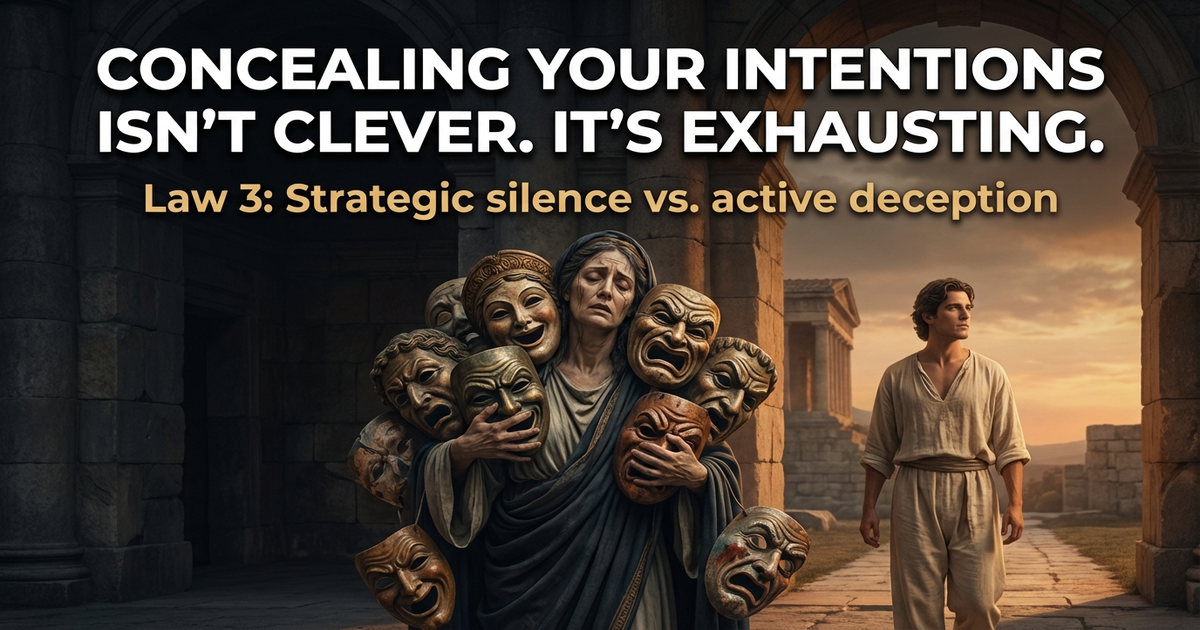
Concealing Your Intentions Isn't Clever. It's Exhausting.
Greene's Law 3 conflates wisdom with manipulation. Strategic silence is phronesis. Active deception is a cognitive tax that compounds into exhaustion and isolation.
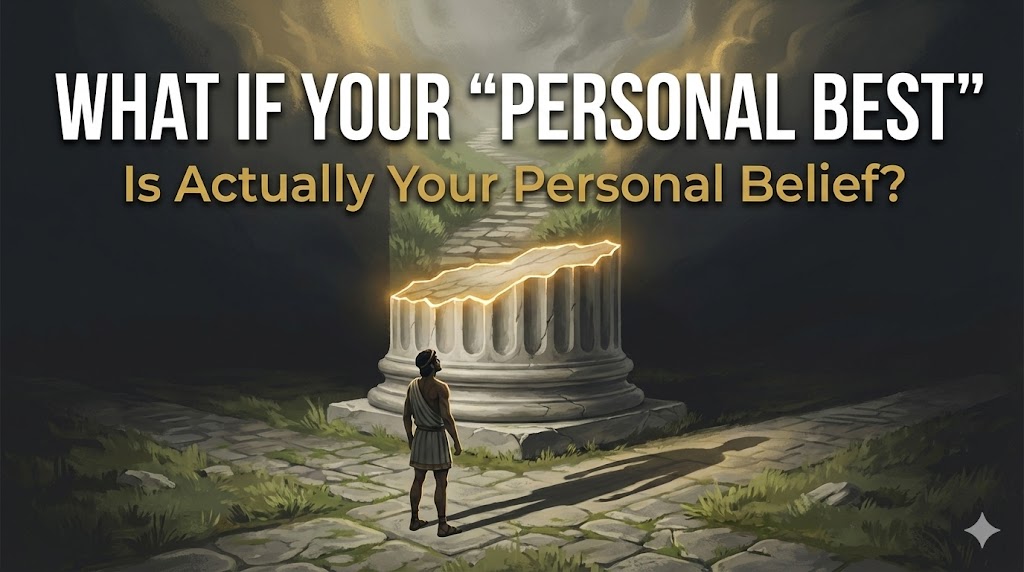
What If Your 'Personal Best' Is Actually Your Personal Belief?
Everyone treats their personal best as an objective measurement. But what if it's actually a prophecy? What if the limit you keep hitting is the limit you keep expecting to hit?
Character Isn't What You Post. It's What You Practice.
Social media has convinced us that visible virtue is real virtue. Aristotle knew better. Character is the pattern of what you do when no one's watching, not the highlight reel you curate for strangers.

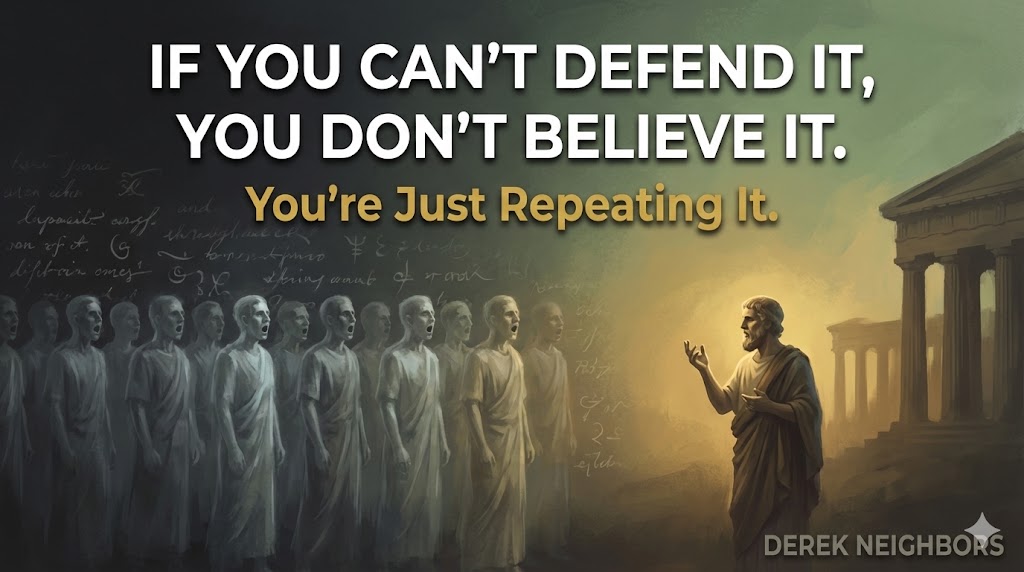
If You Can't Defend It, You Don't Believe It. You're Just Repeating It.
Most people defend positions they never chose. Socrates understood that repeating something doesn't make it yours. The unexamined belief is just someone else's script running in your head.
The Information Architecture: Curating Input for Greatness
Most people consume information like they eat at a buffet, grabbing everything that looks appealing without considering nutrition or purpose. Then they wonder why their thinking is sluggish and their decisions are poor. Greatness requires intentional information architecture.

The Validation Trap: Why Seeking Approval Kills Excellence
The most liberating realization: those people you're trying to win over aren't worth winning over. Energy spent seeking approval is energy not spent building excellence. Time to break free from the validation trap.