Paideia (παιδεία): Meaning, Definition & Modern Application
pie-DAY-ah
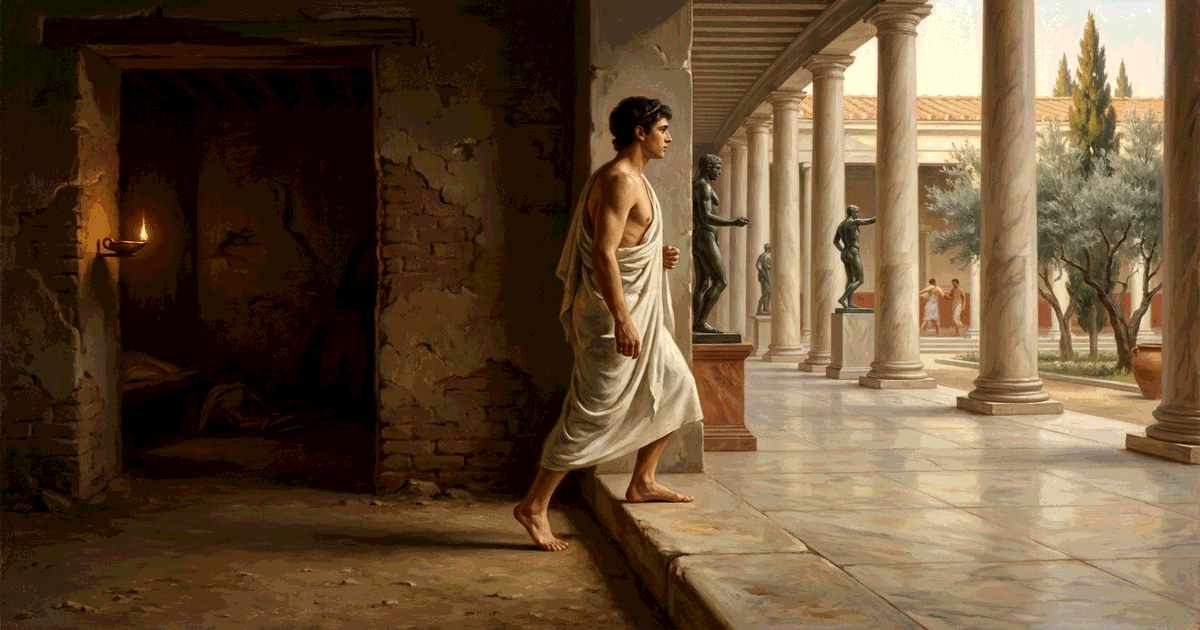
The comprehensive formation of a human being through education, culture, and character training. For the Greeks, paideia meant cultivating the whole person—mind, body, and spirit—to become a fully realized member of society capable of excellence.
Etymology
From pais (child), originally meaning “child-rearing” or “upbringing.” The concept expanded far beyond childhood education to encompass the entire process of human formation through culture, learning, and character development. Werner Jaeger’s monumental work Paideia (1933) traced how the Greeks invented the idea of education as the deliberate shaping of the whole person. The concept reflects the Greek conviction that excellence is cultivated, not inherited.
Deep Analysis
Werner Jaeger’s three-volume work Paideia: The Ideals of Greek Culture, published between 1933 and 1947, argued that paideia was the central concept of Greek civilization, the Greeks’ most significant contribution to human culture. Jaeger defined paideia as the process of shaping the complete human being according to an ideal of excellence. This is not education in any modern sense. It is not the transmission of information, the development of job skills, or the credentialing process that contemporary schooling has become. Paideia is the formation of the whole person: intellectual, moral, physical, and aesthetic capacities developed in harmony toward a vision of what a fully realized human being looks like.
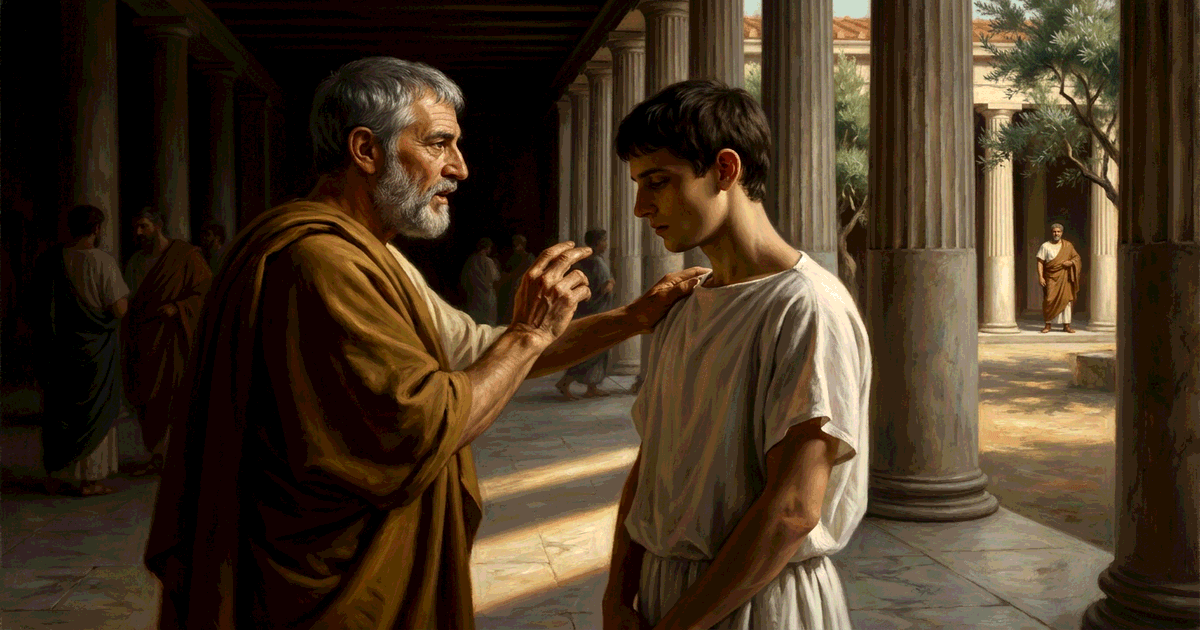
Plato’s Academy, founded around 387 BCE, and Aristotle’s Lyceum, founded in 335 BCE, embodied paideia as a total way of life. Students at the Academy did not attend lectures and return to their separate lives. They lived within a community organized around philosophical inquiry. The curriculum included mathematics, dialectic, and physical exercise, each understood as contributing to different dimensions of human formation. Mathematics trained the mind to perceive abstract order. Dialectic trained the capacity for rigorous argument. Physical exercise developed the body as an integrated dimension of the complete person, not an afterthought.
The relationship between paideia and arete (excellence) is fundamental. Paideia is the process. Arete is the result. The educated person, in the Greek sense, is not someone who knows many things. It is someone who embodies excellence of character, judgment, and action. When Aristotle argued in the Nicomachean Ethics that virtue is developed through habitual practice, he was describing paideia in its most concentrated form. You do not become courageous by studying courage. You become courageous by practicing courageous action within a community that values and models courage. This is why the context of paideia matters as much as its content. The character of the community shapes the character of the individual being formed within it.
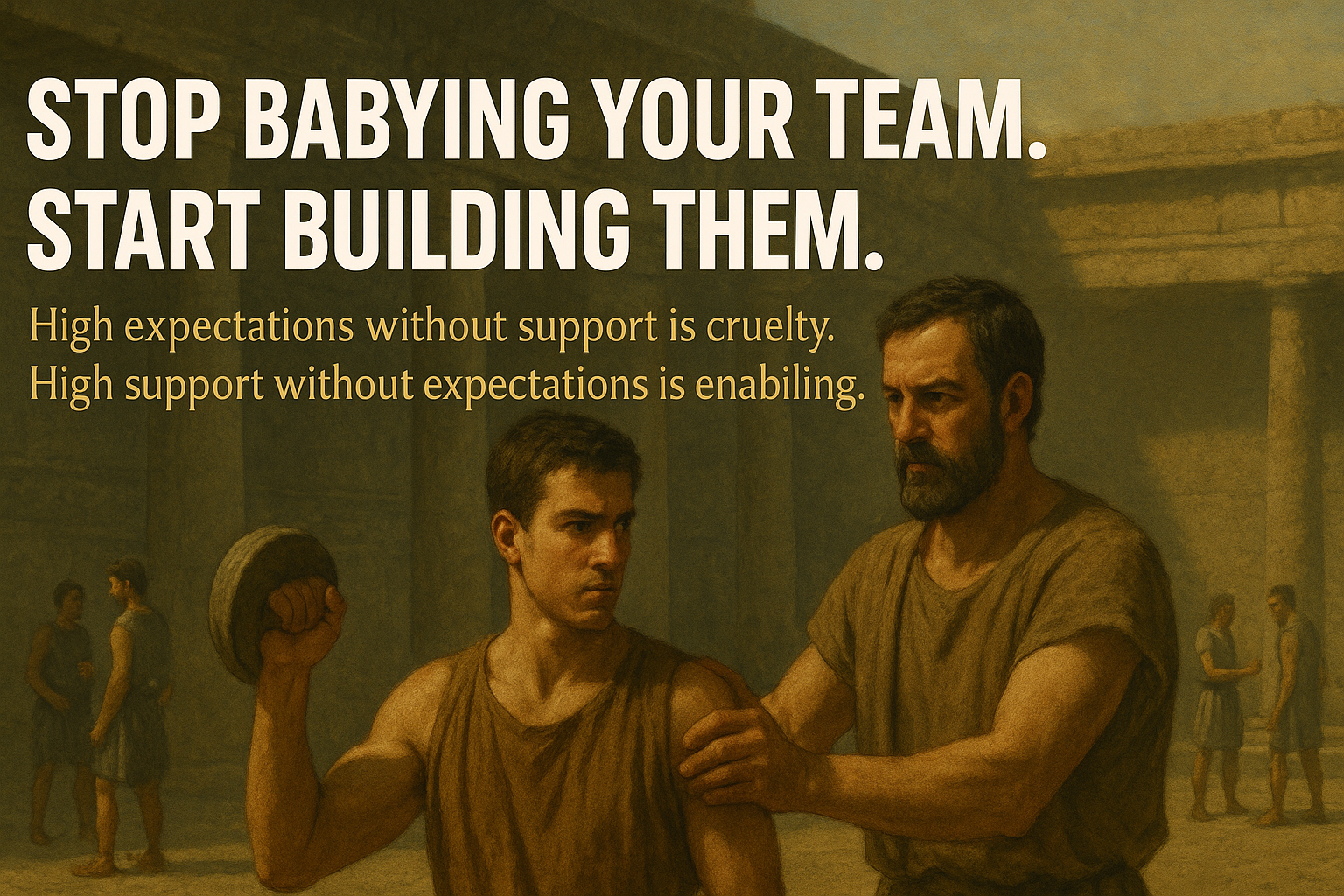
Modern education’s fixation on information transfer betrays the Greek ideal at a fundamental level. The modern school treats the student as a container to be filled with knowledge and then tested to verify the filling was successful. The Greek paideutic tradition treated the student as raw material to be shaped, a person in the process of becoming who they are. The difference is not semantic. Information transfer can happen with a bad teacher, a hostile environment, and no community at all. Formation requires a teacher who embodies what they teach, an environment that reinforces the desired development, and a community that holds the student accountable to a shared standard.
Sophia (theoretical wisdom) and phronesis (practical wisdom) represent two dimensions of the formation that paideia aims to produce. Sophia is the capacity to understand principles, causes, and the fundamental structure of reality. Phronesis is the capacity to act wisely in particular situations where universal principles must be applied to specific circumstances. Greek paideia aimed to develop both. The person with sophia but no phronesis is a philosopher who cannot navigate practical life. The person with phronesis but no sophia acts wisely in specific situations but lacks the deeper understanding that would make their wisdom coherent across contexts.
The physical dimension of Greek paideia is frequently overlooked in modern discussions. The gymnasium was as central to Greek education as the library. Physical training was not recreation or health maintenance. It was an essential component of human formation. The Greeks believed that a person who could not govern their body could not govern their mind or their community. The discipline, endurance, and courage developed through athletic training were understood as the same virtues required in intellectual and civic life. The modern separation of mind and body, which treats physical education as optional or secondary, would have been incomprehensible to the Greeks.
Modern Application
You don't just train skills—you form yourself entirely. Treat every book you read, conversation you have, and challenge you face as part of your ongoing formation. The leader you become emerges not from any single lesson but from the sum of everything you deliberately allow to shape you.
Historical Examples
Isocrates, the Athenian educator and rhetorician of the fourth century BCE, built the most commercially successful school in Athens by organizing paideia around the development of the complete citizen-orator. His school, which operated for over fifty years, trained students not in abstract philosophy but in the practical capacity to think clearly, argue persuasively, and act wisely in civic life. Isocrates explicitly argued that his form of paideia, which he called philosophia, was superior to both the narrow technical training of the Sophists and the abstract theorizing of Plato’s Academy because it developed the whole person for active participation in civic life.
The Spartan agoge, the rigorous educational system described by Plutarch and Xenophon, represents paideia taken to its most austere extreme. Beginning at age seven, Spartan boys were removed from their families and subjected to a program of physical hardship, martial training, and communal living designed to produce warriors of extraordinary discipline and loyalty. The agoge developed courage, endurance, obedience, and group cohesion at the expense of intellectual development and individual expression. It demonstrates both the power of total formative education and the danger of paideia organized around a narrow vision of human excellence.
The Jesuit educational system, established by Ignatius of Loyola and codified in the Ratio Studiorum of 1599, adapted Greek paideia for the early modern world. Jesuit schools combined rigorous classical education (Latin, Greek, rhetoric, philosophy) with moral and spiritual formation, physical activity, and artistic development. The system produced an extraordinary number of influential scientists, philosophers, and leaders over four centuries, from Descartes and Voltaire to modern world leaders. Its success demonstrates that the paideia principle, educating the whole person rather than training specific competencies, produces results that narrow technical education cannot match.
How to Practice Paideia
Design a personal curriculum for your ongoing formation across four domains: intellectual (what you read and study), physical (how you train your body), relational (who you learn from and with), and experiential (what challenges you deliberately seek). For each domain, identify one action you will take this month. Curate your inputs deliberately: the books you read, the people you spend time with, and the media you consume are all shaping you whether you intend them to or not. Review your personal curriculum quarterly and adjust based on what formation your current growth demands. Werner Jaeger’s monumental work on paideia traced how the Greeks invented the idea of education as the deliberate shaping of the whole person. Apply this comprehensive approach to your own development by refusing to compartmentalize growth into purely professional or purely personal categories. Seek out one experience each quarter that challenges a dimension of yourself you have been neglecting: if you focus heavily on intellectual development, add a physical challenge; if you invest primarily in professional skills, develop a relational capacity. The complete leader develops the complete person.
Application Examples
A technology company’s onboarding program consists of three days of presentations about company policies, benefits, and product features. New hires emerge with information about the company but no understanding of its culture, values, or what excellence looks like in practice. Within six months, most have defaulted to the norms of their previous employers.
Onboarding that transfers information without forming character produces employees who know the rules but do not embody the culture. Paideia-informed onboarding would immerse new hires in the lived practice of the organization’s values through mentorship, observation, and progressively challenging experiences that build the specific capacities the organization needs.
A university measures its success by graduate employment rates and starting salaries. Its curriculum is designed to maximize these metrics: heavy technical training, minimal humanities, and no physical education requirement. Graduates are technically skilled and consistently described by employers as lacking judgment, communication ability, and ethical reasoning.
Optimizing for employment metrics produces skilled workers, not formed people. The missing dimensions, judgment, communication, ethical reasoning, are precisely what paideia develops and what narrow technical training ignores. The Greeks would recognize this as the predictable result of treating education as skill delivery rather than human formation.
A parent structures their child’s life around academic achievement: tutors, test prep, advanced courses, and extracurricular activities selected for college applications. The child gains admission to an elite university and arrives intellectually prepared but emotionally fragile, unable to handle setbacks, form deep relationships, or define what matters to them beyond achievement.
Academic preparation that neglects moral, emotional, and physical formation produces high-achieving individuals who lack the internal resources to flourish. The child was trained for performance, not formed for life. Paideia would have developed the whole person, not optimized a single dimension.
A leadership development program teaches frameworks, case studies, and presentation skills over twelve months. Graduates score high on knowledge assessments. Their leadership behavior remains unchanged because the program developed their understanding of leadership without developing their character as leaders.
Formation cannot be short-circuited through knowledge transfer. You cannot become a better leader by understanding leadership better. You become a better leader by practicing leadership under conditions that develop judgment, courage, and integrity. The Greek paideutic model would have embedded leadership development in real challenges with real consequences, not simulated exercises in conference rooms.
A youth sports program measures success by winning percentages and championship titles. An alternative program measures success by the character traits players develop: resilience, teamwork, integrity under pressure, and the ability to learn from failure. The first program produces more trophies. The second program produces more capable human beings.
Paideia applied to youth athletics means treating sports as a vehicle for human formation rather than an end in itself. The character traits developed through well-coached athletics, perseverance, composure under pressure, subordination of individual interest to team success, transfer to every other domain of life. The trophies do not.
A community organization offers after-school programs that combine academic tutoring, physical fitness, arts education, and mentorship from adult community members. Students who participate for multiple years show improvement not only in grades but in self-regulation, interpersonal skills, and community engagement. The program’s success is attributed not to any single component but to the integration of intellectual, physical, and social development within a supportive community.
Effective youth development programs recapitulate the Greek model of paideia without knowing it: they develop the whole person within a community that provides both challenge and support. The key is integration. Academic development without physical and social development produces capable but fragile individuals. The integrated approach produces resilient, capable people who contribute to their communities.
Common Misconceptions
Equating paideia with schooling or formal education strips the concept of its most important dimension. Paideia is not what happens in a classroom. It is the total process of forming a human being, which occurs through every experience, relationship, and environment that shapes who someone becomes. A child receives paideia from their family, their community, their physical environment, and their culture long before they enter any school. Reducing paideia to curriculum mistakes the mechanism for the substance. A second error treats paideia as something done to children and irrelevant to adults. For the Greeks, paideia was a lifelong process. Aristotle argued that the virtues developed through paideia require continuous practice throughout life. The fully formed person is not someone who completed their education but someone who never stopped engaging in formation.
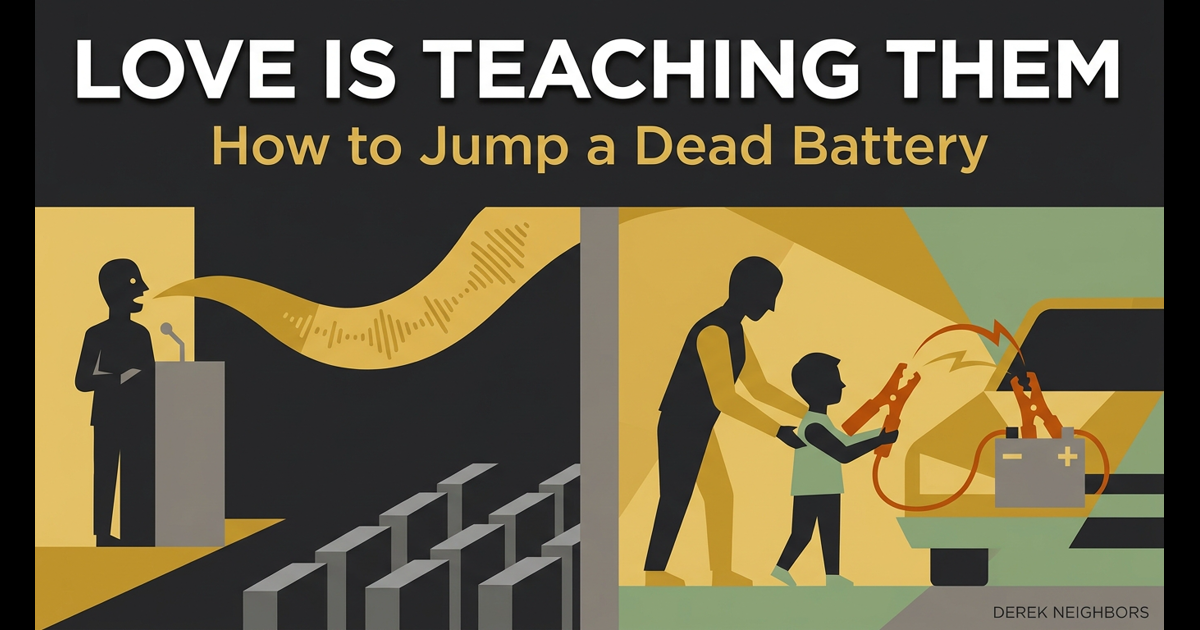
The distinction between training and formation is the most important lesson I have absorbed in twenty years of developing people and teams. Training teaches you what to do. Formation changes who you are. Most organizations invest heavily in training and almost nothing in formation, then wonder why people revert to old behaviors the moment training ends.
I watched this pattern repeat until I finally understood the mechanism. A three-day workshop on giving feedback teaches people a framework. It does not develop the courage to give honest feedback when the relationship is at stake. A seminar on strategic thinking teaches analytical tools. It does not develop the judgment to know which tool fits which situation. The knowledge is necessary but radically insufficient. What closes the gap is sustained practice within a community that holds you accountable to a standard higher than your current level of comfort.
The teams where I have seen the most profound development, where people genuinely grew into more capable versions of themselves, were teams where the environment itself was formative. Honest feedback was not a workshop topic. It was a daily practice. Strategic thinking was not a seminar subject. It was an expectation in every meeting. Physical endurance was not a metaphor. People took care of their bodies because the culture treated physical capacity as relevant to professional performance.
I do not think modern organizations can replicate the Greek gymnasium, but they can learn from the principle: formation happens through the total environment, not through isolated interventions. If you want courageous employees, you need an environment where courage is practiced and rewarded every day. If you want thoughtful employees, you need an environment where thoughtfulness is the expectation in every interaction. Paideia is not a program. It is a culture.
Frequently Asked Questions
What is paideia in Greek philosophy?
Paideia is the Greek concept of comprehensive human formation through education, culture, and character training. It encompasses the cultivation of the whole person, mind, body, and spirit, to produce a fully realized human being capable of excellence and civic contribution. The Greeks understood that true education shapes character as much as intellect, and that the fully formed person develops across all dimensions of human capability.
What does paideia mean?
Paideia originally meant child-rearing, from pais (child). The concept expanded far beyond childhood education to describe the entire lifelong process of human formation through deliberate education and cultural shaping. It reflects the Greek conviction that excellence is cultivated through sustained, intentional development rather than inherited through birth or acquired through luck.
How do you practice paideia?
You practice paideia by designing a personal curriculum for ongoing formation across intellectual, physical, relational, and experiential domains. Curate your inputs deliberately, recognizing that everything you read, study, and experience is shaping the person you are becoming. Review your formation plan quarterly and identify which dimensions of your development have been neglected, then adjust to address the gaps.
What is the difference between paideia and askesis?
Paideia is the comprehensive formation of the whole person through education, culture, and experience. Askesis is the specific discipline of rigorous training aimed at self-mastery. Paideia shapes who you become overall; askesis is one intense method within that broader formation process. A complete paideia includes askesis, but it also includes intellectual study, cultural engagement, community participation, and the full range of formative experiences.