Deisidaimonia (δεισιδαιμονία): Meaning, Definition & Modern Application
day-see-die-moh-NEE-ah
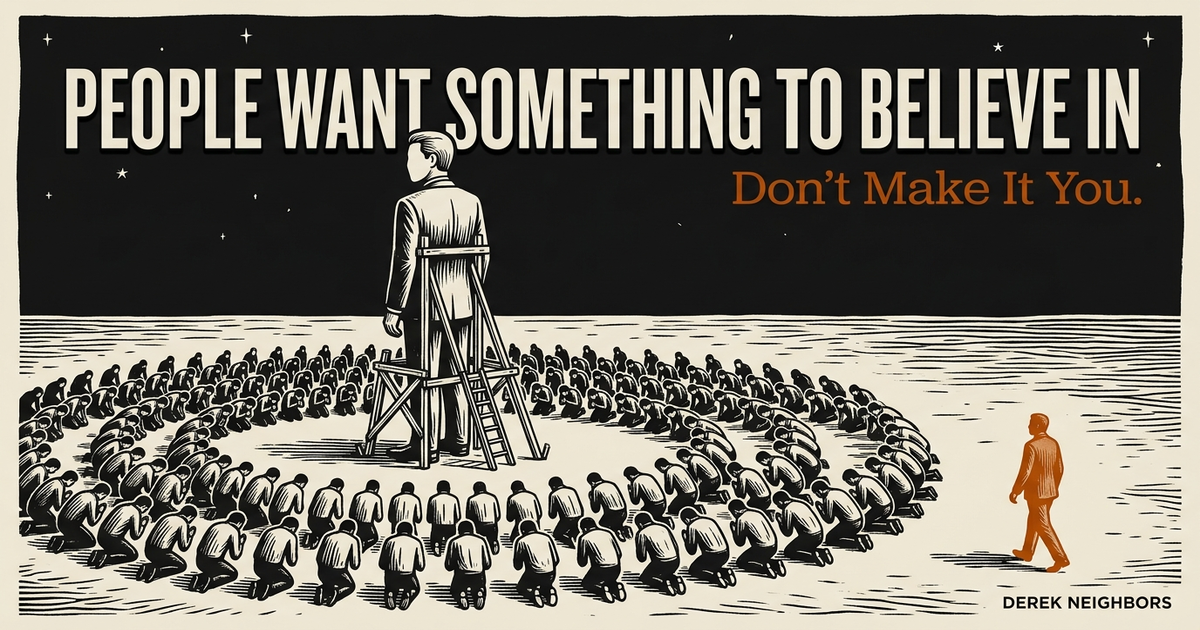
Excessive fear of the divine or supernatural, manifesting as irrational religious anxiety, superstitious behavior, and slavish devotion to omens and rituals. The Greeks considered it a character flaw that enslaves the mind.
Etymology
Derived from deidos (to fear) and daimon (spirit, divine power). Originally neutral, describing one who was mindful of the gods, the term evolved to carry negative connotations by the 4th century BCE. Theophrastus solidified its pejorative meaning as ‘superstition’ in his Characters, distinguishing healthy piety (eusebeia) from the paralysis of excessive religious fear.
Deep Analysis
Theophrastus, Aristotle’s successor at the Lyceum, provides our most vivid portrait of deisidaimonia in his Characters. His superstitious man purifies himself constantly, avoids stepping on gravestones, and cannot pass a crossroads without prostrating himself. This is not piety but slavery. The deisidaimon has surrendered his rational faculty to an imagined cosmos of petty, vindictive spirits who punish minor infractions with disproportionate fury.
The philosophical critique runs deeper than mere mockery of irrational behavior. Plutarch, in his treatise On Superstition, argues that deisidaimonia is actually worse than atheism. The atheist, however mistaken, retains his freedom and tranquility. The superstitious person lives in constant terror, finding threats in dreams, bird flights, and chance utterances. Where the atheist sees an indifferent universe, the deisidaimon sees malevolence everywhere. ‘The atheist thinks there are no gods,’ Plutarch writes, ‘the superstitious man wishes there were none.’
This analysis reveals a crucial insight: deisidaimonia is fundamentally a failure of phronesis, practical wisdom. The superstitious person cannot accurately assess reality because fear distorts perception. Every neutral event becomes an omen. Every setback confirms cosmic hostility. The rational discrimination that phronesis requires becomes impossible when the mind operates from a baseline of terror.
The Stoics extended this critique. Epictetus taught that anxiety about externals, whether divine punishment or worldly failure, represents a category error about what lies within our control. Deisidaimonia exemplifies prohairesis corrupted by misplaced fear. The superstitious person has abandoned the citadel of the rational mind and scattered attention toward phenomena that cannot be controlled and likely do not matter.
There is productive tension between deisidaimonia and eusebeia, genuine piety. The Greeks did not advocate atheism or disregard for the divine. They distinguished between appropriate reverence, which acknowledges human limitation and the vastness of existence, and cringing terror before imagined threats. Eusebeia produces the confidence to act within one’s sphere while accepting ultimate uncertainty. Deisidaimonia produces paralysis and the endless search for guarantees that reality cannot provide.
The connection to ataraxia, the Epicurean and Stoic ideal of tranquility, illuminates another dimension. Deisidaimonia is the opposite of ataraxia. Where the tranquil soul moves through uncertainty with equanimity, the superstitious soul cannot rest. The deisidaimon’s mind churns with what-ifs and worst-cases, never settling because the threatening cosmos offers no peace. Achieving ataraxia requires first recognizing and dismantling the deisidaimonic worldview.
Perhaps most significantly, deisidaimonia undermines eleutheria, genuine freedom. The free person chooses based on reason and value. The superstitious person’s choices are dictated by fear of invisible consequences. This enslavement operates through the person’s own mind, making it particularly insidious. External tyrants can be resisted or escaped; the tyrant of superstitious fear lives within.
The practical implications extend to any domain requiring decisive action under uncertainty. Leaders prone to deisidaimonia cannot make timely decisions because they perpetually await better omens, more data, or clearer signs. They burden their organizations with excessive process, seeking the impossible security of guaranteed outcomes. Their anxiety infects their teams, creating cultures where risk-aversion masquerades as prudence.
The cure is not recklessness but sophrosyne, the moderation that right-sizes fear to actual threat. Combined with the courage of andreia and the wisdom of phronesis, a leader can navigate uncertainty without the crutch of superstitious rituals or the paralysis of cosmic anxiety. The goal is not to eliminate appropriate caution but to recognize when caution has curdled into the kind of fear that serves nothing and harms everything.
Modern Application
When you find yourself seeking guarantees before acting, or when rituals and routines become crutches rather than tools, you may be falling into deisidaimonia. This concept challenges you to examine whether your habits serve genuine excellence or merely soothe irrational anxiety. Recognize that obsessive risk-avoidance and constant worry about forces beyond your control actually diminish your capacity for decisive leadership.
Historical Examples
Nicias, the Athenian general during the Sicilian Expedition, provides history’s most costly example of deisidaimonia. According to Thucydides, when the Athenian forces desperately needed to retreat from Syracuse in 413 BCE, a lunar eclipse occurred. Nicias, described by Plutarch as ‘a slave to divination,’ insisted on waiting the ‘thrice nine days’ recommended by seers before moving. This delay allowed Syracuse to reinforce, trap, and ultimately annihilate the Athenian force. Athens never recovered from this disaster. Nicias’s superstition cost his city its fleet, army, and eventually its empire. His excessive piety, which had been praised in peacetime, proved catastrophic when decisive action was required.
In contrast, Julius Caesar demonstrated the rejection of deisidaimonia when crossing the Rubicon in 49 BCE. Suetonius records that Caesar’s soothsayers found unfavorable omens in the sacrificial victims. Rather than delay, Caesar famously declared ‘the die is cast’ and proceeded. Whether this displayed wisdom or recklessness history debated, but Caesar understood that opportunities do not wait for auspicious signs. His willingness to act despite unfavorable omens created the Roman Empire.
Alexander the Great similarly demonstrated contempt for excessive religious scruple. Plutarch records that when the Gordian Knot supposedly could only be untied by the future ruler of Asia, Alexander simply cut it with his sword. The oracle’s terms were met, the psychological effect achieved, and Alexander did not waste time on ritual puzzle-solving. He understood that divine favor, if it existed, would recognize decisive action over meticulous compliance with arbitrary conditions.
How to Practice Deisidaimonia
Start each morning by identifying one decision you have been avoiding due to vague fears or a desire for perfect certainty. Write down specifically what you fear will happen and assess the probability honestly.
Track your ‘permission rituals’ for one week. Note every time you seek an external sign, approval, or assurance before acting. Ask yourself: Am I gathering necessary information, or am I avoiding responsibility?
Practice making three small decisions daily without consulting anyone or anything. Order without looking at reviews. Choose without asking for opinions. Act without waiting for the ‘right moment.’
Review your routines with brutal honesty. Separate practices that build genuine capability from those that merely comfort anxiety. If skipping a routine would genuinely harm nothing but create significant distress, that routine has become superstitious.
Seek discomfort deliberately. When you catch yourself thinking ‘I cannot proceed until X happens,’ proceed anyway where stakes are reasonable. Build evidence that the world does not punish decisive action.
End each week by listing three outcomes that occurred independently of your worrying about them. This builds the muscle of recognizing that your anxiety does not control external events.
Application Examples
A CEO delays a necessary strategic pivot for months, commissioning study after study, waiting for market conditions to provide clearer signals. Competitors act decisively while she seeks certainty that will never arrive. Her board eventually forces the decision she knew was right all along.
Deisidaimonia in business often disguises itself as thoroughness. The question is whether you are gathering information to decide or gathering information to avoid deciding.
A man cannot leave his house without completing an elaborate morning routine in exact sequence. When travel disrupts this routine, he experiences disproportionate anxiety and performs poorly, convinced that skipping steps caused his struggles rather than his anxiety about skipping them.
When routines control you rather than serve you, they have become modern superstitions. The ritual has become the feared deity.
A manager requires unanimous team agreement before any decision, framing this as collaborative leadership. In reality, she fears the consequences of being solely responsible. Projects stall in endless consensus-building while she waits for permission that is hers to grant.
Seeking universal buy-in can be deisidaimonia dressed as democracy. Leaders must distinguish inclusive process from abdication of decisive responsibility.
A writer waits for inspiration to strike, refusing to work unless conditions feel perfect. She attributes creative blocks to external circumstances rather than recognizing that her superstitious belief in muses prevents the consistent practice that produces actual work.
Creative deisidaimonia invests supernatural power in moods and moments. The professional creates; the amateur awaits permission from inspiration.
An athlete becomes so attached to pre-game rituals that when circumstances prevent them, he cannot perform. His superstition about lucky socks or specific warm-up sequences has transferred his confidence from earned capability to external objects.
Deisidaimonia steals credit from your preparation and gives it to accidents. The superstitious athlete doubts his training while trusting his talismans.
Common Misconceptions
Many assume deisidaimonia only describes primitive or religious people. This misses how superstitious thinking pervades secular contexts. The executive who cannot decide without perfect data, the athlete who trusts lucky charms over training, the leader who reads cosmic meaning into random setbacks, all exhibit deisidaimonia regardless of their religious beliefs.
Another error confuses appropriate caution with its opposite. Deisidaimonia is not defined by what you fear but by whether fear has appropriate proportion to actual risk. Checking safety equipment before a dangerous activity demonstrates prudence. Checking it seventeen times because anxiety cannot be satisfied demonstrates deisidaimonia. The distinction lies not in the action but in whether rational assessment governs behavior.
People also wrongly believe that eliminating deisidaimonia means eliminating all ritual and routine. The Greeks never advocated this. Rituals that focus attention, build consistency, or mark transitions serve legitimate functions. Deisidaimonia appears only when rituals become mandatory for reasons that cannot survive rational examination, when their absence causes distress disproportionate to any actual consequence.
I spent years as a consultant watching organizations paralyze themselves with what I eventually recognized as corporate deisidaimonia. One company I worked with could not launch a product without achieving a specific Net Promoter Score in testing, then kept adjusting the methodology when scores fell short, then questioned the sample size, then demanded additional market research. They were not seeking information. They were seeking absolution from the responsibility of deciding.
I confronted my own deisidaimonia when I realized how many of my ‘principles’ were actually superstitions. I told myself I could not do good work without a certain environment, specific tools, adequate preparation time. When circumstances forced me to work without these conditions, I discovered that the work was often better, not worse. My rituals had been comfort mechanisms, not performance requirements.
The hardest lesson was recognizing deisidaimonia in my approach to feedback. I would seek input from too many people, framing this as thoroughness, when actually I was looking for someone to tell me it was safe to proceed. The permission I sought was not expertise but reassurance. When I stopped asking for reassurance and started asking only for specific expertise I lacked, decisions accelerated and quality improved.
I now ask teams a diagnostic question: What would you do if no one could advise you and you had to decide today? The gap between that answer and their actual behavior reveals their deisidaimonia. Often they already know. They are waiting not for information but for cosmic permission that will never arrive. The breakthrough comes when they realize that acting on judgment, accepting the inherent uncertainty, is not recklessness but responsibility.
Frequently Asked Questions
What is the difference between deisidaimonia and genuine religious faith?
Genuine faith involves trust and relationship with the divine, producing courage and equanimity. Deisidaimonia produces paralysis, anxiety, and obsessive ritual behavior. The faithful person acts freely; the superstitious person is enslaved by fear of cosmic punishment for trivial infractions.
How does deisidaimonia manifest in secular contexts?
Modern deisidaimonia appears as obsessive data-gathering before decisions, magical thinking about lucky objects or routines, and the belief that worry itself prevents bad outcomes. It shows in leaders who cannot act without unanimous approval or perfect information.
Is all ritual behavior superstitious?
No. Rituals become deisidaimonia only when they shift from tools to crutches, when their absence causes disproportionate distress, or when they substitute for genuine capability. A pre-performance routine that focuses the mind differs from one believed to control outcomes.