Frustration comes when we judge ourselves by a single moment. But true growth—true excellence—comes from trusting the work, not the moment.


Why discipline is the forge that creates what people call passion and obsession, not the opposite
Frustration comes when we judge ourselves by a single moment. But true growth—true excellence—comes from trusting the work, not the moment.
Most people think discipline means forcing yourself to do things you don't want to do. This fundamental myth keeps people trapped in cycles of failure and self-recrimination.
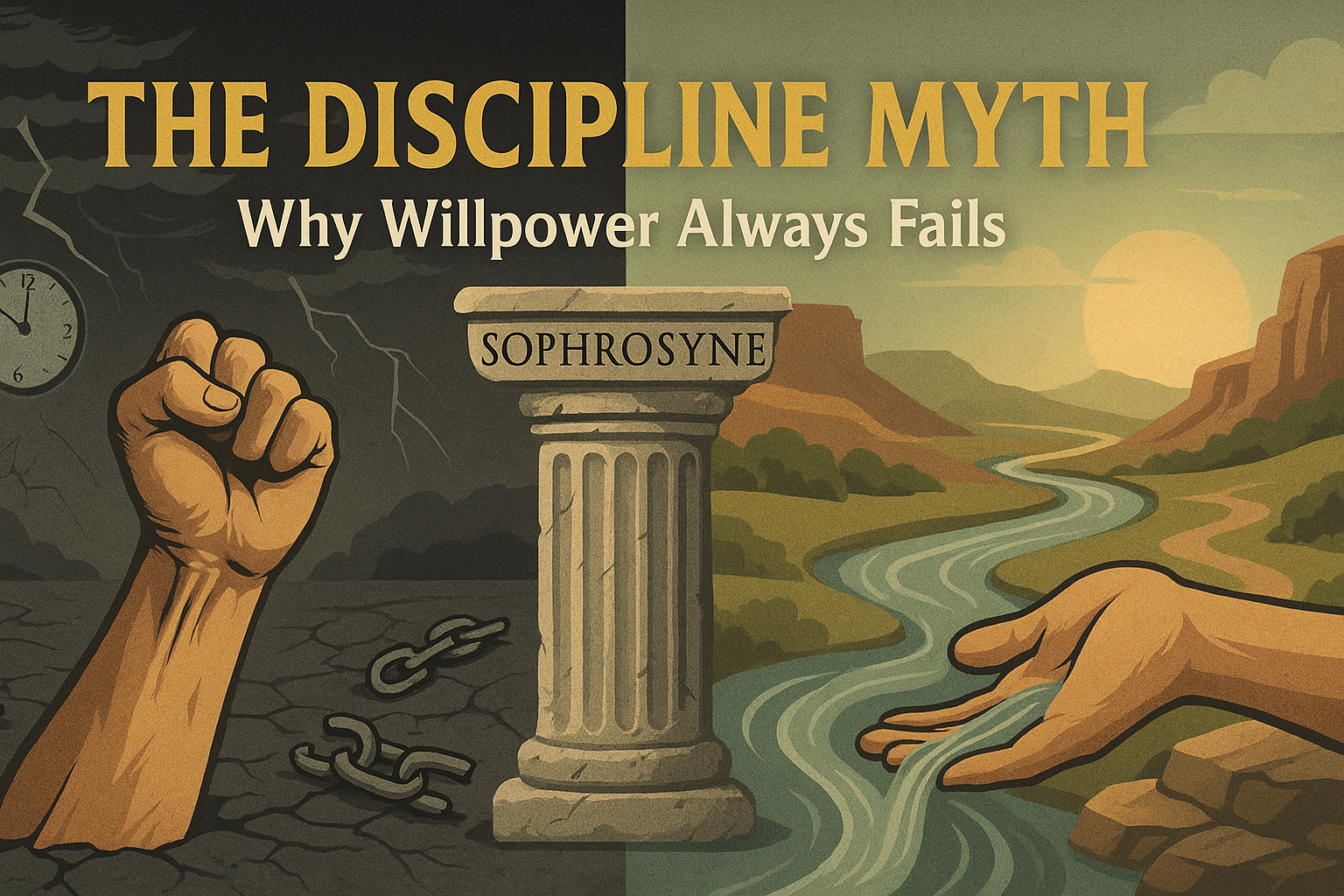
The brutal truth about freedom: it's not the absence of constraints, it's the wisdom to choose the right ones.
Passion is self-focused and fleeting. Excellence through service is other-focused and enduring. The Greeks never told anyone to follow their passion. They built character through craft. Here's why that matters for your work.
Everyone got the marshmallow test wrong. They turned it into a success predictor. The Stoics understood the real truth 2,000 years ago: delayed gratification isn't about outcomes, it's about character.
You've been designing habits for the version of you that exists after good sleep, full of motivation, in ideal conditions. That version shows up maybe 20% of the time. Here's how to build for the other 80%.

The person calling discipline 'for losers' is watching masters and missing the decades of discipline underneath. What looks like obsession is hexis. The discipline came first.

Excellence of function. Not achievement or outcome, but becoming excellent through consistent act...
Self-mastery and moderation. The discipline to regulate yourself internally when nothing external...
Weakness of will—acting against your own better judgment. For Aristotle, akrasia occurs when you ...
Human flourishing. The deep satisfaction of functioning as you were meant to function, living in ...
A stable disposition or settled state of character acquired through repeated action. For Aristotl...
The toil, labor, and productive struggle necessary for achieving anything of worth. In Greek thou...
Courage. The willingness to face what's difficult rather than retreat to what's comfortable, acti...
Self-legislation and the capacity to govern oneself according to one's own rational principles ra...
The stable character or disposition of a person, formed through repeated action and habit. For Ar...
Practical wisdom. The capacity to discern the right action in specific situations, particularly k...
The faculty of moral choice and rational decision-making that defines human agency. For the Stoic...
The systematic knowledge and skill required to produce something well—craft, art, or applied expe...
Never. The Greeks taught arete (excellence as a way of being), techne (craft through disciplined practice), and sophrosyne (self-mastery). They understood that excellence emerges from serving what's needed with discipline and skill, not from chasing what excites you. Passion is self-focused and fickle. Excellence is other-focused and enduring.
What people call 'obsession' is actually habituated excellence (hexis). The person who 'can't wait' to code didn't start that way. They showed up for thousands of hours of unglamorous practice until the work became second nature. The discipline came first. The feeling of being pulled is the reward for years of showing up when you weren't pulled at all.
Passion is self-focused, fickle, demands immediate gratification, and avoids difficulty. It changes with your mood, follows the shiny object, and evaporates the moment work gets hard. Excellence requires the opposite: showing up repeatedly whether it's exciting or not, grinding through boring parts, building character through resistance.
Forced discipline is white-knuckling through resistance without examining why. It's unsustainable and depletes willpower. Intelligent discipline (sophrosyne) is about harmony, not domination. It creates conditions where excellence becomes natural through environment design, identity alignment, and working with your rhythms while still doing necessary hard things.
Epictetus wrote that no man is free who is not master of himself. The person whose work depends on feeling 'pulled' by passion has made themselves a slave to their emotional state. The disciplined person is sovereign. They've built something that doesn't require permission from their feelings. Passion can be taken. Discipline cannot.
Hexis means stable disposition formed through repeated action. It's Aristotle's term for the character state that emerges from disciplined practice. We become what we repeatedly do. The 'obsessed' person you admire has built hexis through years of discipline. You're watching the result, not the cause. The habituation cannot be skipped.
This series is part of a comprehensive approach to excellence and human flourishing. Get systematic frameworks and practical tools for transformation.
Distinguishing genuine self-optimization from elaborate avoidance strategies
Navigate the AI revolution with practical wisdom and strategic thinking