Mimesis (μίμησις): Meaning, Definition & Modern Application
mih-MAY-sis
The act of imitation or representation, central to Aristotle's theory of art and learning. Beyond mere copying, mimesis describes how humans learn virtue by observing and emulating exemplary models, internalizing excellence through deliberate imitation until it becomes authentic character.
Etymology
From mimeisthai, meaning “to imitate” or “to represent.” Related to “mimic” and “mime.” Plato viewed mimesis with suspicion, arguing that art copies copies and moves us further from truth. Aristotle rehabilitated the concept, arguing that humans are the most imitative creatures and that imitation is how we first learn. In his Poetics, mimesis describes how tragedy represents human action. Applied to ethics, it explains how we develop virtue by emulating exemplary models until their excellence becomes our own.
Deep Analysis
The debate about mimesis between Plato and Aristotle is one of the most productive disagreements in Western intellectual history. Plato’s position in Book X of the Republic is severe: mimesis is dangerous because it produces copies of copies. The carpenter builds a bed by imitating the Form of the Bed (the eternal, perfect pattern). The painter paints the carpenter’s bed by imitating the carpenter’s imitation. Art is therefore two steps removed from reality, and its products can only mislead. Plato wanted to banish most poets from his ideal city because their mimetic art appeals to the emotions rather than to reason, weakening the soul’s capacity for truth.
Aristotle’s response in the Poetics overturns Plato’s framework by redefining what mimesis accomplishes. For Aristotle, mimesis is natural to human beings from childhood, and humans learn their earliest lessons through imitation. The child who imitates a parent’s speech is not producing a degraded copy of speech. The child is acquiring the capacity for speech itself. Mimesis, properly understood, is a fundamental mechanism of learning. Furthermore, Aristotle argued that poetic mimesis can reveal universal truths that historical accounts miss. A well-crafted tragedy does not merely copy a particular sequence of events. It shows what kind of person would do what kind of thing in what kind of situation, revealing patterns of human nature that transcend any single case.
The implications for character formation are profound. If you become what you imitate, then the question of who and what you imitate is among the most important questions you face. Paideia (education as character formation) in the Greek world was structured around this insight. Young Greeks studied Homer not primarily for literary appreciation but because the heroes of the Iliad and Odyssey provided models for imitation. Achilles’s courage, Odysseus’s cunning, and Hector’s loyalty were patterns that young men were expected to absorb and reproduce in their own lives. The theory was that sustained exposure to models of excellence would shape the character of the person exposed to them.
The tension between creative mimesis and slavish copying is where the concept becomes most practically useful. Slavish copying reproduces the surface features of a model without understanding the principles that make it work. Creative mimesis grasps the underlying principles and produces something new that embodies those principles in a different context. A musician who copies another musician’s style note for note is engaged in slavish mimesis. A musician who studies a master’s approach to rhythm, harmony, and phrasing and then develops their own style informed by those principles is engaged in creative mimesis. The first produces a replica. The second produces an original that carries the DNA of its models.
Hexis (stable disposition) is the endpoint of successful mimesis in the context of character formation. When you imitate a virtue consistently enough, the imitation ceases to be an external performance and becomes an internal disposition. You begin by imitating courageous action because you have seen it modeled. Over time, through repetition, the imitation becomes genuine courage. This is not fakery. Aristotle was explicit that this is how all virtues are acquired. You become brave by doing brave things, temperate by doing temperate things. The initial “doing” is mimetic, modeling your behavior on what you have observed in others. The eventual result is a stable character trait that is genuinely your own.
The ethical dimensions of ethos (character) and prohairesis (moral choice) intersect with mimesis in important ways. You do not merely imitate behaviors. You imitate patterns of choice. When you study a person you admire, you are not primarily studying what they do. You are studying how they decide what to do. The most valuable form of mimesis is the imitation of another person’s decision-making process, their way of weighing competing values, managing uncertainty, and choosing action under pressure.
Modern Application
You become like those you study and surround yourself with—choose your models deliberately. Find leaders whose character you admire and observe not just their actions but the principles behind them. Through conscious emulation of excellence, you transform borrowed wisdom into your own authentic leadership presence.
Historical Examples
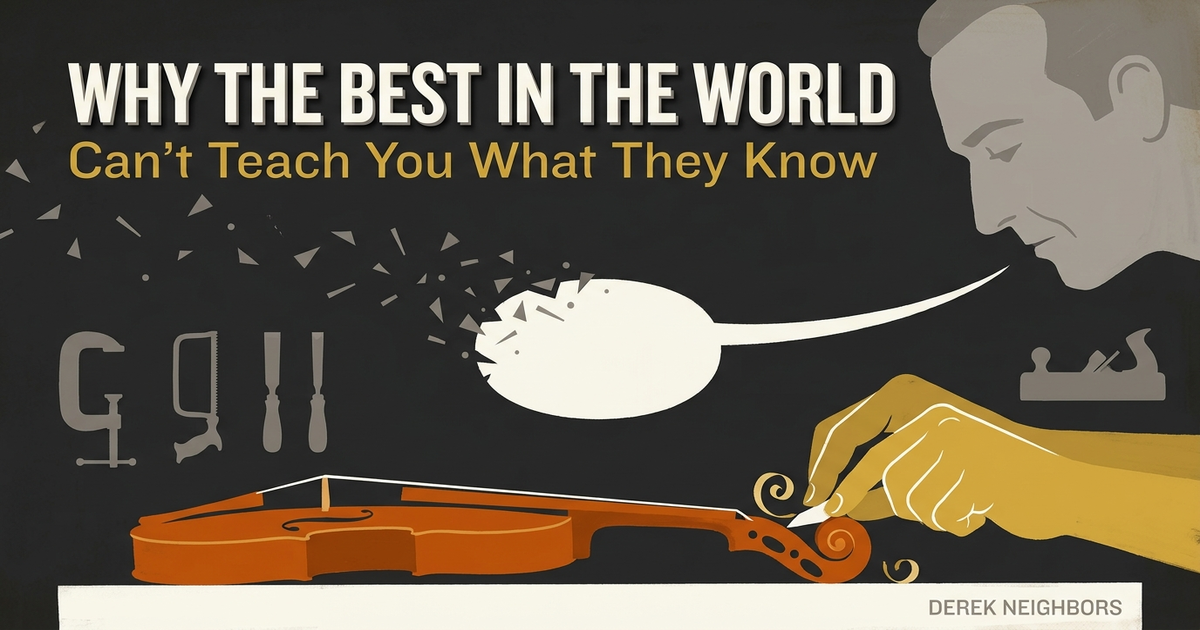
Renaissance apprenticeship was organized entirely around mimesis as a learning method. When a young artist like the teenage Raphael entered Pietro Perugino’s workshop around 1495, the apprentice spent years copying the master’s work. Raphael’s early paintings are nearly indistinguishable from Perugino’s. This was not seen as a failure of originality but as the necessary foundation for it. Through sustained imitation, Raphael internalized the principles of composition, perspective, and color that his master embodied. His mature work, the School of Athens, the Sistine Madonna, transcends anything Perugino produced, but it would not have been possible without the years of devoted mimesis.
Alexander the Great’s military campaigns were profoundly shaped by his mimesis of Achilles. Plutarch records that Alexander kept a copy of the Iliad annotated by Aristotle under his pillow and considered Achilles the model for his own life. Alexander’s visit to what was believed to be Achilles’s tomb at Troy before beginning his Asian campaign was not tourism. It was a ritual act of identification with his heroic model. The mimetic relationship with Achilles shaped Alexander’s willingness to lead from the front, his personal courage in battle, and his aspiration to surpass all previous conquerors.
The Japanese concept of shu-ha-ri, formalized in martial arts but applicable to any craft, provides a structured framework for mimesis that echoes Greek practice. In the shu stage, the student copies the master’s forms exactly, without deviation. In the ha stage, the student begins to understand the principles behind the forms and experiments with variations. In the ri stage, the student transcends the forms entirely and creates from the principles themselves. This progression from slavish imitation through principled adaptation to original creation maps directly onto the Greek understanding of how mimesis produces genuine mastery.
How to Practice Mimesis
Identify three people whose character and competence you genuinely admire. Study how they operate: not surface behaviors but the principles that guide their decisions. Select one specific quality from each model and practice embodying it this month. Read biographies of people who excelled in areas where you want to grow. When you encounter a challenging situation, ask yourself: how would my model handle this? Initially, this imitation will feel borrowed. Over time, it integrates into your authentic character. The goal is not to become someone else but to absorb proven patterns of excellence until they become your own. Plato viewed mimesis with suspicion, but Aristotle rehabilitated it by arguing that humans are the most imitative creatures and that imitation is how we first learn. Apply this insight by studying not only what your models do but why they do it. When you identify a principle underlying their behavior, test it in your own context. Keep a learning journal where you record specific qualities you are emulating, track your progress, and note when the borrowed behavior begins to feel natural. That transition from conscious imitation to authentic expression is the moment when mimesis has done its work.
Application Examples
A new CEO studies the leadership approaches of three predecessors whose tenures produced different outcomes. Rather than copying the most successful predecessor’s specific strategies, she analyzes what principles drove their decisions and how those principles would apply in the current competitive environment, which is fundamentally different from the one her predecessor faced.
Effective mimesis in leadership means imitating principles, not playbooks. The CEO who copies another CEO’s strategy is engaged in slavish mimesis that will fail when conditions change. The CEO who understands why certain principles produce good decisions and adapts those principles to new circumstances has learned how to learn from models.
A young professional identifies a mentor whose career trajectory they admire. Instead of trying to replicate the mentor’s career path step by step, they observe how the mentor thinks about career decisions: what they prioritize, what they are willing to sacrifice, and how they evaluate opportunities. The mentee then applies that decision-making framework to their own, very different, circumstances.
Imitating someone’s career path produces a copy of their life. Imitating someone’s decision-making framework produces a life that is authentically your own but informed by their wisdom. The most valuable thing a mentor can transmit is not what to do but how to think about what to do.
A young tennis player watches hundreds of hours of footage of a champion’s matches. Their coach notices that the player is copying the champion’s shot selection, which does not suit the player’s physical attributes. The coach redirects the player’s attention to the champion’s movement patterns and court positioning, which are transferable principles rather than body-specific techniques.
Mimesis becomes counterproductive when you imitate the wrong level of the model. Surface features, specific shots, particular tactics, may not transfer across different bodies or contexts. Underlying principles, efficiency of movement, strategic positioning, patience under pressure, are far more transferable and more valuable.
An art student is assigned to reproduce a Renaissance master’s painting in detail. The exercise feels mechanical, and the student questions its value. After months of close study, the student begins to understand why the master made specific choices about composition, color, and light. The understanding transforms the student’s original work, which now shows structural sophistication that was absent before.
Close imitation of excellence is not an end but a means. The art student’s reproductions were valuable not as copies but as a method for internalizing principles that could not be learned through verbal instruction alone. Some knowledge can only be transmitted through the sustained practice of mimesis.
A new CEO studies the leadership styles of three industry legends. Instead of picking one to emulate, she identifies the principle each one embodied most strongly: one excelled at strategic clarity, one at talent development, and one at crisis management. She integrates these principles into her own approach, producing a leadership style that resembles none of her models but draws on the deepest insights of all three.
The highest form of mimesis synthesizes principles from multiple models into something original. The CEO’s approach is creative mimesis: she did not copy any single leader’s style but extracted the underlying principles that made each effective and recombined them in a way that fits her own circumstances and temperament.
A software engineer studies the codebase of an open-source project they admire, not to copy specific functions but to understand the design principles that make the codebase elegant and maintainable. They spend months reading code the way an art student studies masterworks. When they build their own project, the influence is structural rather than superficial: the architecture reflects the principles they absorbed, not the specific patterns they observed.
Code review as mimesis means studying excellent work to internalize the principles that produced it. The engineer who copies code has gained a solution to one problem. The engineer who understands why the code was designed as it was has gained a framework for solving an entire category of problems.
Common Misconceptions
The assumption that mimesis means mere copying reflects Plato’s critique without Aristotle’s correction. Aristotle’s point was that mimesis, properly practiced, is one of the primary mechanisms through which humans learn. A child learning language is engaged in mimesis, but no one would describe the resulting capacity for original speech as “mere copying.” The confusion between surface imitation and deep structural learning persists in modern culture, where “be original” is treated as advice that can be followed without first understanding what has already been done. Originality that ignores the tradition it emerges from is not creative. It is uninformed. A second misconception treats mimesis as relevant only to art and aesthetics. In Greek thought, mimesis operates across all domains of human development: character formation, skill acquisition, intellectual growth, and civic participation.
Every significant capability I have developed can be traced back to watching someone do it at a level I could not yet match. Not reading about it. Not attending a workshop about it. Watching a specific person operate in a specific situation and absorbing how they did what they did.
The most impactful instance was early in my career when I observed a technical leader facilitate a meeting where two teams were in fundamental disagreement. I expected him to arbitrate, to declare a winner and a loser. Instead, he asked a series of questions that gradually revealed the assumptions underlying each team’s position. Within an hour, both teams had discovered that their disagreement was rooted in different definitions of the same word. The conflict dissolved without anyone losing.
I spent the next several years imitating that approach, and for a long time, I was doing a poor imitation. My questions were clumsy. My timing was off. I sometimes escalated tension when I meant to reduce it. But through sustained practice, the approach became mine. It stopped being an imitation and became a genuine capability. I no longer thought about what he would do in this situation. I thought about what the situation required.
What I have concluded from this and many similar experiences is that the people who grow fastest are the ones who choose their models carefully and study them closely. Not their achievements, but their processes. Not their results, but their reasoning. The surface is easy to copy and largely useless. The depth is difficult to copy and permanently valuable.
Frequently Asked Questions
What is mimesis in Greek philosophy?
Mimesis is the Greek concept of imitation or representation. Aristotle argued that humans are naturally imitative and that we learn virtue by observing and emulating exemplary models. Through deliberate imitation, borrowed excellence gradually becomes authentic character. While Plato viewed mimesis with suspicion as moving us further from truth, Aristotle rehabilitated it as the fundamental mechanism through which humans learn and develop.
What does mimesis mean?
Mimesis means imitation, representation, or emulation. From mimeisthai (to imitate), it is the root of mimic and mime. In Greek philosophy, it describes both artistic representation and the ethical process of learning virtue through deliberate emulation of worthy models. In Aristotle's Poetics, mimesis also describes how tragedy represents human action, making it central to both aesthetics and ethics.
How do you practice mimesis?
You practice mimesis by identifying people whose character you admire, studying the principles behind their actions, and deliberately emulating specific qualities. Read biographies, observe leaders you respect, and ask how your models would handle the challenges you face. Select one quality from each model and practice embodying it until the imitation becomes authentic expression.
What is the difference between mimesis and paideia?
Mimesis is the specific practice of learning through imitation and emulation of models. Paideia is the comprehensive process of human formation through education, culture, and experience. Mimesis is one powerful method within the broader project of paideia. You can practice mimesis as a targeted technique for developing specific qualities, while paideia encompasses your entire ongoing formation as a human being.