Doxa vs Episteme: Key Differences in Greek Philosophy
You probably hold strong views on dozens of subjects right now, and you have no idea which of those views qualify as genuine knowledge and which are opinion you have mistaken for certainty. That confusion is the central problem that doxa and episteme were coined to address. Doxa is opinion, belief, the cognitive state of accepting something as true without rigorous justification. Episteme is knowledge, the cognitive state of understanding something through demonstration and evidence so thorough that it could not be otherwise. Plato drew this distinction most forcefully in the Republic, where he mapped the human mind onto a divided line. At the bottom sits imagination, dealing with shadows and reflections. Above it sits doxa, dealing with the visible world of particular things. Above doxa sits dianoia, mathematical and hypothetical reasoning. At the top sits episteme, direct comprehension of the Forms themselves, the unchanging realities that ground all particular instances. For Plato, most of what people confidently call knowledge is actually doxa. You see a particular case of justice and form a belief about it. But your belief is shaped by your perspective, your culture, your limited experience. It might be right. It might be wrong. Either way, it lacks the justificatory grounding that would make it episteme. The practical cost of this confusion is enormous. When you operate on doxa while believing you have episteme, you stop questioning. You treat provisional beliefs as settled conclusions. You build strategies on assumptions you have never tested and make decisions with a confidence that exceeds what your understanding warrants. The person who mistakes doxa for episteme is more dangerous than the person who admits ignorance, because the ignorant person might still inquire, while the person with false certainty has closed the door to further investigation. Socrates built his entire philosophical practice on exposing this gap. His cross-examinations revealed, over and over, that people who claimed to know could not withstand systematic questioning. Their episteme dissolved into doxa under scrutiny. The lesson was not that knowledge is impossible but that it is far rarer and far harder to achieve than most people believe. In your own work and decisions, the doxa-episteme distinction functions as a quality check on your reasoning. Before you commit resources, make promises, or act on a conviction, it is worth asking whether what you have is genuine understanding or a well-rehearsed opinion that has never been seriously challenged. When a costly truth must be spoken, pair this check with parrhesia and the inner freedom in eleutheria.
Definitions
Doxa
(δόξα)
DOK-sah
Opinion, reputation, or common belief as distinguished from true knowledge (episteme). In ancient Greek thought, doxa represents the realm of appearance and popular perception—what most people believe to be true, which may or may not align with deeper reality.
Episteme
(ἐπιστήμη)
eh-pis-TAY-may
Scientific or systematic knowledge—understanding that grasps not merely that something is true, but why it must be so. For Aristotle, episteme represents demonstrable knowledge of causes and principles, distinguished from mere opinion (doxa) or practical skill (techne).
Key Differences
| Aspect | Doxa | Episteme |
|---|---|---|
| Object | Doxa deals with appearances and particular instances. It grasps the visible, changing world of individual things and specific situations. | Episteme deals with reality and universal principles. It grasps the stable, intelligible structure behind particular appearances. |
| Justification | Doxa is belief without rigorous justification. A person with doxa may hold a true belief but cannot explain why it must be true or demonstrate its necessity. | Episteme is knowledge grounded in demonstration. A person with episteme can articulate why something is the case and show that it could not be otherwise. |
| Reliability | Doxa can be right or wrong, and there is no internal mechanism to distinguish the two. True doxa and false doxa feel the same from the inside. | Episteme, once genuinely achieved, provides reliable understanding. Because it grasps necessary truths through demonstration, it is not vulnerable to shifting conditions. |
| Acquisition | Doxa forms through passive absorption: cultural immersion, repeated exposure, authority figures, and personal experience unexamined by critical reflection. | Episteme is acquired through active inquiry: systematic investigation, logical demonstration, testing against counterarguments, and rigorous examination of foundations. |
| Relationship to Action | Doxa guides action by habit and convention. It tells you what to do because that is how things are done, because it feels right, or because others agree. | Episteme guides action by understanding. It tells you what to do because you grasp the reasons, the principles, and the likely consequences at a structural level. |
Object
Doxa deals with appearances and particular instances. It grasps the visible, changing world of individual things and specific situations.
Episteme deals with reality and universal principles. It grasps the stable, intelligible structure behind particular appearances.
Justification
Doxa is belief without rigorous justification. A person with doxa may hold a true belief but cannot explain why it must be true or demonstrate its necessity.
Episteme is knowledge grounded in demonstration. A person with episteme can articulate why something is the case and show that it could not be otherwise.
Reliability
Doxa can be right or wrong, and there is no internal mechanism to distinguish the two. True doxa and false doxa feel the same from the inside.
Episteme, once genuinely achieved, provides reliable understanding. Because it grasps necessary truths through demonstration, it is not vulnerable to shifting conditions.
Acquisition
Doxa forms through passive absorption: cultural immersion, repeated exposure, authority figures, and personal experience unexamined by critical reflection.
Episteme is acquired through active inquiry: systematic investigation, logical demonstration, testing against counterarguments, and rigorous examination of foundations.
Relationship to Action
Doxa guides action by habit and convention. It tells you what to do because that is how things are done, because it feels right, or because others agree.
Episteme guides action by understanding. It tells you what to do because you grasp the reasons, the principles, and the likely consequences at a structural level.
When to Apply Each Concept
When to Choose Doxa
Recognize doxa for what it is when speed matters more than precision, when you need to act on incomplete information, or when the stakes are low enough that provisional beliefs serve adequately. Most daily decisions operate on doxa, and that is appropriate. The problem arises when you treat doxa as episteme in high-stakes situations.
When to Choose Episteme
Pursue episteme when the decisions you face are consequential, irreversible, or foundational. Before committing to a strategy, choosing a life direction, or advising others on matters that significantly affect their future, you owe it to yourself and them to move beyond opinion. Episteme requires the discipline of testing your beliefs against the strongest counterarguments you can find.
Frequently Asked Questions
What is the difference between doxa and episteme?
Doxa is opinion or belief, a cognitive state where you accept something as true without being able to demonstrate why it must be true. Episteme is knowledge, a cognitive state grounded in demonstration and justification so thorough that the understanding is reliable and stable. Plato argued that most people operate primarily on doxa while believing they possess episteme.
Doxa vs episteme in Plato?
In Plato's Republic, doxa and episteme occupy different levels of the divided line, which maps the degrees of human understanding. Doxa grasps the visible, changing world of particular things. Episteme grasps the intelligible, unchanging world of Forms. Plato considered the movement from doxa to episteme the central task of philosophical education, represented allegorically by the prisoner leaving the cave.
Is doxa the same as opinion?
Doxa is often translated as opinion, and this captures the core meaning. However, doxa in the Greek context carries more weight than the English word suggests. Doxa includes deeply held beliefs, cultural assumptions, and interpretive frameworks that shape how a person perceives reality. It is not merely a casual preference. It is the entire cognitive orientation of a person who has not yet reached demonstrative knowledge.
Why does Plato distinguish doxa from episteme?
Plato distinguishes doxa from episteme because confusing the two has serious consequences for how people live and govern. Leaders who act on opinion while believing they possess knowledge make errors they cannot diagnose. Citizens who accept appearances as reality remain trapped in the cave of Plato's allegory. The distinction is not academic: it determines whether a society is guided by genuine understanding or by confident ignorance.
Articles Exploring Doxa or Episteme (26)
When the Boss Speaks First, the Room Stops Arguing
You opened the incident review with your best guess and asked the room to push back. Nobody did, and you took the quiet as agreement. The engineer who had the real cause in a dashboard never said it, because after you spoke, saying it meant disagreeing with you. Rank does not have to overrule anyone. Going first is enough.
Certainty Is How Ignorance Sounds Before the Work Corrects It
Two people answer the same question. One is sure. One says it depends, and names what it depends on. The room believes the sure one, and six weeks later the other one is cleaning it up. Certainty is a feeling, and it reports nothing about the world. Here is what the work does to it, and how to hear the difference.
If You Don't Say What It Means, Someone Else Will
The architecture review ran well. Real questions, real answers, on time. Three days later the team is building the thing you thought you had talked them out of. You were right in that room, and the version of it that survived into Monday was written by somebody else. A room never leaves with nothing.
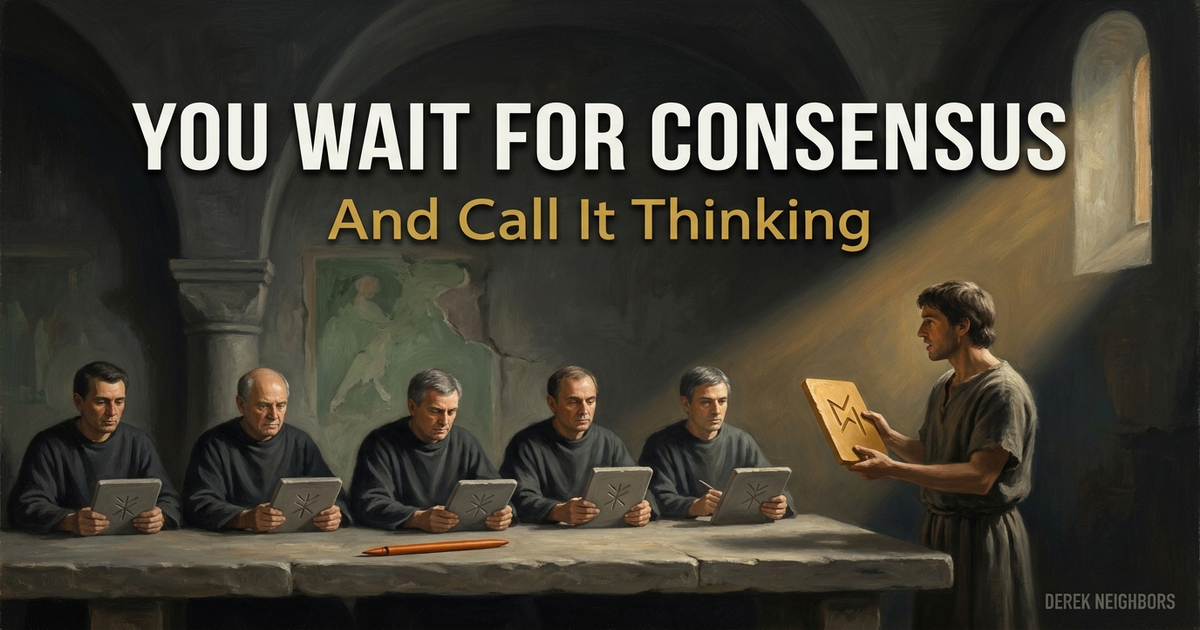
You Wait for Consensus and Call It Thinking
The original thought is already in the room. What is missing is the person willing to say it while it can still lose. Consensus is a tool. It is a poor substitute for a first speaker.
Play to Their Fantasies and You Train Them Off Reality
Law 32 of the 48 Laws of Power tells you to play to people's fantasies: become the oasis of romance in a harsh world, avoid ugly truth, and gain power from the hunger for soft stories. The tactical truth is real. Pleasant pictures gather crowds, and disenchantment makes people angry. The character cost arrives when fantasy becomes your operating system. You train judgment off reality. When the mirage breaks, you earn the rage. The ARETE alternative keeps hope aimed at a hard path people can walk, and restores frank speech that can still lead.

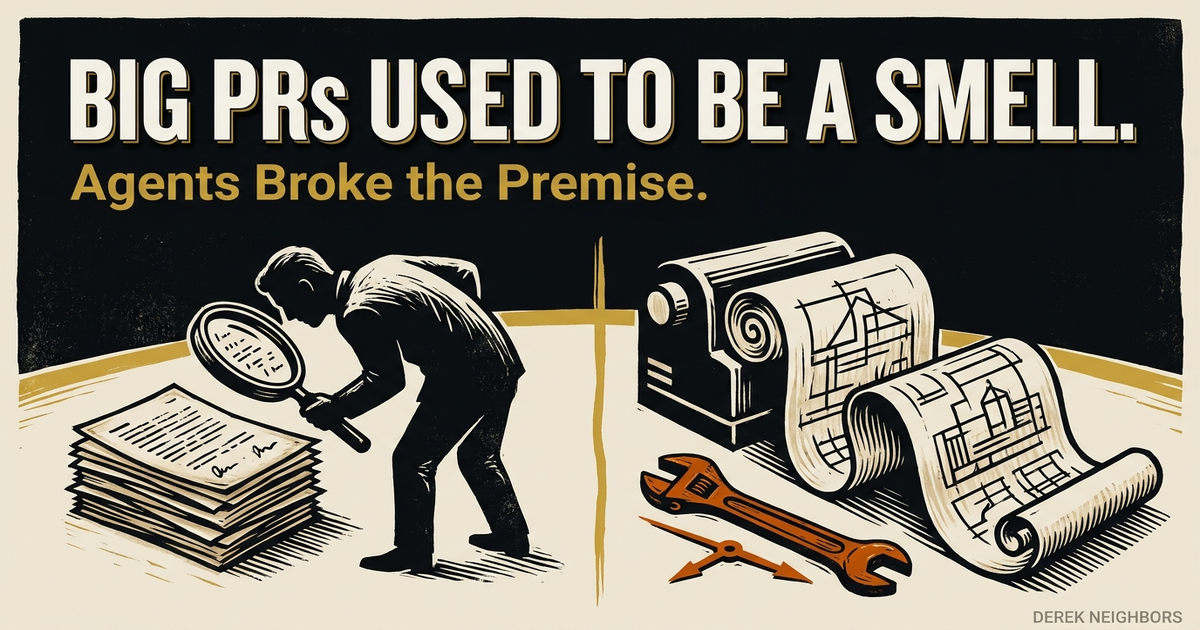
Big PRs Used to Be a Smell. Agents Broke the Premise.
A craftsman friend recoils at huge agent PRs. The disgust is real. The absolute rule is not. Small PRs protected human memory and slow forensics. Agents change both. Keep atomic commits and fast recovery. Stop worshiping line count as excellence.
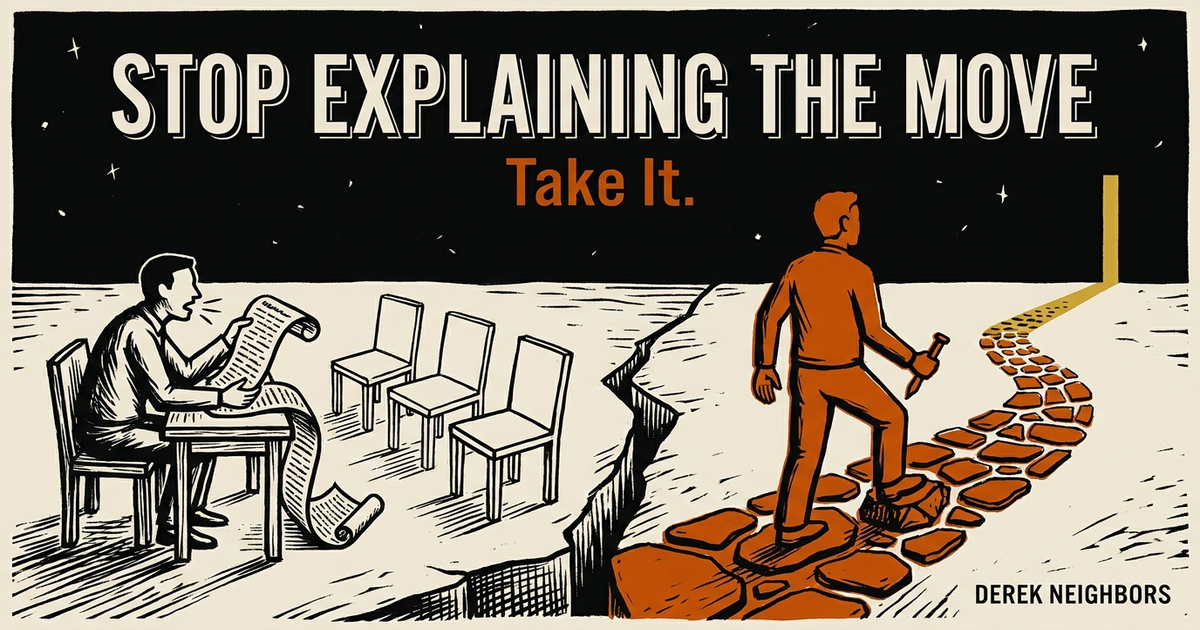
Stop Explaining the Move. Take It.
Preemptive defense feels responsible. It often spends the attention and nerve your practice needed. Ancient courage puts the step first and the account second, and only when an account is actually owed.
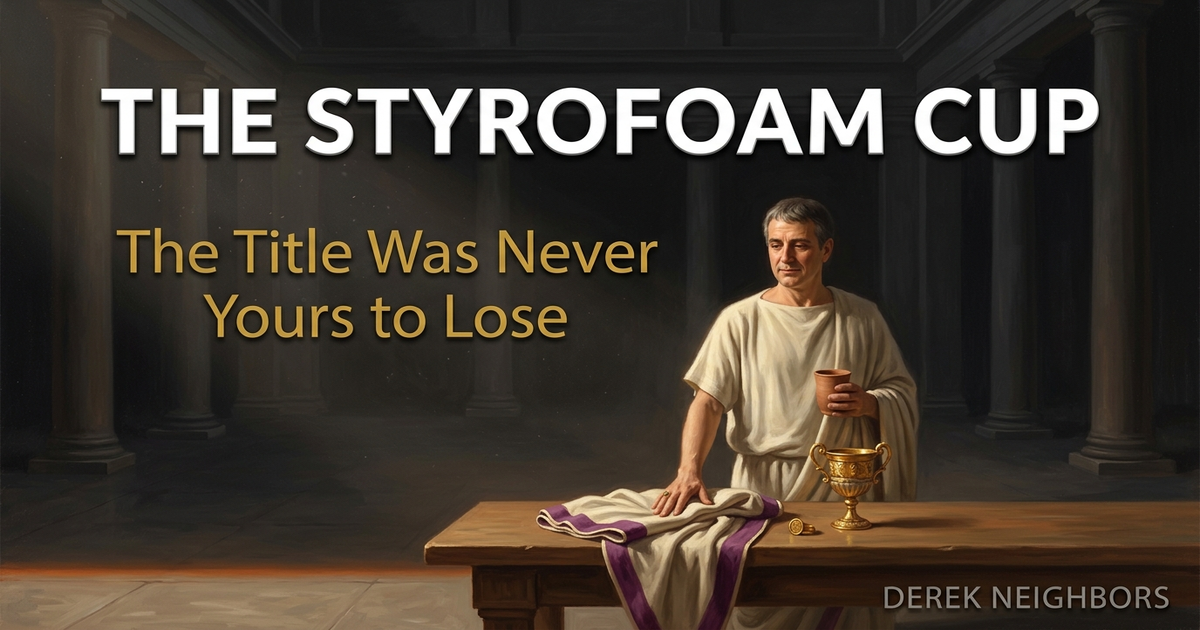
The Styrofoam Cup: The Title Was Never Yours to Lose
The ceramic cup, the car service, the upgraded seat, the jokes that got funnier with every promotion. All of it arrived as you rose, so it reads like a measurement of you. It never was. The deference is addressed to the chair, and the chair is on loan. The Stoics kept a running audit of exactly this, and the Greeks had a job title for the right way to hold borrowed power. Confuse the trappings for yourself and the confusion bills you twice: once while you hold the title, and once, brutally, on the day you hand it back.
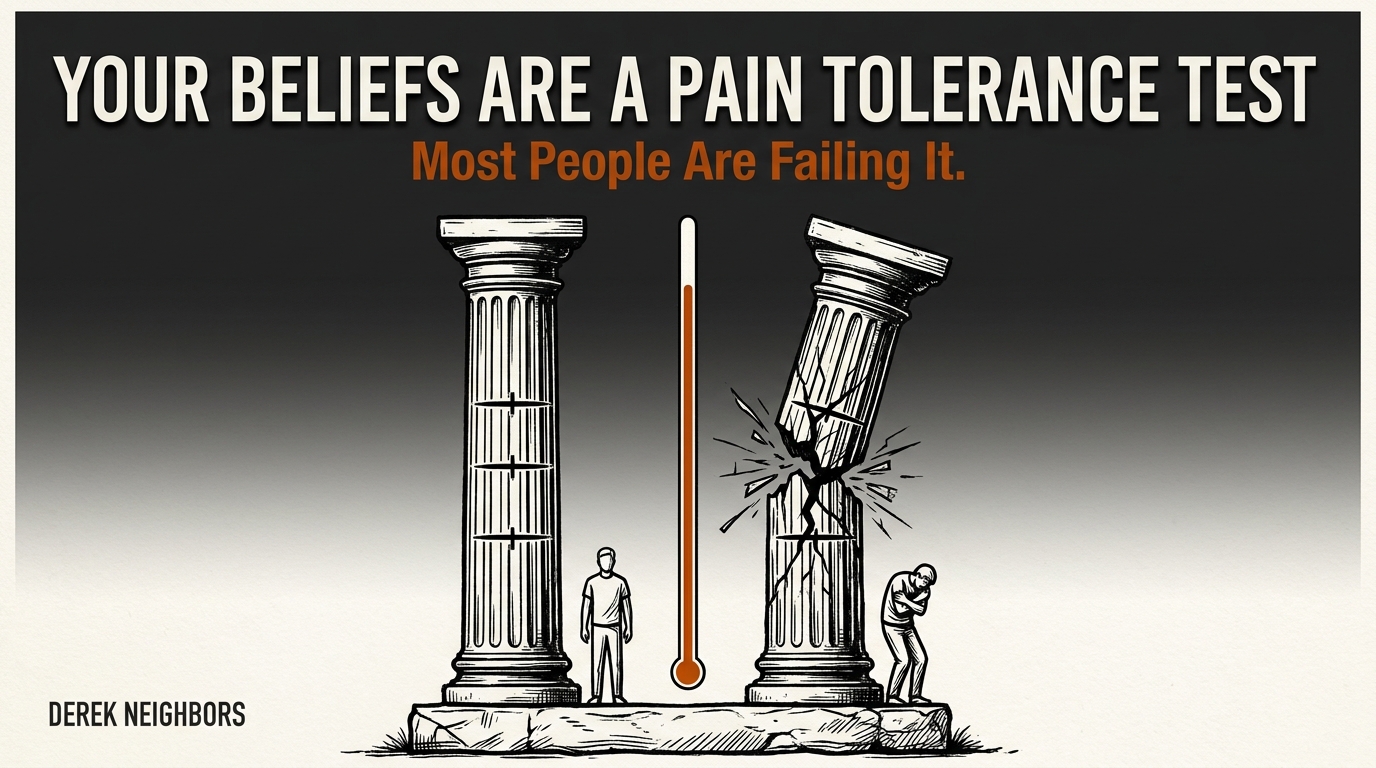
Your Beliefs Are a Pain Tolerance Test. Most People Are Failing It.
Two people take the same hit. Same diagnosis, same year, same loss of income. One keeps showing up. One disappears into the couch for six months. The difference is rarely willpower. It is the belief system running underneath, and belief systems can be scored. The Stoics built a scorecard without calling it that: internal control, suffering as training material, virtue as something worth the cost. Most modern frameworks fail on all three axes and then wonder why life feels unbearable.
The Story You Tell About Pain Decides How Much It Hurts
Two soldiers and two civilians take the same wound. The soldiers ask for less morphine. The injury is identical, so the difference is not in the tissue. It is in the meaning. Cicero spent a book on this, the Stoics built a whole practice around it, and modern pain science has now mapped the lever they were pulling. Pain has two parts: the signal the body sends and the story your mind wraps around it. The signal is mostly fixed. The story is not, and the story does most of the damage.

If Your Team Never Disagrees With You, You're Not Leading. You're Indoctrinating.
A team that always agrees with you is not aligned. It has been worn down. Most leaders are quietly running a sophistic operation, training reciters when they think they are developing thinkers. The Socratic test still applies, and most modern leaders fail it.

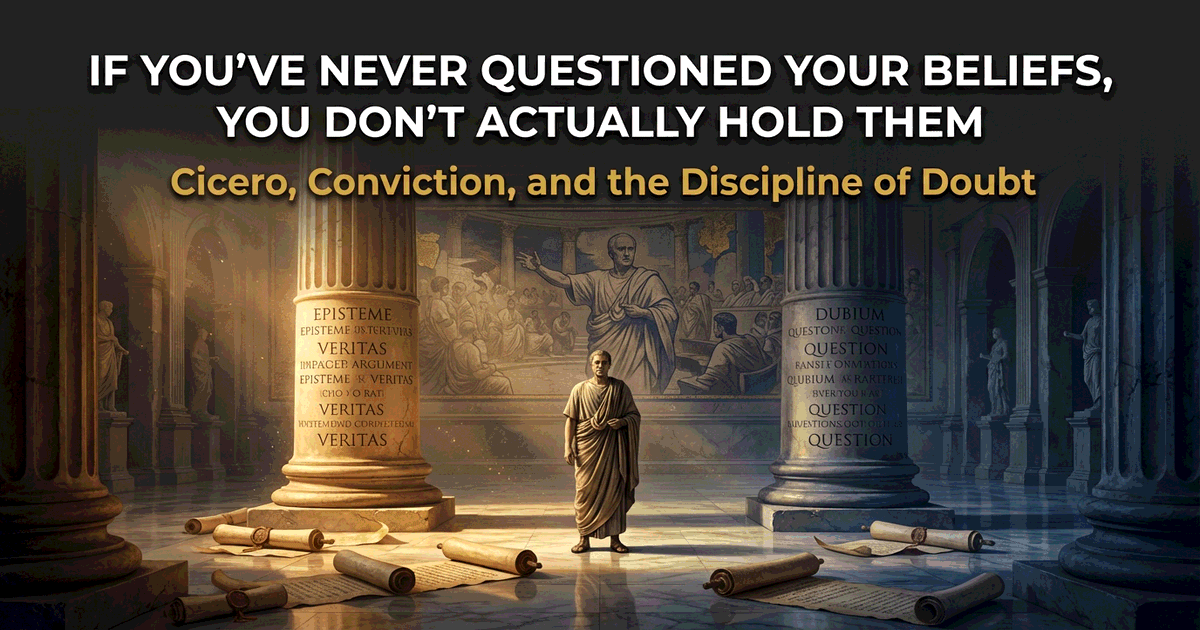
If You've Never Questioned Your Beliefs, You Don't Actually Hold Them
Cicero's Academic Skeptics didn't doubt because they were weak. They doubted because they understood something about conviction that most people never will. Unexamined certainty disguises itself as strength while producing the brittleness that shatters under the first real challenge.
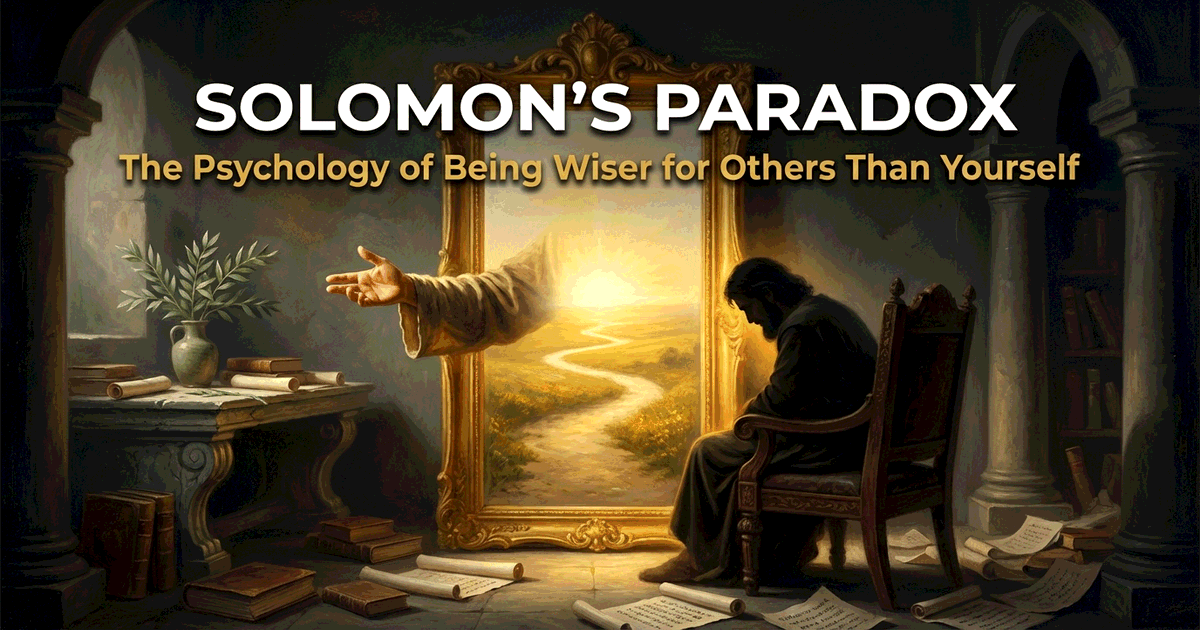
Solomon's Paradox: The Psychology of Being Wiser for Others Than Yourself
You dispense clarity to friends while drowning in your own confusion. Modern psychology calls it Solomon's Paradox. The ancient Greeks had a practice to fix it.
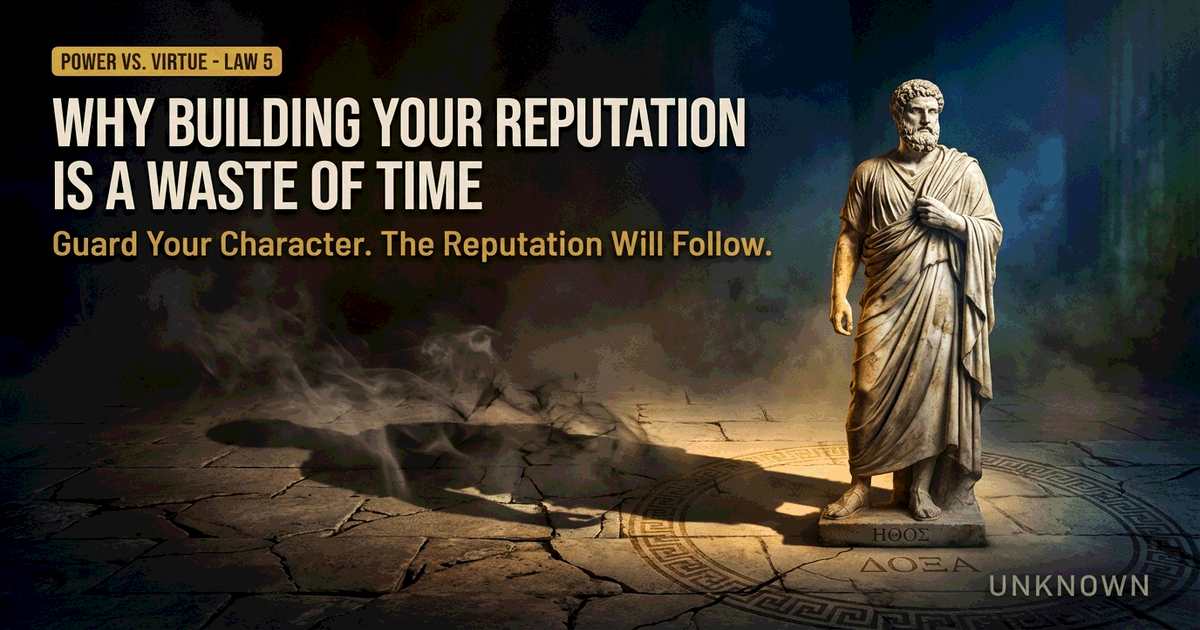
Why Building Your Reputation Is a Waste of Time
Greene says guard your reputation with your life. The Greeks say build character worth remembering. One requires constant maintenance. The other requires consistent choices. The difference explains why some reputations survive scrutiny and others collapse the moment the spotlight shifts.
What If Your 'Personal Best' Is Actually Your Personal Belief?
Everyone treats their personal best as an objective measurement. But what if it's actually a prophecy? What if the limit you keep hitting is the limit you keep expecting to hit?
Character Isn't What You Post. It's What You Practice.
Social media has convinced us that visible virtue is real virtue. Aristotle knew better. Character is the pattern of what you do when no one's watching, not the highlight reel you curate for strangers.

If You Can't Defend It, You Don't Believe It. You're Just Repeating It.
Most people defend positions they never chose. Socrates understood that repeating something doesn't make it yours. The unexamined belief is just someone else's script running in your head.
The Craft Stage: When Skill Becomes Second Nature (Techne)
You don't have a knowledge problem. You have a craft problem. Most people understand excellence intellectually but lack the embodied competence to execute it consistently. Techne bridges the gap between knowing and doing.
The Information Architecture: Curating Input for Greatness
Most people consume information like they eat at a buffet, grabbing everything that looks appealing without considering nutrition or purpose. Then they wonder why their thinking is sluggish and their decisions are poor. Greatness requires intentional information architecture.

The Philosopher King: Ancient Wisdom for Modern Leadership Integration
Plato's most radical leadership idea wasn't about power or position, it was about character. The philosopher king represents the ultimate integration of wisdom, excellence, courage, and transformation. Here's how to stop managing systems and start transforming people.
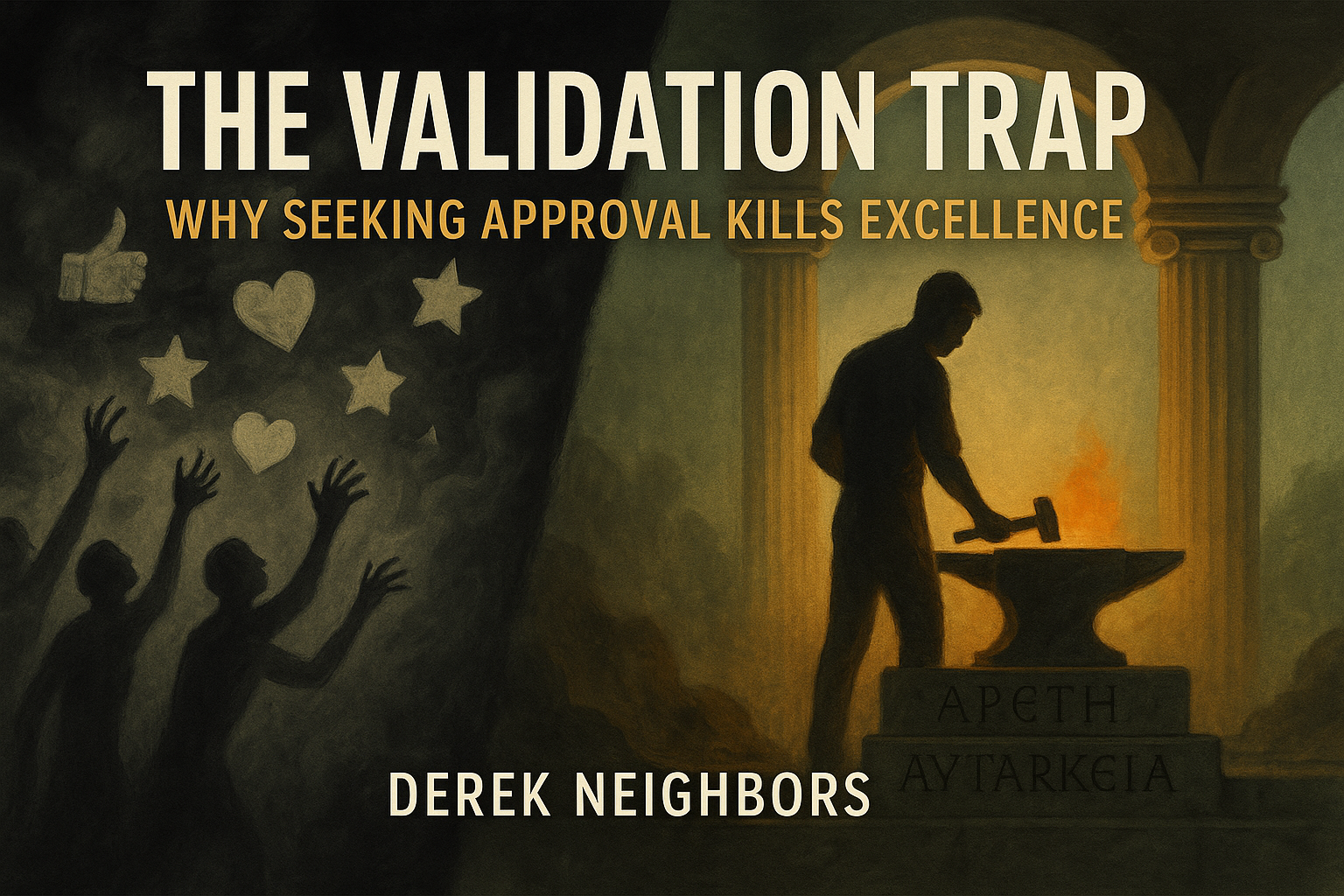
The Validation Trap: Why Seeking Approval Kills Excellence
The most liberating realization: those people you're trying to win over aren't worth winning over. Energy spent seeking approval is energy not spent building excellence. Time to break free from the validation trap.
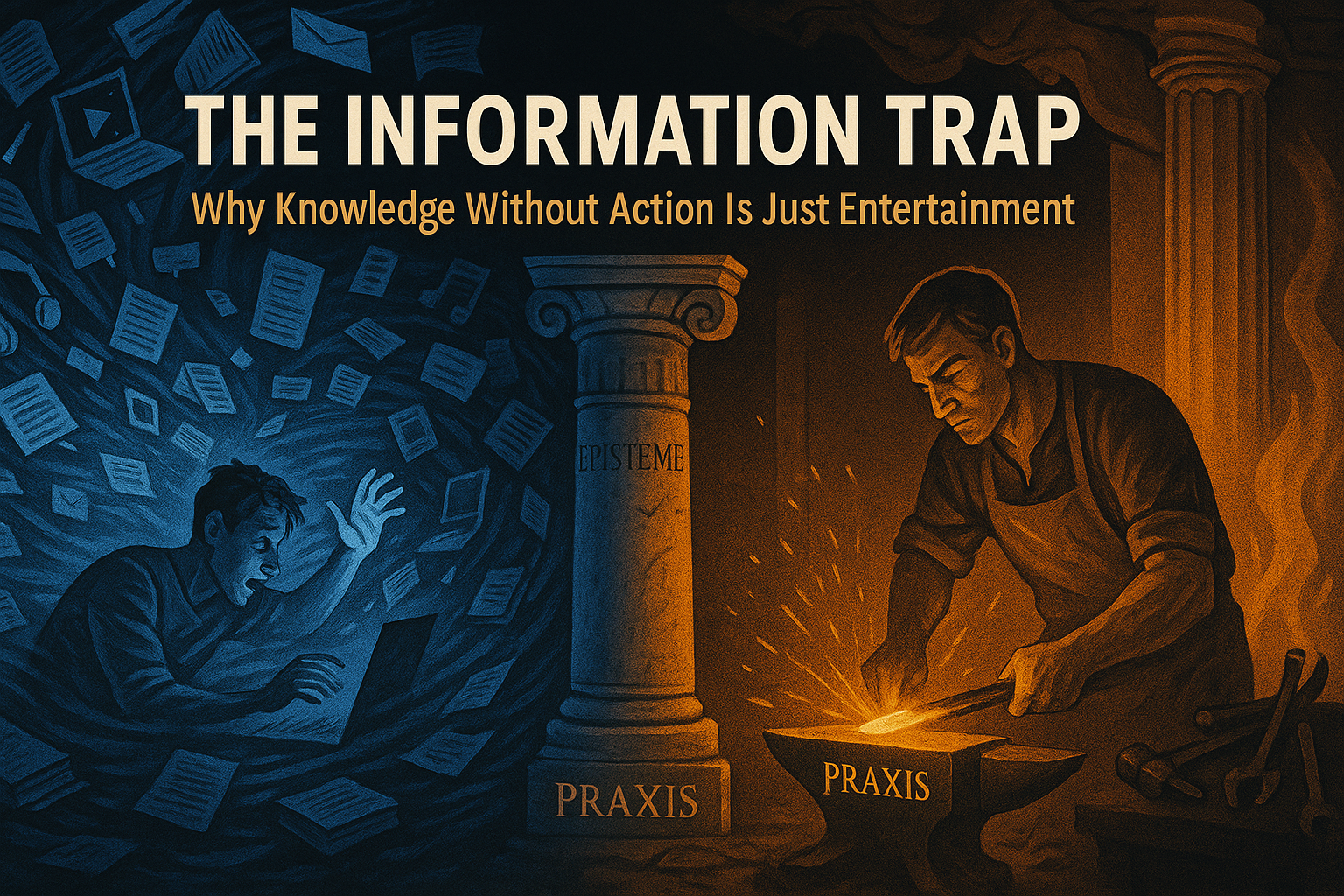
The Information Trap: Why Knowledge Without Action Is Just Entertainment
You don't need another course. You need to start doing. The journey itself holds every lesson you need to learn. The internet gave us infinite information and infinite excuses.
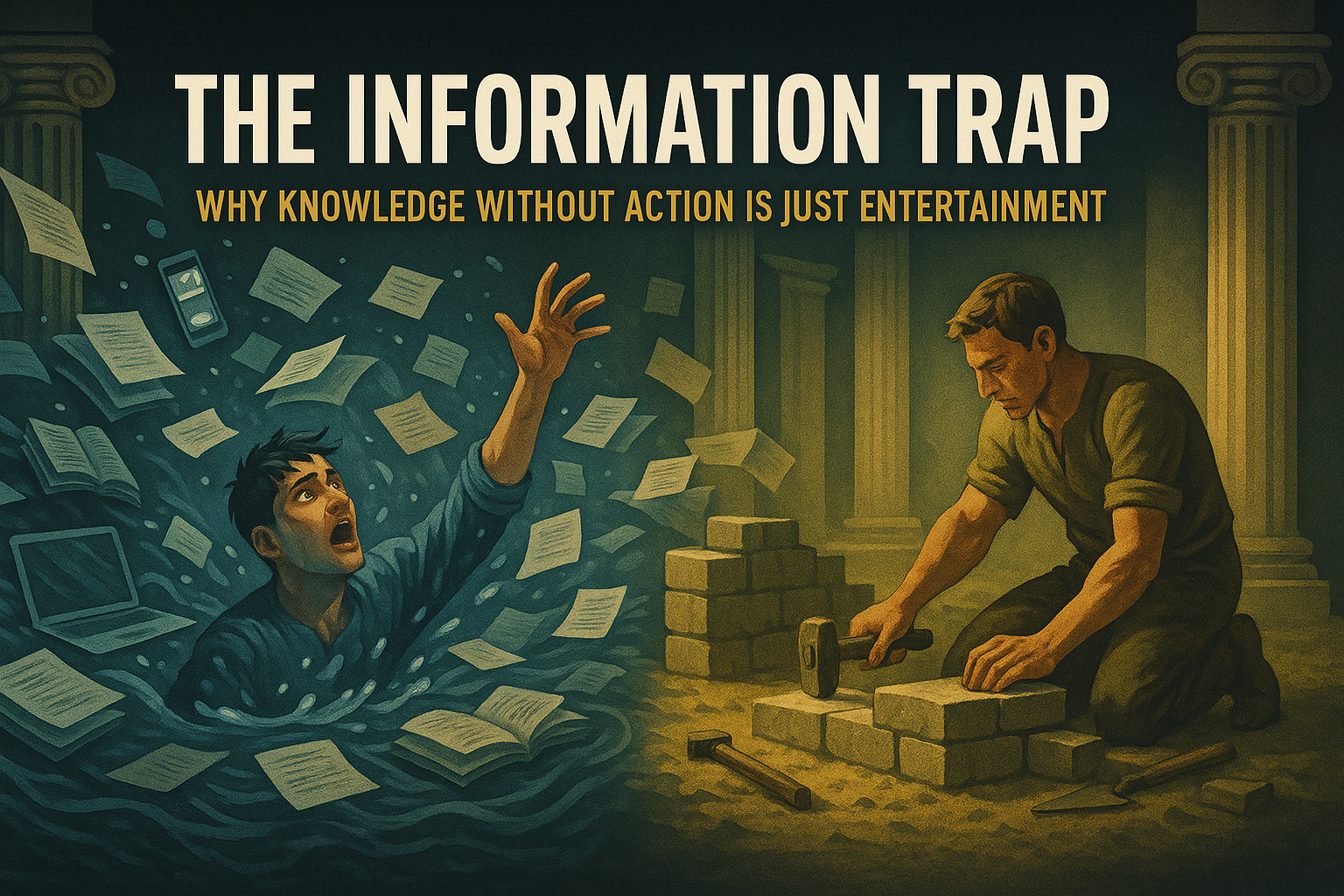
The Information Trap: Why Knowledge Without Action Is Just Entertainment
Most of your learning is actually entertainment in disguise. Here's why information without action is intellectual hoarding, and how to transform from consumer to creator through practical implementation.
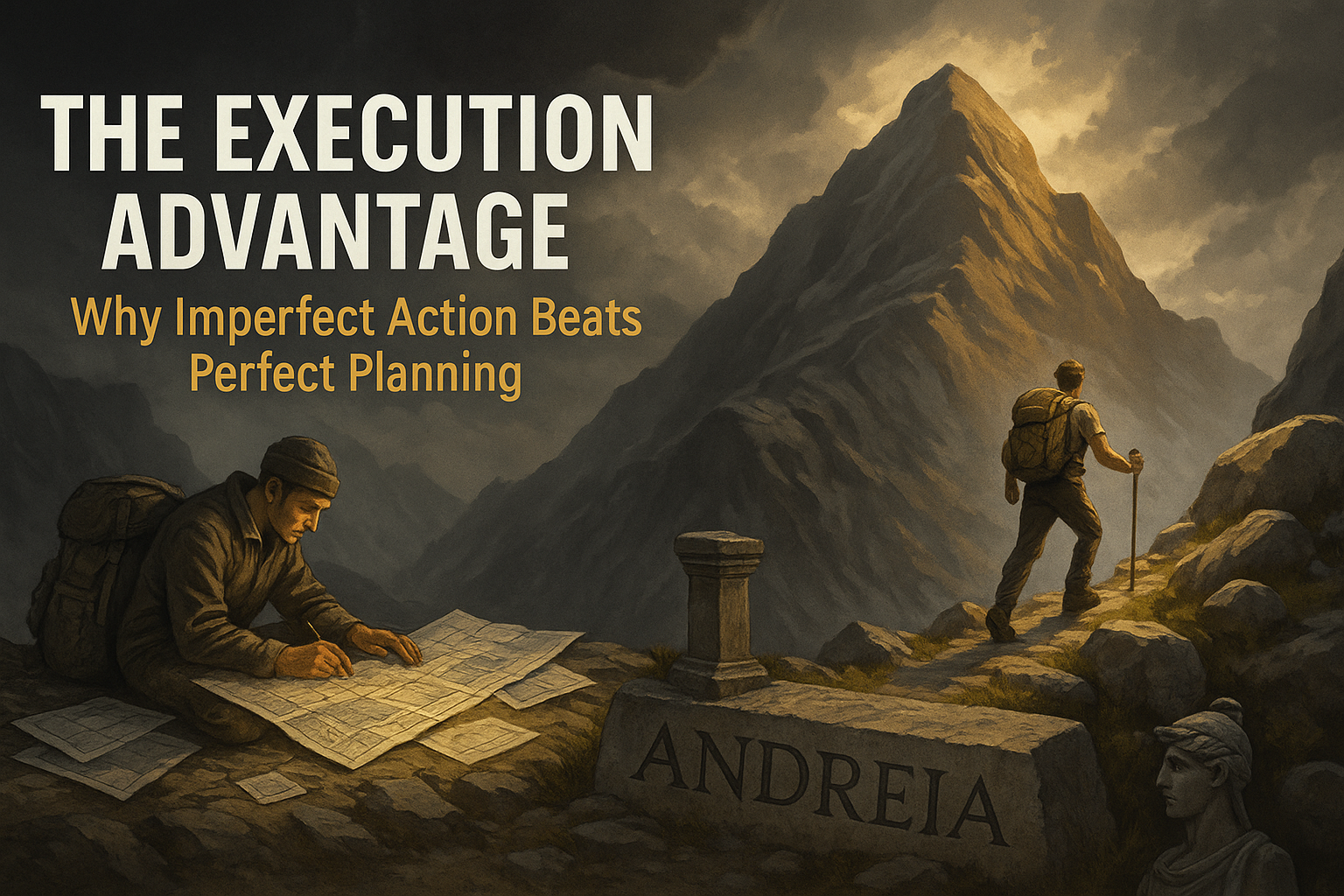
The Execution Advantage: Why Imperfect Action Beats Perfect Planning
Perfect plans are usually perfectly wrong. Here's why imperfect action creates better results than perfect planning, and how to build the execution advantage through courage and rapid iteration.
Phronesis: The Lost Art of Practical Wisdom
The ancient Greeks had a word for the leadership skill we desperately need today: phronesis. It's not about having all the answers, it's about acting wisely when you don't.
Between Trapezes: Navigating AI Uncertainty with Ancient Wisdom
In the moment between letting go of one trapeze and grasping the next, there's a space where everything depends on trust, timing, and practical wisdom. For leaders navigating AI transformation, this moment isn't a crisis, it's where excellence is forged.