Greene's first law of power tells you to never outshine the master. The tactical truth is real: insecure leaders punish excellence. But the solution isn't dimming your light. It's knowing when to deploy it. The Greeks called it kairos.

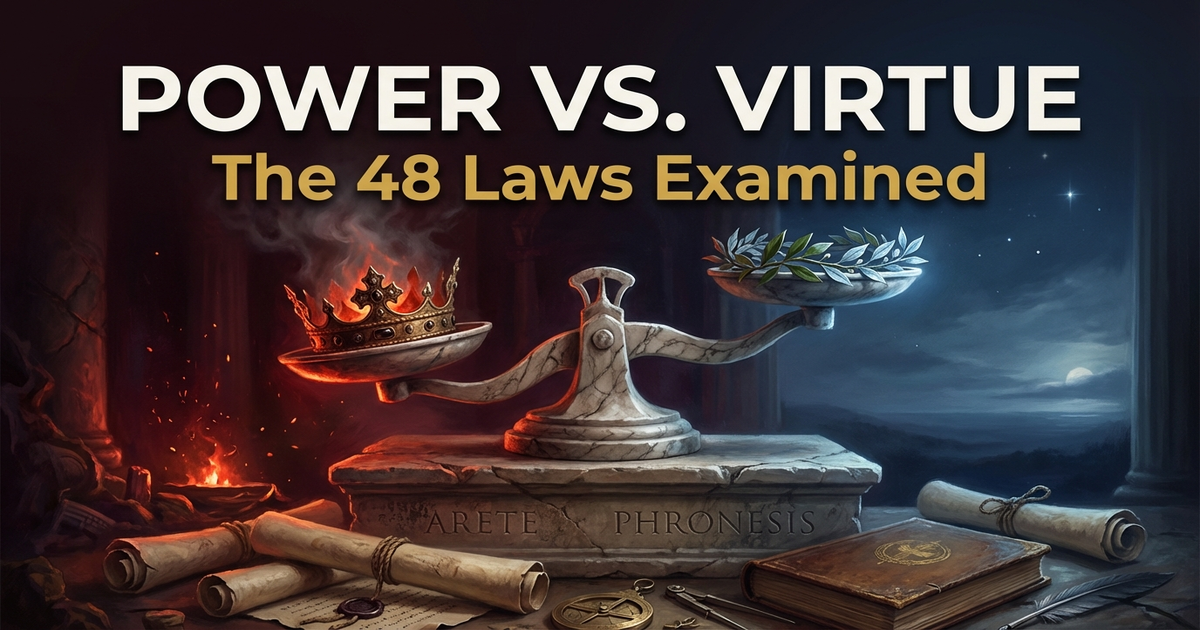
A year-long examination of Robert Greene's 48 Laws of Power through the lens of ancient virtue ethics. Some laws we affirm, some we reframe, some we reject entirely.
Greene's first law of power tells you to never outshine the master. The tactical truth is real: insecure leaders punish excellence. But the solution isn't dimming your light. It's knowing when to deploy it. The Greeks called it kairos.
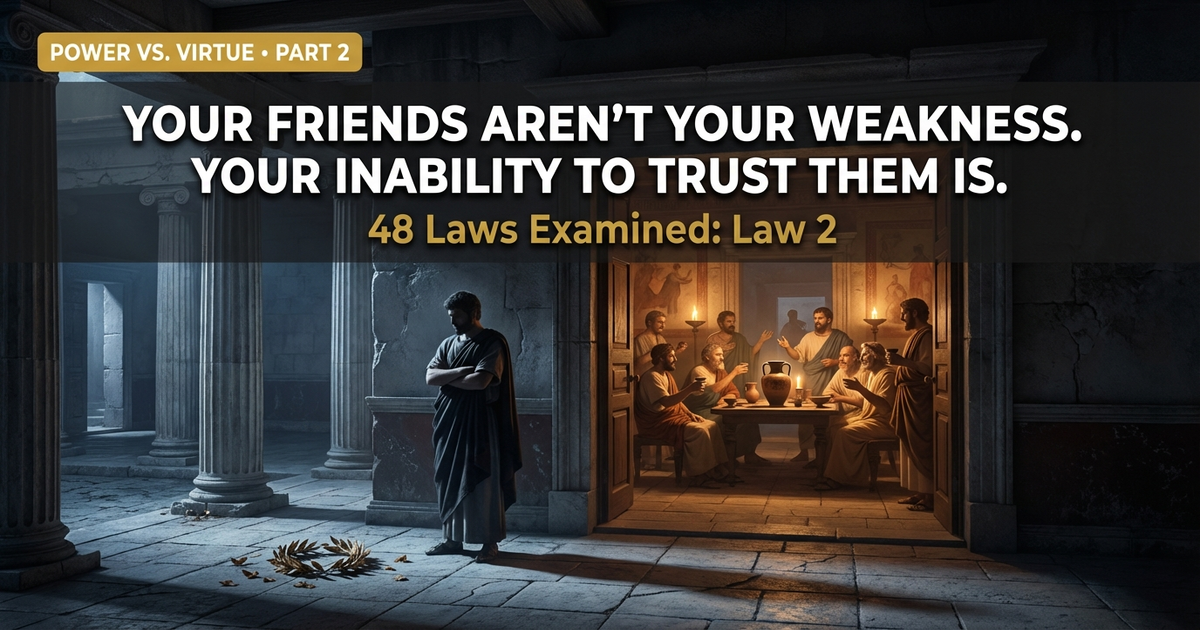
Greene's second law of power tells you to distrust friends and hire enemies. The tactical truth is real: friends can betray you. But the solution isn't strategic isolation. It's wisdom about who to let close.
Greene's Law 3 conflates wisdom with manipulation. Strategic silence is phronesis. Active deception is a cognitive tax that compounds into exhaustion and isolation.
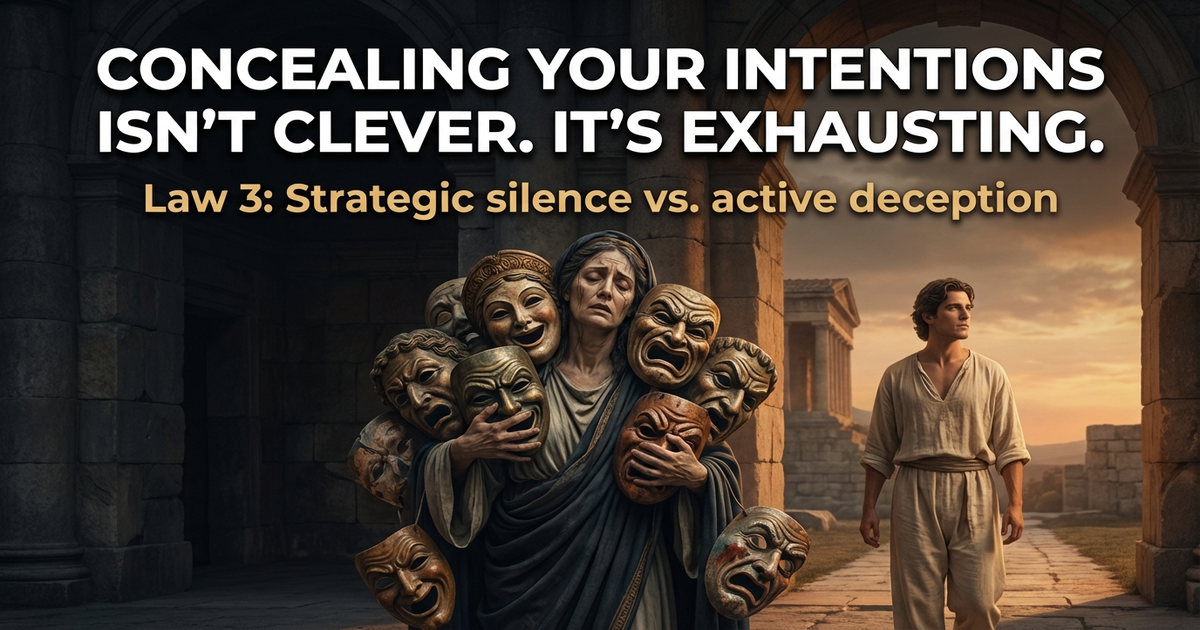
For the first time in this series, Greene and the ancient philosophers agree. Say less. Mean more. But they agree for different reasons, and the difference reveals everything about power versus virtue.

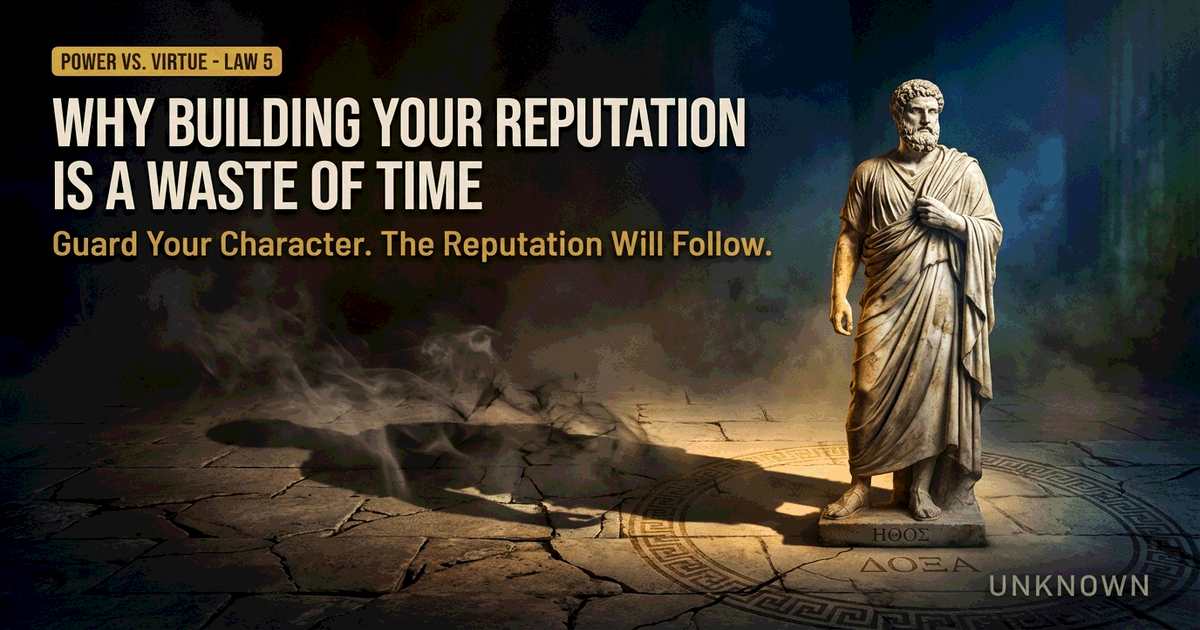
Greene says guard your reputation with your life. The Greeks say build character worth remembering. One requires constant maintenance. The other requires consistent choices. The difference explains why some reputations survive scrutiny and others collapse the moment the spotlight shifts.
Greene says court attention at all costs. The Greeks say build something worth seeing, then refuse to hide it. One manufactures spectacle. The other practices megalopsychia, the discipline of being exactly as capable as you are, in public, where it counts.

Excellence of function. Not achievement or outcome, but becoming excellent through consistent act...
Self-mastery and moderation. The discipline to regulate yourself internally when nothing external...
Human flourishing. The deep satisfaction of functioning as you were meant to function, living in ...
Practical wisdom. The capacity to discern the right action in specific situations, particularly k...
Truth as unconcealment. Not merely accurate statements, but the fundamental orientation toward re...
Opinion, reputation, or common belief as distinguished from true knowledge (episteme). In ancient...
The characteristic function, task, or work that defines what something is meant to do. In Aristot...
The stable character or disposition of a person, formed through repeated action and habit. For Ar...
A stable disposition or settled state of character acquired through repeated action. For Aristotl...
The opportune or decisive moment, the critical point in time when conditions align for effective ...
Deep fellowship and communal participation. The shared life of a community bound by common purpos...
Greatness of soul—the virtue of one who considers themselves worthy of great things and is actual...
Deep friendship rooted in mutual recognition of virtue and commitment to each other's flourishing...
The quality of trustworthiness, faith, or reliable commitment that binds relationships and commun...
Attention to oneself; the continuous vigilant awareness of one's thoughts, judgments, and impulse...
This year-long series examines each of Robert Greene's 48 Laws of Power through the lens of ancient Greek virtue ethics. We acknowledge the tactical truth of each law, examine its character cost, and provide the ARETE alternative for achieving effectiveness without sacrificing integrity.
No. Some laws align with ancient wisdom (like 'Always say less than necessary' which reflects sophrosyne). Some need reframing (like 'Never outshine the master' which confuses timing with self-diminishment). Some we reject entirely (like 'Use selective honesty to disarm' which is manipulation). Each law gets examined individually.
The ARETE alternative shows how to achieve similar outcomes through virtue rather than manipulation. Instead of dimming your light to avoid threatening insecure leaders, you deploy excellence with wisdom about timing. Instead of using enemies, you choose friends for character. The goal is effectiveness without character erosion.
Greek concepts like kairos (timing), phronesis (practical wisdom), and arete (excellence) provide frameworks for navigating power dynamics with integrity. The Stoics understood political realities while maintaining character. This series bridges ancient wisdom and modern workplace challenges.
Most critiques either reject Greene entirely or accept his premises uncritically. This series acknowledges the tactical truth of each law, understands WHY they 'work,' then asks the deeper question: What kind of person do you become by practicing this? It's not about whether laws are effective, but whether the effectiveness is worth the character cost.
One law per week, every week for 48 weeks. The series runs from January 2026 through January 2027, providing a full year of examination into power, character, and what it means to lead with integrity.
This series is part of a comprehensive approach to excellence and human flourishing. Get systematic frameworks and practical tools for transformation.
Distinguishing genuine self-optimization from elaborate avoidance strategies
Navigate the AI revolution with practical wisdom and strategic thinking