Phantasia vs Doxa: Key Differences in Greek Philosophy
Before you form a belief about anything, something else has already happened. An image has appeared in your mind. A mental picture, a remembered sensation, a constructed scenario. This prior event is phantasia, the image-making faculty, and it is distinct from the belief-forming faculty that the Greeks called doxa. Aristotle dedicated significant attention to phantasia in De Anima because he recognized that the mind does not leap from raw perception to settled belief in a single step. Phantasia mediates between perception and thought. It takes the raw material of sensory experience and presents it to the mind as an image, a representation that can be contemplated, manipulated, and evaluated. Only then does doxa enter: the faculty that takes that image and commits to a judgment about whether it is true or false, real or imagined. The distinction is not merely academic. It determines the quality of your thinking. Phantasia presents. Doxa commits. When you fail to distinguish between the two, you treat every mental image as a truth claim. A fearful scenario plays in your mind and you immediately believe it will happen. An appealing vision arises and you take it as a reliable prediction. The undisciplined mind collapses phantasia into doxa, treating every product of imagination as an object of belief. The Stoics developed this insight into one of their most powerful psychological tools. They distinguished between the initial phantasia (the impression that arises in the mind) and the act of synkatathesis (assent) that transforms an impression into a belief. Epictetus taught that you cannot control which phantasiai appear in your mind, but you can control whether you give them your assent. This gap between impression and assent is the space where freedom lives. The person who assents to every impression that arises is enslaved to their own image-making faculty. The person who has trained themselves to examine impressions before granting assent has achieved a form of cognitive self-governance that most people never develop. Animals have phantasia. A dog can form mental images and respond to imagined scenarios. But animals do not have doxa in the full sense, because doxa requires the rational capacity to evaluate an impression and commit to a judgment about its truth. This means that the movement from phantasia to doxa is specifically a rational act, and it can be done well or poorly. Done well, it produces reliable beliefs grounded in careful evaluation. Done poorly, it produces beliefs that are nothing more than unexamined responses to whatever images happened to appear most vividly or most recently. In your own thinking, the practical application is clear. When a strong mental image grips you, pause. Ask whether you are dealing with phantasia or doxa. Is this something appearing in your mind, or something you have committed to believing? The space between those two is where your best thinking happens.
Definitions
Phantasia
(φαντασία)
fan-tah-SEE-ah
The capacity of the mind to form impressions, appearances, or mental representations of reality. In Stoic philosophy, phantasia is the initial presentation that arises in consciousness before rational judgment is applied—the raw material from which all thought and action emerge.
Doxa
(δόξα)
DOK-sah
Opinion, reputation, or common belief as distinguished from true knowledge (episteme). In ancient Greek thought, doxa represents the realm of appearance and popular perception—what most people believe to be true, which may or may not align with deeper reality.
Key Differences
| Aspect | Phantasia | Doxa |
|---|---|---|
| Function | Phantasia is the image-making faculty. It produces mental representations, impressions, and imagined scenarios from sensory experience and memory. | Doxa is the judgment-forming faculty. It evaluates images and impressions and commits to beliefs about whether they are true or false. |
| Truth Commitment | Phantasia makes no truth claim. An image can appear in your mind without any assertion that it represents reality. It presents without judging. | Doxa asserts truth. When you form a doxa, you commit to the proposition that something is the case. You take a stance on reality. |
| Voluntariness | Phantasia arises largely involuntarily. Images, impressions, and mental scenarios appear without your choosing them. You cannot fully control what appears in your mind. | Doxa involves a degree of assent. The Stoics emphasized that while you cannot control your initial impressions, you can choose whether to grant them your belief. |
| Shared with Animals | Animals possess phantasia. Dogs dream, horses startle at imagined threats, and many creatures respond to mental images. Phantasia does not require rational capacity. | Doxa requires reason. Forming a judgment, committing to a truth claim, and evaluating evidence are rational operations that distinguish human cognition from animal perception. |
| Role in Cognition | Phantasia provides the raw material for thought. It mediates between perception and reasoning, supplying the images that the mind then evaluates and organizes. | Doxa produces committed beliefs from that raw material. It is the stage where the mind moves from considering an image to asserting that something about it is true. |
Function
Phantasia is the image-making faculty. It produces mental representations, impressions, and imagined scenarios from sensory experience and memory.
Doxa is the judgment-forming faculty. It evaluates images and impressions and commits to beliefs about whether they are true or false.
Truth Commitment
Phantasia makes no truth claim. An image can appear in your mind without any assertion that it represents reality. It presents without judging.
Doxa asserts truth. When you form a doxa, you commit to the proposition that something is the case. You take a stance on reality.
Voluntariness
Phantasia arises largely involuntarily. Images, impressions, and mental scenarios appear without your choosing them. You cannot fully control what appears in your mind.
Doxa involves a degree of assent. The Stoics emphasized that while you cannot control your initial impressions, you can choose whether to grant them your belief.
Shared with Animals
Animals possess phantasia. Dogs dream, horses startle at imagined threats, and many creatures respond to mental images. Phantasia does not require rational capacity.
Doxa requires reason. Forming a judgment, committing to a truth claim, and evaluating evidence are rational operations that distinguish human cognition from animal perception.
Role in Cognition
Phantasia provides the raw material for thought. It mediates between perception and reasoning, supplying the images that the mind then evaluates and organizes.
Doxa produces committed beliefs from that raw material. It is the stage where the mind moves from considering an image to asserting that something about it is true.
When to Apply Each Concept
When to Choose Phantasia
Attend to phantasia when you notice your mind generating vivid images, scenarios, or impressions that have not yet been evaluated. Before acting on any strong mental picture, recognize it as phantasia and subject it to scrutiny. The discipline of distinguishing impression from belief is one of the most practical tools in the Stoic repertoire.
When to Choose Doxa
Examine your doxa when you realize you have committed to a belief without adequate evaluation. Ask yourself when you moved from receiving an impression to asserting its truth. If you cannot identify the moment of evaluation, you may have collapsed phantasia into doxa without the rational scrutiny that genuine belief formation requires.
Frequently Asked Questions
What is the difference between phantasia and doxa?
Phantasia is the image-making faculty that produces mental representations, impressions, and imagined scenarios. Doxa is the belief-forming faculty that commits to judgments about truth and falsity. Phantasia presents images to the mind without asserting their truth. Doxa takes those images and forms committed beliefs about them. The gap between the two is where rational evaluation should occur.
Phantasia vs doxa in Aristotle?
In De Anima, Aristotle distinguishes phantasia from doxa by noting that phantasia can present things that are not real without the mind committing to their reality. Doxa involves a judgment that something is true or false. Aristotle also observes that animals have phantasia but not doxa, because doxa requires the rational capacity to evaluate and assert, which is specifically human.
What is phantasia in Greek philosophy?
Phantasia is the mental faculty that produces images, impressions, and representations from sensory experience and memory. In Aristotle's psychology, it mediates between raw sense perception and higher-order thought. In Stoic philosophy, phantasia is the initial impression that appears in the mind, which must then be evaluated and either accepted or rejected through the act of rational assent.
How does imagination relate to opinion in Greek thought?
In Greek thought, imagination (phantasia) produces the material that opinion (doxa) evaluates. Phantasia generates images and impressions. Doxa forms beliefs about those images. The relationship is sequential: first the image appears, then the judgment follows. Problems arise when people skip the evaluative step and allow vivid images to become beliefs automatically, which both Aristotle and the Stoics identified as a source of cognitive error.
Articles Exploring Phantasia or Doxa (24)
When the Boss Speaks First, the Room Stops Arguing
You opened the incident review with your best guess and asked the room to push back. Nobody did, and you took the quiet as agreement. The engineer who had the real cause in a dashboard never said it, because after you spoke, saying it meant disagreeing with you. Rank does not have to overrule anyone. Going first is enough.
Certainty Is How Ignorance Sounds Before the Work Corrects It
Two people answer the same question. One is sure. One says it depends, and names what it depends on. The room believes the sure one, and six weeks later the other one is cleaning it up. Certainty is a feeling, and it reports nothing about the world. Here is what the work does to it, and how to hear the difference.
If You Don't Say What It Means, Someone Else Will
The architecture review ran well. Real questions, real answers, on time. Three days later the team is building the thing you thought you had talked them out of. You were right in that room, and the version of it that survived into Monday was written by somebody else. A room never leaves with nothing.
Whatever You Show Them, You Owe Them
Law 37 of the 48 Laws of Power tells you to stage arresting spectacles, because dazzled by appearances nobody will notice what you are really doing. The first half is true and Aristotle already had a virtue for it. The second half is the problem. A spectacle is a promise made in public, and the bill arrives whether or not you meant to sign it.
You Wait for Consensus and Call It Thinking
The original thought is already in the room. What is missing is the person willing to say it while it can still lose. Consensus is a tool. It is a poor substitute for a first speaker.
Play to Their Fantasies and You Train Them Off Reality
Law 32 of the 48 Laws of Power tells you to play to people's fantasies: become the oasis of romance in a harsh world, avoid ugly truth, and gain power from the hunger for soft stories. The tactical truth is real. Pleasant pictures gather crowds, and disenchantment makes people angry. The character cost arrives when fantasy becomes your operating system. You train judgment off reality. When the mirage breaks, you earn the rage. The ARETE alternative keeps hope aimed at a hard path people can walk, and restores frank speech that can still lead.
Big PRs Used to Be a Smell. Agents Broke the Premise.
A craftsman friend recoils at huge agent PRs. The disgust is real. The absolute rule is not. Small PRs protected human memory and slow forensics. Agents change both. Keep atomic commits and fast recovery. Stop worshiping line count as excellence.
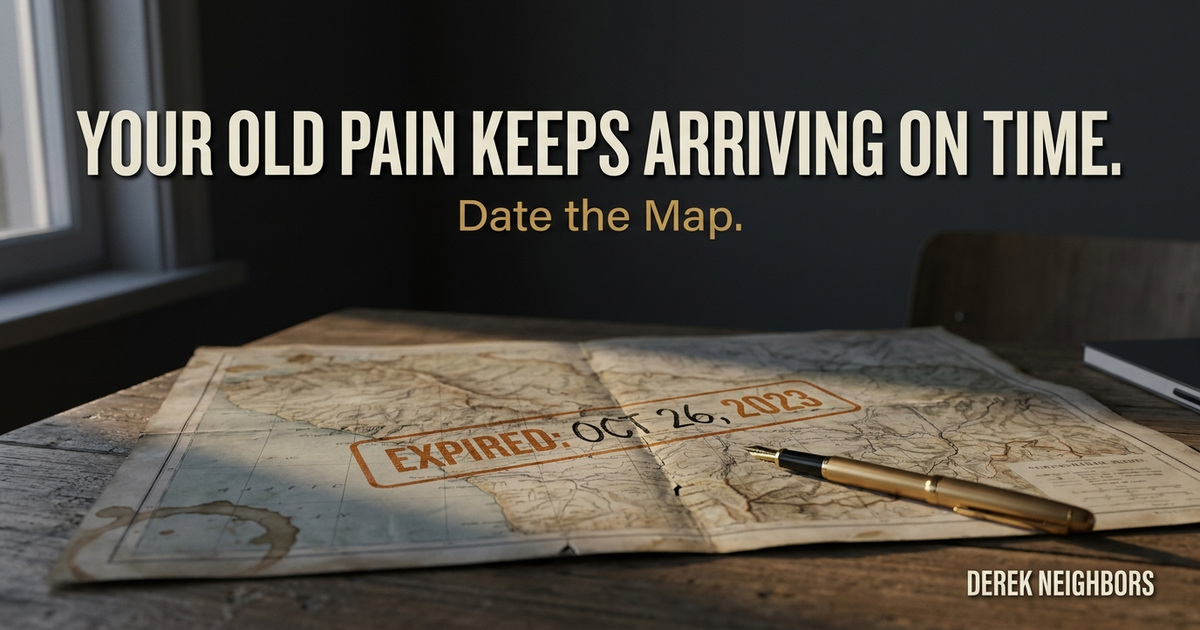
Your Old Pain Keeps Arriving On Time. Date the Map.
Korzybski said the map is not the territory. The harder problem is the undated map: a reaction that was right once and still fires on a present that has changed. Date the impression before you grant it authority.
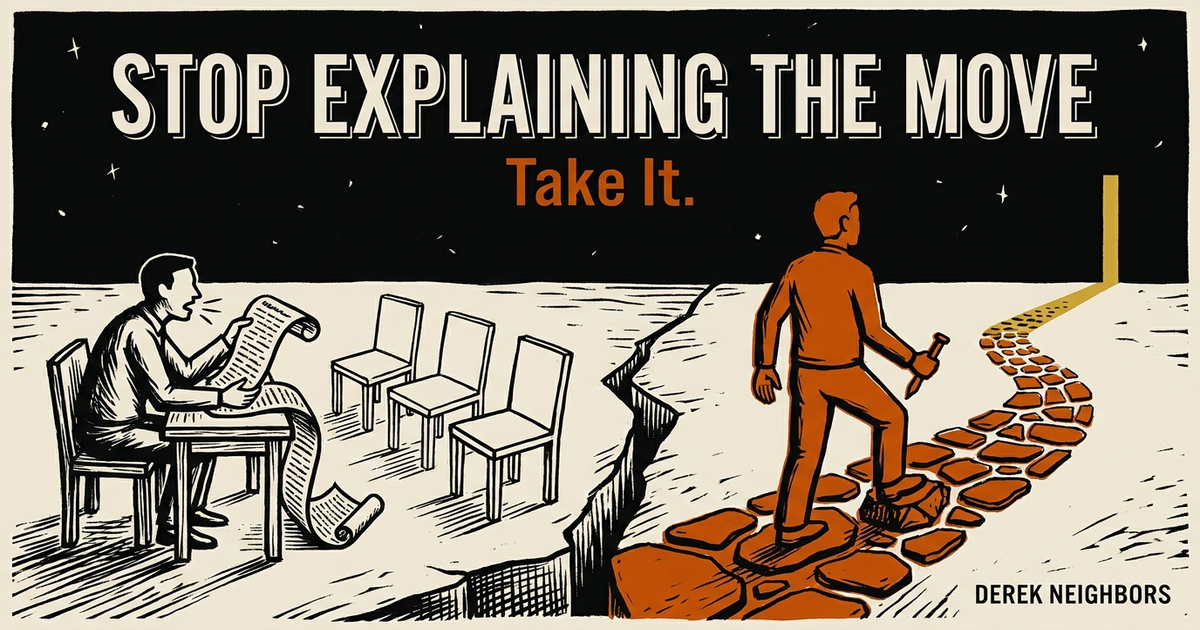
Stop Explaining the Move. Take It.
Preemptive defense feels responsible. It often spends the attention and nerve your practice needed. Ancient courage puts the step first and the account second, and only when an account is actually owed.
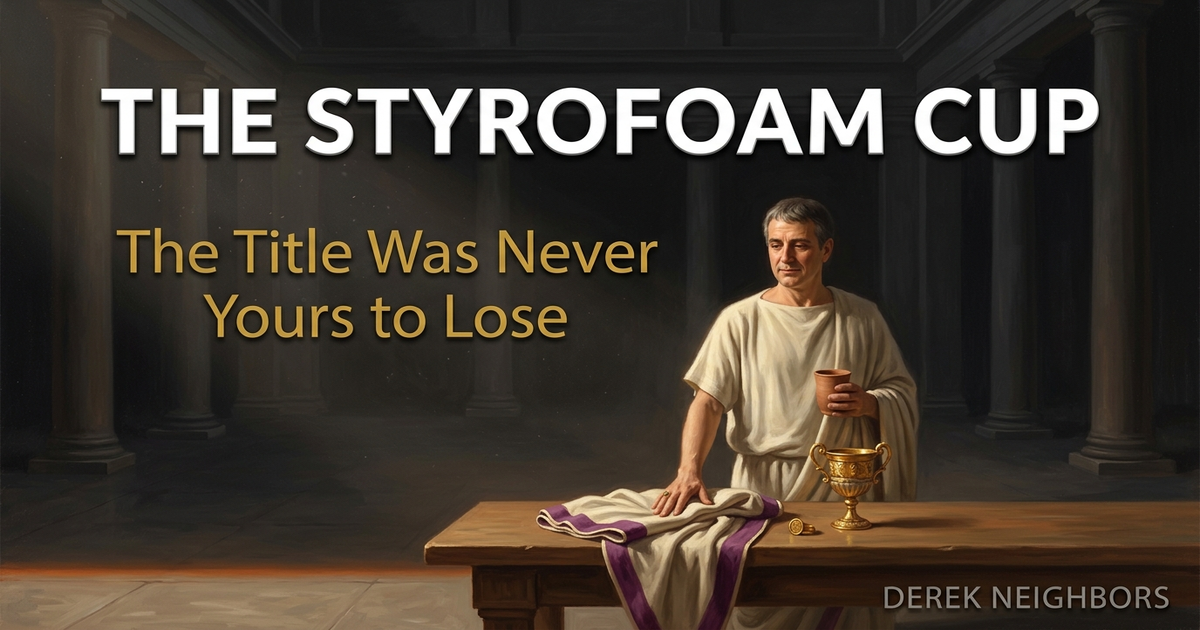
The Styrofoam Cup: The Title Was Never Yours to Lose
The ceramic cup, the car service, the upgraded seat, the jokes that got funnier with every promotion. All of it arrived as you rose, so it reads like a measurement of you. It never was. The deference is addressed to the chair, and the chair is on loan. The Stoics kept a running audit of exactly this, and the Greeks had a job title for the right way to hold borrowed power. Confuse the trappings for yourself and the confusion bills you twice: once while you hold the title, and once, brutally, on the day you hand it back.
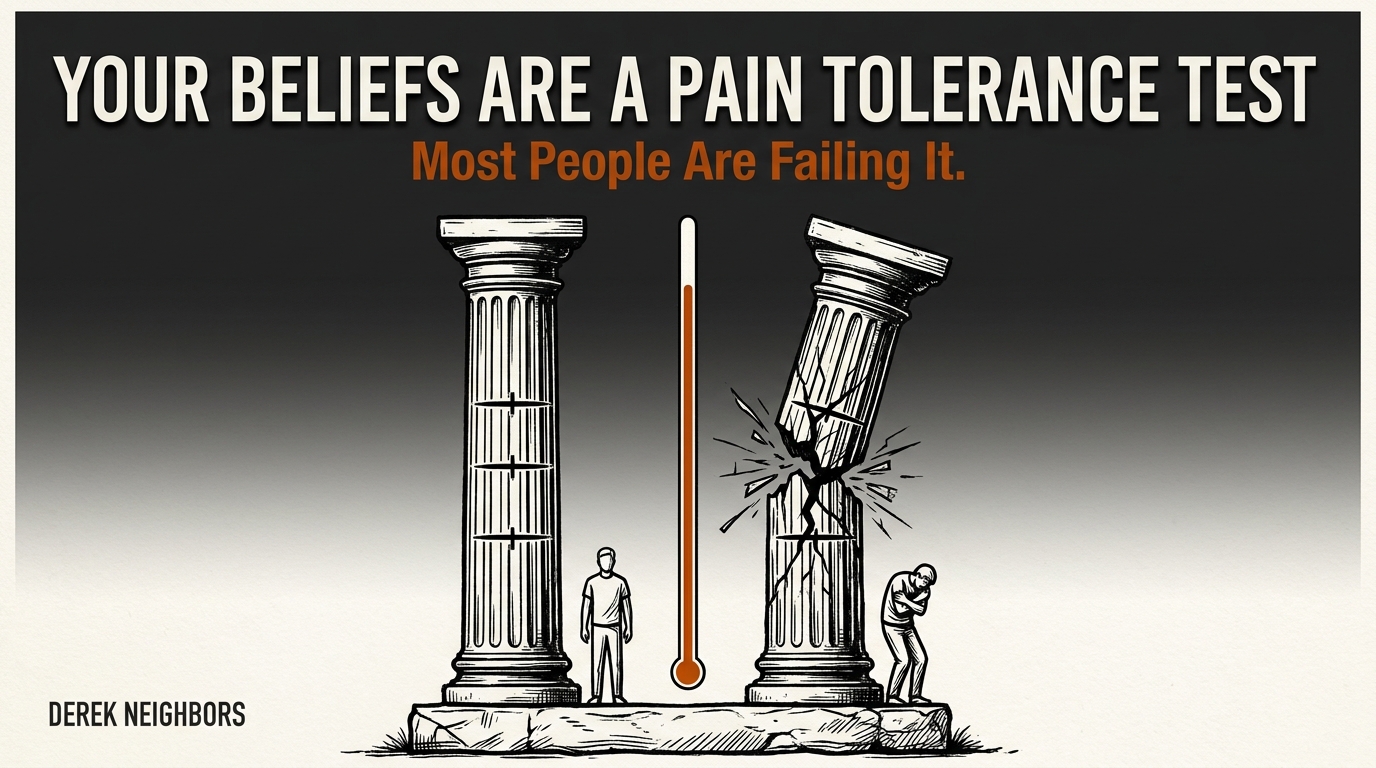
Your Beliefs Are a Pain Tolerance Test. Most People Are Failing It.
Two people take the same hit. Same diagnosis, same year, same loss of income. One keeps showing up. One disappears into the couch for six months. The difference is rarely willpower. It is the belief system running underneath, and belief systems can be scored. The Stoics built a scorecard without calling it that: internal control, suffering as training material, virtue as something worth the cost. Most modern frameworks fail on all three axes and then wonder why life feels unbearable.
The Story You Tell About Pain Decides How Much It Hurts
Two soldiers and two civilians take the same wound. The soldiers ask for less morphine. The injury is identical, so the difference is not in the tissue. It is in the meaning. Cicero spent a book on this, the Stoics built a whole practice around it, and modern pain science has now mapped the lever they were pulling. Pain has two parts: the signal the body sends and the story your mind wraps around it. The signal is mostly fixed. The story is not, and the story does most of the damage.

Stoicism Doesn't Mean You Stop Grieving. It Means You Stop Performing It.
The popular picture of Stoicism is a man who feels nothing at the funeral. The philosopher who wrote the manual on composure buried a close friend and wept past all reason, then admitted it in writing. What the Stoics actually taught about loss is harder than numbness and harder than wallowing, and it turns on one distinction almost nobody makes.
If Your Team Never Disagrees With You, You're Not Leading. You're Indoctrinating.
A team that always agrees with you is not aligned. It has been worn down. Most leaders are quietly running a sophistic operation, training reciters when they think they are developing thinkers. The Socratic test still applies, and most modern leaders fail it.
The Scar You Think Everyone Sees Isn't There. You're the Only One Looking.
You assume your perception of how others treat you is data. A famous psychology experiment, and a much older Stoic discipline, both say it isn't. Most of what you think the room is responding to is being generated by the filter you brought into the room.
If You've Never Questioned Your Beliefs, You Don't Actually Hold Them
Cicero's Academic Skeptics didn't doubt because they were weak. They doubted because they understood something about conviction that most people never will. Unexamined certainty disguises itself as strength while producing the brittleness that shatters under the first real challenge.
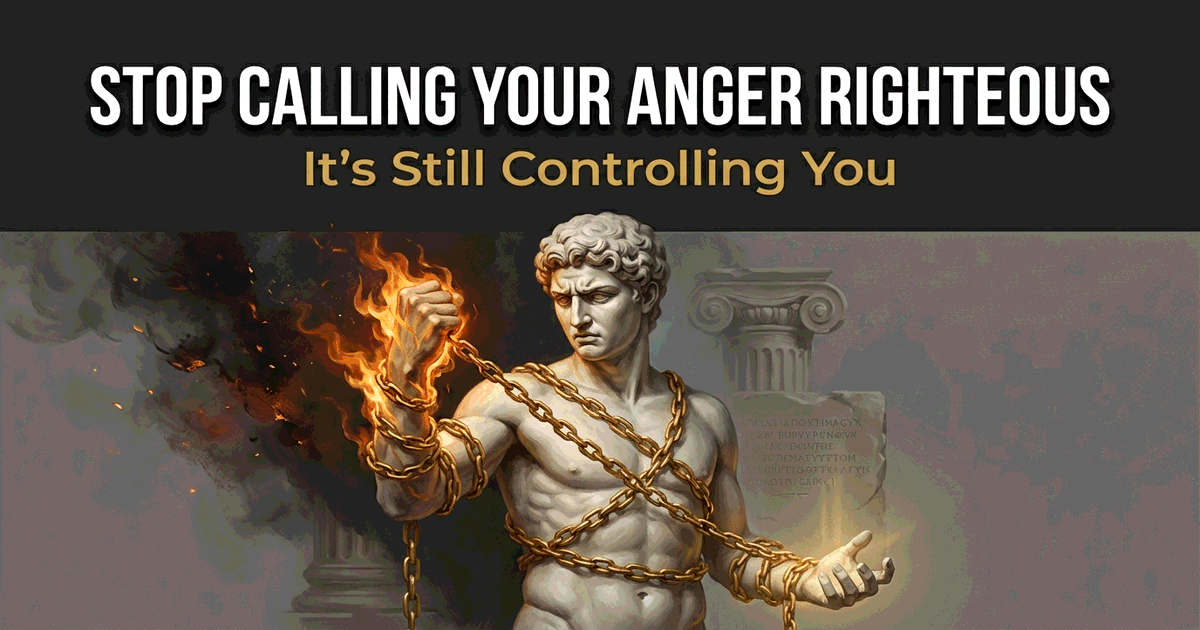
Stop Calling Your Anger Righteous. It's Still Controlling You.
Marcus Aurelius argued that kindness requires more courage than fury. The Stoics rejected righteous anger as philosophy's most dangerous illusion, and modern neuroscience proves them right.
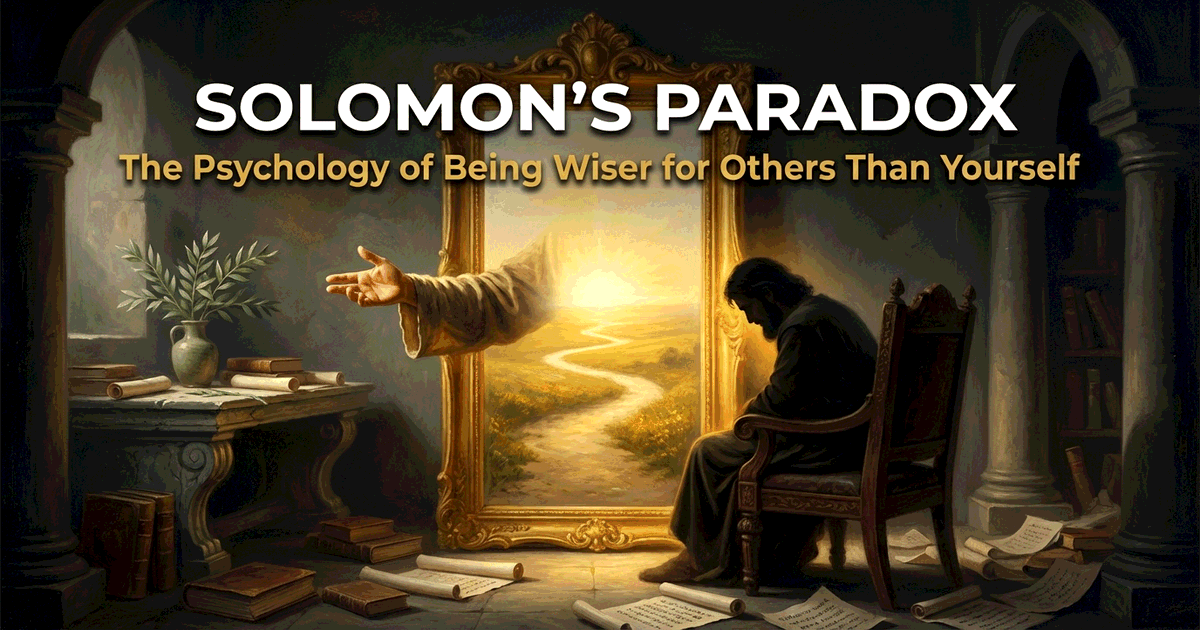
Solomon's Paradox: The Psychology of Being Wiser for Others Than Yourself
You dispense clarity to friends while drowning in your own confusion. Modern psychology calls it Solomon's Paradox. The ancient Greeks had a practice to fix it.
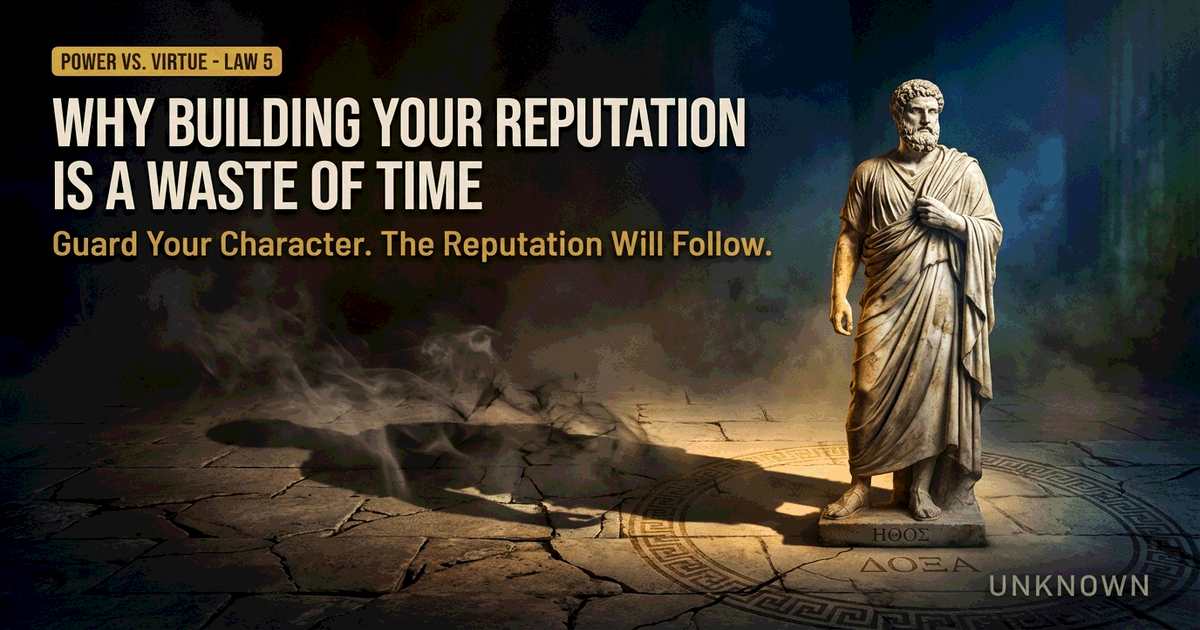
Why Building Your Reputation Is a Waste of Time
Greene says guard your reputation with your life. The Greeks say build character worth remembering. One requires constant maintenance. The other requires consistent choices. The difference explains why some reputations survive scrutiny and others collapse the moment the spotlight shifts.
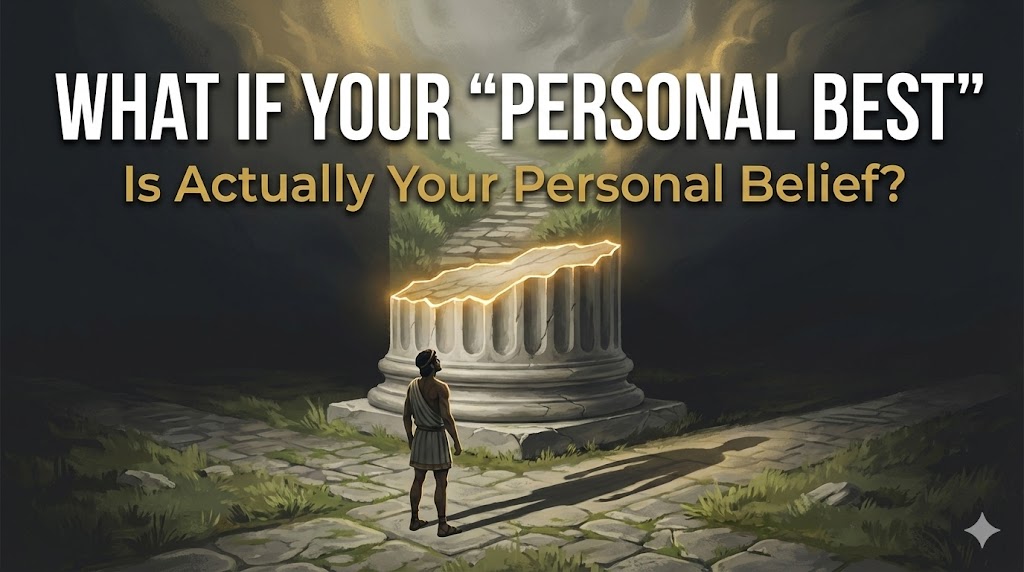
What If Your 'Personal Best' Is Actually Your Personal Belief?
Everyone treats their personal best as an objective measurement. But what if it's actually a prophecy? What if the limit you keep hitting is the limit you keep expecting to hit?
Character Isn't What You Post. It's What You Practice.
Social media has convinced us that visible virtue is real virtue. Aristotle knew better. Character is the pattern of what you do when no one's watching, not the highlight reel you curate for strangers.

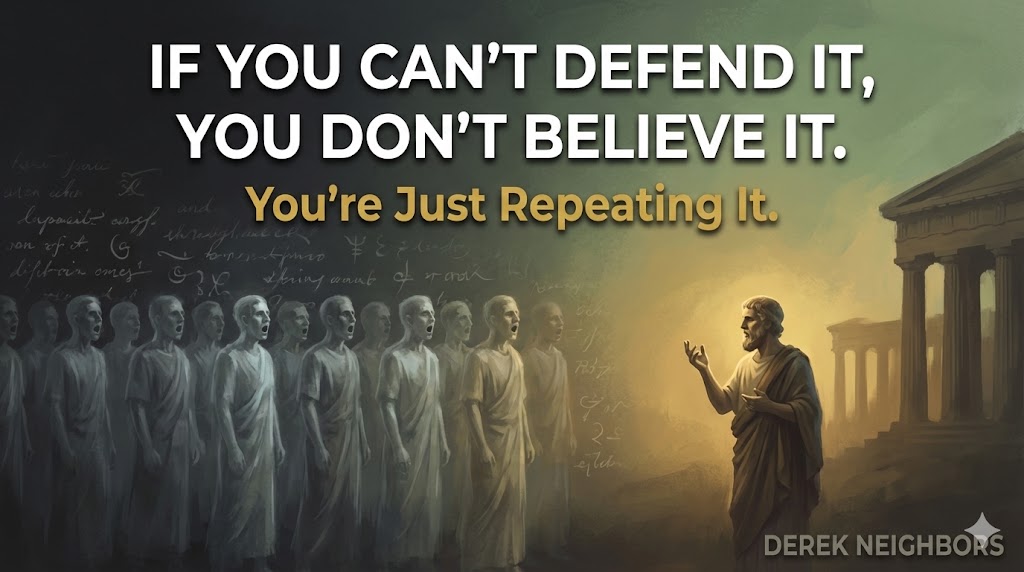
If You Can't Defend It, You Don't Believe It. You're Just Repeating It.
Most people defend positions they never chose. Socrates understood that repeating something doesn't make it yours. The unexamined belief is just someone else's script running in your head.
The Information Architecture: Curating Input for Greatness
Most people consume information like they eat at a buffet, grabbing everything that looks appealing without considering nutrition or purpose. Then they wonder why their thinking is sluggish and their decisions are poor. Greatness requires intentional information architecture.

The Validation Trap: Why Seeking Approval Kills Excellence
The most liberating realization: those people you're trying to win over aren't worth winning over. Energy spent seeking approval is energy not spent building excellence. Time to break free from the validation trap.