Stop Solving Problems You Haven't Defined Yet
Motion feels responsible. Definition feels slow. That is why so many teams spend weeks solving symptoms with impressive energy while the real problem keeps reproducing itself underneath the work.
Browse all articles in the Mastery category. Here you'll find insights, tips, and exploration of topics related to mastery.
Explore diverse perspectives on mastery through practical advice, thought-provoking analysis, and real-world examples.
Motion feels responsible. Definition feels slow. That is why so many teams spend weeks solving symptoms with impressive energy while the real problem keeps reproducing itself underneath the work.
You probably aren't the best in your field. That matters far less than you think. Almost everyone you compare yourself to has already quit, or is about to. The strategy that compounds is staying.
Most people try to engineer their lives down to zero pressure. The Stoics tried something harder. They trained the response so the pressure stopped being decisive.
You tell yourself one day off won't matter. But momentum doesn't degrade on a schedule. It collapses. And the rebuild costs more than you think.
You've tried Todoist, Notion, bullet journals, and time-blocking. They all collapsed the same way. The system was never the problem. The problem is you stopped believing your own word.
The distance between very good and extraordinary isn't incremental. It's a cliff. And the moment you encounter someone who has already climbed it, your response reveals more about your character than your skills ever will.
The meeting where someone asks for more budget, more headcount, more time is almost never about resources. It's about avoiding the harder question of what to cut. The paradox: limitations don't block great work. They force it.
The Default Mode Network does your brain's most sophisticated cognitive work when you stop trying. The ancient Greeks built their civilization around this principle. Modern hustle culture has buried it.
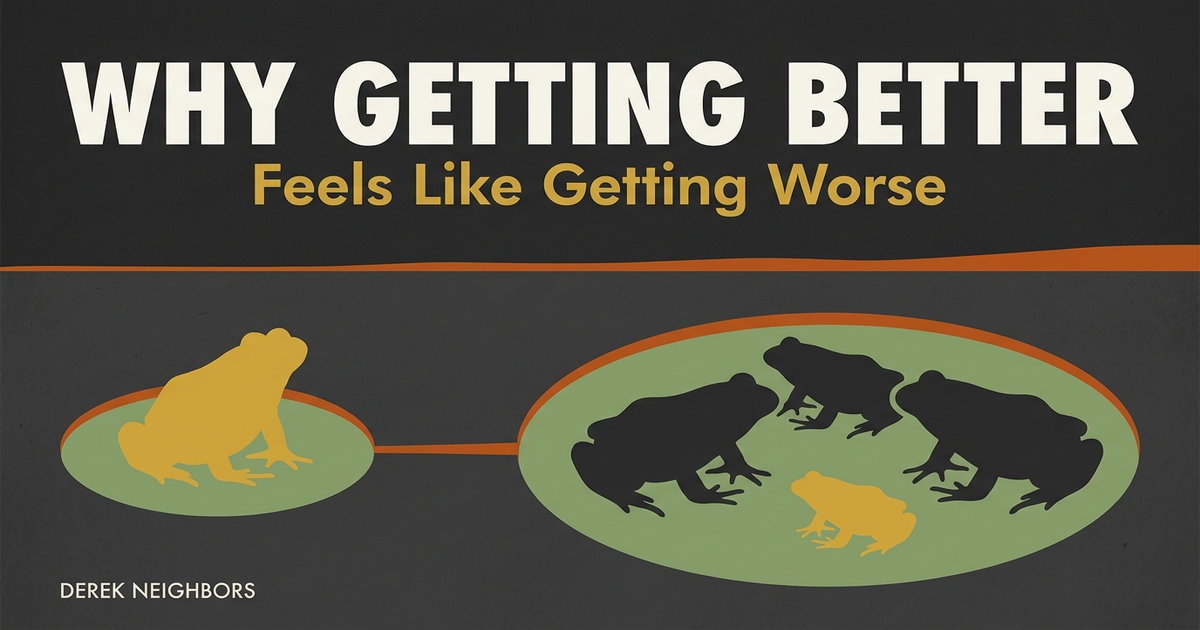
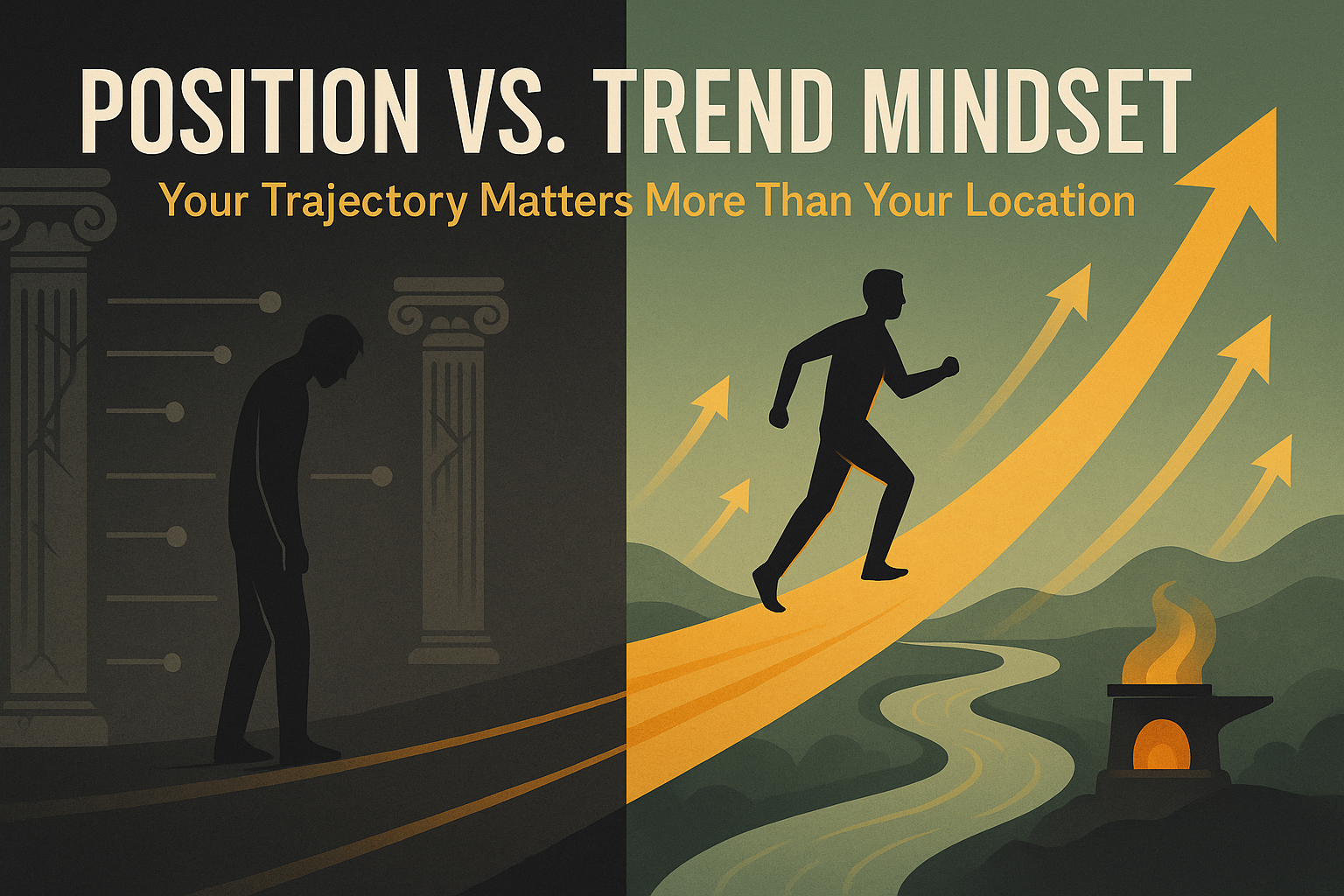
The fundamental difference between position thinking (comparing to others) and trend thinking (tracking your own trajectory). Why your direction matters more than your location.
The speed at which you can absorb, process, and apply new information becomes the ultimate edge in today's fast-paced world.