Kairos vs Chronos: Key Differences in Greek Philosophy
The Greeks used two distinct words for time because they recognized that not all moments are equal. Chronos is the time your clock measures. Kairos is the time that matters. Learning to distinguish between them transforms how you make decisions, because the right action at the wrong time produces failure as reliably as the wrong action at any time.
Definitions
Kairos
(καιρός)
kai-ROSS
The opportune or decisive moment, the critical point in time when conditions align for effective action. Unlike chronos (sequential time), kairos represents qualitative time: the right moment that demands recognition and response.
Chronos
(χρόνος)
KROW-nos
Sequential, quantitative time measured by clocks and calendars. Unlike kairos (the opportune moment), chronos represents arbitrary, mechanical time that passes regardless of meaning or readiness.
Key Differences
| Aspect | Kairos | Chronos |
|---|---|---|
| Nature of Time | Kairos is qualitative time, the critical moment when conditions align and decisive action becomes possible. | Chronos is quantitative time, the steady sequential progression of seconds, minutes, hours, and days. |
| Human Agency | Kairos demands recognition and decisive response. You must perceive the moment and act before it passes. | Chronos proceeds regardless of human perception or response. It moves forward whether you notice it or not. |
| Relationship to Opportunity | Kairos creates windows of opportunity that open briefly and close permanently. Missing kairos means the specific moment cannot be recovered. | Chronos provides the substrate within which opportunities arise. There will always be more chronos, but not more of a specific kairos. |
| Experience | Kairos feels charged and significant. You sense that something important is happening or about to happen. | Chronos feels neutral and continuous. It is the background rhythm of existence, noticed mainly when it runs short. |
Nature of Time
Kairos is qualitative time, the critical moment when conditions align and decisive action becomes possible.
Chronos is quantitative time, the steady sequential progression of seconds, minutes, hours, and days.
Human Agency
Kairos demands recognition and decisive response. You must perceive the moment and act before it passes.
Chronos proceeds regardless of human perception or response. It moves forward whether you notice it or not.
Relationship to Opportunity
Kairos creates windows of opportunity that open briefly and close permanently. Missing kairos means the specific moment cannot be recovered.
Chronos provides the substrate within which opportunities arise. There will always be more chronos, but not more of a specific kairos.
Experience
Kairos feels charged and significant. You sense that something important is happening or about to happen.
Chronos feels neutral and continuous. It is the background rhythm of existence, noticed mainly when it runs short.
When to Apply Each Concept
When to Choose Kairos
Develop kairos awareness when you need to act at the right moment rather than at the scheduled time. Negotiations, crucial conversations, product launches, and creative breakthroughs all depend on recognizing when the window is open. If you find yourself saying ‘the timing felt perfect,’ you have experienced kairos. Train yourself to notice these moments before they pass.
When to Choose Chronos
Rely on chronos for planning, consistency, and long-term discipline. Building habits, managing projects, and maintaining commitments all operate in chronological time. When you need to show up reliably every day regardless of inspiration, chronos is your framework. Most sustained achievement depends on doing the work within chronos while remaining alert for kairos.
Frequently Asked Questions
What is the difference between kairos and chronos?
Chronos is sequential, measurable time, the kind a clock displays. Kairos is the decisive moment of opportunity, the point when action becomes uniquely effective. The Greeks personified chronos as the relentless progression of time and kairos as the fleeting instant that demands recognition and response. Understanding both allows you to plan within chronos while acting on kairos.
Kairos vs chronos in Greek philosophy?
In Greek thought, chronos represents the quantitative flow of time that governs the physical world. Kairos represents qualitative time, the charged moment when something can happen that cannot happen at any other time. Aristotle discussed kairos in rhetoric as the ability to say the right thing at the right moment. The distinction reveals that effective action requires not only knowing what to do but sensing when to do it.
When should you use kairos thinking?
Use kairos thinking when the outcome depends more on timing than on preparation. Critical conversations, strategic pivots, and creative decisions often hinge on recognizing the right moment. If you have been preparing and waiting, kairos is the signal to act. The skill lies in distinguishing genuine kairos from impatience disguised as urgency.
Is kairos the same as opportunity?
Kairos is a specific type of opportunity defined by its temporal nature. Regular opportunities may persist or recur. A kairos moment has a narrow window: it arrives, it opens, and it closes. Missing it means that particular configuration of circumstances will not return. The concept emphasizes that recognizing and seizing the moment is itself a form of wisdom.
Articles Exploring Kairos or Chronos (26)
If You Don't Say What It Means, Someone Else Will
The architecture review ran well. Real questions, real answers, on time. Three days later the team is building the thing you thought you had talked them out of. You were right in that room, and the version of it that survived into Monday was written by somebody else. A room never leaves with nothing.
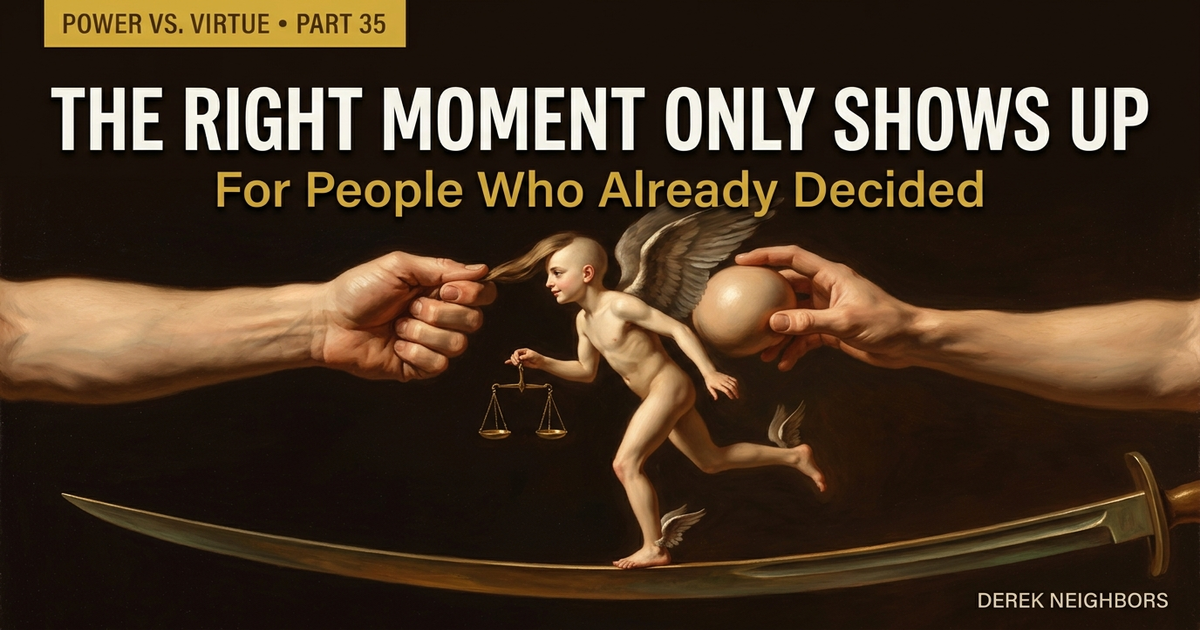
The Right Moment Only Shows Up for People Who Already Decided
Law 35 of the 48 Laws of Power tells you to master the art of timing, and this series agrees with it. The same move lands or dies on when you make it, hurry reads as fear, and rooms punish people who cannot wait. Then the law tells you to seem patient and to sniff out the spirit of the times, and its hero is a man who survived every regime by standing for nothing. Kairos is the right moment for something. Decide the something first, or the moment never comes.
Your Five-Year Plan Is Built From Last Year
I sat through an offsite that wrote 2029 as last year with nicer fonts. The futures worth living stay invisible until you stack skills, relationships, and harder rooms.

You Can't Talk a Proud Culture Into Changing
A strong culture will nod in the all-hands and return to the process that already made it proud. Conversion speeches bounce. The usable move is a small office with different rules and a scoreboard the old culture can see.
If Everything Is Urgent, Your Team Stops Listening
Constant fire drills train people to ignore you. Calm urgency is scarce pressure with a named end date, shared ownership, and language that matches the work. Restore the signal or lose the room.
You Don't Need More Time. You Need Higher Stakes.
You keep shopping for more hours: earlier alarms, cleaner calendars, better tools. Seneca's diagnosis was sharper. Life is not short. Most of it gets wasted by people who do not feel its weight. A child, a diagnosis, a business with real customers compresses the day and somehow yields more. The compression did not steal the time. It exposed how much was already drifting. You need higher stakes, not another system.

Pronoia: Why the Most Successful People Believe the Universe Is on Their Side
Some people move through the world braced for ambush. Others move through the same world convinced it keeps leaving doors unlocked for them. The second group looks delusional right up until you check the results. The Greeks called the ordered version of this trust pronoia, the Stoics built a cosmology on it, and the mechanism that makes it pay requires no mysticism at all. Your prior about the world is not a mood. It is a strategy, and it is the one you are running right now.
Your Successor Can't Lead While You're Still in the Room
Most leaders treat succession as a problem of finding the right person. The harder problem comes after. Your continued presence, offered as help, keeps the team loyal to you and the successor leading in your shadow. The Greeks had a discipline for the deliberate withdrawal that finishes the job: anachoresis. The handoff that looks like loss is the only move that completes the work, and it is the one most leaders refuse to make.

Surrender Isn't Weakness. Pretending to Surrender Is.
Greene's Law 22 tells you to surrender as a counter-trap. The tactic is real, and the Stoics knew the moves it copies. But Marcus Aurelius yielded to preserve his prohairesis. Greene's reader yields to spring an ambush. The heads can look identical; the ends diverge. The test that separates them is whether you could name, out loud, what you yielded for.
You're Asking Fear the Wrong Question.
There is a decision you have been circling for months. Two voices are arguing about it in your head. Voice one is fear, and fear's question sounds adult and responsible: will this be worth what it costs? Voice two is regret, and regret only asks one question, the one fear refuses to ask. The Stoic tradition built an entire decision discipline around the fact that human beings systematically ask the wrong question at the moment a choice is live. Epictetus had a name for the place where this gets decided. The Greeks called it the only domain that actually matters.
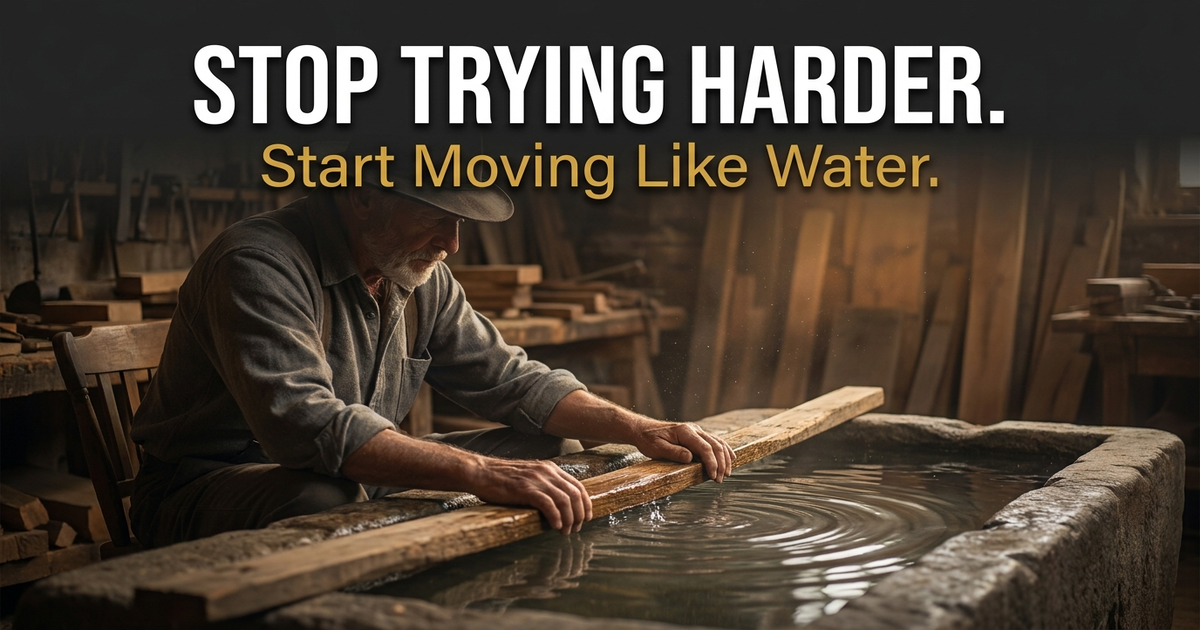
Stop Trying Harder. Start Moving Like Water.
The mythology that says excellence comes from gripping tighter is a Western misread of how skilled humans actually perform. Four hundred years ago, a swordsman named Miyamoto Musashi described the working stance every senior craftsman, surgeon, musician, and distance runner eventually finds: mizu no kokoro, the water mind. Alert without rigidity. Fitted to the moment. Impossible to tense up. The novice grips. The master flows. This is the investigation into why, and the training that gets you across the threshold.
Your Burnout Isn't a Schedule Problem. It's a Stewardship Problem.
The productivity industry has been selling calendar tools to people whose problem was never on the calendar. You can engineer your week perfectly and still arrive at Friday burned alive. The category you are missing has a Greek name and a four-thousand-year track record. Stewardship, not scheduling, is the lever ambitious people keep refusing to pull.

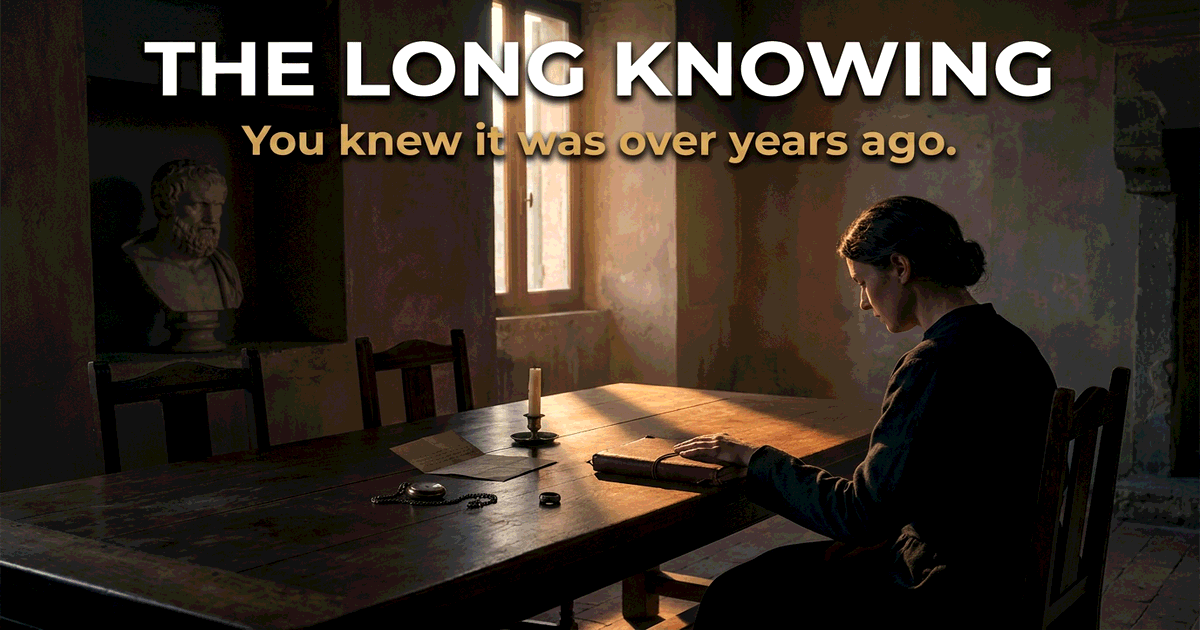
You Knew It Was Over Years Ago. You Just Couldn't Say It Out Loud.
The truth shows up in a thirty-second moment with no audience. Most people register it, file it, and spend the next five years pretending they didn't. The years of pretending are the actual cost.
Hats, Haircuts, and Tattoos: Why You're Making Every Decision at the Wrong Speed
Most people spend 45 minutes choosing a Netflix show and 20 minutes choosing a mortgage. The problem isn't indecision. It's miscalibration. Phronesis (practical wisdom) demands matching speed to stakes.

Should You Hide Your Excellence to Protect Your Boss's Ego?
Greene's first law of power tells you to never outshine the master. The tactical truth is real: insecure leaders punish excellence. But the solution isn't dimming your light. It's knowing when to deploy it. The Greeks called it kairos.

Your Goals Aren't Too Big. Your Sacrifices Are Too Small.
You don't have an ambition problem. You have a payment problem. Everyone wants the dream. Almost no one wants to pay what it actually costs.

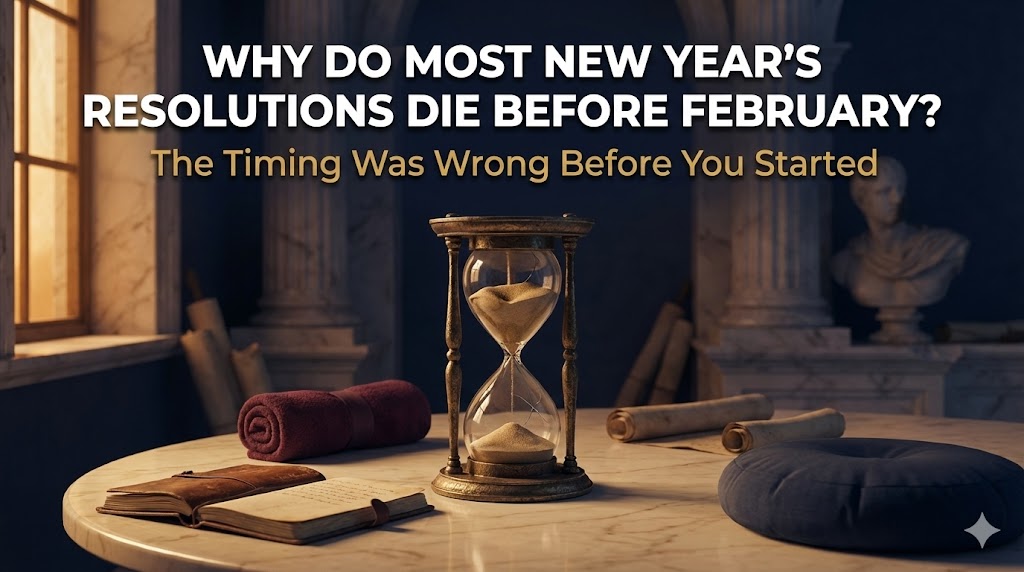
Why Do Most New Year's Resolutions Die Before February?
I watched a man fail his resolution in an ice cream shop parking lot. Not because he ate ice cream. Because he was already negotiating with Monday. The timing was wrong before he started.
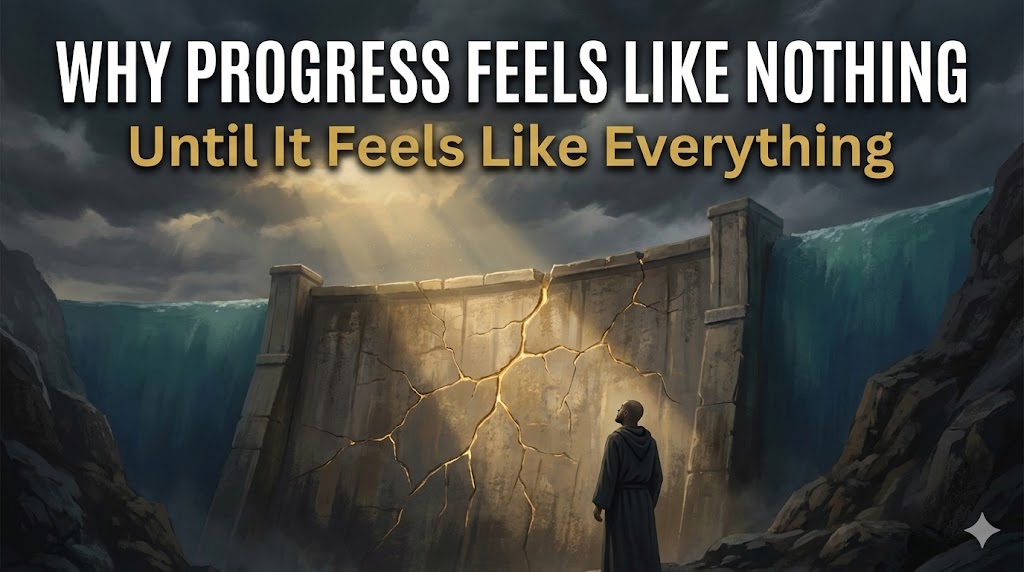
Why Progress Feels Like Nothing Until It Feels Like Everything
Progress doesn't arrive gradually. It accumulates in silence, then announces itself all at once.
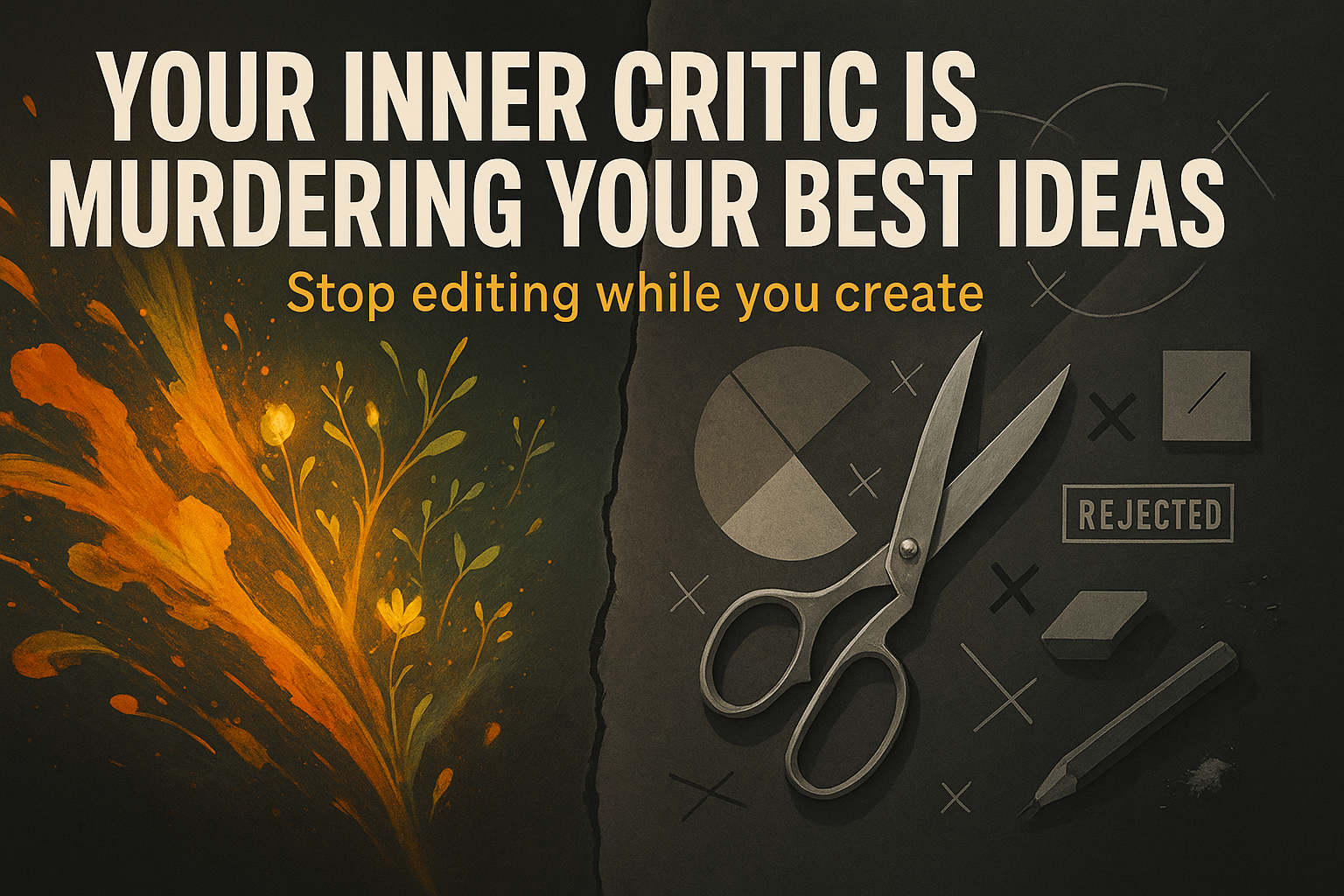
Your Inner Critic Is Murdering Your Best Ideas in the Crib
Your inner critic isn't the enemy. But letting it judge while you create guarantees mediocrity. Excellence requires opposite mindsets—and knowing when to deploy each.
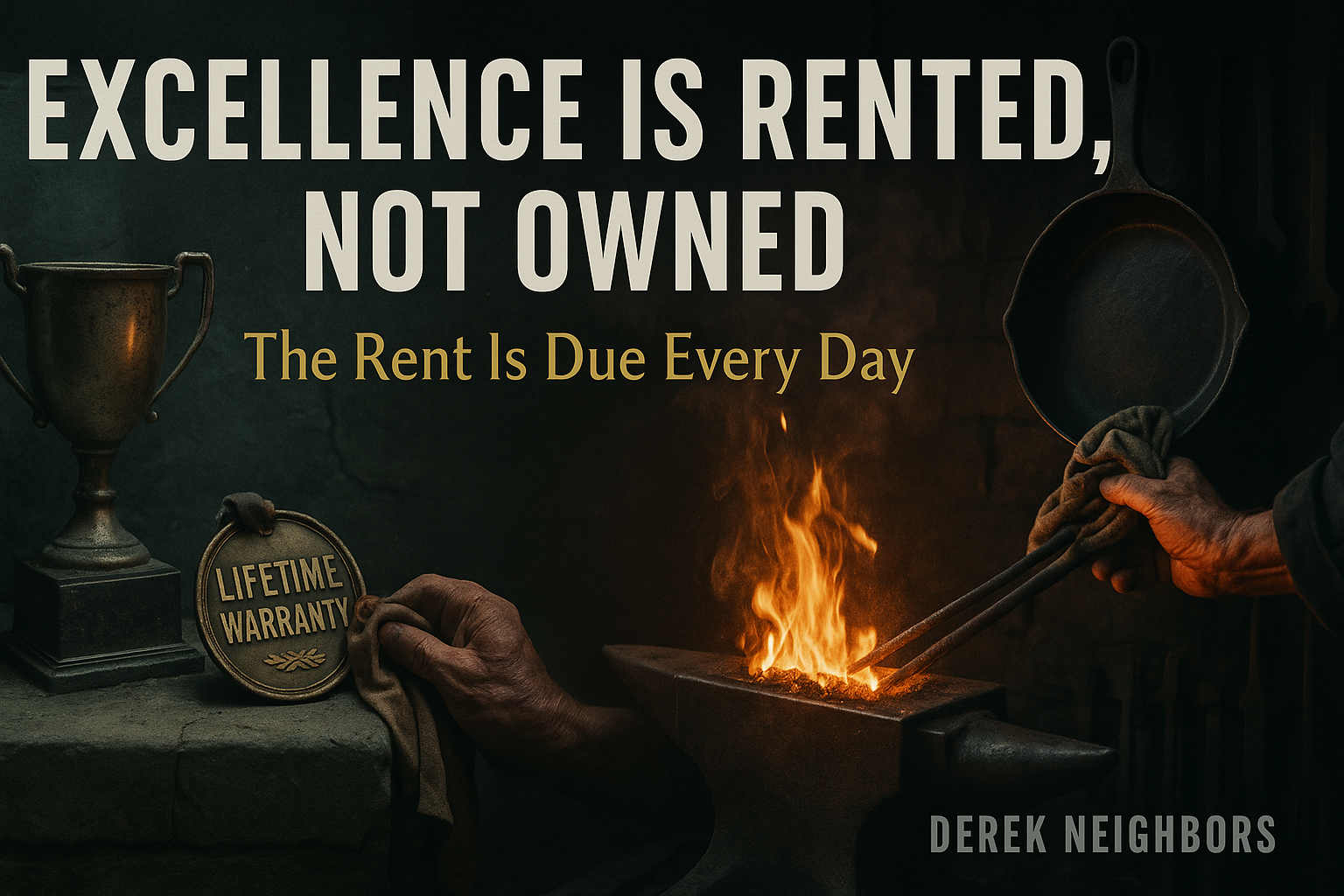
Excellence Is Rented, Not Owned: The Rent Is Due Every Day
Grandma's cast iron pan lasted 60 years with daily care. My 'lifetime warranty' pan died in 18 months with neglect. Excellence isn't owned—it's rented. And the rent is due every single day.
Stop Waiting for Flow - Start Training It Like Every Other Skill
You can spend another year waiting for flow to happen, or you can spend the next 12 weeks training it like the ancient Greeks did, systematically, progressively, relentlessly.

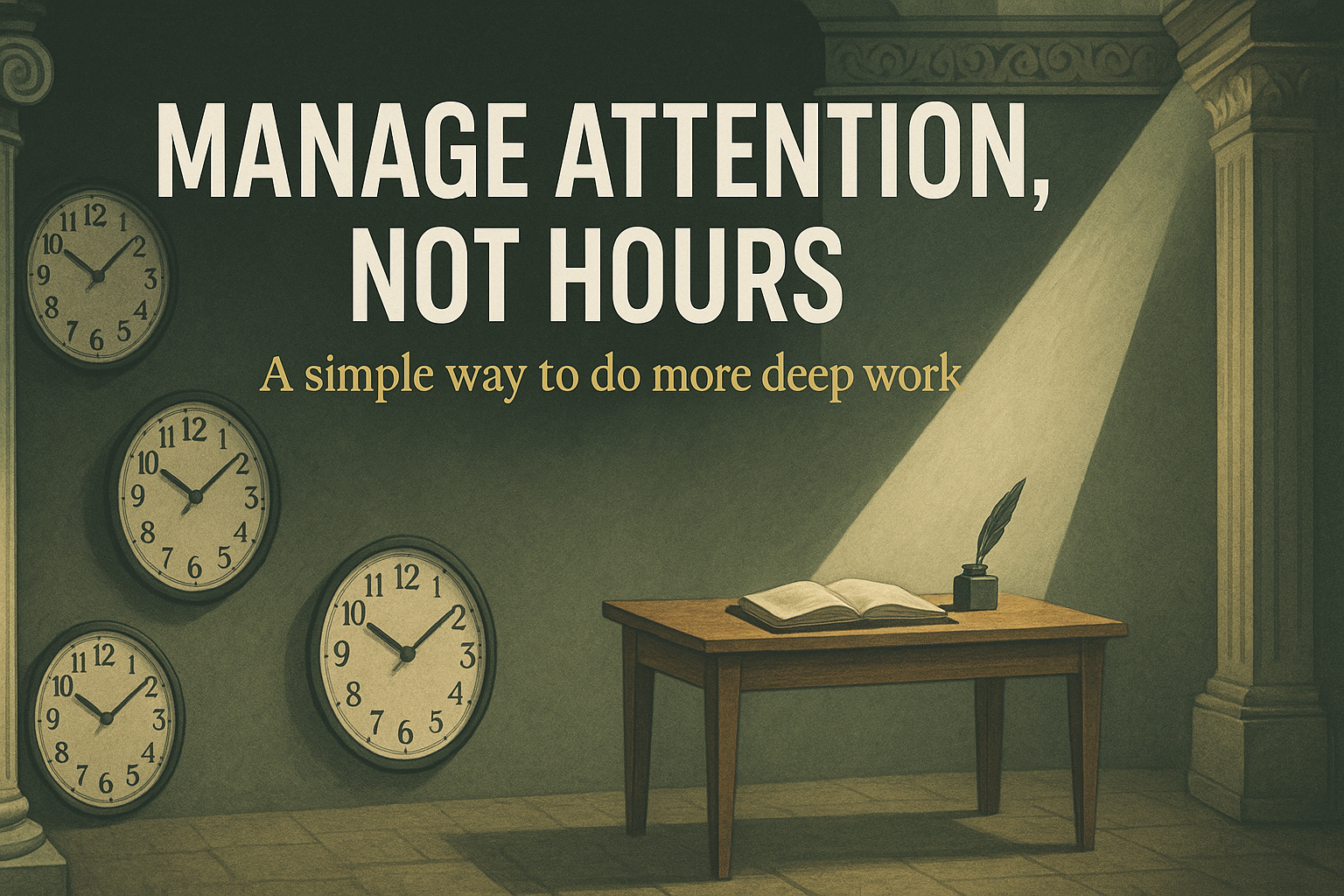
Manage Attention, Not Hours: How to Do Work That Matters
You don't need more hours, you need cleaner attention. When you defend attention, deep work shows up and the needle finally moves.
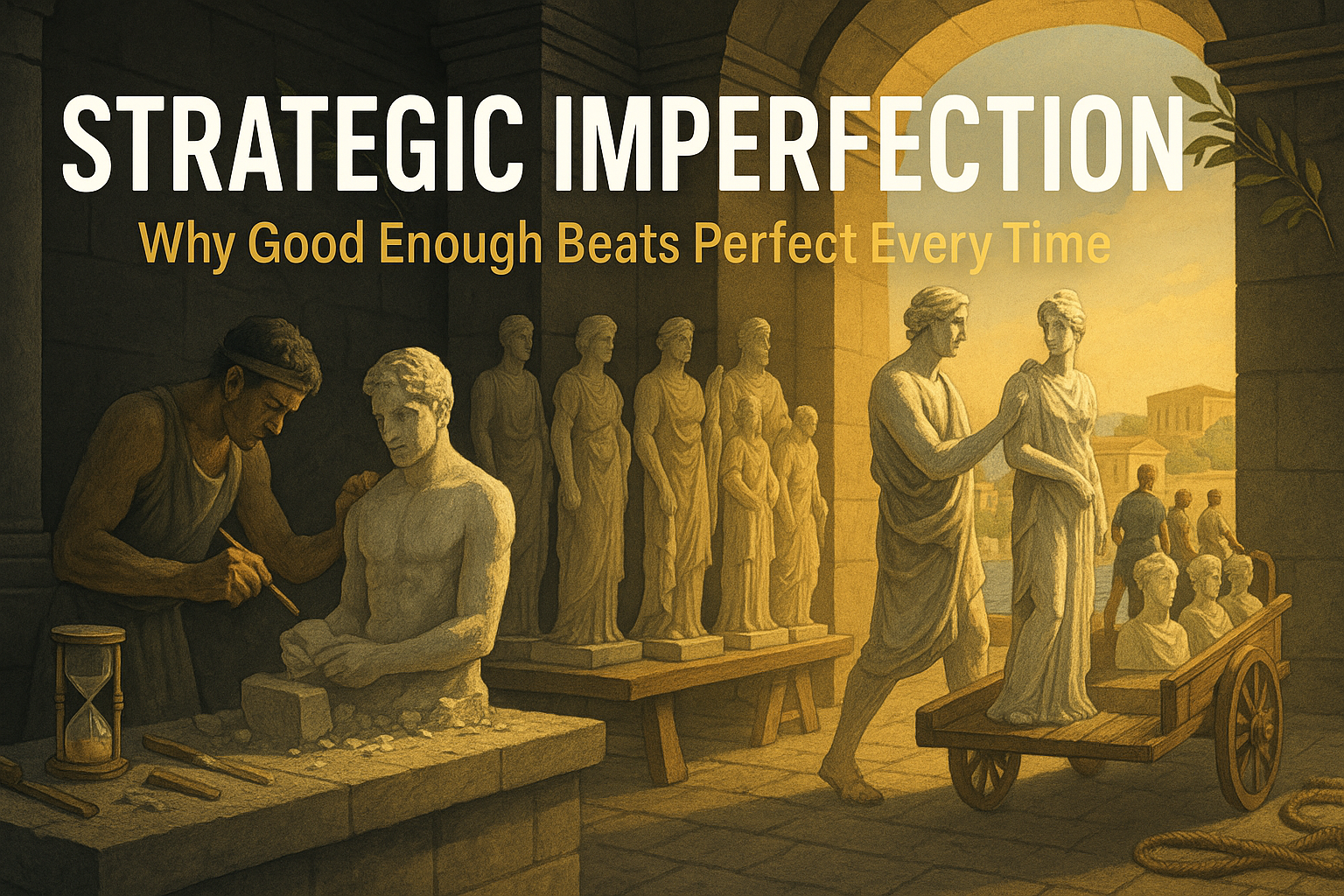
Strategic Imperfection: Why Good Enough Beats Perfect Every Time
Perfectionism isn't high standards. It's fear management. Strategic imperfection creates more progress than perfect ever could.
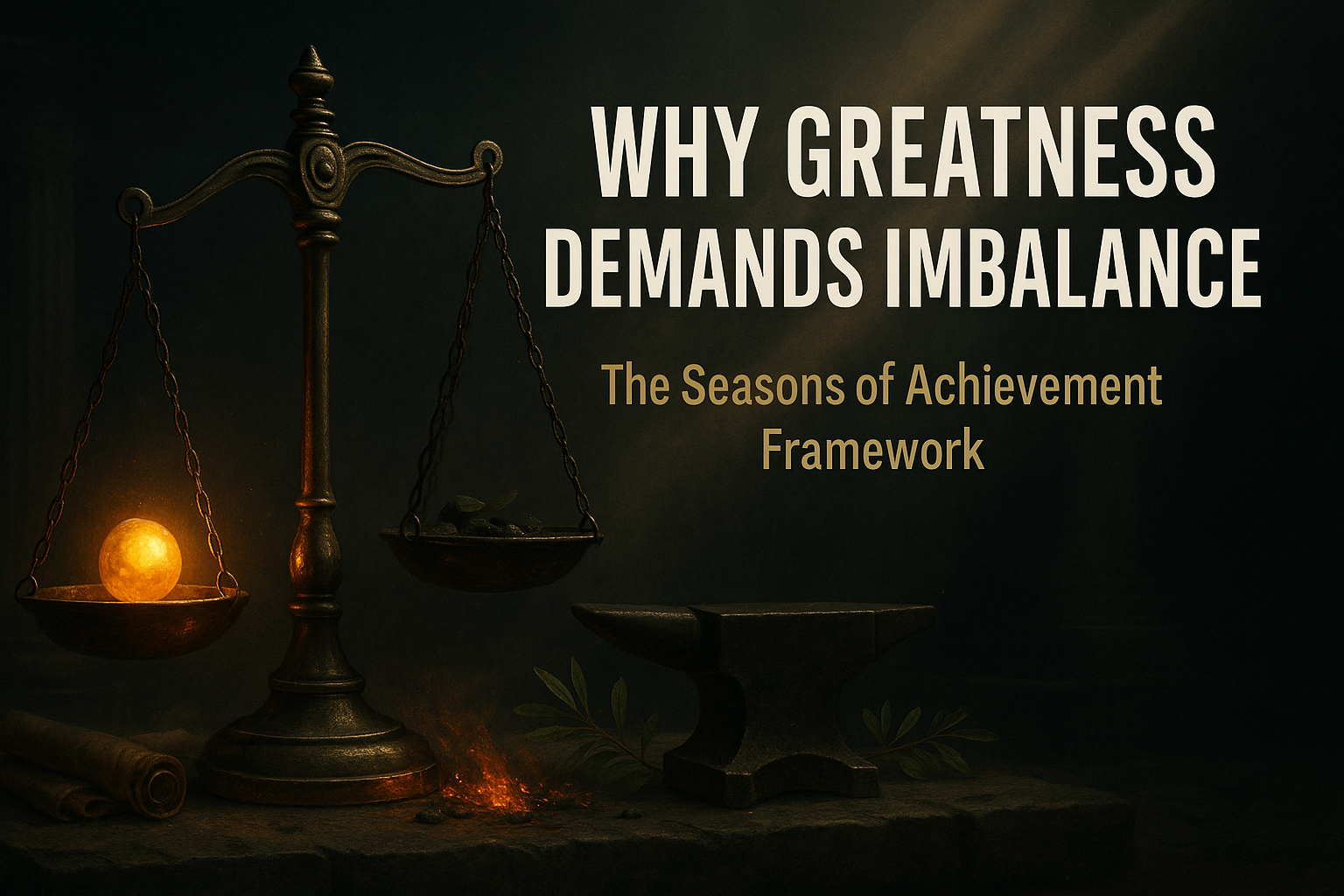
Why Greatness Demands Imbalance
True greatness cannot be evenly distributed across all areas of life simultaneously. Excellence requires strategic imbalance, knowing when and where to concentrate your full intensity, and having the wisdom to let other areas temporarily receive less attention.
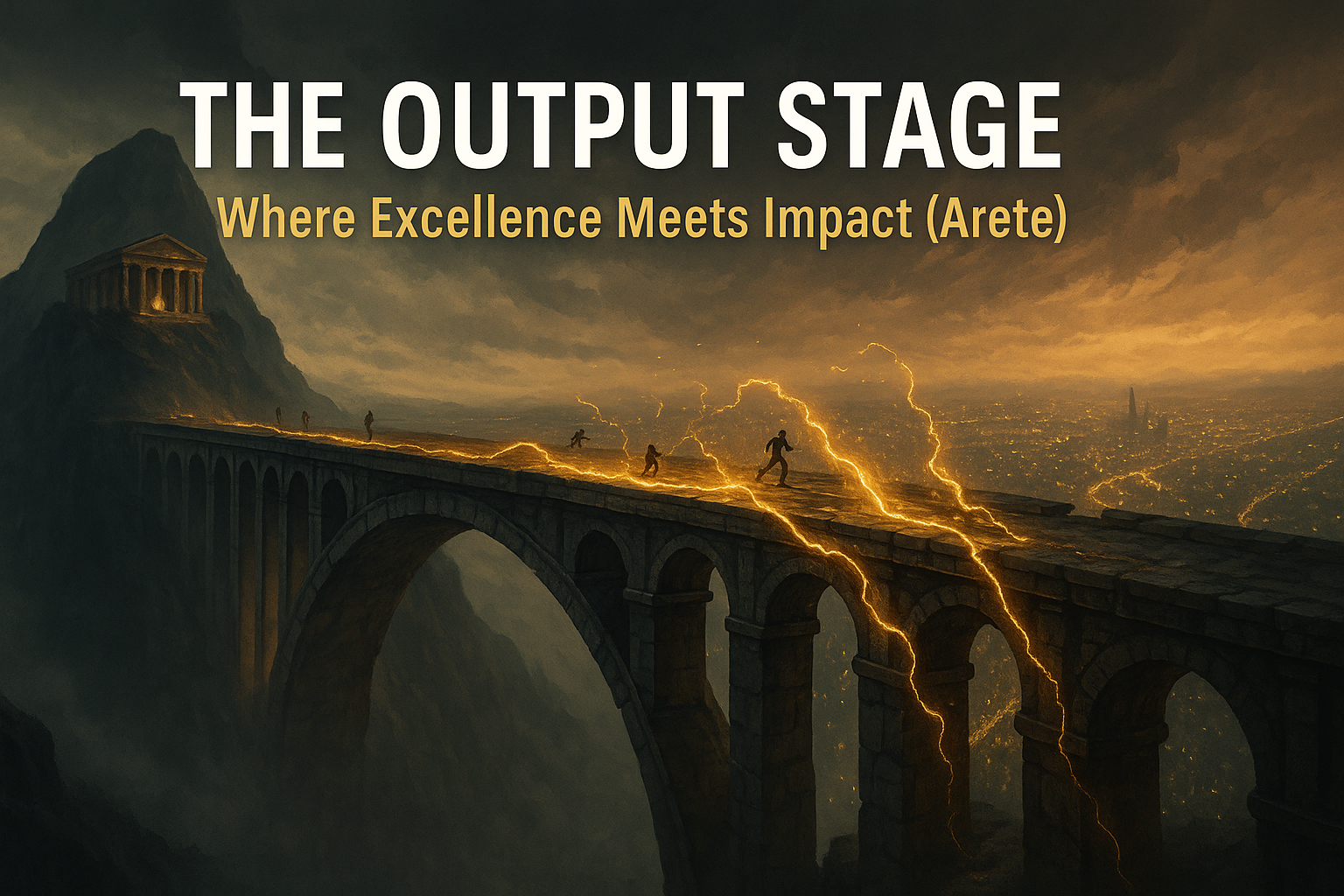
The Output Stage: Where Excellence Meets Impact (Arete)
Output (Arete) is where internal mastery becomes external transformation. Discover how to bridge personal excellence to world-changing impact through systematic application of ancient wisdom.
The Processing Engine: Why Smart People Can't Convert Knowledge Into Action
You consume endless information but produce mediocre results. The problem isn't what you know, it's how you process what you know. Smart people excel at input but fail at transformation. Time to build your Processing Engine.