Andreia vs Karteria: Key Differences in Greek Philosophy
Andreia and karteria both involve facing difficulty, but they demand different things from you. Andreia asks you to act in the face of fear. Karteria asks you to persist in the face of pain. One is about the courage to begin; the other is about the endurance to continue. Most significant achievements require both.
Definitions
Andreia
(ἀνδρεία)
ahn-DRAY-ah
Courage. The willingness to face what’s difficult rather than retreat to what’s comfortable, acting despite fear rather than in its absence.
Karteria
(καρτερία)
kar-teh-REE-ah
The virtue of patient endurance and steadfast perseverance in the face of hardship, pain, or prolonged difficulty. Distinguished from mere courage (andreia), karteria emphasizes the capacity to bear what must be borne without yielding or complaint.
Key Differences
| Aspect | Andreia | Karteria |
|---|---|---|
| Primary Challenge | Andreia confronts fear. It is the virtue of acting rightly when you are afraid or when the outcome is uncertain and the stakes are high. | Karteria confronts suffering. It is the virtue of persisting when the path is painful, tedious, or exhausting. |
| Temporal Nature | Andreia often operates in acute moments. The decision to speak up, to take a risk, or to stand firm tends to happen at a specific point. | Karteria operates over extended periods. Endurance is measured in weeks, months, and years of sustained effort through difficulty. |
| What It Requires | Andreia requires willingness to face danger, loss, or disapproval. It demands that you value what is right more than what is safe. | Karteria requires tolerance for discomfort and the ability to continue when progress is slow or invisible. It demands patience under pressure. |
| Risk Profile | Andreia involves active risk-taking. The courageous person moves toward the threat rather than away from it. | Karteria involves passive resistance to erosion. The enduring person holds position despite the forces that would wear them down. |
Primary Challenge
Andreia confronts fear. It is the virtue of acting rightly when you are afraid or when the outcome is uncertain and the stakes are high.
Karteria confronts suffering. It is the virtue of persisting when the path is painful, tedious, or exhausting.
Temporal Nature
Andreia often operates in acute moments. The decision to speak up, to take a risk, or to stand firm tends to happen at a specific point.
Karteria operates over extended periods. Endurance is measured in weeks, months, and years of sustained effort through difficulty.
What It Requires
Andreia requires willingness to face danger, loss, or disapproval. It demands that you value what is right more than what is safe.
Karteria requires tolerance for discomfort and the ability to continue when progress is slow or invisible. It demands patience under pressure.
Risk Profile
Andreia involves active risk-taking. The courageous person moves toward the threat rather than away from it.
Karteria involves passive resistance to erosion. The enduring person holds position despite the forces that would wear them down.
When to Apply Each Concept
When to Choose Andreia
Call on andreia when fear is the primary obstacle. When you need to have a difficult conversation, take an unpopular stand, launch before you feel ready, or confront a truth you have been avoiding, courage is the relevant virtue. The question andreia answers is: ‘Am I willing to act despite the risk?’
When to Choose Karteria
Call on karteria when fatigue, boredom, or accumulated difficulty is the primary obstacle. When the initial excitement has faded and the work stretches ahead without visible reward, endurance is the relevant virtue. The question karteria answers is: ‘Am I willing to keep going despite the grind?’
Frequently Asked Questions
What is the difference between andreia and karteria?
Andreia is courage, the virtue of acting rightly in the face of fear. Karteria is endurance, the virtue of persisting through prolonged difficulty. Andreia gets you through the door. Karteria keeps you in the room. Most meaningful pursuits require the courage to start something risky and the endurance to sustain effort through the long, unglamorous middle.
Is karteria a form of courage?
Karteria and andreia are related but distinct virtues. The Stoics particularly valued karteria as the capacity to withstand hardship without complaint. While courage involves confronting acute fear, endurance involves tolerating chronic difficulty. Both require strength of character, but they activate in response to different kinds of challenges.
When do you need andreia vs karteria?
You need andreia at decision points where fear could prevent right action: speaking truth to power, taking a meaningful risk, or confronting an uncomfortable reality. You need karteria during the long stretches where persistence is the primary demand: training for mastery, building a business through lean years, or maintaining discipline when results are delayed.
Articles Exploring Andreia or Karteria (42)
Why Staying Silent Is the Most Expensive Thing You'll Ever Do
Every swallowed truth is a down payment on becoming someone you don't recognize. The Greeks had a word for what's missing: parrhesia.
Comfort Killed More Dreams Than Failure Ever Did
Everyone fears failure. Almost nobody fears comfort. The ancients understood why that's backwards. Comfort doesn't protect dreams. It suffocates them slowly while you're too numb to notice.
Your Confidence Is Fake. Here's How to Build the Real Thing.
The modern confidence industry sells shortcuts that produce fragile leaders. Real confidence follows the ancient sequence: courage first, then competence, then confidence.
Stop Being Afraid to Fail. Start Being Afraid to Coast.
The loud fear of failure drowns out the quiet fear of never knowing. But only one of those fears creates wounds that heal.
Why Progress Feels Like Nothing Until It Feels Like Everything
Progress doesn't arrive gradually. It accumulates in silence, then announces itself all at once.
The Couples Who Fight Are the Couples Who Last
Happy couples don't fight. That's the story we tell ourselves. Then we watch peaceful marriages end without warning. The truth? Antifragile bonds are forged through navigated conflict, not polished harmony.

Hard Work Stops Some People. Uncertainty Stops Everyone Else.
Andy Weir posted chapters of The Martian to his blog for 10 years. 3,000 readers. No validation. No proof it mattered. Then the breakthrough. The separator isn't talent or work ethic, it's tolerance for uncertainty.
Why Do Smart People Overcomplicate Everything?
The Greeks understood something we've forgotten, true wisdom reveals itself through simplicity, not complexity. Intelligence is finding the simple truth, not creating elaborate frameworks.
Forgiveness Isn't About Them. It's the Most Selfish Thing You Can Do.
Every minute you spend resenting someone is energy you're not using to build your life. The Stoics knew what we forgot: forgiveness releases you from the prison, not them from consequences.
Good Vibes Only Will Keep You Weak Forever
Good vibes only doesn't protect you from negativity. It protects you from growth. Every time you positive-think your way past difficult emotions, you're training yourself to be weaker.
Your Team Isn't Aligned. They're Just Too Scared to Speak Up
When teams nod along in meetings, we celebrate alignment. But what if everyone's privately disagreeing? The Abilene Paradox shows how silence becomes performative agreement and why andreia (courage) matters more than consensus.

Why Does Tolerating One Person's Mediocrity Destroy Your Entire Team?
Mediocrity spreads like wildfire once you signal it's acceptable. Leaders who tolerate good enough from one person send a message to everyone that standards are negotiable. Excellence demands eliminating compromises at the source before they become cultural norms.
Stop Following Your Passion. Start Building Excellence.
Passion is self-focused and fleeting. Excellence through service is other-focused and enduring. The Greeks never told anyone to follow their passion. They built character through craft. Here's why that matters for your work.
Why Real Learning Only Happens Under Pressure
Real competence emerges when comfort dies and stakes are real. The professionals who thrive in crisis weren't trained in safe environments, they were forged under pressure.
Stop Chasing Flow. Build It.
Flow doesn't show up when you beg it. It shows up when you remove what blocks it. The people who hit flow states most aren't gifted, they're disciplined about building the right conditions.
Strategic Imperfection: Why Good Enough Beats Perfect Every Time
Perfectionism isn't high standards. It's fear management. Strategic imperfection creates more progress than perfect ever could.
AI-First Leadership: Guiding Organizational Transformation
Most leaders want AI transformation results without undergoing the leadership metamorphosis it requires. Here's what AI-first leadership actually demands.
AI First Culture: Organizational and Process Transformation
Culture doesn't just eat strategy for breakfast. Culture will devour your AI transformation, shit out the bones, and ask for seconds.
The Internal Locus Revolution: Why Everything Is On You (And That's Your Advantage)
Most people spend their lives as victims of circumstances they created. Here's why accepting that you're both the source and solution to your problems is the ultimate advantage.
Stop Serving From Weakness: Why Most Servant Leaders Fail
Most 'servant leaders' are just weak managers who've convinced themselves that avoiding difficult decisions is virtuous. Real servant leadership requires character strength.
AI First: The Mindset Shift That Changes Everything
The fundamental mindset architecture that separates AI leaders from AI laggards. Three core shifts with practical implementation frameworks grounded in ancient wisdom.
The Vibe Code Fallacy: Why Playing It Safe Is the Riskiest Strategy
When smart engineers choose the safety of understanding over the risk of adaptation, they're not avoiding debt, they're accumulating it. The compound cost of caution might be the riskiest strategy of all.
The Output Stage: Where Excellence Meets Impact (Arete)
Output (Arete) is where internal mastery becomes external transformation. Discover how to bridge personal excellence to world-changing impact through systematic application of ancient wisdom.
The Processing Engine: Why Smart People Can't Convert Knowledge Into Action
You consume endless information but produce mediocre results. The problem isn't what you know, it's how you process what you know. Smart people excel at input but fail at transformation. Time to build your Processing Engine.
The Unlimited Courage Question: The Single Test That Cuts Through All Self-Deception
Most people disguise cowardice as prudence. Here's the single question that cuts through all self-deception and reveals what you're really running from.
The Position vs. Trend Mindset: Why Your Trajectory Matters More Than Your Current Location
The fundamental difference between position thinking (comparing to others) and trend thinking (tracking your own trajectory). Why your direction matters more than your location.

The Philosopher King: Ancient Wisdom for Modern Leadership Integration
Plato's most radical leadership idea wasn't about power or position, it was about character. The philosopher king represents the ultimate integration of wisdom, excellence, courage, and transformation. Here's how to stop managing systems and start transforming people.
Metanoia: The Transformation Mindset for Leaders
The Greeks understood that lasting change requires complete transformation of mind, heart, and character. Most organizational change fails because leaders try to change everything except themselves. Here's the ancient solution.
The Completion Paradox: Why Finishing Matters More Than Starting
You don't have a motivation problem. You have a completion problem. Every unfinished project is evidence that you can't trust yourself to follow through. Here's how to build the character that finishes what it starts.
The Art of Running Away: When Flight is Wisdom and When It's Weakness
How to tell when leaving is strategic wisdom versus fear-based avoidance. The uncomfortable truth about when running away is the courageous choice.
The Resistance Diagnostic: Is This Teaching Me or Am I Just Running Away?
How to tell when resistance is teaching you versus when you're using your intelligence to avoid what needs to be done. The uncomfortable truth about sophisticated avoidance.
The Comfort Zone Sophistication: When Optimization Becomes Elaborate Avoidance
Intelligence can become a barrier to growth when it creates sophisticated comfort zones. Here's how to recognize when your optimization becomes elaborate avoidance, and what to do about it.
Andreia: The Courage to Lead Through Uncertainty
The Greeks understood that courage isn't the absence of fear, it's the commitment to excellence despite uncertainty. This ancient virtue transforms how you lead through risk, change, and the unknown.
The Stretch Paradox: Why Safety Enables Greater Challenge
The greatest challenges require the greatest safety. Great leaders understand this paradox: the more psychological safety you create, the more difficult challenges your team will tackle. Here's the framework that makes it work.
The Problem Solver's Paradox: How Winners Create Value Through Solutions
The most indispensable people aren't those who avoid problems, they're those who actively seek them out and solve them effectively. Here's the framework for building that rare and valuable skill.
The Metanoia Moment: When Disruption Demands Fundamental Thinking Shifts
The phone book to Google transition was about efficiency. The Google to ChatGPT shift is about quality of understanding. That's the difference between incremental improvement and categorical transformation, and it requires metanoia.

Arete: Why Excellence is a Way of Being, Not Achieving
The Greeks understood something we've forgotten: excellence isn't something you achieve, it's something you become. This fundamental shift changes everything about how you approach work, leadership, and life.
The Fear-Excellence Connection: Why Fear Is Excellence's Companion, Not Its Enemy
The self-help industry got fear completely wrong. Every person operating at excellence has learned to dance with fear, not defeat it. Fear isn't your enemy, it's your compass pointing toward what matters most.
The Execution Advantage: Why Imperfect Action Beats Perfect Planning
Perfect plans are usually perfectly wrong. Here's why imperfect action creates better results than perfect planning, and how to build the execution advantage through courage and rapid iteration.
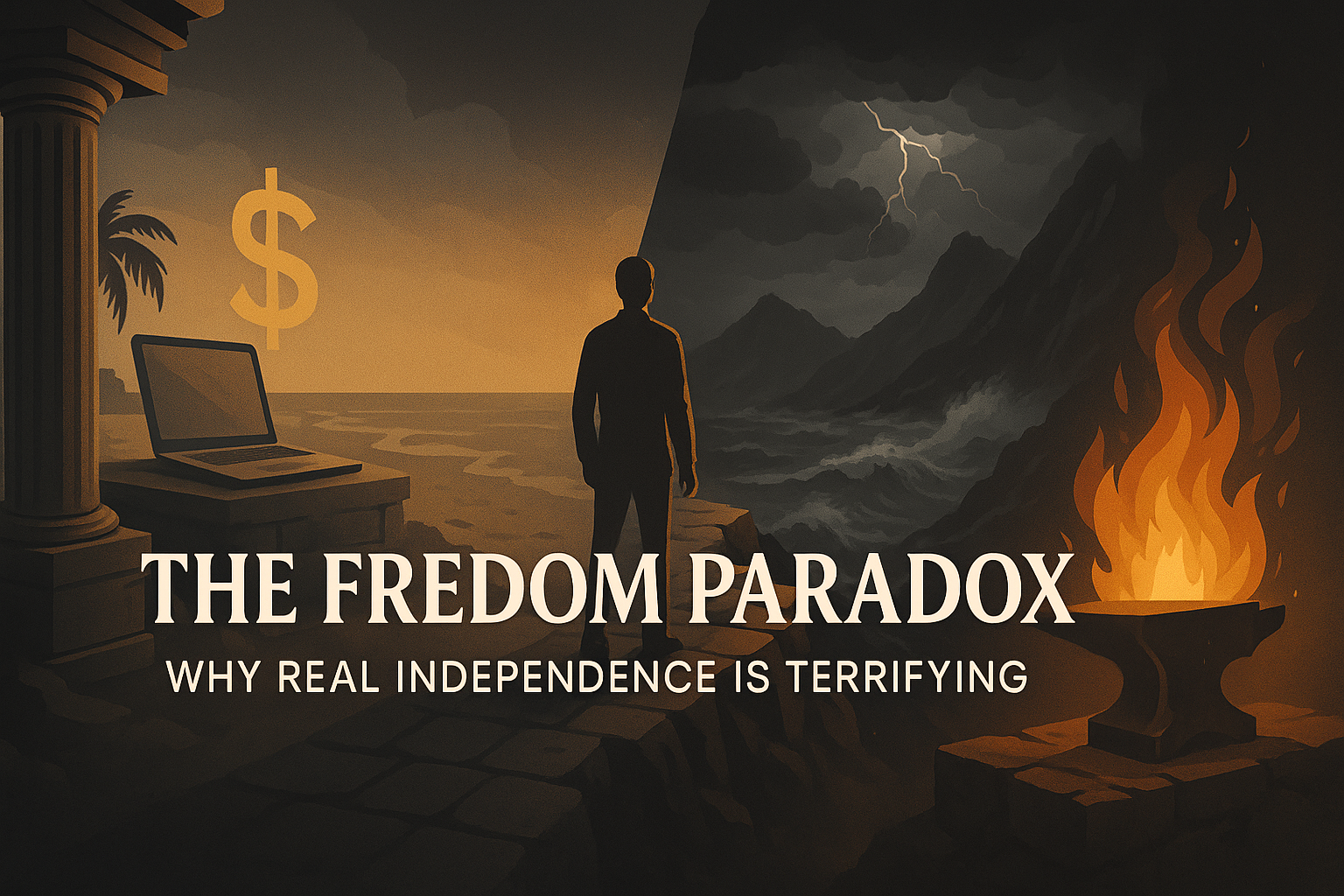
The Freedom Paradox: Why Real Independence Is Terrifying
The social media mythology of entrepreneurship sells a comfortable lie: that anyone can bet on themselves and become a millionaire working a few hours per week. The reality is far more terrifying, and far more rewarding for those with the courage to accept it.
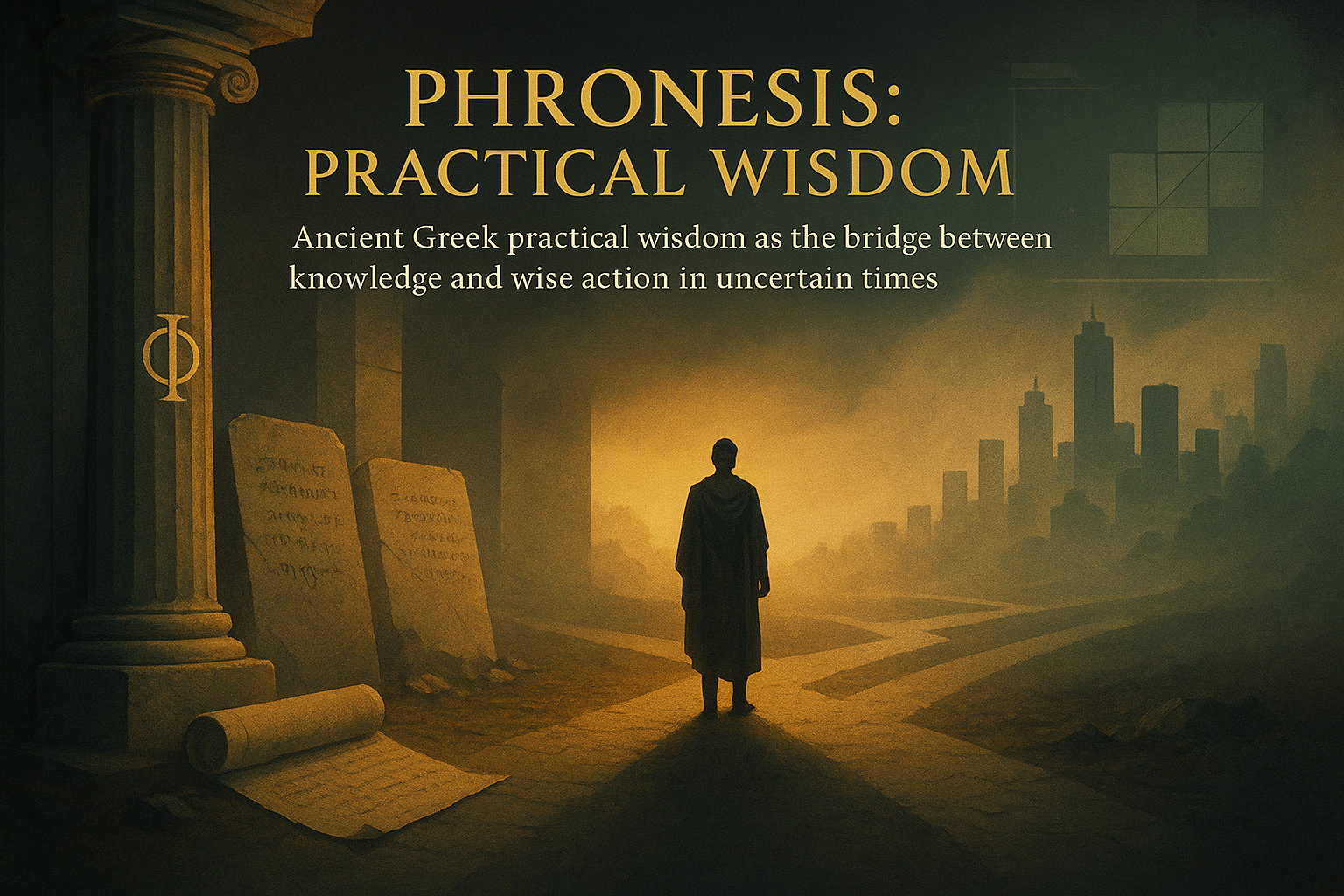
Phronesis: The Lost Art of Practical Wisdom
The ancient Greeks had a word for the leadership skill we desperately need today: phronesis. It's not about having all the answers, it's about acting wisely when you don't.
Andreia: Courage in the Age of Fear
The Greeks had a word for the kind of courage we desperately need today: andreia. It's not about being fearless, it's about being fear-full and acting anyway.