If Nobody Could Lose Anything, It Wasn't Brave
By Derek Neighbors on October 29, 2026
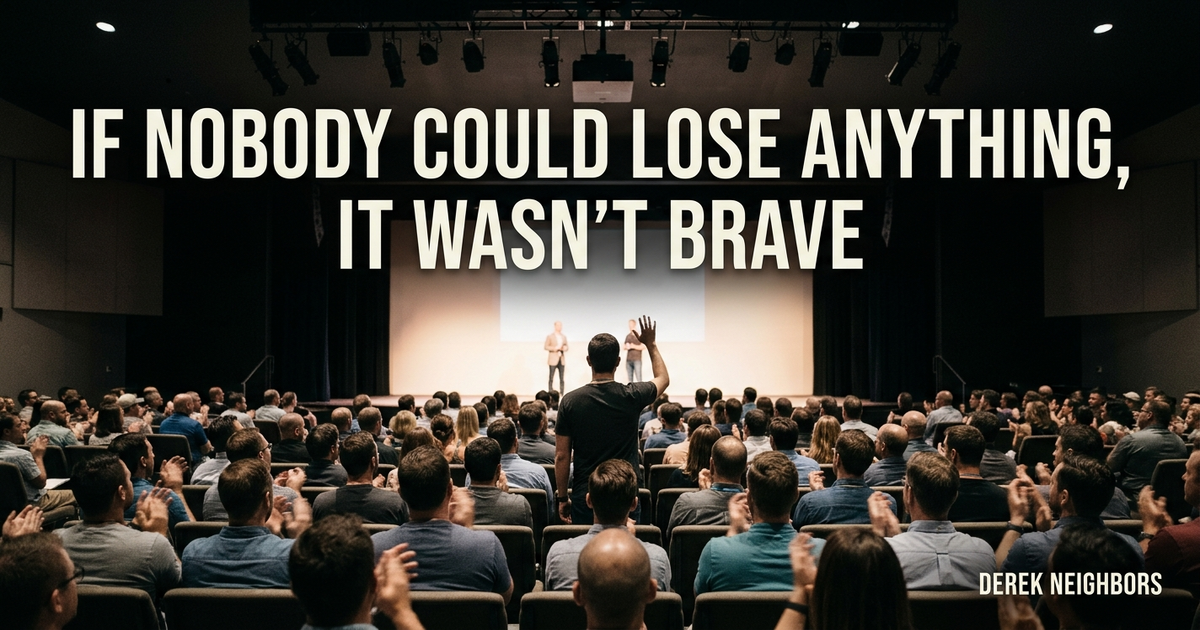
The all-hands slide said BOLD BETS in letters a foot tall. The CEO walked through three of them. The company would launch an AI product line, reorganize engineering into smaller teams, and shut down its oldest product. Each one got called brave at least once, and the room clapped every time.
Now look at what each bet cost the people on stage. The AI line was funded out of two teams’ budgets, and neither team was asked. The reorg moved forty engineers and no executives. The shutdown had been proposed eighteen months earlier by a product manager, and she was moved off the product for saying it out loud.
If all three bets failed, nobody on that stage would lose a thing. They might all have been the right calls, but calling them brave handed the people on stage credit for a risk other people were carrying.
You have sat through some version of this meeting. Most of us have, and most of us clapped.
The Word Is Everywhere
Companies have never talked about courage more. The values page says “be bold,” HR runs a workshop on courageous conversations, and the launch memo calls the strategy brave. Somewhere a manager is telling a team to “be brave with the roadmap” while keeping every project on it.
The natural reading is that courage is going up. If the word is on every wall, people must be doing more of it.
The People Using the Word Rarely Pay
Ask one question of any decision someone calls brave: if this fails, what does the person calling it brave lose?
Run that question through a quarter of company announcements and a pattern shows up fast. The word usually lands on decisions that are big, and big is a different thing from risky. A reorg is huge for the people being moved and costs the person who drew the boxes nothing, since they keep their seat. A budget cut works the same way: the team loses the money and the leader who made the cut gets a story for the board.
Meanwhile the acts that do carry personal risk rarely get the word at all. Think of the engineer who says in a launch review that the release is not safe, with the VP sitting right there, or the manager who tells a director that the director’s favorite project should die. Both of them pay with standing in the room, some goodwill, sometimes a promotion, and instead of brave they usually get called difficult.
I call this a bravery recession. I have no survey that proves it, but at company after company I see the word used more while fewer people do the thing it names. Two forces drive it. Once the label costs nothing, people with power hand it to their own decisions, and once the people taking real risks get known as hard to work with, everyone watching learns to keep quiet.
What Aristotle Counted as Courage
The Greek word for courage is andreia. It grew out of the word for a grown man, and in its oldest use it meant the steadiness a soldier showed by holding his place in the line when the other side charged. In that first sense, courage meant one person staying put with their own body at risk. (I wrote a longer piece on andreia as a leadership virtue last year.)
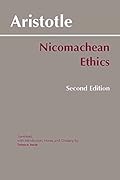
Aristotle spends a long stretch of the Nicomachean Ethics, Book III, on courage. He says the brave person faces what is truly frightening, for the right reason, in the right way, at the right time. For anyone running a company, the more useful part is his list of things that look like courage and are not.
First come citizen soldiers who stand firm to avoid the law’s penalties and their neighbors’ contempt. Aristotle says the ones moved by shame come closest to courage, and the ones held in place by officers behind them are acting under compulsion. Next come people who look brave because they have seen the danger before and know it is smaller than it looks. His example is the professional soldier, who appears fearless until the odds turn and then is the first to run, while citizen soldiers with more to lose die at their posts. He adds people who charge in from anger, people who are confident because they have always won before, and people who are brave only because they do not understand the danger.
In a company, the same list looks like this:
| Looks like courage | What it lacks | At work |
|---|---|---|
| Shame or fear of penalties | The act is for reputation or to avoid punishment | Pushing back only when the culture deck asks for dissent |
| Experience | The danger is known to be small | Picking only the fights you already know you will win |
| The professional soldier | Holds only while the odds are good | The executive who is bold until the board pushes back |
| Anger | Heat makes the choice | The angry reply-all sent at midnight |
| Optimism from past wins | This risk was never measured | “It worked last time, so it will work again” |
| Ignorance | The danger is unseen | The new manager who promises a date nobody can hit |
In every case on that list, the person is missing the same thing: a loss they understand and have chosen to accept.
Courage, Aristotle writes, involves pain, and it is rightly praised because it is harder to face what is painful than to give up what is pleasant. The better a person’s life, the more it hurts them to risk it, because they know exactly what they stand to lose.
Measured against that list, the executives on the all-hands stage were not facing any danger at all. The people in the line were the engineers being moved and the teams losing budget, and nobody asked them whether they wanted to be there. Some leaders on a stage do carry real risk, like a founder who puts the last year of cash into one product, and the test sorts them from the rest quickly.
Bravery Is Measured by What You Could Lose
Put Aristotle’s pieces together and courage at work means facing a real loss you understand, by choice, for something worth the loss. Companies skip the exposure part. Exposure alone does not make anyone brave either, since an executive who stakes their career on a reckless plan is exposed, and Aristotle would call that rash. Without exposure, though, there is nothing to be brave about, however big the decision is. A small act can be brave. Telling a room of senior people that the demo they loved does not work in production is small. It takes thirty seconds. The person who says it is the one who pays if the room turns. A huge decision can be cowardly if the decider has arranged things so the downside lands below them.
Corporate language mixes these up all the time. “Bold strategy” describes how big a move is, while “brave leadership” is supposed to describe what the leader put at risk, and a leader who swaps one for the other collects praise meant for the people taking the risk.
The bets in that all-hands may well have been right. Leaders have to make big calls, and a call can be right and safe for the person making it. Call it a good decision or a hard decision, and save brave for the calls where you are the one exposed.
I wrote earlier this year about how to tell the bold from the brave inside one person. This is the same question asked of a whole company, and the company version is harder to see, because the person using the word controls the slide.
How to Bring Real Courage Back to Work
You cannot fix this with a new value on the wall. That is how the recession started. The fix is to tie the word back to the cost.
Ask who pays before anyone says brave. In the meeting where the decision is made, ask out loud: if this fails, who loses what? List the teams and budgets on the hook. Then ask what the decision makers lose. The answer is often uncomfortable, which is the point of asking it.
Write your own downside into the memo. If you are making the call, say what you lose if you are wrong. “If the new product line has not reached ten paying customers by June, I will shut it down and my org takes the first budget cut.” That sentence costs you something. It also tells everyone carrying the rest of the risk that you are carrying some of it. A decision can be good without this sentence. You need it when you want to call the decision brave, or when you are asking other people to carry risk for it.
Stop calling your own decisions brave. Let other people use the word about you, if they want to. A leader who calls their own move brave is asking for credit before paying the bill. Describe the decision plainly, give the reasons, and leave the adjectives alone.
Find the people who already paid, and reward them where it counts. Every company has a few, like the engineer who blocked an unsafe release or the senior person who said “I was wrong” in front of the whole team. Put their names in the review cycle and the promotion packet. If speaking up keeps costing people their standing, the people still willing to do it will leave or go quiet. My piece on teams that make staying silent the risky move covers one way to build that.
Move the first cut up. When a bet needs money, take it from your own budget first. When a bet needs a reorg, start with your own org chart. People notice fast whose budget got cut first.
If you are not the one on stage, none of this lets you off. A company that never rewards the person who says the release is unsafe explains why fewer people say it, and it excuses nobody, including you. Whatever the promotion packet rewards, you still control your own sentence in the launch review, what you are willing to put at risk to say it, and whether you call your own safe choices brave.
AI has made this test sharper. Right now every company has an AI strategy deck, and plenty of those decks say “bold” on the first slide. The bold part is often a pilot with no downside for anyone senior. The brave version is a head of engineering who goes all in on agents and tells the board the hiring plan they approved is wrong, because the math changed. That leader puts their own org first in line for the new way of working and signs their name to the results, good or bad. The model can do far more than most leaders are letting it do. The courage is in going first with your own team and your own reputation, instead of announcing a program and waiting to see who it hurts.
Final Thoughts
The word brave is everywhere in companies now, and it mostly lands on big decisions made by people who cannot lose anything if those decisions fail. Meanwhile the people who do pay, who speak up in the launch review or propose the cut before it is popular, rarely get the word and often get a reputation for being difficult.
Aristotle said courage hurts, and hurts most for the person with the most at stake. Use that as your test. Before anyone calls a decision brave, ask what the person making it could lose. If the answer is nothing, call it a decision, and when you are the one with something real to lose, put it in writing and go first. You will always know the true answer about yourself, whatever the slide says.
If you want to build the kind of character that goes first when the cost is real, MasteryLab is where that work happens.
FAQ
What does real courage at work look like?
Real courage at work is a person facing a real loss for a good reason. The engineer who blocks a launch in front of the VP, the manager who tells the board the plan they sold is wrong, the product lead who kills their own project. In each case the person acting is the one who could lose something, like standing, budget, a promotion, or the job.
Why do companies call decisions brave when nobody takes a risk?
Calling a decision brave costs nothing and makes it sound bigger. Leaders attach the word to large decisions whose downside lands on other people, such as teams that get reorganized or budgets that get cut. Size and risk get confused. A decision can be enormous for the company and carry no personal risk for the person who made it.
How can a leader tell if a decision is actually brave?
Ask what you personally lose if the decision fails, and write it down before you announce it. If the answer is nothing, the decision might still be right, but it is not brave. If the answer is real, put it in the memo, so the people carrying the rest of the risk know you are carrying some of it too.
What does andreia mean?
andreia is the ancient Greek word for courage. It grew out of the word for a grown man and first meant the steadiness a soldier showed holding his place in the line. Aristotle defined it as facing what is truly frightening, for the right reason and in the right way, and he noted that it is painful and is praised because it is painful.