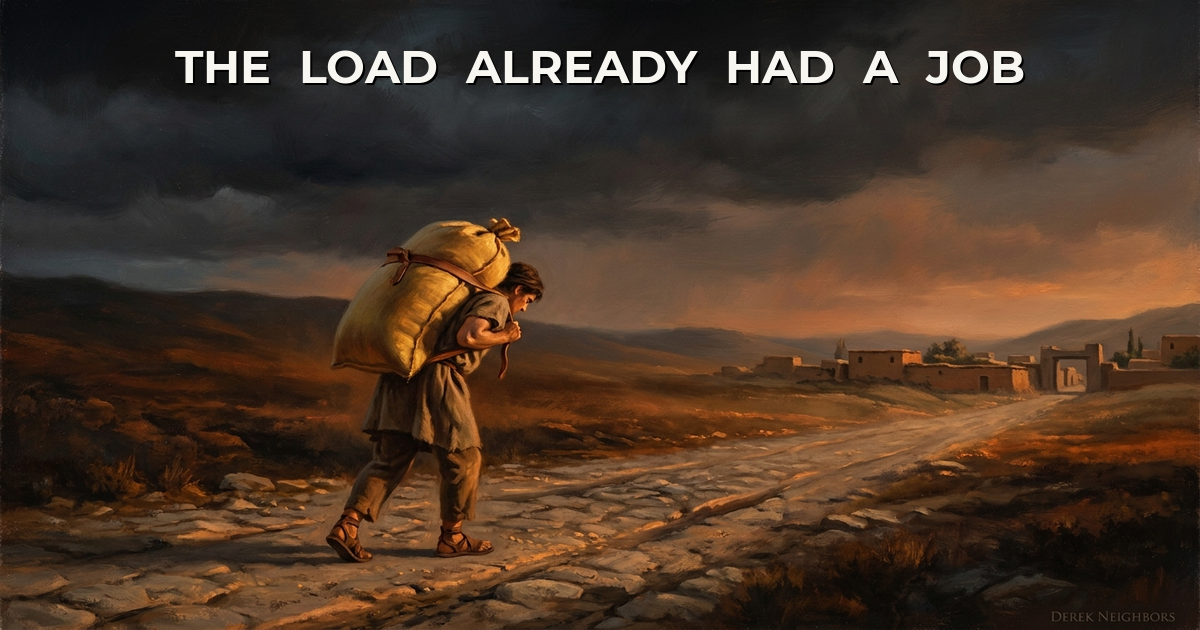
The Load Already Had a Job
By Derek Neighbors on September 13, 2026
I came off a long desert run last month and opened the watch before I sat down.
The number was fine. Eight something. The hills I had just climbed did not register. The number did.
The load already had a job. I handed it to the number. I do not think I am the only one making that swap.
The Assumption We Run on the Hard Days
The story I keep seeing is that hardship forms you if you can prove it. Close the ring, hit the split, burn the points, fast until the window turns green. A load with no number looks like a hobby, and a load with a dashboard looks like character.
Once you believe that, you start picking the hard thing by what the app can count. You keep the ruck because the pack has a weight. You drop the afternoon that unblocks one engineer because it will not show up as a closed ticket. You call that second kind of day soft, and you call the first kind training.
I have run that budget for years. I still like a clean split. I am a little embarrassed how much I like it. The watch is honest about pace. It is silent about why I was out there.
The Crack
Some loads already had a job before anyone invented a score. Potatoes on a back meant someone ate. A Saturday migration meant the table still had its rows on Monday. The strain was real, and the reason was sitting in the load before the first step.
My watch does not carry water. It records a pace. I let the pace apply for the job the hills already had.
Hesiod’s word for toil that costs you something and is aimed at a result is ponos. He put sweat on the road to arete because the road went somewhere. Sweat on a loop that ends at a beep is still sweat. It is a thinner kind of work.
I wrote last June about putting a hundred pounds on your back so the fake load in your head cannot fit. That piece still stands. This one asks a different question. What is the pack for.
What the Score Is Good For
I am not throwing the watch in a drawer. I build with models every day. I will take a clean metric over a story I tell myself in the shower. The watch can stay. What has to stop is letting the number apply for a job it cannot do.
A record answers a clerk’s question: did you move, did the window hold, did the points close. Those answers help when a job already exists. They become a problem when they apply for the job.
Aristotle’s word for the job sitting in the work is telos, that for the sake of which. A deploy’s telos is a system that stays up. A fasting window’s telos can be a body that can finish the day. A watch split can serve a race. A ticket count can serve a ship date. The failure starts when the split or the count is treated as the end. Then the metric can tell you that you moved, and it still cannot tell you why the moving mattered.
The ergon is the work itself: the hills, the migration, the review that unblocks a junior. The score is a note about the work. When the note starts hiring, the work gets quieter and the note gets louder.
I do the same thing at this desk. I have closed a writing day as productive because the word count moved, then reread the draft and found I had still not said the thing I owed the page. The count looked proud while the page still hid the sentence. I wanted the count to count as courage.
Here is the part I do not like admitting. I still reach for the number first when I am tired. It is faster than asking whether anyone can move because of the hour. A finished count is a closed shape, and reaching for it postpones the only question that would tell me if the hour counted.
I have watched the same pattern in rooms with engineering leaders. The board had a great week. Sixty tickets closed. Nobody in the standup could name who could actually move now. In those rooms the dashboard ate the job. I am not saying every standup ends that way. I am saying I have sat in enough of them that I stopped trusting a green board as proof.
You can optimize the obstacles out of a life and delete the activity. That is a different failure. This one leaves the strain in and steals the why. You still suffer, and you suffer for a chart.
The Revelation
A job is the end the work is for, said in a sentence a stranger could act on. A score is a record of motion. You can refine the sentence as you go. You cannot wait for the beep to invent the first one.
Two hours can look the same from outside. Both people are sweating. Both boards are green. Only the named end tells you which hour was work.
If you cannot say the job in one sentence before you start, the score will write one for you. It will be polite and easy to screenshot. It will not be the sentence that feeds anyone. Motion without an end is not the ergon a person owes. A rational hour is for the sake of something. The number cannot supply that something after the fact.
The watch can stay on your wrist. Give it the clerk’s job. Do not give it the reason.
Same rule at a keyboard. I let the model write the function and the tests. I do not let a token count tell me the afternoon mattered. The afternoon mattered if a running system got healthier or a person got unblocked. Tokens are a record. They are a terrible telos.
What to Do With Monday
Name the job before you start. One sentence about who can move when you are done, or what stays up. If the sentence is “hit zone two for forty minutes,” you do not have a job yet. You have a setting. You control that sentence. You do not control whether the watch or the board likes the hour that follows.
Keep the score as a clerk. Look at it after. Do not let it pick the work. If the only reason you can give for the afternoon is a streak, change the afternoon or admit you are collecting stamps.
Do one hard thing a week whose why is a person or a running system. A review that unblocks a junior. A phone call that names a date. The chart can come along. It does not get to be the point.
Ask a better standup question. “Who can move now” before “how many points closed.” Points can close on work that left everyone stuck. The first question names the job. The second one files the receipt.
If you want a test you can run tonight, write the job for tomorrow’s hardest hour on a scrap of paper before you open the app. Leave the paper on the desk. In the evening, read it next to the score. If the paper is blank and the score looks proud, you know what hired you.
Final Thoughts
I will run again this week. The watch will come with me. I am done letting it apply for a job the hills already had.
The old load knew what it was for: food on a back, a table that still had its rows. Your week still has loads like that. A person who cannot move until you finish. A sentence you owe a room.
Pick one of those up first. Let the number write itself down after. If you have no app and no standup, you still owe the sentence for the hour you can choose. A note on paper counts. The gadget was never the point.
If your hardest hours are getting cleaner on the dashboard and emptier in the actual job, you hired a clerk as a boss.
If you want a room that will ask what the week was for before it asks what you scored, MasteryLab is where that question gets said out loud.
FAQ
What does ponos mean in Greek?
ponos is productive toil, work that costs you something and is aimed at a result. Hesiod put sweat on the road to excellence because the road went somewhere. Strain with a receipt and no destination is still strain. It is not ponos in the older sense.
What is telos in Greek philosophy?
telos is the end a thing is for, the job sitting in the work before the first step. Aristotle called it that for the sake of which. A deploy’s telos is a system that stays up. A watch split can serve a race. The failure is treating the split as the end. Then it can record whether you moved, and it still cannot tell you why the moving mattered.
Is a training metric the same as voluntary hardship?
No. Voluntary hardship is a load you pick because it serves a job you can name: a body that can finish the day, a system that stays up, a person who can move. A training metric is a record of strain. Useful when it sits next to the job. A problem when it applies for the job.
How do you keep hard work from turning into a scoreboard?
Name the job in one sentence before you start. Who can move when you are done. What stays up. What ships. Keep the dashboard as a clerk. If you cannot name the job, put the work down or change the work. Do not let a streak counter hire itself as the reason.