Paideia vs Mathesis: Key Differences in Greek Philosophy
The modern world has reduced education to the transfer of information and the acquisition of credentials. The Greeks had a richer and more demanding vision. Paideia is the comprehensive formation of a human being through education, culture, and the deliberate shaping of character. It encompasses everything from physical training to musical instruction to philosophical inquiry, all aimed at producing a person capable of participating fully in civic life and living with excellence. Mathesis is the specific act or process of learning, the cognitive event of coming to understand something you did not understand before. When you master a mathematical proof, grasp a new language, or internalize a historical pattern, you have engaged in mathesis. The distinction matters because you can achieve extensive mathesis without experiencing paideia at all. You can learn enormous amounts of information, acquire multiple skills, and accumulate credentials, all while remaining fundamentally unformed as a person. The modern university system excels at producing mathesis. It teaches subjects, tests knowledge, and certifies competence. What it frequently fails to do is produce paideia: the integration of knowledge with character, the formation of judgment alongside the accumulation of facts, the development of a whole person rather than a specialized expert. Jaeger’s monumental study of paideia documented how the Greeks treated education as the central concern of civilization itself. Paideia was not a phase of life that ended with schooling. It was the lifelong process by which a culture reproduced itself in its members, transmitting not merely knowledge but values, habits, aesthetic sensibilities, and the capacity for self-governance. A society committed to paideia asks: what kind of person does our education produce? A society committed only to mathesis asks: what does our education teach? The difference between these questions determines the character of a civilization. Consider your own formation. You have learned many things. But how much of that learning transformed who you are rather than merely adding to what you know? The lecture that changed your understanding of a subject produced mathesis. The mentor who changed your character, the community that shaped your values, the sustained practice that built your judgment: these produced paideia. The person who has undergone paideia is recognizable not by what they know but by how they carry themselves, how they treat others, how they face difficulty, and how they think through problems that have no textbook answers. They have been formed, not merely informed. The person who has achieved only mathesis may be brilliantly knowledgeable and utterly unprepared for the demands of a full human life.
Definitions
Paideia
(παιδεία)
pie-DAY-ah
The comprehensive formation of a human being through education, culture, and character training. For the Greeks, paideia meant cultivating the whole person—mind, body, and spirit—to become a fully realized member of society capable of excellence.
Mathesis
(μάθησις)
MAH-thay-sis
The act of learning or acquiring knowledge through study. Distinguished from askesis (training through practice), mathesis is intellectual acquisition without the behavioral component that transforms understanding into virtue.
Key Differences
| Aspect | Paideia | Mathesis |
|---|---|---|
| Scope | Paideia encompasses the whole person: intellect, character, body, aesthetic sensibility, and civic capacity. It is formation in the broadest sense. | Mathesis addresses the cognitive dimension specifically: the acquisition of knowledge, skills, and understanding through study and instruction. |
| Goal | Paideia aims to produce a formed person, someone with character, judgment, and the capacity to live well and contribute to community life. | Mathesis aims to produce a knowledgeable person, someone who has learned specific content and can demonstrate competence in defined areas. |
| Duration | Paideia is a lifelong process. The Greeks did not consider education complete at any fixed point. Cultural formation continues as long as a person is alive and engaged. | Mathesis occurs in particular episodes of learning. Each act of coming to know something is a discrete event with a beginning and end. |
| Method | Paideia works through immersion: living within a community, absorbing its values, engaging with its culture, and being shaped by mentors, institutions, and shared practices. | Mathesis works through instruction: studying with teachers, engaging with texts, practicing skills, and systematically building understanding of specific subjects. |
| Outcome | Paideia produces a formed person whose knowledge is integrated with character. The outcome is visible in how the person lives, not merely in what they can demonstrate on an exam. | Mathesis produces an informed person who possesses specific knowledge or skills. The outcome is visible in what the person knows and can do within defined domains. |
Scope
Paideia encompasses the whole person: intellect, character, body, aesthetic sensibility, and civic capacity. It is formation in the broadest sense.
Mathesis addresses the cognitive dimension specifically: the acquisition of knowledge, skills, and understanding through study and instruction.
Goal
Paideia aims to produce a formed person, someone with character, judgment, and the capacity to live well and contribute to community life.
Mathesis aims to produce a knowledgeable person, someone who has learned specific content and can demonstrate competence in defined areas.
Duration
Paideia is a lifelong process. The Greeks did not consider education complete at any fixed point. Cultural formation continues as long as a person is alive and engaged.
Mathesis occurs in particular episodes of learning. Each act of coming to know something is a discrete event with a beginning and end.
Method
Paideia works through immersion: living within a community, absorbing its values, engaging with its culture, and being shaped by mentors, institutions, and shared practices.
Mathesis works through instruction: studying with teachers, engaging with texts, practicing skills, and systematically building understanding of specific subjects.
Outcome
Paideia produces a formed person whose knowledge is integrated with character. The outcome is visible in how the person lives, not merely in what they can demonstrate on an exam.
Mathesis produces an informed person who possesses specific knowledge or skills. The outcome is visible in what the person knows and can do within defined domains.
When to Apply Each Concept
When to Choose Paideia
Pursue paideia when you recognize that your development requires more than new information. When you need to build judgment, develop character, or integrate what you know into how you live, paideia is the relevant concept. It applies whenever the question is not what should I learn but who should I become.
When to Choose Mathesis
Pursue mathesis when you need to acquire specific knowledge or master a particular skill. When the gap between where you are and where you need to be is a gap in understanding rather than character, mathesis is the appropriate response. It applies whenever the question is clearly defined and the learning objective is concrete.
Frequently Asked Questions
What is the difference between paideia and mathesis?
Paideia is the comprehensive formation of a person through education, culture, and character development. It aims to shape who you are. Mathesis is the specific process of learning, the cognitive act of acquiring knowledge or skill. It gives you what you know. Paideia encompasses mathesis but extends far beyond it into the formation of character, judgment, and civic capacity.
Paideia vs mathesis in Greek education?
The Greek educational ideal centered on paideia: producing citizens of excellent character who could participate fully in political and cultural life. Mathesis was a component of this larger project. A student engaged in mathesis when learning geometry, rhetoric, or music. But the purpose of these studies was paideia, the formation of a complete human being. The subjects served the person, not the other way around.
What is the Greek concept of paideia?
Paideia is the Greek ideal of comprehensive human formation through education and culture. Werner Jaeger's influential study described it as the process by which a civilization shapes its members according to its highest ideals. Paideia included physical training, musical education, literary study, mathematical instruction, and philosophical inquiry, all integrated into a coherent vision of what a well-formed person looks like.
How does paideia differ from modern education?
Modern education emphasizes mathesis: the transfer of information, the development of technical skills, and the certification of competence. Paideia aimed at something broader: the formation of character alongside the acquisition of knowledge. A modern graduate may have extensive knowledge but no formation of judgment or character. Greek paideia would consider such an education incomplete, having achieved its narrowest goal while missing its deepest purpose.
Articles Exploring Paideia or Mathesis (21)
Whose Voice Do You Hear When You Want to Quit?
Halfway up a hard climb with nobody watching, the thing that keeps you going is rarely an argument. It is a person, and a question about what they would do. Everyone carries a few of these voices in their head. Most people never chose theirs. Seneca told a friend to pick one on purpose, and he was specific about how.

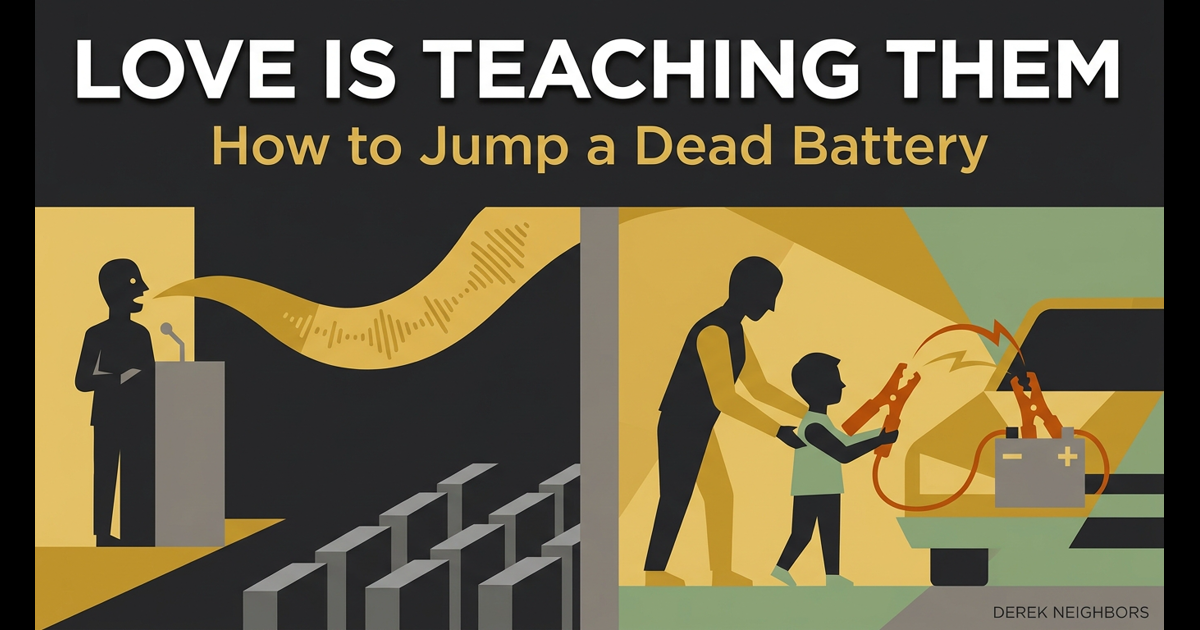
Love Is Teaching Them How to Jump a Dead Battery
Speeches about values feel like formation. The transfer happens in the driveway, at the pool filter, and in the unsexy work cousins of those jobs. If you keep doing the task, you kept the skill.
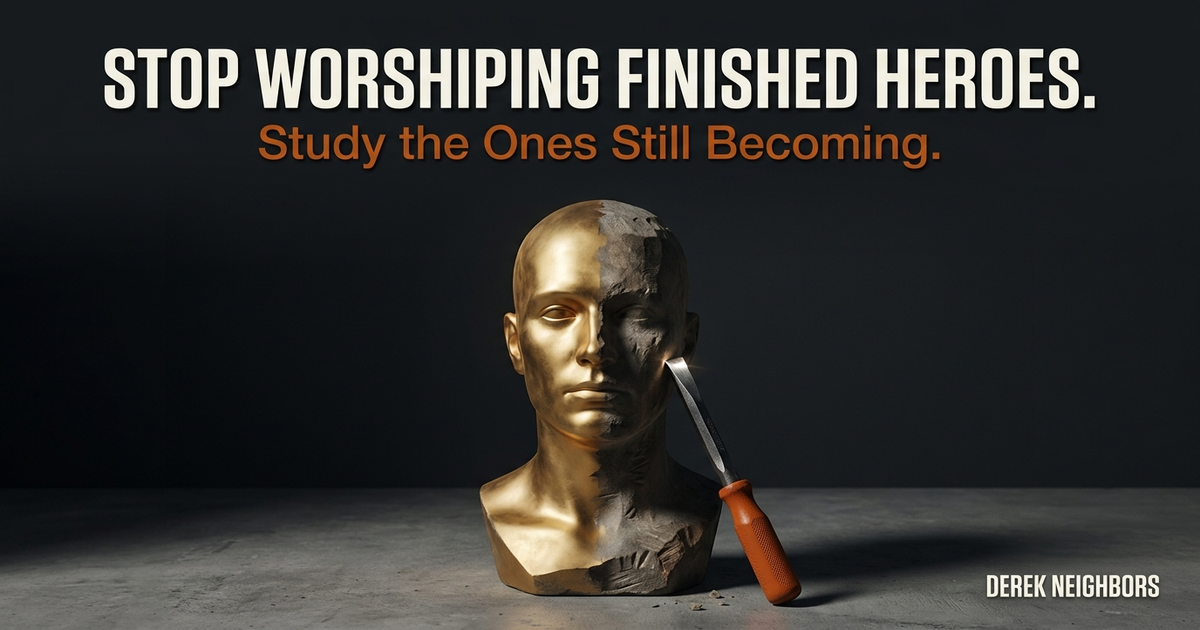
Stop Worshiping Finished Heroes. Study the Ones Still Becoming.
Polished heroes erase the path. Study the unfinished ones whose bad days are still visible, and you get permission to keep swinging instead of waiting to feel finished.
Why Getting Better Feels Like Getting Worse
You joined the harder room and suddenly feel slower, smaller, less impressive. Most people read that collapse as proof they got worse. James Davis showed in 1966 that aspiration tracks local rank more than absolute ability. Growth that changes the comparison set re-ranks you before it rewards you. Staying biggest frog in a pond that stopped teaching is the quietest form of quitting.

People Want Something to Believe In. Don't Make It You.
Law 27 of the 48 Laws of Power tells you to play on people's need to believe and create a cultlike following. Keep your words vague, favor enthusiasm over thinking, hand out rituals, collect the devotion. The need Greene identified is real. People are starving for something worth believing in. The law fails at the harvest. The Greeks called his method goeteia, the enchanter's craft that bypasses judgment instead of building it, and they left us a portrait of exactly where it ends: a con man with a puppet snake god who opened his rites by expelling every skeptic in the crowd, because one honest question would have brought the whole thing down.

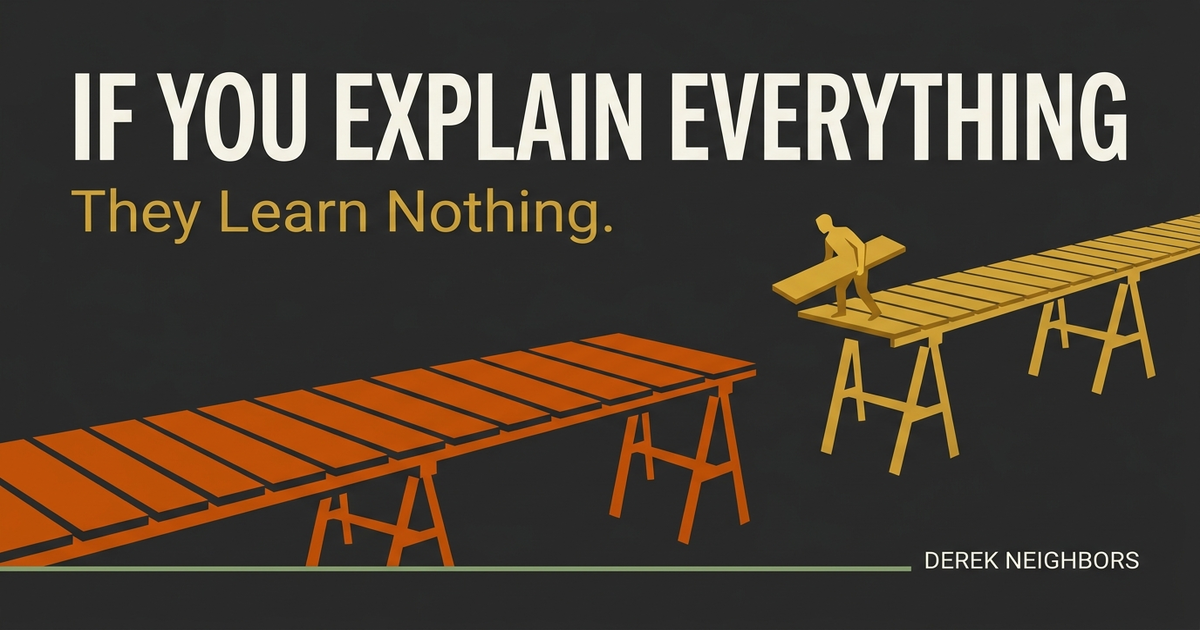
If You Explain Everything, They Learn Nothing
The most patient explainer on the team is often the reason the team can't function without them. Complete answers feel generous, and they quietly train people to wait for the next one. Every procedure you hand over expires with the tool it describes. The thing that transfers is the loop: how to get stuck, stay calm inside the stuck, and work a way out. Aristotle said you can't untie a knot you don't know is there. A teacher who explains everything makes sure the student never meets the knot.
You Spent Years Feeling Not Enough. Turns Out That Was the Training.
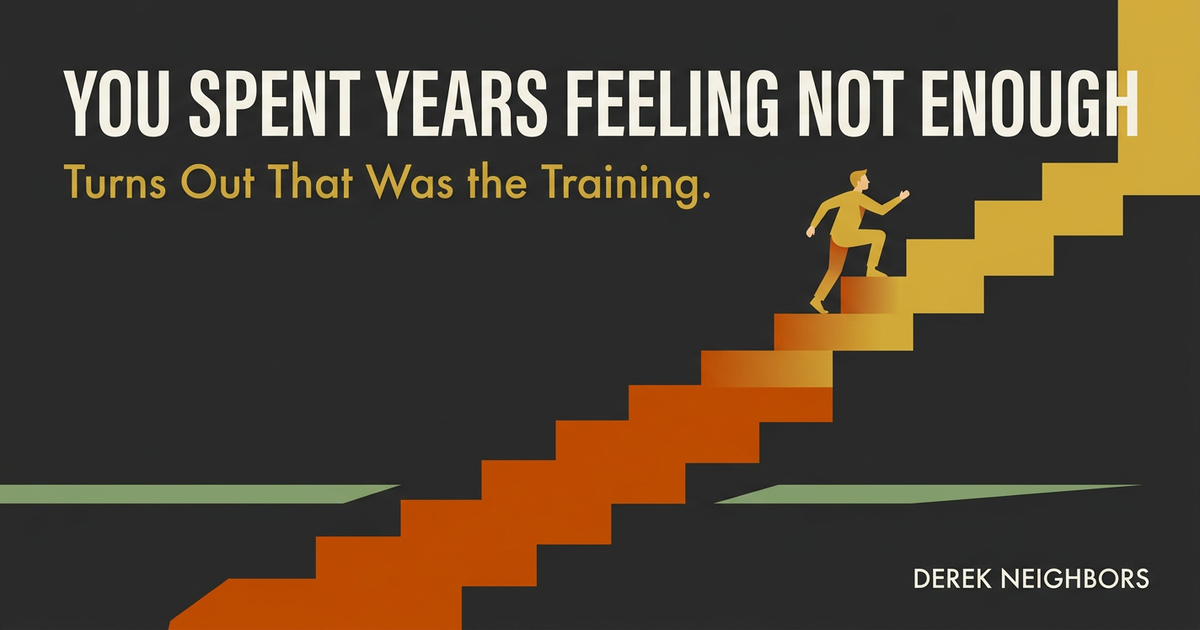
There is a low hum a lot of people grow up with: the sense that you are a little behind, a little short, that everyone else got a manual you missed. Most spend decades trying to silence it. Some go dead. Some go bitter. But that ache was never measuring your worth. It was pointing. The years of feeling not enough were formation, training you in the one thing comfort can never teach, the refusal to settle. The work of adulthood is not curing the engine that lack built. It is aiming it without the self-contempt it once carried.
Why the Best in the World Can't Teach You What They Know
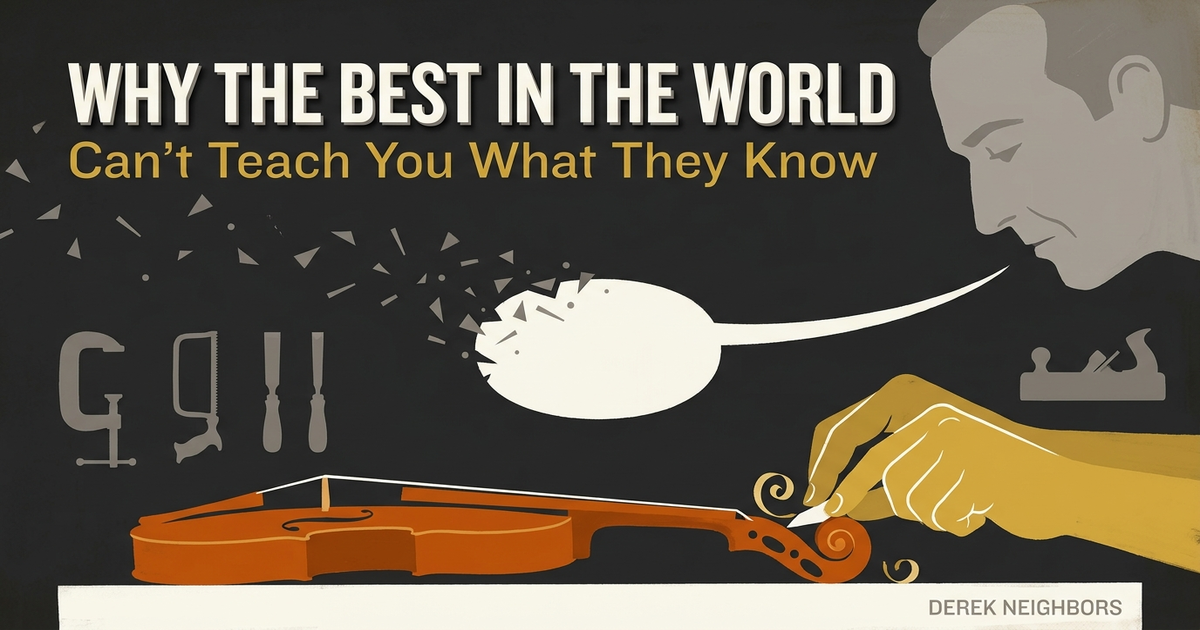
Ask the best performer in any field how they do it and you get a slogan. Trust your gut. See the ball, hit the ball. We assume they're hiding the secret or explaining it badly. The truth is stranger: fluent expertise erases its own steps as it compiles, so the master's explanation is a reconstruction by a narrator who no longer has access to the machinery. The Greeks called the unteachable knack empeiria. Modern research calls it tacit knowledge. Either way, the words are the least transferable thing a master has, and the people who learn fastest stop collecting answers and start watching hands.
Your Successor Can't Lead While You're Still in the Room
Most leaders treat succession as a problem of finding the right person. The harder problem comes after. Your continued presence, offered as help, keeps the team loyal to you and the successor leading in your shadow. The Greeks had a discipline for the deliberate withdrawal that finishes the job: anachoresis. The handoff that looks like loss is the only move that completes the work, and it is the one most leaders refuse to make.

Darwin Took 28 Years to Write One Book. He Hated Being Called a Genius.
Charles Darwin spent twenty-eight years between the HMS Beagle's return in 1836 and the publication of On the Origin of Species in 1859. Eight of those years he spent classifying barnacles. He described himself in his autobiography as not a quick thinker or writer. The word the public eventually used for him was genius. He hated it. Genius is a hindsight label we paste onto a long, mostly invisible accumulation of patient daily work, and the lightning-bolt myth of insight survives because it lets the rest of us off the hook for not enduring the years of karteria, patient endurance, the actual builders endured.

Don't Tell Your Team What They Did. Tell Them Who They're Becoming.
Almost every working leader can quote a single sentence said to them in early career that organized their identity for the next twenty years. Almost no leader can name a sentence they have offered, on the same terms, to someone they lead. The gap between the leader who shapes a person and the leader who manages output is, on close inspection, the gap between the review and the named becoming.
Your Environment Will Beat Your Discipline Every Time
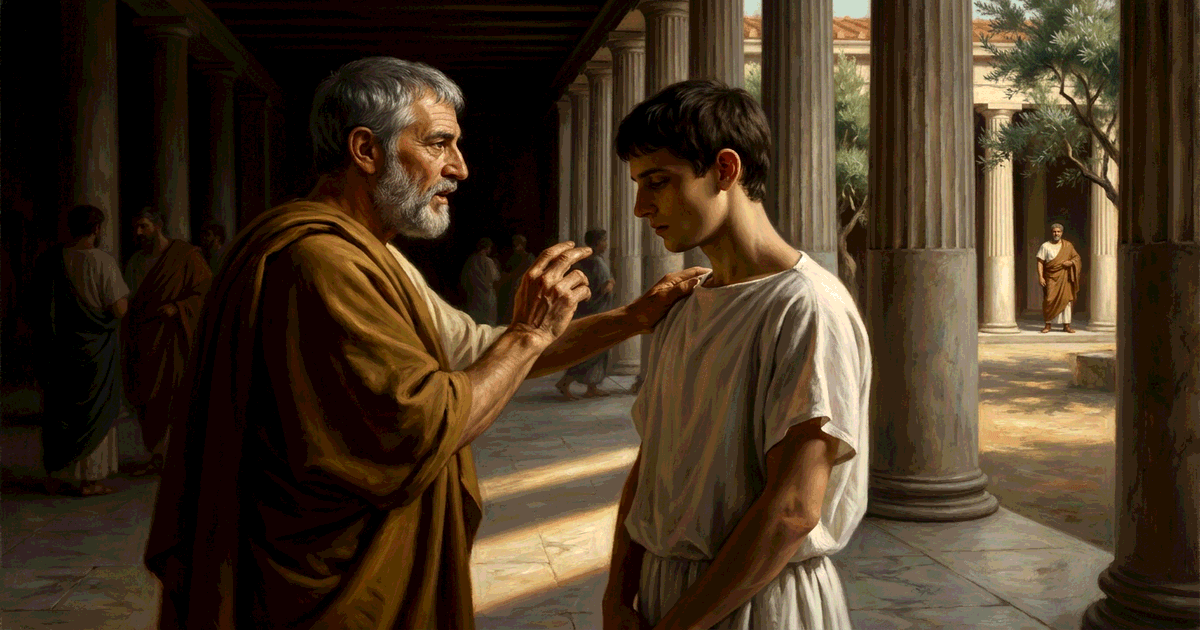
Disciplined people stall, blame themselves, and try harder. The verdict is wrong. The room they are standing in has a low ceiling, and the will they keep applying to themselves should have been applied, years ago, to choosing a different room. The Greeks understood this. We have spent two centuries forgetting it.

If Your Team Never Disagrees With You, You're Not Leading. You're Indoctrinating.
A team that always agrees with you is not aligned. It has been worn down. Most leaders are quietly running a sophistic operation, training reciters when they think they are developing thinkers. The Socratic test still applies, and most modern leaders fail it.

Your Hard Start Was Worth More Than Their Soft Landing
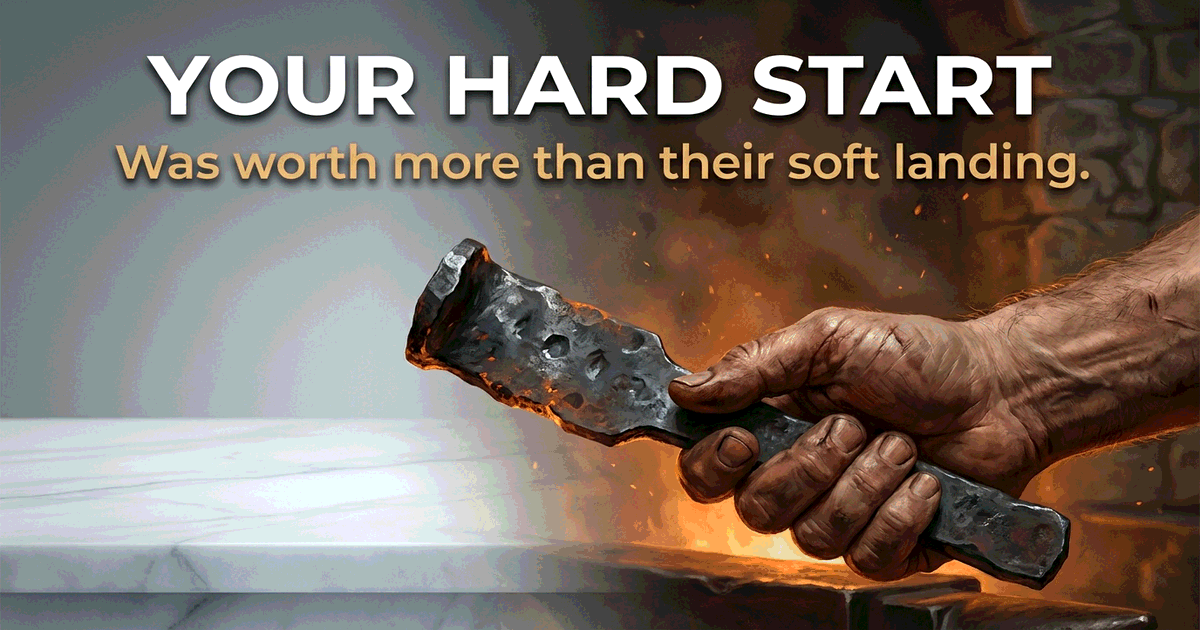
The hardship that felt like a disadvantage was the only education that holds up under pressure. Privilege has an expiration date. Formation does not.
You Don't Want to Change. You Want to Feel Better.
You've read the books, hired the coach, attended the retreat. Six months later, the same patterns are running. The same conflicts repeat. The vocabulary improved. The behavior didn't. The effort was real. The misunderstanding was deeper: what change actually requires.

Want Better Leaders? Stop Naming Them.
The best coaches figured this out decades ago. Saban's Process. Belichick's expectations. Cignetti's explicit no-captains policy. When you designate leaders, everyone else stops leading.

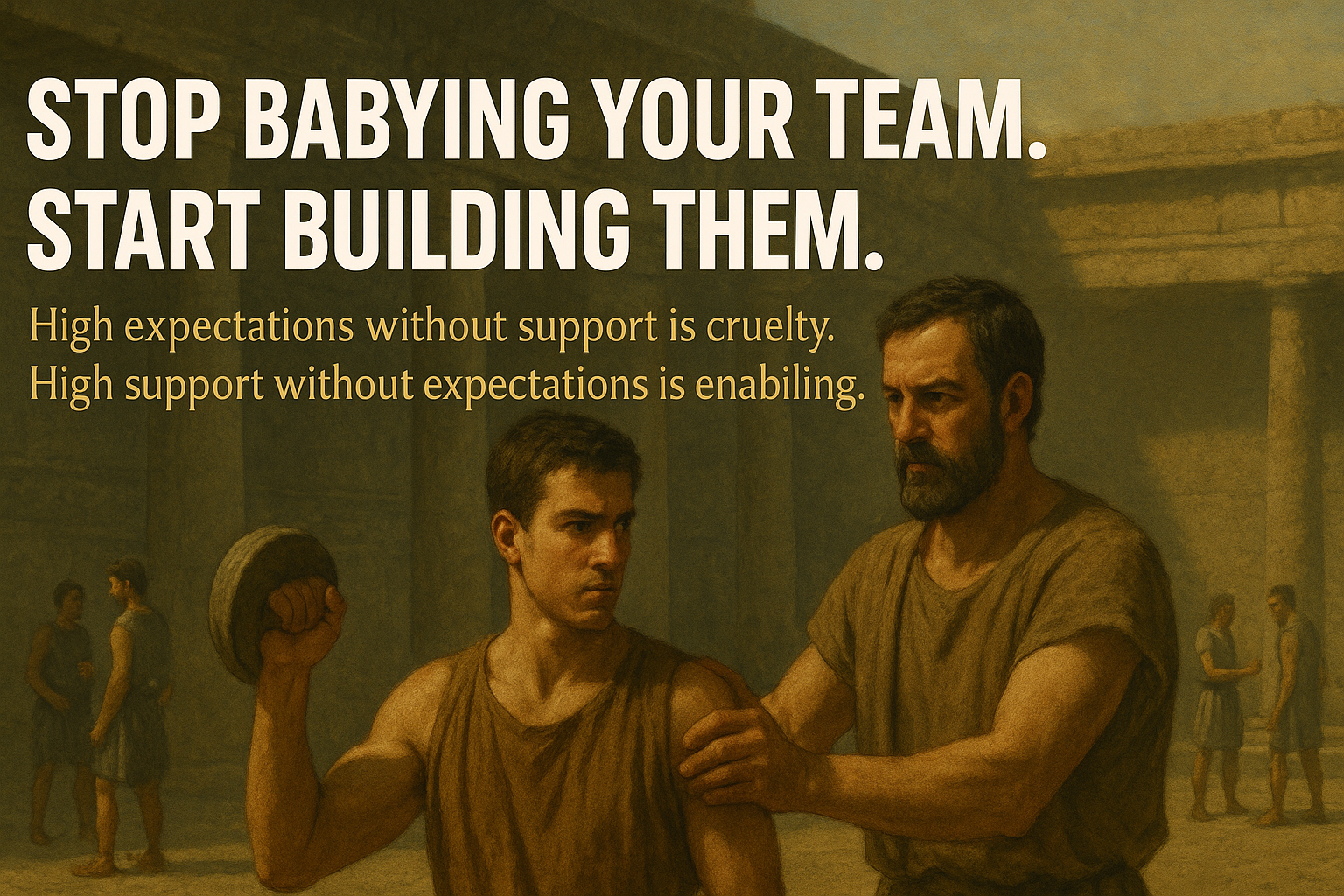
Stop Babying Your Team. Start Building Them.
The ancient concept of paideia required both challenge and care. High expectations without support breaks people. High support without expectations keeps them small. Real leadership integrates both.
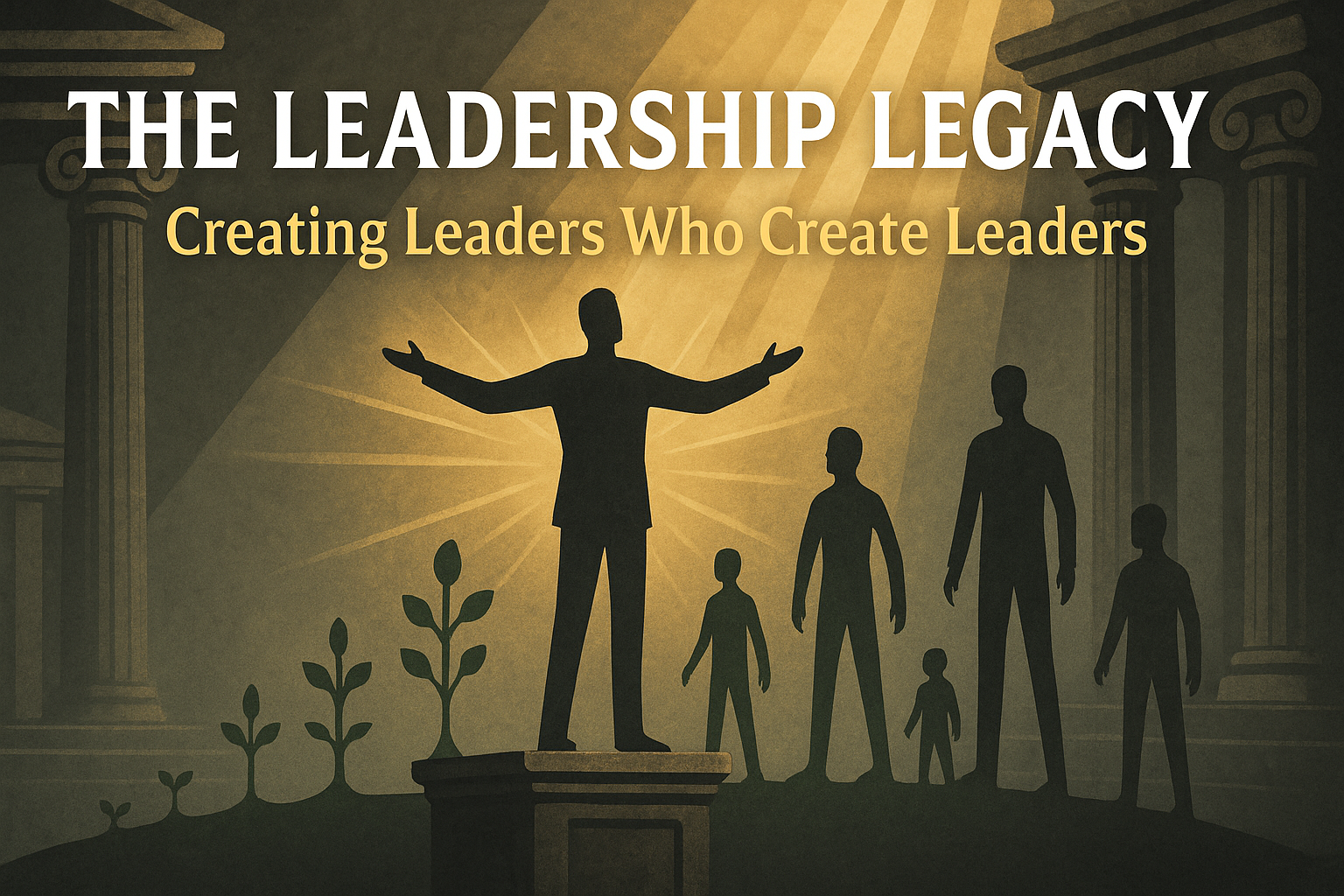
The Leadership Legacy: Creating Leaders Who Create Leaders
The ultimate test of leadership isn't what you accomplish, it's what continues after you're gone. Here's how exceptional leaders create legacies by developing other leaders who develop leaders.
The Stretch Paradox: Why Safety Enables Greater Challenge
The greatest challenges require the greatest safety. Great leaders understand this paradox: the more psychological safety you create, the more difficult challenges your team will tackle. Here's the framework that makes it work.

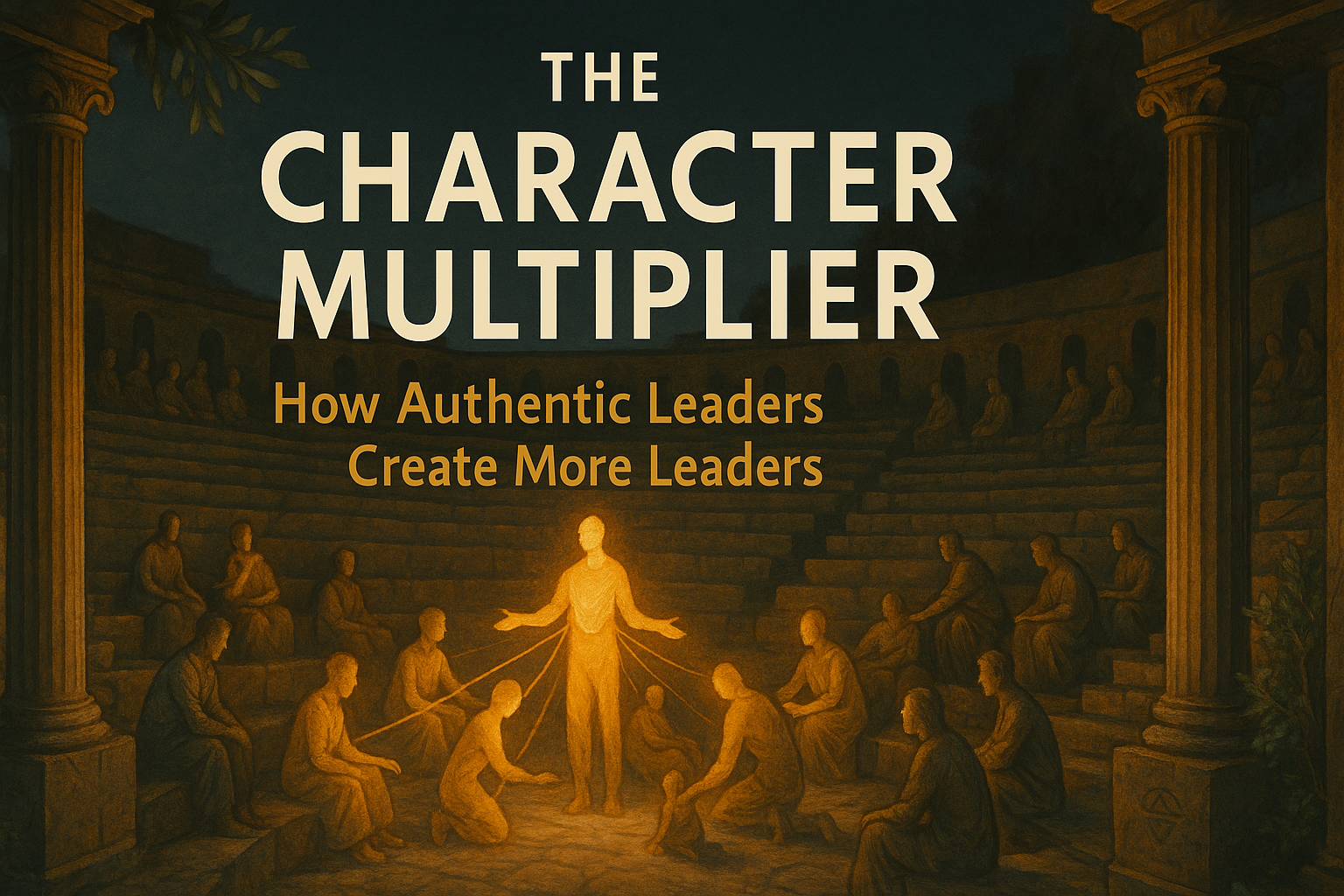
The Character Multiplier: How Authentic Leaders Create More Leaders
Most leaders create followers. Great leaders create leaders. But the rarest leaders create character—and character creates everything else. Here's how authentic leaders systematically develop character in others.
The One-on-One Revolution: Leadership Through Structured Dialogue
Most one-on-ones are glorified status updates disguised as leadership development. The DIALOGUE method transforms individual conversations into systematic leadership multiplication, creating leaders who create more leaders through structured excellence.