Ponos vs Karteria: Key Differences in Greek Philosophy
Ponos and karteria are two faces of the human capacity to handle difficulty, and most sustained achievements require both. Ponos is productive toil, the active effort you invest in meaningful work. It is offensive in nature: you push toward a goal, you labor to build something, you exert yourself to make progress. The sweat of ponos produces something. Karteria is steadfast endurance, the capacity to bear hardship without breaking. It is defensive in nature: you hold your ground when conditions turn against you, you absorb pain without abandoning your position, you persist through circumstances you cannot change. The grit of karteria preserves something. The distinction matters because different phases of any significant endeavor demand different capacities. Starting a new venture, launching a creative project, or beginning a training regimen requires ponos. You need energy, initiative, and the willingness to labor without guarantee of return. These are active problems that respond to active effort. The middle of that same endeavor, when the excitement has faded, the obstacles have accumulated, and the end is nowhere in sight, requires karteria. You need staying power, patience, and the ability to absorb setbacks without quitting. These are endurance problems that respond to the capacity to hold on. Most people are naturally stronger in one of these capacities than the other. The person with abundant ponos launches projects, attacks problems with energy, and generates impressive initial momentum, but may struggle when the work becomes a grind. The person with strong karteria persists through anything, holds fast when others quit, and maintains composure under pressure, but may lack the initiative to start something new or the drive to push toward ambitious goals. The complete practitioner develops both: the ability to push and the ability to hold. The Greeks understood that cultivating only one of these capacities creates a characteristic vulnerability. Pure ponos without karteria produces the person who burns bright and burns out, who launches ten initiatives and finishes none, because they cannot sustain effort once the initial energy fades. Pure karteria without ponos produces the person who endures everything and creates nothing, who survives every hardship but never takes the initiative to build something worth enduring hardship for. The Stoics valued karteria highly, but even they recognized that endurance without purpose degrades into passivity. And the Herculean tradition of ponos insisted that labor must produce transformation, not merely exhaustion. Wisdom lies in knowing which capacity the present moment demands.
Definitions
Ponos
(πόνος)
POH-nos
The toil, labor, and productive struggle necessary for achieving anything of worth. In Greek thought, ponos was not mere suffering but purposeful exertion—the price demanded by excellence and the forge through which virtue is shaped.
Karteria
(καρτερία)
kar-teh-REE-ah
The virtue of patient endurance and steadfast perseverance in the face of hardship, pain, or prolonged difficulty. Distinguished from mere courage (andreia), karteria emphasizes the capacity to bear what must be borne without yielding or complaint.
Key Differences
| Aspect | Ponos | Karteria |
|---|---|---|
| Direction | Ponos is active and forward-directed. It describes the effort of pushing toward a goal, laboring to produce, and exerting force to make progress. | Karteria is receptive and position-holding. It describes the capacity to withstand pressure, absorb difficulty, and maintain your stance when forces push against you. |
| Relationship to Goals | Ponos creates progress toward goals. The productive struggle of labor moves you closer to your objective. Without ponos, nothing gets built. | Karteria protects progress already made. Steadfast endurance prevents you from losing ground when circumstances push back. Without karteria, gains are surrendered. |
| Physical Metaphor | Ponos is the push. Think of the worker driving a plow through resistant soil, the athlete straining against resistance, the builder lifting heavy materials into place. | Karteria is the hold. Think of the soldier maintaining a defensive position under bombardment, the climber gripping the rock face in a storm, the tree standing through a sustained wind. |
| Emotional Quality | Ponos carries an emotional quality of exertion and productive heat. The experience of ponos is intense, engaged, and purposeful, even when exhausting. | Karteria carries an emotional quality of quiet resolve. The experience of karteria is steady, calm under pressure, and characterized by refusal to break rather than effort to advance. |
| When Each Is Tested | Ponos is tested when the work is hard but progress is possible. The question ponos answers is: 'Will you do the difficult work required to move forward?' | Karteria is tested when the work is hard and progress is stalled or impossible. The question karteria answers is: 'Will you endure when endurance is the only option?' |
Direction
Ponos is active and forward-directed. It describes the effort of pushing toward a goal, laboring to produce, and exerting force to make progress.
Karteria is receptive and position-holding. It describes the capacity to withstand pressure, absorb difficulty, and maintain your stance when forces push against you.
Relationship to Goals
Ponos creates progress toward goals. The productive struggle of labor moves you closer to your objective. Without ponos, nothing gets built.
Karteria protects progress already made. Steadfast endurance prevents you from losing ground when circumstances push back. Without karteria, gains are surrendered.
Physical Metaphor
Ponos is the push. Think of the worker driving a plow through resistant soil, the athlete straining against resistance, the builder lifting heavy materials into place.
Karteria is the hold. Think of the soldier maintaining a defensive position under bombardment, the climber gripping the rock face in a storm, the tree standing through a sustained wind.
Emotional Quality
Ponos carries an emotional quality of exertion and productive heat. The experience of ponos is intense, engaged, and purposeful, even when exhausting.
Karteria carries an emotional quality of quiet resolve. The experience of karteria is steady, calm under pressure, and characterized by refusal to break rather than effort to advance.
When Each Is Tested
Ponos is tested when the work is hard but progress is possible. The question ponos answers is: 'Will you do the difficult work required to move forward?'
Karteria is tested when the work is hard and progress is stalled or impossible. The question karteria answers is: 'Will you endure when endurance is the only option?'
When to Apply Each Concept
When to Choose Ponos
Call on ponos when the situation requires active effort and the path forward is visible, even if difficult. Starting new projects, building capabilities, creating deliverables, and pushing through technical challenges all require the productive labor that ponos represents. If progress is possible through effort, ponos is the capacity to deploy.
When to Choose Karteria
Call on karteria when the situation requires patience and the path forward is blocked or unclear. Waiting for results, enduring a downturn, recovering from failure, and persisting through plateaus all require the steadfast endurance that karteria represents. If the best available action is to hold your position and not break, karteria is the capacity to deploy.
Frequently Asked Questions
What is the difference between ponos and karteria?
Ponos is productive toil, the active effort invested in meaningful labor. Karteria is steadfast endurance, the capacity to bear hardship without breaking. Ponos pushes forward. Karteria holds the line. Both involve facing difficulty, but ponos is about generating progress through effort while karteria is about maintaining position through persistence. Most significant achievements require both, at different phases.
Ponos vs karteria in Greek philosophy?
Ponos was associated with the productive struggle that builds strength and character. Heracles was a symbol of ponos, whose labors produced both results and personal transformation. Karteria was valued particularly by the Stoics as the capacity to endure unavoidable hardship with composure. The Spartans and Stoics both cultivated karteria through deliberate exposure to discomfort. Together, these concepts describe the complete human relationship with difficulty.
How do ponos and karteria work together?
Ponos and karteria complement each other in any sustained effort. Ponos provides the energy to start and the drive to push toward goals. Karteria provides the resilience to continue when the push meets resistance. In practice, most important work alternates between phases requiring each: bursts of productive labor followed by periods where endurance is the primary demand. Building both capacities creates a complete approach to difficulty.
Is ponos the same as hard work?
Ponos overlaps with hard work but carries a richer meaning. The Greek concept of ponos includes not only physical labor but the idea that struggle itself is productive and character-forming. It is not generic busyness. It is the specific kind of exertion that produces something worthwhile and transforms the person doing the work. Ponos connects effort to meaning in a way that the modern phrase 'hard work' does not.
Articles Exploring Ponos or Karteria (28)
Stop Celebrating Decimals
You are at 0.4 and there is a slide about it. Somebody made a chart. The number moved, so the room claps. A decimal is a position report, and treating it like an achievement pays you in advance for work you have not finished. The opposite error is quieter and more flattering, and it is the one that catches good people.
The Load Already Had a Job
I came off a long run and opened the watch before I sat down. The hills did not register. The number did. The old load already had a job. The watch applied for it.
Suffer For Them, Not With Them
Two senior engineers watch the same junior stall on the same ugly ticket. One takes it off their board and saves the sprint. The other clears an afternoon, sits two desks away, and lets the migration fail on the junior's watch. From the outside those look like the same amount of care. They are opposites. Rescue ends your pain in one move and postpones theirs to a point where it is expensive. The harder thing is to carry a cost on their behalf and let the struggle do what it was for.
The Big Guy Breaks When You Refuse to Stay Down
Position feels like invincibility until someone smaller keeps standing after every punch. The damage is not only physical. It lands in the story the big guy told about being untouchable. If you are on top, keep training the grit that got you there. If you are behind, make refusal your strategy.
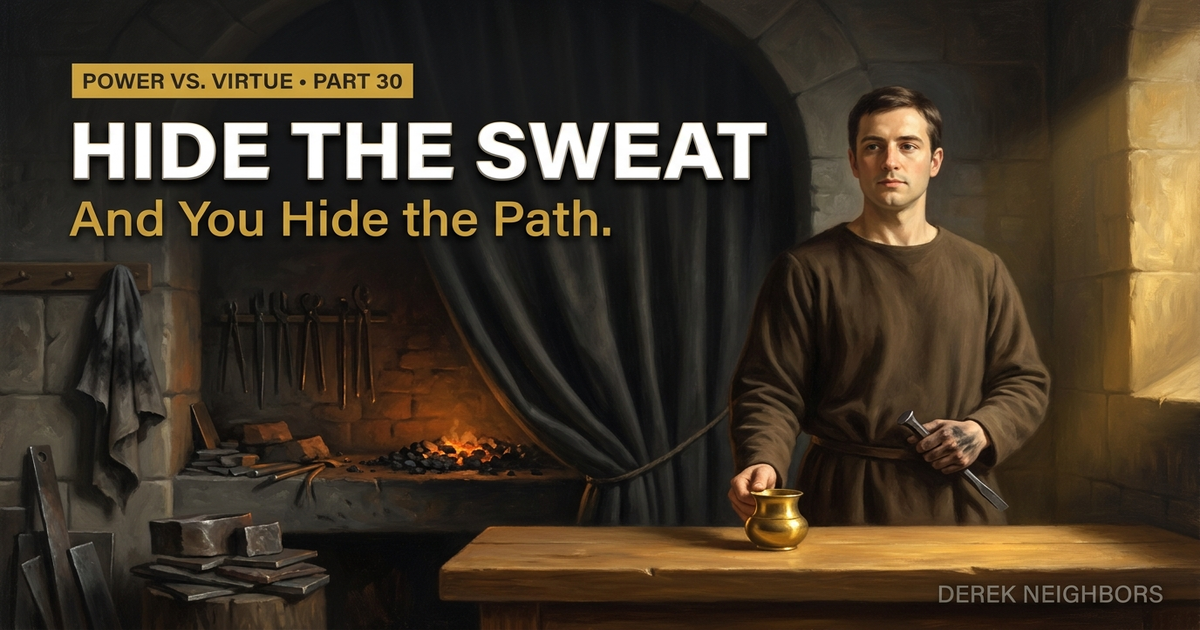
Hide the Sweat and You Hide the Path
Law 30 of the 48 Laws of Power tells you to make your accomplishments seem effortless. Hide the toil. Conceal the tricks. Act as if you could do much more. The tactical truth is real: audiences confuse rehearsal with weakness, and clean execution reads as competence. The character cost arrives when concealment becomes mystique. Juniors never see the path. Effort becomes shame. Your identity fuses to a costume of natural gift. The ARETE alternative is Castiglione's sprezzatura rebuilt on Greek hexis: earned ease from practice, ponos honored in the forge, techne that can still teach.
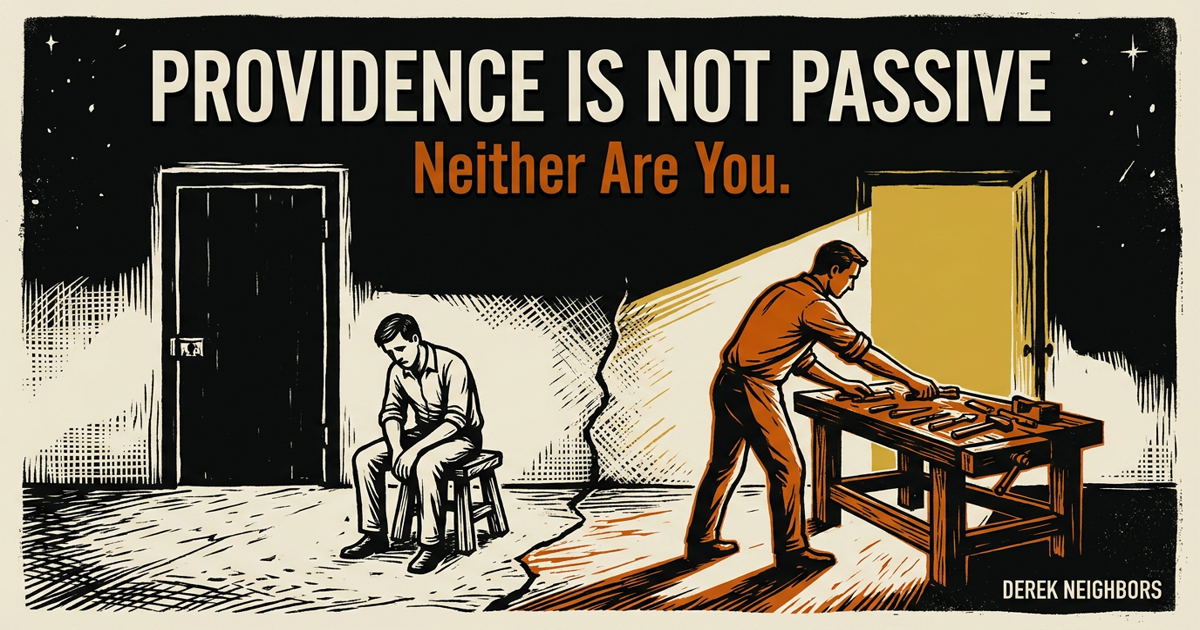
Providence Is Not Passive. Neither Are You.
Believing the universe is on your side means nothing if your calendar proves you are waiting. The Stoics welded trust in providence to being-at-work. Pronoia without energeia is costume. This is the challenge: meet the field armed, or stop calling the wait faith.
Living the Dream Is Mostly Grunt Work. That's the Good News.
The day you finally get the dream is the day it stops feeling like one. Fear shows up, the calendar disappears, and the summit moment never comes. Most people read this as failure. It's the strongest evidence yet that the dream became real.

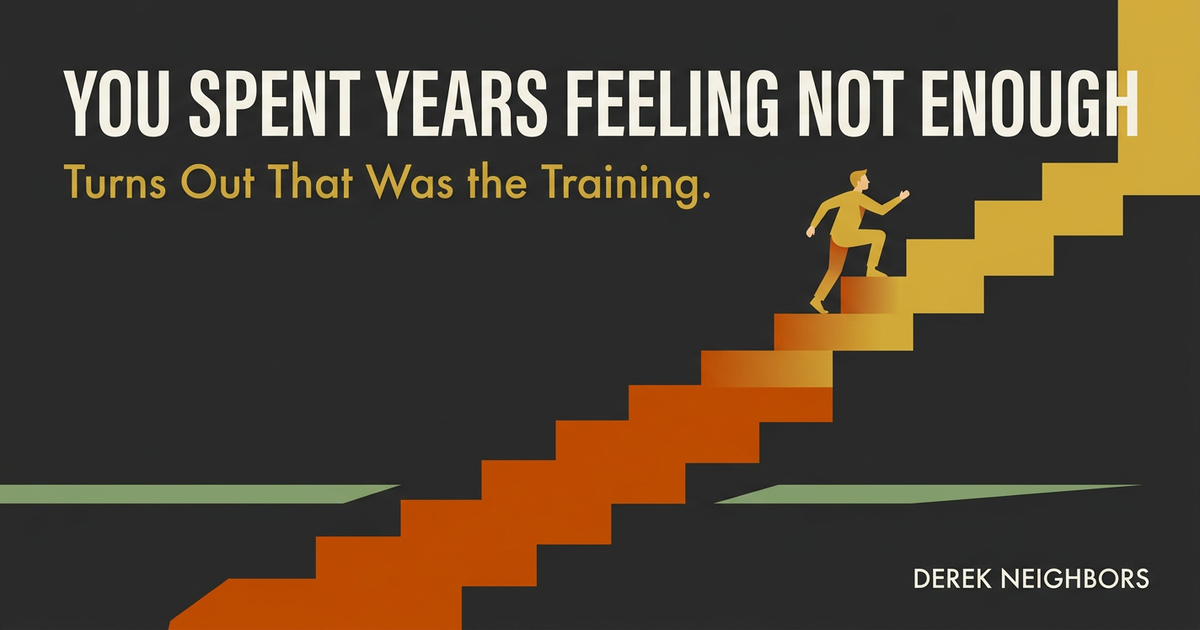
You Spent Years Feeling Not Enough. Turns Out That Was the Training.
There is a low hum a lot of people grow up with: the sense that you are a little behind, a little short, that everyone else got a manual you missed. Most spend decades trying to silence it. Some go dead. Some go bitter. But that ache was never measuring your worth. It was pointing. The years of feeling not enough were formation, training you in the one thing comfort can never teach, the refusal to settle. The work of adulthood is not curing the engine that lack built. It is aiming it without the self-contempt it once carried.
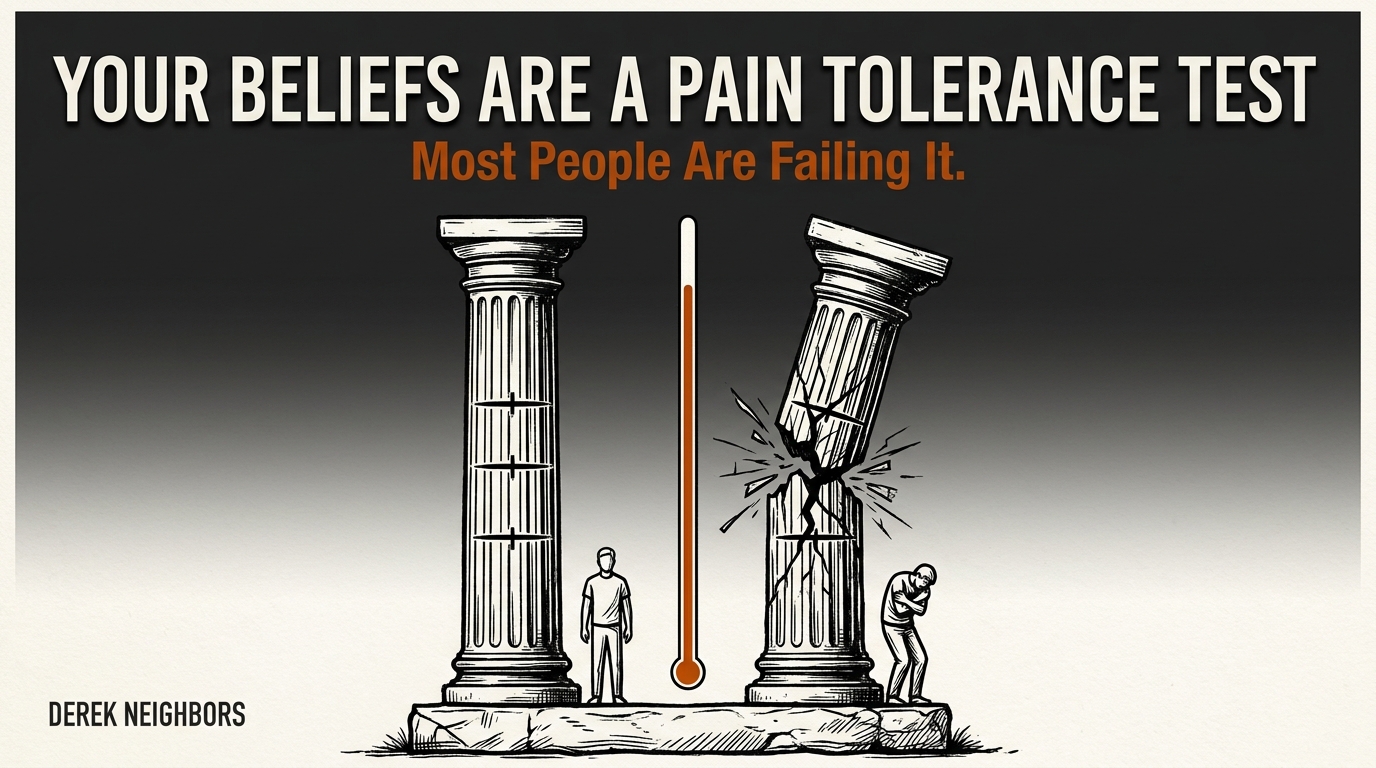
Your Beliefs Are a Pain Tolerance Test. Most People Are Failing It.
Two people take the same hit. Same diagnosis, same year, same loss of income. One keeps showing up. One disappears into the couch for six months. The difference is rarely willpower. It is the belief system running underneath, and belief systems can be scored. The Stoics built a scorecard without calling it that: internal control, suffering as training material, virtue as something worth the cost. Most modern frameworks fail on all three axes and then wonder why life feels unbearable.
The Story You Tell About Pain Decides How Much It Hurts
Two soldiers and two civilians take the same wound. The soldiers ask for less morphine. The injury is identical, so the difference is not in the tissue. It is in the meaning. Cicero spent a book on this, the Stoics built a whole practice around it, and modern pain science has now mapped the lever they were pulling. Pain has two parts: the signal the body sends and the story your mind wraps around it. The signal is mostly fixed. The story is not, and the story does most of the damage.
Carry a Hundred Pounds Up a Mountain. Your Worry List Won't Fit.
Modern comfort has gifted the average mind enough idle capacity to host a daily inventory of anxieties, resentments, and dreads that primitive life would not have permitted. Malakia is the Greek word for the moral failure this produces, softness as a settled disposition that organizes a life around the avoidance of effort. The cure is not therapy or another book. It is the deliberate, repeated practice of putting a real load on the body, large enough and long enough that the simulated load in the mind cannot fit on the climb. Askesis as training. Ponos as productive toil. The pack on the back is not penance. It is the cure for the part of the mind that was about to be eaten by the surplus capacity comfort produces.
Darwin Took 28 Years to Write One Book. He Hated Being Called a Genius.
Charles Darwin spent twenty-eight years between the HMS Beagle's return in 1836 and the publication of On the Origin of Species in 1859. Eight of those years he spent classifying barnacles. He described himself in his autobiography as not a quick thinker or writer. The word the public eventually used for him was genius. He hated it. Genius is a hindsight label we paste onto a long, mostly invisible accumulation of patient daily work, and the lightning-bolt myth of insight survives because it lets the rest of us off the hook for not enduring the years of karteria, patient endurance, the actual builders endured.
You Don't Need More. You Need to Strip Your Life Down on Purpose.
We have engineered constraint out of ordinary days and cannot understand why ordinary days no longer move us. The ancient world knew the answer. They built deliberate practices around removing inputs, not adding them. The Sabbath was an amputation. Askēsis was training. Autarkeia was the freedom of needing less. This is the protocol for a thirty-day voluntary sabbath that gets the meaning back into the small things you have stopped noticing.
You Don't Have to Be the Best. You Just Have to Still Be Here.
You probably aren't the best in your field. That matters far less than you think. Almost everyone you compare yourself to has already quit, or is about to. The strategy that compounds is staying.
Your Hard Start Was Worth More Than Their Soft Landing
The hardship that felt like a disadvantage was the only education that holds up under pressure. Privilege has an expiration date. Formation does not.
You're Not Struggling Because Something Is Wrong. You're Struggling Because Something Finally Matters.
Comfort culture has convinced you that if something feels hard, you're doing it wrong. The Greeks built an entire civilization on the opposite idea. Struggle isn't the obstacle. It's the signal.
Your Goals Aren't Too Big. Your Sacrifices Are Too Small.
You don't have an ambition problem. You have a payment problem. Everyone wants the dream. Almost no one wants to pay what it actually costs.

AI Is Making Life Easier. That Might Be the Worst Thing That Ever Happened to Us.
Three miles from anything, my calf seized. No Uber. No shortcut. Just pain and the choice to keep moving. AI is removing that choice from everything. And that might be destroying us.

Comfort Killed More Dreams Than Failure Ever Did
Everyone fears failure. Almost nobody fears comfort. The ancients understood why that's backwards. Comfort doesn't protect dreams. It suffocates them slowly while you're too numb to notice.
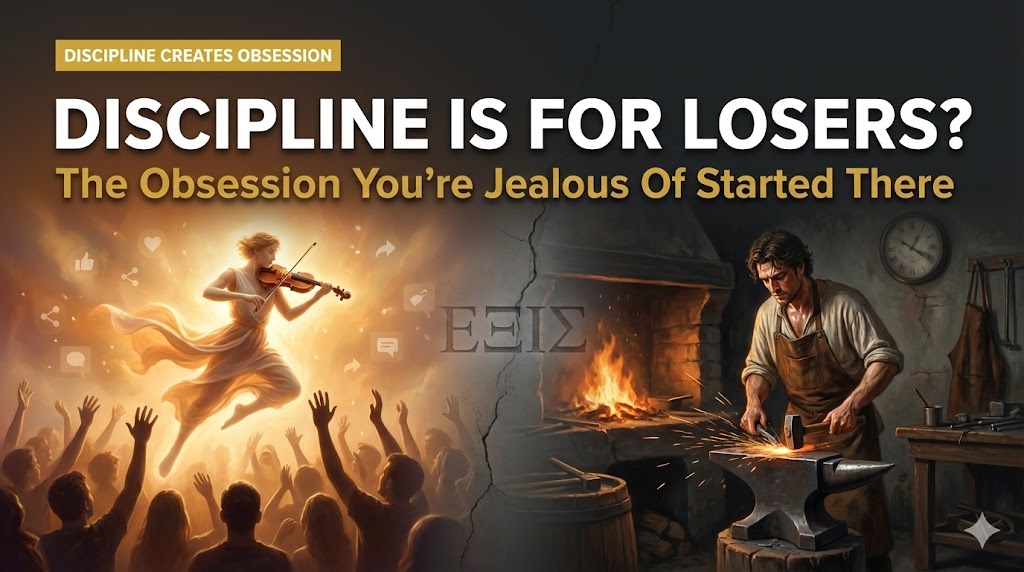
"Discipline Is for Losers"? The Obsession You're Jealous Of Started There
The person calling discipline 'for losers' is watching masters and missing the decades of discipline underneath. What looks like obsession is hexis. The discipline came first.
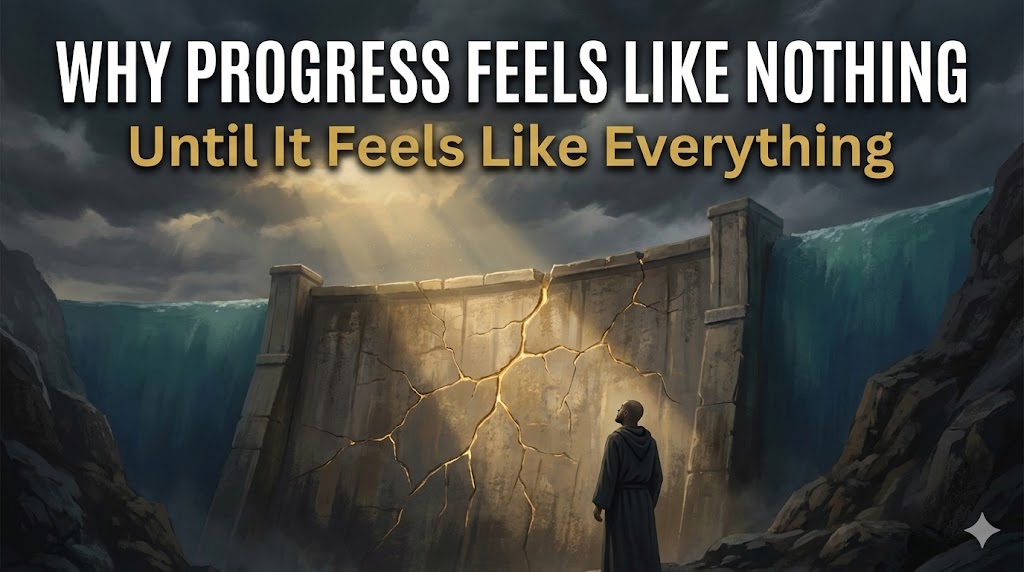
Why Progress Feels Like Nothing Until It Feels Like Everything
Progress doesn't arrive gradually. It accumulates in silence, then announces itself all at once.
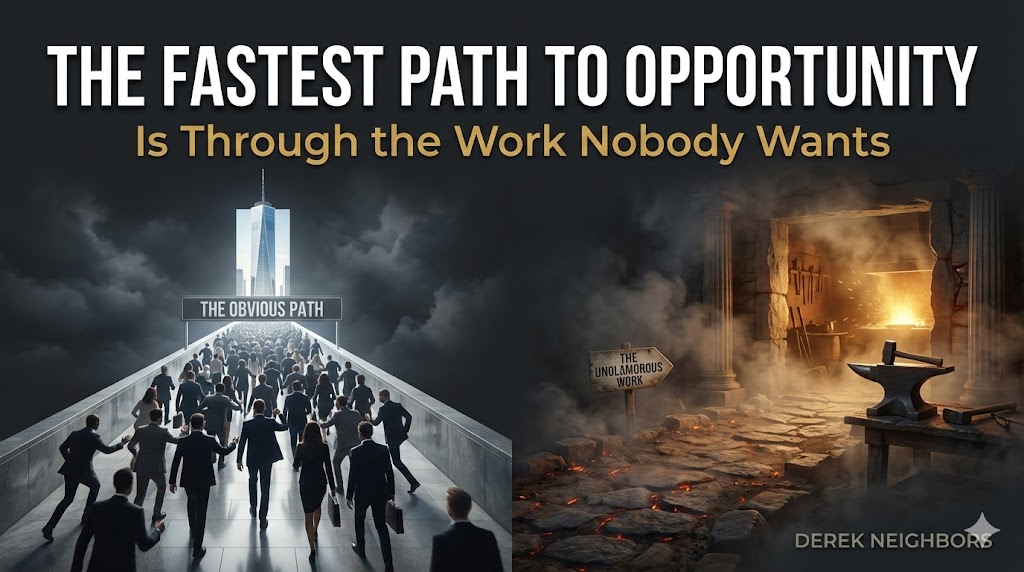
The Fastest Path to Opportunity Is Through the Work Nobody Wants
Everyone's competing for the spotlight. Meanwhile, opportunity waits in the tasks everyone avoids. The dirty work doorway isn't just a path to success. It's the only path that isn't crowded.
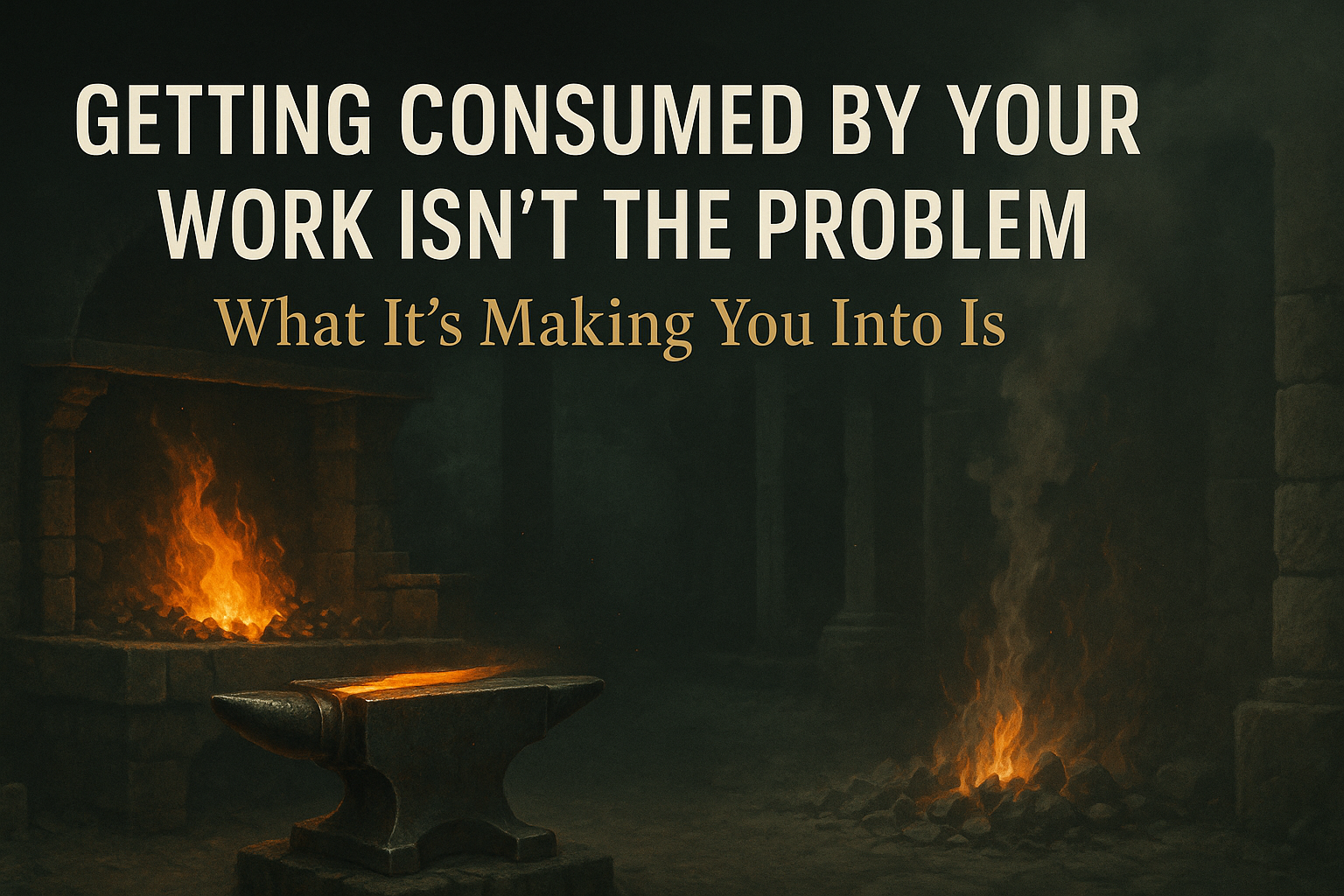
Getting Consumed by Your Work Isn't the Problem. What It's Making You Into Is.
Work-life balance won't save you from being consumed. Everything significant consumes you. The question isn't whether work will consume you, but what you're becoming through that consumption. Choose the fire that forges you.
Your Self-Care Routine Is Making You Weaker
Modern self-care culture produces people who need more support to handle less challenge. Rest is only restorative when preceded by genuine exertion. Without the depletion, there's nothing to restore.
Why Real Learning Only Happens Under Pressure
Real competence emerges when comfort dies and stakes are real. The professionals who thrive in crisis weren't trained in safe environments, they were forged under pressure.
The Discipline Gateway: Why Real Freedom Costs More, Not Less
The brutal truth about freedom: it's not the absence of constraints, it's the wisdom to choose the right ones.
The Completion Paradox: Why Finishing Matters More Than Starting
You don't have a motivation problem. You have a completion problem. Every unfinished project is evidence that you can't trust yourself to follow through. Here's how to build the character that finishes what it starts.
Breaking Through: How Resistance Shapes Your Transformation
Every breakthrough begins with a breakdown. Resistance isn't blocking your transformation, it's forging it.
