Metanoia (μετάνοια): Meaning, Definition & Modern Application
meh-TAH-noy-ah
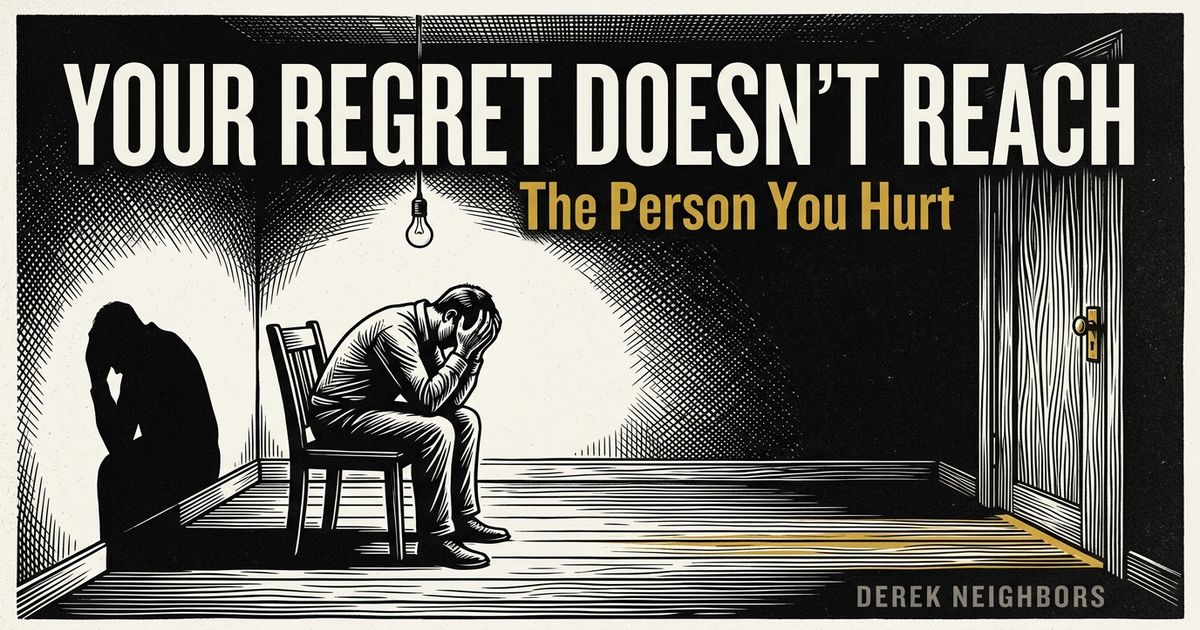
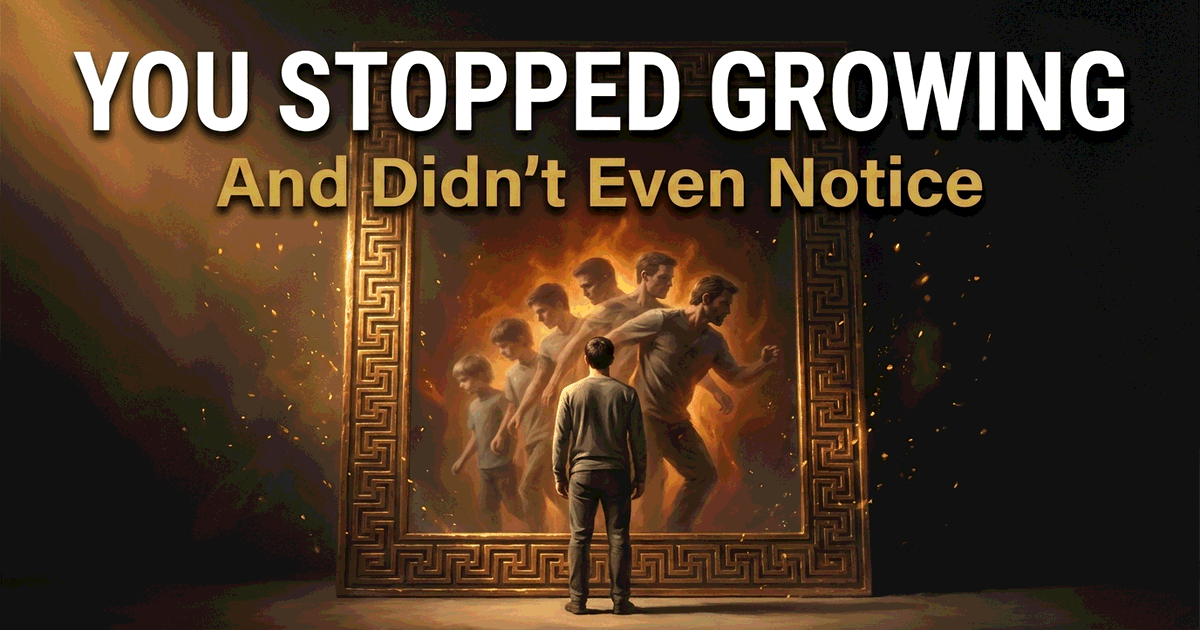
A fundamental transformation of mind and heart—not mere regret, but a complete turning around of one's understanding, perception, and way of being. In ancient Greek thought, it signifies the moment when scales fall from the eyes and one sees reality with new clarity.
Etymology
From meta (after, beyond, change) and nous (mind), literally “change of mind” or “thinking beyond.” In classical Greek, metanoia described a profound shift in perception, not merely regretting a mistake but fundamentally reorienting how you see reality. Early Christian writers adopted the term for spiritual conversion, but the philosophical meaning is broader: any genuine transformation of understanding that changes the direction of your life.
Deep Analysis
Metanoia is composed of two parts: meta, meaning beyond, after, or about, and nous, meaning mind or understanding. The compound suggests a movement of mind that goes beyond its current position, a shift in the framework through which you interpret experience. This is fundamentally different from changing your mind about a particular question. When you change your mind about which restaurant to visit, your framework for making decisions remains intact. When you experience metanoia, the framework itself is what changes.
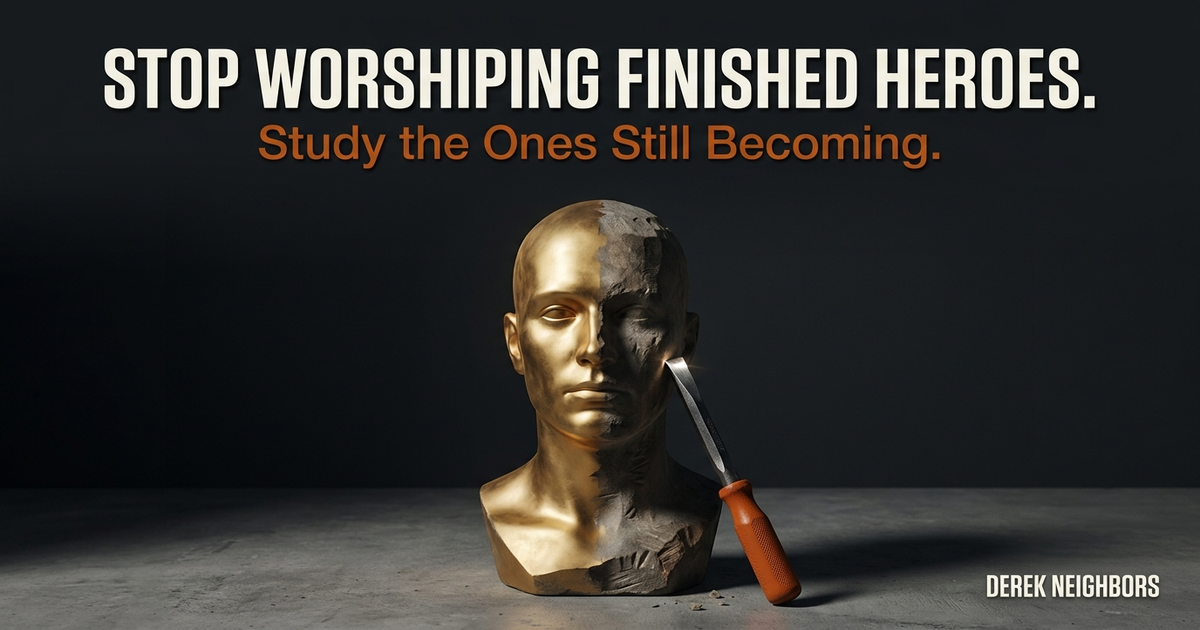
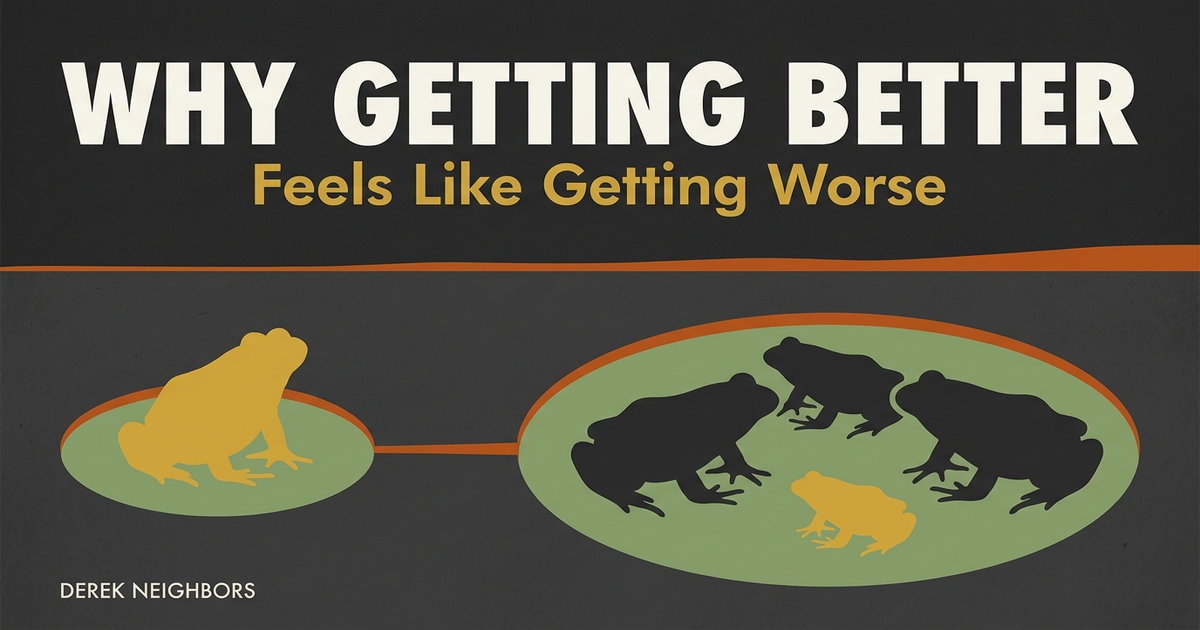
The distinction between metanoia and ordinary belief revision is the distinction between adjusting a lens and replacing the lens entirely. Ordinary learning operates within your existing conceptual framework. You add new information, update probabilities, and refine your understanding without altering the fundamental assumptions through which you process experience. Metanoia disrupts the framework itself. The categories you used to organize reality no longer hold. The priorities you considered self-evident reveal themselves as contingent. The questions you thought were central turn out to be peripheral, and questions you never considered become urgent.
In its earliest Greek usage, metanoia carried a connotation of regret or afterthought, the recognition that you should have thought differently. The Stoics gave it a more active meaning: the deliberate turning of the mind toward wisdom and away from error. For Epictetus, the philosophical life begins with the recognition that your current way of seeing is inadequate. This recognition is not a failure. It is the precondition for genuine progress. The person who has never experienced metanoia has never seriously examined their assumptions, which means their beliefs, however sophisticated, are borrowed rather than earned.
The Christian theological tradition later adopted metanoia as the Greek equivalent of “repentance,” but the theological meaning narrowed the concept in ways that the philosophical tradition would not have recognized. Repentance in the Christian sense typically means sorrow for sin and a turning toward God. Metanoia in the philosophical sense is broader: it is any fundamental reorganization of understanding that changes how you live. A scientist who abandons a paradigm they spent decades defending is experiencing metanoia. A manager who realizes that the leadership philosophy driving their career was producing harm rather than value is experiencing metanoia. Neither case requires religious content.
Prohairesis (moral choice) connects to metanoia at a crucial juncture. Epictetus taught that your prohairesis, your fundamental orientation of will, determines the quality of your life. Metanoia can be understood as the transformation of prohairesis: a shift in what you ultimately choose to value and pursue. Before metanoia, you may choose to pursue status, comfort, or approval. After metanoia, you may choose to pursue truth, virtue, or contribution. The external circumstances of your life may remain identical. What changes is the center of gravity around which you organize your choices.
The relationship between metanoia and telos (purpose) is equally important. When your understanding of your own telos shifts, everything downstream shifts with it. A person who discovers that their career was organized around a purpose they no longer believe in does not need a new job. They need a new understanding of what their life is for. This kind of reorientation is terrifying because it removes the ground on which your previous identity was constructed. But without it, phronesis (practical wisdom) operates in service of the wrong objectives, producing efficient movement toward destinations that do not merit the journey.
Modern Application
When you recognize that your current path, assumptions, or identity no longer serve your highest purpose, metanoia calls you to turn completely—not to improve the old way, but to embrace a fundamentally new orientation. As a leader, cultivate the courage to undergo genuine transformation rather than superficial adjustment. Your willingness to experience metanoia signals to others that growth requires not just refinement, but sometimes complete reinvention.
Historical Examples
The conversion of the Roman emperor Constantine in 312 CE represents one of the most consequential instances of metanoia in Western history. According to the account preserved by Eusebius, Constantine experienced a vision before the Battle of the Milvian Bridge that led him to embrace Christianity. Whether the vision was genuine or politically motivated has been debated for seventeen centuries. What is beyond dispute is that Constantine’s metanoia, whatever its source, redirected the trajectory of an entire civilization. His Edict of Milan in 313 CE legalized Christianity, transforming a persecuted sect into the dominant religion of the Roman world within a generation.
Siddhartha Gautama’s transformation into the Buddha follows the pattern of metanoia in its purest form. Born into wealth and shielded from suffering, Siddhartha experienced what tradition calls the “four sights”: an old person, a sick person, a dead body, and an ascetic. These encounters did not provide new information. Siddhartha knew that aging, sickness, and death existed. What they provided was a disruption of the framework through which he had organized his life. The comfort and pleasure that had previously seemed sufficient revealed themselves as inadequate responses to the fundamental facts of human existence. His subsequent search for a path beyond suffering was driven by this metanoia: not a new belief but a new way of seeing that made his previous life impossible to continue.
Thomas Kuhn’s The Structure of Scientific Revolutions, published in 1962, described metanoia operating in the history of science itself. Kuhn argued that scientific progress does not happen through steady accumulation of knowledge but through “paradigm shifts” where the entire framework of a discipline is replaced. Copernicus replacing geocentrism, Lavoisier replacing phlogiston theory, and Einstein replacing Newtonian mechanics are all instances of collective metanoia: the scientific community’s framework for understanding reality transforms, and what was once obvious becomes obviously wrong.
How to Practice Metanoia
Identify one fundamental assumption about yourself, your work, or your world that you have held for years. Write it down. Now challenge it directly: what if the opposite were true? Explore what would change if you released this assumption entirely. Practice the discipline of examining your worldview for beliefs that no longer serve you. When you encounter evidence that contradicts your identity or narrative, resist the urge to dismiss it. Sit with the discomfort. True transformation begins in the moments when you allow your certainties to dissolve and rebuild from what remains. Schedule a quarterly “assumption review” where you list the five beliefs most central to your current worldview and subject each one to rigorous questioning. Seek out experiences that challenge your perspective: conversations with people who see the world differently, exposure to unfamiliar domains, and honest engagement with criticism you would normally deflect. Metanoia cannot be manufactured on demand, but you can create the conditions that make it possible by maintaining genuine openness to being fundamentally wrong about something important.
Application Examples
A founder spends five years building a company around a product she believes will change the industry. Customer feedback consistently points to a different, smaller use case that generates real value. The founder resists because the smaller use case does not match the vision that motivated her to start the company. Metanoia arrives when she recognizes that her attachment to the original vision has become an obstacle to the actual impact her company could create.
Metanoia in business often requires sacrificing the narrative that gives your work meaning. The founder’s identity was built around the big vision. Accepting the smaller, truer purpose requires letting go of the story she tells herself about who she is and what she is building. The transformation is not strategic. It is personal.
A high-achieving professional reaches every milestone on their twenty-year plan: the degree, the career, the income, the home. Instead of satisfaction, they experience a persistent emptiness. The goals they pursued so diligently were inherited from their parents’ definition of success, never examined, and never chosen.
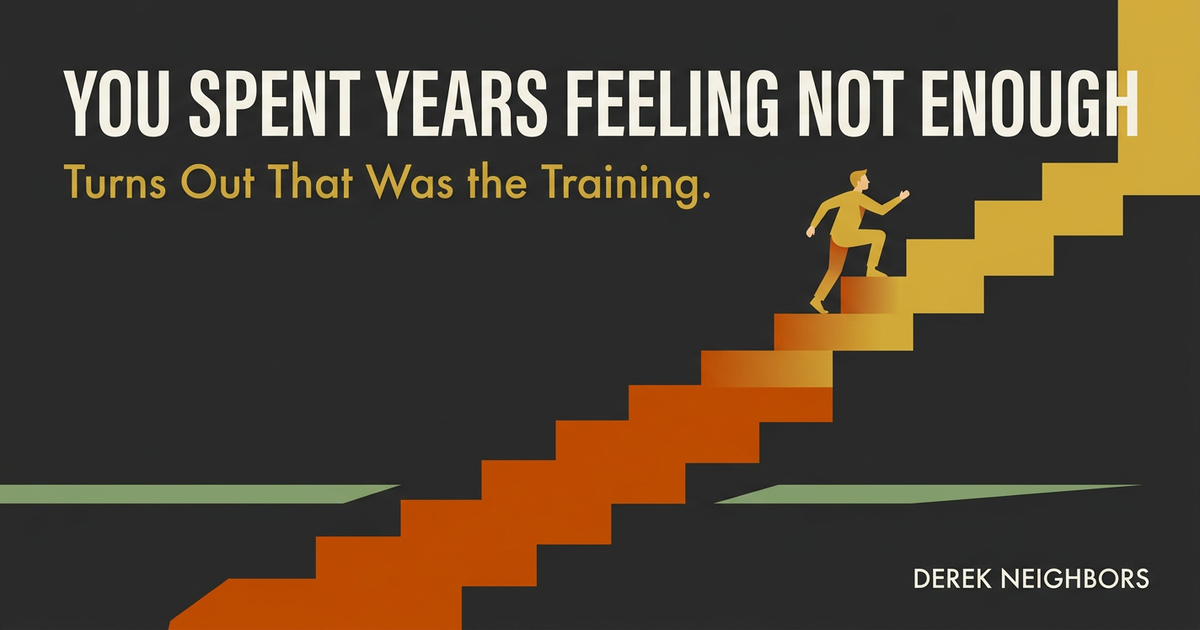
Metanoia sometimes arrives as the recognition that you have been living someone else’s life competently. The emptiness is not a sign that you need more achievement. It is the signal that the entire framework for evaluating achievement needs to be replaced. This is painful because it invalidates the effort that got you here, but the alternative is continuing to optimize for outcomes that do not matter to you.
A senior executive known for decisive, top-down leadership joins an organization with a collaborative culture. Every instinct tells her to take charge, set direction, and drive execution. Over six months, she watches collaborative decision-making produce better outcomes than her top-down approach ever did. The experience does not teach her a new technique. It transforms her understanding of what leadership means.
Metanoia in leadership is not learning a new management style. It is recognizing that your entire model of what leadership is was incomplete. The executive did not add collaboration to her toolkit. She rebuilt her understanding of the relationship between leaders and teams from the ground up.
A tenured professor who has taught the same course for fifteen years attends a conference where a younger scholar presents research that contradicts the professor’s core thesis. The professor’s first response is defensive. Over the following months, engaging with the new research, the professor recognizes that the contradiction is not a threat to be managed but a correction to be embraced.
Academic metanoia requires the courage to let evidence override identity. When your career is built on a particular thesis, abandoning it feels like self-destruction. But a scholar whose commitment to truth is stronger than their attachment to being right will eventually follow the evidence, even when the evidence leads away from everything they have published.
A professional athlete who has built their career on physical dominance suffers an injury that permanently limits their explosive power. The recovery process forces them to develop an entirely different style of play based on positioning, anticipation, and technique rather than raw athleticism. They initially resist the change, then gradually discover that the new approach produces results they could not have achieved through physical dominance alone.
Metanoia in athletics can be forced by circumstances that destroy the foundation of your previous approach. The athlete who cannot rely on their old strengths must develop new ones, and the transition requires not just new skills but a new understanding of what their sport demands. The injury did not teach them a new technique. It changed their entire conception of how their sport works.
A neighborhood that has resisted demographic change for decades experiences a wave of immigration that transforms its composition within five years. Some long-time residents respond with hostility and withdrawal. Others discover that the new residents bring perspectives, skills, and cultural practices that enrich the community in ways they could not have anticipated. For the second group, the experience is metanoia: their understanding of what their community is and who belongs in it has fundamentally shifted.
Metanoia at the community level occurs when shared experience dissolves categories that were previously taken as fixed. The residents who discover enrichment where they expected threat have not merely changed their opinion about immigration. They have changed their framework for understanding community itself.
Common Misconceptions
Treating metanoia as a synonym for any significant change of mind misses its distinctive character. You change your mind when new evidence leads you to a different conclusion within your existing framework. Metanoia changes the framework itself. The person who switches political parties because they disagree on a policy issue has changed their mind. The person who realizes that partisan identity itself was distorting their ability to think clearly has experienced something closer to metanoia. A second error assumes metanoia is always positive. The Greeks understood that you can shift from a better framework to a worse one. A person radicalized into an extremist ideology has experienced a kind of metanoia, a fundamental reorganization of their worldview, that makes them worse, not better. The direction of the transformation matters as much as its depth.
Metanoia, in my experience, is never comfortable and rarely voluntary. The moments that fundamentally changed how I see the world were not the result of reading the right book or hearing the right argument. They were the result of reality refusing to cooperate with my existing framework until the framework broke.
The most significant metanoia in my professional life happened when I realized that my approach to leadership, which I would have described as “high standards and accountability,” was actually producing fear and compliance rather than excellence and engagement. I had mountains of evidence that my approach worked: teams delivered on time, metrics improved, and stakeholders praised the results. What I did not measure, and what eventually became impossible to ignore, was the human cost. People were performing out of anxiety, not commitment. They were delivering results but not growing.
Seeing this required more than a new perspective. It required abandoning a worldview. I had built my professional identity around the belief that demanding leaders produce excellent teams. Accepting that my demands were producing something other than excellence meant accepting that years of effort had been organized around a flawed understanding. That acceptance did not happen in a single moment. It accumulated over months as I watched teams I thought were thriving revealed as teams that were enduring.
What I learned from that experience is that metanoia cannot be pursued directly. You cannot decide to transform your fundamental understanding. You can only create the conditions for it: expose yourself to evidence that challenges your current framework, surround yourself with people who will tell you the truth, and cultivate the willingness to let reality correct you even when the correction is devastating.
Frequently Asked Questions
What is metanoia in Greek philosophy?
Metanoia is the Greek concept of fundamental transformation of mind, a complete turning around of understanding and perception. It goes beyond regret to describe a genuine reorientation of how you see reality and live your life. Early Christian writers later adopted the term for spiritual conversion, but the philosophical meaning is broader: any profound shift in understanding that fundamentally changes your direction.
What does metanoia mean?
Metanoia literally means "change of mind" or "thinking beyond," from meta (change, beyond) and nous (mind). It describes a profound shift in perception and orientation, not a superficial adjustment but a complete transformation of understanding. The word signifies the moment when scales fall from the eyes and you see reality with entirely new clarity, fundamentally altering the trajectory of your life.
How do you practice metanoia?
You create conditions for metanoia by examining long-held assumptions, sitting with evidence that contradicts your worldview, and cultivating the courage to release beliefs that no longer serve your growth. It requires genuine openness to being wrong about fundamental things. While you cannot force metanoia, you can prepare the ground by regularly questioning your deepest certainties and seeking out perspectives that challenge your current understanding.
What is the difference between metanoia and prohairesis?
Metanoia is the transformative experience of fundamentally changing your mind and orientation. Prohairesis is the ongoing faculty of moral choice and deliberate decision-making. Metanoia is the earthquake that reshapes the landscape; prohairesis is the daily navigation of that landscape through conscious choices. Metanoia is rare and profound; prohairesis is constant and practical. Both are essential to the examined life.