Miasma (μίασμα): Meaning, Definition & Modern Application
mee-AZ-mah
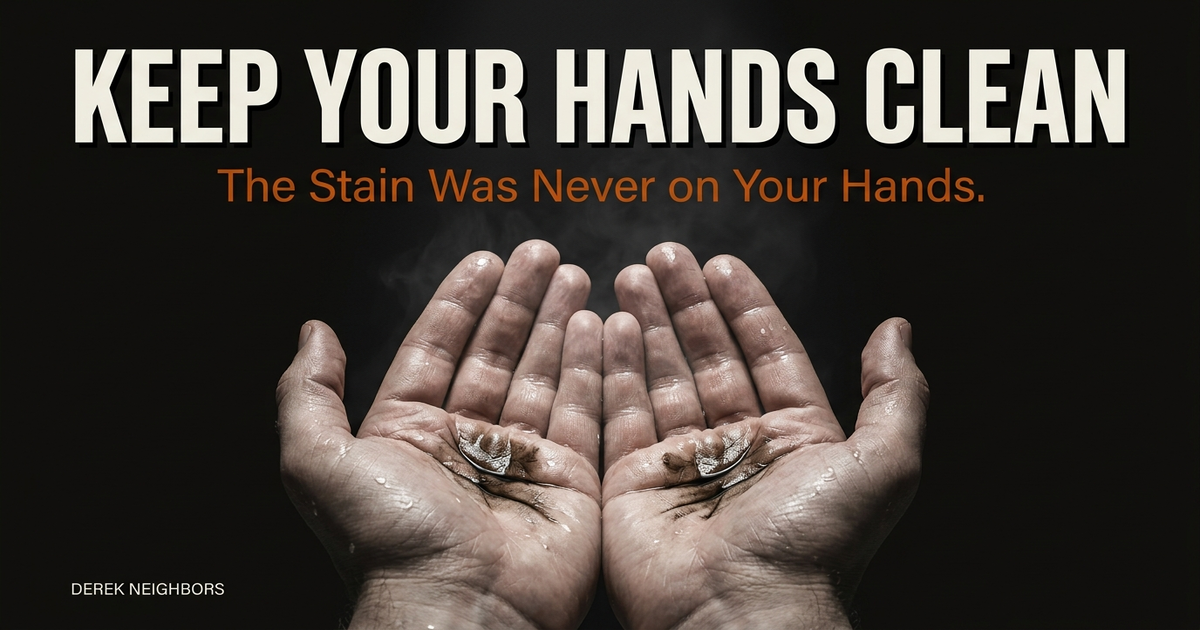
A pollution or stain that spreads through a community from wrongdoing, requiring purification. In Greek thought, moral corruption was contagious, affecting not only the wrongdoer but all connected to them.
Etymology
From the Greek verb miainō (μιαίνω), meaning ‘to stain, pollute, or defile.’ The root connects to concepts of ritual impurity and bloodguilt. Originally describing physical contamination, it evolved to encompass moral and spiritual pollution that could infect an entire household, city, or lineage through proximity to unpurified wrongdoing.
Deep Analysis
The concept of miasma reveals something the modern world has largely forgotten: that moral corruption is not merely personal but contagious. The Greeks understood ethics as fundamentally communal, and miasma was the mechanism by which individual wrongdoing became collective catastrophe.
In Sophocles’ Oedipus Tyrannos, the plague devastating Thebes is not random misfortune but the direct consequence of unaddressed miasma. The oracle at Delphi declares that the city harbors pollution from the unpunished murder of the former king. Until this corruption is identified and expelled, the entire polis suffers. Oedipus, seeking to save his city, discovers he is himself the source of contamination. The tragedy is not merely personal guilt but the recognition that his unknowing crimes have poisoned everyone around him.
This reflects a worldview fundamentally different from modern individualism. We tend to imagine ethical failures as discrete events affecting primarily the wrongdoer. The Greek understanding was more ecological. Pollution spread through connection, through proximity, through the invisible bonds that link members of a community. A murderer’s miasma could contaminate his household, his city, even those who unknowingly sheltered him.
Plato addresses this dynamic in the Laws, where he outlines how different types of pollution require different forms of purification. Involuntary homicide requires different treatment than intentional murder, but both introduce miasma that demands attention. The key insight is that leaving pollution unaddressed does not make it disappear. It spreads, intensifies, and eventually manifests as collective suffering.
The concept connects importantly to hubris, the overreaching arrogance that often generates miasma. When individuals violate proper boundaries, dishonoring others or the gods, they introduce pollution into the cosmic order. This is why hubris was not merely impolite but dangerous to everyone connected to the transgressor. The Greeks recognized what organizational psychologists now confirm: toxic behavior is genuinely toxic. It contaminates culture, erodes trust, and spreads through social networks.
Purification, katharsis, was the necessary response to miasma. This could involve ritual cleansing, exile of the polluted individual, or formal acknowledgment and atonement. The crucial element was active intervention. Pollution that went unaddressed only grew more virulent. This explains the Greek emphasis on justice not merely as punishment but as purification, restoring the community to a state of cleanliness.
For the Stoics, while they moved away from ritual pollution concepts, the underlying dynamic persisted. Marcus Aurelius warns repeatedly against allowing the vices of others to contaminate his own soul. Seneca describes how proximity to certain people and environments corrupts judgment and character. The language differs, but the recognition remains: moral corruption spreads through contact.
The tension within miasma lies between individual responsibility and collective consequence. How can it be just that an entire city suffers for one person’s crime? The Greek answer seems to be that justice requires recognizing our interconnection. We are not isolated atoms but members of communities, and our actions ripple outward in ways we cannot fully track. This places enormous weight on leaders, who by their position can introduce pollution that spreads through entire organizations.
The practical implication is vigilance. You must watch not only for your own potential to introduce corruption but for contamination entering from other sources. You must be willing to name pollution when you see it, to pursue the difficult work of purification through honest conversation and accountability. The alternative is to let miasma spread until it manifests as organizational plague: dysfunction, distrust, and eventual collapse.
Modern Application
You must recognize that your ethical failures do not stay contained. When you tolerate dishonesty in yourself or others, you introduce pollution into your team's culture that spreads invisibly. Your role as a leader includes being a guardian against contamination, identifying sources of moral corruption before they infect the whole organization, and pursuing the difficult work of purification through accountability and honest reckoning.
Historical Examples
The plague of Athens during the Peloponnesian War (430-426 BCE) was interpreted by many Athenians through the lens of miasma. Thucydides, in his History, describes how the crowding of refugees within the city walls created conditions for disease, but the popular understanding held that the city suffered divine punishment for impiety. The Athenians had violated sanctuary, and their subsequent suffering was seen as pollution made manifest. Whether or not the plague had supernatural causes, the social breakdown Thucydides describes, with the abandonment of burial customs and moral restraint, shows how collective crisis spreads beyond its initial source.
The house of Atreus provides the most extensive mythological example of miasma’s generational spread. According to Aeschylus’ Oresteia, Tantalus’ original crime against the gods introduced pollution that spread through generations: Atreus serving his brother’s children as food, Agamemnon sacrificing his daughter, Clytemnestra murdering her husband, and Orestes killing his mother. Each act of violence generated new miasma that demanded response, creating an endless cycle of bloodguilt. Only Athena’s intervention, establishing a court of justice, finally purifies the family line. The trilogy demonstrates the Greek understanding that unpurified pollution grows worse with time.
Alcmaeon of Argos, as recounted by Herodotus and dramatized by Euripides, exemplifies individual miasma and its consequences. After killing his mother (some accounts say at Apollo’s command), Alcmaeon was pursued by the Furies and could find no land that would accept his polluted presence. The earth itself rejected him. He eventually found refuge on newly formed alluvial land, earth that had not existed when he committed matricide and thus was not under the pollution’s scope. The story illustrates how seriously the Greeks took contamination: an entire landscape could become polluted by harboring a murderer.
How to Practice Miasma
Conduct a daily integrity audit. Each evening, review your actions and ask: Did I introduce any pollution today through dishonesty, unfairness, or cowardice? Note specific moments where you felt the temptation to compromise.
Identify contamination sources. Weekly, examine your environment for sources of ethical pollution. Ask: What behaviors am I tolerating that spread harm? What relationships or systems are introducing corruption into my work or life?
Practice ritual cleansing. When you recognize you have caused harm, take concrete action to address it. Apologize specifically. Make restitution where possible. Do not let wrongdoing sit unaddressed, as the Greeks understood that unpurified pollution only spreads.
Guard the threshold. Before bringing new people, ideas, or practices into your sphere of influence, assess their potential for contamination. Ask: What is this person or practice likely to spread?
Create purification rituals. Develop practices that regularly cleanse your mental and ethical environment. This might be weekly reflection, monthly conversations with a trusted advisor who will speak honestly, or quarterly reviews of organizational culture.
Track patterns of pollution. Keep notes on recurring sources of ethical compromise. Notice what environments, relationships, or pressures consistently lead you toward contamination.
Application Examples
A sales team discovers their top performer has been manipulating numbers and misleading customers. Leadership initially hesitates to act because the revenue is substantial and the misconduct is not technically illegal.
Miasma teaches that unaddressed wrongdoing spreads. Every day leadership delays, the message propagates: this behavior is acceptable here. Other team members begin cutting corners, and the culture of integrity erodes invisibly until a larger crisis forces reckoning.
You discover a close friend has been dishonest with their spouse about a significant matter. They ask you to keep their secret, creating a web of complicity.
The concept reveals that harboring another’s pollution introduces contamination into your own life. Your silence becomes participation, and the miasma spreads to your own relationships as you become practiced in deception.
A newly appointed executive inherits a team with deeply embedded dysfunction: backstabbing, blame-shifting, and passive aggression have become normalized over years of poor leadership.
Miasma accumulated under previous leadership does not automatically clear when that leader departs. The new executive must actively pursue purification through honest acknowledgment of past problems, clear new standards, and consistent accountability.
One team member consistently makes cutting, demoralizing comments during meetings. They are technically competent, so their behavior is tolerated as personality quirks.
Contempt is contagious. What begins as one person’s behavior gradually becomes acceptable team conduct, as others adopt similar patterns or withdraw to protect themselves. The miasma spreads until psychological safety is destroyed.
A company discovers that a past decision, made years ago by departed executives, caused genuine harm to a community. Current leadership had no involvement and faces no legal liability.
Miasma persists beyond the tenure of those who introduced it. The organization continues to carry pollution until it is addressed. Purification requires acknowledgment and, where possible, restitution, regardless of who originally caused the harm.
Common Misconceptions
Many people assume miasma is purely religious superstition with no rational application. This misses the psychological and social reality the concept captures. Moral corruption genuinely spreads through communities. Tolerated misconduct normalizes further misconduct. The mechanism may not be supernatural, but the dynamic is observable in any organization where ethical standards have eroded over time.
Another error is treating miasma as primarily about guilt. The concept is less about internal feeling than about objective pollution requiring objective remedy. You can feel tremendous guilt without generating miasma, and you can spread significant pollution while feeling no guilt at all. The Greeks were concerned with actual contamination and its effects on the community, not merely the psychological state of the wrongdoer.
A third misconception reduces purification to simple apology or feeling sorry. Greek katharsis required concrete action: ritual, exile, or formal justice. The pollution was not merely in the mind but in the world, and addressing it required action in the world. Modern tendencies to resolve ethical violations through statements of regret alone would have seemed inadequate to the Greek understanding of what miasma required.
I spent years wondering why some teams I worked with felt heavy, even when nothing was obviously wrong. The work got done, the metrics looked acceptable, but something was off. People seemed diminished, careful, protective. Then I encountered miasma and recognized what I had been sensing: pollution.
In one organization, the contamination traced back to a single decision made years before I arrived. A popular manager had been caught in serious misconduct, and leadership had quietly let them resign rather than face the discomfort of public accountability. No one talked about it directly, but the message had penetrated everywhere: here, we protect ourselves rather than face truth. That pollution shaped every subsequent interaction. People learned that honesty was dangerous, that image mattered more than integrity.
I have also been the source of miasma. Early in my career, I tolerated a client relationship that required constant small deceptions. Nothing dramatic, just the steady pressure to oversell and underdeliver. I told myself it was normal business practice. But I noticed how it changed me, how the contamination spread into other relationships. I became more comfortable with half-truths, more skilled at rationalization. The pollution was spreading outward from that initial compromise.
The Greeks understood something I had to learn painfully: you cannot contain corruption. You think you are keeping it in a box, handling it carefully, but it seeps through. It infects your thinking, your team’s culture, your organization’s character.
Now I treat ethical compromises with the seriousness the Greeks gave to bloodguilt. Not because I am morally rigid, but because I have seen how unaddressed pollution spreads. When I see contamination in a team I am coaching, naming it clearly is usually the first step. Not accusation, but honest acknowledgment: something is polluted here. Then the real work of purification can begin.
Frequently Asked Questions
What is miasma in Greek philosophy?
Miasma refers to moral pollution or contamination that spreads from wrongdoing through a community. The Greeks believed that certain transgressions, especially bloodguilt and impiety, created a contagious stain that could affect an entire household or city until properly purified through ritual or justice.
How does miasma relate to leadership?
Leaders function as both potential sources and guardians against miasma. When leaders tolerate unethical behavior, cut ethical corners, or avoid accountability, they introduce pollution that spreads through organizational culture. Conversely, leaders who maintain integrity and address wrongdoing protect their communities from contamination.
What is the difference between miasma and hamartia?
Hamartia refers to a personal error or tragic flaw, often involving a missed mark in judgment. Miasma is the pollution that results from wrongdoing and spreads beyond the individual. One might commit hamartia through a single choice, but the resulting miasma can contaminate an entire community until addressed.